
Pallet Inverter Argentina: What Procurement Criteria Ensure Compliance with International Export Standards?
Are you an Argentine exporter struggling with inconsistent pallet standards, manual labor inefficiencies, and the constant pressure of international compliance? You are not alone. Many businesses face the challenge of seamlessly transitioning goods between different pallet types for global shipping, often leading to costly delays and compliance headaches. This struggle can hinder your growth, impact customer satisfaction, and even lead to financial penalties.
Ensuring compliance with international export standards, especially for a key trading nation like Argentina, hinges on selecting pallet inverter systems that offer robust adaptability, uncompromised safety features, and proven operational efficiency. The key procurement criteria involve evaluating technical specifications for diverse pallet handling, assessing integrated safety protocols, verifying machine durability, and confirming the supplier’s commitment to long-term support and customization for specific export markets.
I’ve personally witnessed the transformation that the right packing machine can bring to a business. As RANDAL LIU, founder of FHOPEPACK, I understand the intricate dance between machinery and market demands. If you are ready to navigate the complexities of international trade with confidence, let’s explore the essential criteria for choosing a pallet inverter that will elevate your export operations in Argentina.
The Core Need for Pallet Inverters in International Trade: Why Argentina Needs Them?
Are your Argentine export operations bogged down by manual pallet handling and non-compliant pallet types? This common problem can severely slow down your supply chain, leading to missed deadlines and increased operational costs. The fundamental challenge lies in the disparity of pallet standards required by different importing countries, demanding a flexible and efficient solution.
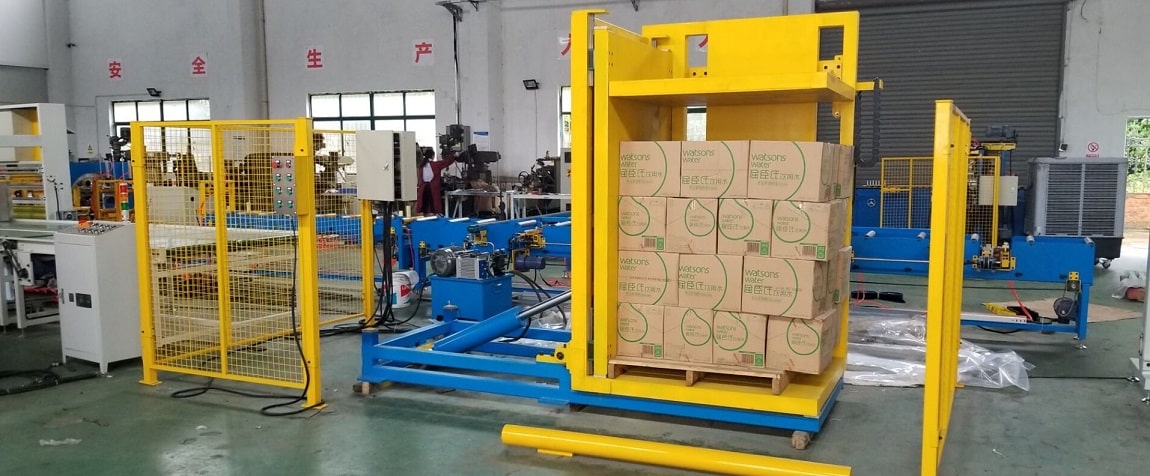
Argentine exporters critically need pallet inverters to efficiently manage the diverse pallet specifications prevalent in international trade, such as Euro pallets (1200x800mm), US GMA pallets (48×40 inches), and various plastic or hygiene-specific pallets. These machines facilitate seamless product transfer from domestic or internal warehouse pallets to compliant export pallets, directly addressing issues of cargo safety, customs clearance, and overall logistics flow.
When I started FHOPEPACK, my vision was to empower businesses with the right tools and knowledge. Understanding why a technology is crucial is the first step toward smart procurement. For Argentina, a country with significant agricultural and industrial exports, the ability to rapidly and reliably switch pallet types isn’t just a convenience; it is a strategic necessity for maintaining competitiveness in global markets. Let’s delve deeper into this critical need.
Dive deeper Paragraph:
Argentina’s position as a major exporter of food products, agricultural goods, and manufactured items means its businesses constantly interact with varied international logistics requirements. One of the most persistent hurdles is the incompatibility of domestic pallets with international shipping standards. For instance, while local warehouses might use specific robust wooden pallets for internal movements, European Union regulations, often common for food imports, strictly mandate ISPM 15 heat-treated wood pallets or plastic pallets to prevent pest infestation. Similarly, exports to North America might require GMA-spec pallets. The manual process of offloading products from one pallet and reloading them onto another is not only labor-intensive and time-consuming but also introduces significant risks of product damage and worker injury.
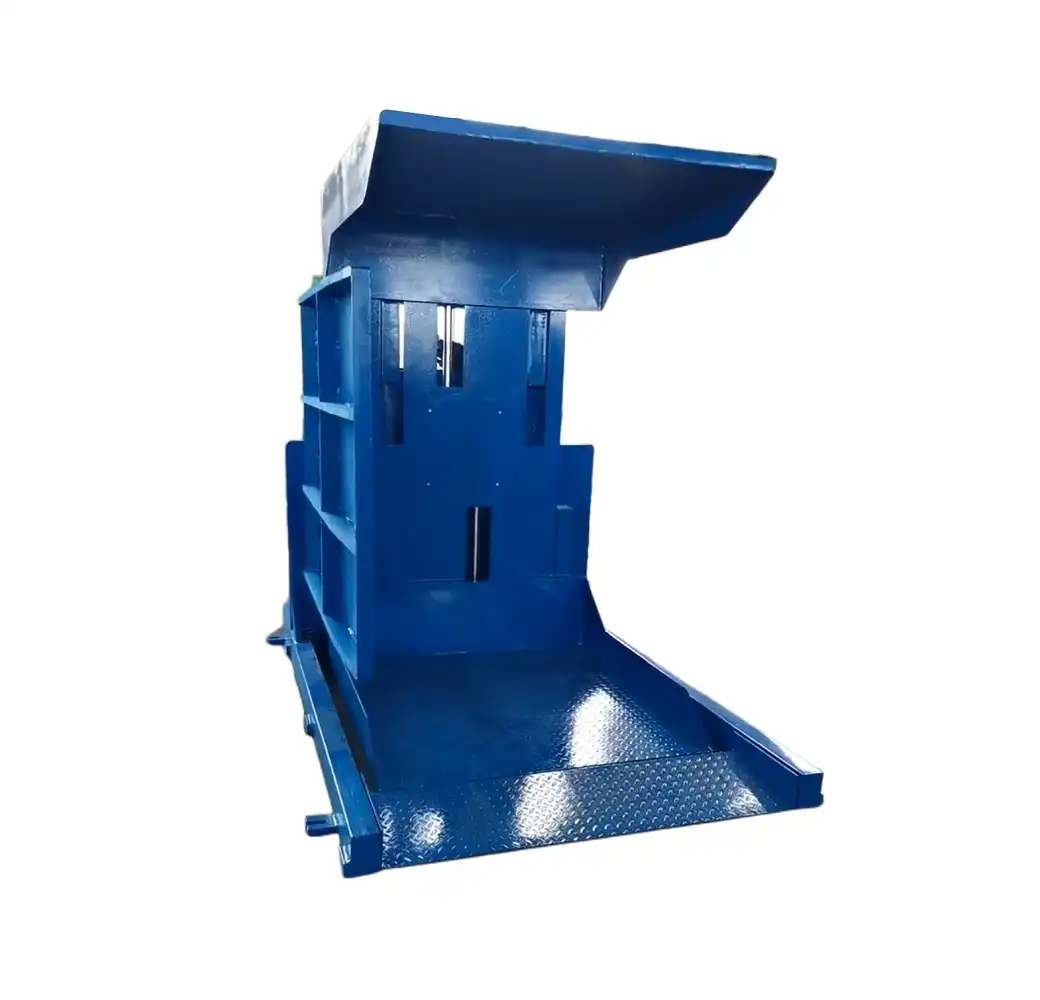
This is where a high-quality pallet inverter becomes indispensable. It automates the process of transferring goods from one pallet to another, or from a damaged pallet to a new one, without disturbing the product stack. This capability directly impacts compliance by ensuring that only approved and undamaged pallets leave your facility for international destinations. Without such a system, companies face:
- Increased Labor Costs: Manual transfer requires multiple workers and significant time, driving up operational expenses. This directly aligns with Carlos’s challenge of rising labor costs.
- Higher Risk of Product Damage: Repeated manual handling increases the chance of goods being dropped, crushed, or otherwise compromised, leading to costly rejections and customer dissatisfaction.
- Compliance Penalties and Delays: Using non-compliant pallets can result in shipments being held at customs, fines, or even forced re-exportation, all of which incur substantial financial losses and damage to reputation.
- Reduced Throughput: Slow pallet changeovers bottleneck the entire export logistics chain, making it difficult to meet tight delivery schedules, a challenge amplified by customer pressure for shorter lead times.
A robust pallet inverter solution, like those offered by FHOPEPACK, directly tackles these issues by streamlining the process. It ensures that products are always on the correct, compliant pallet for their destination, facilitating smooth customs clearance and efficient loading onto shipping containers. This automation minimizes human intervention, thereby reducing the margin for error and enhancing overall operational fluidity, which is vital for any business looking to strengthen its presence in international trade routes. (International pallet standards, export logistics efficiency, customs compliance, operational costs reduction)
Critical Technical Specifications: What Features Guarantee Adaptability and Performance for Global Standards?
Are you wondering which technical features are absolutely non-negotiable when procuring a pallet inverter for your Argentine export business? The wrong specifications can leave you with a machine that fails to meet the demands of global trade, causing more problems than it solves. It’s crucial to understand what truly makes a pallet inverter adaptable and high-performing in a diverse international shipping environment.
To guarantee adaptability and optimal performance for global standards, a pallet inverter must possess key technical specifications including a wide range of load capacities to handle various product weights, the ability to accommodate multiple pallet dimensions (e.g., Euro, US, customized sizes), robust construction materials for high-intensity operations, and advanced control systems for precise, automated, or semi-automated operation. Furthermore, look for features like adjustable pressure settings, multiple inversion angles, and compatibility with different material handling equipment to maximize operational flexibility.
My experience building FHOPEPACK has taught me that a machine is only as good as its specifications. For businesses like yours in Argentina, the details truly matter when it comes to international compliance. You need a system that doesn’t just work, but works flawlessly under varying conditions, ensuring your products always arrive on the right pallet. Let’s explore these essential technical specifications.
Dive deeper Paragraph:
When considering a pallet inverter for international export operations, particularly from Argentina, the technical specifications are paramount. The machine must be versatile enough to cope with the unpredictable nature of global logistics. One of the most important aspects is the load capacity and size compatibility. Exporters handle everything from light packaged goods to heavy industrial components. A suitable pallet inverter should offer a broad weight range capability, typically from 500kg to 3000kg or more, and be designed to handle a variety of pallet sizes and types without extensive retooling. This includes standard Euro (1200x800mm), US GMA (48×40 inches), industrial (1200x1000mm), and even custom-sized plastic or hygiene pallets for food or pharmaceutical exports.
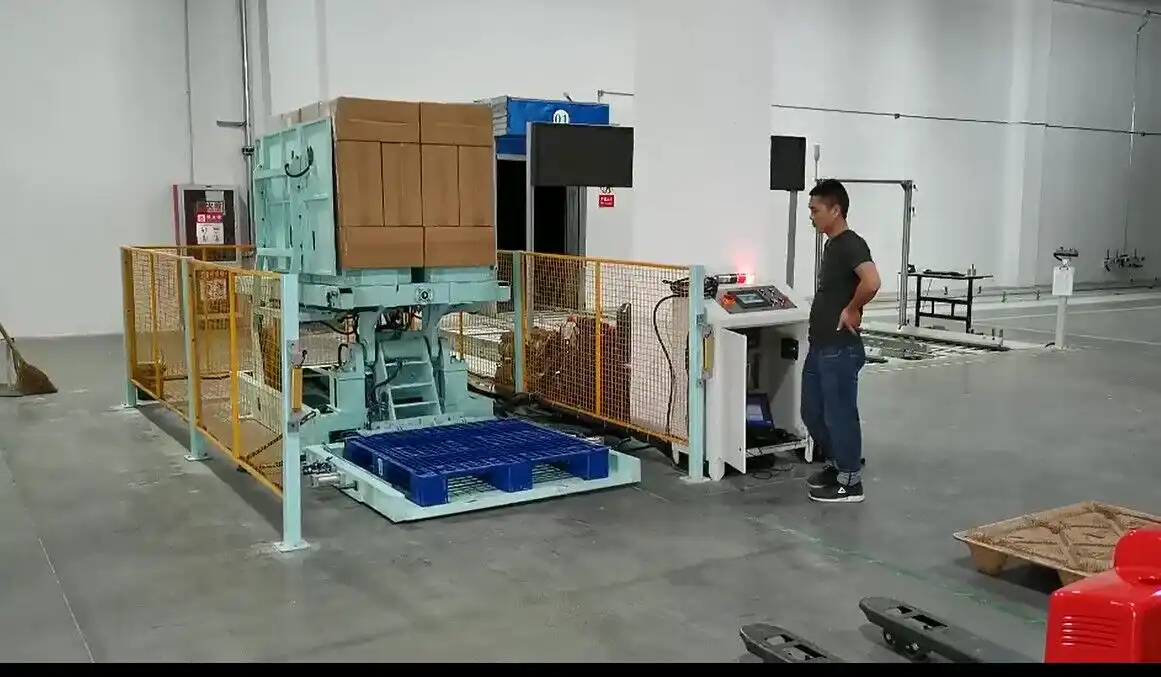
Another critical feature is the degree of automation. Depending on your volume and labor availability, you might choose between manual, semi-automatic, or fully automatic systems. A fully automatic system can integrate seamlessly into existing production lines, reducing human intervention to a minimum and significantly increasing throughput—a key goal for Carlos. It should include intuitive controls, often with HMI (Human-Machine Interface) touchscreens, for easy operation and troubleshooting.
Furthermore, construction quality and material are crucial for longevity and reliability. For high-intensity warehousing environments like Carlos’s, the machine must be built with robust materials, such as heavy-duty steel, and use high-quality hydraulic or mechanical components to withstand continuous operation. Corrosion-resistant finishes are also beneficial, especially in food processing or coastal environments.
Consider these technical aspects:
- Capacity Range: Does it support the full spectrum of your product weights and pallet sizes? (e.g., 500kg to 2500kg, 800x1200mm to 1200x1200mm)
- Operating Speed: How many pallets can it process per hour? Can it keep up with your peak export demands? (e.g., 20-60 pallets/hour)
- Power Requirements: Is it compatible with local Argentine power grids and energy consumption expectations? (e.g., 3-phase, 380V, 50Hz)
- Sensor Technology: Does it have advanced sensors for precise pallet alignment, load stability, and safety interlocks? (e.g., photoelectric sensors, laser guides)
- Customization Options: Can the machine be customized with features like integrated scales, wrapping functions, or specific gripper types for unusual loads?
FHOPEPACK, for example, offers a range of pallet inverters designed with these considerations in mind, ensuring they meet the stringent demands of global trade. Brands like SHJLPACK also provide good options, but always verify their specs against your specific operational needs. Prioritizing these technical criteria ensures you invest in a solution that provides true value and long-term compliance benefits. (Pallet inverter specifications, load capacity, automation level, durable construction, precise control systems)
Safety and Operational Efficiency: How Do Advanced Pallet Inverters Protect Workers and Streamline Logistics?
Is your current pallet handling process fraught with safety hazards and operational bottlenecks? Manuel pallet changing can lead to severe injuries and significant delays, directly impacting your bottom line and employee morale. It’s a common challenge, especially in busy export hubs like Argentina, where high volumes and diverse handling requirements create inherent risks.
Advanced pallet inverters significantly enhance worker safety by eliminating the need for manual lifting, twisting, or manipulating heavy loads, thereby reducing the risk of musculoskeletal injuries, crushed limbs, and falling cargo accidents. Operationally, these machines streamline logistics by providing fast, consistent, and automated pallet changes, minimizing downtime, accelerating throughput, and allowing for continuous product flow, which is crucial for meeting tight international shipping schedules.
Safety and efficiency are two sides of the same coin in any successful operation. In my journey from an employee to the founder of FHOPEPACK, I saw firsthand how much a commitment to safety impacts overall productivity. For Argentine exporters, this isn’t just about compliance; it’s about protecting your most valuable asset—your people—while simultaneously boosting your operational capabilities. Let’s delve into how a well-chosen pallet inverter achieves this balance.
Dive deeper Paragraph:
Worker safety is not just a moral obligation; it’s a critical component of operational efficiency and compliance. Manual pallet changes, often involving forklifts and human manipulation of heavy goods, are inherently dangerous. These tasks frequently lead to:
- 🤕 Musculoskeletal Injuries: Strain from repetitive lifting, bending, and twisting.
- ⚠️ Crushing Accidents: From falling loads or improper forklift maneuvers.
- سقوط货物 Falling Goods: Resulting in damaged products and potential injury to nearby personnel.
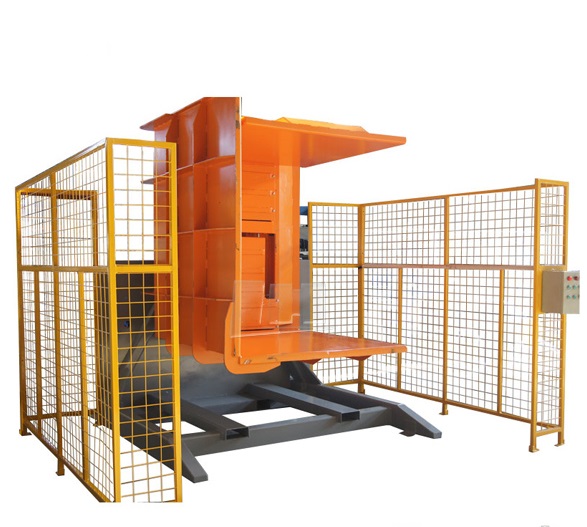
A modern pallet inverter fundamentally addresses these risks by automating the most hazardous parts of the process. Machines like those from FHOPEPACK are designed with multiple safety interlocks, emergency stop buttons, and robust guarding to protect operators. Many models feature:
- Safety Light Curtains: Automatically halt operation if a person or object enters the work zone.
- Overload Protection: Prevents operation beyond the machine’s rated capacity, protecting both equipment and personnel.
- Controlled Speed and Motion: Eliminates erratic movements that can cause loads to shift or fall.
- Ergonomic Design: Reduces the need for operators to perform strenuous or awkward actions, contributing to a healthier work environment.
Beyond safety, the operational efficiency gains are substantial. A pallet inverter can perform a complete pallet change cycle in a matter of minutes, a process that could take several workers much longer manually. This speed directly translates into:
- Reduced Labor Dependency: Freeing up valuable human resources for more complex, value-added tasks. This is a direct answer to Carlos’s labor shortage challenge.
- Increased Throughput: Faster pallet changes mean more products can be prepared for export in less time, helping meet demanding shipping schedules.
- Consistent Quality: Automated processes reduce human error, ensuring consistent stacking and palletization that adheres to export guidelines.
- Improved Warehouse Flow: Eliminating bottlenecks at the pallet changing station allows for a smoother, more continuous flow of goods through the warehouse, enhancing overall logistics.
By integrating an advanced pallet inverter, Argentine businesses can significantly reduce workplace accidents, decrease insurance premiums, and avoid the costly disruptions associated with injured workers. Simultaneously, they optimize their logistics processes, making them faster, more reliable, and better equipped to handle the high demands of international trade. It’s a win-win for both people and productivity. (Worker safety, operational efficiency, automated pallet changing, reduced labor costs, warehouse throughput)
Ensuring Durability and Long-Term Partnership: What Guarantees Sustainable Operation and Support?
Are you concerned about investing in a pallet inverter only to face frequent breakdowns and poor after-sales support? Many companies purchase equipment without adequately vetting the supplier’s commitment to durability and long-term partnership. This oversight can lead to unexpected downtime, escalating maintenance costs, and a significant hit to your export capabilities from Argentina.
Ensuring durability and a sustainable long-term partnership requires scrutinizing the manufacturer’s use of high-quality components, their track record for machine reliability, and the comprehensiveness of their after-sales support, including readily available spare parts, expert technical assistance, and structured maintenance programs. A strong guarantee also involves the supplier’s willingness to provide customization and ongoing consultation, affirming their role as a solutions provider rather than just a seller of machinery.
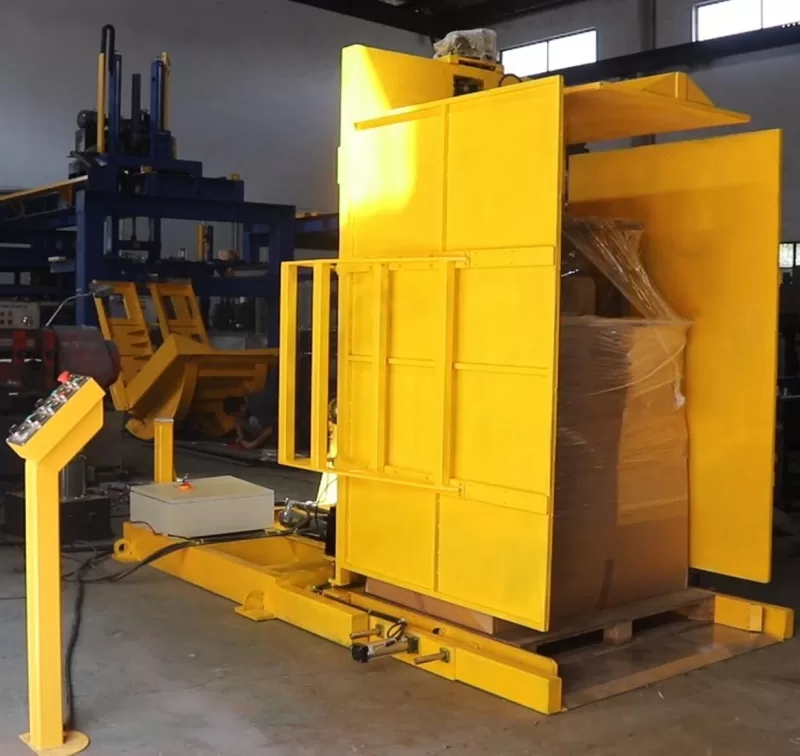
In my years in the packing machine industry, I’ve learned that a true partner offers more than just a product. At FHOPEPACK, we believe in building relationships that last, providing the support and expertise needed for your continued success. For Argentine exporters, your pallet inverter is a critical investment. Choosing a supplier who stands behind their product and supports your long-term goals is paramount. Let’s explore what this entails.
Dive deeper Paragraph:
For a business like Carlos’s, which operates a high-intensity regional distribution center, the long-term reliability and support for a pallet inverter are as crucial as its initial performance. A machine that constantly breaks down or lacks readily available spare parts can quickly become a liability, causing significant operational disruptions and financial losses. This is why the procurement process must extend beyond the machine’s immediate capabilities to the vendor’s commitment to durability and after-sales service.
Here are the key aspects to evaluate for a sustainable partnership:
- 🛠️ Component Quality: Investigate the quality of internal components—motors, hydraulics, electrical systems. Reputable manufacturers like FHOPEPACK often use globally recognized brands for these critical parts, ensuring reliability and easier sourcing of replacements if needed. Look for robust construction, often with heavy-gauge steel, designed for continuous industrial use.
- 📄 Warranty and Guarantees: A comprehensive warranty reflects the manufacturer’s confidence in their product. Understand what it covers, for how long, and the process for making claims. Beyond the warranty, inquire about extended service agreements.
- ⚙️ Spare Parts Availability: Nothing is more frustrating than a machine down for weeks waiting for a specific part. A reliable supplier will maintain a robust inventory of spare parts, ideally with efficient shipping channels to locations like Argentina.
- 📞 Technical Support and Training: Does the supplier offer responsive technical support, potentially with multilingual capabilities? Are training programs available for your operators and maintenance staff to ensure they can competently run and troubleshoot the equipment? This prevents minor issues from escalating into major problems.
- 🤝 Service Network: For international operations, having a local or regional service partner or a readily accessible factory support team that can travel to your location is invaluable. This minimizes downtime for complex repairs or maintenance.
- 🔄 Customization and Future Upgrades: A long-term partner should be able to offer customized solutions for unique challenges and discuss potential upgrades as your needs evolve. This shows they understand your business and are invested in your future growth.
My own journey from being an employee to founding FHOPEPACK was driven by a passion for providing solutions that genuinely help clients grow. I remember clients who struggled with unreliable equipment from vendors who disappeared after the sale. That experience shaped FHOPEPACK’s commitment to being a true partner. While other brands like SHJLPACK also exist, always prioritize suppliers, like FHOPEPACK, who demonstrate a clear commitment to ongoing support and product longevity. This ensures your pallet inverter remains a productive asset for years, safeguarding your export operations from Argentina. (Machine durability, after-sales support, spare parts availability, technical assistance, long-term supplier relationship)
Return on Investment and Cost Reduction: How Does a Pallet Inverter Positively Impact Your Bottom Line?
Are you looking for ways to reduce operational costs and justify the capital expenditure of new equipment for your Argentine export business? While the initial cost of a pallet inverter might seem significant, focusing purely on purchase price overlooks the profound positive impact it can have on your long-term financial health. The question isn’t just about cost, but about value.
A pallet inverter positively impacts your bottom line by significantly reducing direct labor costs associated with manual pallet changes, minimizing product damage and associated returns or rework, decreasing insurance premiums through improved workplace safety, and optimizing warehouse space and throughput. The accumulated savings in labor, materials, and efficiency gains, coupled with avoiding compliance penalties and fostering customer satisfaction, collectively deliver a strong return on investment (ROI) that quickly outweighs the initial capital outlay.
The financial stability I achieved through my packing machine factory allowed me to start FHOPEPACK, driven by a desire to share knowledge. This knowledge includes understanding that every investment must contribute to your bottom line. For Argentine exporters, a pallet inverter is not just an operational tool; it’s a strategic financial asset. Let’s delve into how it transforms expenses into savings and boosts profitability.
Dive deeper Paragraph:
Evaluating a pallet inverter solely on its purchase price would be a disservice to its true value. The real benefit lies in its ability to generate significant cost savings and improve overall financial performance, ultimately leading to a robust Return on Investment (ROI). For companies in Argentina involved in international trade, these savings can be substantial across several key areas:
- 💰 Labor Cost Reduction: This is one of the most immediate and impactful benefits. By automating the pallet changing process, the need for multiple workers to manually handle goods is dramatically reduced or eliminated. With rising labor costs and shortages, as highlighted by Carlos, this saving alone can justify the investment in a relatively short period. Less manual intervention means fewer man-hours per pallet processed.
- 📦 Minimization of Product Damage: Manual handling is a primary cause of product damage, leading to expensive reworks, repackaging, or even outright loss of goods. A precise, controlled mechanical system reduces the likelihood of impacts, drops, or improper stacking, safeguarding your inventory and reducing waste. This directly avoids losses that cut into profit margins.
- 🛡️ Decreased Safety and Insurance Costs: Fewer manual operations mean fewer workplace accidents. This translates into lower worker’s compensation claims, reduced medical expenses, and potentially lower insurance premiums over time. A safer working environment also boosts morale and reduces employee turnover, avoiding the hidden costs of recruiting and training.
- ⏱️ Improved Operational Efficiency and Throughput: Faster pallet changes mean your goods move through the warehouse more quickly, reducing bottlenecks and enabling higher throughput. This accelerated pace allows you to meet tight delivery deadlines, avoid late shipment penalties, and increase customer satisfaction—all factors that contribute positively to revenue and brand reputation.
- 🏢 Optimized Warehouse Space: Some pallet inverter designs, particularly in-line systems, can optimize the use of floor space by creating a more streamlined flow, reducing the need for staging areas associated with manual operations.
- ✅ Compliance Assurance: Avoiding customs delays, fines, and re-exportation costs due to non-compliant pallets directly protects your profits. The ability to consistently meet international standards ensures smooth export operations, minimizing unforeseen expenses.
Consider a calculation example: If a manual process costs $X per pallet in labor and damages, and an automated system reduces this to $Y, the difference ($X-$Y) multiplied by your annual pallet volume quickly adds up. I’ve seen this firsthand; businesses that embrace automation often see their initial investment returned within 1-3 years due to these cumulative savings. Both FHOPEPACK and SHJLPACK offer various models, each with specific cost-benefit profiles, but the overall principle of significant cost reduction through automation remains universal for any high-volume exporter in Argentina. (ROI calculation, cost reduction strategies, labor savings, product damage prevention, operational efficiency gains)
Conclusion
For Argentine exporters, selecting the right pallet inverter is a strategic decision that underpins international compliance, operational efficiency, and financial health. By prioritizing robust technical specifications, uncompromising safety features, dependable long-term support, and clear ROI, businesses can transform pallet handling from a challenge into a competitive advantage, ensuring smooth and profitable global trade.








