
Pallet Changer Price Analytics: A Comprehensive Cost and Value Assessment
1. Introduction to Pallet Changers and Their Market Significance
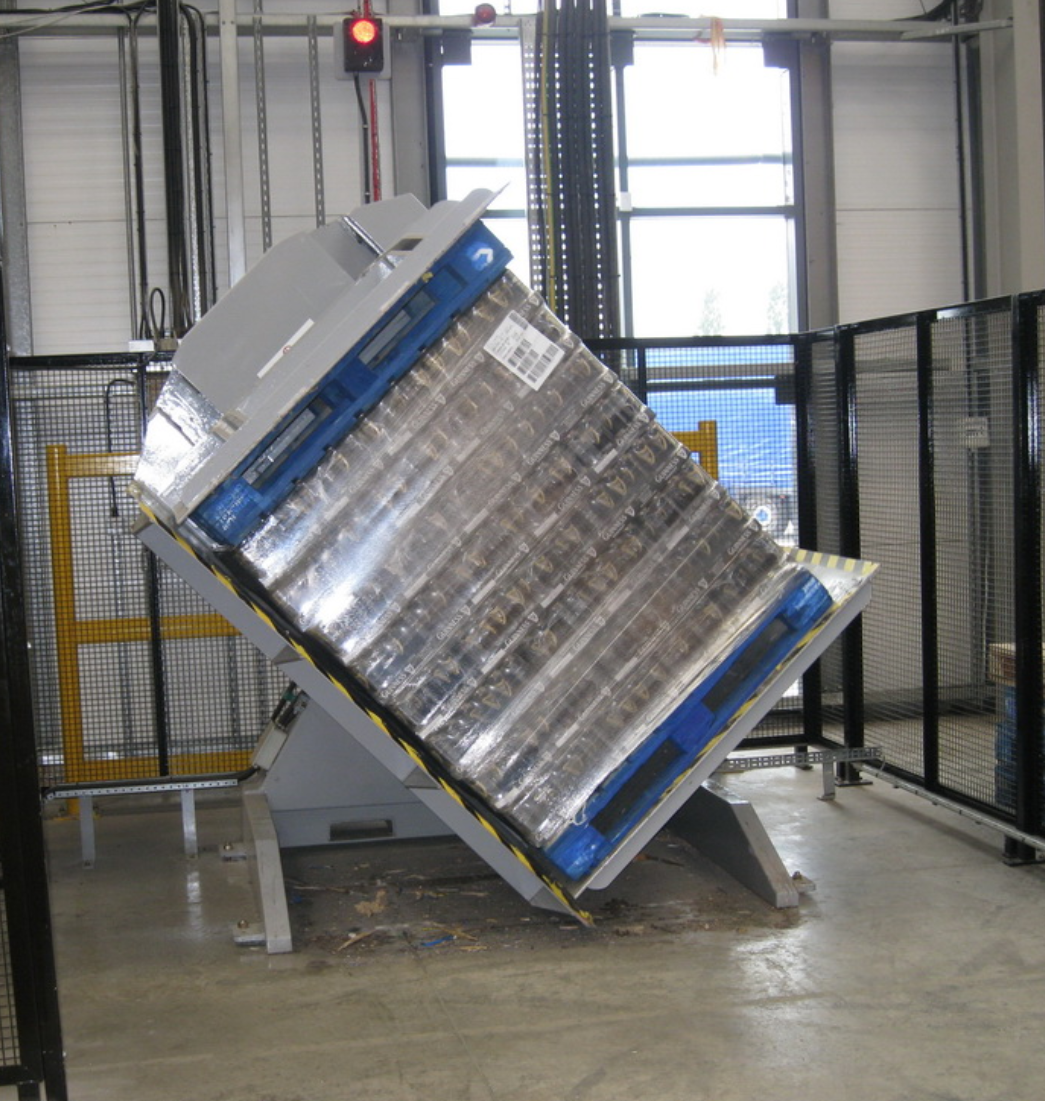
Pallet changers, also known as pallet exchangers or pallet transfer systems, are crucial pieces of equipment in modern intralogistics and manufacturing environments. Their primary function is to transfer goods from one pallet to another automatically or semi-automatically.1 This process is essential for various reasons, including switching between pallet types (e.g., wood to plastic for hygiene reasons in the pharmaceutical or food industries), transferring loads to and from in-house pallets to shipping pallets, or replacing damaged pallets.1 By automating this task, pallet changers enhance operational speed, efficiency, and safety, while reducing manual labor and potential product damage.2
The applications of pallet changers are diverse, spanning warehouse storage systems, material flow control, palletizing systems, and integration into inbound and outbound stages of a warehouse.1 They are particularly vital in industries with stringent hygiene regulations, such as pharmaceuticals and food and beverage, where the transition from external wooden pallets to internal plastic or metal pallets is a common requirement.1 Furthermore, in CNC machining environments, automatic pallet changers (APCs) play a pivotal role in minimizing spindle downtime by allowing new workpieces to be set up while the machine is operational, thereby significantly boosting productivity.3
The market for pallet changers and related palletizing equipment is experiencing robust growth, driven by increasing automation in industries, the rise of e-commerce, and the need for more efficient and safer material handling solutions.4 This report provides a detailed price analytics overview for pallet changers, examining the cost structures for various types, factors influencing pricing, total cost of ownership (TCO), return on investment (ROI) considerations, and market trends.
2. Types of Pallet Changers and Their Applications
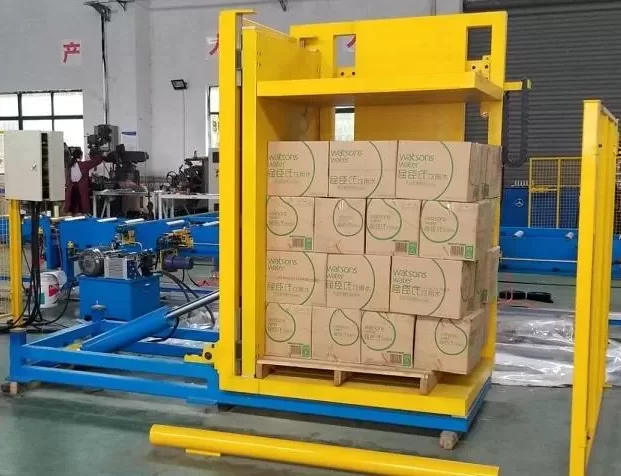
Pallet changers are categorized based on their level of automation, operational method, and specific application. Understanding these types is fundamental to analyzing their price points and value propositions.
2.1. Based on Automation Level:
- Manual Pallet Changers: These systems require human intervention for most, if not all, pallet-changing operations.[^3, ^4] They are typically simpler in design, more affordable, and suitable for smaller factories or operations with low pallet handling volumes and limited budgets.[^3, ^4] Manual systems often require little electronic servicing or power.5 MIDACO, for instance, offers manual pallet changer systems including Micro Pallet Systems with manual lift-off and front-load shuttle systems.6
- Semi-Automatic Pallet Changers: These represent a middle ground, with some parts of the process automated while others still require manual effort.5 They are suited for mid-sized factories with moderately busy operations and offer a balance between cost and automation.5
- Fully Automatic Pallet Changers: These systems handle all pallet-changing operations without human intervention and are typically employed in large warehouses or high-volume production lines.[^1, ^3, ^4] They necessitate a more significant investment and power but deliver maximum speed and efficiency.[^3, ^4] Fully automated systems can be integrated with conveyors and other warehouse management systems.[^1, ^3]
2.2. Based on Operational Method (Warehouse/Logistics Focus):
- Sliding Pallet Changers (Push/Pull Type): These machines transfer goods by sliding them horizontally from one pallet to another. A sliding wall or push plate moves the items, often after the load is stabilized by side support walls.1 This method is suitable for a variety of items, including cartons, trays, barrels, and cans.1 The SMB Sliding Pallet Changer, for example, can perform up to 80 pallet exchanges per hour.1 Meijer Handling Solutions also offers stationary pallet changers using the pushing method.7
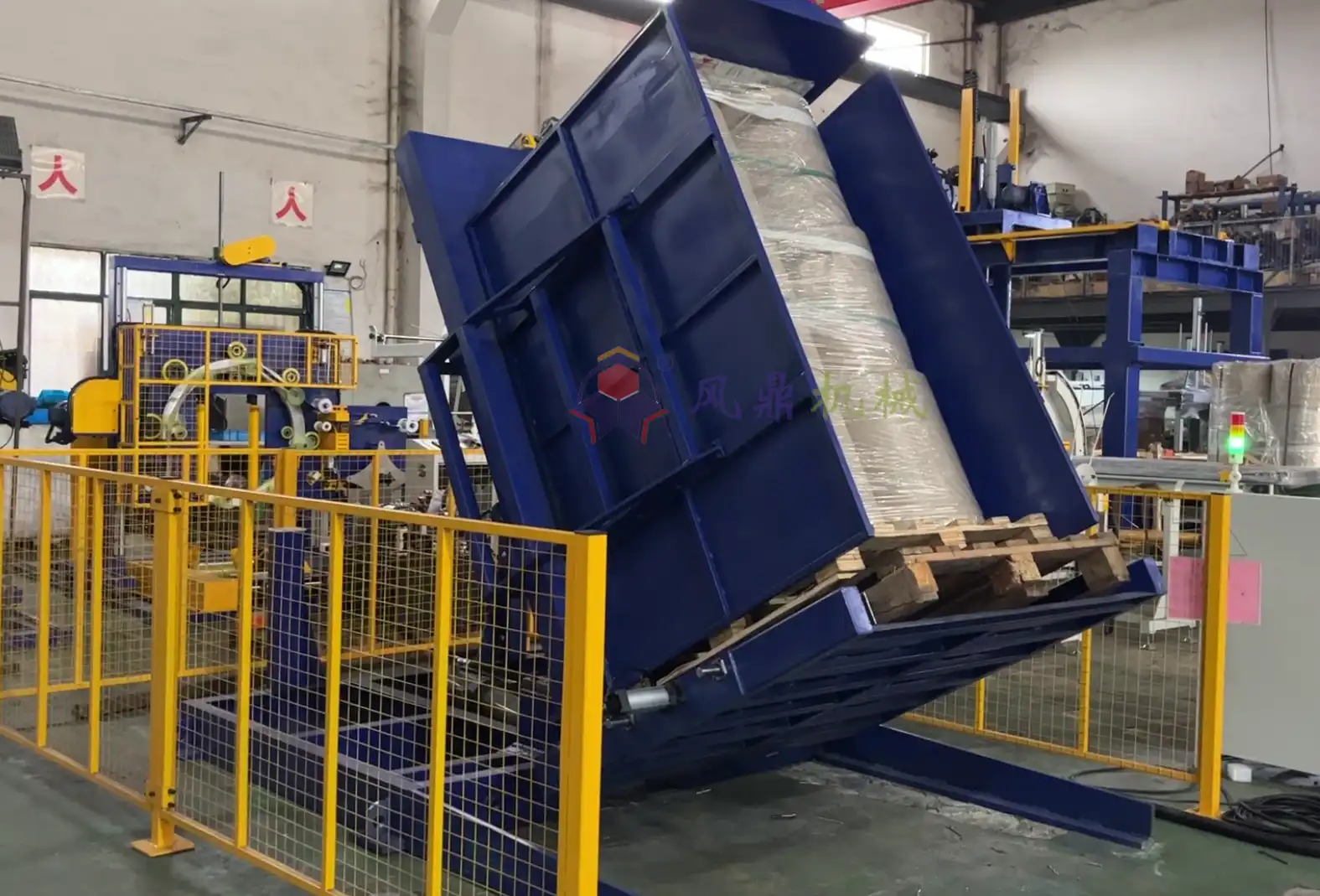
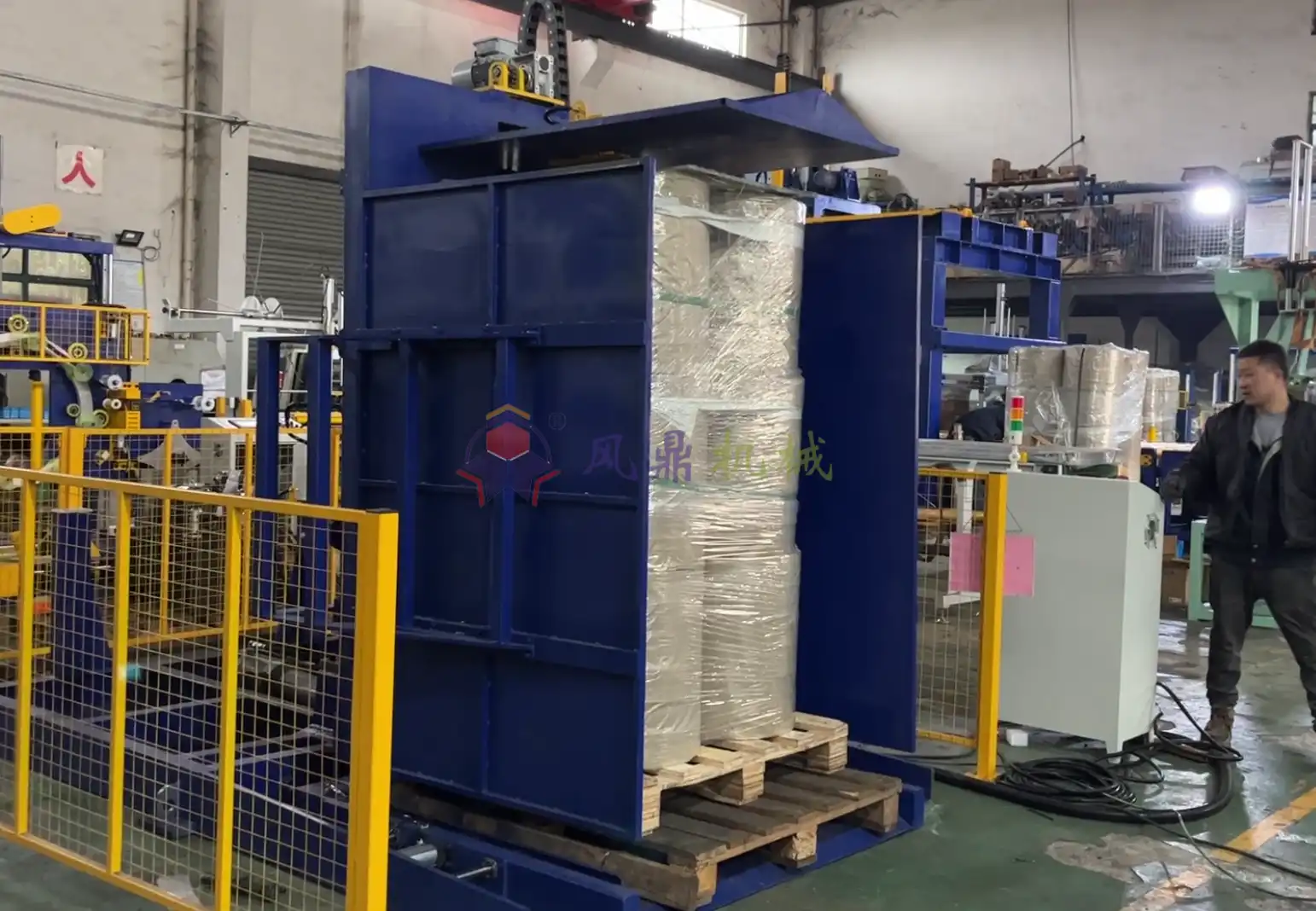
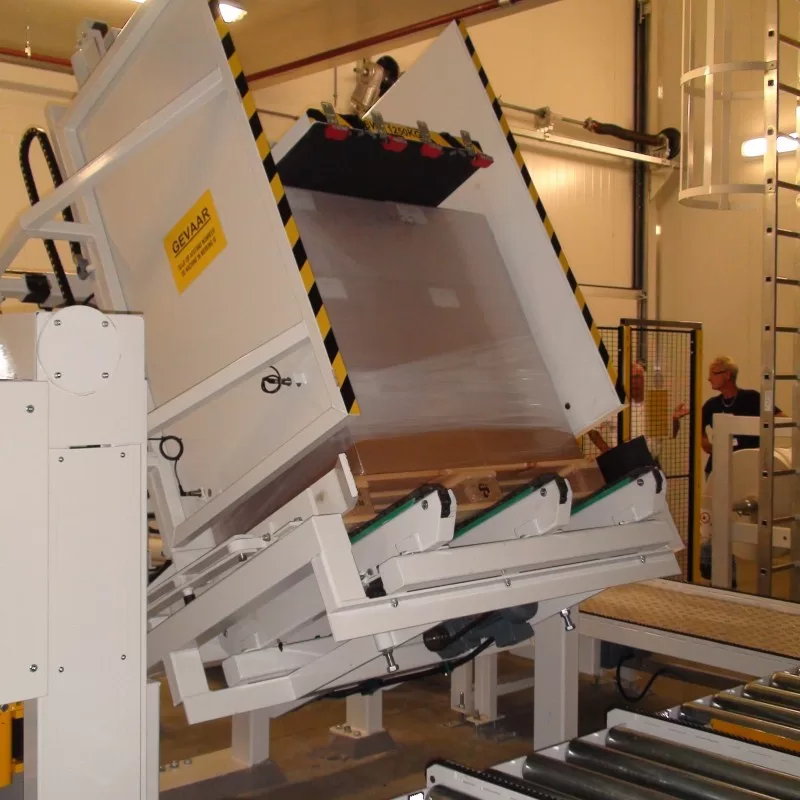
- Tilting Pallet Changers (Pallet Inverters): These systems gently tilt or rotate the load (often 90 or 180 degrees) to allow the original pallet to be removed and a new one inserted.[^1, ^4] This method is ideal for delicate, unstable, or pressure-sensitive goods as the cargo is not compressed or slid.[^1, ^2] Examples include the SMB Tilting Pallet Changer (up to 1,500 kg capacity) and various models from Toppy, Cherry’s Industrial, and Premier Handling Solutions.[^1, ^2, ^12, ^13, ^14, ^15] Pallet inverters can also be used to access and replace damaged goods at the bottom of a load or transfer loads to slip sheets.8
- Clamping Pallet Changers: These machines use clamps to secure the load from the sides (or top and bottom) while the pallet is exchanged. Cherry’s Industrial PC Model gently cradles the load on three sides, and their DV Changer uses a “V” basket and adjustable clamping plate.2 Baust offers pallet changers with side clamping, suitable for robust goods, capable of up to 50 changes per hour.[^16, ^17]
- Rotating Pallet Changers: These allow the pallet to be rotated 90 degrees or more, offering flexibility in orientation changes. They are used in industries with complex manufacturing workflows like automotive and aerospace and can combine changing, turning, and rotating in one operation.5
2.3. CNC Machining Center Pallet Changers:
- Automatic Pallet Changers (APCs) for VMCs/HMCs: These systems are integrated with CNC Vertical Machining Centers (VMCs) or Horizontal Machining Centers (HMCs) to automatically swap pallets holding workpieces. While one pallet is being machined, the operator can set up the next workpiece on the other pallet outside the machine, drastically reducing spindle idle time.[^5, ^6, ^10, ^18, ^19, ^20, ^21, ^22, ^23] MIDACO is a prominent manufacturer of such systems, offering solutions for various CNC brands, including Haas.[^5, ^6, ^18, ^19] Parkson also offers APCs for vertical and horizontal machining centers.9
- Pallet Pool Systems: These are more advanced automation systems often connected to one or more CNC machines, featuring a larger number of pallets (e.g., 4, 6, 8, 10, or more) stored in a magazine or on a shuttle system.[^5, ^24, ^25, ^26] They enable extended periods of unattended machining (“lights out” production) and are a key component of Flexible Manufacturing Systems (FMS).[^5, ^25, ^26] MIDACO offers 4-Pallet Pool systems for VMCs.[^5, ^27] Matsuura’s MX-330 PC10 features 10 pallets.10 Mazak’s PALLETECH system is another example.11
- Manual CNC Pallet Changers: Simpler systems for CNC machines, like MIDACO’s Micro Pallet System or SCHUNK’s VERO-S quick-change pallet system, allow for rapid manual exchange of pre-fixtured pallets, reducing setup time compared to changing individual parts directly on the machine table.[^10, ^18, ^28, ^29, ^30]
2.4. Specialized Pallet Changers:
- Turnover Pallet Changers: Specifically designed to flip pallets over, often used in food/beverage, pharmaceuticals, and electronics where the load itself might need to be inverted or accessed from the bottom.5
- Layer Pickers: While not strictly pallet changers, these systems can pick layers of products from one pallet and transfer them to another, often used in distribution for mixed pallet building.12
- Pallet Dispensers/Stackers: These systems automatically dispense empty pallets to, or stack empty pallets from, a pallet changer or palletizing station, further automating the overall process.[^2, ^32, ^33, ^34, ^35]
The choice of pallet changer type is dictated by factors such as the type of goods being handled (fragile, robust, bulk), volume of goods, required speed, integration with existing intralogistics, budget, and specific industry requirements like hygiene or cleanroom standards.1
3. Key Specifications Influencing Pallet Changer Price
The price of a pallet changer is not a monolithic figure; it is influenced by a confluence of technical specifications, features, and market dynamics. Understanding these factors is crucial for buyers to align their investment with operational needs and budget constraints.
3.1. Load Capacity and Size:
The maximum weight and dimensions of the pallet loads a changer can handle significantly impact its design, materials, and consequently, its price.5 Standard load capacities typically range from 1,000 kg to 3,000 kg 5, but specialized heavy-duty models can handle much more (e.g., MIDACO CNC APCs up to 32,000 lbs / ~14,528 kg 13, Nimo-KG RR1 pallet inverter up to 10,000 kg 14).
Heavier load capacities necessitate more robust frame construction, stronger actuators (hydraulic or electric), and more powerful motors, all contributing to a higher price point. For example, MIDACO offers automatic systems with capacities from 500 lb (227 kg) up to 32,000 pounds (14,528 kg), indicating a wide range of structural and power component differences that would correlate with price.15 Similarly, pallet size compatibility (e.g., standard Euro pallets, GMA pallets, or custom sizes) also influences design complexity and cost.16
3.2. Automation Level and Control Systems:
The degree of automation is a primary price differentiator.
- Manual systems, being the simplest, are the most affordable.17
- Semi-automatic systems introduce some powered components and basic controls, placing them in a mid-tier price range.5
- Fully automatic systems involve sophisticated PLCs, sensors, actuators, and often integration with broader warehouse management systems (WMS) or manufacturing execution systems (MES), leading to higher investment costs.1 For CNC applications, integration with the machine tool’s control panel, often using M-functions, is standard for automatic systems.13 The complexity of the control system, including user interfaces (e.g., touchscreen HMI 2), safety interlocks, and programming capabilities, directly adds to the cost.
3.3. Speed and Throughput (Cycle Time):
The rate at which a pallet changer can complete a cycle (pallets per hour or minute) is a critical performance metric and a cost driver.1 Higher speeds generally require more powerful motors, faster actuators, and more precise control systems, which increases the price.
For instance, SMB Sliding Pallet Changers can perform up to 80 pallet exchanges per hour.1 Cherry’s Industrial LT model can handle up to 60 pallets per minute, while their DV-PE96 model handles up to 30 pallets per hour.2 Toppy’s Easy Changer is rated at 60 pallets per hour.12 Baust pallet changers offer performance up to 50-60 changes per hour depending on the method.18 Faster cycle times are crucial for high-volume operations and contribute to a quicker ROI by maximizing throughput 19, justifying a higher initial investment.
3.4. Construction Materials and Durability:
Pallet changers are typically manufactured from steel for strength and stability, often coated to prevent rust.5 Heavy-duty construction using high-quality materials ensures longevity and better long-term returns, though it increases the initial price.2
For specific industries like food and beverage or pharmaceuticals, stainless steel construction is often required for hygiene and corrosion resistance.5 Stainless steel is significantly more expensive than standard steel, leading to a notable price premium for food-grade or pharmaceutical-grade pallet changers.20 For example, while standard steel pallets are cost-effective, plastic or stainless steel pallets preferred for sanitary environments are “much more expensive”.20 This material premium extends to the machinery handling them. The 25% tariffs on steel and aluminum also directly impact manufacturing costs, which can be passed on to consumers.21
3.5. Safety Features:
Advanced safety features, while essential for protecting personnel and products, can add to the cost. These include:
- Light Curtains: Create an invisible barrier; if breached, the machine stops. This is an optional feature on MIDACO Automatic Pallet Changer Systems and helps meet CE compliance.3
- Fixed Guarding/Safety Fencing: Physical barriers to prevent access to moving parts, common on fully automated systems.22
- Emergency Stop Buttons and Interlocking Doors: Standard safety mechanisms.23
- Pressure/Load-Sensitive Settings: Adjust machine operation based on product type to prevent damage, especially for fragile items.2 While these features increase the upfront cost, they contribute to a safer working environment and can reduce long-term costs associated with accidents and product damage.2
3.6. Customization and Additional Features:
Standard models form the baseline price, but customization to meet specific operational needs will incur additional costs.2
Examples of customizations and add-ons include:
- Specific Pallet Size/Type Handling: Adapting the machine for non-standard pallets or specialized load carriers.16 Logimarkt offers customization for EURO, INDUSTRY, and custom-sized pallets, including GMA pallets.16
- Integration with Conveyors or AGVs: For seamless material flow in automated lines.1 Adding a simple conveyor can range from $50-$400 per meter for the belt/chain itself, with system installation costs from $5,000 to over $200,000 depending on complexity.24
- Automatic Pallet Dispensing/Stacking: Integrating pallet dispensers or stackers adds to the system’s cost but improves automation.2 Automatic pallet dispensers can range from $3,600 – $15,850+, with some complex systems reaching $100,000.25 The ROI can be quick due to labor savings.26
- Integrated Stretch Wrapping: Some advanced pallet exchange lines incorporate automatic stretch wrappers, adding to the overall system cost and complexity.27 A pallet wrapper with an integrated scale can cost around $10,995, with options like data collection software adding hundreds more.28 An integrated pallet strapper and stretch wrapper machine is listed at $13,000-$15,000.29
- Special Environmental Requirements: Such as explosion-proof modifications for hazardous environments, which significantly increase cost. An explosion-proof pallet jack scale, for example, costs around $6,923, compared to a standard version at $1,304-$2,512.30
- IoT Connectivity and Advanced Software: Smart features for real-time monitoring, data analytics, and predictive maintenance add value but also increase the initial price.31 The cost of IoT hardware (sensors, gateways) can range from hundreds to tens of thousands of dollars, with connectivity and cloud services adding recurring costs.32 The premium for customization is justified when standard models cannot meet unique operational demands or when the long-long-term efficiency gains outweigh the initial higher investment. Cherry’s Industrial, for example, explicitly states they offer budget-friendly custom solutions when stock changers won’t suffice.33
3.7. Brand and Manufacturer Reputation:
Established brands with a long history of reliability and service often command higher prices.34 This premium is associated with perceived lower risk, better build quality, proven technology, and more comprehensive after-sales support. Newer or less-established manufacturers, particularly those listed on platforms like Alibaba, may offer lower prices but might entail compromises on build quality, component robustness, or support levels.5
4. Price Benchmarking and Ranges
Pallet changer prices vary extensively based on the type, specifications, and whether the equipment is new or used. This section provides indicative price ranges to help potential buyers understand the investment levels required. Note: Prices are subject to change based on manufacturer, specific configuration, exchange rates, and market conditions. USD conversions for EUR prices are approximate.
4.1. New Pallet Changers:
The following table provides an overview of indicative price ranges for new pallet changers, categorized by type and key features.
| Pallet Changer Type/Sub-Type | Typical Load Capacity Range | Indicative New Price Range (USD/EUR) | Key Features Driving Price | Example Models/Brands (if available) |
|---|---|---|---|---|
| Manual – Basic Warehouse | 1,000 – 1,500 kg | $3,000 – $8,000 | Simplicity, hand operation, basic construction | Generic models on Alibaba 5 |
| Manual – CNC Micro System | Up to 227 kg (500 lbs) for shuttle; Micro systems for smaller parts | $6,500 – $20,000+ | Precision for CNC, quick manual changeover, specific mounting | MIDACO Micro Pallet System MPS31 ($6,500) 35; MIDACO Manual Shuttle Systems (starting ~ $20,000) 36 |
| Semi-Automatic – Warehouse | 1,000 – 2,000 kg | $15,000 – $40,000 (Estimate) | Partial automation, powered assistance, moderate speed | Generic models 5 |
| Automatic – Warehouse Standalone (e.g., Inverter, Tilter, Pusher) | 1,000 – 2,000 kg (common); up to 10,000 kg (specialized) | $20,000 – $70,000+ ; €25,000 – €36,000+ | Full automation, higher speed, specific transfer method (tilt, push), safety features, PLC controls | Toppy Easy Changer (€30,000) 12; Toppy Maxi Toppy (from €25,000) 37; Toppy Falcon Wings (€36,000) 38; Vestil Portable Pallet Inverter 3K ($22k-$29k) 39; Southworth PalletPal SR-44 series ($50k-$70k) 40; Cherry’s Industrial (Quote-based) 2; Premier Handling Solutions (Quote-based) 22 |
| Automatic – Inline/Integrated System (Warehouse/Logistics) | 1,000 – 2,000+ kg | $50,000 – $250,000+ (Can be much higher for complex lines) | Full line integration, conveyors, pallet dispensers, stretch wrappers, high throughput, advanced controls | Toppy (custom) 41; Cherry’s LT Model with options 2; Baust PW 6000 18 |
| Automatic – CNC Integrated Shuttle (APC) | 227 kg – 14,500+ kg (500 lbs – 32,000+ lbs) | $20,000 – $100,000+ (as machine add-on or standalone integration) | CNC machine integration, high precision, fast exchange, servo drives, safety guarding | MIDACO (Quote-based, e.g., A30SD, A40SD) 3; Haas APC add-on ($4,999 by one vendor, likely very basic or specific part) 42; SCHUNK VERO-S components ($2.7k-$14.6k per major component) 43 |
| Automatic – CNC Pallet Pool (e.g., 4-10+ pallets) | Varies by machine size | $100,000 – $800,000+ (Often a significant portion of total FMS cost) | Multi-pallet capacity, extended unmanned operation, FMS integration, sophisticated scheduling software | MIDACO 4-Pallet Pool 3; Matsuura MX-330 PC10 10; Mazak PALLETECH 11; Fastems FMS (FMS for 3 VMCs ~$800k) 44 |
Light-duty pallet inverters (e.g., <1000 kg capacity) can be found in the lower end of the automatic warehouse standalone category, potentially starting from $6,750 – $8,750 for simpler electric models from some suppliers.45 However, established brands for similar capacities are likely to be higher.
Heavy-duty automatic pallet exchangers (>1500kg, inline) would fall into the higher end of the “Automatic – Inline/Integrated System” category, with prices escalating based on capacity, speed, and integration complexity. A 1500kg capacity electric pallet inverter is listed on Alibaba from $4,000-$4,800 46, while a 1.5-ton automatic electric pallet stacker (not a changer, but related complexity) is $2,699-$2,999.47 These prices from sourcing platforms often represent basic models from less established brands and may not include features or durability comparable to major manufacturers.
The wide price ranges underscore the importance of detailed needs assessment and obtaining multiple quotes. The initial cost of a Toppy Easy Changer, for example, is €30,000, but its operational cost per pallet change can decrease significantly over three years, highlighting the need to consider lifecycle costs.12
4.2. Used Pallet Changers:
The used market offers potential cost savings, but requires careful evaluation.
| Pallet Changer Type | Typical Age Range (if discernible) | General Condition Notes | Indicative Used Price Range (USD/EUR) | Factors Heavily Influencing Price | Example Listings (Manufacturer, Model, Price) |
|---|---|---|---|---|---|
| Automatic – CNC Integrated Shuttle | Varies (e.g., 2002, 2006, 2007, 2022 models listed) | “Used, Overall In Great Shape”, “signs of cosmetic wear, but fully operational” | $3,900 – $28,500+ | Age, condition (operational & cosmetic), hours of use (if CNC), brand, included pallets/features, seller reputation | MIDACO 30SD Automatic Pallet Changer ($3,900) 48; MIDACO 40SD ($12,500) 49; MIDACO “80SD” ($14,500) 50; 2022 Midaco A40SD ($28,500) 50; Used MIDACO AS50SD, A30SD, Series 40A, Series 30 (Prices on request) 51 |
| Automatic – Warehouse Standalone (Inverter/Changer) | Varies | Varies | $8,000 – $15,000+ (Highly dependent on model/brand/condition) | Age, condition, capacity, features, brand | 180 Degree Pallet Turner ($8,000, generic listing) 5; Cherry Industrial Hydraulic Pallet Clamp & Inverter ($12,500, used) 52; Used Premier FS 1900 (€14,000) 38 |
| CNC Multi-Pallet System / FMS Components | Varies (e.g., 2020, 2022 models listed) | Varies | $99,900 (8-station pallet changer) – $449,900+ (HMC with 6-pallet system) | Complexity, number of pallets, integration level, machine condition (if bundled) | Doosan AWC 8 Station Pallet Changer (2022, $99,900) 53; Okuma MB-5000HII HMC with 6 Pallet System (2020, $449,900) 54 |
| Manual / Basic Components | Varies | Varies | $280 – $1,000+ | Simplicity, completeness, condition | Pallet Changing Station (unspecified, $279.99) 55; MIDACO Series M20FL ($679) 50 |
Factors Affecting Used Prices:
- Condition: The primary determinant. Operational status, signs of wear on critical components (hydraulic systems, motors, electrical parts for warehouse types 56; spindles, ball screws, locating pins for CNC types 57), and cosmetic appearance all play a role.
- Age and Usage: Older machines or those with high operating hours (especially for CNC-integrated systems) will generally be priced lower.57
- Brand Reputation and Availability of Spares: Equipment from reputable manufacturers with good spare part availability may retain more value.58
- Included Features and Accessories: The number and type of pallets, guarding, control systems, and any integrated peripherals affect the price.
- Maintenance History: A well-documented maintenance history can increase a used machine’s value.58
- Market Demand: Current demand for specific types or brands of used pallet changers will influence pricing.58
Purchasing used equipment requires thorough due diligence, including physical inspection and, if possible, seeing the machine in operation. The significant price reduction must be weighed against potential risks of higher maintenance, lack of warranty, and technological obsolescence.
5. Total Cost of Ownership (TCO) and Return on Investment (ROI) Analysis
Evaluating the financial viability of a pallet changer extends beyond its initial purchase price. A comprehensive Total Cost of Ownership (TCO) analysis and a clear understanding of Return on Investment (ROI) are essential for making informed procurement decisions. TCO encompasses all direct and indirect costs incurred throughout the asset’s lifecycle, including acquisition, commissioning, operation, maintenance, and disposal.59 For industrial equipment, the initial purchase price can sometimes represent less than 10% of the TCO, with ongoing expenses like energy and maintenance being far more significant over time.60
5.1. Initial Investment Costs (Acquisition & Commissioning)
The initial outlay for a pallet changer includes several components:
- Purchase Price: This is the primary acquisition cost, benchmarked in Section 4.
- Site Preparation: This can be a substantial and often underestimated cost.
- Floor Loading: Stationary pallet changers, especially heavy-duty models, require a level, stable concrete foundation capable of supporting the machine’s weight and operational forces. The floor must be checked for obstructions (e.g., to a depth of at least 200mm) and be free of debris before installation.61 Standard commercial concrete slabs (4-6 inches thick) cost approximately $5-$12 per square foot, but thicker, reinforced slabs for heavy machinery will cost more.62
- Power Requirements: Automatic and semi-automatic pallet changers require specific electrical service, often 3-phase power.5 Electrical fit-out for a warehouse can range from $4-$9 per square foot.63 If a facility needs a new 3-phase/480V service (e.g., 200 amp), the cost from the utility company alone can be $30,000 or more, excluding internal wiring and panel upgrades.64 Pallet changers may incorporate motors ranging from around 0.65 kW for lighter electric pallet movers to 5 kW or more for hydraulic pumps in larger inverters (e.g., Cherry’s PSR-90 uses a 5 HP / ~3.7 kW motor 65; VLIFT 1500kg pallet inverter uses a 5kW electric pump 66).
- Compressed Air: Some pallet changers, particularly pneumatic types or those with air blast cleaning features (like MIDACO’s “Dual Air Blast” for CNC applications 13 or the Pierson PPS requiring 100psi 67), require a compressed air supply. Compressed air is a significant utility cost, potentially accounting for 10-30% of a facility’s electricity consumption.67 The TCO of a compressed air system itself is high, with the initial compressor purchase being only about 10% of its lifecycle cost.68
- Installation and Commissioning (Cc): Costs vary greatly with system complexity. Simple manual changers may only require placement and anchoring. Automated systems involve professional installation, electrical wiring, PLC programming, sensor calibration, safety system setup, and integration with existing lines or CNC machine tools.1 This can range from a few thousand dollars for basic setups to tens or even hundreds of thousands for complex, integrated lines. For instance, palletizing robot installation can cost $5,000-$20,000, with integration adding another $10,000-$50,000.34 Building commissioning typically ranges from 0.5% to 2% of the total project cost.69
- Freight and Shipping: The cost of transporting heavy industrial machinery can be considerable, influenced by distance, weight, dimensions, and fuel surcharges.70 These costs must be included in the landed cost of the equipment.
- Software Licensing and Initial Training: Advanced systems, particularly CNC-integrated APCs or FMS, often require specialized software and control systems (e.g., Mazak’s PMC NEO 11), which may have licensing fees.71 Operator and maintenance training is crucial for safe and efficient use. Online pallet jack operator training can cost $59-$80 per person.72 More specialized training for CNC or robotic systems can range from $400/day per attendee to $1,950/day for on-site training, or $1,000-$5,000 per operator for robotic palletizers.34








