
An Executive Report on Multilevel Coil Storage Systems: A Strategic Analysis of Solutions, Compliance, and Financial Viability
Executive Summary

Purpose and Scope
This report provides a comprehensive decision-making framework for industrial leaders evaluating investments in multilevel coil storage systems. It addresses the critical challenges inherent in traditional coil storage—such as floor stacking—and presents a detailed analysis of modern solutions, from basic static racking to fully integrated Automated Storage and Retrieval Systems (AS/RS). The scope encompasses a technical comparison of system architectures, a thorough examination of regulatory and safety compliance, and a robust financial analysis of costs, Total Cost of Ownership (TCO), and Return on Investment (ROI). The objective is to equip operations directors, plant managers, and capital project managers with the data and analysis necessary to select, justify, and implement the optimal coil storage solution for their specific operational context.
Key Findings
The analysis has yielded several critical findings that should guide any investment decision in this area:
- Fundamental Trade-Offs: A clear and unavoidable trade-off exists between storage density, inventory selectivity, and capital cost. High-density systems like double-deep or automated solutions maximize space but may limit direct access to every coil, whereas selective racking offers 100% access at the cost of a larger footprint.1
- The Primacy of Structural Engineering: For heavy coil applications, particularly in seismically active regions like California, the choice between lower-cost roll-formed steel and heavy-duty structural I-beam racking is a pivotal strategic decision. The superior durability, impact resistance, and load capacity of structural steel often result in a lower Total Cost of Ownership, despite a higher initial investment, by mitigating risks of damage, downtime, and non-compliance with stringent building codes.2
- The Transformative Potential of Automation: Automated Storage and Retrieval Systems (AS/RS) represent the apex of coil storage technology, capable of handling massive loads up to 75,000-80,000 lbs.2 These systems deliver transformative ROI by drastically increasing storage density, maximizing throughput, reducing labor requirements, and virtually eliminating product damage. The investment is substantial, often exceeding $1 million, but the operational gains can be equally significant.3
- Financial Viability and ROI: The financial case for advanced storage systems is compelling. While initial costs range from a few thousand dollars for basic floor components to several million for a full AS/RS, the ROI is driven by the reduction of hidden costs associated with inefficient, unsafe storage. Case studies and financial models demonstrate that payback periods for automation can be as short as 6 to 18 months, with TCO analyses showing modern systems can save hundreds of thousands to millions of dollars over their operational life compared to outdated methods.4
Strategic Recommendations
The selection of a multilevel coil storage system should not be viewed as a simple equipment purchase but as a strategic investment in operational efficiency, safety, and capacity. It is recommended that decision-makers adopt a phased, data-driven approach. The first step should be a thorough audit of the current operation’s “hidden costs”—wasted floor space, inventory damage rates, labor inefficiencies, and safety liabilities. This baseline data is crucial for building a powerful business case. The final selection should be guided by a clear understanding of the facility’s specific operational profile, including throughput requirements, inventory mix, and long-term growth strategy, using the analytical frameworks provided in this report.
The Strategic Imperative for Advanced Coil Storage
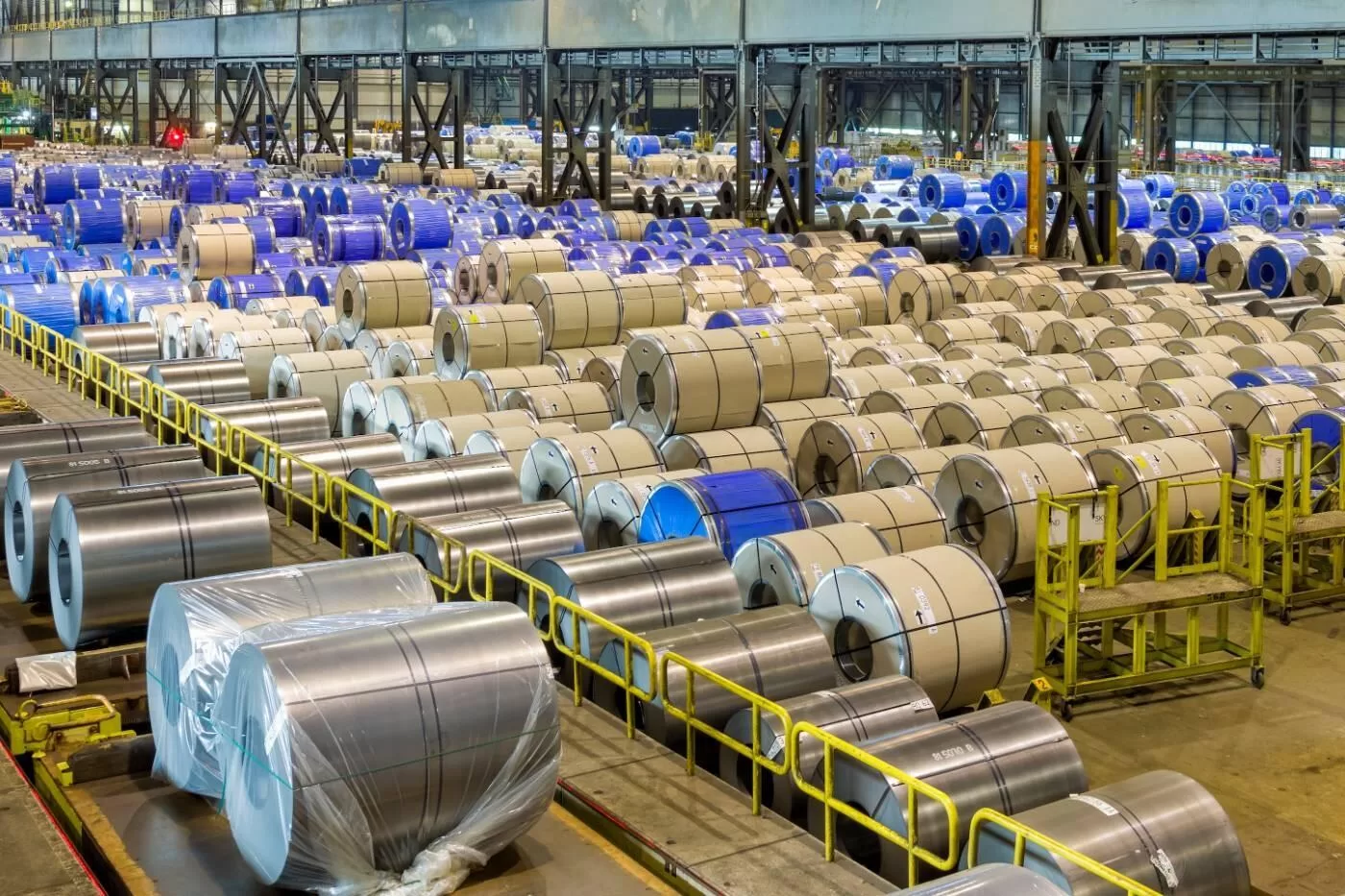
The method by which a facility stores its metal coils is a foundational element of its operational and financial health. Traditional methods, often born of necessity rather than design, carry significant and often underestimated costs that directly impact safety, productivity, and profitability. Transitioning to a dedicated, engineered multilevel storage system is a strategic decision that addresses these inherent flaws and unlocks substantial value.
The Inherent Risks and Inefficiencies of Traditional Methods
For decades, the default method for storing heavy coils has been to place them directly on the warehouse floor, sometimes stacked in pyramids or chocked with simple wood blocks.4 While seemingly simple, this approach creates a cascade of inefficiencies and risks.
- Space Inefficiency: Floor storage is the least efficient use of warehouse space. By failing to utilize the vertical cube of the building, it consumes vast amounts of valuable floor area that could otherwise be allocated to revenue-generating activities like manufacturing or assembly.2 This spatial inefficiency can force companies into premature and costly facility expansions.5
- Product Damage: Coils are high-value assets that are exceptionally vulnerable when stored improperly. Contact with concrete floors can lead to moisture absorption and corrosion. The immense weight in a pyramid stack can cause creasing, flattening, and edge damage to the coils at the bottom.2 Furthermore, the constant need to move coils to access others increases the likelihood of impact damage. This material degradation translates directly to reduced yield and lost revenue.6
- Operational Inefficiency: The lack of direct access to every coil is a primary source of operational waste. To retrieve a specific coil buried in a stack, operators must first move several other multi-ton coils out of the way. This process, often called “honeycombing,” is a non-value-added activity that consumes significant time, labor, and equipment hours, creating a major bottleneck in the workflow from inventory to production.7
- Safety Hazards: Unsecured, floor-stacked coils represent one of the most significant safety hazards in an industrial environment. Their cylindrical shape makes them inherently unstable and prone to rolling or tipping, especially if the floor is uneven or if they are bumped by handling equipment.2 A rolling multi-ton coil can cause catastrophic damage to equipment and infrastructure and poses a lethal threat to personnel. This liability is a central concern of regulatory bodies like the Occupational Safety and Health Administration (OSHA).8
Core Benefits of Dedicated Multilevel Storage Systems
Investing in an engineered multilevel coil storage system is the definitive solution to the problems of traditional methods. The benefits extend beyond simple organization and touch every aspect of the operation.
- Optimized Space Utilization: The most immediate benefit is the conversion of unused vertical air space into productive storage capacity. By stacking coils safely on multiple levels, facilities can dramatically increase their storage density, often doubling or tripling the amount of material stored within the same footprint.9 This frees up valuable floor space, enhances workflow, and can postpone or eliminate the need for a capital-intensive building expansion.
- Enhanced Safety and Security: Engineered racking systems are designed and constructed specifically to provide stable, secure support for heavy, cylindrical loads. Features like custom-fit cradles, roll stops, and robust structural frames prevent coils from shifting or rolling, drastically reducing the risk of accidents.2 This proactive approach to safety not only protects employees but also ensures compliance with OSHA’s mandate for the secure storage of tiered materials.10
- Improved Inventory Management and Selectivity: A structured racking system allows each coil to be assigned a specific, designated location. This facilitates precise inventory tracking and management.11 Systems like selective racking provide 100% selectivity, meaning any coil can be accessed directly without moving others. This is critical for operations with a high mix of products and enables efficient inventory rotation strategies like “first-in, first-out” (FIFO) to prevent material aging.11
- Increased Productivity and Throughput: The combination of improved organization and direct accessibility dramatically reduces the time required to retrieve a specific coil. What previously took extensive maneuvering of multiple coils can be reduced to a single, efficient lift. This minimizes downtime for production lines waiting on material and accelerates the shipping process, directly boosting overall plant productivity and throughput.6 The logical progression is clear: the hidden costs of floor storage—wasted space, damaged inventory, inefficient labor, and safety liabilities—are not just operational annoyances; they are quantifiable financial drains. A multilevel racking system is engineered to directly counteract each of these drains. Therefore, the financial justification for such an investment should not be measured against its purchase price alone, but against the substantial and continuous costs it eliminates. A comprehensive audit of the current costs associated with floor storage provides a powerful and compelling baseline for calculating the return on this strategic investment.
Manual and Semi-Automated Racking Solutions

For facilities transitioning from floor storage or upgrading existing systems, a wide array of manual and semi-automated racking solutions offer a spectrum of capabilities balancing density, selectivity, and cost. The selection process requires a careful analysis of the specific coil types, handling processes, and structural requirements of the operation.
Comparative Analysis of Racking System Architectures
The architecture of a coil racking system dictates its fundamental performance characteristics. Each design offers a unique combination of benefits and trade-offs tailored to different operational needs.
- Standard Coil Storage Racks: Often adapted from conventional selective pallet racking, these systems consist of vertical upright frames connected by horizontal load beams.11 To accommodate coils, the beams are fitted with specialized cradles or supports. Their primary advantage is 100% selectivity, allowing direct and immediate access to every coil stored. This makes them ideal for operations with a high number of different stock-keeping units (SKUs) but a relatively low volume of each.1 However, this high selectivity comes at the cost of lower storage density, as a separate aisle is required for each row of racks.
- Coil Cradles and Modular Systems: These systems focus on providing tailored support for individual coils.
- Steel Cradles: These are V-shaped or curved supports, typically constructed from steel angles or round tubes, that are mounted onto the rack beams.9 They are designed to support the coil at its core or along its circumference, preventing the coil from rolling and minimizing the risk of deformation.2 Many systems, like those from Dexco, feature full-depth cradles that can handle a wide range of coil sizes and weights, with adjustability to accommodate changing inventory needs.2
- Polymeric Systems: An innovative alternative to steel, these systems use components made from high-strength, ductile recycled plastics.12 Lankhorst Mouldings’ KLP® line, for example, includes modular components like the RollStop System, which uses rails and individual stops to secure coils up to three levels high, and the CoilWedge System, which uses long wedged beams suitable for both wide and narrow slit coils up to two levels high.12 These systems are prized for their flexibility, ease of installation (often without bolting to the floor), and their non-damaging contact surfaces. Specialized versions are available for high-temperature coils (up to 110°C) and for outdoor use with corrosion-resistant components.12
- Slit Coil Racks: Storing slit coils—narrow strips cut from a master coil—presents a unique stability challenge. Standard coil cradles are often dangerously inadequate. Specialized slit coil racks feature dividers or deep compartments that provide lateral support to prevent the tall, narrow coils from tipping over.11 It is a critical safety point that slit coils should not be stored in standard coil racks unless explicitly engineered for that purpose. Safe alternatives include storing them “eye to the sky” on pallets within a pallet rack or using dedicated, often floor-mounted, slit coil storage units.13
- Vertical Coil Racks: These systems store coils in a vertical, or “eye to the sky,” orientation.11 This approach is highly effective for maximizing the use of vertical warehouse height and is particularly well-suited for storing long or narrow coils that would be unstable or awkward to store horizontally.
- High-Density Racking: For operations prioritizing storage capacity over individual access, high-density designs are employed.
- Double-Deep Coil Racks: This configuration places one row of racking directly behind another, allowing coils to be stored two-deep from the aisle.9 This can nearly double the storage capacity of a given area compared to selective rack, but it reduces selectivity to 50% (the front coil must be moved to access the back coil) and requires the use of specialized deep-reach forklifts.14 These systems are robustly designed, often with four beams per level (one front, two interior, one back) to support the heavy loads.9 The following table provides a comparative overview of these manual and semi-automated systems.








