
Innovative Approaches to Automated Steel Coil Packing Lines
Exporting heavy, valuable steel coils presents immense logistical and protective challenges. Manual packing methods are slow, labor-intensive, and often result in inconsistent protection, leading to costly damage and claims in transit. Innovative automated packing lines are transforming this critical stage, delivering precision, speed, and reliability previously unattainable.
Innovative automated steel coil packing lines integrate robotics for precise handling, intelligent vision systems for quality control, and seamless connectivity with upstream/downstream processes. They employ specialized materials like advanced VCI films and reinforced wraps applied with machine precision, dramatically boosting efficiency, reducing labor costs, minimizing damage, and ensuring coils arrive in optimal condition for global distribution.
Moving steel coils from production to shipment requires a packaging process that is not only robust but also highly efficient. The evolution from manual to automated systems represents a significant leap, addressing long-standing issues of speed, safety, and consistency. Let’s delve into the specific technological advancements making this possible.
Automated Handling: Precision, Safety, and Throughput
Handling massive, multi-ton steel coils is inherently challenging. The sheer weight and awkward shape make manual manipulation slow, physically demanding, and fraught with safety hazards. Automating this process is fundamental to increasing efficiency and reducing the risk of workplace injuries or costly product damage.
Robotic coil handling systems in automated packing lines leverage advanced robotics to lift, rotate, and precisely position heavy steel coils weighing up to 35 tons. Equipped with specialized end effectors and integrated with vision systems, these robots ensure safe, damage-free manipulation from production exit to the final packed state. This automation eliminates hazardous manual tasks, streamlines material flow, reduces labor requirements, and achieves consistent, high-speed throughput rates exceeding 20 coils per hour in some configurations, a stark contrast to manual handling limitations.

The integration of robotic systems into coil packing lines has revolutionized the initial stages of the process. Instead of overhead cranes with manual operators struggling with slings or hooks, articulated robotic arms or heavy-duty gantry robots equipped with custom end effectors (like C-hooks, core grippers, or magnets) take over.
Robotic Systems and End Effectors
Robots can be programmed to handle coils of varying sizes and weights with repeatable precision. Laser or vision sensors integrated with the robots allow them to accurately locate the coil’s position and orientation, adjust their grasp, and place the coil onto conveyors, wrapping stations, or pallets. This minimizes the chance of collisions or dropping the load, which is a major cause of damage in manual operations.
Integrated Vision and Control
Advanced control algorithms enable robots to perform complex maneuvers required for efficient packing, such as rotating the coil for horizontal or vertical wrapping or precisely positioning it on a pallet for strapping. Integration with the overall packing line control system ensures smooth transitions between handling steps and synchronization with other automated equipment.
Safety and Ergonomics
Automating coil handling moves operators away from heavy, moving loads, significantly reducing the risk of crushing injuries or accidents related to manual lifting and manipulation. This creates a safer work environment, lowers insurance costs, and improves overall employee well-being.
Impact on Throughput
One of the most dramatic impacts of automated handling is the increase in throughput. As noted in the source material, manual packing might achieve 1 coil per hour per operator, whereas automated lines can reach speeds of 20 or even 30 coils per hour with minimal supervision. This speed is critical for high-volume production facilities aiming to clear production lines efficiently.
| Feature | Manual Handling | Automated Handling |
|---|---|---|
| Speed (coils/hr) | Low (e.g., 1) | High (e.g., 15-30+) |
| Precision | Variable, operator dependent | High, repeatable |
| Safety Risk | High (crushing, drops) | Low (operators away from load) |
| Labor Required | High | Low (supervision only) |
| Consistency | Variable | High |
| Damage Risk | Significant (mishandling) | Low (precise, controlled movement) |
Automated handling forms the backbone of a modern packing line, enabling subsequent automated processes to operate at optimal speed and efficiency while ensuring the safety of personnel and the integrity of the product.
High-Performance Materials for Automated Application
The effectiveness of an automated packing line is intrinsically linked to the materials it applies. These materials must not only provide superior protection against corrosion and physical damage but also be designed for high-speed, precise application by machinery.
Automated steel coil packing lines utilize specialized, machine-grade materials like VCI stretch films designed for high-speed wrapping and VCI papers tailored for automated dispensing. Reinforced woven fabrics provide robust outer physical barriers. Automated systems precisely apply these materials, alongside machine-fed edge protectors and high-tensile strapping, ensuring uniform, multi-layered protection against corrosion, impact, and abrasion, directly improving packaging consistency and reducing material waste compared to manual methods.

Traditional packaging materials, while potentially offering protection, were often cumbersome for manual application and inconsistent when applied this way. Automated lines demand materials that are consistent in quality, correctly dimensioned, and possess physical properties optimized for machine handling, stretching, sealing, and cutting.
Machine-Grade VCI Films and Papers
Vapor Corrosion Inhibitor (VCI) technology is essential for rust prevention, especially for steel coils in transit. For automated lines, VCI is integrated into high-performance carrier materials. Machine-grade VCI stretch films are formulated with specific stretch ratios, tack levels, and tensile strengths to work seamlessly with automated wrapping machines, ensuring consistent VCI coverage and tight load containment. Similarly, VCI papers designed for automated feeding from large rolls offer consistent VCI release and can be reinforced or poly-coated for added strength or moisture resistance, tailored for machine dispensing and wrapping applications around or within the coil eye. Companies like Zerust and Cortec offer diverse VCI paper (e.g., Zerust ICT®430-35SR, Cortec CorShield® VpCI®-146 Reinforced Paper) and VCI film (e.g., Zerust ICT®510-SM Stretch VCI Film, Cortec VpCI-126 Series films) options optimized for automated systems, ensuring that the protective VCI molecules are delivered consistently and effectively to the metal surface.
Durable Physical Barriers
Beyond VCI, automated lines apply robust physical protection. This includes specialized high-strength woven polyethylene fabrics (like Cortec CorShield® or Zerust ICT® VCI Scrim) or multilayer laminates capable of withstanding punctures, tears, and abrasion during handling and transit. These materials are supplied in large rolls compatible with automated wrapping stations that can tension and seal the material around the coil, providing a tough outer shell.
Automated Dispensing of Edge Protection and Strapping
Automated lines also integrate systems for applying edge and eye protectors (made from corrugated paperboard or plastic) and high-tensile strapping (steel or polyester). Edge protectors, designed for machine feeding from magazines, are precisely positioned by robotic arms or automated guides to protect vulnerable coil edges from impact and strapping tension. Automated strapping machines apply precise tension and seal the straps, securing the coil to a pallet or unitizing layers without damaging the product (especially when used with edge protectors). The consistency of tensioning and placement achieved by machines is difficult to replicate manually, further enhancing load integrity.
Material Optimization and Waste Reduction
Automated systems are designed to optimize material consumption. They can precisely cut wrapping materials to the correct size for each coil, apply only the necessary amount of stretch film, and minimize overlap compared to manual processes. This not only reduces material costs (as highlighted in the Pesmel material, suggesting potential 30% savings) but also minimizes packaging waste, contributing to more sustainable operations. Materials like Propaflex, mentioned in the source, though not explicitly automated application, are examples of specialized materials designed for form-fitting protection that could potentially be integrated into automated systems for specific surface protection needs.
The interplay between advanced machinery and specialized, machine-grade materials is what allows automated packing lines to achieve high throughput while providing consistent, high-quality, multi-layered protection.
Intelligent Quality Control and Seamless Integration
Achieving a consistently high-quality packaged coil requires more than just applying materials quickly. It demands verification at multiple stages and seamless integration with the broader production and logistics ecosystem. Automated lines incorporate intelligent systems to monitor product quality and packaging integrity, linking the packing process to the digital thread of Industry 4.0.
Automated steel coil packing lines integrate advanced quality control through intelligent vision systems, laser scanners, and sensors that verify dimensions, detect surface defects, and check packaging integrity in real-time. These systems connect with plant-wide management via Industry 4.0 and IoT technologies, enabling real-time data exchange, performance monitoring, predictive maintenance, and comprehensive traceability, ensuring consistent quality and optimizing the entire material flow from production to shipment.
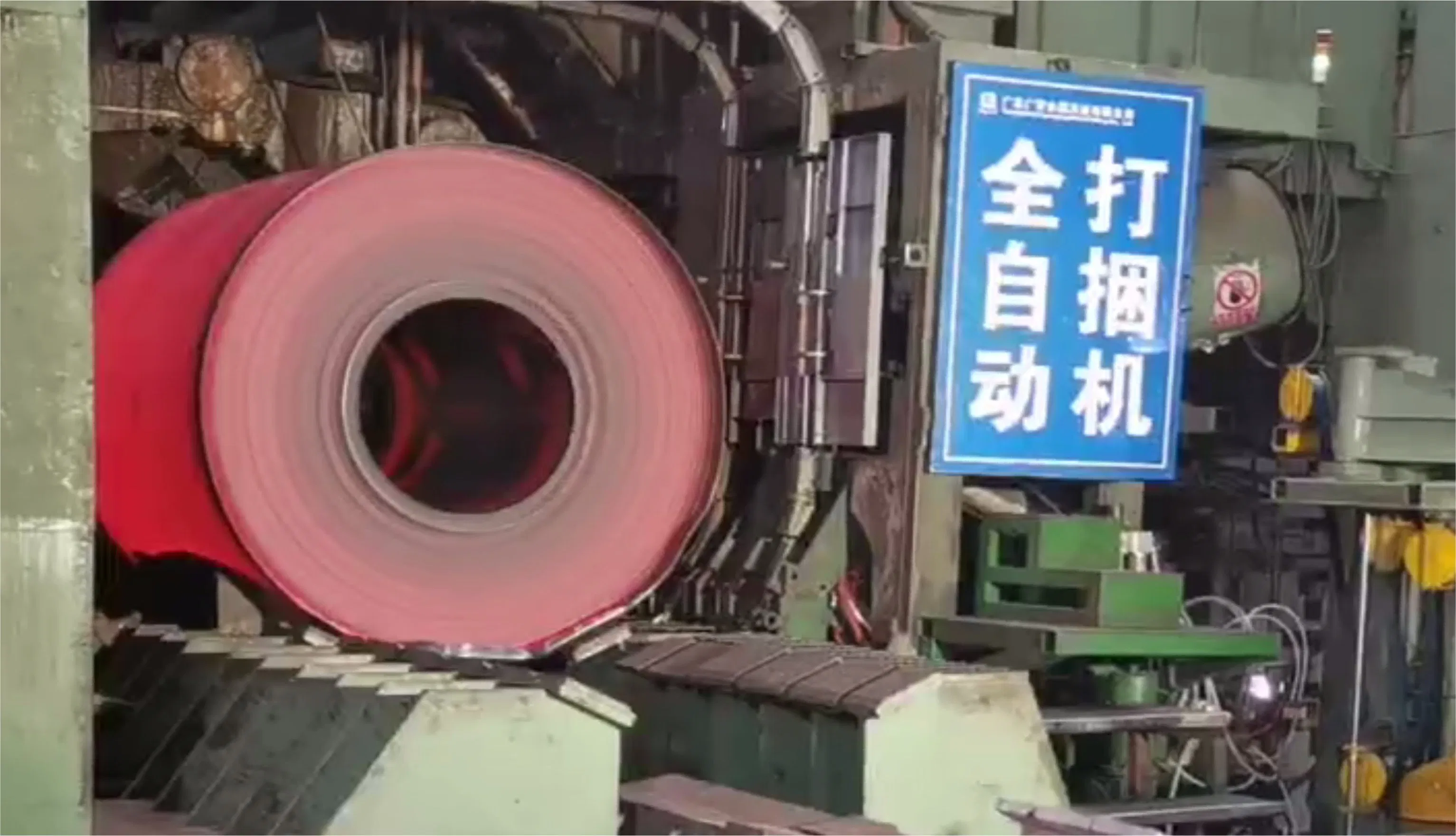
Intelligent quality control within an automated packing line goes beyond simply checking if a coil is wrapped. It involves using sensors and imaging technologies to inspect the coil itself before or during packaging and verifying that the packaging has been applied correctly and effectively.
Vision Systems and Sensor Technology
High-resolution cameras and vision systems can scan the coil surface for defects like scratches, dents, or rust spots as it moves along the line. Laser scanners measure precise dimensions (diameter, width, coil eye) and shape conformity. Sensors can verify that edge protectors are in place, strapping tension is correct, and wrapping layers are applied without gaps. These checks happen at high speed, providing objective, repeatable inspection data far surpassing the capability of manual visual checks.
Data Analytics and Process Optimization
All this sensor data is collected and analyzed in real-time. This allows the system to identify trends, alert operators to potential issues (e.g., a specific wrapping station is consistently applying material unevenly), and provide data for continuous process improvement. Analytics can optimize machine parameters, predict maintenance needs before failure occurs, and ensure that packaging standards are consistently met for every coil.
Industry 4.0 and IoT Connectivity
Modern automated packing lines are designed with Industry 4.0 principles in mind. They are equipped with IoT sensors that communicate data about machine status, production rates, material consumption, and quality metrics to higher-level manufacturing execution systems (MES) or enterprise resource planning (ERP) systems. This connectivity enables:
- Real-time Monitoring: Plant managers can see the packing line’s performance from anywhere.
- Automated Data Transfer: Packing data (coil ID, weight, dimensions, packing code, date/time) is automatically associated with the coil’s production record.
- Integrated Planning: Packing operations can be seamlessly scheduled based on upstream production rates and downstream shipping requirements.
- Remote Diagnostics: Experts can troubleshoot issues remotely, minimizing downtime.
Ensuring Traceability and Compliance
Integration with plant-wide systems enables comprehensive traceability. Every packaged coil can be tracked from its point of origin on the production line through the packing process and into inventory or shipment. This data is crucial for quality assurance, recall management (if necessary), and meeting stringent customer or regulatory requirements regarding product handling and protection.
| Sensor/System Type | Function in Packing Line | Benefit |
|---|---|---|
| Vision Systems | Surface defect detection, label reading | Identifies flaws, verifies labeling |
| Laser Scanners | Coil dimension measurement, shape conformity | Ensures product meets specs before packaging |
| Tension Sensors | Strapping tension verification | Prevents damage, ensures load security |
| Gap Sensors | Wrap layer verification | Ensures complete moisture/corrosion barrier |
| IoT Connectivity | Data collection & transmission | Real-time monitoring, optimization, traceability |
This level of intelligent control and system integration is vital for ensuring that automated lines not only pack quickly but also pack correctly, guaranteeing product quality and providing valuable data for operational excellence.
Sustainable Practices and Future Innovations
As global environmental awareness grows, the steel industry faces increasing pressure to adopt more sustainable practices, including in packaging. Automated steel coil packaging lines are at the forefront of this shift, offering opportunities to minimize environmental impact while maintaining or enhancing product protection.
Sustainable practices in automated steel coil packaging lines involve optimizing material usage to minimize waste and utilizing eco-friendly materials like recyclable or bio-based VCI films and papers, and repulpable barrier coatings. Automation ensures precise material application, further reducing consumption. Future innovations include biodegradable VCI chemistries, smart packaging sensors for condition monitoring, and increased flexibility to adapt to new, potentially more sustainable packaging formats, significantly lowering the environmental footprint of global steel logistics.
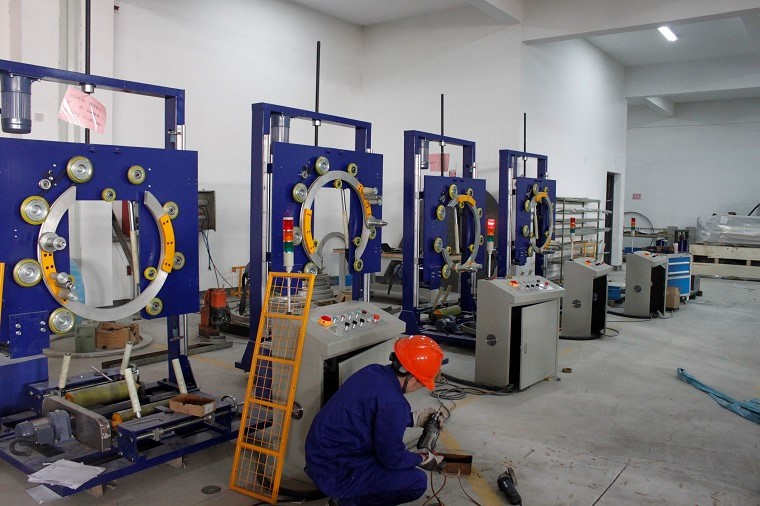
The drive for sustainability in steel coil packaging centers on two main areas: reducing the amount of material used and choosing materials that are less harmful to the environment. Automated lines contribute significantly to both.
Material Optimization and Waste Reduction
As discussed earlier, automated systems can cut materials precisely and apply layers consistently, minimizing overlap and waste inherent in manual processes. Using materials supplied in large, optimized rolls also reduces secondary packaging waste compared to handling smaller, pre-cut sheets. Furthermore, the efficiency gains from automation mean less energy consumed per packaged coil compared to slower manual operations.
Eco-Friendly Packaging Materials
The focus is shifting towards packaging materials that are recyclable, repulpable, or even biodegradable. VCI technology, essential for rust prevention, can be integrated into carriers like recyclable VCI paper (often made with recycled content, like Zerust VCI papers or Cortec’s various paper products) or recyclable VCI poly films (like Zerust ICT®510-SM or Cortec VpCI-126 Series, provided they are collected and processed correctly). Some companies are even developing bio-based or compostable VCI materials (like Cortec’s Eco-Corr® or Eco Works series), offering end-of-life options that reduce landfill burden. Using repulpable barrier coatings (such as Cortec EcoShield Barrier Coating) on paper or linerboard allows these materials to be recycled within standard paper streams, unlike traditional poly-coated or wax papers.
Eliminating Hazardous Waste Streams
A key environmental benefit is the reduction or elimination of messy, petroleum-based rust preventative oils. VCI packaging provides a clean, dry alternative, removing the need for hazardous cleaning solvents and the disposal of oil-soaked rags or materials, which simplifies waste management and improves workplace safety.
Future Directions: Smart and Biodegradable Solutions
Future innovations are likely to push sustainability further. Development of biodegradable VCI chemistries that fully break down in various environments is ongoing. Smart packaging technologies, using sensors embedded in the packaging or applied to the coil, could monitor environmental conditions (temperature, humidity, shock) during transit. This data could not only provide valuable insights for logistics optimization but also potentially allow for less packaging material if conditions are verified as mild, or trigger alerts if there’s a risk to product integrity, enabling proactive intervention. Increased flexibility in automated lines will also facilitate the adoption of novel, more sustainable packaging formats as they emerge.
Conclusion
Innovative automated steel coil packaging lines represent a significant leap forward, delivering unparalleled efficiency, consistent quality, enhanced safety, and growing sustainability benefits. By integrating robotic handling, intelligent QC, and specialized materials like VCI, manufacturers can drastically reduce costs, minimize transit damage, and meet increasing environmental demands. Investing in a modern coil packing line is a strategic imperative for maintaining competitiveness and ensuring product integrity in the global market.








