
Industry 4.0 in Packaging: Transitioning from Manual to Unmanned Coil Packing Lines
For decades, the final step in metal production—packing coils and wire rods for shipment—has been a stubborn bottleneck. It’s a scene I know all too well from my early days on the factory floor: teams of workers manually wrestling heavy steel, a process plagued by slow speed, high injury risk, and inconsistent quality. This manual stage creates a jarring disconnect in an otherwise advanced production line. The promise of Industry 4.0 is a fully integrated, smart, and autonomous manufacturing flow. So, why should the packaging line, the crucial last touchpoint with your product, remain a manual, labor-intensive relic? The transition to unmanned coil packing lines is not just an upgrade; it’s the essential final piece to achieving a true, end-to-end smart factory.
The core answer lies in integrating intelligent automation that replaces human muscle and guesswork with robotic precision, data-driven decision-making, and seamless connectivity. An unmanned packing line uses technologies like Automated Guided Vehicles (AGVs) for coil handling, robotic arms for precise placement, and smart wrapping machines with IoT sensors. These systems communicate with your central Manufacturing Execution System (MES), creating a continuous, efficient, and safe flow from production to dispatch without manual intervention. This shift is the definitive step from Industry 3.0 automation to the interconnected, self-optimizing reality of Industry 4.0 packaging.
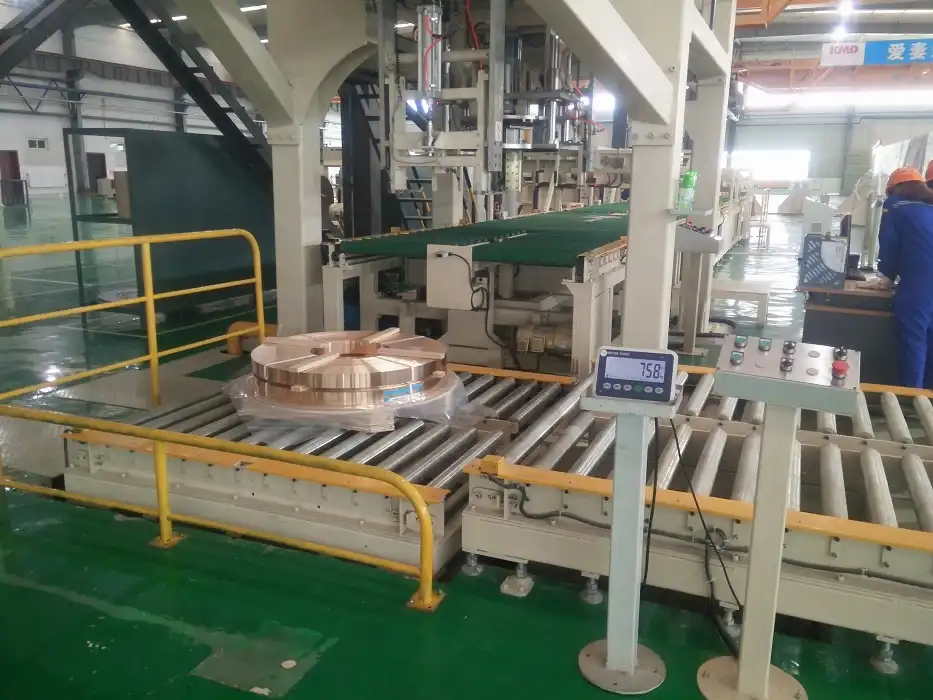
This evolution is more than just buying new machines. It’s a strategic rethinking of your entire post-production workflow. For factory managers like Jose in Mexico, who face immense pressure to boost output, ensure safety, and control costs, moving to an unmanned line is the solution to multiple chronic problems at once. Let’s explore the critical questions you must answer to make this transition successfully.
1. What are the Core Technologies Powering an Unmanned Coil Packing Line?
Imagine a production line where a finished steel coil is automatically transported, measured, wrapped, and labeled without a single worker lifting a finger. This isn’t science fiction; it’s the result of integrating several mature Industry 4.0 technologies. The first and most visible change is in material handling. Automated Guided Vehicles (AGVs) or robotic coil manipulators take over the dangerous task of moving heavy coils from the production mandrel to the packing station. These systems use lasers or magnetic tape for navigation, ensuring safe and precise movement 24/7.
The heart of the unmanned line is the intelligent packing machine itself. Modern coil wrapping machines are equipped with Programmable Logic Controllers (PLCs) and IoT sensors. These sensors collect real-time data on coil dimensions, tension, film usage, and machine health. This data is fed into a central system, allowing the machine to auto-adjust settings for each coil, ensuring perfect, consistent wraps every time. Furthermore, machines from leading manufacturers like Fengding or Wuxi Buhler are designed with open communication protocols (like OPC UA), allowing them to seamlessly integrate into your factory’s broader Industrial Internet of Things (IIoT) network.
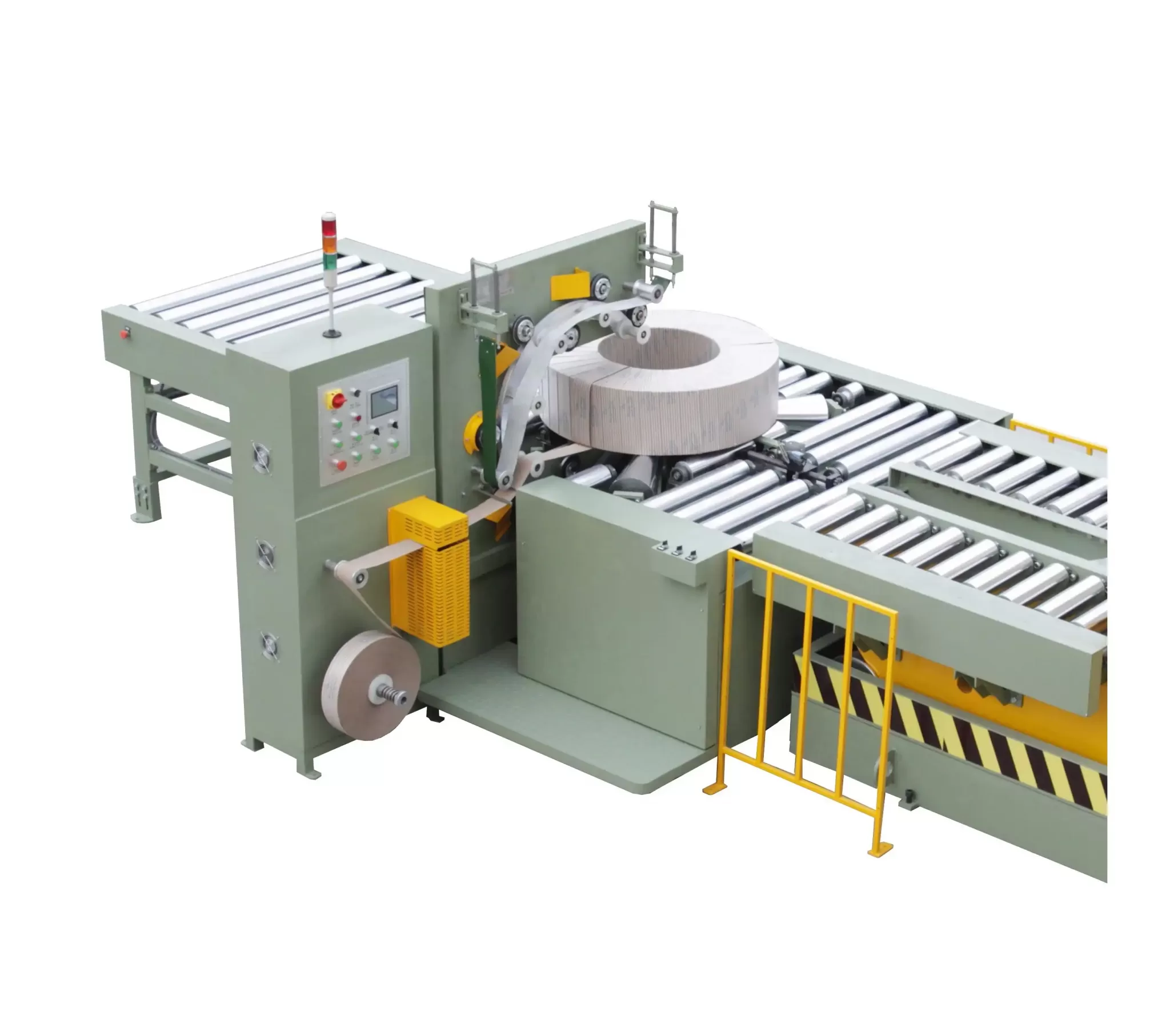
To truly understand how these components create a unified system, let’s break down the workflow and the data flow.
The Integrated Workflow of an Unmanned Line
The process follows a precise, automated sequence:
- Automatic Coil Transfer: An AGV receives a signal from the production line that a coil is ready. It navigates to the mandrel, lifts the coil, and transports it to the waiting station of the wrapping line.
- Data Handshake & Setup: As the coil arrives, a scanning system (e.g., laser or vision) measures its exact width, diameter, and weight. This data is instantly sent to the wrapping machine’s PLC.
- Automatic Wrapping Cycle: The PLC calculates the optimal wrapping pattern, film tension, and number of layers. The machine automatically adjusts its roller stations and film carriage, then executes the perfect wrap.
- Quality Assurance & Logging: Sensors confirm the wrap is complete and secure. All process data—coil ID, dimensions, film used, time stamp—is logged into the MES/ERP system.
- Automatic Discharge & Labeling: The wrapped coil is discharged onto a conveyor or another AGV. A robotic printer applies a barcode or RFID label containing all the packing data, ready for automated warehouse storage or direct loading.
Key Technology Components Table
| Technology | Role in Unmanned Line | Key Benefit |
|---|---|---|
| AGVs / Robotics | Handles all heavy lifting and transport. | Eliminates manual labor, drastically improves safety. |
| IoT Sensors | Collects real-time data on coil specs and machine performance. | Enables auto-adjustment and predictive maintenance. |
| Machine Vision | Scans and measures coil dimensions automatically. | Ensures packing accuracy without manual input. |
| PLC & Control Software | The “brain” that coordinates all machines based on sensor data. | Creates a synchronized, efficient workflow. |
| IIoT Connectivity | Allows machines to talk to each other and the factory MES. | Provides full traceability and centralized control. |
This technological integration transforms the packing station from a cost center into a data-generating, efficiency-driving node in your smart factory network. (core technologies for unmanned coil packing, IoT in packaging machinery, automated guided vehicle for steel coil)
2. How Does an Unmanned Line Directly Solve Factory Pain Points?
Managers running metal processing plants are not looking for technology for technology’s sake. They need solutions to concrete, costly problems. An unmanned packing line is a direct and powerful answer to the most common pain points I’ve heard from clients across the globe. Let’s address them one by one. First, the efficiency bottleneck. Manual packing is slow and variable. Worker fatigue sets in, breaks are needed, and shift changes cause delays. An automated line operates at a consistent, pre-programmed speed, 24 hours a day if needed. It turns packing from a bottleneck into a synchronized, high-throughput process that matches your production pace.
The most compelling argument is safety. Manual handling of multi-ton steel coils is one of the most hazardous tasks in a factory. Back injuries, crushed limbs, and fatalities are a real and constant threat. An unmanned line removes workers from these danger zones entirely. By using AGVs and manipulators, the physical risk is eliminated. This not only protects your most valuable asset—your people—but also significantly reduces insurance premiums, worker compensation claims, and downtime from accidents.
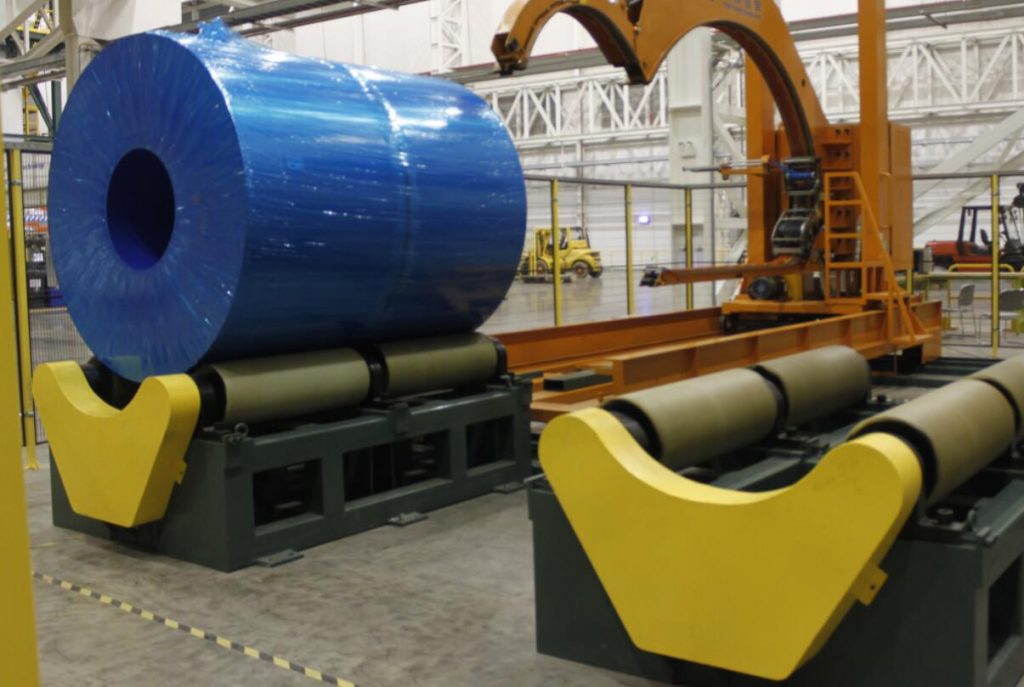
Beyond safety and speed, the impact on product quality and operational cost is profound.
🛡️ Solving the “Big Three” Pain Points
Let’s visualize how an unmanned line attacks the core challenges:
graph TD
    A[Factory Pain Points] --> B[Manual Coil Packing Line]
    B --> C[Efficiency Bottleneck]
    B --> D[Safety Hazards]
    B --> E[Product Damage & High Cost]

    A --> F[Unmanned Smart Packing Line]
    F --> G[Solution: Constant Automated Speed]
    G --> H[✅ Eliminates Bottleneck]
    F --> I[Solution: Robots/AGVs Handle Loads]
    I --> J[✅ Eliminates Manual Injury Risk]
    F --> K[Solution: Precise, Consistent Wrapping]
    K --> L[✅ Eliminates Damage, Reduces Film Waste]

    C & D & E --> M[High Operational Cost, Low Profit]
H & J & L --> N[Low Operational Cost, High ROI]-
Pain Point: Product Damage & Cost. Inconsistent manual wrapping leads to loose film, exposed edges, and moisture ingress during transit, causing rust and customer rejections. An automated machine applies the exact same tension and overlap every time, creating a weather-tight, secure package that protects the coil’s value. Furthermore, smart systems optimize film usage, reducing material waste—a direct cost saving.
-
Pain Point: Labor Shortage & Cost. Finding and retaining skilled labor for tough manual jobs is increasingly difficult and expensive. An unmanned line reduces dependency on a large packing crew. You can reallocate skilled workers to more valuable supervision, maintenance, or quality control roles, improving overall workforce utilization.
-
Pain Point: Lack of Traceability. In a manual process, tracking which worker packed which coil with what settings is nearly impossible. An automated line logs every parameter for every coil. If a customer has an issue, you can instantly retrieve the complete packing data, enabling rapid root-cause analysis and continuous process improvement.
The shift to unmanned is a direct investment in solving these chronic operational headaches, translating into tangible bottom-line results. (solving factory bottlenecks with automation, reducing labor cost in coil packaging, preventing steel coil damage in transit)
3. What is the Real ROI: Beyond the Machine Price Tag?
When considering an unmanned packing line, the initial investment figure can be daunting. It’s natural to focus on the purchase price of the AGVs, the robotic wrapper, and the control system. However, the true financial analysis must look at the Total Cost of Ownership (TCO) and the Return on Investment (ROI) over a 3-5 year period. The machine price is just the entry ticket; the real savings and returns are generated daily on your factory floor. The most obvious saving is in direct labor costs. By automating the line, you can significantly reduce the number of operators per shift. This isn’t about eliminating jobs, but about optimizing your human capital for higher-value tasks.
The real ROI calculation must be holistic. It combines hard cost savings (labor, film, insurance) with soft cost avoidance (accident downtime, product rejections, recruitment) and new value creation (increased throughput, traceability). A well-designed unmanned line from a reliable partner like Fengding often achieves a payback period of 18-24 months. This is because the savings are continuous and substantial, turning the packing area from a cost center into a profit-protecting asset.
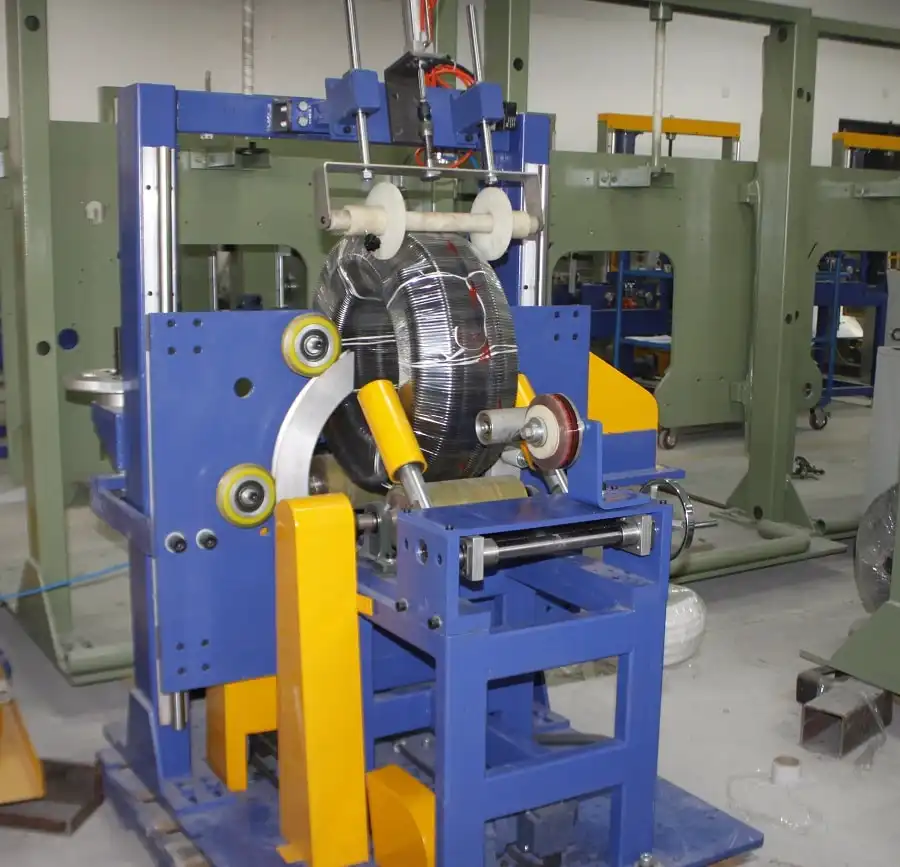
Let’s build a clearer picture of where these financial benefits come from.
Building the ROI Case: A 5-Year Perspective
Consider a mid-sized plant packing 20 coils per shift. Here’s a simplified financial impact model:
| Cost/Saving Category | Manual Line (Annual) | Unmanned Line (Annual) | 5-Year Impact |
|---|---|---|---|
| Labor Costs | $200,000 (5 operators) | $60,000 (1 supervisor + 1 tech) | Saving: $700,000 |
| Film/Waste Usage | $50,000 (10% overuse) | $45,000 (optimized use) | Saving: $25,000 |
| Workplace Insurance | $80,000 (high-risk) | $40,000 (low-risk) | Saving: $200,000 |
| Product Damage Claims | $30,000 | $5,000 | Saving: $125,000 |
| Downtime from Injuries | $25,000 | $2,000 | Saving: $115,000 |
| Increased Throughput | (Baseline) | +15% output capacity | Added Value: Variable |
| Total 5-Year Benefit | ≈ $1,165,000 + Added Value |
Key Insights from the Data:
- Labor is the biggest lever. The savings here alone can cover a significant portion of the automation investment.
- Risk reduction has a direct cost. Lower insurance and avoided accident costs are real, recurring savings.
- Quality pays. Reducing damage claims protects your revenue and customer relationships.
- Uptime is revenue. Minimizing unplanned stops keeps your entire production line flowing.
The initial capital outlay is an investment in predictable, lower future operating costs and higher, more reliable output. When you partner with an expert who understands your production goals—like the engineers at Fengding who design for heavy-duty, continuous operation—you ensure the equipment delivers this promised ROI without costly surprises or downtime. (ROI of automated packaging line, total cost of ownership for coil wrappers, calculating payback period for factory automation)
4. How to Start the Transition: A Practical Step-by-Step Guide?
The vision of a fully unmanned line is clear, but the path to get there can seem overwhelming. The biggest mistake is trying to do everything at once without a plan. A successful transition is a phased journey, not a single leap. It requires careful assessment, strategic planning, and choosing the right partner. The first step is always an internal audit. You must thoroughly map your current packing process. How many coils do you pack per shift? What are the exact steps, from mandrel to truck? Where are the delays and safety near-misses? Quantify your labor costs, film waste, and damage rates. This data forms your “before” picture and defines your specific goals.
The most critical step is selecting the right technology partner. This is not a simple vendor purchase; it’s forming a strategic alliance. You need a supplier who doesn’t just sell machines but understands metal manufacturing challenges. Look for a partner with proven experience in your industry, like Fengding, which specializes in heavy-duty coil packing systems. They should offer not just equipment, but a comprehensive solution including layout planning, integration support, training, and reliable after-sales service to ensure your investment performs for years to come.
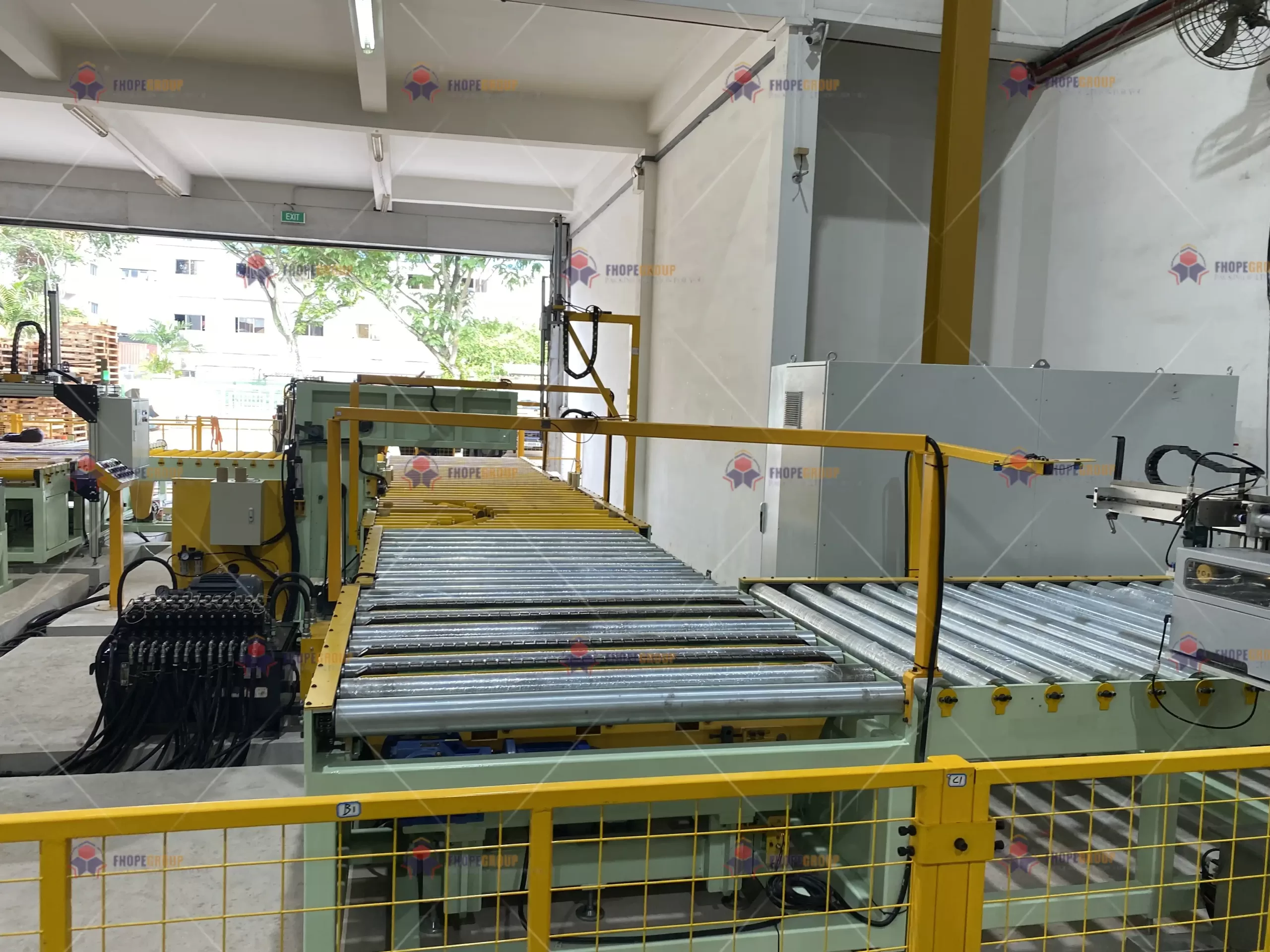
A phased approach minimizes risk and allows for learning and adjustment at each stage.
Your Roadmap to an Unmanned Line
Follow this actionable, four-phase plan to ensure a smooth and successful transition:
-
Phase 1: Assessment & Foundation (Months 1-3)
- Audit Current State: Document all processes, costs, and pain points.
- Define Clear KPIs: Set targets for throughput increase, labor reduction, and damage rate decrease.
- Internal Alignment: Get buy-in from management, finance, and floor supervisors.
- Partner Selection: Vet suppliers based on industry expertise, technology, and support capability.
-
Phase 2: Pilot & Design (Months 4-6)
- Start with a Core Machine: Implement a single, semi-automatic or automatic wrapping machine (e.g., a Fengding horizontal wrapper) to automate the core wrapping function first.
- Integrate Basic Sensors: Add dimension scanning and data logging to this machine.
- Train Your Team: Operators learn to run and maintain the new equipment.
- Design Full Flow: With your partner, design the complete future layout for AGVs and full automation.
-
Phase 3: Integration & Scaling (Months 7-12)
- Add Material Handling: Introduce AGVs or a coil conveyor system to feed the wrapping machine automatically.
- Connect to MES/ERP: Establish the data link between the packing station and your factory management system.
- Expand Automation: Duplicate the successful cell for additional production lines if needed.
-
Phase 4: Optimization & Unmanned Operation (Ongoing)
- Analyze Data: Use the collected performance data to fine-tune settings for maximum efficiency and film savings.
- Implement Predictive Maintenance: Use machine health data to schedule maintenance before failures occur.
- Achieve Full Unmanned Shifts: Gradually move towards lights-out operation during certain shifts.
By breaking down the project, you manage risk, demonstrate quick wins (like the safety and quality improvements from Phase 2), and build the internal expertise and confidence needed for full-scale implementation. (how to implement factory automation, step-by-step guide to smart packaging, selecting a coil wrapping machine manufacturer)
Conclusion
The journey from a manual, bottlenecked packing station to a smooth, unmanned coil packing line is the definitive step into Industry 4.0 for metal manufacturers. It directly tackles the critical challenges of safety, efficiency, cost, and quality that managers face daily. This transition is not merely about replacing labor with machines; it’s about integrating intelligent systems that communicate, self-optimize, and provide unparalleled control and traceability. The return on investment is clear and substantial, transforming a cost center into a strategic asset. By taking a measured, phased approach and partnering with an experienced specialist like Fengding, you can confidently navigate this upgrade. Start by automating the core wrapping process with a reliable coil wrapping machine, and build your smart, safe, and highly efficient factory of the future from there.








