
How to Customize the Design of Mold Flippers?
Mold flippers are essential machinery in industries requiring frequent mold maintenance and changeovers. While standard models offer significant benefits, customization allows for optimized performance tailored to specific operational needs, enhancing both efficiency and safety. Understanding how to customize a mold flipper ensures you get the most value from this critical equipment.
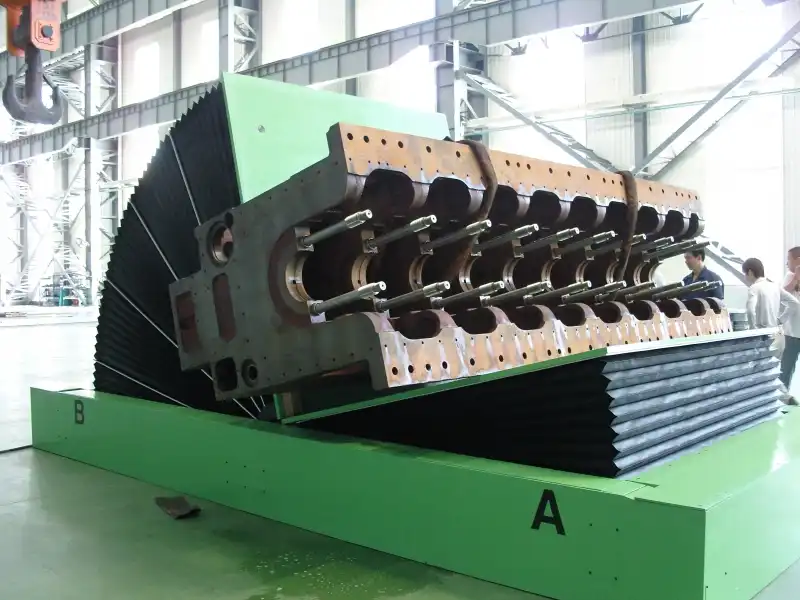
Customizing a mold flipper involves tailoring its specifications to match your unique operational demands. This includes adjusting load capacity, table dimensions, rotation mechanisms (hydraulic or electric), control systems (manual or automatic), and safety features. By focusing on these key areas, businesses can create mold flippers that perfectly integrate into their workflows, maximizing uptime and minimizing risks.
Investing in a customized mold flipper is a strategic decision that can yield substantial long-term benefits. Let’s explore the key areas where customization can make a significant impact on your operations.
1. Tailoring Load Capacity and Dimensions for Specific Molds
For industries handling diverse mold sizes and weights, standard mold flippers might not always be the perfect fit. Customization becomes crucial to ensure the machinery can safely and efficiently handle the specific molds used in your production line.
Why Customize Load Capacity and Dimensions?
Customizing the load capacity and dimensions of a mold flipper ensures optimal performance, safety, and longevity. Standard models are designed for a range of applications, but tailoring these specifications to your exact mold parameters prevents overstressing the machinery, maximizes workspace utilization, and guarantees secure handling of your valuable molds. By precisely matching the flipper to your operational needs, you minimize risks and enhance overall efficiency.
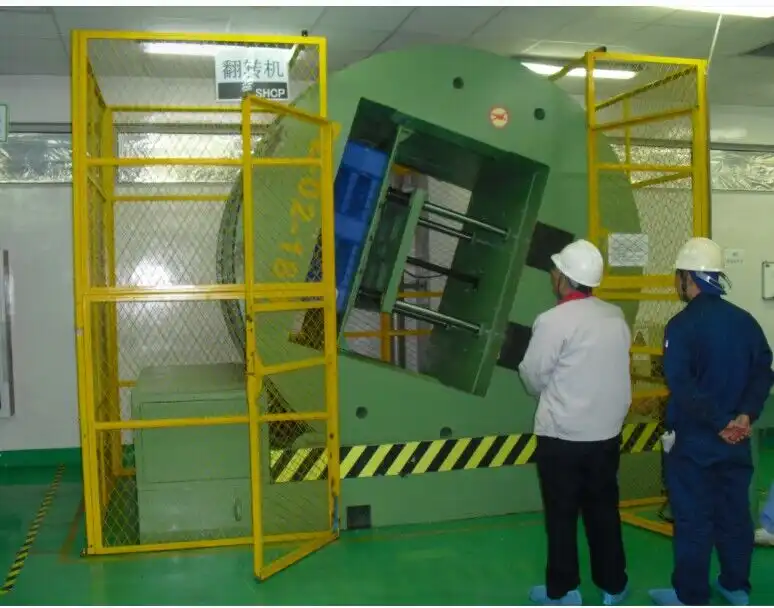
Optimizing Mold Flipper Dimensions for Enhanced Workflow
Beyond just load capacity, the physical dimensions of the mold flipper itself can be customized to integrate seamlessly into your workspace and workflow. Considering factors like platform size, overall machine footprint, and operational height can significantly improve efficiency and safety. Let’s break down how dimensional customization can optimize your mold handling process.
Platform Size and Shape
The platform of the mold flipper, which directly supports the mold during rotation, is a prime candidate for customization.
- Standard platforms are often rectangular and come in pre-defined sizes.
- Custom platforms can be tailored in both size and shape to perfectly accommodate your most frequently used molds. For example, if you consistently handle molds with unusual shapes, a custom platform can be designed with contours or fixtures that provide a more secure and stable grip.
Machine Footprint
In workshops where space is at a premium, minimizing the mold flipper’s footprint is essential.
- Standard models have fixed dimensions that might occupy more floor space than necessary.
- Custom designs can be engineered to be more compact, perhaps by optimizing the motor and hydraulic system layout or by designing a more streamlined frame. This is particularly beneficial in smaller workshops or production lines with tight layouts.
Operational Height
The working height of the mold flipper can also be adjusted to improve ergonomics and integration with other equipment.
- Standard heights might require operators to bend or strain to load and unload molds.
- Custom heights can be specified to match the height of adjacent machinery like die spotting presses or pallet jacks, creating a more fluid and less physically demanding workflow. This can reduce operator fatigue and improve overall efficiency.
By carefully considering and customizing these dimensional aspects, you can create a mold flipper that not only handles your molds effectively but also integrates seamlessly into your existing workspace, maximizing efficiency and operator comfort.
| Feature | Standard Mold Flipper | Customized Mold Flipper | Benefit of Customization |
|---|---|---|---|
| Platform Size | Fixed, Rectangular Sizes | Tailored to Mold Dimensions, Shape Contours Possible | Optimal Mold Support, Increased Stability, Reduced Risk |
| Machine Footprint | Standard Dimensions, May Be Space-Intensive | Compact Designs Available, Streamlined Layouts | Space Saving, Better Workshop Layout, Easier Integration |
| Operational Height | Pre-set Heights, Potential Ergonomic Issues | Adjustable to Match Workflow, Ergonomic Considerations | Improved Ergonomics, Reduced Operator Strain, Efficiency |
2. Customizing the Driving and Control Systems
The driving and control systems are the heart of any mold flipper, dictating its operational precision, speed, and ease of use. Customization in these areas allows for fine-tuning the machinery to match the specific demands of your production environment and operator preferences.
Why Customize Driving and Control Systems?
Customizing the driving and control systems of a mold flipper directly impacts its performance and usability. Choosing between hydraulic and electric drives, and selecting the appropriate control mechanisms (manual, semi-automatic, or fully automatic), ensures the machine operates at the optimal speed and precision for your specific molds and workflow. This targeted customization leads to smoother operation, reduced cycle times, and enhanced operator control, ultimately boosting productivity.
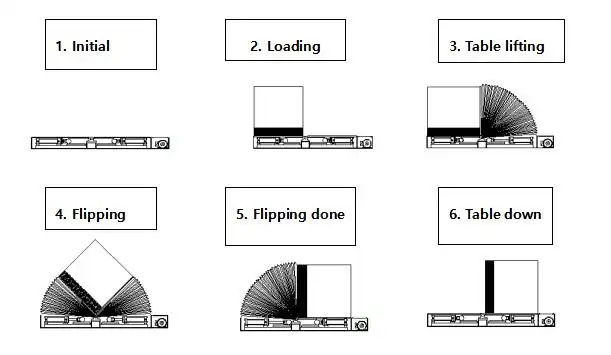
Hydraulic vs. Electric Driving Systems: A Tailored Approach
Mold flippers typically utilize either hydraulic or electric driving systems to achieve the rotation. The choice between these systems significantly impacts the machine’s performance characteristics and suitability for different applications. Customization here means selecting the system that best aligns with your operational needs and preferences.
Hydraulic Systems: Power and Heavy Lifting
Hydraulic systems are renowned for their power and ability to handle extremely heavy loads.
- Standard hydraulic systems offer robust performance for heavy molds but can sometimes be less precise in control and potentially require more maintenance due to hydraulic components.
- Custom hydraulic systems can be designed with advanced valve controls and feedback mechanisms to improve precision and smoothness of rotation, even under heavy loads. Furthermore, customized systems might incorporate energy-efficient hydraulic pumps and optimized fluid circuitry to reduce power consumption and environmental impact.
Electric Systems: Precision and Clean Operation
Electric systems excel in providing precise control and cleaner operation, often preferred in environments where hydraulic leaks are a concern.
- Standard electric systems offer good control for medium to heavy molds and are generally easier to maintain than hydraulic systems.
- Custom electric systems can incorporate servo motors and advanced frequency inverters to achieve exceptionally precise positioning and variable speed control. This level of customization is ideal for delicate molds or processes requiring very accurate rotation angles. Moreover, electric systems can be tailored with regenerative braking to recapture energy during deceleration, further enhancing efficiency.
Control System Options: From Manual to Fully Automatic
The level of automation in the control system is another key area for customization, ranging from simple manual controls to sophisticated fully automatic systems.
- Manual control systems are straightforward and cost-effective, suitable for lower-volume operations or when operator intervention is frequently needed.
- Semi-automatic systems often include push-button controls for initiating and stopping rotation, with safety interlocks for enhanced operator protection.
- Fully automatic systems can be programmed with pre-set rotation cycles and integrated with production line PLCs for seamless automated mold handling. Customization here might involve designing specific HMI (Human-Machine Interface) panels, integrating with existing factory control networks, or adding remote monitoring and diagnostic capabilities.
By carefully selecting and customizing the driving system and control level, you can optimize your mold flipper for the specific weight, precision, and automation requirements of your mold handling tasks.
| Feature | Standard Mold Flipper (Hydraulic) | Customized Mold Flipper (Hydraulic) | Standard Mold Flipper (Electric) | Customized Mold Flipper (Electric) |
|---|---|---|---|---|
| Driving System | Basic Hydraulic System | Advanced Hydraulic with Precision Control & Efficiency | Standard Electric Motor System | Servo Motors, Regenerative Braking, High Precision |
| Control Precision | Moderate | High, Smooth Rotation | Good | Very High, Variable Speed Control |
| Automation Level | Manual to Semi-Automatic | Customizable to Fully Automatic Integration | Manual to Semi-Automatic | Customizable to Fully Automatic & Remote Monitoring |
| Best Suited For | Heavy Molds, Robust Operation | Heavy & Delicate Molds, Energy Efficiency | Medium to Heavy Molds, Clean Environments | Delicate Molds, Precise Positioning, Energy Savings |
3. Material and Feature Customization for Enhanced Durability and Functionality
Beyond core mechanics, customizing the materials and adding specific features can significantly extend the lifespan of your mold flipper and enhance its functionality in demanding industrial environments.
Why Customize Materials and Features?
Customizing the materials and features of a mold flipper enhances its durability, safety, and operational versatility. Upgrading to high-grade steel, adding protective coatings, incorporating safety sensors, or integrating specialized features like sliding tables or nylon platform covers directly addresses specific operational challenges and environmental factors. This level of customization ensures the mold flipper is not just functional, but also robust, safe, and perfectly suited to its intended working environment.
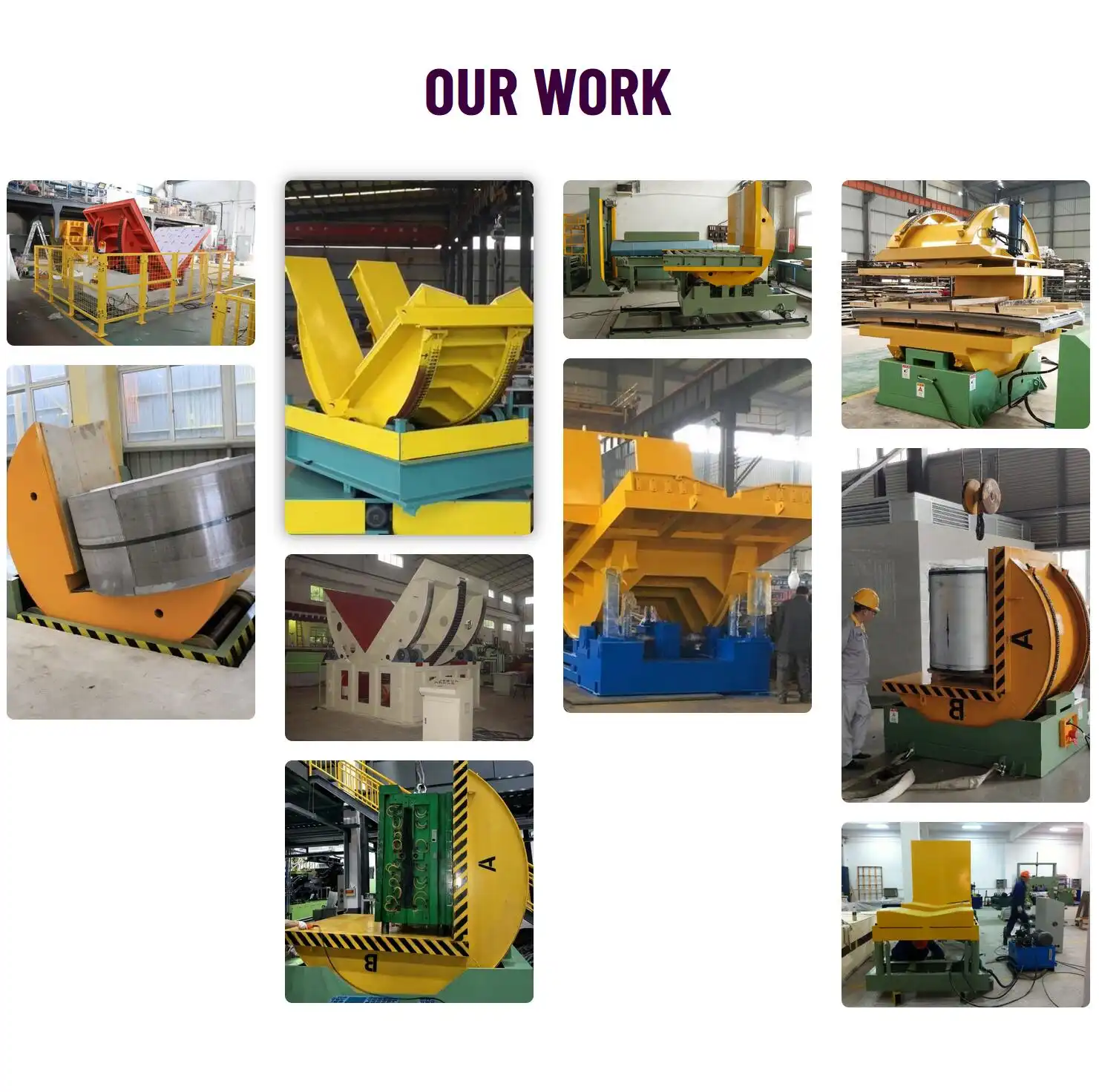
Building a Robust Mold Flipper: Material and Feature Choices
The selection of materials and the incorporation of specific features are crucial for tailoring a mold flipper to withstand the rigors of industrial use and meet specific operational demands. Let’s explore key areas for customization:
Material Upgrades for Enhanced Durability
The structural integrity of a mold flipper hinges on the quality of materials used in its construction.
- Standard mold flippers typically use industrial-grade steel, which is suitable for general applications.
- Customization can involve upgrading to high-strength steel alloys for critical structural components, particularly for machines handling very heavy loads or operating in harsh environments. For example, using thicker gauge steel or alloys with higher yield strength can significantly improve resistance to deformation and fatigue over prolonged use. Similarly, choosing specific grades of steel with enhanced corrosion resistance is beneficial in humid or chemically active environments.
Protective Coatings and Surface Treatments
Surface treatments protect the mold flipper from wear, corrosion, and damage, extending its operational life.
- Standard finishes often include basic paint coatings for rust prevention.
- Customization options include applying heavy-duty powder coatings, which offer superior resistance to abrasion, chemicals, and UV degradation. For extreme environments, specialized coatings like epoxy or ceramic-based coatings can provide enhanced protection. Additionally, surface treatments like galvanizing or passivation can be applied to steel components for increased corrosion resistance, especially in outdoor or wash-down environments.
Feature Integration for Enhanced Functionality
Adding specific features can tailor the mold flipper to streamline workflows and improve safety.
- Optional sliding tables facilitate easier loading and unloading of molds, particularly beneficial when using pallet jacks or forklifts. Customization here might involve designing tables with specific travel lengths or integrated locking mechanisms for secure mold positioning.
- Nylon platform covers protect the mold-contacting surfaces from scratches and damage, especially important for delicate or polished molds. Customization could include selecting different types of nylon or polyurethane materials with varying degrees of hardness and chemical resistance, depending on the molds being handled.
- Safety sensors and interlocks are critical for operator safety. Customization can involve adding light curtains, pressure-sensitive mats around the machine, or integrating with plant-wide safety systems. Programmable safety controllers can be implemented to create sophisticated safety logic, ensuring safe operation under various conditions.
By carefully considering material upgrades, protective coatings, and feature integration, you can create a mold flipper that is not only robust and durable but also precisely tailored to your specific operational needs and safety standards.
| Feature Category | Standard Mold Flipper | Customized Mold Flipper | Benefit of Customization |
|---|---|---|---|
| Structural Materials | Industrial Grade Steel | High-Strength Steel Alloys, Thicker Gauges | Increased Durability, Higher Load Capacity, Longer Lifespan |
| Surface Protection | Basic Paint Coating | Heavy-Duty Powder Coating, Epoxy/Ceramic Coatings, Galvanizing | Enhanced Corrosion Resistance, Abrasion Resistance, Longevity |
| Functional Features | Basic Platform | Sliding Tables, Nylon Covers, Custom Fixtures | Improved Workflow, Mold Protection, Application Specificity |
| Safety Features | Standard Safety Features | Light Curtains, Pressure Mats, Advanced Safety Controllers | Enhanced Operator Safety, Compliance with Safety Standards |
4. Ensuring Safety in Customized Mold Flipper Designs
Safety is paramount when dealing with heavy machinery like mold flippers. Customization must always prioritize and enhance safety features to protect operators and prevent accidents.
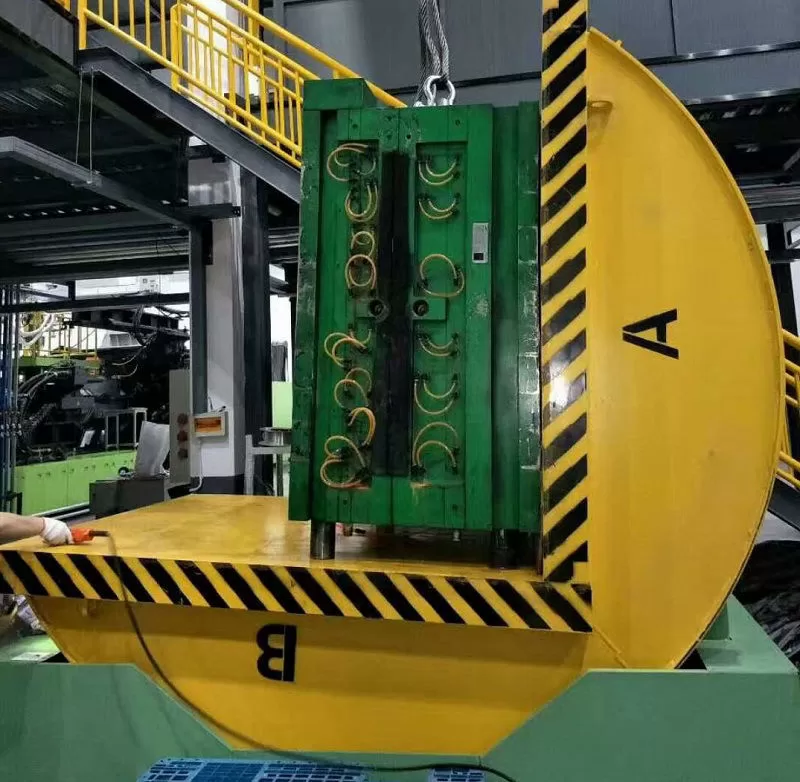
Ensuring safety in customized mold flipper designs is not an afterthought, but a fundamental aspect of the design process. Customization should incorporate enhanced safety measures beyond standard offerings. This includes implementing advanced safety sensors, fail-safe mechanisms, and ergonomic controls that minimize operator risk. By proactively integrating safety into every aspect of the customized design, businesses can create a safer working environment, reduce the potential for accidents, and ensure compliance with stringent safety regulations. A focus on safety during customization is an investment in both your workforce and operational efficiency.
Customization of mold flippers offers a powerful pathway to optimize your mold handling processes. By carefully considering load capacity, dimensions, driving systems, materials, features, and most importantly, safety, you can create a machine that perfectly fits your specific needs, enhancing productivity, safety, and longevity. Explore the possibilities of machinery customization to unlock the full potential of your operations.
Conclusion
Customizing mold flippers is a strategic approach for businesses aiming to maximize efficiency and safety in mold handling. By tailoring the design to specific operational requirements, companies can ensure optimal performance, reduce downtime, and enhance workplace safety. Investing in customization is an investment in long-term productivity and operational excellence, ensuring your mold handling equipment is perfectly aligned with your unique needs.








