
How to Choose the Right Automatic Steel Coil Packing Line for Your Indian Factory?
After deciding to automate your steel coil packaging, you are now facing the most critical phase: choosing the right machine and the right partner. The Indian market is filled with options, from local fabricators to global suppliers in China and Europe. Looking at websites and quotes can be overwhelming, with every company claiming their solution is the best. How do you navigate this complex landscape to find a packaging line that is perfectly suited to your factory’s needs?
Making the wrong choice is a multi-crore mistake that goes far beyond the initial investment. You could be stuck with a machine that cannot keep up with your production, fails to protect your steel from the monsoon rains, or suffers constant breakdowns with no reliable service support in India. This decision will define your packaging quality and operational efficiency for the next decade. You need a clear, structured way to evaluate your options.
Choosing the right automatic steel coil packing line requires a methodical, four-step approach. You must first clearly define your factory’s specific requirements, then technically scrutinize the machine’s engineering and components, rigorously assess the supplier’s reliability and support infrastructure for India, and finally, analyze the total cost of ownership (TCO) rather than just the initial purchase price. This disciplined process ensures you select a true asset, not a future liability.

My name is Randal Liu, and as a fellow industrialist in Asia, I have guided many companies through this exact process. I understand that for an Indian factory, an investment in automation must deliver tangible results in terms of quality, efficiency, and profitability. This guide will provide you with a practical, step-by-step framework to help you choose with confidence and build a globally competitive manufacturing operation.
Step 1: How to Define Your Factory’s Specific Packaging Needs?
Before you can even begin talking to suppliers, you must first look inward and clearly document your own requirements. A supplier cannot design the right solution for you if your needs are not clearly defined. This initial homework is the most important step in the entire process. It will become the foundation for your technical specification and your request for quotation (RFQ).
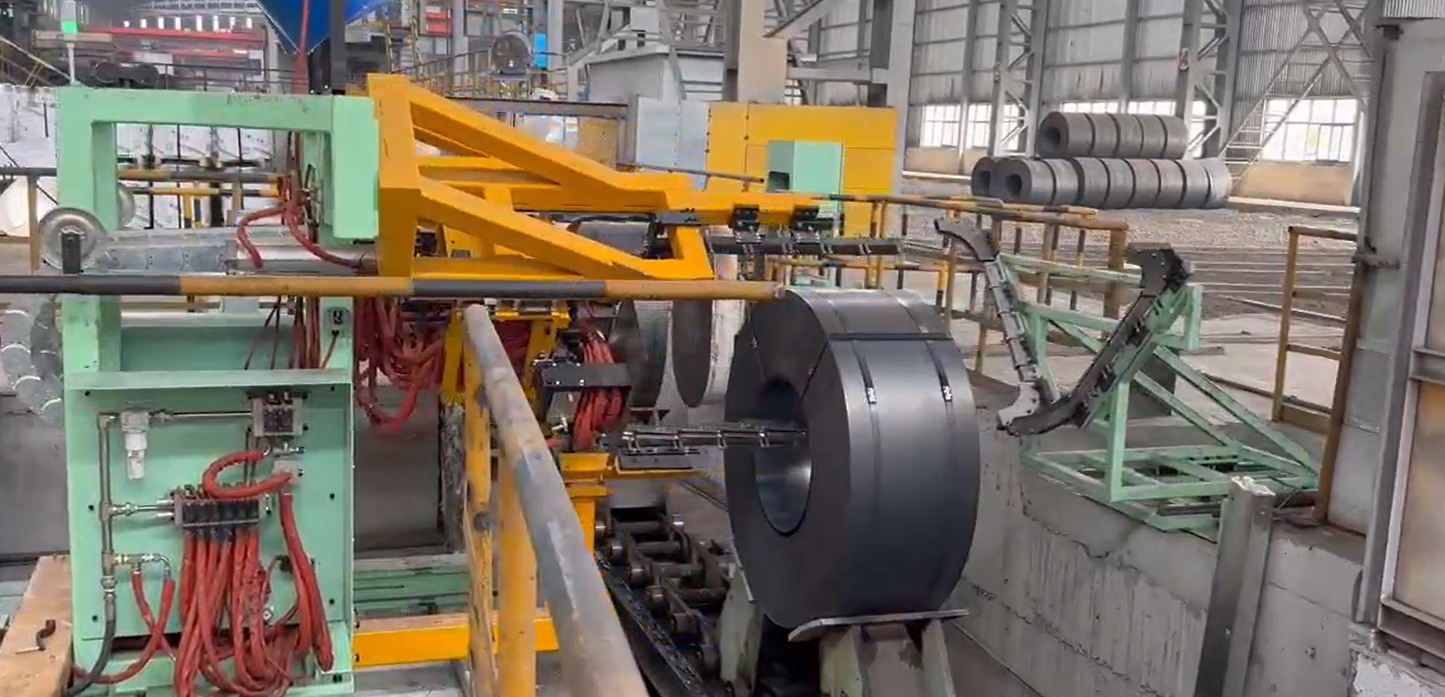
To define your needs, you must create a detailed specification sheet that covers four key areas: the physical dimensions and weight of your steel coils, your required production throughput (coils per hour), your exact packaging and protection requirements, and the physical space available in your factory. A clear and detailed specification sheet will ensure you only receive serious, relevant proposals from suppliers.
Dive Deeper: Creating Your Technical Requirement Document
Think of this as creating a blueprint for your ideal solution. The more detail you provide, the better the result will be. Sit down with your production and maintenance teams and answer the following questions.
1. Coil Specifications
This data determines the physical size and strength of the machine.
- Weight: What is the absolute minimum and maximum weight of the coils you need to pack?
- Dimensions: What are the minimum and maximum values for the coil’s outer diameter (OD), inner diameter (ID), and width? Be precise. A machine designed for a 1200mm wide coil may not be able to handle a 1500mm coil.
2. Throughput and Speed
This determines the speed and automation level of the line.
- Coils per Hour: How many coils do you currently produce per hour at peak capacity? What are your future growth projections? You should choose a line that can meet your needs for at least the next 5 years. A good target is to select a machine that can handle 20-30% more than your current peak capacity.
3. Packaging and Protection Level
This defines the final product you want to deliver to your customers.
- Wrapping: Do you need a full “cocoon” wrap for moisture protection? Is VCI film required for rust prevention during sea transport or long-term storage? Do you only need a few layers of wrap for dust protection?
- Strapping: What kind of strap do you need—steel or PET? How many straps are required per coil? Do you need radial (through-the-eye) strapping, circumferential (around the outside), or both?
- Other Materials: Do you need to apply corner protection plates? Do you need a final label to be applied automatically?
4. Factory Layout and Space
The machine must physically fit into your plant.
- Available Area: Measure the length, width, and height of the space where the line will be installed.
- Flow: How will coils enter the line and how will finished bundles exit? Consider forklift and crane access. A simple drawing of the proposed area is incredibly helpful for a supplier.
Here’s a simple checklist to get you started:
| Requirement Category | Your Factory’s Specification |
|---|---|
| Max Coil Weight (kg) | |
| Max/Min Coil OD (mm) | |
| Max/Min Coil Width (mm) | |
| Target Coils per Hour | |
| Wrapping Type | Full Cocoon / Partial / VCI Film |
| Strapping Type | Steel / PET / Both |
| Number of Straps | |
| Available Floor Space (m) | L: W: H: __ |
Step 2: What Key Technical Features Should You Scrutinize in a Machine?
Once you have your requirements defined, you can start evaluating proposals from suppliers. This is where you must become a detective and look closely at the technical details. Two machines that look similar can be vastly different in terms of quality, reliability, and performance. The difference lies in the engineering and the quality of the components.
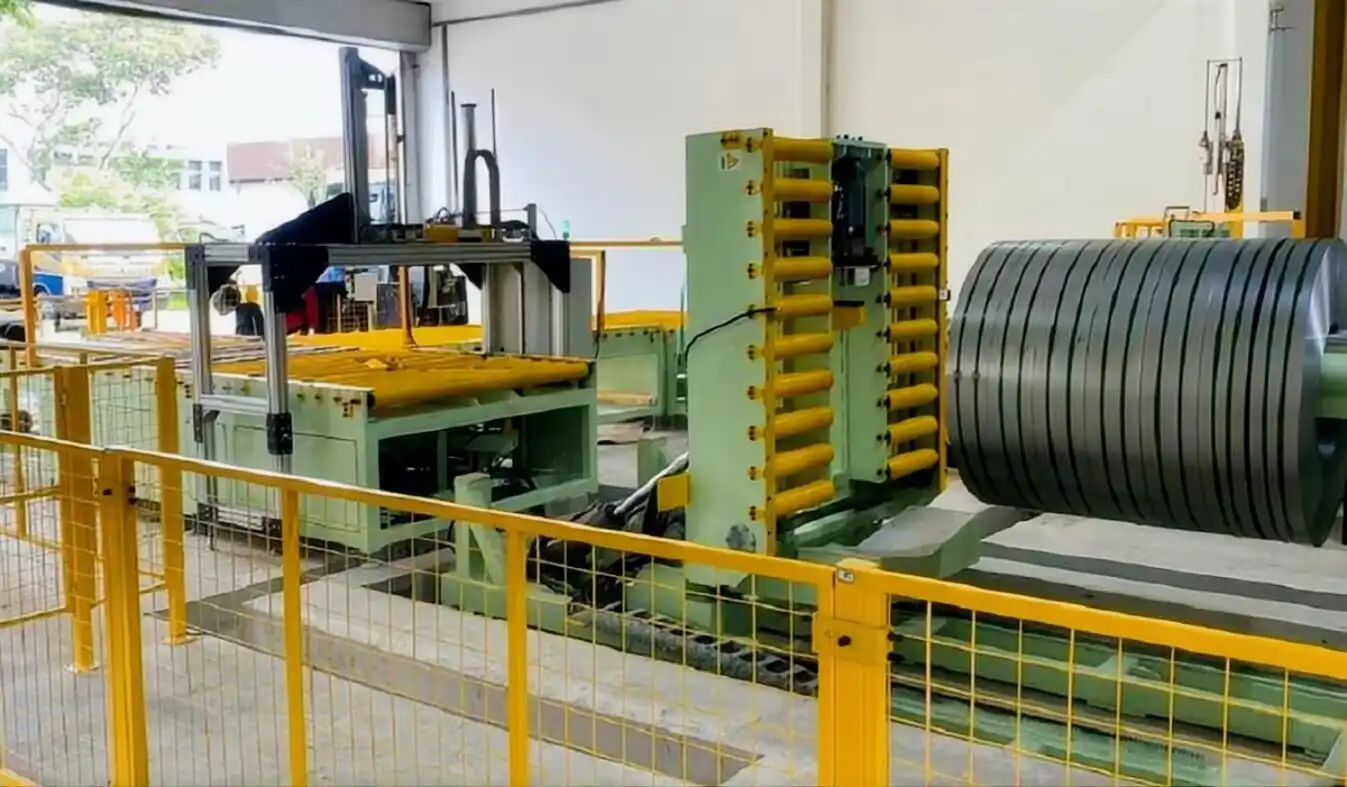
When scrutinizing a machine’s technical features, focus on the fundamentals: the robustness of the machine’s steel frame, the quality and brand of the core drive components (motors, gearboxes), the reliability of the PLC control system, and the efficiency of the packaging technology (e.g., the pre-stretch ratio of the wrapper). These features are the heart of the machine and will determine its long-term performance and reliability.
Dive Deeper: Reading Between the Lines of a Technical Quotation
A quotation is more than just a price; it’s a window into the supplier’s engineering philosophy. Here is what you should look for to separate a high-quality machine from a low-quality one.
1. Structural and Mechanical Integrity
This is the machine’s skeleton. A weak frame will lead to vibrations and premature failure.
- Frame Construction: Ask for the thickness of the steel plate used. For a machine handling heavy steel coils, the main structural elements should be a minimum of 10-15mm thick. It should be an all-welded, heavy-duty design.
- Bearings and Rollers: The rollers that carry the coil should be solid, heavy-duty steel. Ask about the bearings used. Reputable brands like SKF, FAG, or top-tier Japanese brands are a very good sign.
2. Drive and Control Systems
These are the machine’s muscles and brain. Using high-quality, globally recognized brands is a mark of a superior supplier.
- Motors and Gearboxes: Look for brands like SEW-Eurodrive, Siemens, or ABB. These are known for their reliability and have service networks within India, making them easier to support and replace if needed.
- PLC and HMI: The PLC (Programmable Logic Controller) is the brain. Insist on a mainstream brand like Siemens or Allen-Bradley. Your local maintenance team will already be familiar with their programming, and support is widely available. An obscure or proprietary PLC brand can be a major problem down the road.
- Pneumatics and Electrics: Look for other quality component brands like Schneider for contactors or Festo for pneumatics.
3. Packaging Technology Efficiency
An efficient machine will save you money every single day.
- Wrapper Pre-Stretch: The orbital wrapper should have a powered pre-stretch system. A good machine will offer a pre-stretch ratio of at least 250-300%. This means it can turn 1 meter of film into 3-4 meters of applied film, dramatically cutting your consumable costs. A cheap machine with no pre-stretch will cost you a fortune in wasted film.
- Strapper Head Reliability: The strapping head is a complex mechanical component. Ask about its design and service life. A robust, well-engineered strapping head is critical for minimizing downtime.
| Technical Feature | Look for This (High Quality) | Beware of This (Low Quality) |
|---|---|---|
| Machine Frame | Thick (10mm+), heavy-duty welded steel. | Thin steel, bolt-together construction. |
| Motors/Gearbox | Reputable global brands (SEW, Siemens, etc.). | Unbranded or unknown Chinese brands. |
| PLC Control System | Mainstream brands (Siemens, Allen-Bradley). | Obscure or proprietary PLC systems. |
| Wrapper Film System | Powered pre-stretch (250%+). | No pre-stretch or mechanical-only stretch. |
Step 3: How to Assess a Supplier’s Reliability and Support for India?
You are not just buying a machine; you are entering into a 10- to 20-year relationship with the company that built it. For an Indian factory buying from an overseas supplier (whether from China or Europe), the quality of their support is just as important as the quality of their machine. A great machine with no support is a useless machine.
To assess a supplier’s reliability, you must go beyond their sales pitch and seek objective proof of their performance and commitment to service. This means checking their references in the steel industry, demanding a detailed written service plan for India, conducting a thorough factory audit (even virtually), and evaluating the quality of your communication with them throughout the entire sales process.

Dive Deeper: Your Due Diligence Checklist for a Potential Partner
This is your investigation phase. A trustworthy partner will welcome your questions and be transparent. A supplier with something to hide will become evasive.
1. Check Their References (The Right Way)
Don’t just accept a list of company names.
- Be Specific: Ask for references from other steel companies. Even better, ask for references in India or at least Southeast Asia. This proves they understand your specific market conditions, from climate to business culture.
- Ask the Tough Questions: When you call a reference, ask more than “Are you happy?” Ask:
- “How was the installation and commissioning process?”
- “Have you needed emergency support? If so, how quickly did they respond?”
- “How was the process of getting spare parts? Was it fast and easy?”
- “Would you buy from them again?”








