
Steel Coil Packaging Automation: A Guide for Indian Manufacturers
As a steel manufacturer in India, you are at the heart of one of the world’s most dynamic and fastest-growing economies. This incredible growth brings immense opportunity, but it also brings pressure. You face rising domestic and international competition, the need to increase your plant’s throughput, and the challenge of meeting global quality standards. You may be looking at your packing area, where workers are manually handling and wrapping heavy steel coils, and realizing this slow, inconsistent process is holding your business back.
The manual packing process is not just a bottleneck; it’s a major liability. In a country with challenging logistics and a humid monsoon season, improper packaging leads to costly product damage, rust, customer rejections, and a constant risk of serious workplace injuries. You know you need to modernize, but investing in automation is a major decision, and you need a clear path forward.
For Indian manufacturers, automating steel coil packaging is the most strategic investment to protect product quality, improve safety, and unlock higher production capacity. This involves implementing robust, integrated systems—such as coil upenders, orbital stretch wrappers, and automatic strappers—that create a secure, “monsoon-proof” package. The key is to choose a reliable automation partner who understands the demands of the Indian market and can provide a solution with a clear, fast return on investment.
My name is Randal Liu, and as the founder of FHOPEPACK in China, I have partnered with many steel manufacturers across Asia who are on the exact same journey as you. We understand the transition from manual labor to world-class automation because we have lived it ourselves. It’s a critical step to secure your place in the global market. This guide is designed to give you a practical, no-nonsense framework for making the right automation choices for your Indian factory.
Why is Manual Packing Holding Back Your Steel Business in India?
In your facility, you have likely invested in modern production machinery, but if the end of your line is still manual, it acts like an anchor, dragging down your entire operation’s efficiency. You may think that with available labor, the manual process is “good enough.” But the hidden costs of this outdated method are significant, especially in the competitive Indian market.
Manual packing is holding your business back by creating a production bottleneck that limits your sales capacity, failing to protect your coils from rust and transit damage which hurts your profits and reputation, and exposing your valuable workforce to unnecessary and serious safety risks. These combined factors make manual packing one of the most expensive and inefficient processes in a modern Indian steel plant.
Dive Deeper: The True Cost of an Outdated Process
Let’s look beyond the surface and calculate the real costs that are eating into your profitability every single day. As a factory owner myself, I’ve learned that the problems you don’t measure are often the ones that cost you the most.
1. The Throughput Bottleneck
Your state-of-the-art rolling mill might produce coils much faster than your team can pack them. Let’s say your packing team of 4-5 people can handle 10 coils per hour, but the rest of your plant can produce 20. That means for every hour you operate, you are losing the potential profit on 10 coils. You have already paid for the raw material and the processing; the only thing stopping you from selling more is the slow, manual packing at the end. An automated line can easily match the speed of your production, instantly unlocking that hidden capacity.
2. The High Cost of Product Damage
This is a massive issue in the Indian context.
- Corrosion and Rust: During the monsoon season, humidity is your enemy. A manually applied stretch wrap is often loose and inconsistent, leaving gaps where moisture can penetrate and cause rust. A single rusted coil can lead to a rejected shipment, a damaged customer relationship, and a total loss of that product’s value.
- Transit Damage: Your coils may travel hundreds or thousands of kilometers by truck or rail over roads that are not always perfect. Manual packing and strapping are often not tight or robust enough to prevent coils from telescoping or suffering edge damage from vibrations and impacts.
3. The Inefficiency and Risk of Labor
While labor is an asset, using skilled workers for a repetitive, dangerous, and low-value task is inefficient. The process of manually lifting, pushing, and strapping heavy coils is one of the leading causes of serious back injuries, strains, and cuts in any steel facility. The cost of a single major injury—in lost time, medical expenses, and impact on morale—can be enormous.
| Disadvantage of Manual Packing | Impact on Your Indian Steel Business |
|---|---|
| Slow Speed | Limits your factory’s total output and sales potential. |
| Inconsistent Quality | Leads to rust and transit damage, causing financial loss and hurting your brand. |
| High Labor Requirement | Wastes manpower on a non-value-added task. |
| Major Safety Hazards | High risk of employee injury, leading to high costs and operational disruption. |
Automating this process is not an expense; it’s a direct solution to these costly, daily problems.
What are the Core Components of a Modern Coil Packaging Line?
When you hear “automation,” it might sound complex, but a modern coil packaging line is a logical sequence of robust, proven machines working together. Understanding these core components will help you have more intelligent conversations with suppliers and choose the right configuration for your specific needs.
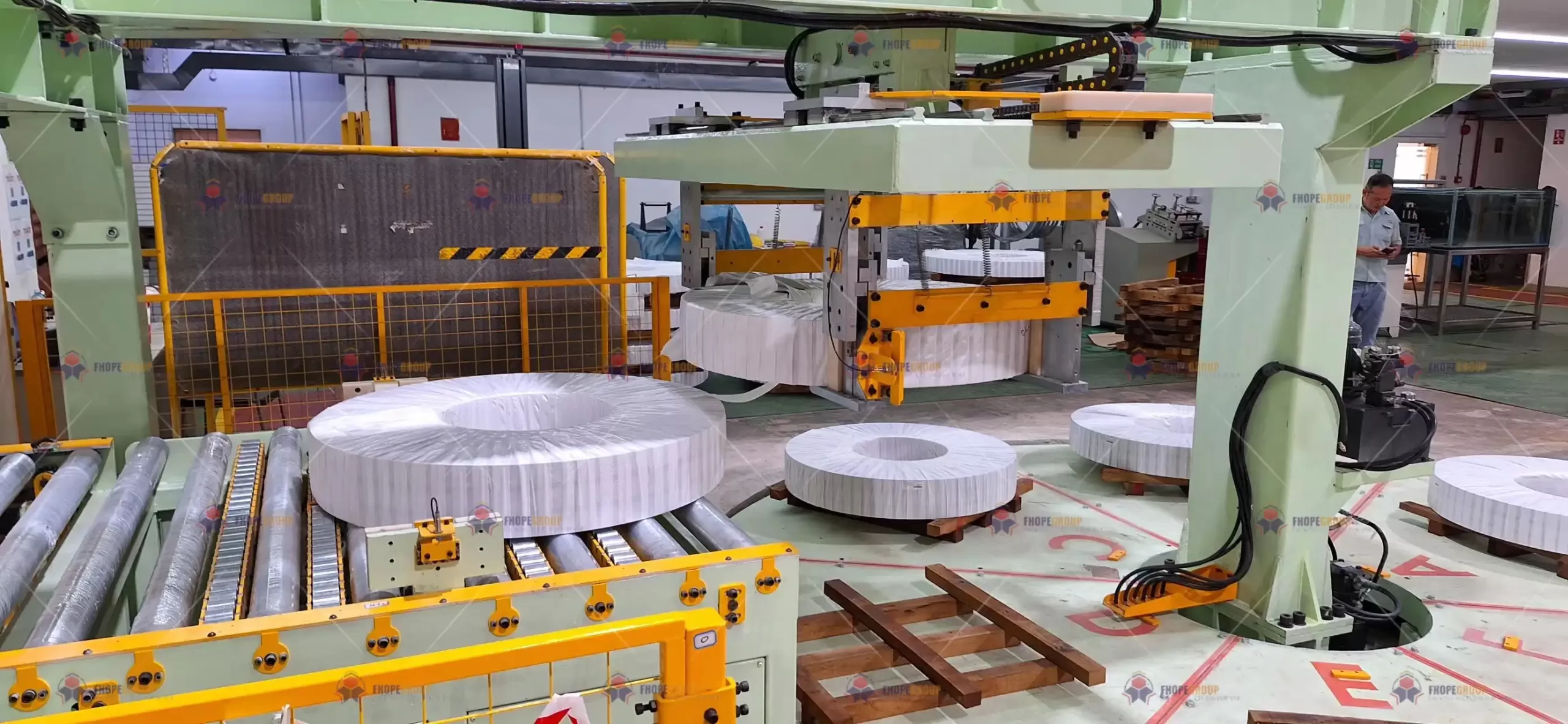
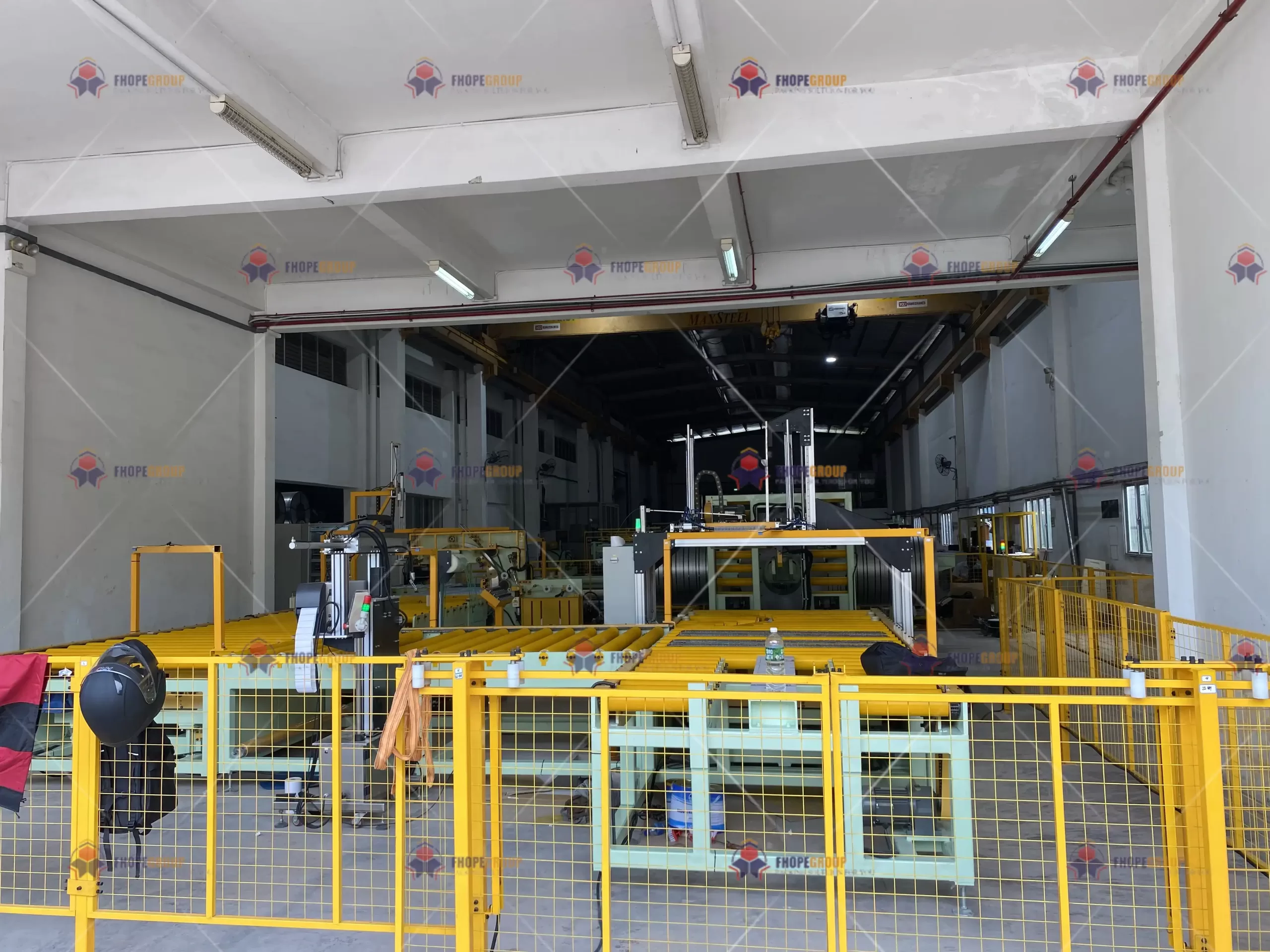
A typical automated steel coil packaging line consists of four core components working in sequence: a coil upender for safe positioning, a conveyor system for automated movement, an orbital stretch wrapper for complete protection, and a strapping machine for final security. This integrated system takes a finished coil and transforms it into a secure, protected, and transport-ready package without manual intervention.

Dive Deeper: Assembling Your Automated Solution
Think of these components as building blocks. A good partner will help you select the right blocks and arrange them in the most efficient layout for your factory floor. Let’s look at each one.
1. Coil Upender (Tilter)
- What it does: This machine safely and gently tilts the steel coil by 90 degrees. It typically takes a coil from an “eye-to-sky” position (lying flat) and tilts it to an “eye-to-the-wall” position (sitting on a pallet or conveyor), ready for packaging.
- Why it’s essential: It eliminates the incredibly dangerous practice of flipping heavy coils with cranes and slings. This single machine dramatically improves safety and prevents damage to the coil’s delicate edges.
2. Conveyor System
- What it does: A system of heavy-duty chain or roller conveyors automatically transports the coil from the upender to the wrapping station, and then to the strapping station.
- Why it’s essential: It creates the “flow” of the automated line, replacing forklifts or manual push carts. This makes the process faster, safer, and reduces the chance of collisions and product damage.
3. Orbital Stretch Wrapper
- What it does: This is the heart of the protection system. The coil is moved into the center of the machine, and a rotating ring passes a roll of stretch film through the eye of the coil and around its outer surface. This action “cocoons” the entire coil in a tight, multi-layered, waterproof plastic film.
- Why it’s essential: This is your primary defense against moisture, dust, and rust. For the Indian market, I always recommend using this machine with VCI (Volatile Corrosion Inhibitor) stretch film, which actively releases a vapor that prevents corrosion—a perfect solution for the monsoon season and sea transport.
4. Automatic Strapping Machine
- What it does: After wrapping, the coil is moved to a station where one or more strapping heads automatically apply steel or PET straps. These can be circumferential (around the outside) or through-the-eye (radial).
- Why it’s essential: The straps provide the final security and handling strength. They keep the coil windings tight and provide secure points for lifting with cranes or forklifts.
| Component | Primary Function | Key Benefit for Indian Manufacturers |
|---|---|---|
| Coil Upender | Safely tilts the coil 90 degrees. | Eliminates a major safety hazard; protects coil edges. |
| Conveyor System | Automatically moves the coil between stations. | Increases speed and reduces forklift traffic. |
| Orbital Wrapper | Encases the coil in a protective stretch film. | Provides a “monsoon-proof” barrier against rust and damage. |
| Strapping Machine | Applies high-tension straps to secure the coil. | Ensures bundle integrity for rough transport and handling. |
How Does Automation Solve India’s Unique Logistics and Climate Challenges?
A steel coil produced in your factory in Maharashtra might travel by truck to a port in Gujarat before being shipped to a customer in Europe. It will face extreme humidity, bumpy roads, and multiple handling stages. Your packaging has to be robust enough to survive this entire journey. This is where automation offers a decisive advantage over manual methods.
Automation directly solves India’s unique challenges by creating a standardized, highly protective package that can withstand long-distance transit and extreme weather. The machine-applied stretch wrap provides a superior moisture barrier against monsoon humidity, while the combination of a tight wrap and consistent strap tension creates a shock-absorbent package that prevents damage during rough road and rail transport.
%(https://www.fhopepack.com/blog/wp-content/uploads/2024/07/automatic-slit-coil-packaging-system2-1.webp “Transit-Ready Steel Coil Packaging”)
Dive Deeper: Engineering a Package for the Real World
When we design a packaging line for a client in India, we aren’t just thinking about their factory; we’re thinking about the entire supply chain. The package must be engineered for the journey.
Winning the Battle Against Humidity (Monsoon-Proofing)
This is likely your biggest environmental challenge. Rust is the enemy of any steel producer.
- The “Cocoon” Seal: An orbital wrapper applies film under tension, causing the layers to cling together and form a tight, waterproof seal. Manual wrapping can never achieve this level of consistency. There are no loose ends or gaps for moisture to penetrate.
- The Power of VCI Film: This is a crucial technology for your market. VCI (Volatile Corrosion Inhibitor) film is a special stretch film embedded with molecules that turn into a gas inside the package. This gas forms an invisible, microscopic layer on the surface of the steel that stops the chemical reaction of rusting. Combining a machine wrap with VCI film provides the ultimate protection during long sea voyages or storage during the humid season.
Surviving the Journey (Transit-Proofing)
From national highways to local roads, the journey can be rough. Your packaging needs to be tough.
- Shock Absorption: The tight layers of stretch film act as a cushion, absorbing vibrations and minor impacts.
- Preventing Edge Damage: The most vulnerable part of a coil is its edges. The wrapping machine can be programmed to apply extra layers of film to the corners and edges for enhanced protection.
- Structural Integrity: The high, consistent tension from an automatic strapping machine holds the coil windings together tightly, preventing them from shifting or “telescoping” during sudden stops or starts in transit. This creates a solid, stable mass that travels much more safely.
A machine-wrapped coil is not just a product; it’s a globally compliant package. When your international customers receive a perfectly clean, dry, and undamaged coil, it sends a powerful message about the quality and professionalism of your entire operation.
How to Choose the Right Automation Partner for Your Indian Factory?
You are ready to invest in automation, but you know that the success of your project depends entirely on the supplier you choose. The market is full of options, from local fabricators to international giants. As an Indian manufacturer, you need a partner who provides not just a machine, but a complete solution: robust technology, reliable support, and a true understanding of your operational needs.
Choosing the right automation partner requires looking beyond the initial price and focusing on the supplier’s technical expertise, their experience in the steel industry, and their commitment to after-sales service in India. You need a partner who builds incredibly durable machines, can prove their reliability with references from other steel mills, and has a clear plan to support you with spare parts and technical help to ensure maximum uptime.

Dive Deeper: My Insight on Finding a Partner You Can Trust
As a Chinese manufacturer who serves a global market, I have learned what is most important to clients like you. Price is always a factor, but reliability and service are what build a long-term, successful partnership. Here is my advice on how to vet a potential supplier.
1. Prioritize Robust Engineering Over Low Price
A packaging machine in a steel mill operates in a tough environment. It must be “built like a tank.” When evaluating a supplier, ask about the construction:
- What is the thickness of the steel frame?
- What brands of motors, gearboxes, and electronics do they use? (Look for reputable international brands like Siemens, SEW, Schneider, or top-tier Asian brands).
- A machine that is 20% cheaper is often built with much lower quality components that will fail under the stress of continuous operation, costing you far more in downtime.
2. Verify Their Experience in the Steel Industry
A company that makes packaging machines for light biscuits is not qualified to build a machine for 20-ton steel coils. Ask for specific proof of their experience:
- Case Studies: Ask for detailed case studies of packaging lines they have installed in other steel plants.
- References: Request to speak with their other customers, especially any in India or Southeast Asia. Ask them about the machine’s reliability and their experience with the supplier’s service.
3. Scrutinize Their Service and Support Plan for India
This is the most critical point for an Indian manufacturer buying from an overseas supplier. Before you buy, you need clear answers to these questions:
- Do you have a local service agent or technician in India?
- If not, what is your plan for remote support? (They must offer remote PLC access for diagnostics).
- What is your guaranteed process for shipping critical spare parts to India? How long will it take?
- Are all manuals, schematics, and HMI interfaces available in clear, simple English?
A good partner will have confident, detailed answers to all these questions.
| Supplier Evaluation Checklist | Green Flag (Good Partner) | Red Flag (High Risk) |
|---|---|---|
| Machine Construction | Uses thick steel and reputable global component brands (Siemens, etc.). | Vague about specifications; uses unknown, cheap components. |
| Industry Experience | Provides multiple case studies and references in the steel industry. | Shows examples from unrelated, light-duty industries. |
| Service in India | Has a clear plan for local or remote support and fast-tracks spare parts. | Is vague about support; has no clear process for spare parts. |
| Price Focus | Justifies price with high quality, reliability, and long-term value. | Competes only on having the lowest possible price. |
By choosing a partner who values long-term reliability over short-term savings, you are setting your factory up for years of efficient, profitable, and safe operation.
Conclusion
Automating your steel coil packaging is a necessary step for Indian manufacturers to compete on a global scale. It solves critical issues of safety, product protection, and production speed, driving profitability and growth.









