

How to Automate Weight Checking of Pipe Bundles in Bundle Packing
Automating weight checks in pipe bundle packing streamlines operations, boosts accuracy, and cuts costs. This ensures each bundle meets specifications, improving quality control and customer satisfaction, while reducing material waste.
Here’s how to automate weight checking during pipe bundle packing: Integrate a weighing and checking program with conveyor systems using load cells. Set acceptable weight ranges; bundles outside these trigger a reject mechanism. Data capture provides real-time monitoring and reporting.
To ensure your pipe bundling operation runs smoothly and produces consistent results, a robust weight checking system is essential. Keep reading to learn how automated systems can transform your pipe packing line!

Understanding Checkweigher Reject Mechanisms
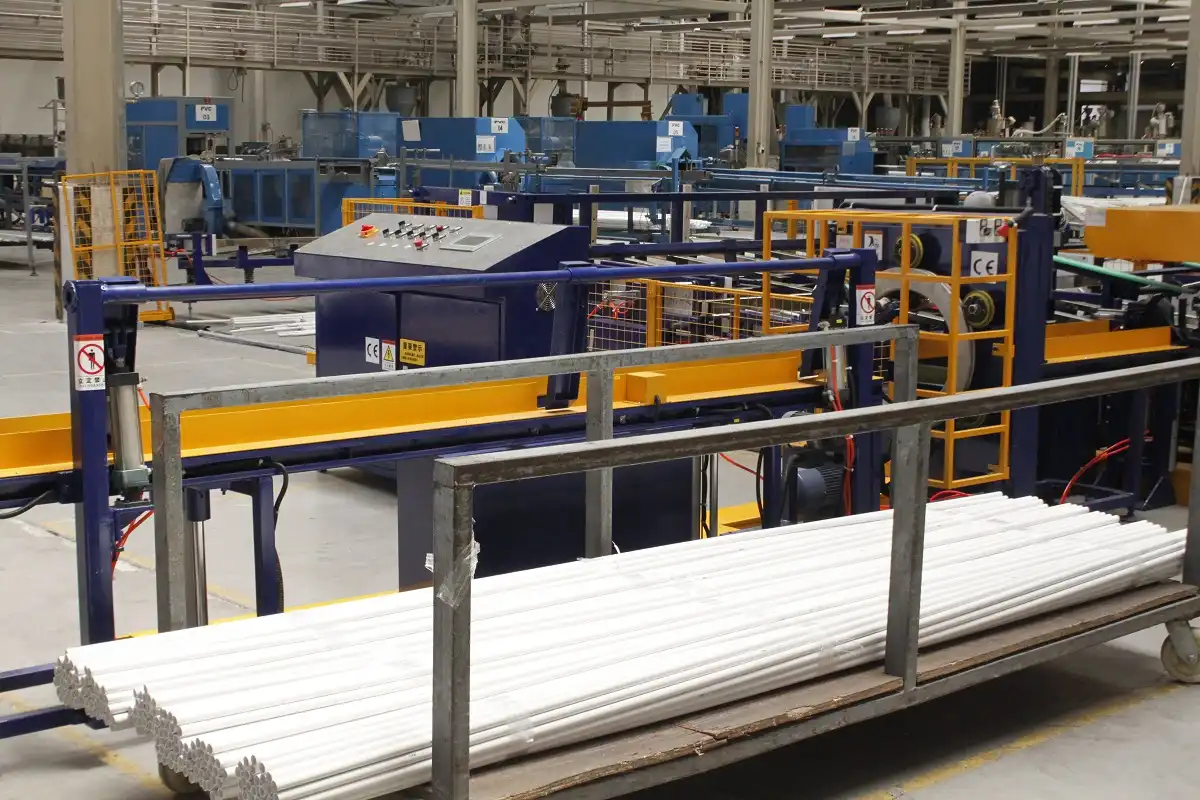
Manual pipe bundle packing often relies on visual checks or spot weighing, leading to inconsistencies. Checkweighers automatically weigh bundles and reject those outside pre-defined limits. Key components include a weigh scale and a reject mechanism. The reject mechanism removes out-of-spec bundles. Some clients reject underweight packages. Some customers will remove both under and overweight packages off of the line so they can reuse the product, saving them countless dollars over the long run.
Transition Paragraph: Dive into the technical aspects, exploring diverse reject mechanisms and criteria for selecting the optimal system.
Selecting the Right Reject Mechanism for Your Pipe Bundling Line
Choosing the appropriate reject mechanism is crucial for efficient and reliable pipe bundle packing. The selection hinges on variables like bundle type, weight, and production speed. There are five main types of checkweigher reject system devices:
- Air Jet Reject Device: Best for lightweight bundles (under 1 lb). Uses a sharp air stream to blow the bundle off the line. Simple and fast (up to 250 bundles per minute).
- Bopper Reject Device: For slightly heavier bundles (under 2.5 lbs) requiring high speeds. A cylindrical “bopper” hits the bundle off the conveyor.
- Pusher Reject Device: Handles bundles up to 8 lbs at speeds up to 80 bundles per minute. Uses a pneumatic cylinder to push the bundle.
- Swing Gate/Diverter Reject Device: Suitable for bundles up to 5 lbs at speeds of 200 bundles per minute. A gate diverts unacceptable bundles off the line.
-
Drop Belt Conveyor Reject Device: Lowers the outfeed conveyor, causing the off-target bundle to fall into a reject bin. Handles bundles under 6 lbs.
The proper reject system depends on the following variables: Type of container or package, Weight of that container or package,Speed at which the product is running across the checkweigher
The application and customer needs dictate the reject method. Any reject could be used on any model (within reason).To determine which type of reject will be most applicable to a given project, we will delve into which of the variables we mentioned match with which type of reject device we offer.
By carefully considering these variables, businesses can choose the reject mechanism best suited to their specific application, optimizing their automated weighing and checking program for maximum efficiency and accuracy.

Implementing Automatic Weighing Systems
Automated pipe packing line systems boost efficiency, precision, and safety. They offer a quick and reliable means of guaranteeing the manufacturer, co-packer (if applicable), and customer satisfaction .
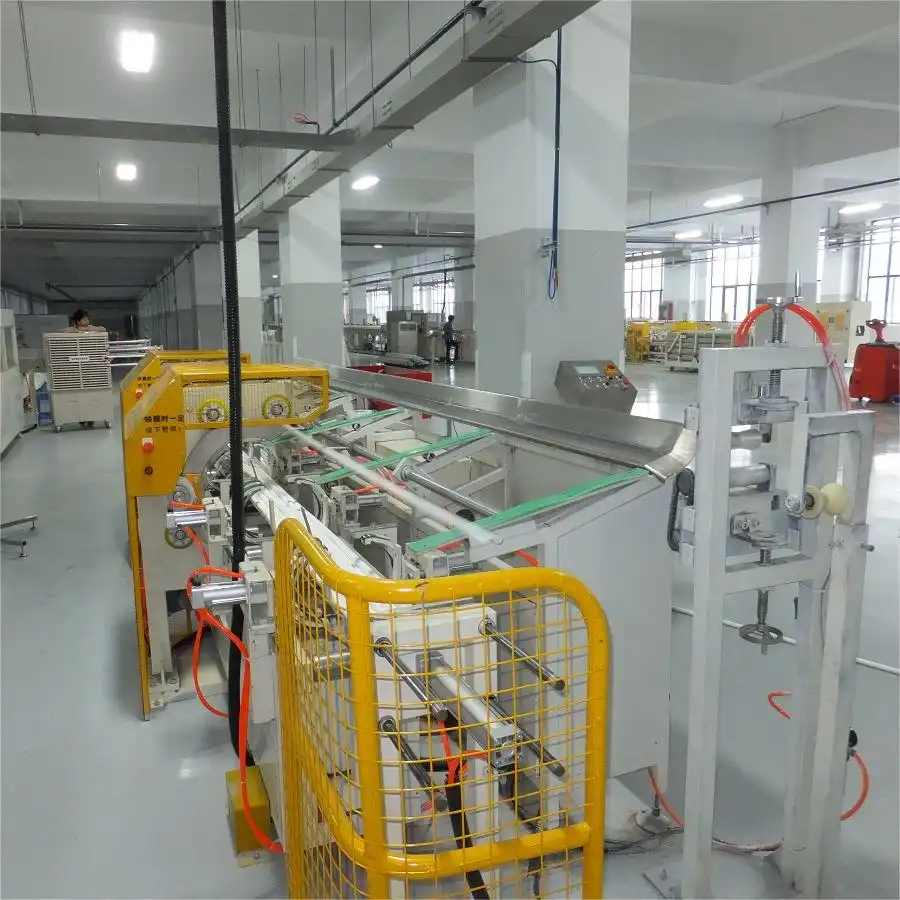
Automated systems use in-motion checkweighers to weigh bundles as they move along the packing line. Load cells measure the weight and compare it to pre-set limits. Bundles exceeding or falling short of the target weight are automatically rejected from the packing line.
Here we will discuss about the details of automatic weighing Systems, it is a crucial component of any modern pipe packing line and it is divided into two areas:
-
Components of automatic weighing Systems;
-
Integration with Existing Systems;
Components of Automatic Weighing Systems
An automatic weighing system isn’t just one machine, it’s a cohesive unit comprised of several interconnected components working in harmony. Understanding these components is essential for effective implementation and troubleshooting:
Component Function Key Considerations Weighing Conveyor Transport the pipe bundles across the load cells for weight measurement. Belt speed, load capacity, belt material (resistance to abrasion and product compatibility). Load Cells Precisely measure the weight of the pipe bundle. Accuracy, sensitivity, environmental protection (dust, moisture). Control System Processes data from the load cells, compares it to programmed weight limits, and triggers actions. Programmability, data logging capabilities, user interface, integration capabilities. Reject Mechanism Physically removes non-conforming bundles from the production line. Speed, reliability, gentle handling of products, adaptability to different bundle sizes. Data Logging & Reporting Records weight data, production statistics, and reject events. Real-time monitoring, trend analysis, quality control reporting. Integration with Existing Systems
When integrating automatic weighing systems, one approach is to take an existing conveyor belt and place the load cells, then take that information and feed it into the control system to perform actions, so one would take these steps to do so:
-
Asses your current operations – before integrating an automatic weighing system, one must first assess the current layout of their factory or business and analyze if there is room to fit such a device, or perform actions using the device.
-
Determine Data Logging needs – when doing testing or integration with a WMS systems, accurate date and time of events are important
-
Calibration considerations – the system needs to be properly calibrated for accurate reporting.
-
Test and Review the system regularly
By understanding these steps, it is possible to properly assess the needs of the business and integrate one system into another with ease.
This ensures that you get the most value out of the weighing and checking program.

The Importance of a Bad Page Reject System
In any high-volume pipe packing line, errors are inevitable. It is critical to implement a bad page reject system to identify and remove flawed bundles, preventing substandard product from reaching customers. This maintains reputation and meets customer satisfaction.
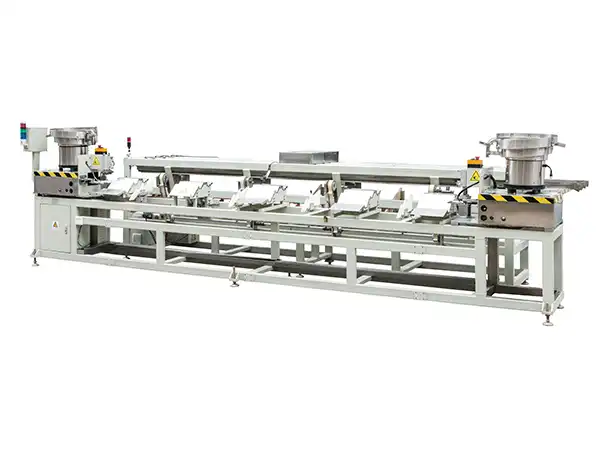
A “bad page reject” system is designed to detect a wide range of errors, from incorrect weight and labeling to physical defects. It utilizes sensors, cameras, and automated decision-making to remove non-conforming packages and prevent distribution, ensuring end-product quality.
Implementing a Robust Reject System
Implementing a robust reject system requires careful consideration of detection methods and system integration and design.
- Asses your organization
-
Set clear Key Performance Indicator goals
Methods for Detecting Defective Bundles:
There are several methods to detect defective bundles, the best implementation for the project will depend on the specifics of the customer’s application.
- Weight Verification: Checkweighers that can use load cells to reject any product that falls outside the specified weight range.
- Vision Systems: Integrate cameras and image processing software. These systems can detect label errors, missing components, or physical damage.
- Dimensional Gauging: Laser scanners or optical sensors measure bundle dimensions, identifying irregularities in shape or size.
- Manual Inspection: Although automation is key, having a human operator for spot checks and final approval adds an extra layer of quality control.
| System | Weight Verification | Vision systems | Dimensional Guaging | Manual Inspection | Comments |
|---|---|---|---|---|---|
| Initial cost | low | high | medium | medium | Can be customized using off the shelf components |
| Accuracy | high | medium | low | medium | Dependent on the skill of the personnel performing the test |
| Speed | high | medium | high | medium | Manual inspections are more likely to be slow than the other systems. |
Designing an Effective Reject System:
- Strategic Placement: Position reject mechanisms after critical checkpoints (e.g., weighing station, labeling).
- Fail-Safe Operation: Ensure the reject mechanism functions correctly, even in emergencies.

Future Trends in Automatic Weight Checking
Automated pipe packing line weight checking is constantly evolving. Emerging technologies promise even greater precision, efficiency, and data-driven insights.
By leveraging these advancements, manufacturers can minimize errors and optimize processes.
Key trends include advanced sensors (AI enhanced), real-time data analytics, and adaptive control systems. Advanced sensors are being developed to incorporate machine learning algorithms to minimize errors. This leads to even greater insight than the current status quo.
To help readers learn more we will detail:
- The potential of advanced sensors
- The growing role of data analytics and AI
-
adaptive systems and control
The Potential of Advanced Sensors
Advanced sensors, like hyperspectral imaging and 3D scanning, can collect richer data about pipe bundles than traditional load cells alone. Hyperspectral imaging, for example, can detect subtle variations in color and composition, which could indicate contamination or inconsistencies in materials. This technology can be used to identify any bad page reject
3D scanning can map the exact dimensions of a bundle, revealing deformation or improper stacking that might not be apparent through simple weight measurement. Such advanced sensors provide far more information to an automated weighing and checking program.
Sensor Type Measurement Benefits Challenges Hyperspectral Imaging Material composition, surface defects Enhanced quality control, detection of subtle flaws. High initial cost, complex data analysis. 3D Scanning Dimensional accuracy, shape irregularities Identification of stacking issues, non-standard bundle geometry. Requires robust data processing, sensitive to environmental factors. Acoustic Sensors Internal bundle integrity, void detection Non-destructive testing, identification of internal defects. Interpretation of data can be complex, sensitive to external noise. The Growing Role of Data Analytics and AI
The data generated by advanced sensors can be overwhelming without effective methods for analysis. Artificial intelligence (AI) and machine learning (ML) offer powerful tools for extracting meaningful insights. AI-powered systems can analyze weight trends, predict potential issues, and adjust production parameters in real-time. For instance, an AI could identify a gradual increase in bundle weight over time, signaling that a component feeder is malfunctioning or that a calibration adjustment is needed.
Real-time data analytics dashboards provide operators with instant visibility into key performance indicators (KPIs). This allows for proactive intervention and informed decision-making.
Adaptive Systems and Control
In the future, automated weighing systems will become increasingly adaptive, self-correcting, and autonomous. Rather than simply reacting to deviations, they will anticipate them and proactively adjust parameters to maintain optimal performance. A key element of this evolution is the integration of feedback loops that link sensors, AI-driven analytics, and control mechanisms. For example, a system might monitor the output of a cutting station and adjust the blade sharpness or cutting speed to compensate for wear and tear.
Conclusion
Implementing automatic weight checking in pipe bundle packing enhances quality, optimizes resources, and reduces labor costs. There is a wide range of approaches, from in-motion checkweighers to advanced sensor technologies to address a wide range of needs. By embracing automated weighing and checking programs, the pipe packing line will see measurable results. and contribute to its long-term success, while minimizing bad page reject.












