
How does a pallet inverter reduce worker contact risks in hazardous goods logistics?
Handling hazardous goods is one of the toughest jobs in logistics. Every day, workers face constant risks of injury, chemical exposure, or worse. The pressure to move products fast often collides with the need for absolute safety. For warehouse and logistics managers like Carlos in Spain, who deal with thousands of pallets daily, this creates a major headache. Manual handling only makes these risks worse, leading to costly accidents, fines, and operational delays. We must find a smarter, safer way to protect our teams and keep operations running smoothly.
A pallet inverter fundamentally reduces worker contact risks in hazardous goods logistics by automating the transfer of unstable, damaged, or specific goods between pallets. This removes the need for manual lifting, turning, and direct exposure to dangerous materials. It creates a secure, contained environment for pallet exchange, drastically minimizing human intervention in situations where hazardous substances are present.
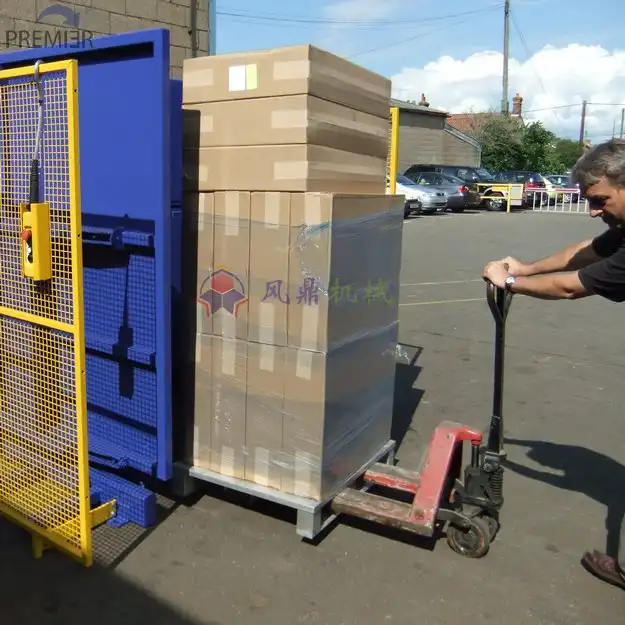
Understanding how a pallet inverter achieves such a significant impact is crucial. This technology is not just about moving goods; it is about building a safer, more efficient future for logistics. Let’s explore the challenges and how this solution truly transforms hazardous goods handling.
Why is hazardous goods logistics a high-risk environment for workers?
Working with hazardous materials is inherently dangerous. It is a field where one small mistake can have serious consequences. We are talking about chemicals, flammable liquids, toxic substances, and explosive materials. These things require extreme care. My years in the packing machine industry taught me that even small handling errors can escalate quickly. This risk goes beyond just a company’s bottom line. It impacts human lives and the environment. We must understand these risks deeply to build truly safe systems.
Hazardous goods logistics is a high-risk environment for workers due to the inherent dangers of the materials themselves, such as flammability, corrosiveness, toxicity, or explosiveness. This combines with the physical demands of handling. These factors lead to potential exposure, spills, accidents, and long-term health issues from direct contact or inhalation.
Hazardous goods present multiple layers of risk for logistics workers. These risks are not just theoretical. They manifest as real-world threats every day.
-
Chemical Exposure 🧪:
- Direct Contact: Spills, leaks, or splashes can cause skin burns, irritation, or absorption of toxic substances. Workers might inhale fumes or dust.
- Respiratory Hazards: Many hazardous goods release harmful vapors or fine particles into the air. Inhaling these can cause acute respiratory distress or long-term lung damage.
- Absorption: Some chemicals can be absorbed through the skin without immediate signs of damage. This leads to systemic toxicity over time.
- Examples: Acids, caustics, industrial solvents, or certain food additives in concentrated forms.
-
Physical Injuries 🤕:
- Manual Handling: Lifting, pushing, or pulling heavy and awkward loads causes musculoskeletal injuries. This includes back strains, sprains, and hernias.
- Falling Goods: Unstable stacks or improperly secured loads can fall. This causes crushing injuries, broken bones, or even fatalities. Hazardous goods often come in heavy drums or containers, making this risk higher.
- Forklift Accidents: While forklifts reduce manual lifting, they introduce other risks. Collisions with shelves, other equipment, or workers can happen. This is especially true in busy warehouses.
- Examples: Dropping a heavy drum of corrosive liquid or a stack of unstable boxes containing pesticides.
-
Fire and Explosion Risks 🔥:
- Flammable Materials: Many hazardous goods are flammable. A spark, an electrical fault, or even static discharge can ignite them. This leads to fires or explosions.
- Reactive Substances: Some chemicals react dangerously with air, water, or other substances. This generates heat, toxic gases, or explosions.
- Storage Conditions: Improper storage, such as storing incompatible materials together, increases these risks.
- Examples: Solvents, certain gases, or organic peroxides.
-
Long-Term Health Effects 😷:
- Chronic Exposure: Even low-level, long-term exposure to certain hazardous substances can cause chronic diseases. This includes cancer, organ damage, or reproductive problems.
- Sensitization: Repeated exposure can make workers hypersensitive to a substance. This causes severe allergic reactions.
- Psychological Stress: The constant threat of accidents and the need for strict adherence to safety protocols create significant mental stress for workers.
These risks are amplified in dynamic warehouse environments. Workers must handle diverse products, often under tight deadlines. This makes vigilance critical but also challenging. Managers like Carlos must address these fundamental dangers head-on to protect their teams.
How do current manual methods in hazardous goods handling lead to accidents?
Even with the best training, human error is a factor. Manual pallet handling is a major source of accidents, especially with unstable or heavy loads in hazardous environments. Imagine workers manually flipping heavy drums or trying to shift delicate, potentially leaking containers. This is a recipe for disaster. The risk of goods tipping, pallets breaking, or spills is constant. This leads to worker injuries and costly cleanups. Carlos, managing a large distribution center, understands these pain points very well. We must move beyond outdated, dangerous manual practices.
Manual methods in hazardous goods handling increase accident risks through direct physical contact with unstable or heavy loads. This requires workers to lift, tilt, or transfer items by hand. This can cause musculoskeletal injuries, accidental spills, product damage, and exposure to harmful substances, particularly during the critical pallet exchange process.
Manual handling methods expose workers to unnecessary dangers in hazardous goods logistics. These traditional approaches often rely on human strength and judgment, which are simply not enough for safety and efficiency.
-
Direct Contact and Exposure 👋:
- Unstable Loads: Workers often need to manually stabilize uneven or poorly stacked pallets before or during transfer. This puts them in close proximity to potentially dangerous goods.
- Damaged Goods: If a product package is leaking or damaged, manual intervention to contain it or transfer it to a new pallet means direct contact with the hazardous substance. This increases the risk of chemical burns or inhalation.
- Dust and Fumes: Simply moving or inspecting hazardous materials can stir up dust or release fumes. Without proper mechanical ventilation and sealed processes, workers breathe these in.
-
Musculoskeletal Injuries 💪:
- Heavy Lifting: Hazardous goods often come in heavy containers, drums, or bulk bags. Manually lifting or shifting these, even with team lifts, puts immense strain on backs, shoulders, and knees.
- Awkward Postures: Workers might bend, twist, or reach into difficult spaces to adjust loads or replace pallets. These awkward postures increase the risk of sprains and strains.
- Repetitive Tasks: In high-volume operations, the repetitive nature of manual pallet handling leads to cumulative trauma disorders over time.
-
Accidents from Load Instability 📉:
- Tipping and Falling Goods: When workers manually tilt a pallet or try to flip a load, the entire stack can become unstable. This causes products to fall, potentially injuring workers or spilling hazardous contents.
- Pallet Breakage: Manual handling can stress old or damaged pallets. This leads to them breaking under load, causing the entire stack to collapse.
- Poor Stacking: If workers manually restack goods, they might not achieve the same stability as a machine. This creates ongoing risks for other workers in the warehouse.
-
Inefficiency and Labor Strain 🕒:
- Slow Process: Manual pallet changes are slow and labor-intensive. This delays shipments and reduces overall warehouse throughput, which Carlos certainly faces with his demanding clients.
- Labor Shortage: In many regions, including Spain, there is a growing shortage of workers willing to do physically demanding and dangerous warehouse jobs. Relying on manual methods makes it harder to attract and retain staff.
- Increased Error Rate: Human fatigue and distraction can lead to errors. This includes putting the wrong product on a pallet or mishandling a hazardous package.
My own journey in the packing machine industry has shown me how critical it is to remove human contact from high-risk tasks. I saw how clients struggled with these exact problems. They needed solutions that protected their people. These manual methods are not just inefficient; they are a direct threat to worker safety and business continuity.
What is a pallet inverter, and how does it fundamentally enhance worker safety?
We have looked at the dangers of manual handling in hazardous logistics. So, what is the answer? Businesses need a reliable way to manage pallet transfers without putting their staff in harm’s way. The right technology can make a huge difference. My experience building packing machines always focused on this dual goal: efficiency and safety. When I started FHOPEPACK, I knew sharing knowledge about such solutions was key. Enter the pallet inverter – a core piece of equipment for safer operations.
A pallet inverter is a machine designed to rotate, invert, or transfer goods from one pallet to another, or to replace a damaged pallet, without manually touching the product. It fundamentally enhances worker safety by isolating personnel from hazardous loads and operations. It prevents direct contact with potentially dangerous goods, eliminates manual lifting, and maintains load stability throughout the transfer process.

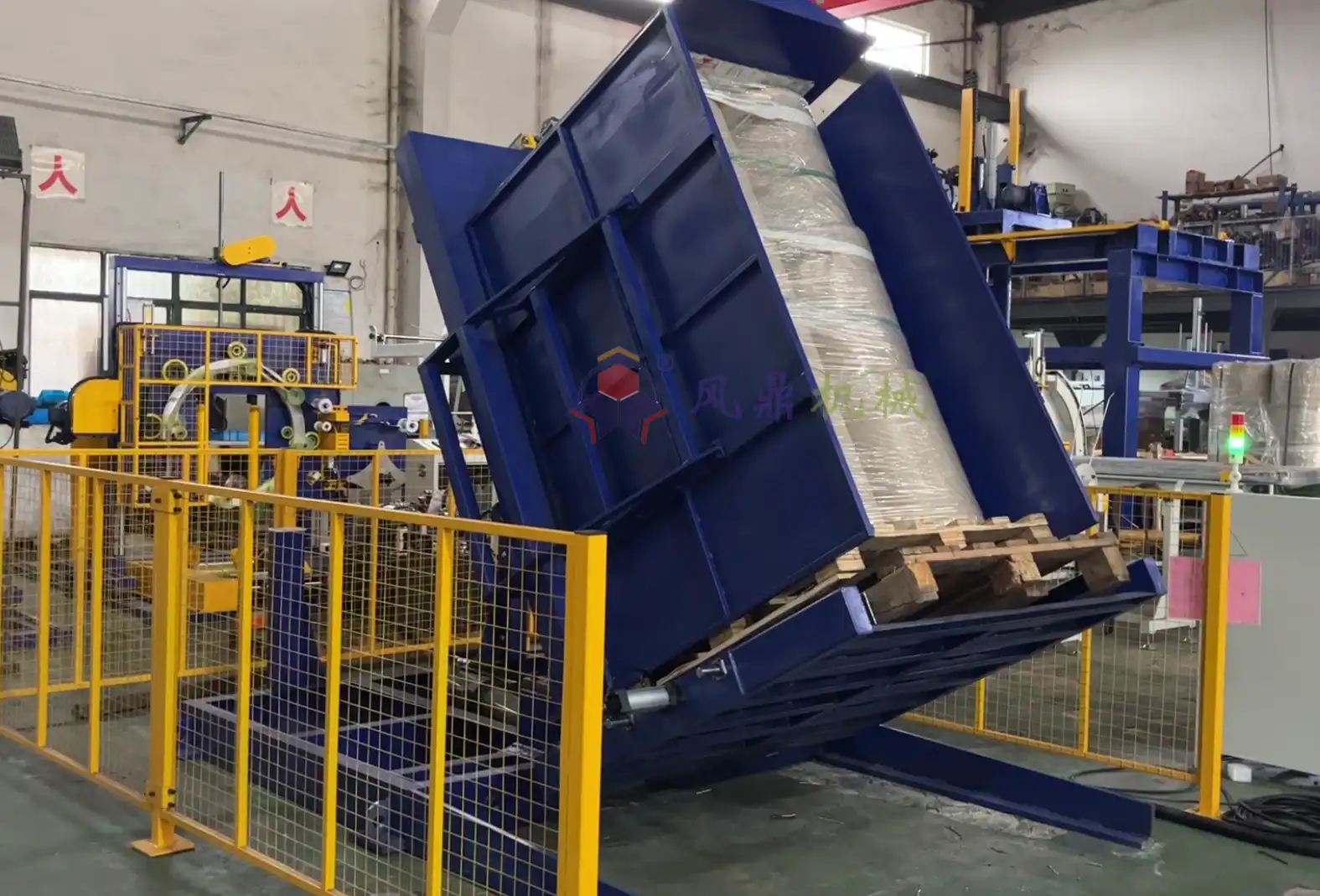
A pallet inverter is a specialized piece of equipment designed to mechanically handle and transfer palletized loads. It does this without direct human contact with the goods or the pallet. This design makes it uniquely suited for hazardous goods environments.
-
How a Pallet Inverter Works ⚙️:
- Clamping Mechanism: The machine uses hydraulic clamps to securely grip the load and its original pallet. This ensures stability.
- Rotation or Tilting: Once clamped, the entire load (goods and pallet) is rotated 90, 180, or even 360 degrees, depending on the machine type. Some models tilt the load at an angle.
- Pallet Exchange: With the load inverted or tilted, the old pallet is either slid out or the new pallet is brought into position. The process then reverses to place the load onto the new pallet.
- Types: There are various types, including 90-degree tippers, 180-degree inverters, and free-standing pallet changers. Each one suits different load types and operational needs.
-
Elimination of Manual Handling 🚫:
- No Lifting: Workers do not need to manually lift or shift heavy drums, sacks, or boxes. The machine does all the heavy work. This prevents back injuries, strains, and other musculoskeletal problems.
- No Flipping or Tilting by Hand: The dangerous task of manually tipping a pallet or load to replace it is removed. The inverter handles this smoothly and controllably. This prevents goods from falling or spilling.
- Reduced Contact with Hazardous Goods: Since the load is handled mechanically, workers are much further away from any potential leaks, spills, or harmful fumes. This significantly reduces exposure risks.
-
Enhanced Load Stability 穩:
- Secure Clamping: The inverter securely clamps the entire load. This keeps it stable throughout the transfer. This prevents items from shifting, falling, or becoming unstable during rotation.
- Controlled Movement: The machine moves the load slowly and precisely. This eliminates the sudden movements and jerks that can occur during manual handling. These movements often lead to load instability.
- Prevention of Spills and Damage: By maintaining load integrity, the pallet inverter greatly reduces the chance of product damage or spills. This is critical when dealing with corrosive or flammable materials.
-
Compliance and Regulatory Benefits ✅:
- Meet Safety Standards: Using automated equipment helps companies comply with strict health and safety regulations, particularly those concerning manual handling and hazardous materials.
- Reduced Accident Rates: Fewer manual tasks mean fewer opportunities for human error. This directly translates to fewer accidents and injuries. This lowers insurance costs and avoids fines.
- Better Work Environment: Workers feel safer and more valued when advanced equipment protects them from danger. This improves morale and retention, which is a big plus for managers like Carlos.
Carlos, with his focus on “equipment reliability and ergonomic safety,” would immediately see the value. A pallet inverter is not just a machine. It is a critical safety system that protects people while keeping operations moving.
How do pallet inverters create a safer, more efficient hazardous goods workflow?
Safety is always the top priority, but businesses also need to be efficient and cost-effective. Many people assume safety comes at the cost of speed or productivity. This is simply not true. A well-implemented solution, like a pallet inverter, delivers both. My journey has shown me how factories, from small operations to large groups like Carlos manages, transform their entire workflow with the right machinery. Pallet inverters are not just a safety tool. They are a strategic asset for overall operational excellence.
Pallet inverters create a safer, more efficient hazardous goods workflow by automating pallet changes. This drastically reduces the time spent on manual handling. It prevents product damage during transfer. It ensures compliance with diverse international pallet standards (like Euro vs. US pallets). It frees up workers from dangerous tasks to focus on higher-value activities. This leads to faster turnaround times and reduced operational costs.
The benefits of integrating a pallet inverter extend far beyond just direct worker safety. They create a ripple effect, improving efficiency, reducing costs, and ensuring compliance across the entire hazardous goods logistics chain.
-
Enhanced Automation and Reduced Labor Dependence 🤖:
- Faster Processing: Automated pallet changes are significantly faster than manual methods. A pallet inverter can complete a cycle in minutes, whereas manual transfers can take much longer, especially for heavy or unstable loads.
- Addressing Labor Shortages: As Carlos knows, finding skilled labor for demanding warehouse jobs is hard. Pallet inverters reduce the need for multiple workers to perform strenuous and risky tasks. This allows the existing workforce to focus on more complex, value-added roles.
- Consistent Performance: Machines do not get tired. They perform tasks consistently and reliably, day in and day out, without errors caused by fatigue or distraction. This ensures a steady workflow.
-
Compliance with Diverse Pallet Specifications 🌍:
- International Standards: Carlos’s challenge of switching between Euro and US standard pallets is common. Pallet inverters are designed to handle various pallet sizes and types (wood, plastic, slave boards). This ensures seamless transitions for international shipments.
- Hygiene Requirements: For industries like food processing, using specific hygienic pallets (e.g., plastic or clean pallets) is crucial. Inverters allow for easy transfer from delivery pallets to internal cleanroom pallets without product contamination risks.
- Damaged Pallet Replacement: Old or damaged pallets can compromise load stability and violate safety rules. Inverters allow quick replacement of such pallets without disturbing the product. This maintains the integrity of the hazardous goods.
-
Significant Cost Reduction 💰:
- Reduced Labor Costs: Less reliance on manual labor for dangerous tasks directly lowers payroll and associated benefits. This frees up budget for other areas.
- Decreased Injury Claims: Fewer accidents mean fewer worker’s compensation claims, reduced medical expenses, and lower insurance premiums. This has a direct positive impact on the bottom line.
- Less Product Damage: Automated handling is gentler and more controlled. This leads to less product damage and fewer spills. This saves costs associated with waste, re-packaging, and environmental cleanups.
- Avoided Fines: Compliance with safety regulations means avoiding hefty fines and legal penalties associated with accidents or non-conformance.
-
Improved Throughput and Customer Satisfaction 🚀:
- Faster Dispatch: With quicker pallet changes, goods are ready for dispatch sooner. This shortens lead times and helps meet the demanding delivery schedules of e-commerce and retail clients. This directly addresses Carlos’s goal of accelerating warehousing processes.
- Reliable Operations: A more automated and safer workflow leads to fewer disruptions due to accidents or slow processes. This ensures a more reliable supply chain.
- Enhanced Reputation: Companies that prioritize safety and efficiency build a strong reputation with clients and regulators. This can open doors to new business opportunities.
I remember one client who was struggling with slow exports due to constant manual pallet changes for different regional standards. Their hazardous goods shipments were always held up. Implementing a robust pallet inverter system not only sped up their entire export process by 50% but also removed the most dangerous parts of the job. Their workers were much happier and safer. This kind of transformation is exactly why FHOPEPACK exists. It is about empowering businesses with the right knowledge and tools.

Conclusion
Pallet inverters revolutionize hazardous goods logistics by boosting safety, efficiency, and compliance. They remove manual risks, accelerate operations, and adapt to diverse pallet needs. Investing in a pallet inverter is a strategic move for any warehouse manager looking to protect staff and streamline their workflow.








