
How pallet inverter reduces product damage compared to forklifts in cold rooms?
Have you ever walked into a cold room and felt the chill, not just from the temperature, but from the constant worry of damaged goods? The pressure to maintain product integrity in sub-zero conditions is immense. Forklifts, while essential, often become a source of damaged products when handling delicate or frozen items for pallet changes. This can lead to significant financial losses and customer dissatisfaction.
Pallet inverters drastically reduce product damage in cold rooms by offering a controlled, gentle, and automated method for transferring goods between pallets, completely removing the rough, manual handling and inherent risks associated with using forklifts for this specific task.

At FHOPEPACK, I have seen firsthand how these challenges can impact a business. My journey in the packing machine industry taught me that success comes from understanding core problems and offering real solutions. We understand the unique demands of cold storage. This article will show you why pallet inverters are not just an option, but a necessity for safeguarding your products and improving your cold room operations.
Why do forklifts often struggle with pallet handling in cold rooms, leading to damage?
Do you rely on forklifts for every pallet task in your cold storage? While forklifts are vital for moving heavy loads, using them for precise pallet-to-pallet transfers, especially in cold rooms, introduces significant risks. The cold environment itself complicates operations, making manual or semi-manual pallet changes a recipe for accidents and product damage.
Forklifts struggle with delicate pallet changes in cold rooms due to reduced operator visibility, icy floor conditions, and the need for awkward, manual maneuvers, all of which increase the likelihood of product impact, dropping, or crushing damage.
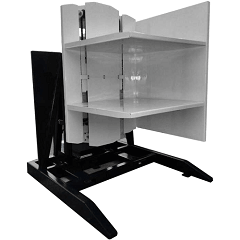
From my experience, I have seen many facilities where forklifts cause damage during pallet changes. This happens a lot when changing from one pallet type to another, like Euro to American standard pallets for international shipping. Forklifts are designed for transport, not for careful inversion or transfer of goods. This is even worse in cold rooms. We need to look closer at these issues.
-
Challenging Cold Room Conditions:
- 🧊 Icy Floors and Reduced Grip: Cold rooms often have damp or icy surfaces. This makes forklift movements less predictable. Tires can slip. Braking distances increase. These conditions demand slower speeds and more careful driving. But operations often push for speed. This creates a conflict between safety and efficiency, leading to higher risks of sudden stops or turns that can shift loads. Such shifts can cause products to fall or be crushed against the forklift mast.
- 🥶 Material Brittleness: Many products become more fragile in sub-zero temperatures. Plastics get brittle. Packaging might crack more easily. Even durable goods can be more susceptible to impact damage. What might be a minor bump in a warm warehouse can become a significant breakage in a cold room. Forklift forks are hard and unforgiving. Any direct contact with a fragile, frozen item can easily cause irreparable damage, making the product unsellable.
- 👓 Operator Visibility: Cold environments often bring fogging issues for safety glasses or windshields. The constant need for specific clothing also limits operator movement and peripheral vision. This reduced visibility makes precise alignment of forks extremely difficult. When an operator cannot clearly see the edges of a pallet or the exact position of the load, they are more likely to misjudge distances. This causes accidental bumps into other pallets, racking, or even direct contact with the product itself during a transfer or inversion.
-
Inherent Forklift Limitations for Pallet Inversion/Transfer:
- 🔄 Lack of Controlled Rotation: A forklift can lift. It cannot gently invert a stack of goods. To change a pallet using a forklift, workers often need to manually restack items or use risky methods like tilting the load. These manual steps are slow. They also put staff at risk. More importantly, they expose products to direct human handling and gravity. Each manual step is an opportunity for a product to be dropped, mishandled, or improperly stacked. This increases the chances of damage.
- ⚖️ Instability of Loads: When a forklift lifts a load, especially a tall or uneven one, stability is a concern. Trying to move or manipulate a load for a pallet change without proper support means the product stack is inherently unstable. Sudden movements, even small ones, can cause the stack to lean. This might lead to parts of the load sliding off the pallet. For sensitive items like food or beverages, even a slight shift can compromise packaging integrity. This makes the product unfit for sale.
- ⏰ Time-Consuming and Labor-Intensive: Manual pallet changes with forklifts are slow. They often require two or more workers. One operates the forklift. Others guide or manually handle products. This process is not efficient. It costs a lot in labor. It also introduces more chances for human error. The longer a product is in a transition state, the higher the risk of something going wrong. This impacts overall warehouse efficiency, especially when dealing with the thousands of pallets a busy distribution center processes daily.
What are the true costs of product damage and operational delays in cold storage?
Do you only count the value of damaged goods when assessing losses? Many warehouse managers, like Carlos, know that product damage in cold storage is far more expensive than just the item’s cost. The impact ripples through your entire supply chain. It affects everything from your bottom line to customer trust.
The true costs of product damage and operational delays in cold storage extend beyond the value of lost inventory, including significant expenses from waste disposal, labor for re-handling, potential contract penalties, damaged customer relationships, and a negative impact on overall brand reputation.

When I started my factory, I learned that every loss impacts profit. I saw clients struggle with product damage in their warehouses. They often overlooked the indirect costs. These costs can be much larger than the direct ones. Let us break down these hidden financial burdens.
-
💰 Direct Financial Losses:
- 💸 Lost Product Value: This is the most obvious cost. It is the value of the damaged goods that cannot be sold. For high-value frozen items, this adds up quickly. It is not just the production cost, but also the profit margin you lose.
- 🗑️ Disposal Costs: Damaged products often need special disposal. This is true for food or regulated items. This adds another layer of expense. You pay for the product. Then you pay to get rid of it. This is a double loss.
- 👷 Increased Labor for Rework: Damaged goods mean more work. Staff must identify, isolate, and often re-pack or dispose of them. This diverts valuable labor from productive tasks. It increases your operational costs.
- 📦 Replacement Shipping: If a damaged product needs replacement, you face extra shipping costs. This is especially true for international shipments. It means more logistics work. It also means more money spent without new revenue.
-
📉 Operational Inefficiencies and Hidden Costs:
- 🐌 Slower Throughput: Damage causes delays. You must stop operations to clean up. You also have to replace items. This slows down your entire warehouse. It makes it harder to meet delivery schedules. This is a major challenge for businesses like Carlos’s, where quick customer delivery is key.
- ⏰ Increased Downtime: When products spill or pallets break, the area becomes unsafe. You must stop work to clean up. This leads to unplanned downtime. Every minute of downtime costs money in a busy distribution center.
- 📉 Reduced Storage Space: Damaged goods often take up valuable space. They sit in a “quarantine” area. This means less space for new, sellable inventory. This reduces your overall storage capacity and efficiency.
- 📊 Inventory Inaccuracy: Damage makes inventory counts difficult. It leads to discrepancies. This can impact your planning and forecasting. It makes it harder to manage your supply chain effectively.
-
🤝 Impact on Customer Relationships and Reputation:
- 😠 Customer Dissatisfaction: Receiving damaged goods is frustrating for customers. It leads to complaints and returns. This directly harms customer satisfaction. For a business like Carlos’s, dealing with multinational food and beverage groups, customer satisfaction is crucial for retaining big contracts.
- 📜 Contract Penalties: Many contracts include clauses for on-time delivery and product quality. Damaged goods or delays can trigger penalties. These can be very expensive. Carlos specifically mentions the risk of contract fines.
- 📉 Loss of Trust and Reputation: Consistent issues with damage can hurt your brand’s reputation. Clients start to doubt your reliability. This can lead to losing business to competitors. Building trust takes years. Losing it can happen in moments. For any growing business, reputation is everything.
- 🚫 Compliance Risks: For food and beverage products, damage can sometimes lead to compliance issues. Contaminated or compromised goods must be handled according to strict regulations. Failure to do so can result in hefty fines and legal problems. This adds another layer of risk and cost.
How do pallet inverters specifically prevent product damage, even in challenging cold environments?
Are you still wondering if a pallet inverter can truly handle your delicate products in the freezing cold? Many people are skeptical until they see it in action. Pallet inverters are specifically designed to protect products during transfers. They do this through precision engineering and automated control, making them perfect for cold rooms where product integrity is paramount.
Pallet inverters prevent product damage in cold rooms by securely clamping the load, providing a stable platform for inversion or transfer, eliminating manual handling risks, and offering gentle, automated operation that minimizes impact or shifting, regardless of the extreme cold.

At FHOPEPACK, we focus on solutions that solve real problems. I have seen pallet inverters transform operations for many clients. They move from constant damage control to smooth, reliable processes. This is especially true in environments like cold storage. Let us look at how they achieve this.
-
🔒 Secure and Gentle Clamping Mechanism:
- 💪 Even Pressure Distribution: Pallet inverters use hydraulic or electric clamps. These clamps hold the product stack firmly on all sides. They apply pressure evenly. This stops the load from shifting or falling during the inversion process. Unlike a forklift that lifts from the bottom, an inverter holds the entire unit. This prevents individual items from slipping out. This is very important for unstable or delicate products, which are common in the food and beverage industry.
- 📉 Reduced Impact and Movement: Because the load is securely clamped, there is minimal internal movement of products. This means no bumping or jostling against each other. This significantly reduces the risk of scuffing, crushing, or breaking. In a cold room, where materials are more brittle, this gentle handling is critical for maintaining product quality. It helps avoid surface damage or internal fractures that could compromise the product.
- ⚙️ Adaptable to Load Size: Modern pallet inverters, like those we design at FHOPEPACK, can adjust their clamping force and opening width. They handle various load sizes and weights. This means they can gently secure everything from tall stacks of frozen goods to smaller, lighter boxes. This adaptability ensures that all products receive the right level of support. It prevents over-compression on delicate items and ensures firm grip on heavy ones.
-
🤖 Automated and Controlled Operation:
- ✅ Consistency and Precision: An automated system performs the same action every time. This removes human error from the equation. The rotation speed is controlled. The stop points are exact. This consistency means you get a perfect pallet change every time. This greatly reduces the risk of accidental drops or misalignments. This precision is difficult to achieve with manual forklift operations, especially in challenging cold environments.
- 🌬️ Designed for Cold Environments: Pallet inverters can be built with specialized components. These components withstand extreme cold. They use materials that do not become brittle. They also use hydraulic fluids that work well at low temperatures. This ensures reliable operation, even in deep-freeze conditions. This means the machine itself does not suffer from the cold. It keeps working efficiently and safely without breaking down.
- ⚡ Faster and More Efficient: Automation also means speed. A pallet inverter can complete a change cycle much faster than manual methods. This boosts throughput. It keeps your cold room operations flowing smoothly. This directly addresses Carlos’s need for faster delivery cycles and improved efficiency. It helps meet customer demands without compromising product safety. It also helps manage different pallet sizes, like Euro and US, quickly and without mistakes.
What wider benefits do pallet inverters bring to warehouse safety and efficiency beyond just preventing damage?
Are you looking for solutions that do more than just fix one problem? As a manager, you know that the best equipment offers multiple benefits. Pallet inverters do not just protect products; they transform your entire warehouse operation. They bring significant improvements in safety, labor management, and overall efficiency, which are critical for any modern distribution center.
Pallet inverters offer wider benefits beyond damage prevention, including significantly enhanced worker safety by eliminating risky manual handling, improved operational efficiency through automation and faster changeovers for diverse pallet types, and substantial reductions in labor costs in cold room environments.
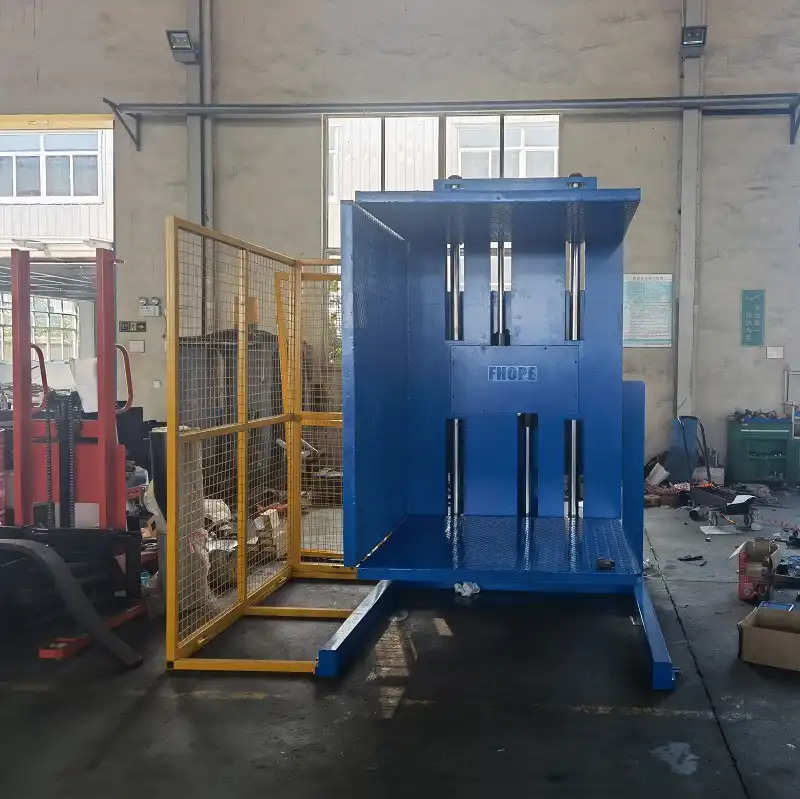
My goal at FHOPEPACK is to help businesses grow. I have seen how effective solutions like pallet inverters can help clients achieve financial independence and improve their operations. These machines address many of the challenges Carlos faces in his role.
-
🛡️ Enhanced Worker Safety and Reduced Risks:
- 🚫 Elimination of Manual Handling Hazards: This is a huge benefit. Manual pallet changing, especially flipping heavy loads, is extremely dangerous. It involves risks of crushing injuries, back strains, and goods falling onto workers. Carlos himself noted incidents from manual flipping. Pallet inverters remove this manual contact. Workers simply load and unload the machine. This dramatically lowers the chance of workplace accidents. It creates a much safer working environment for everyone in the cold room.
- ⬇️ Reduced Forklift-Related Accidents: When forklifts are used less for awkward pallet changes, they spend more time doing what they do best: moving pallets. This means less complex maneuvering. It means fewer instances where forks might hit racking or other equipment. This overall reduces the risk of forklift accidents. These accidents can cause severe injuries and costly damage to infrastructure. By streamlining the pallet changing process, pallet inverters contribute to a safer cold room for all.
- 💰 Lower Insurance and Compensation Costs: Fewer accidents mean fewer claims. This directly translates into lower insurance premiums for your business. It also reduces the cost of worker’s compensation and potential legal fees from serious injuries. This financial relief is a significant long-term benefit for any company. It helps improve the financial health of the operation. It also aligns with Carlos’s goal of reducing overall operating costs.
-
🚀 Increased Operational Efficiency and Throughput:
- ⏱️ Faster Pallet Changeovers: Pallet inverters can complete a cycle in minutes. This is much quicker than manual methods. This speed is crucial for meeting tight deadlines. It helps businesses, like Carlos’s, keep up with the demands of e-commerce and retail clients who expect faster delivery. The ability to quickly swap pallets means goods move through the warehouse faster.
- 🔄 Versatility for Diverse Pallet Specifications: Carlos mentioned the frequent need to switch between Euro, American, and plastic pallets. Pallet inverters handle this with ease. They can accommodate different pallet types and sizes. This ensures compliance with various international shipping standards. This versatility is vital for global operations. It allows seamless transitions without needing manual intervention or specialized equipment for each pallet type. This flexibility helps standardize your processes.
- 📈 Improved Warehouse Flow: By automating a key bottleneck (pallet changes), inverters help create a smoother flow of goods. This reduces congestion. It minimizes idle time. This makes the entire warehouse more efficient. It helps achieve higher throughput. This is essential for managing thousands of pallets daily. It also helps meet peak demands without overwhelming the system.
-
💲 Significant Labor Cost Reduction and Better Resource Allocation:
- 👥 Reduced Labor Dependency: Pallet inverters can do the work of several people. This frees up your staff. They can focus on more complex tasks. This is very important in times of labor shortages and rising labor costs. It helps optimize your workforce. It ensures your team is working on high-value activities, not repetitive, risky ones.
- 👨🏭 Addressing Labor Shortages: Many young people do not want high-intensity manual labor. This is a common challenge. Automation offers a solution. It reduces the need for physically demanding roles. This makes warehouse jobs more attractive. It also helps businesses operate effectively even with fewer available workers. This supports Carlos’s challenge regarding labor scarcity.
- 📊 Standardization and Consistency: Machines provide a standardized process. This reduces variations in quality. It also reduces errors. This consistency is key for lean operations. It helps ensure that every pallet change meets your strict quality and safety standards. This further supports compliance and customer satisfaction.
Conclusion
Product damage in cold rooms is a costly problem, and forklifts often make it worse. Pallet inverters offer a clear solution. They protect goods, improve safety, and boost efficiency. They replace risky manual work with precise automation. Investing in a pallet inverter is a smart move for any cold storage operation.








