
How Europe Steel Plants Use Coil Wrapping Machines to Protect Heavy Coils?
Sometimes, you walk into a factory and see the same old problems. Workers struggle with heavy coils. The packing process is slow. You see damaged products. This does not just happen to small factories. Even big European steel plants face these daily challenges. They lose money and time. They put their workers at risk.
Europe steel plants use coil wrapping machines to protect heavy coils by automating the entire packing process. These machines wrap coils tightly and consistently. This prevents damage during storage and transport. It also makes the work safer for employees. Automation boosts efficiency significantly in a demanding industry.

You might be asking how this is possible. You might wonder if such a solution can work for your factory too. Stay with me. I will explain why these machines are not just a luxury. They are a necessity for modern steel production. I will show you how they solve big problems.
1. Why are Europe steel plants investing in advanced coil wrapping technology?
Are you a factory manager? Do you face pressure to cut costs and increase output? European steel plants feel this pressure even more. They operate in a highly competitive market. They need to be efficient. They need to keep their workers safe.
Europe steel plants invest in advanced coil wrapping technology because of several key factors. These include high labor costs, strict safety regulations, and the constant demand for perfect product quality. They must stay competitive. This means they cannot afford slow manual processes or damaged goods. So, they turn to automation.
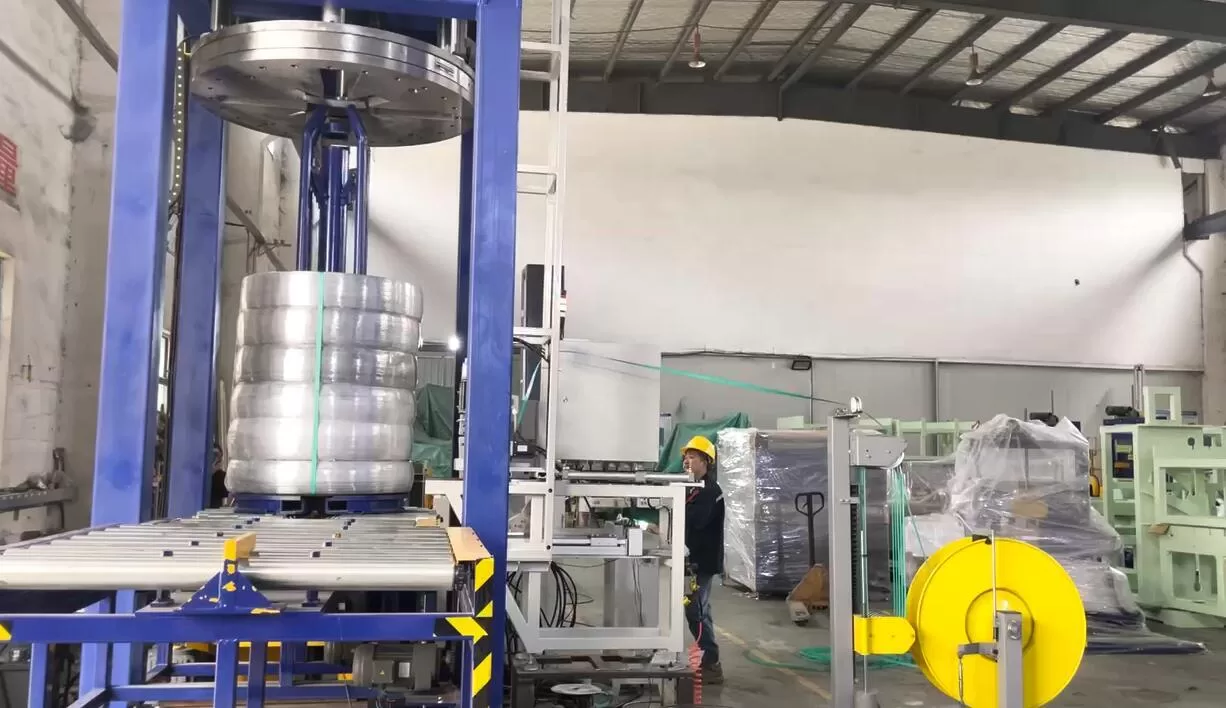
The steel industry in Europe is mature. It has high standards. Factories there often have older equipment. But they still need to meet modern demands. This creates a big challenge. They must upgrade. They need to find ways to do things better, faster, and safer. I have seen this first-hand many times. When I started my factory, I knew we had to focus on efficiency from day one. This mindset is even more critical in big, established markets like Europe.
The Driving Forces Behind Automation in Europe’s Steel Sector
European steel plants are not just buying new machines for fun. They have strong reasons. These reasons often connect directly to the everyday problems faced by factory managers like Michael.
Labor Costs and Workforce Challenges
Labor in Europe is expensive. This is a fact. Manual labor for heavy tasks like coil packing adds up quickly. It involves many workers. It takes a lot of time. Also, finding skilled workers for these tough jobs is getting harder. Younger generations often prefer less physically demanding work. This means factories must automate. They need to reduce reliance on manual labor for repetitive, heavy tasks. This makes the remaining workforce more productive. It helps them focus on more skilled jobs.
Strict Safety and Environmental Regulations
Europe has very strict rules about workplace safety. It also has strong environmental laws. Manual handling of heavy steel coils is risky. It can cause serious injuries. Factories face big fines if they do not follow safety rules. They also get bad publicity. Coil wrapping machines remove workers from dangerous areas. They reduce the risk of accidents. This makes the workplace much safer. It helps factories comply with regulations easily.
Demand for High Quality and Reduced Damage
Customers expect perfect products. They do not want damaged coils. Scratches, dents, or rust from poor packing lead to complaints. They cause product returns. This hurts a factory’s reputation and profit. Modern coil wrapping machines apply uniform, tight wraps. They protect coils from moisture, dust, and physical impact. This ensures products arrive at the customer in perfect condition. It keeps customers happy. It saves money on rework and claims.
Global Competitiveness and Efficiency
The global steel market is tough. European plants compete with factories from all over the world. They need to produce more. They need to do it faster. They must do it at a lower cost. Manual packing slows things down. It creates bottlenecks at the end of the production line. Automated wrapping machines are fast. They are consistent. They integrate into existing production lines. This speeds up the entire process. It boosts overall factory output. This helps European plants stay competitive. It secures their place in the market.
2. What common problems do manual coil packing methods create for steel manufacturers?
Do you still use manual methods to pack your steel coils? Then you know the struggles. Your workers lift heavy items. They tie ropes. They wrap by hand. This might seem cheap at first. But it costs you much more in the long run.
Manual coil packing methods create major problems for steel manufacturers. These include slow production speeds and efficiency bottlenecks. They also lead to high rates of worker injury and safety hazards. Product damage during handling and transport is also common. These issues increase operational costs and reduce profitability for the factory.
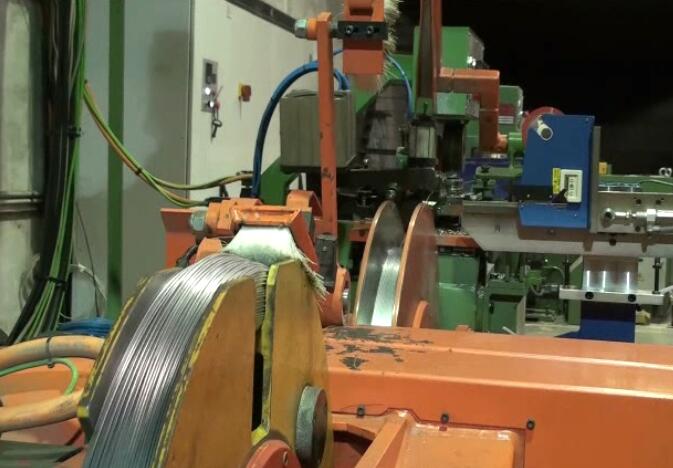
I have seen countless factories where manual packing was the biggest hurdle. It was not just about the speed. It was about the hidden costs. The lost production time. The medical bills. The frustrated clients. These are the things that keep factory managers like Michael up at night. I know because I have been there myself. Building my own factory taught me that these small inefficiencies multiply. They become big problems very fast.
The Real Costs of Manual Coil Packing
Manual coil packing might seem like a way to save money on equipment. But it introduces many problems. These problems often cost much more than investing in automation. Let us look at the details.
Efficiency Bottlenecks
Manual packing is slow. It needs many people. Each coil takes time to wrap and secure by hand. This creates a bottleneck at the end of the production line. What happens then? The whole factory slows down. Machines upstream might stop. This is wasted production capacity. It reduces the overall output of the factory. If you produce 100 coils per hour, but can only pack 50, you have a huge problem. Your delivery times get longer. This makes customers unhappy.
High Safety Risks and Injury Rates
Handling heavy steel coils is dangerous work. Workers use cranes or forklifts. They position coils. They secure them. There is a high risk of crushing injuries. There are also risks of strains and sprains from repetitive tasks. These accidents lead to several issues:
- Medical Costs: Treating injured workers is expensive.
- Insurance Premiums: Higher injury rates mean higher insurance costs for the factory.
- Lost Workdays: Injured workers cannot come to work. This affects productivity.
- Worker Morale: A dangerous workplace lowers morale. It can lead to high employee turnover.
- Legal Liabilities: Factories face lawsuits if safety rules are not followed.
Increased Product Damage and Loss
Steel coils are valuable. But they are also fragile in some ways. Edges can get bent. Surfaces can get scratched. Manual handling increases these risks. Coils might drop. They might hit other objects. Also, manual wrapping might not be tight or consistent enough. This leaves gaps. Moisture can get in. Dust can settle. This causes rust or other damage. Damaged products mean:
- Customer Complaints: Unhappy customers lead to lost business.
- Returns and Rework: You have to fix or replace damaged goods. This costs time and money.
- Reduced Profit Margins: Every damaged product eats into your profit.
Supplier Trust Issues
Michael mentioned supplier trust issues. This is a common problem. Many equipment suppliers only care about the sale. They do not offer good after-sales service. When you rely on manual packing, you often use general packaging suppliers. They might not understand the steel industry’s specific needs. This makes it hard to find reliable partners. You end up with solutions that do not truly solve your problems. This cycle of bad experiences makes managers wary of new investments. They need a partner who understands their world.
Here is a simple comparison:
| Feature | Manual Coil Packing | Automated Coil Wrapping |
|---|---|---|
| Efficiency | Slow, creates bottlenecks | Fast, consistent, high throughput |
| Safety | High risk of injury, high insurance costs | Low risk, improved worker safety |
| Product Protection | Inconsistent, prone to damage | Uniform, tight wrap, less damage |
| Labor Cost | High and increasing | Lower, focused on supervision |
| Consistency | Varies by worker, often inconsistent | Highly consistent, repeatable |
| Overall Cost | High hidden costs (injuries, damage, delays) | Higher initial investment, lower long-term |
3. How do modern coil wrapping machines solve these critical challenges in steel production?
We have talked about the problems. Now, let us talk about solutions. Modern coil wrapping machines are not just about speed. They are about transforming your entire packing operation. They tackle every challenge we just discussed.
Modern coil wrapping machines solve critical challenges in steel production by automating the entire packing process. They eliminate manual heavy lifting, greatly improving worker safety. These machines apply consistent, tight wrapping. This protects valuable coils from damage. They also increase packing speed. This removes bottlenecks and significantly boosts overall factory efficiency and profitability.
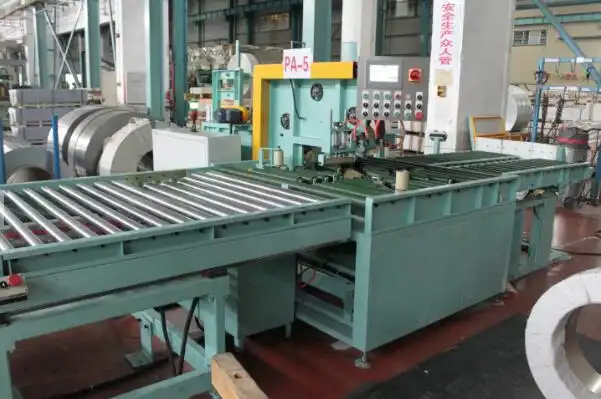
I remember when I first saw a fully automated packing line. It was a game-changer. The speed, the precision, the calm in the factory. It was a huge contrast to the chaotic, noisy manual operations. This kind of technology brings peace of mind to factory owners. It means better quality products. It means happier, safer workers. It also means more money in the bank. This is why I am so passionate about these machines. They truly change businesses.
The Transformative Impact of Automated Coil Wrapping
Modern coil wrapping machines are sophisticated pieces of equipment. They are designed for the harsh environments of steel plants. They offer concrete benefits that address Michael’s goals directly.
Boosting Automation and Efficiency
Automated coil wrapping machines work continuously. They do not get tired. They wrap coils much faster than any human team.
- High Throughput: These machines can process many coils per hour. This keeps up with the production line.
- Reduced Bottlenecks: They remove the packing area as a choke point. This lets the entire factory operate at full capacity.
- Consistent Speed: The machine performs the same task the same way every time. This ensures consistent output.
Significantly Improving Safety
This is one of the biggest benefits. Automated machines remove workers from dangerous situations.
- No Manual Lifting: Workers no longer need to lift or maneuver heavy coils.
- Reduced Exposure: Workers operate machines from a safe distance. They do not interact directly with moving coils or heavy packaging materials.
- Lower Injury Rates: This directly translates to fewer accidents. It means lower insurance costs. It means a safer environment for everyone.
Protecting Products and Reducing Loss
The primary job of these machines is to protect the product. They do it very well.
- Uniform Wrapping: Machines apply stretch film or other materials evenly. This creates a strong, protective layer.
- Tight Securement: The wrap is tight. It prevents movement during transport. It stops outside elements from getting in.
- Prevention of Damage: Coils are protected from scratches, dents, dust, and moisture. This reduces customer complaints and product returns. It protects your profit.
Cost Reduction and ROI
Investing in a coil wrapping machine has a clear return on investment (ROI).
- Lower Labor Costs: You need fewer workers for packing. Those workers can be reassigned to other tasks.
- Reduced Product Waste: Less damage means less money lost on faulty products.
- Lower Insurance Premiums: A safer workplace can lead to reduced insurance costs.
- Increased Revenue: Faster output and happier customers can lead to more sales.
- Long-Term Savings: These savings add up quickly. The machine pays for itself over time.
Consider a hypothetical example for ROI:
| Factor | Manual Packing (Annual) | Automated Packing (Annual) | Savings (Annual) |
|---|---|---|---|
| Labor Cost | $150,000 (3 workers x $50k) | $50,000 (1 supervisor x $50k) | $100,000 |
| Product Damage/Loss | $30,000 | $5,000 | $25,000 |
| Safety Incidents Cost | $20,000 | $2,000 | $18,000 |
| Throughput Increase | – | $50,000 (extra sales) | $50,000 |
| Total Savings | – | – | $193,000 |
Note: Initial machine investment typically recouped within 1-3 years.
4. What should you consider when choosing a reliable coil wrapping machine partner for your factory?
You now see the benefits of coil wrapping machines. But how do you pick the right one? More importantly, how do you find the right company to work with? Michael’s past experiences with bad suppliers show this is a big concern. You need a partner, not just a seller.
When choosing a reliable coil wrapping machine partner, you should look beyond just the machine itself. Consider the supplier’s industry experience and their ability to provide custom solutions. Check their after-sales support and spare parts availability. Most importantly, find a partner who understands your specific production challenges and offers clear ROI analysis, not just a price list.

I have built a packing machine factory from the ground up. I know what it takes to make machines that last. I also know what it takes to support clients over many years. It is not just about engineering. It is about understanding the customer’s business. It is about being there when problems arise. This deep understanding comes from experience. It comes from being on both sides: as an employee, and as a factory owner.
Key Factors for Selecting Your Coil Wrapping Machine Partner
Choosing the right partner is as important as choosing the right machine. A good partner will help you succeed. A bad one can cause more headaches.
Deep Industry Expertise and Understanding
Does the supplier truly understand the steel industry? Do they know about coil types, handling, and environmental factors? A good partner will ask about your specific factory setup. They will ask about your current production bottlenecks. They will know about safety risks. They need to speak your language. This is what I pride myself on at FHOPEPACK. My journey from an employee to a factory owner taught me the real struggles on the factory floor. This experience helps me understand clients like Michael very well.
Proven Track Record and References
Ask for examples. Ask for references. Have they installed similar machines in other steel plants? Can they show you success stories? A reputable supplier will be happy to share this information. This shows they deliver on their promises.
Customization and Solution-Oriented Approach
Every factory is unique. Your production line might have specific needs. A good partner does not just sell standard machines. They offer solutions. They should be able to:
- Integrate the machine with your existing conveyor systems.
- Customize the wrapping material or method for your specific coils.
- Offer different machine sizes or configurations. They should work with you to design the best setup.
Robust After-Sales Support and Maintenance
Machines need service. They need spare parts. What happens if your machine breaks down?
- Technical Support: Is there a dedicated support team? Can you reach them quickly?
- Spare Parts: Are parts readily available? What is the lead time for critical components?
- Maintenance Services: Do they offer maintenance plans? Can they train your staff? Poor after-sales support can lead to long downtimes. This cancels out all the efficiency gains.
Clear ROI Analysis and Transparent Pricing
A good partner will help you understand the financial benefits. They will not just give you a price. They will help you calculate the ROI. This shows you how the machine will save you money. It shows how it will increase your profit. They should be transparent about all costs. There should be no hidden fees.
Focus on Long-Term Partnership
You are making a big investment. You want a partner who will be with you for the long haul. They should care about your success. This means providing honest advice. It means being reliable. This is the core of what FHOPEPACK offers. I want to help you grow your business, just like I helped many clients and grew my own factory.
My Insights: The true value of automation goes beyond the machine itself, doesn’t it?
We have explored a lot today. We talked about why European steel plants choose automation. We looked at the problems manual packing causes. We saw how modern machines solve these issues. But my real insight, from years in this industry, is simpler.
The real value of automation is not just in the steel wrapping machine itself. It is also in the peace of mind it brings. It means your workers are safer. Your products arrive undamaged. Your factory runs smoother. This translates to a stronger business and a better future. It is about finding the right partner, someone who truly understands your challenges and goals, just like I strive to understand yours.
Conclusion
Modern coil wrapping machines are essential for Europe’s steel plants. They boost safety, cut costs, and improve efficiency. This makes them a wise investment for any forward-thinking factory manager.








