
How pallet inverter performance varies in high-volume FMCG distribution centers?
Imagine a massive distribution center, possibly like one of your own across Europe, constantly buzzing with activity. Thousands of pallets move in and out every single day. These centers, especially in the FMCG sector, operate at a relentless pace. Any hiccup in the flow, particularly when dealing with pallet handling, can quickly turn into a costly bottleneck. Delays, fines, and even safety incidents can quickly add up, hurting your bottom line and customer trust.
Pallet inverter performance in high-volume FMCG distribution centers varies significantly based on several crucial factors: the machine’s type (manual, semi-automatic, or fully automatic), its overall throughput capacity, its adaptability to diverse pallet specifications, its operational uptime and reliability, the integrated safety features, and how well it integrates into existing logistics workflows. In the demanding FMCG environment, high performance means achieving seamless, safe, and rapid pallet changes for a wide array of goods, directly boosting efficiency and overall profitability.
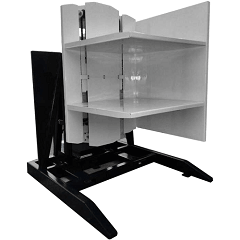
Understanding these variations is not just about choosing a machine; it’s about selecting a strategic partner for your warehouse operations. My journey in the packing machine industry, from an employee to a factory owner, taught me that the right equipment can truly transform a business. Let’s dive deeper into what truly defines performance and how these differences can impact your high-volume FMCG operations.
What defines high-performance pallet inverting in a bustling FMCG distribution center?
Many warehouse managers often think of “performance” simply as how fast a machine can do its job. But in a fast-paced FMCG distribution center, the reality is far more intricate than just raw speed. Focusing only on cycle time can lead you down a costly path.
High performance for a pallet inverter in an FMCG distribution center means consistent high throughput, minimal operational downtime, seamless adaptability to various pallet types like Euro, US, or plastic, robust and integrated safety features, and the ability to integrate smoothly into existing logistics flows, all while operating reliably day in and day out without fail.

For a busy FMCG distribution center, where thousands of pallets might move daily, a pallet inverter’s performance needs to be holistic. It is about more than just how many pallets it can process in an hour. It’s about how consistently it does that, day after day, week after week. Think about your European regional distribution center, Carlos. If a machine is fast but constantly breaks down or cannot handle the frequent shifts between Euro and US pallets, it creates more problems than it solves. True high performance is a combination of several critical factors that ensure uninterrupted flow and operational excellence.
-
Throughput and Cycle Time Consistency:
- Definition: This is the number of pallets processed per hour, but more importantly, how consistent this rate remains during peak times and extended shifts.
- Impact on FMCG: In FMCG, inconsistent throughput can quickly cause bottlenecks, especially when dealing with perishable goods or tight delivery windows. A machine might boast high peak speeds, but if it frequently jams or requires manual resets, its actual effective throughput drops significantly. We aim for predictable, steady performance.
-
Adaptability and Versatility:
- Definition: How easily and quickly the inverter can switch between different pallet sizes, materials (wood, plastic), and weights without needing extensive manual reconfigurations or specific programming changes.
- Impact on FMCG: This is a major challenge for you, Carlos, given your diverse import and export needs with Euro, US, and plastic pallets. A high-performing inverter must handle these variations seamlessly, minimizing changeover times and reducing the risk of human error. It should be versatile enough to cater to different product types too, from delicate beverages to heavy packaged foods.
-
Reliability and Uptime:
- Definition: This refers to the Mean Time Between Failures (MTBF) and the overall percentage of time the machine is operational.
- Impact on FMCG: In a high-volume setting, even a short breakdown can halt an entire line, leading to missed deadlines, contractual penalties, and massive re-planning efforts. A truly high-performing machine is one you can trust to run consistently with minimal interruptions. This means robust construction, quality components, and proven engineering. I’ve seen how crucial this is; early in my career, we spent too much time trying to fix machines that weren’t built for constant, heavy use. It taught me the value of robust engineering right from the start.
-
Integrated Safety Features:
- Definition: This includes automatic sensors, safety light curtains, emergency stop buttons, protective guarding, and ergonomic design that minimizes human intervention in hazardous zones.
- Impact on FMCG: Your concern about safety risks from manual handling, Carlos, is valid. Accidents are costly, both in human suffering and financial terms. A high-performing inverter prioritizes operator safety, significantly reducing the risk of product spillage or personnel injuries, which can be frequent when dealing with heavy loads.
-
Integration with Existing Systems:
- Definition: How well the pallet inverter can be incorporated into existing conveyor lines, warehouse management systems (WMS), or manual workflows without requiring significant overhauls of the entire layout.
- Impact on FMCG: A high-performance inverter should fit smoothly into your current operations, acting as an enhancement rather than a disruption. This means having the right interfaces and design flexibility to become a seamless part of your overall material flow, whether it’s an online system or a standalone unit.
How do different pallet inverter technologies adapt to diverse pallet types and labor challenges?
Today’s warehouses face a double-edged challenge: a constant need to handle many different pallet specifications and a growing shortage of available labor. Relying on manual processes for pallet switching is simply unsustainable in such an environment. It’s slow, risky, and drains your most valuable human resources.
Pallet inverter technologies range from basic manual stackers to sophisticated fully automatic systems, each offering distinct levels of adaptability to diverse pallet types and varying efficiency in addressing labor shortages. While automatic systems are superior for handling multiple pallet specifications with minimal human intervention, semi-automatic options can provide a balanced solution, optimizing both cost and versatility for facilities with moderate volumes and specific pallet needs.
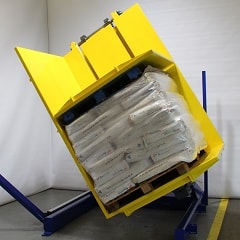
The choice of pallet inverter technology can drastically impact how effectively your distribution center manages its diverse pallet needs and navigates the ongoing labor challenges. It’s not a one-size-fits-all solution; what works for one operation might be inefficient for another. Understanding the nuances of each technology is key to making an informed decision that truly addresses your specific operational pain points, Carlos.
-
Manual / Semi-Automatic Pallet Changers:
- Description: These systems often involve operators manually loading pallets or initiating a simple exchange process with some mechanical assistance. They might be floor-level or involve a small amount of lifting.
- Adaptability: They can handle diverse pallet types, but the changeover often requires significant manual input, such as adjusting clamps or reconfiguring settings for different sizes. This flexibility comes at the cost of speed and labor.
- Labor Challenge: These systems are still quite labor-intensive. Operators are needed for every cycle, making them less ideal for situations with high labor costs or shortages. They still involve some physical strain and safety risks from handling.
- Suitability: Best for lower-volume operations, where pallet changes are infrequent, or for very specific, non-standard loads that automation struggles with.
-
Automatic 180-degree Pallet Inverters:
- Description: These machines automatically clamp a load, rotate it 180 degrees, and then deposit it onto a new pallet, often at floor level or integrated with a conveyor. They typically process one pallet at a time.
- Adaptability: They are highly adaptable to a wide range of pallet sizes and weights. Many models feature adjustable clamping pressures and size settings that can be quickly changed, sometimes automatically through presets, to accommodate Euro, US, or plastic pallets. This makes them much more efficient for your varied export requirements.
- Labor Challenge: These systems significantly reduce manual labor. Operators primarily load and unload pallets, or the machine can be integrated into an automated line, requiring even less direct human interaction during the change process itself. This frees up staff for other, less strenuous tasks.
- Suitability: Ideal for moderate to high-volume distribution centers that require frequent, diverse pallet changes but might not need a continuous, fully integrated line.
-
Automatic Online Pallet Transfer Systems (Pallet Changers):
- Description: These are fully automated systems integrated directly into conveyor lines, designed for continuous, high-speed operation. They can often exchange pallets without ever inverting the product itself, or perform a 180-degree inversion as part of a larger automated sequence.
- Adaptability: These systems are engineered to handle high volumes of various standard pallet types (Euro, US, plastic) with minimal intervention. Pre-programmed settings allow for rapid switching between different pallet recipes, ensuring seamless flow even with changing product lines or destination requirements.
- Labor Challenge: They offer the highest level of automation, almost eliminating direct manual labor from the pallet changing process. This directly addresses severe labor shortages and significantly reduces the safety risks associated with manual handling, making your warehouse safer and more cost-effective.
- Suitability: Perfect for high-volume FMCG distribution centers that demand continuous, high-speed operations and consistent handling of diverse pallet types with maximum safety and efficiency. This aligns closely with your goals for enhanced automation and safety, Carlos. From my experience helping clients build their packing lines, designing a system that can smoothly handle these shifts automatically is often the biggest leap in efficiency. I learned early on that a smart, adaptable system is far better than a purely manual one when it comes to long-term cost savings and reducing workplace injuries.
Why is consistent reliability and minimal maintenance essential for high-volume FMCG operations?
In the fast-paced world of FMCG, where goods are constantly moving and delivery deadlines are tight, any interruption can be catastrophic. A single equipment breakdown doesn’t just mean a temporary pause; it can create a ripple effect throughout your entire supply chain.
Consistent reliability and minimal maintenance are absolutely essential for high-volume FMCG operations because even minor equipment failures can trigger significant production halts, incur substantial financial penalties from delayed shipments, compromise the integrity of the entire supply chain, and ultimately erode both profitability and crucial customer trust. %[Online 180-degree Pallet Changing Machine for seamless integration]( “FHOPEPACK Online Pallet Changer”)
For a distribution center handling thousands of pallets daily, like yours, Carlos, the concept of “downtime” takes on a whole new meaning. It’s not merely an inconvenience; it’s a direct threat to your operational continuity and financial health. This is why when I founded FHOPEPACK, I insisted on designing and building machines that embody rugged durability and ease of maintenance. My philosophy is that a machine should be a tireless workhorse, not a delicate piece of art that constantly needs attention.
-
The True Cost of Downtime:
- Immediate Losses: Every hour a pallet inverter is down, thousands of pallets might not get processed. This means lost productivity, overtime costs for catch-up, and potential spoilage for temperature-sensitive FMCG products.
- Contractual Penalties: Many FMCG supply contracts include strict clauses for delivery times. Delays due to equipment failure can result in significant financial penalties, directly impacting your profit margins.
- Supply Chain Disruption: A bottleneck in the DC can create a domino effect, delaying upstream suppliers and downstream retailers, damaging relationships and overall efficiency.
- Reputation Damage: Missed deliveries and inconsistent service can tarnish a company’s reputation, leading to customer churn. In a competitive market like FMCG, trust is paramount.
-
Proactive Maintenance versus Reactive Repairs:
- Planned Maintenance: A reliable pallet inverter should have clear, simple, and infrequent preventative maintenance schedules. This allows your team to plan maintenance during off-peak hours, minimizing disruption.
- Reactive Repairs: When a machine lacks reliability, it leads to frequent, unplanned breakdowns. These reactive repairs are usually more expensive, more stressful, and always happen at the worst possible time, forcing emergency interventions that are costly and inefficient. Prioritizing robust design greatly reduces these painful surprises.
-
Component Quality and Durability:
- Long-lasting Parts: High-volume operations demand high-quality components. Investing in a pallet inverter made with durable materials and robust engineering means fewer parts will wear out quickly. This reduces the frequency of replacements and the labor associated with them.
- Stress Testing: At FHOPEPACK, we rigorously test our machines. We ensure that every component, from motors to hydraulic cylinders, can withstand the continuous, high-stress demands of a busy distribution center without premature failure. I remember early in my career, seeing machines fail because manufacturers cut corners on component quality. It was a clear lesson for me: durability is not an option; it’s a necessity.
-
Ease of Service and Parts Availability:
- Simple Design: A well-designed pallet inverter is also easy to service. This means accessible components, clear diagnostics, and simple repair procedures that minimize the time your technicians spend on maintenance.
- Readily Available Parts: Even the most reliable machine will eventually need a part. Fast access to spare parts, coupled with strong after-sales support from the manufacturer, is crucial for quick problem resolution and minimizing downtime. This is why we focus so much on our service network.
-
Operational Continuity:
- Ultimately, the goal is uninterrupted operation. A consistently reliable pallet inverter ensures your distribution center can meet its daily targets, handle unexpected surges in demand, and maintain a steady flow of goods. This predictable performance allows for better planning, optimized resource allocation, and a smoother overall operation, which is critical for your bottom line in a competitive market.
How does optimizing pallet inverter performance directly improve safety and cut costs in distribution centers?
Warehouse operations inherently carry risks. Manual pallet handling, especially with heavy loads or unstable stacks, is a notorious source of injuries and inefficiencies. These problems don’t just affect your staff’s well-being; they directly hit your company’s financial health. Accidents mean not only human suffering but also hefty insurance claims, potential legal costs, and lost productivity.
Optimizing pallet inverter performance directly enhances safety by largely eliminating hazardous manual handling, which significantly reduces workplace accidents and their associated financial costs, while simultaneously cutting operational expenses through decreased reliance on manual labor, faster processing times, and a marked reduction in product damage or loss.
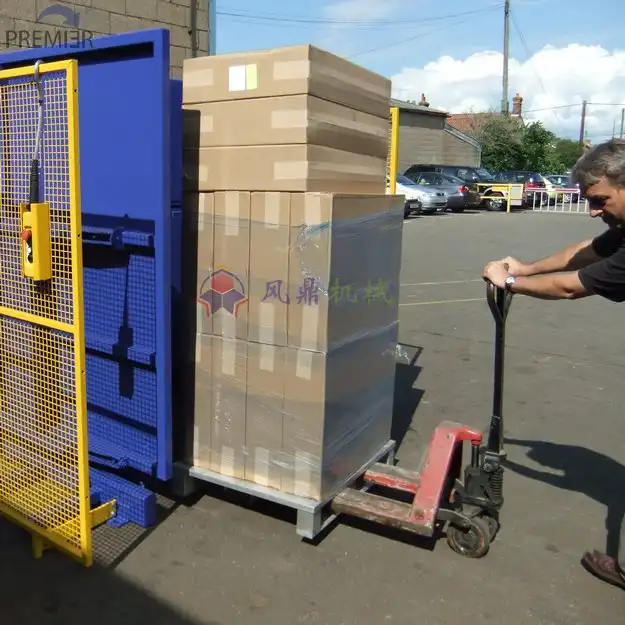
For a logistics professional like you, Carlos, facing pressure from increasing labor costs, safety concerns, and the relentless demand for faster delivery, optimizing pallet inverter performance offers a clear path to tangible improvements. It’s about more than just moving pallets; it’s about transforming your operational efficiency and creating a safer, more profitable environment. This dual benefit—enhanced safety and significant cost reduction—is a core reason why I champion these solutions.
-
Enhanced Safety:
- Elimination of Manual Handling: The most significant safety benefit comes from automating the process of flipping, transferring, or exchanging pallets. This removes the need for workers to manually handle heavy, unstable loads, which is a leading cause of back injuries, crushed limbs, and other serious accidents in warehouses.
- Reduced Product Damage: Manual handling and primitive methods of pallet transfer often lead to product spills or damage, which can pose slip hazards or require costly cleanup. Automated systems handle loads carefully and consistently, drastically reducing these occurrences.
- Ergonomic Benefits: By minimizing repetitive strain and heavy lifting, pallet inverters create a more ergonomic work environment. This not only prevents injuries but also improves employee morale and reduces long-term health issues associated with warehouse work. My goal at FHOPEPACK is always to make the work safer and easier for the people on the ground.
- Compliance with Regulations: Modern pallet inverters come with advanced safety features (sensors, interlocks, emergency stops) that help distribution centers comply with strict occupational safety regulations, avoiding fines and legal issues. I remember one client who saw a 30% reduction in workplace incidents within the first year of installing one of our automatic pallet changers. That’s not just a statistic; it’s about people going home safe every day, and that’s incredibly rewarding.
-
Significant Cost Reduction:
- Lower Labor Costs: Automating pallet changing reduces the number of personnel required for this task. With rising labor costs and shortages, this translates directly into substantial savings on wages, benefits, and recruitment. Staff can be reallocated to more value-added activities.
- Reduced Insurance Premiums: A safer workplace with fewer accidents often leads to lower workers’ compensation claims and, consequently, reduced insurance premiums. This is a direct financial benefit that adds up over time.
- Minimized Product Loss: Fewer spills and damages mean less wasted product, especially crucial for high-value FMCG goods. This directly impacts your inventory costs and bottom line.
- Improved Efficiency and Throughput: Faster, more reliable pallet changes mean goods move through the DC more quickly. This increases overall throughput without needing to expand physical space, effectively boosting your operational capacity and efficiency, which is vital for meeting tight e-commerce and retail delivery demands.
- Avoided Penalties: By ensuring smooth, timely pallet transitions for different international standards, you avoid the delays and fines that can result from non-compliance or slow processing, particularly important for your export operations.
-
Overall Operational Efficiency:
- Optimized pallet inverter performance streamlines your entire material handling process. It ensures a consistent, predictable flow, allowing for better planning, reduced lead times, and ultimately, higher customer satisfaction. This comprehensive approach to safety and cost-effectiveness makes pallet inverters a strategic investment for any high-volume FMCG distribution center aiming for peak performance.
Conclusion
Understanding how pallet inverter performance varies across high-volume FMCG distribution centers is key to making the right investment. It’s a holistic view, encompassing reliability, adaptability, safety, and cost efficiency. By choosing the right pallet inverter, you not only boost operational efficiency but also significantly enhance safety and reduce overall costs. At FHOPEPACK, we believe in partnering with you to master your packing needs.








