
How Pallet Inverters Improve Safety in Battery Pallet Switching Operations?
Are you a warehouse manager, perhaps like Carlos in Spain, who faces the daily challenge of moving thousands of pallets? Do you constantly worry about worker safety, especially when handling heavy or delicate items such as battery pallets? The risk of accidents, injuries, and even costly product damage in pallet switching operations is real, and it can keep you up at night. If you nod your head, then you are in the right place, because I know these challenges intimately.
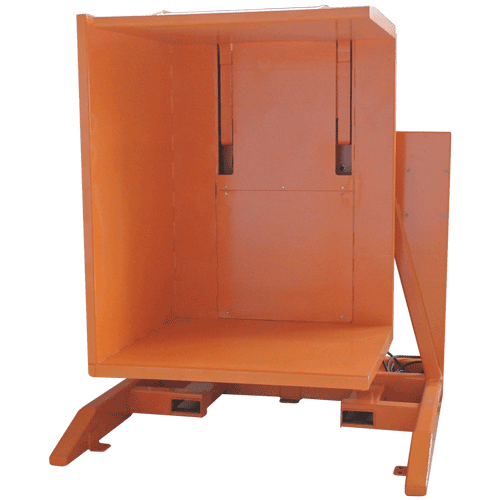
Pallet inverters fundamentally enhance safety in battery pallet switching by eliminating manual handling, reducing the risk of musculoskeletal injuries, preventing product damage from falls, and ensuring a stable, controlled transfer process for heavy and potentially hazardous battery loads. This mechanical solution replaces dangerous manual flipping, protecting workers and safeguarding valuable cargo, directly addressing critical safety concerns in high-volume logistics environments.
I have spent many years in the packing machine industry, from the factory floor to running my own successful company. I have seen firsthand the struggles and the triumphs of businesses like yours. My goal with FHOPEPACK is to share what I know, to help you navigate these complex operational challenges. So, let us dive deeper into how a simple change in equipment can make a huge difference in your warehouse safety and efficiency.
What Makes Battery Pallet Handling So Risky for Workers?
Imagine a typical day in a busy distribution center. Pallets come in and go out, sometimes thousands of them. Now, picture these pallets loaded with heavy, sometimes volatile, battery units. The pressure is on to move them quickly, efficiently, and without error. But what happens when workers need to switch these battery pallets from one type to another, say from a worn in-house pallet to a clean shipping pallet? This seemingly simple task becomes a high-risk operation. The weight of battery packs alone can lead to serious injuries. Many of my clients, when they first talk to me, share stories of strained backs, pulled muscles, and even serious falls. I remember one client, a logistics manager for a large electronics company, telling me how his team used pry bars and forklifts in dangerous ways to manually flip pallets. He saw too many close calls, and sadly, a few real accidents. This is why I am so passionate about finding better ways.
1. Manual Lifting and Repetitive Strain Injuries
Manual handling of heavy battery pallets puts immense strain on workers’ bodies.
- Weight: Battery pallets are very heavy. Workers lift, push, and pull them. This often exceeds safe lifting limits.
- Repetition: The need to switch many pallets causes repetitive motions. This leads to chronic injuries over time.
- Posture: Workers often use awkward body positions to gain leverage. This increases the risk of back injuries, shoulder problems, and carpal tunnel syndrome.
- Fatigue: Long shifts combined with strenuous work lead to fatigue. Tired workers are more likely to make mistakes and injure themselves.
2. Risk of Pallet Instability and Falling Goods
When people try to manually switch or flip heavy pallets, the load can become unstable.
- Tilting Loads: Manual methods often involve tilting the entire pallet. The goods can shift or fall off the pallet during this action.
- Product Damage: Falling battery packs can get damaged. This results in costly write-offs and delays.
- Worker Injury: If a heavy battery pack falls, it can strike a worker. This can cause severe injuries or even fatalities.
- Chemical Spills: Some batteries contain corrosive chemicals. A fall can rupture battery casings and cause hazardous spills. This creates a dangerous environment for everyone in the warehouse.
3. Equipment Misuse and Unsafe Practices
Without the right tools, workers often improvise, leading to unsafe practices.
- Forklift Abuse: Workers may use forklifts in ways they are not designed for, like pushing or tipping pallets. This can damage the forklift and the load.
- Makeshift Tools: People might use ropes, chains, or other improvised equipment to move or flip pallets. These tools are not safe for this purpose. They can break or slip.
- Lack of Training: Workers might not receive proper training for these complex tasks. This increases the chance of accidents.
- Pressure to Perform: High demands for speed can push workers to take shortcuts. This often compromises safety.
These risks are not just theoretical. They lead to real injuries, higher insurance costs, and lost productivity. As Carlos knows, accidents directly impact the bottom line and worker morale. It is a problem that demands a robust solution.

How Do Pallet Inverters Eliminate These Key Safety Hazards?
When I started FHOPEPACK, one of my core beliefs was that good engineering should solve real-world problems. Pallet inverters are a perfect example of this. They take a dangerous, labor-intensive task and turn it into a safe, controlled process. Think about the manual dangers we just discussed: the heavy lifting, the unstable loads, the improvised solutions. A pallet inverter tackles each of these head-on. It acts like an extra pair of incredibly strong, precise hands that never get tired or make a mistake. I have visited countless warehouses where, before they installed an inverter, managers felt helpless against the rising tide of workplace injuries. After implementation, they often tell me their safety records improve dramatically. It is not just about avoiding fines; it is about creating a work environment where people feel secure and valued.
1. No More Manual Handling of Heavy Loads
Pallet inverters completely remove the need for workers to physically lift, push, or tilt heavy battery pallets.
- Automated Operation: The machine does all the heavy lifting. Workers just load the pallet onto the inverter. Then they press a button.
- Reduced Strain: This eliminates manual strain on backs, shoulders, and knees. It drastically lowers the risk of musculoskeletal injuries.
- Consistent Movement: The inverter moves the pallet smoothly and predictably. This prevents sudden jerks or drops.
- Ergonomic Design: Many inverters have designs that consider the operator. This means less bending and reaching during the loading process.
2. Secure Clamping and Controlled Rotation
A key safety feature of pallet inverters is how they hold the load securely during the entire switching process.
- Firm Grip: The inverter clamps the pallet and its contents tightly. This prevents any shifting or falling of battery packs.
- Stable Rotation: The machine rotates the pallet slowly and in a controlled way. There are no sudden movements. This keeps the load stable.
- Minimized Spills: For battery pallets, this means greatly reducing the risk of product damage. It also prevents potential chemical leaks from damaged batteries.
- Reduced Debris: A secure load means less chance of small parts or debris falling. This keeps the work area cleaner and safer for walking.
3. Dedicated Equipment for a Specific Task
Using a pallet inverter means you have the right tool for the job. This prevents dangerous improvisations.
- Purpose-Built: The inverter is designed specifically for changing pallets. This makes it efficient and safe for this exact task.
- Eliminates Improvised Methods: Workers no longer need to use forklifts in unsafe ways or rely on makeshift equipment. This removes a major source of accidents.
- Training Simplicity: Operating an inverter is straightforward. Workers can be trained quickly and effectively on its safe use.
- Compliance: Using proper equipment helps meet safety regulations and standards. This protects the company from penalties and lawsuits.
By taking these steps, pallet inverters create a much safer environment for handling battery pallets. They reduce the burden on workers and protect valuable goods. This leads to a more efficient and secure operation overall.

Can Pallet Inverters Handle Diverse Pallet Types and Heavy Loads Safely?
One common question I get from clients, especially those with international operations like Carlos, is about versatility. They need a solution that works not just for one type of pallet, but for Euro pallets, American pallets, plastic pallets, and everything in between. And these pallets often carry very heavy goods, like batteries. When I started my journey in this industry, I knew that a good machine had to be adaptable. It is not enough to solve one problem; you need to solve many. My experience has taught me that the best equipment is robust enough for heavy loads and flexible enough for varied demands. It must perform safely every single time, regardless of the pallet type or the weight of its contents. This adaptability is key to consistent, safe operations in a modern warehouse.
1. Adaptability to Multiple Pallet Standards
Modern pallet inverters are built to handle a wide range of pallet sizes and types. This flexibility is crucial for global logistics operations.
- Adjustable Clamping: The clamping plates on inverters can adjust their width and height. This means they can firmly grip different pallet sizes. This includes Euro pallets, American pallets, and custom sizes.
- Load Versatility: They are not just for wood pallets. They can safely handle plastic pallets, metal pallets, and even slip sheets. This is important for hygiene or specific industry needs.
- Quick Changeovers: Operators can often adjust the settings quickly. This reduces downtime when switching between different pallet standards. This is vital for operations like Carlos’s, where different countries demand different pallet specifications.
- Modular Design: Some advanced systems offer modular components. This allows for even greater customization and future adaptability as your needs change.
2. Robust Construction for Heavy Loads
Battery pallets are inherently heavy. Pallet inverters are specifically engineered to manage these significant weights with ease and safety.
- Strong Materials: Inverters are built with heavy-duty steel and strong components. This ensures they can withstand constant use with heavy loads.
- High Weight Capacities: Most industrial pallet inverters can handle loads up to several tons. This capacity easily accommodates dense battery packs.
- Stable Base: The machines have a wide, stable base. This prevents tipping or instability during the inversion process. This is especially important when dealing with high center of gravity loads.
- Reinforced Mechanisms: The hydraulic or electric drive systems are powerful. They are designed for smooth, controlled movement even under maximum load.
3. Ensuring Load Integrity and Safety Features
Beyond just moving the pallet, inverters are designed with features that protect the product and the operator during heavy-duty operations.
- Gentle Handling: Despite their strength, inverters operate with a smooth, controlled motion. This prevents sudden jolts that could damage sensitive battery components.
- Pressure Control: Some models have adjustable clamping pressure. This allows for a firm grip without crushing lighter or more delicate loads.
- Safety Sensors: Many inverters include safety light curtains or emergency stop buttons. These features prevent accidents by stopping the machine if a person or obstruction is detected.
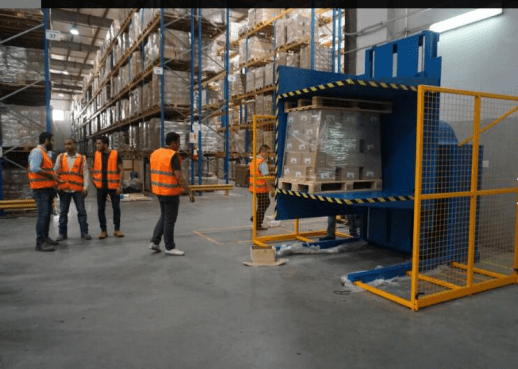
- Operator Enclosures: Some advanced systems offer caged or enclosed operating areas. This provides an additional layer of protection for personnel during operation.
These capabilities mean that a pallet inverter is not just a safety tool. It is also a highly efficient and adaptable piece of equipment. It meets the diverse demands of modern warehousing, even with challenging items like battery pallets. It helps ensure that operations remain smooth, safe, and productive, no matter the pallet or load.
Beyond Safety, What Other Benefits Do Pallet Inverters Bring to Warehouse Operations?
Safety is always the number one priority, especially for someone like Carlos who runs a large distribution center. But a smart investment does more than just solve one problem. When I started FHOPEPACK, I aimed to create solutions that offered a ripple effect of benefits for my clients. This is what a pallet inverter does. It improves safety, yes, but it also dramatically boosts efficiency, cuts down on operational costs, and helps meet those tight customer deadlines. I have seen businesses transform, moving from struggling with manual processes to becoming lean, efficient operations, simply by integrating the right equipment. It is not just about avoiding harm; it is about building a stronger, more competitive business. This is the kind of impact I love to help my clients achieve.
1. Significant Improvements in Operational Efficiency
Pallet inverters streamline the pallet switching process, making it much faster and more consistent than manual methods.
- Faster Cycle Times: The automated process completes a pallet change in minutes. Manual processes can take much longer, especially with heavy battery loads.
- Reduced Labor Time: Less human intervention means workers can focus on other value-added tasks. This optimizes your labor force.
- Consistent Flow: Automated systems reduce bottlenecks caused by slow manual handling. This ensures a steady flow of goods through the warehouse.
- Increased Throughput: With faster and more consistent operations, you can process more pallets per hour. This directly supports increased demand from customers.
2. Substantial Reduction in Operating Costs
Investing in a pallet inverter often leads to long-term cost savings in various areas of warehouse management.
- Lower Labor Costs: By reducing the need for multiple workers on pallet switching tasks, you lower your overall labor expenditure. This is especially important with rising labor costs.
- Decreased Damage Costs: Secure handling prevents product damage. This reduces the costs associated with spoiled goods, rework, and waste.
- Reduced Insurance Premiums: Fewer workplace accidents mean better safety records. This can lead to lower insurance premiums over time.
- Less Equipment Wear and Tear: When workers stop using forklifts or other equipment for unintended tasks, those machines last longer. This reduces maintenance and replacement costs.
3. Enhanced Compliance and Customer Satisfaction
In a competitive market, meeting regulatory standards and customer expectations is vital. Pallet inverters help with both.
- Regulatory Adherence: Using specialized equipment helps meet workplace safety regulations (OSHA, etc.). This avoids fines and legal issues.
- Pallet Hygiene: For food or pharmaceutical industries, switching to clean pallets is essential. Inverters make this process easy and compliant with hygiene standards.
- Faster Delivery: Efficient pallet changes mean quicker order fulfillment. This leads to shorter delivery times and happier customers.
- Reliable Shipments: Consistent and damage-free pallet switching ensures that goods arrive at their destination in perfect condition. This builds trust and strengthens client relationships.
4. Maximizing Warehouse Space and Resource Utilization
Pallet inverters also contribute to better use of your warehouse space and resources.
- Optimized Flow: Efficient pallet handling helps maintain clear aisles and reduces congestion. This improves overall warehouse flow.
- Reduced Forklift Traffic: Less manual movement means fewer forklifts are needed for this specific task. This frees up equipment for other duties.
- Standardized Operations: The machine ensures that pallet changes are done the same way every time. This creates a more standardized and predictable operation.
- Future-Proofing: Investing in automation prepares your warehouse for future growth and increasing demands. It makes your operations more scalable and resilient.
These benefits together make a strong case for integrating pallet inverters into your operation. They address not just safety, but also the broader challenges faced by modern distribution centers, leading to a more profitable and sustainable business model.
Conclusion
Pallet inverters are a powerful tool for any warehouse, especially those handling challenging battery pallets. They drastically improve safety by removing manual risks. They also boost efficiency, cut costs, and ensure compliance. This makes your operations smoother and more profitable. Investing in a pallet inverter means investing in a safer, more productive future for your business.








