
Can Steel Coil Packing Lines Boost Quality Control in Poland’s Factories?
Poland’s industrial landscape is dynamic. Factories there face global competition and rising expectations. For steel mills, one area often overlooked, yet critical for reputation and profit, is the final packing process. Many producers still rely on methods that are outdated. This leads to issues like damaged goods or unhappy clients. The question is clear: can we do better? Can advanced packing lines truly improve how we control quality?
Yes, steel coil packing lines are a game-changer for quality control in Polish factories. These automated systems ensure every coil meets exact specifications, reducing errors that manual processes create. They provide consistent tension, secure strapping, and precise wrapping. This minimizes damage during transit. It also meets strict customer demands. This means fewer rejections and a stronger market position for manufacturers.
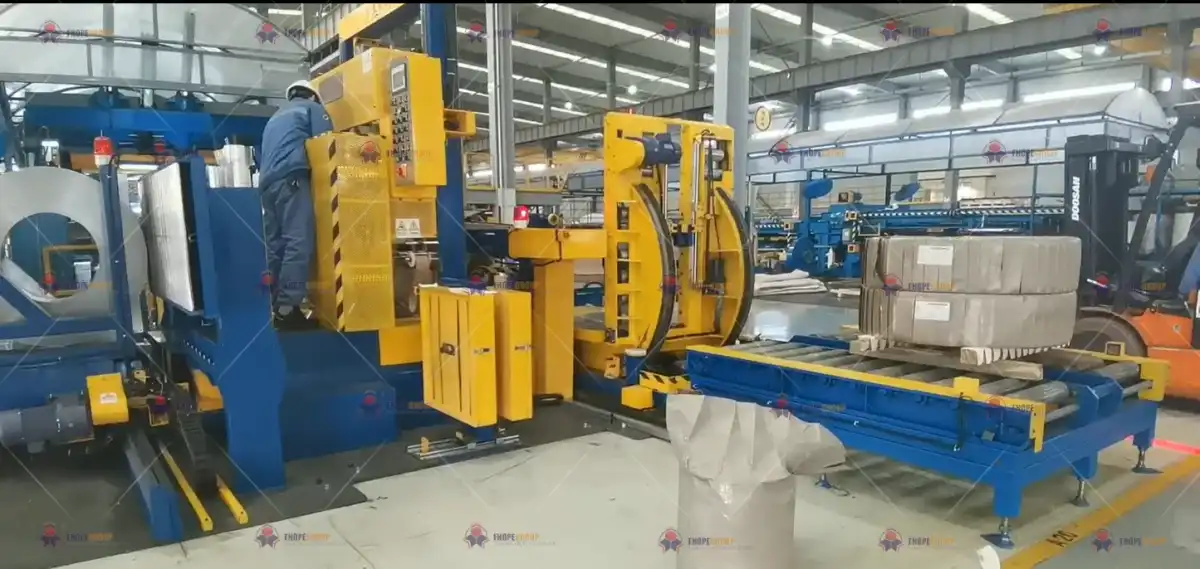
I have seen countless factories struggle with this. My journey in the packing machine industry taught me that efficient packing is not just about moving products faster. It is about protecting the product. It is about protecting the brand. It is about protecting the bottom line. Let us dive deeper into how these modern solutions can transform quality control for steel coil production, especially in demanding markets like Poland.
How do automated lines ensure consistent packing quality for varied steel coils?
Many steel factories in Poland deal with different types of coils daily. These include cold-rolled, galvanized, and pre-painted steel. Each type has unique packing needs. Manually switching between these different requirements is slow. It often causes mistakes. This leads to inconsistent quality. This is a big problem. It makes delivery times longer and leads to customer complaints.
Automated coil packing lines use advanced sensors and programmable logic controllers (PLCs) to adjust settings for various coil dimensions and material types. This ensures consistent film tension, precise strapping, and uniform wrapping. It does this automatically. This level of precision is impossible with human hands. It removes guesswork. It guarantees that every coil, regardless of its specifications, receives the same high-quality protection.

When I first started my factory, FHOPEPACK, I remembered seeing clients lose big orders. This was often because their coils arrived with inconsistent packing. Some coils were perfectly wrapped, others were loose. It was frustrating for everyone. This experience shaped my vision. We wanted to build machines that could handle complexity with simplicity. Automated lines are the answer. They provide a predictable process. This is vital for quality control. They adapt quickly to changes in coil size, weight, and desired packaging style. For example, a factory might produce 1-ton coils in the morning and 3-ton coils in the afternoon. An automated system can switch these settings with minimal downtime. It maintains optimal tension for PET strapping or stretch film. This prevents loose packaging. It stops movement during transport. This adaptability is key for factories that produce diverse products. It makes sure that whether a coil needs heavy-duty steel strapping or delicate moisture-proof wrapping, the machine applies it perfectly every time. This reduces the risk of scratches, dents, or rust, which are common quality issues with manual packing. We also build in systems for automatic labeling. This includes barcodes or custom logos. This adds another layer of quality. It ensures correct product identification. This helps with inventory management. It also helps with traceability for clients. My engineering team often works with Polish factories. They want to upgrade their aging systems. We show them how our machines can handle the vast array of their product lines. They see the immediate benefit in reduced errors and improved client satisfaction. This consistency is not just about making things look good. It directly impacts the integrity of the steel. It prevents costly rework. It prevents product rejection.
Can automation really solve the labor shortage and enhance safety in Poland’s steel mills?
The steel industry is tough. It often requires heavy lifting and repetitive tasks. In Poland, like many places, finding and keeping young workers for these demanding roles is getting harder. There is a real labor shortage. Manual handling of heavy steel coils poses significant safety risks. Workers can suffer injuries from improper lifting, strapping, or wrapping. This leads to higher insurance costs and lost productivity. It is a cycle that many factories want to break.
Absolutely. Automation directly addresses both the labor shortage and safety concerns in Polish steel mills. Coil packing lines take over dangerous tasks like lifting, flipping, and heavy strapping. This reduces the need for manual labor in high-risk zones. It moves workers to safer, more supervisory roles. This significantly lowers the chance of workplace accidents and injuries. It creates a more attractive work environment for new talent.

I remember one factory I visited early in my career. There, a worker almost lost his fingers during a manual strapping operation. The machine was old. The safety protocols were not good. It was a stark reminder of the human cost of outdated processes. That experience reinforced my commitment to safety in machine design. Our automated systems are not just about speed. They are about human dignity and well-being. By automating the entire packing process, from coil transport to final labeling, factories can reduce their reliance on a shrinking pool of manual laborers. This means fewer people are needed to perform the physically demanding and often dangerous jobs. Workers can then focus on monitoring the machines, performing maintenance, or quality checks. These are less strenuous and more fulfilling tasks. This shift makes the workplace safer. It also makes it more appealing. It attracts a new generation of skilled technicians. They are comfortable working with advanced technology. We design our machines with built-in safety features. These include automatic shutdowns, emergency stops, and protective barriers. These prevent access to moving parts during operation. This reduces the risk of accidents to near zero. For example, a robotic arm can precisely place a coil onto a wrapping station. This eliminates the need for a person to operate an overhead crane in a congested area. This directly lowers the incidence of back injuries, cuts, and crush injuries. Our clients often tell us how their safety records improve dramatically after installing an FHOPEPACK solution. This is not just a benefit to the workers. It is also a benefit to the company. It reduces worker compensation claims. It reduces lost production time. It improves morale. A safer workplace is a more productive workplace. It also helps retain skilled staff. This creates a stable workforce in an industry that needs it.
What role do advanced packing lines play in meeting strict export standards for Polish steel?
Many Polish steel factories export their products across Europe and beyond. These international markets have very strict quality and packaging standards. For example, customers might require CE or ISO certified packaging. They might also need specific barcodes and extremely high levels of moisture protection. Meeting these demands manually is complex and error-prone. It can lead to rejected shipments. This causes significant financial losses.
Advanced coil packing lines are essential for meeting strict export standards. They can integrate multiple packing functions. This includes precise PET/steel strapping, multi-layer stretch wrapping for superior moisture and rust protection, and automated barcode application. These systems ensure every package complies with international regulations. This provides the documentation and quality assurance that global clients demand. This boosts a factory’s reputation and its access to lucrative export markets.
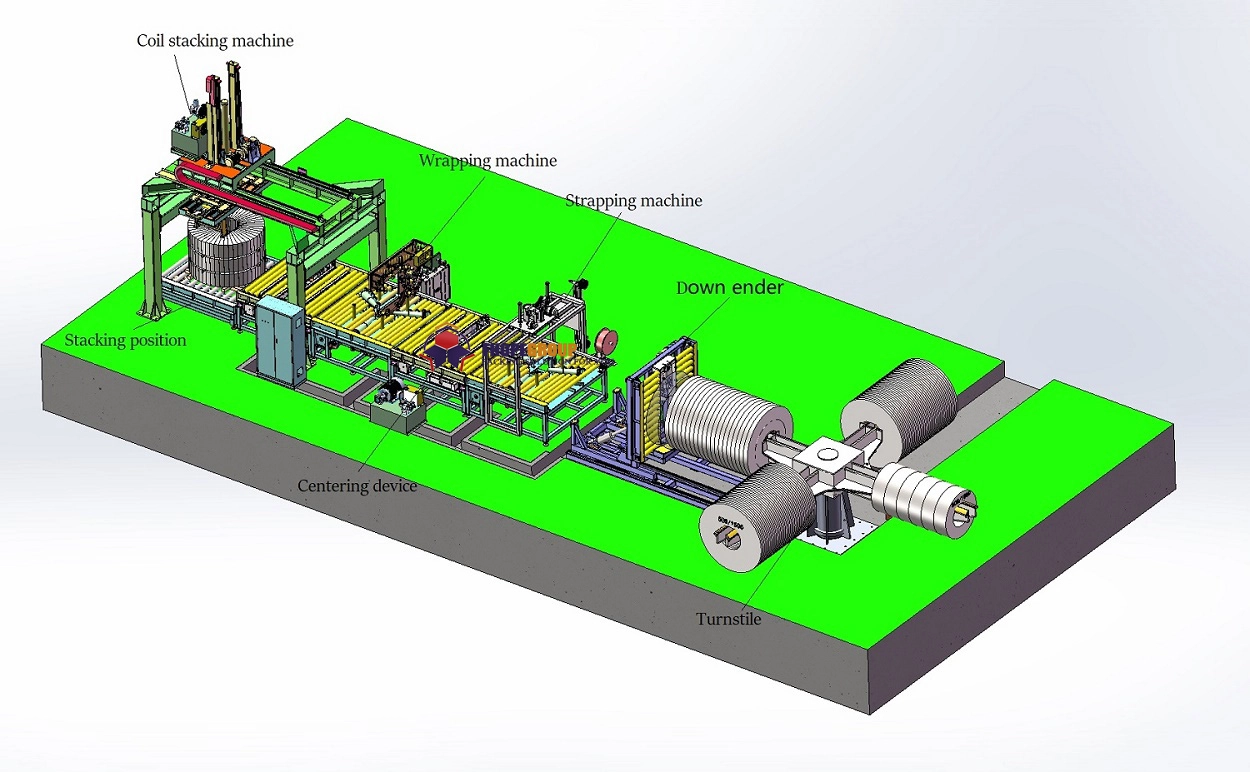
I have seen companies lose entire contracts because their packaging did not meet the required specifications for export. One client, aiming for the German market, had issues with rust on their coils. This was even after they thought their manual wrapping was sufficient. It was a costly lesson. That is why FHOPEPACK designs packing lines with export in mind. Our machines are built to apply layers of protection that are simply not possible to achieve consistently by hand. For instance, a typical export coil might need inner diameter strapping, outer diameter wrapping, side wrapping, and then a final protective layer. An automated line can apply these layers with exact tension and overlap. This creates a hermetic seal against moisture and dust. This is crucial for long-distance transport. We also integrate systems for automatic labeling. This can apply specific barcodes, QR codes, or other identification. This links to a factory’s inventory management system. It provides full traceability for each coil. This is a common requirement for CE/ISO certification. It also meets the demands of modern supply chains. Our machines can also use specialized anti-corrosion films and papers. These provide an extra layer of defense against rust. This is especially important for sensitive steel products. This ensures that coils arrive at their destination in perfect condition. This reduces the risk of rejection. It also builds trust with international buyers. My team and I often work with clients to design custom solutions. These solutions meet their specific export market needs. We make sure they understand how each component of the packing line contributes to overall product integrity. This is not just about protection. It is about compliance. It is about market access. It is about competitive advantage. It helps Polish factories compete on a global stage.
Is investing in a comprehensive packing line a cost-effective strategy for long-term growth?
The initial investment in a fully automated coil packing line can seem significant. This makes some factory owners hesitant. They wonder if the benefits truly outweigh the upfront costs. They might stick with cheaper, less efficient manual or semi-automatic methods. However, in today’s competitive environment, ignoring automation can lead to hidden costs. These include wasted materials, lower output, and damaged reputation.
Yes, investing in a comprehensive packing line is a highly cost-effective strategy for long-term growth. It reduces labor costs, minimizes material waste, and prevents costly product damage or rejections. The initial investment pays for itself through increased efficiency, higher production rates, and improved product quality. It provides a quick return on investment. It positions the factory for sustainable growth and a stronger market presence in Poland and globally.
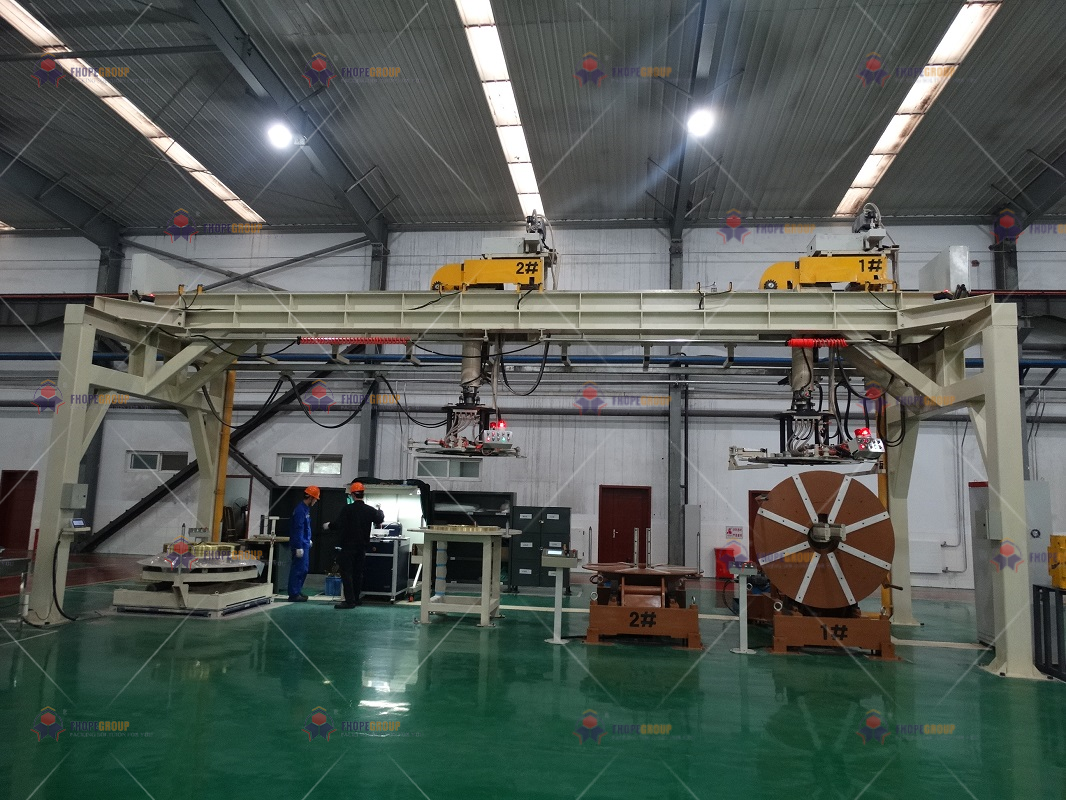
I have helped many clients grow their businesses. I have seen how a smart investment in automation can turn things around. When I established FHOPEPACK, I knew that our solutions had to deliver real value. It was not just about selling machines. It was about creating partnerships. Let us look at the numbers. Manual packing requires a team of workers. Automated lines often need only one or two operators to supervise. This significantly cuts down on labor expenses. Additionally, manual packing often results in inconsistent material usage. Sometimes too much film is used. Other times, not enough. An automated machine applies the exact amount of material needed. This minimizes waste. It leads to substantial savings over time. Consider also the cost of product damage. A damaged coil means rework. It means client complaints. It means potential penalties. These costs quickly add up. An automated line virtually eliminates these issues. It ensures consistent, high-quality packaging. This protects the product. It protects the factory’s reputation. Furthermore, automated lines can operate 24/7 with minimal interruptions. This increases overall production capacity. It allows factories to meet higher demand. This directly translates to increased revenue. My team and I often conduct return-on-investment analyses for potential clients. We show them how quickly an FHOPEPACK system pays for itself. It usually happens within a few years. After that, it generates pure profit through efficiency gains and cost reductions. We also offer comprehensive after-sales support. This includes training and spare parts. This ensures the line runs smoothly for years. This makes us a reliable, long-term partner. This kind of investment is not just buying a machine. It is buying a future for the factory.
Conclusion
Automated steel coil packing lines clearly offer a powerful solution for quality control in Poland’s factories. They ensure consistent packing quality for diverse products. They also solve labor shortages. They enhance safety. They meet strict export standards. This makes them a cost-effective investment for long-term growth. Embracing this technology is not just an option. It is a necessity for any factory looking to master their packing process and secure a competitive edge. Explore a coil packing line today.








