
How pallet inverter helps bosses future-proof warehouse operations for growth?
In today’s fast-moving world, warehouse managers and supply chain leaders face huge pressure. You deal with increasing customer demands, rising labor costs, and a constant need for efficiency. If you are a boss in this industry, you know the pain. You see your team struggling with old methods. This slows down everything. It costs you money. It also puts your whole operation at risk when you need to grow.
A pallet inverter helps bosses future-proof warehouse operations for growth by automating critical handling tasks. It ensures seamless adaptation to diverse pallet standards, drastically improves safety for workers, cuts down on labor expenses, and speeds up the entire supply chain. This prepares your warehouse for bigger demands and more complex logistics in the years to come.
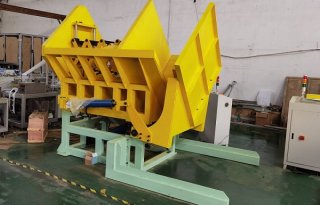
You might wonder if a single machine can really make such a big difference. I can tell you from my own journey, working from an employee to owning a packing machine factory, that small changes can have a huge impact. Let’s look closely at how a pallet inverter becomes a key tool for your warehouse’s future success.
How do pallet inverters simplify diverse pallet handling and international trade?
In the world of logistics, one big problem often comes up: different pallet sizes. You ship goods across borders. Then you find out that Europe uses Euro pallets. America uses US pallets. Other places have their own standards. Dealing with this mix by hand is slow. It leads to mistakes. It can even stop your shipments.
Pallet inverters simplify diverse pallet handling and international trade by making it easy to switch products between different pallet types quickly and safely. They handle various sizes and materials, ensuring that goods meet international shipping standards without manual effort or risk.

When I was first starting out, working in a packing machine factory, I saw how much time companies lost just on this issue. People would try to transfer goods from one pallet to another by hand. This was not only inefficient but also risky for the products and the workers. Today, with global trade growing, this problem is only getting worse. For a company like Carlos’s, managing thousands of pallets daily for a multinational food and beverage group, this is not just a small problem; it is a major bottleneck. Imagine the delay when a container full of goods needs to switch from internal Euro pallets to US standard pallets for export. Each pallet handled manually means more labor, more time, and more chance of damage. This kind of inefficiency directly impacts delivery times and, in turn, customer satisfaction. A pallet inverter, also called a pallet changer, fixes this by doing the work of many people in a fraction of the time. It can handle a full stack of products, clamp them securely, and then switch the pallet beneath. This means products stay safe. They stay untouched. This ensures that the integrity of the product, especially for food and beverage, remains perfect. This ability to handle different pallet types smoothly is not just a convenience. It is a critical feature for any business looking to expand its reach. It means you can accept goods on any pallet and ship them out on another without a hitch. This flexibility is what true growth looks like. It is about removing barriers, not building new ones. It allows businesses to scale their operations. They can enter new markets with confidence. They know their logistics can keep up.
Can pallet inverters truly cut labor costs and boost warehouse efficiency?
Many warehouse managers like Carlos are facing a big problem. There are not enough workers. The cost of labor keeps going up. Young people do not want to do heavy lifting. This makes it hard to keep things moving. Manual handling of pallets is a huge drain on time and money. It is not a sustainable way to operate a growing business.
Pallet inverters truly cut labor costs by automating the labor-intensive task of switching or inverting pallets. This reduces the need for multiple workers to perform strenuous manual operations, freeing them up for higher-value tasks and significantly boosting overall warehouse efficiency through faster cycle times.
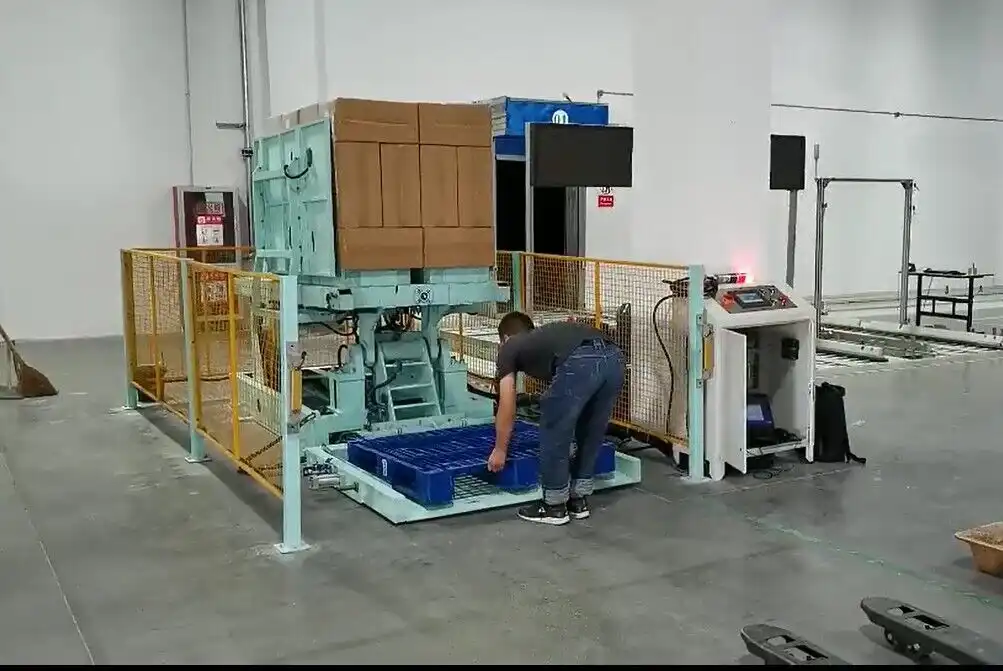
I remember when I first started my own packing machine factory. We always looked for ways to do things better, with fewer people, but without losing quality. We learned that investing in the right machines pays off very quickly. It is not about replacing people. It is about making the work smarter and safer. For example, Carlos’s warehouse handles thousands of pallets. If each pallet takes a few minutes for manual changeover, that time adds up fast. Think about the wages for the workers doing that job. Think about the time lost from other important tasks. A pallet inverter changes this completely. It can switch a pallet in seconds or a couple of minutes, depending on the model. This is much faster than any human team. This speed means products move through the warehouse faster. It reduces bottlenecks. It also makes your entire operation more predictable. This predictable flow is key for meeting tight delivery schedules from e-commerce and retail clients. When you use a pallet inverter, you need fewer people for the physical task of moving and changing pallets. Those workers can then do other, more skilled jobs. They can manage inventory, operate other machines, or handle data. This makes your workforce more valuable. It also makes your business more robust against labor shortages. In my experience, the initial cost of a machine like this is quickly covered by the savings in labor. It also boosts output. It is a clear example of how smart automation leads to both cost savings and better overall performance. This improved efficiency is not just about speed. It is also about accuracy. Machines make fewer errors than humans during repetitive tasks. This leads to less damage, fewer reworks, and ultimately, a smoother, more cost-effective operation.
How do pallet inverters enhance warehouse safety and reduce operational risks?
Safety is something every manager worries about. In a busy warehouse, manual pallet handling comes with real dangers. Workers lift heavy goods. They try to flip loaded pallets. Goods can fall. People can get hurt. Carlos knows this well. He has seen accidents happen. These accidents are not just bad for people. They also cost money in insurance, medical bills, and lost work time.
Pallet inverters enhance warehouse safety and reduce operational risks by eliminating the need for manual, high-risk tasks such as flipping or transferring heavy loads between pallets. They securely clamp products during the entire process, preventing goods from toppling and protecting workers from potential injuries.
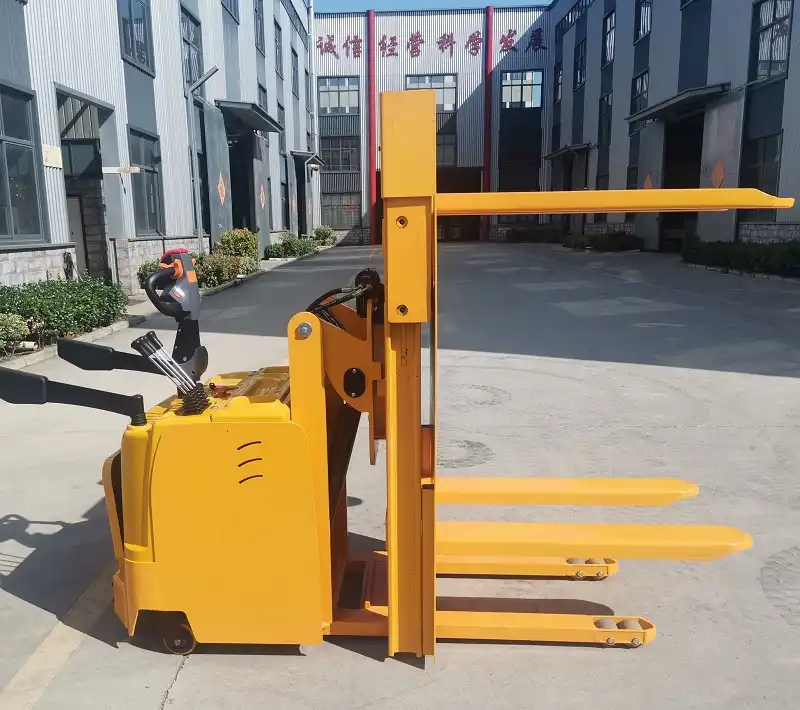
When I started FHOPEPACK, one of my main goals was to provide solutions that not only improved efficiency but also, more importantly, enhanced safety. I had witnessed many incidents where simple tasks like changing pallets led to serious injuries. These events are not only tragic for the individuals involved but also create a ripple effect of disruption, investigation, and financial loss for the company. For a large-scale operation like Carlos’s, where thousands of pallets are handled daily, the risk factor increases exponentially with manual processes. A pallet inverter fundamentally changes this risk profile. Instead of workers using crowbars, forklifts in tricky ways, or even just sheer muscle to maneuver heavy pallets, the machine does it all. The goods are held firmly in place. The machine then rotates or lifts them to allow for pallet exchange. This completely removes humans from the hazardous zone. This means no more crushed fingers, no more strained backs, and no more products falling from height. Think about the peace of mind this brings to a manager. Knowing your team is safer. Knowing you have minimized the chance of a costly accident. Beyond the direct human cost, there is the financial impact. Each accident means downtime, potential legal costs, higher insurance premiums, and a blow to morale. Reducing these risks directly translates into lower operational costs and a more stable, predictable work environment. It shows that you care for your employees. This also helps attract and keep good workers, a big plus in today’s labor market. Investing in a pallet inverter is not just buying a machine; it is investing in the well-being of your team and the financial health of your business. It is a proactive step to build a safer, more compliant, and more resilient warehouse operation for the long run.
Why is a pallet inverter a smart investment for long-term warehouse growth and adaptation?
You are always looking ahead as a boss. You want to make sure your warehouse can handle more business tomorrow than it can today. This means you need tools that are not just good for now, but also good for the future. You need equipment that can change with your needs. Many machines are only good for one thing. But a pallet inverter is different. It offers flexibility. It offers growth potential.
A pallet inverter is a smart investment for long-term warehouse growth and adaptation because it provides scalable, flexible automation that meets evolving operational demands. It handles diverse loads, integrates with various systems, and ensures consistent high performance, which helps a business grow without major overhauls.
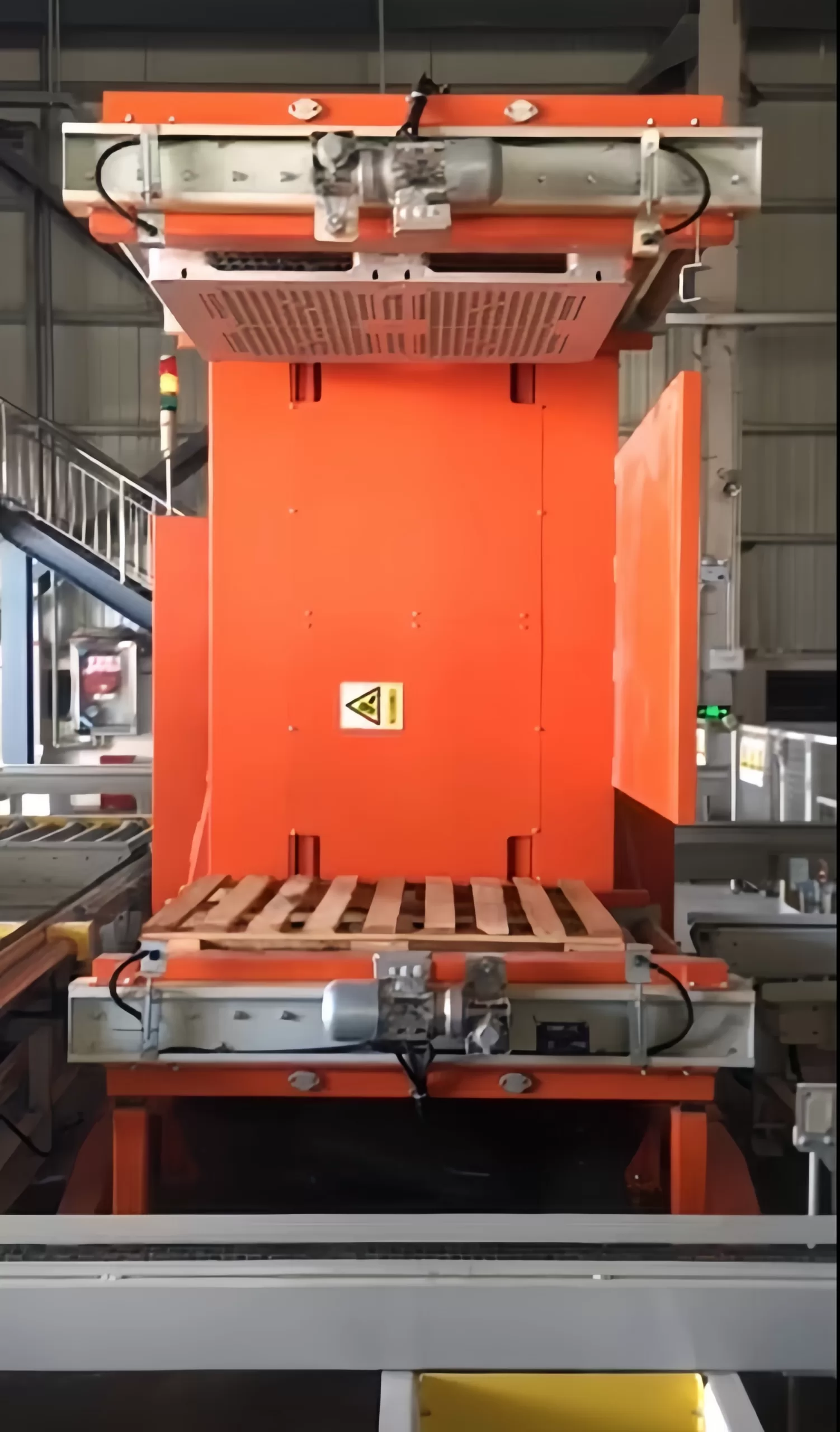
From my own experience, having seen many companies grow (and some struggle), the ones that thrive are those that invest wisely in adaptable technology. They do not just buy machines; they buy solutions for their future problems. For Carlos, managing a large distribution center, his challenge is not just today’s pallet changes. It is also next year’s, and the year after that. What if his company expands into new markets with even more unique pallet requirements? What if customer demand for faster delivery doubles? A pallet inverter is designed with this kind of future in mind. First, it offers versatility. Many models can handle a wide range of pallet sizes, weights, and even product types. This means one machine can solve many problems. It can adapt to new products or new shipping needs without you needing to buy new equipment. Second, these machines come in different levels of automation. You can start with a semi-automatic model. As your business grows, you can upgrade to a fully automatic system. Some can even integrate directly into automated conveyor lines. This scalability is crucial. You do not need to tear everything down and start over. You just make an incremental upgrade. Third, it ensures consistency. When you have a machine doing the work, it does it the same way every time. This consistency is vital for maintaining quality. It helps with regulatory compliance, especially important in the food and beverage industry. It also helps with meeting customer expectations. In a world where e-commerce demands instant gratification, consistent, fast processing is not a luxury; it is a necessity. Finally, for a manager like Carlos who wants a long-term partner, working with a supplier like FHOPEPACK means you get more than just a machine. You get the knowledge and support to ensure your investment keeps working for you. This kind of partnership helps you plan for future growth, knowing you have the right tools and expertise behind you.
Conclusion
Pallet inverters are a powerful tool for any warehouse manager looking to grow. They solve big problems like diverse pallet sizes, labor costs, and safety risks. By making these changes, they help your warehouse run better and prepare for the future. A pallet inverter is a key investment for long-term success.








