
How Does a Pallet Inverter Compare to Manual Handling in Distribution Centers?
Managing a busy distribution center, especially when you deal with international shipments and diverse pallet types, can feel like a constant juggling act. You are always trying to balance speed, safety, and costs. I have been in the packing machine industry for a long time. I know the pressures you face. In my early days, I saw how much time and effort went into manual pallet changes. It was not efficient, and it often led to problems. This made me think about better ways. I want to share some insights from my journey. We will look at how modern pallet inverters stack up against the old ways of doing things by hand.
Manual handling of pallets in distribution centers is significantly slower and more hazardous than using a pallet inverter, which offers a highly efficient, safer, and cost-effective solution for handling diverse pallet types and high volumes, leading to improved operational flow and reduced labor dependency.
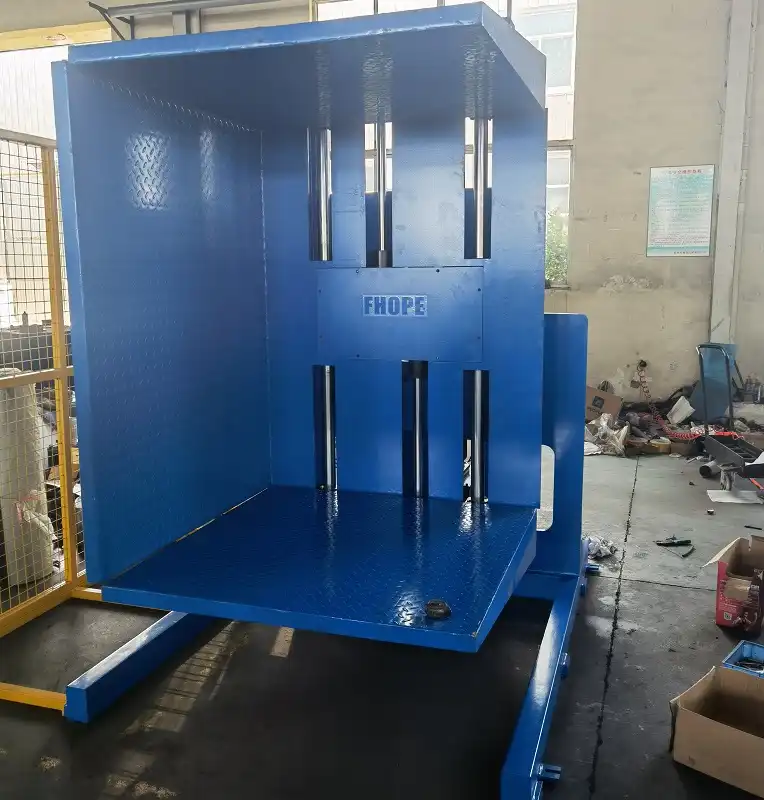
You might be wondering if making such a change is truly worth it. The challenges in a modern warehouse are real. We need to move goods quickly. We need to keep our teams safe. We also need to keep costs under control. Let us dive deeper into these points. We will explore how these two methods compare. This will help you see the bigger picture.
Is Manual Pallet Handling Still Viable in Modern Warehouses?
The image of workers moving pallets by hand might seem like a thing of the past. But it still happens more often than you would think. I have seen countless operations where teams manually shift goods from one pallet type to another. They use forklifts, pallet jacks, and a lot of muscle power. This process is complex. It involves lifting heavy items, re-stacking, and sometimes even physically rotating goods. For instance, when shipping internationally, you often need to switch from a standard Euro pallet to a US-sized pallet. Or you might need to move goods from a wooden pallet to a hygienic plastic one. Doing this by hand is not just slow; it is full of risks. I often recall early days at my first packing machine factory. We saw how much time was lost just moving products. Imagine doing that hundreds of times a day.
Manual pallet handling is becoming increasingly unsustainable in today’s fast-paced distribution centers due to its inherent inefficiencies, high safety risks, and rising labor costs, making it a bottleneck for modern logistics operations.
Let us break down why manual handling struggles in a modern warehouse environment.
1. The Hidden Costs of Manual Labor and Time
- 1.1 Low Efficiency: Manual pallet changes take a lot of time. Each switch from one pallet to another requires multiple steps. Workers must prepare the new pallet. They must then move the goods. This can involve unwrapping, lifting, re-stacking, and re-wrapping. If your operation handles thousands of pallets daily, these small delays add up quickly. This impacts your overall throughput. It slows down your entire supply chain. From my experience, every minute saved on the floor directly impacts your delivery schedules and customer satisfaction.
- 1.2 High Labor Costs: Labor costs continue to rise globally. Finding enough skilled warehouse staff is also a growing challenge. Young people often do not want physically demanding jobs. Relying heavily on manual labor for pallet changing means you need more staff. You pay higher wages, and you still face recruitment difficulties. My own journey showed me how much a good machine can leverage your existing team. It lets them focus on more skilled tasks.
- 1.3 Error Prone: Human error is a factor in any manual process. Mis-stacking, dropping goods, or using the wrong pallet type can happen. These errors lead to damaged products, re-work, and wasted materials. In a food and beverage group, where compliance and product integrity are key, such errors can be costly. They can lead to spoiled goods or even regulatory fines. I always push for solutions that minimize human mistakes.
2. The Unacceptable Risks to Safety and Goods
- 2.1 Increased Injury Risk: Manually handling heavy pallets or goods is dangerous. Workers often lift, push, and pull items that can weigh hundreds of kilograms. This leads to back injuries, sprains, and other accidents. I have heard many stories of severe injuries in warehouses. These accidents are not just painful for the employee; they also lead to lost workdays, medical expenses, and increased insurance premiums for the company. Safety should always be the top priority.
- 2.2 Product Damage: When goods are moved by hand, there is a higher chance of damage. This is especially true for delicate items or unstable stacks. A dropped box, a shifted pallet, or an uneven transfer can cause product loss. For a food group, damaged goods mean direct financial losses. They also mean potential brand damage if products reach customers in poor condition. My company focuses on solutions that protect your products as much as your people.
- 2.3 Compliance Issues: Different countries have different pallet standards. For example, Euro pallets and US pallets have different dimensions. Manually ensuring every pallet meets the correct export specification is tricky. Mistakes can lead to shipments being rejected at customs. This causes significant delays and contractual penalties. I have seen how these issues can hurt a business.
3. Impact on Customer Satisfaction
- 3.1 Slower Deliveries: Modern customers expect fast deliveries. E-commerce and retail clients demand shorter lead times. Manual pallet changes create bottlenecks. They slow down your outbound logistics. This directly impacts your ability to meet customer expectations.
- 3.2 Contractual Penalties: Delays in shipping due to inefficient pallet handling can trigger penalty clauses in contracts. This directly impacts your bottom line. It also harms your reputation as a reliable supplier. My goal is always to help my clients avoid these costly situations.
How Does a Pallet Inverter Transform Operational Efficiency?
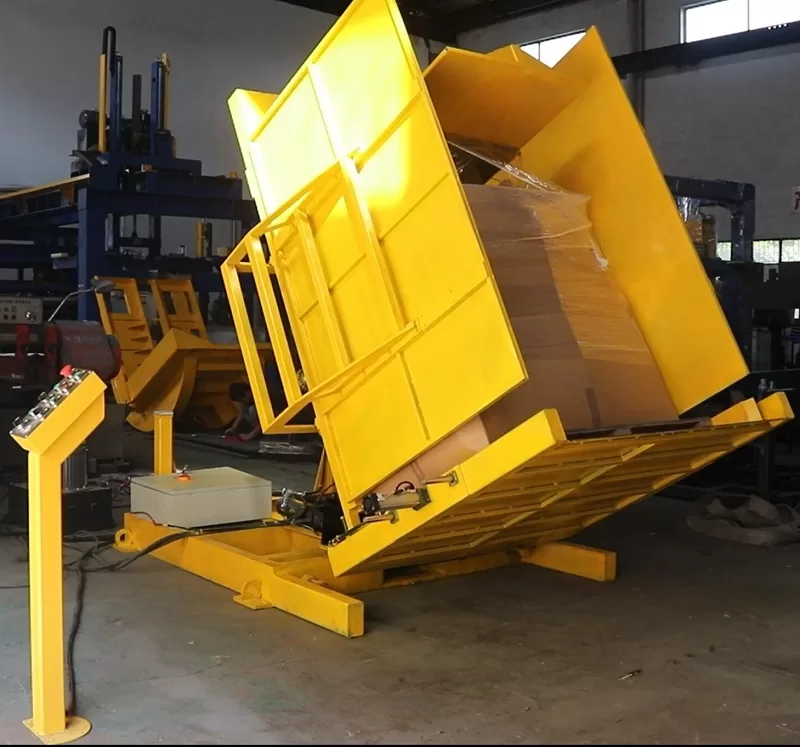
Now, let us talk about the solution that many in the industry are turning to: the pallet inverter. Imagine a machine that can quickly and safely switch the pallet underneath your goods. It does this without manually touching the product itself. This is what a pallet inverter does. It comes in various forms. Some machines tip the entire load. Others use a clamping mechanism to hold the goods while the pallet is swapped. The key benefit is that it automates a highly labor-intensive and risky task. It takes a process that could take several minutes per pallet manually and reduces it to seconds. I first saw a pallet inverter in action years ago. I immediately understood its potential. It was a game-changer for many operations. It helped businesses move goods faster and safer.
A pallet inverter significantly boosts operational efficiency by automating the pallet transfer process, reducing cycle times, accommodating diverse pallet types, and minimizing the need for manual intervention, thereby streamlining the entire goods flow in a distribution center.
Let us explore the ways a pallet inverter brings efficiency to your operations.
1. Speed and Throughput
- 1.1 Reduced Cycle Time: Pallet inverters drastically cut down the time required to switch pallets. What takes minutes with manual labor can be done in mere seconds by a machine. This speed-up is crucial for high-volume operations. It allows a distribution center to process more pallets per hour. This directly translates to increased throughput. For example, a semi-automatic inverter can handle 20-30 pallets per hour, far exceeding manual capabilities.
- 1.2 Continuous Flow: By automating the pallet change, these machines help maintain a continuous flow of goods. There are fewer stops and starts. This reduces bottlenecks. This smooth, uninterrupted process is vital for meeting tight delivery schedules. It also helps manage high demands from e-commerce and retail clients. In my experience, even small improvements in flow create big impacts over time.
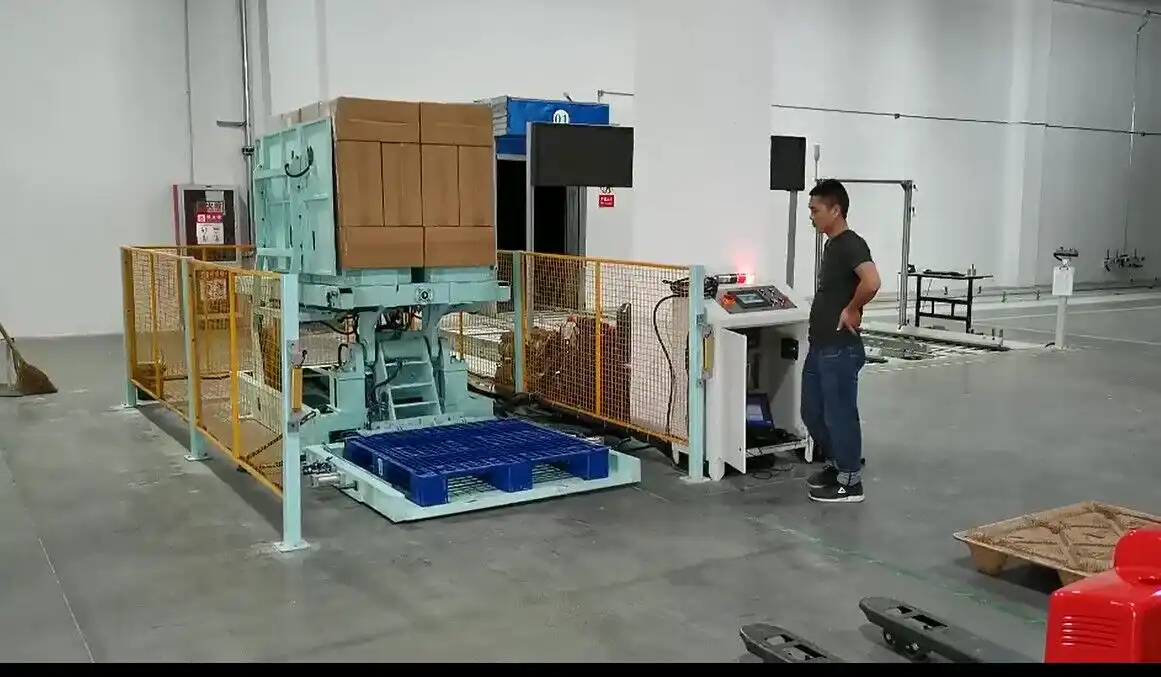
- 1.3 Integration with Automation: Pallet inverters can be integrated into existing automated lines. This creates an even more seamless and efficient system. They can work with conveyors and other material handling equipment. This makes them a key component of a fully automated warehouse. This also takes the concept of “parcel sorting operations” to a new level. Here, pallets are the units being sorted and moved efficiently.
2. Versatility and Adaptability
- 2.1 Handling Diverse Pallet Types: One of the biggest advantages is their ability to handle various pallet sizes and materials. Whether you need to switch from a wooden Euro pallet to a plastic hygiene pallet, or from a US-standard pallet to a custom size, a pallet inverter can do it. This flexibility is critical for multinational operations like Carlos’s food group, where different regions have different requirements.
- 2.2 Product Protection: The design of most pallet inverters ensures the product remains stable and undamaged during the transfer. The goods are clamped securely. They are then gently inverted or transferred. This minimizes the risk of product shifting or falling. It is a stark contrast to the risks associated with manual handling. This protection is invaluable for fragile or high-value items.
- 2.3 Adapting to Load Requirements: Pallet inverters can handle different load weights and dimensions. From light loads to heavy stacks of goods, these machines are built for robustness. This adaptability means you can use one machine for a wide range of products within your warehouse.
3. Space Utilization
- 3.1 Compact Footprint: Many pallet inverter models are designed to be compact. They do not require a large amount of floor space. This is important in warehouses where space is often limited and expensive.
- 3.2 Streamlined Processes: By centralizing the pallet changing function, an inverter can help organize your warehouse layout. It removes the need for ad-hoc manual handling zones. This makes your facility cleaner and more efficient.
Beyond Speed: What Are the Safety and Cost Implications of Pallet Automation?
The benefits of a pallet inverter extend far beyond just speed. While faster operations are great, true value comes from a comprehensive solution. This includes improved safety and significant cost savings. When I started my own packing machine factory, I knew that selling a machine was not enough. We needed to provide solutions that genuinely helped businesses. This meant looking at their entire operation. We looked at how our machines could make their workplace safer and more profitable. Safety is a non-negotiable aspect of any operation. Costs, of course, directly impact the bottom line. Let us examine how pallet automation addresses these critical areas.
Pallet automation, particularly with pallet inverters, drastically reduces workplace accidents and product damage, while simultaneously lowering operational costs through reduced labor dependency, minimized re-work, and avoidance of penalty fees, providing a strong return on investment.

Here is how pallet automation improves safety and drives down costs.
1. Drastically Enhanced Safety Standards
- 1.1 Eliminating Manual Lifting and Flipping: This is the most direct safety benefit. Pallet inverters eliminate the need for workers to manually lift, turn, or flip heavy pallets or products. This removes the primary cause of musculoskeletal injuries, back strains, and crush injuries. It also reduces the risk of goods falling on workers. I have seen firsthand how much this change improves employee morale and safety records.
- 1.2 Reduced Accident Frequency: With fewer manual interventions, the number of accidents decreases significantly. This includes incidents like dropped loads, tip-overs, and forklift-related collisions during manual transfers. A safer workplace means fewer workers’ compensation claims, lower insurance premiums, and a more secure environment for everyone. For a company dealing with thousands of pallets, this is a huge win.
- 1.3 Consistent and Predictable Operation: Machines operate with a consistent level of precision and force. This removes the variability and fatigue associated with human effort. This predictability leads to a safer operation. It also means fewer surprises or unexpected hazardous situations. Every machine we design aims for this consistent safety.
2. Significant Long-Term Cost Savings
- 2.1 Lower Labor Costs: By automating the pallet changing process, you can reallocate your valuable staff. They can move to more skilled roles within the warehouse. This reduces your reliance on a large workforce for physically demanding tasks. It helps address the challenges of labor shortages and rising wages. Over time, the savings on labor can be substantial.
- 2.2 Minimized Product Damage Costs: When products are handled mechanically and securely, the risk of damage drops sharply. This means less waste, fewer returns, and fewer instances of having to replace or re-process damaged goods. For a food and beverage group, this directly impacts profit margins. It also reduces spoilage.
- 2.3 Reduced Insurance Premiums: A safer workplace with fewer accidents often results in lower insurance premiums. Insurance companies recognize operations with strong safety records. This can lead to tangible financial benefits for your business.
- 2.4 Avoidance of Penalties and Fines: Ensuring accurate pallet changes for compliance (e.g., correct pallet type for export) prevents costly customs delays and contractual penalties. An automated system makes it easier to meet these standards consistently. This avoids financial losses and maintains client relationships.
- 2.5 Increased Equipment Lifespan: By using specialized machinery for heavy lifting and maneuvering, your forklifts and other general-purpose equipment experience less wear and tear from strenuous pallet transfer tasks. This extends their lifespan and reduces maintenance costs.
Choosing Your Partner: Why FHOPEPACK Understands Your Warehouse Needs?
Finding the right equipment for your warehouse is about more than just buying a machine. It is about finding a partner who understands your challenges. It is about someone who can offer a solution that truly fits your unique operations. I have spent my entire career in the packing machine industry. I started on the factory floor. I built my own successful factory. This journey taught me a lot. I learned that every client has specific pain points. For someone like Carlos, dealing with thousands of pallets, diverse international standards, and a demanding market, a generic solution simply will not work. You need reliability, adaptability, and strong support. My goal with FHOPEPACK is to share this knowledge. I want to help businesses like yours succeed. We do not just sell machines; we offer expertise. We offer solutions tailored to real-world warehouse problems.
FHOPEPACK positions itself as a long-term partner for distribution centers by offering expert consultation, reliable pallet inverter solutions tailored to diverse operational needs, and comprehensive after-sales support, stemming from Randal Liu’s deep industry experience and commitment to client success.
Let us look at what makes FHOPEPACK a different kind of partner for your warehouse automation needs.
1. Deep Industry Knowledge and Empathy
- 1.1 Randal’s Hands-On Experience: My background is not just theoretical. I started as an employee. I built a factory. I have seen the challenges firsthand, from labor shortages to safety concerns. This means I understand your struggles. My team and I speak your language. We know what it takes to run an efficient warehouse operation, especially one dealing with coil packing, handling machines, and pallet changing machines. This personal history helps us design and recommend solutions that are truly practical.
- 1.2 Focus on Real-World Problems: We do not just look at technical specifications. We look at your actual operational environment. We consider your daily pallet volume. We look at the types of goods you handle. We also consider the specific pallet standards you need to meet. For a manager dealing with Euro and US pallets, this practical understanding is key. We aim to solve your problems, not just sell you a product.
2. Tailored and Flexible Solutions
- 2.1 Adaptability to Diverse Needs: Your warehouse is unique. FHOPEPACK offers pallet inverter systems that can adapt to various pallet sizes, weights, and materials. Whether you need a full automatic system or a semi-automatic solution, we can help. We can also integrate our machines with your existing lines. This flexibility ensures you get a system that truly fits your operational flow.
- 2.2 Reliability and Durability: We understand that equipment reliability is paramount. A machine breakdown can halt your entire operation. Our pallet inverters are built for high-intensity warehouse environments. They are designed for long-term stable operation. This focus on quality means less downtime for you. It means more consistent output.
3. Partnership Beyond Purchase
- 3.1 Comprehensive Support: Our commitment extends beyond the sale. We offer installation support, training for your team, and reliable after-sales service. We want to ensure your equipment performs optimally for years to come. This is the definition of a long-term partnership. We want to see your business grow and succeed.
- 3.2 Consultative Approach: We act as consultants. We work with you to understand your current challenges and future goals. We help you identify the best automation strategies. This collaborative approach ensures you invest in a solution that provides the best possible return. We guide you through the process, from initial assessment to ongoing optimization.
Conclusion
Choosing between a pallet inverter and manual handling for your distribution center’s pallet operations is a clear choice for efficiency, safety, and cost reduction. A pallet inverter offers a superior, automated solution. It tackles challenges like diverse pallet types, labor shortages, and safety risks. Investing in the right technology, with the right partner, sets your business up for long-term success.








