
How Mexican steel plants using coil wrapping machine for safe coil protection?
Are you tired of slow, unsafe, and damaging coil packing in your Mexican steel plant? I know the feeling. Manual processes create huge bottlenecks and constant worry about worker injuries. Every dented coil, every lost-time injury, every minute of downtime costs you money. It eats into your profits and makes client complaints common. This is not how a modern plant should run. But what if I told you there is a clear path to change this? What if you could protect your coils better, keep your workers safer, and boost your plant’s output all at once?
Mexican steel plants are increasingly adopting advanced coil wrapping machines to enhance safety and protect their products. These automated systems remove workers from hazardous manual handling tasks, significantly reducing the risk of injuries associated with heavy coil manipulation. At the same time, they provide consistent, robust wrapping that shields coils from damage during storage and transit, ensuring products reach customers in perfect condition.
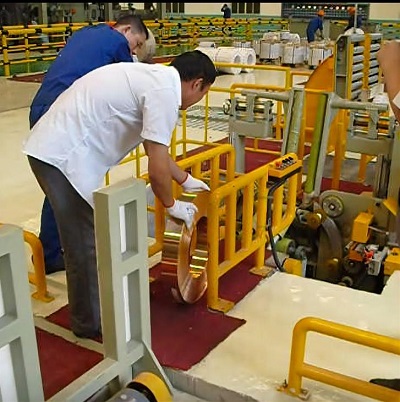
My journey in the packing machine industry taught me one thing: real solutions come from understanding real problems. This is exactly why I want to share my insights with you. Let us explore how these machines transform operations, one key area at a time.
1. Why are Mexican steel plants struggling with traditional coil packing methods?
For years, many Mexican steel plants relied on old-fashioned packing. This often meant lots of people doing tough, repetitive tasks. It felt like the only way to get the job done. But these methods bring big problems. They slow everything down. Workers face daily risks. Products often get damaged. This impacts your bottom line and your team’s morale. We need to understand why these methods fail. This helps us see the clear need for something better.
Mexican steel plants often struggle with traditional coil packing due to high reliance on manual labor. This leads to slow processing speeds, creating significant bottlenecks at the end of the production line. Also, workers manually handling heavy steel coils face constant safety risks, including strains, crushing injuries, and long-term health issues. Inconsistent wrapping also means more product damage, especially to sensitive coil edges, causing customer dissatisfaction and financial losses. %[Heavy Loading Steel Packing Line](https://www.fhopepack.com/blog/wp-content/uploads/2025/05/heavy-loading-steel-packing-line-scaled.webp “Heavy Loading Steel Packing Line“)
My early days in a packing machine factory showed me this firsthand. I saw workers straining, trying to secure massive steel coils. The sheer physical effort was immense. It was not just slow; it was dangerous. I remember one incident where a coil shifted during manual strapping. Luckily, no one was seriously hurt, but it was a close call. That moment stuck with me. It made me realize the urgent need for safer methods. When I later started my own factory, I made sure we focused on automating these risky steps. We saw how much efficiency improved. We also saw how much safer our team became. Traditional methods bring several core issues that hurt a factory’s operations.
The Hidden Costs of Manual Packing
Manual packing seems cheap at first. You do not buy a big machine. But the true costs add up fast.
A. Human Capital Drain
- High Labor Costs: You need many workers to pack coils by hand. This means high salaries, benefits, and training costs. Over time, this becomes very expensive.
- Increased Turnover: Dangerous or tiring jobs often mean people leave faster. Finding and training new staff takes time and money.
- Skill Dependency: Manual packing relies on skilled workers. If they are absent, or leave, your operations can grind to a halt.
B. Operational Bottlenecks
- Slow Speeds: Human hands cannot work as fast as machines. This creates a backlog at the end of the line. Your whole production slows down.
- Inconsistent Quality: Each worker packs a little differently. This leads to inconsistent wrapping. Some coils might be well-protected, others less so.
- Limited Throughput: Manual systems simply cannot handle high volumes needed by growing plants. This caps your potential output.
The Safety Trap
This is a critical point for factory managers like Michael. Safety is not just about rules. It is about protecting people.
A. Direct Injury Risks
- Crushing Hazards: Steel coils are heavy. Moving them, tilting them, or strapping them by hand creates a huge risk of crushing injuries.
- Strains and Sprains: Repetitive motions and heavy lifting cause muscle strains, back injuries, and other long-term health problems for workers.
- Falling Objects: Coils can shift or fall if not handled properly. This puts everyone nearby at risk.
B. Indirect Costs of Injuries
- High Insurance Premiums: More injuries mean higher worker compensation claims. This directly increases your insurance costs.
- Lost Productivity: Injured workers cannot work. This means lost production time and the need for replacement staff.
- Low Morale: A dangerous workplace lowers worker morale. This affects overall productivity and creates a negative work environment.
These issues highlight why traditional methods are not sustainable. They present significant risks and hold back growth for ambitious Mexican steel plants. My goal at FHOPEPACK has always been to show there is a better way.
2. How do coil wrapping machines improve safety for workers in steel factories?
Worker safety is often the biggest headache for factory managers. The thought of an accident, especially with heavy steel, is a constant worry. Manual handling of coils is a prime area for these risks. High injury rates lead to more than just pain for workers. They mean skyrocketing insurance costs, lost production time, and a negative impact on team morale. You need a real solution to protect your people. Coil wrapping machines offer a powerful answer. They are designed to take the danger out of the packing process.
Coil wrapping machines dramatically improve worker safety in steel factories by removing human interaction from hazardous tasks. They automate the entire wrapping process, from loading to securing, which eliminates the need for manual lifting, tilting, or strapping of heavy coils. This automation reduces exposure to crushing hazards, repetitive strain injuries, and falls, creating a significantly safer work environment for employees in Mexican steel plants.

When I started my journey, safety was always a top priority. I saw too many close calls with manual coil handling. It made me determined to engineer solutions that put worker well-being first. This focus was a cornerstone of my factory’s success. It is why I advocate so strongly for automation in this area. Coil wrapping machines are not just about speed; they are about saving lives and preventing injuries.
Key Safety Benefits of Coil Wrapping Machines
These machines change the entire risk profile of your packing line. They protect workers in many ways.
A. Elimination of Manual Lifting and Handling
- No Heavy Lifting: Workers no longer need to manually lift or position heavy steel coils. The machine does all the heavy work. This prevents back injuries, strains, and sprains.
- Reduced Physical Strain: Repetitive tasks like strapping and banding coils by hand are gone. This lowers the risk of carpal tunnel syndrome and other overuse injuries.
- Safe Loading and Unloading: Coils are loaded onto the machine’s robust platform using forklifts or cranes. Workers stay clear of the load zone.
B. Protection from Crushing and Falling Hazards
- Secured Work Area: Modern coil wrappers often have safety fencing and interlocks. These features ensure workers cannot enter the danger zone while the machine is operating.
- Stable Coil Positioning: The machine holds the coil firmly in place during the wrapping process. This prevents the coil from shifting, rolling, or falling unexpectedly.
- Controlled Operations: All movements are precise and controlled by the machine’s programming. There is no human error involved in positioning the coil or applying the wrap.
C. Consistent and Secure Packaging
- Uniform Wrapping: The machine applies wrap consistently and tightly around the coil. This means the package itself is more stable. A well-wrapped coil is less likely to unravel or shift during transport.
- Damage Prevention: Good wrapping protects the coil’s edges and surface from impact. This also protects workers who might handle the wrapped coil later. They do not face sharp edges or loose materials.
To illustrate the impact, consider this comparison:
| Aspect | Manual Coil Packing | Automated Coil Wrapping |
|---|---|---|
| Lifting | High risk of back injury, strains | Machine handles all heavy lifting |
| Repetitive Tasks | High risk of overuse injuries (e.g., carpal tunnel) | Eliminated by automation |
| Crushing Hazards | Workers close to heavy, moving coils | Workers kept clear of danger zones |
| Coil Stability | Prone to shifting during handling | Coil held securely by machine |
| Package Consistency | Varies by worker, potential for loose wraps | Uniform, tight, and secure every time |
For any factory manager in Mexico, seeing these benefits is clear. Investing in coil wrapping machines means investing in the well-being of your team. It creates a workplace where people feel safe and valued. This leads to higher morale and a more productive environment overall. I have seen this transformation happen many times.
3. Can automation with coil wrapping machines really boost production efficiency and cut costs?
Many factory managers worry about the cost of new equipment. They question if the investment will truly pay off. You need to see clear returns on your money. Without clear ROI, buying a new machine feels like a gamble. You risk spending a lot with no real improvement in your output or your bottom line. This can make any decision difficult. I am here to tell you that automation with coil wrapping machines delivers big results. It boosts your efficiency and cuts costs in measurable ways.
Yes, automation with coil wrapping machines significantly boosts production efficiency and cuts costs for Mexican steel plants. These machines drastically increase packing speed, eliminating end-of-line bottlenecks and speeding up overall delivery. They reduce reliance on expensive manual labor, lower product damage rates, and optimize material usage. This results in substantial savings in labor, materials, and reduced customer returns, delivering a strong return on investment.

This question is close to my heart. When I built my factory, every investment had to make sense financially. I needed to see how it would make us more competitive. It is not enough to just talk about efficiency; you need to prove it with numbers. Coil wrapping machines offer some of the clearest ROI in the packing industry. I learned this when I started helping clients expand. They would often come to me with bottlenecks at the packing stage. Their production lines were fast, but then everything slowed down. The manual packing just could not keep up. By introducing automated coil wrappers, we saw immediate improvements. Their output jumped. Their costs went down. It was a game changer for many of them.
How Efficiency Gains Translate to Cost Savings
The benefits are multi-faceted. They touch almost every part of your operation.
A. Increased Throughput and Speed
- Faster Packing Cycles: Machines can wrap coils much faster than humans. This means more coils are packed per hour.
- Reduced Bottlenecks: The packing line keeps pace with production. This prevents slowdowns that affect the entire plant’s output.
- Consistent Operation: Machines work non-stop, without breaks or fatigue. This ensures a steady flow of packed products.
B. Significant Labor Cost Reduction
- Fewer Workers Needed: One operator can often manage several machines. This reduces the number of staff needed for packing.
- Reallocation of Labor: Workers can move to higher-value tasks within the factory. This optimizes your workforce.
- Reduced Overtime: With faster packing, you might not need as much overtime pay to meet deadlines.
C. Minimized Product Damage
- Secure Wrapping: Machines apply a tight, consistent wrap. This protects coils from scratches, dents, and moisture during transport and storage.
- Reduced Rework: Fewer damaged products mean less time spent on rework or replacing items.
- Lower Warranty Claims: Customers receive undamaged goods. This leads to fewer complaints and warranty claims. This directly impacts your profits.
D. Optimized Material Usage
- Precise Material Application: Machines use the exact amount of wrapping material needed. There is less waste compared to manual wrapping.
- Variety of Materials: Machines can handle different types of films and straps. This allows you to choose the most cost-effective and protective option for each product.
For example, consider a steel plant packing 50 coils per shift.
- Before Automation:
- 4 workers needed for packing.
- Average packing time: 5 minutes per coil (including handling).
- Daily output: ~96 coils (8-hour shift, 4 workers, 5 min/coil).
- Product damage rate: 3% (due to manual handling/inconsistent wrap).
- After Automation (with one machine):
- 1 worker needed to oversee the machine.
- Average packing time: 1.5 minutes per coil.
- Daily output: ~320 coils (8-hour shift, 1 machine, 1.5 min/coil).
- Product damage rate: 0.5% (due to consistent machine wrap).









