
How Engineers Analyze ROI of Pallet Inverter for Large-Scale Pharmaceutical Packaging?
Dealing with thousands of pallets daily, especially in demanding environments like pharmaceutical packaging, brings unique challenges. You know the pain: constant pallet changes between Euro and American standards, the endless search for skilled labor, and the looming threat of accidents. These issues do not just slow things down; they hit your bottom line hard. I have seen countless operations struggle with these exact problems.
Engineers analyze the ROI of a pallet inverter for large-scale pharmaceutical packaging by evaluating direct cost savings from reduced labor and product damage, increased operational efficiency through faster pallet exchange, and mitigated safety risks, all while ensuring compliance with stringent industry standards. This methodical approach ensures that the investment brings tangible, long-term value to the entire supply chain.
When I started FHOPEPACK, my goal was always to share knowledge. I want to help businesses like yours navigate these complex decisions. Understanding the return on investment for a pallet inverter is not just about numbers; it is about building a more efficient, safer, and compliant future for your packaging operations. Let us look at how.
Why is Pallet Switching a Critical Challenge in Modern Packaging Operations?
In today’s fast-paced world, any delay or inefficiency in your warehouse means lost money. Manual pallet switching, especially with diverse pallet types like those needed for international pharmaceutical shipments, creates a major bottleneck. This is a problem many of my clients, including those moving high-value goods, face daily.
Pallet switching is a critical challenge due to the diverse international pallet standards, the high labor intensity and associated costs, the significant safety risks involved in manual handling, and the direct impact on delivery times and overall supply chain efficiency. These factors combine to create a complex operational hurdle that demands an automated solution.
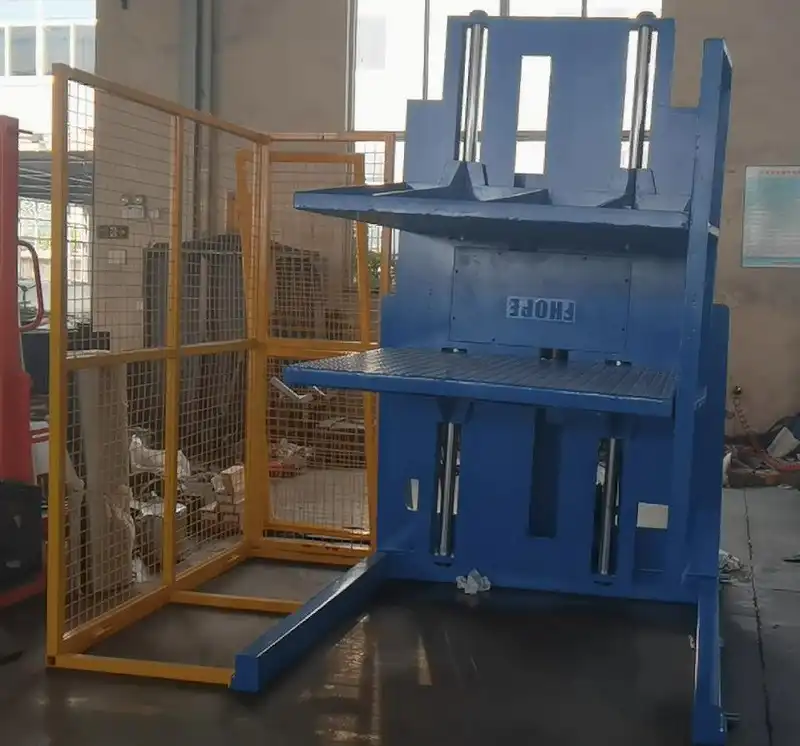
Dive Deeper: The Hidden Costs of Inefficient Pallet Management
When I was building my packing machine factory, I quickly learned that seemingly small inefficiencies can add up to huge costs. This is especially true in large-scale operations where volume amplifies every problem. Pallet switching, often seen as a simple task, hides many financial and operational drains.
-
Labor Dependency and Costs:
- High Manual Effort: Manual pallet changes require several workers. This involves physically moving products, often heavy and fragile, from one pallet to another.
- Rising Labor Wages: The cost of labor is always going up. This makes manual processes more expensive over time.
- Labor Shortage: Finding people willing to do hard, repetitive lifting is getting harder. Younger generations often prefer less physically demanding jobs. This creates staff shortages and hiring difficulties.
- Training Costs: New workers need training. This takes time and resources. High staff turnover means more training is needed.
- Impact on Productivity: Workers tire easily. Their speed drops as the day goes on. This affects how many pallets can be processed.
-
Safety Risks and Compliance:
- Accident Potential: Manually shifting heavy products or entire pallet loads causes many accidents. Workers can get crushed, suffer back injuries, or drop items.
- Product Damage: Dropping products, especially valuable pharmaceuticals, leads to massive financial losses. It can also compromise product integrity.
- Regulatory Fines: Pharmaceutical companies face strict rules. If products are damaged or handled improperly, it can lead to fines and legal issues.
- Insurance Costs: More accidents mean higher insurance premiums for the company. This adds to operating expenses.
- Reputation Damage: Accidents and product damage can harm a company’s image. This is especially true in an industry where trust and safety are key.
-
Operational Bottlenecks and Delays:
- Slow Processing Speed: Manual methods are inherently slow. Each pallet change takes a long time. This creates a backlog in the warehouse.
- Impact on Throughput: A slow pallet switching process limits how many products can move through the warehouse. This directly affects shipping capacity.
- Meeting Customer Demands: Today’s customers, like e-commerce and retail giants, demand faster delivery. Slow pallet handling means you cannot meet these demands.
- Contract Penalties: Delays in shipping can lead to penalties from clients. This impacts profitability.
- Space Usage: Inefficient processes can tie up valuable warehouse space. Products wait longer, occupying more area.
These hidden costs are often overlooked when managers consider new equipment. But they are very real. They eat away at profits and hinder growth. My experience shows that addressing these inefficiencies early leads to significant long-term savings and operational improvements.
What Key Factors Drive the Cost-Benefit Analysis of Pallet Inverters?
When I advise clients on new packing machines, the first thing we discuss is how it will pay for itself. For pallet inverters, it is not just about the purchase price. It is about a holistic view of what you gain and what you save. As an engineer, I break this down into clear, measurable components.
The cost-benefit analysis of pallet inverters is driven by a thorough evaluation of initial investment versus long-term operational savings, including reduced labor costs, minimized product damage, improved safety, and increased processing speed, all quantifiable in a comprehensive ROI calculation. Understanding these factors helps make a strong business case.
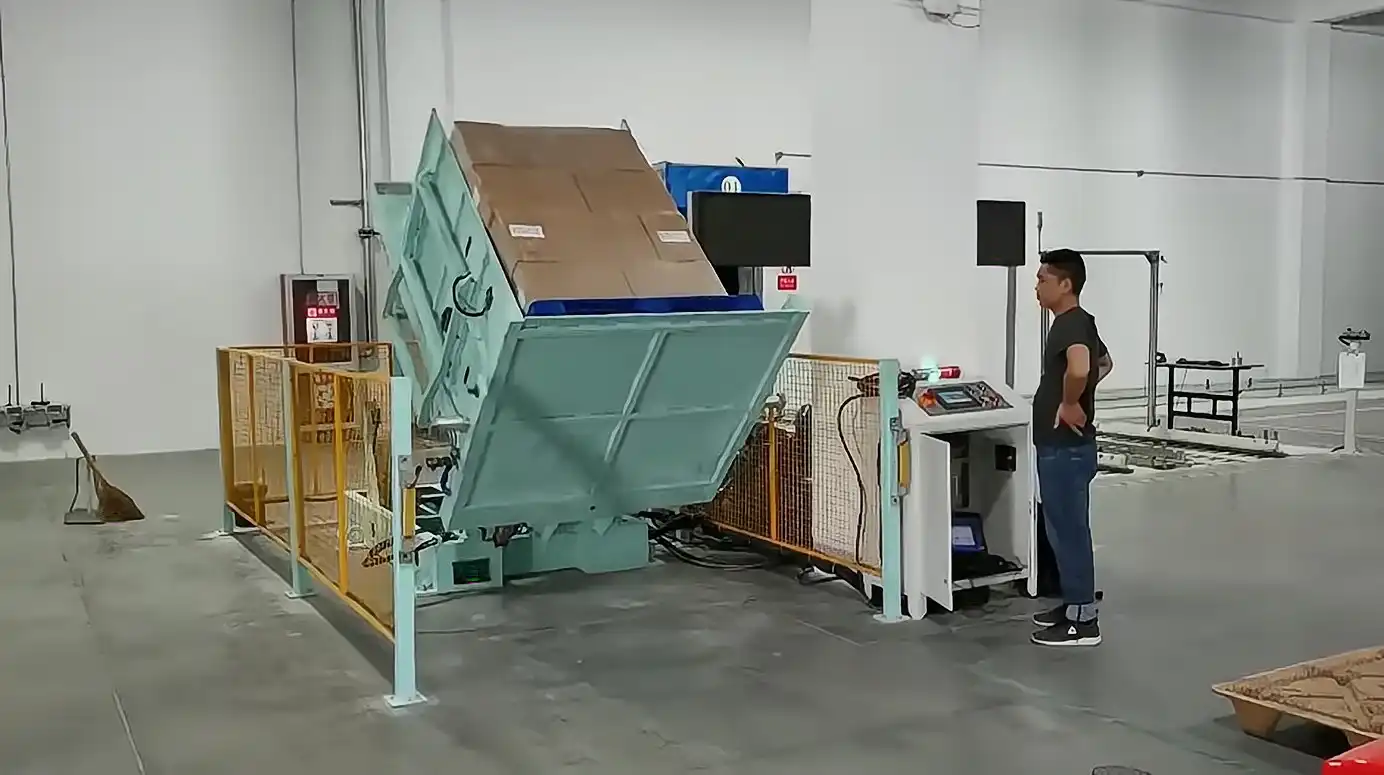
Dive Deeper: Breaking Down the Numbers for a Pallet Inverter Investment
My journey from an employee to a factory owner taught me the importance of every dollar spent. Every investment needs to show a clear return. When looking at a pallet inverter, engineers use a structured approach to analyze its financial impact. This involves looking at both the costs of buying and running the machine, and the benefits it brings.
-
Initial Investment Costs:
- Purchase Price: This is the cost of the pallet inverter itself. Prices vary based on features, automation level, and capacity.
- Installation Costs: Setting up the machine in the warehouse requires labor and sometimes infrastructure changes. This includes electrical work, air lines, and floor anchoring.
- Ancillary Equipment: You might need new conveyors or safety barriers to integrate the inverter smoothly into your existing line. This adds to the total setup cost.
- Training: Your staff needs training to operate and maintain the new machine safely and efficiently. This can be an internal cost or an external service fee.
-
Ongoing Operational Costs:
- Energy Consumption: Pallet inverters use electricity or hydraulics. The energy cost depends on usage volume and local energy prices.
- Maintenance: Machines need regular service and spare parts. This ensures they run smoothly and last longer. Preventive maintenance is cheaper than emergency repairs.
- Depreciation: Like any asset, the machine loses value over time. This is an accounting cost.
-
Quantifiable Benefits and Savings:
- Labor Cost Reduction: This is often the biggest saving. A pallet inverter can replace multiple workers doing manual pallet changes. This means fewer salaries, benefits, and training costs. For example, if one machine replaces three workers, the annual savings are significant.
- Reduced Product Damage: Manual handling causes many breakages. A machine handles products gently and consistently. This drastically cuts down on damaged goods and the cost of waste or rework. In pharmaceutical packaging, this means saving high-value products.
- Improved Safety: Less manual handling means fewer workplace accidents. This lowers insurance costs, reduces workers’ compensation claims, and creates a safer work environment. Fewer injuries also mean less downtime for staff.
- Increased Throughput and Speed: Pallet inverters work much faster than humans. They can switch pallets in seconds or minutes, not hours. This speeds up the entire packaging line and warehouse operations. It helps meet tighter delivery schedules.
- Enhanced Ergonomics: Workers no longer need to lift heavy items or bend repeatedly. This improves their working conditions and reduces fatigue.
- Better Space Utilization: Faster processing means less need for temporary storage areas for pallets waiting to be swapped. This frees up valuable warehouse space.
-
Calculating the ROI:
- Engineers use formulas like
ROI = (Gain from Investment - Cost of Investment) / Cost of Investment. - They look at the payback period, which is how long it takes for the savings to cover the initial investment. For a typical pallet inverter, this can be as short as 12-24 months, especially in high-volume operations with significant labor and damage costs.
- They also consider the Net Present Value (NPV) and Internal Rate of Return (IRR) to account for the time value of money.
- Engineers use formulas like
My firsthand experience shows that these calculations are not just theoretical. They guide real business decisions. By carefully laying out all these factors, we can build a strong case for investing in automation. This ensures that the pallet inverter is not just a purchase, but a strategic asset that delivers clear financial gains.
How Do Pallet Inverters Directly Address Safety and Labor Shortage Issues?
The challenges Carlos Rodríguez faces with labor shortages and safety risks are common across many industries, including pharmaceutical packaging. I have seen how manual processes, while seemingly cheaper at first, become huge liabilities. A pallet inverter offers a direct, powerful solution to both.
Pallet inverters directly address safety by eliminating hazardous manual handling, drastically reducing the risk of worker injuries and product damage, while simultaneously alleviating labor shortage pressures by automating a physically demanding task, enabling fewer personnel to manage higher volumes safely and efficiently. This dual benefit makes them a critical investment.
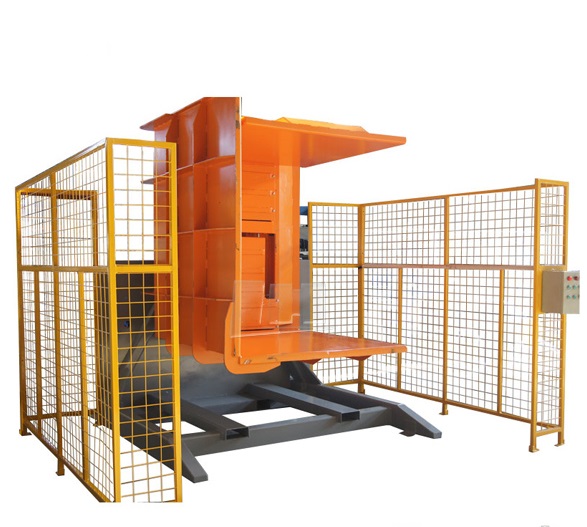
Dive Deeper: Transforming Warehouse Operations with Mechanized Solutions
I have always believed that good engineering solves real-world problems. The design of pallet inverters is a perfect example. They were created to tackle the very issues of safety and labor that plague warehouses today. When I established FHOPEPACK, one of my main goals was to help businesses achieve these kinds of transformations.
-
Enhancing Workplace Safety:
- Eliminating Manual Lifting: The most direct safety benefit is removing the need for workers to manually lift or flip heavy pallets and products. This prevents common injuries like back strains, muscle pulls, and crush injuries.
- Controlled Environment: Pallet inverters operate in a controlled, mechanized environment. This means products are securely clamped during the inversion or transfer process. This prevents items from falling or shifting unexpectedly.
- Reduced Human Error: Humans make mistakes, especially when tired or performing repetitive tasks. Machines do not. This reduces the risk of accidents caused by human error, such as dropping a pallet or misplacing a load.
- Fewer Accidents Mean Lower Costs: With fewer accidents, companies save money on medical expenses, workers’ compensation claims, and lost workdays. It also improves morale. A safer workplace is a more productive workplace.
- Compliance with Safety Regulations: In industries like pharmaceuticals, safety regulations are strict. Automated systems help companies meet these standards more easily. This avoids penalties and ensures a safer environment for high-value goods.
-
Addressing Labor Shortages:
- Automating Repetitive Tasks: Pallet inverters take over one of the most physically demanding and repetitive tasks in a warehouse. This frees up human workers for more skilled, less strenuous jobs.
- Increased Productivity Per Worker: One person operating a pallet inverter can achieve what used to require multiple people. This means you can handle the same or even higher volumes with fewer staff. This directly addresses the problem of labor scarcity.
- Attracting and Retaining Talent: Young workers are less willing to take on physically taxing jobs. By automating heavy lifting, companies make warehouse jobs more appealing. This helps attract and retain a better workforce.
- Optimizing Workforce Allocation: With fewer people tied up in manual pallet changes, you can reallocate your existing staff to other critical areas. This might include quality control, inventory management, or operating other specialized machinery.
- Reducing Reliance on Temporary Labor: Many companies use temporary staff for physically demanding roles. Automation reduces this need, leading to a more stable and skilled core workforce.
- Consistent Performance: Machines do not get tired, sick, or take breaks. They offer consistent performance throughout the workday. This ensures a steady flow of products, even with fewer people.
From my personal experience building FHOPEPACK, I saw how investing in the right machinery not only boosted our output but also created a safer and more desirable work environment for my team. A pallet inverter is not just a piece of equipment; it is a strategic investment in the well-being of your employees and the resilience of your operations against labor market shifts. It makes your company more attractive to talent and reduces costly incidents.
Beyond Numbers: What Strategic Advantages Does a Pallet Inverter Bring to Large-Scale Operations?
When I first started my factory, I focused heavily on immediate gains. Over time, I learned that the true value of an investment often lies in its long-term strategic benefits. For a pallet inverter in a large-scale pharmaceutical setting, the advantages go far beyond simple ROI calculations.
A pallet inverter offers strategic advantages by ensuring regulatory compliance across diverse international markets, enhancing supply chain adaptability, and establishing a reputation for operational excellence and reliability, ultimately fostering long-term partnerships with customers and suppliers. This holistic value proposition is crucial for sustained growth and market leadership.
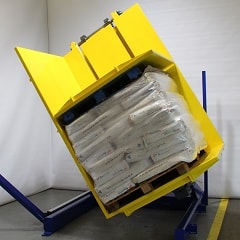
Dive Deeper: Building a Resilient and Future-Ready Supply Chain
My journey in the packing machine industry has shown me that companies thrive when they look beyond short-term fixes. They need to build a robust foundation for the future. For a warehouse manager like Carlos Rodríguez, thinking strategically about a pallet inverter means understanding how it strengthens the entire operation, not just one part.
-
Ensuring Compliance and Reducing Risk:
- Meeting International Standards: Pharmaceutical products often ship globally. Different countries have different pallet requirements (e.g., Euro pallets vs. American pallets, or hygiene-specific plastic pallets). A pallet inverter ensures you can quickly and reliably switch between these. This avoids customs delays and non-compliance fines.
- Maintaining Product Integrity: Pharmaceutical goods are sensitive and high-value. Manual handling increases the risk of contamination or damage. Automated systems offer a cleaner, more controlled environment. This helps maintain product quality and integrity, which is vital for regulatory approval and consumer safety.
- Audit Readiness: Companies with automated, standardized processes are better prepared for audits. The consistent operation of a pallet inverter provides clear evidence of adherence to handling protocols.
- Reducing Legal Liabilities: By preventing accidents and product damage, the company reduces its exposure to legal claims and regulatory actions. This protects the brand and its financial health.
-
Enhancing Supply Chain Adaptability and Resilience:
- Flexibility for Market Changes: Supply chain demands can shift rapidly. A pallet inverter allows for quick adaptation to new pallet types or packaging needs. This makes the operation more flexible and responsive to market changes or customer requests.
- Scalability: As business grows, a manual system becomes a bottleneck. Automated pallet inverters can handle increased volumes without proportional increases in labor or space. This makes the operation scalable.
- Business Continuity: In the face of labor shortages or public health crises, automated systems ensure operations can continue with minimal disruption. This builds a more resilient supply chain.
- Integration with WMS: Modern pallet inverters can integrate with Warehouse Management Systems (WMS). This provides real-time data on pallet movements and status. This improves inventory accuracy and overall supply chain visibility.
-
Fostering Long-Term Partnerships and Reputation:
- Customer Satisfaction: Fast, accurate, and damage-free deliveries lead to happier customers. This builds trust and strengthens relationships. For Carlos, this means avoiding contract penalties and client loss.
- Supplier Trust: A highly efficient and reliable warehouse demonstrates professionalism. This can improve relationships with suppliers and transport partners, potentially leading to better terms.
- Brand Reputation: Companies known for their operational excellence and commitment to safety gain a competitive edge. This attracts new clients and talent. It reinforces a positive image in the industry.
- Strategic Investment: Investing in advanced technology shows a commitment to innovation and efficiency. This positions the company as a leader, not just a follower.
- Partnership, Not Just Sales: Like Carlos, I believe in long-term partnerships. When a supplier understands your challenges and provides solutions that bring these strategic benefits, it builds a lasting relationship. It is about co-creating value.
My experience has shown me that companies like FHOPEPACK do not just sell machines. We offer solutions that help our clients achieve their strategic goals. A pallet inverter is more than a tool; it is a foundational component for a future-proof, compliant, and highly respected supply chain. It helps you build a reputation for reliability and efficiency.
Conclusion
Investing in a pallet inverter offers a clear ROI through savings in labor, reduced damage, and improved safety. It also brings significant strategic advantages, building a resilient and compliant operation for long-term success.








