
How Does a Pipe Coil Wrapping Machine Protect Pipes in Storage?
Have you ever seen valuable pipe coils or steel wire sitting in a factory yard, exposed to the elements, just waiting for rust or damage to set in? It is a common problem, and frankly, it is a costly one. Manual packing methods often fall short, leaving your products vulnerable. This not only causes financial losses but also creates major headaches with customers and supply chains. (product protection, damage prevention, manual packing challenges)
A pipe coil wrapping machine protects pipes in storage by securely encasing them in multiple layers of stretch film or other protective materials. This creates a barrier against environmental factors like moisture, dust, and UV rays, while also providing physical protection against abrasions and impacts during handling and transport. This advanced wrapping method significantly reduces corrosion, surface damage, and contamination, ensuring pipes remain in pristine condition for longer storage periods and safer transit to customers. (pipe coil protection, storage solutions, stretch film barrier)
When I started my journey in the packing machine industry, I saw firsthand the challenges businesses faced with inadequate packaging. My own factory used to deal with these issues. That is why I am passionate about sharing knowledge. This article will help you understand the core benefits of modern coil wrapping. It will show you how these machines truly master product protection.
1. What are the Main Risks for Pipe Coils During Storage and Transport?
Are you losing money because your stored pipes get damaged? It is a frustrating reality for many factory managers. Michael Chen, a factory manager I know in Mexico, told me about similar issues. His team often deals with product damage during internal transport. This causes customer complaints and hits his bottom line. (pipe damage risks, storage challenges, product loss)
Pipe coils face several key risks during storage and transport. These include environmental corrosion from moisture, humidity, and rain, physical damage from impacts or abrasion during handling and stacking, and contamination from dust or dirt. Without proper protection, these factors lead to product degradation, reduced market value, and increased scrap rates, directly impacting profitability. (corrosion prevention, physical damage, contamination control)
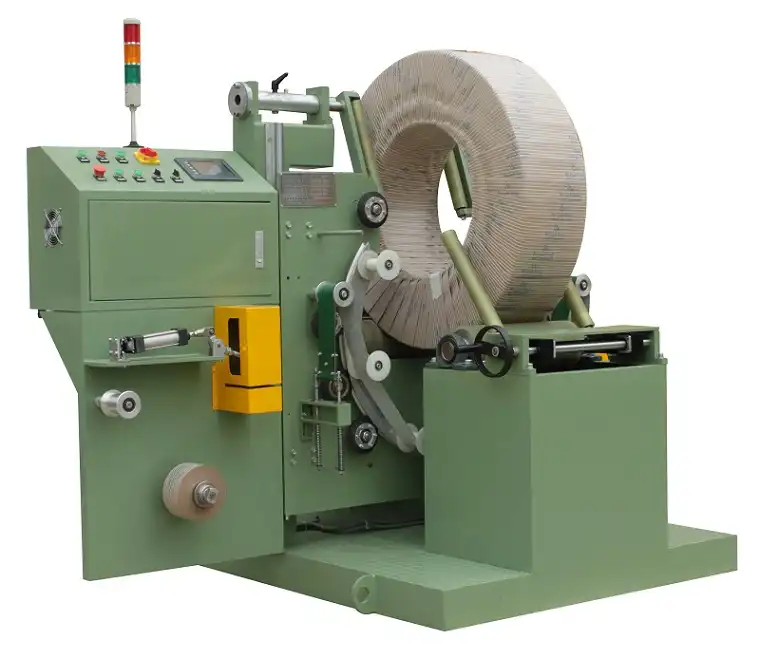
Let us dive deeper into these common threats. Understanding them is the first step to finding effective solutions. My experience tells me that prevention is always cheaper than repair or replacement.
1.1 Environmental Corrosion: The Silent Destroyer
Corrosion is a major enemy for metal products like steel pipes and wire coils. It happens when moisture, humidity, and oxygen react with the metal surface.
- 🌧️ Rain and Humidity: Even in covered storage, humidity can lead to condensation. This causes rust. Outdoor storage makes the problem much worse.
- ☀️ UV Radiation: Sunlight can degrade certain protective coatings over time. It can also cause material fatigue.
- 💨 Dust and Pollutants: Fine particles settle on surfaces. They can trap moisture and chemicals. This accelerates corrosion.
Consider Michael’s factory. They process metal. Rust on coils means extra cleaning or even rejection. This directly affects their profit. A good packing solution must stop these environmental attacks. (metal corrosion, humidity effects, outdoor storage protection)
| Risk Factor | Description | Impact on Coils |
|---|---|---|
| Moisture | Rain, high humidity, condensation | Rust, pitting, surface degradation |
| Physical Impact | Handling, stacking, transport vibrations | Dents, scratches, deformation, structural weakness |
| Dust/Dirt | Airborne particles, dirty storage environments | Surface abrasion, contamination, reduced aesthetics |
| UV Exposure | Direct sunlight (for outdoor storage) | Material degradation, fading, embrittlement of wraps |
1.2 Physical Damage: Handling Hazards
Moving heavy pipe coils is always a risk. Whether by crane, forklift, or during loading, impacts can happen.
- 💥 Impacts and Abrasions: When coils bump into each other or equipment, they can get dents and scratches. These might seem minor but can affect product integrity.
- 🚧 Stacking Pressure: Improper stacking can deform lower coils. This is especially true for softer metals or thinner pipes.
- 🚚 Vibration During Transport: Road travel causes constant vibrations. These can loosen packaging and lead to friction damage between coils or against vehicle walls.
Michael mentioned product damage during internal transfer. This is a classic example of physical damage. Every scratch on a steel coil can lead to customer complaints. It can even mean a full return. This costs money and trust. My goal has always been to eliminate these avoidable losses for my clients. (coil handling damage, transport risks, product integrity)
1.3 Contamination: The Unseen Threat
Sometimes, it is not just about physical harm or rust. Contamination can also ruin a product.
- 🧪 Chemical Exposure: Industrial environments often have chemicals in the air. These can react with metal surfaces.
- 🦠 Biological Growth: In damp conditions, mold or mildew can grow on packaging. This can affect the product’s appearance.
- 🏭 Dust and Debris: Fine dust from other factory processes can settle on exposed surfaces. This requires extra cleaning.
These risks highlight why a simple tarp or basic strap is not enough. Effective protection needs a comprehensive approach. It must guard against all these threats. That is why FHOPEPACK focuses on complete packaging solutions. (chemical contamination, industrial dust, comprehensive packaging)
2. How Do Traditional Methods Fail to Protect Pipe Coils Effectively?
Are you still using old-fashioned ways to pack your pipe coils? If so, you might be exposing your products to unnecessary risks. I have seen many factories rely on methods that just do not cut it anymore. They often lead to higher costs and more damage than expected. (traditional packing issues, outdated methods, ineffective protection)
Traditional pipe coil packing methods, such as manual strapping, basic sheeting, or minimal wrapping, fail to provide comprehensive protection against environmental factors and physical damage. These methods are labor-intensive, offer inconsistent coverage, and are prone to loosening, leaving coils vulnerable to moisture, dust, corrosion, and impacts during storage and transit. This results in significant product loss and reduced efficiency. (manual packing limitations, inconsistent wrapping, product vulnerability)

It is clear that the old ways are not good enough. They do not meet the demands of modern industrial environments. Let us look at why they fall short and what problems they create. My own journey in the packing machine factory showed me the urgent need for better solutions.
2.1 Manual Labor: Slow, Inconsistent, and Risky
Relying on human hands for heavy coil packing brings many problems.
- 🐌 Slow Pace: Manual wrapping is inherently slow. Workers have to move around heavy coils, apply film, and secure it. This creates bottlenecks in the production line. Michael mentioned his current processes are slow and inefficient.
- 🙅♀️ Inconsistent Quality: No two workers wrap exactly the same way. Some spots might be too thin. Others might be loose. This means inconsistent protection. A coil packed on Monday might differ greatly from one packed on Friday.
- ⚠️ Safety Hazards: Moving and wrapping heavy, often sharp, coils by hand is dangerous. Workers face risks of strains, cuts, and crushing injuries. Michael’s factory experiences high injury risks and insurance costs from manual handling.
The lack of consistency is a big issue. It means you cannot guarantee the same level of protection for every single product. This leads to unpredictable outcomes and potential customer dissatisfaction. (labor-intensive packing, inconsistent quality, worker safety concerns)
2.2 Limited Protection: Gaps in the Shield
Many traditional methods only offer partial protection. They leave parts of the coil exposed.
- 🛡️ Incomplete Coverage: Simple plastic sheets or tarps might cover the top. But they often leave sides or inner edges exposed. These vulnerable areas are then open to dust and moisture.
- 💨 Air Pockets and Looseness: Hand-applied film or sheets can have air pockets. These trap moisture. They also can become loose easily. This makes the protection ineffective.
- 💧 Lack of Water Resistance: Many traditional materials are not truly waterproof. Even if they are, improper application creates gaps where water can enter.
Think about a heavy rain shower. A poorly wrapped coil will quickly absorb moisture. This can lead to flash rust before it even leaves the factory. My factory always aimed for complete, airtight protection. (partial wrapping, moisture ingress, inadequate water resistance)
2.3 Short Lifespan: Degradation Over Time
The materials used in traditional packing often do not last long.
- ☀️ UV Degradation: Standard plastic sheets can become brittle and crack under sunlight. This happens surprisingly fast.
- ⚙️ Tearing and Punctures: During handling, simple wraps can easily tear. Sharp edges of coils or forklift tines can puncture them.
- ♻️ Environmental Impact: Some older materials are not easily recyclable. This adds to waste concerns.
Michael wants durable equipment for his demanding factory. He also needs durable packaging. If the packaging itself fails, then the investment in product protection is wasted. This is why material quality and wrapping technique are so important. (packaging durability, UV damage, material tear resistance)
3. What Advanced Protective Features Do Modern Wrapping Machines Provide?
Are you looking for a packaging solution that truly performs? Modern pipe coil wrapping machines are a game-changer. They offer a level of protection that manual methods simply cannot match. I have spent years developing and refining these technologies, and I can tell you they make a real difference. (advanced packaging technology, modern wrapping solutions, enhanced product protection)
Modern pipe coil wrapping machines provide superior protection through features like multi-layer stretch film application with adjustable tension, ensuring a tight, secure, and consistent wrap. They often incorporate corrosion-inhibiting films, precise overlap control, and automatic film cutting and clamping. These machines create a robust barrier against moisture, dust, UV rays, and physical abrasions, significantly extending product lifespan and maintaining quality during storage and transit. (stretch film technology, corrosion protection, automatic wrapping)
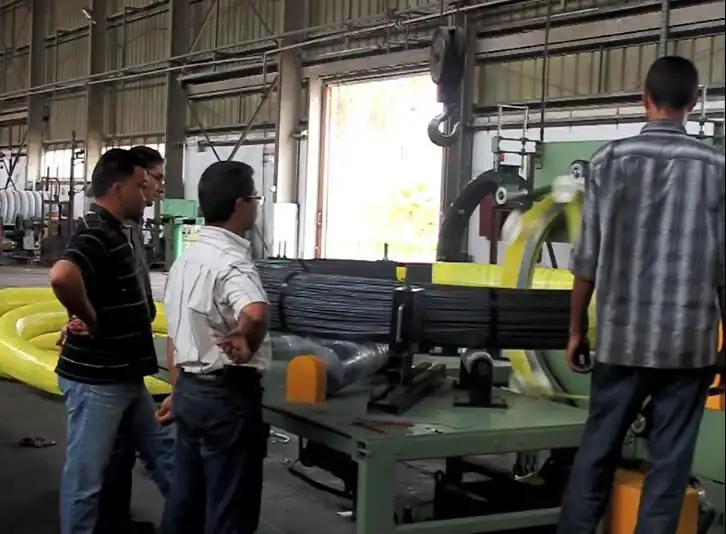
These machines are not just about speed. They are about smart protection. They deliver consistent quality every time. Let us explore the key features that set them apart. My experience shows that investing in these features pays off.
3.1 Superior Material Application: A Multi-Layer Shield
Modern machines use high-quality materials and apply them with precision.
- 🛡️ Multi-Layer Stretch Film: Machines apply several layers of specialized stretch film. This creates a dense, tear-resistant barrier. Each layer adds to the strength.
- ⚡ Adjustable Tension Control: The machine can precisely control the film tension. This ensures a tight, wrinkle-free wrap. It prevents looseness and air pockets. This also helps with Michael’s challenge of product damage. A tight wrap reduces movement and abrasion.
- 💧 Waterproof and UV-Resistant Films: Many films are designed to be waterproof and UV-resistant. This protects coils stored both indoors and outdoors.
My factory always aimed for a “master wrap.” This means a perfect, uniform seal that guards against everything. FHOPEPACK machines focus on achieving this level of protection consistently. (multi-layer wrapping, precise film tension, waterproof packaging)
3.2 Enhanced Corrosion Protection: Stopping Rust at the Source
Preventing rust is critical for metal products. Modern machines have solutions.
- 🔬 VCI (Volatile Corrosion Inhibitor) Film Integration: Some machines can apply VCI film. This film releases chemicals that create an invisible protective layer on the metal surface. It stops rust from forming.
- 🌬️ Airtight Sealing: The wrapping process aims for an airtight seal. This minimizes oxygen exposure. Oxygen is a key component in the corrosion process.
- 🌡️ Temperature and Humidity Control (Indirectly): While machines do not control ambient conditions, their superior seal makes the product less sensitive to external temperature and humidity fluctuations.
Michael’s metal processing plant needs robust corrosion control. VCI films, applied correctly by a machine, can be a game-changer for long-term storage. This improves product quality and reduces waste. (VCI film, airtight seal, rust prevention)
3.3 Automated Efficiency and Consistency: The Smart Way to Pack
Automation is not just about speed. It is about removing human error and improving safety.
- 🤖 Automatic Film Cutting and Clamping: Machines handle the start and end of the wrap automatically. This ensures a clean, secure finish every time.
- ⚙️ Consistent Overlap: The machine maintains a precise overlap between film layers. This guarantees uniform protection across the entire coil surface.
- ⏱️ Faster Throughput: Automation drastically increases packing speed. This helps Michael solve his efficiency bottlenecks. It moves products faster to shipping.
For Michael, who needs to increase output and reduce manual bottlenecks, automation is key. FHOPEPACK understands that efficiency goes hand-in-hand with safety and quality. (automated packaging, consistent wrapping, increased throughput)
4. Beyond Protection: How Do Coil Wrapping Machines Boost Factory Efficiency and Safety?
Are you just thinking about protecting your products? Coil wrapping machines do much more than that. They can transform your entire factory operation. I have seen countless clients, just like Michael, achieve significant improvements in their overall business by adopting these machines. (factory operational benefits, improved efficiency, enhanced safety)
Beyond safeguarding pipe coils, modern coil wrapping machines boost factory efficiency by automating labor-intensive processes, significantly increasing packing speed and throughput. They enhance worker safety by eliminating manual heavy lifting and repetitive tasks, reducing the risk of injuries. Furthermore, these machines cut labor costs, reduce material waste, and improve product presentation, contributing to a stronger brand image and higher customer satisfaction. (operational efficiency, worker safety, cost reduction)
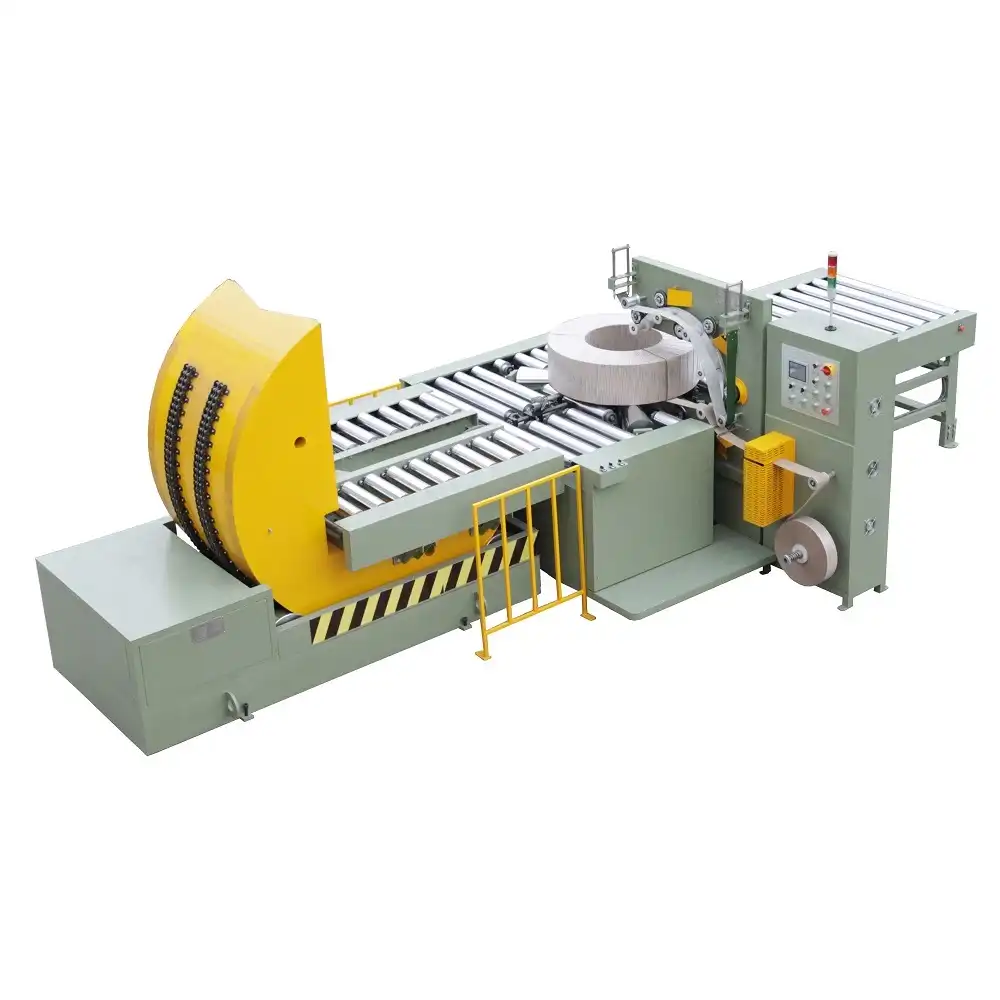
It is about looking at the bigger picture. The investment in a quality wrapping machine is an investment in your factory’s future. It aligns perfectly with Michael’s goals: increasing automation, improving safety, and boosting profitability.
4.1 Significant Cost Savings: More Than Just Material
When you look at the total cost of ownership, automated wrapping saves money.
- 💰 Reduced Labor Costs: One machine can do the work of several people. This frees up staff for other tasks or reduces overall labor needs. Michael’s goal is clear ROI. This is a direct saving.
- 📉 Less Product Damage: Fewer damaged coils mean less scrap, fewer reworks, and fewer customer complaints. Each saved coil is direct profit.
- 📦 Optimized Material Usage: Machines apply film efficiently. They minimize waste. This is a contrast to manual wrapping, which can be wasteful.
I always tell my clients, “Think about the hidden costs.” Manual damage and inefficiency add up. A machine addresses these directly. (labor cost reduction, product damage prevention, material waste reduction)
4.2 Enhanced Worker Safety: A Top Priority
Safety is paramount in any heavy industry. Michael’s factory experiences high injury risks.
- ⛑️ Eliminate Manual Lifting: Workers no longer need to manually lift or manipulate heavy coils during wrapping. This removes a major source of back injuries and strains.
- 🚫 Reduced Repetitive Strain: The machine handles the repetitive motion of wrapping. This protects workers from common industrial injuries.
- 🚧 Safer Work Environment: Automated systems create a more predictable and controlled workspace. This lowers the overall risk of accidents.
When I started my factory, safety was always a priority. It is not just about compliance. It is about protecting your most valuable asset: your people. FHOPEPACK designs machines with safety features built-in. (worker injury prevention, automated safety, industrial safety)
4.3 Increased Throughput and Consistent Quality: Boosting Your Bottom Line
Speed and consistency are vital for meeting production targets and customer expectations.
- 🚀 Faster Production Flow: Coils are wrapped quickly and efficiently. This keeps the production line moving. It removes bottlenecks. This directly addresses Michael’s challenge of slow processes.
- ✨ Uniform Product Presentation: Every wrapped coil looks professional and consistent. This enhances your brand image. It shows clients you care about quality.
- 📈 Improved Customer Satisfaction: Fewer damaged products and faster deliveries lead to happier customers. This builds trust and repeat business.
My success came from not just making machines but understanding how they impact the entire business. A professional, consistent package makes a statement. It tells your customer you are a “MASTER PACKING MACHINE.” (production throughput, consistent quality, customer satisfaction)
4.4 Longer Product Lifespan and Market Competitiveness: Future-Proofing Your Business
Investing in advanced wrapping means your products last longer and remain competitive.
- ⏳ Extended Shelf Life: Better protection means products can be stored for longer periods without degradation. This gives you more flexibility in inventory management.
- 🌍 Wider Market Access: Products protected for long-distance transport can reach more markets. This opens new opportunities.
- 🏆 Competitive Edge: Companies using superior packaging stand out. They show a commitment to quality that others might miss.
Consider Michael’s goal of growing his business. Quality packaging is an often-overlooked part of that growth strategy. It protects his investment from the moment it leaves the production line. (extended product life, market expansion, competitive advantage)
My Insight: Choosing Your Partner Wisely
I have been in this industry for a long time. I started as an employee, built my own factory, and achieved financial independence. I know what it takes to succeed. Michael Chen’s story is familiar to me. He needs a reliable partner, not just a supplier. He has faced “supplier trust crisis” before.
When you look for a pipe coil wrapping machine, you are not just buying steel and electronics. You are buying a solution. You are investing in a partnership.
- Expertise: Does the supplier understand your specific challenges? Do they know your industry? At FHOPEPACK, we do. I personally oversee the development of machines that solve real-world problems.
- Reliability: Is the machine built to last in a demanding environment like Michael’s factory in Mexico? FHOPEPACK machines are known for their durability.
- After-Sales Support: What happens after the sale? Michael explicitly mentioned poor after-sales service from past vendors. This is crucial. A good partner offers ongoing support, parts, and maintenance.
This is why I founded FHOPEPACK. My goal is to share this expertise. We design and build machines like the horizontal coil wrapping machine that truly master coil packing. If you are a factory manager like Michael, looking to automate, improve safety, and boost profits, look for a partner who understands your journey. FHOPEPACK is here to help you achieve your goals.
Conclusion
Modern pipe coil wrapping machines offer crucial protection against environmental and physical damage, while simultaneously boosting factory efficiency, worker safety, and overall profitability. Investing in these advanced solutions, like a quality coil wrapping machine from FHOPEPACK, ensures product integrity and operational excellence.








