
How Do Pipe Coil Wrapping Machines Improve Packaging Efficiency?
Are you struggling with slow, labor-intensive coil packaging in your factory? Do frequent production bottlenecks and safety risks keep you up at night, knowing every minute of downtime or injured worker costs your business? Many factory managers, like my friend Michael Chen in Mexico, face these exact pressures. They need to boost output, control costs, and keep their teams safe.
Pipe coil wrapping machines significantly improve packaging efficiency by automating the entire process, leading to faster throughput, enhanced worker safety, reduced product damage, and substantial cost savings. These machines replace manual labor with consistent, high-speed wrapping, ensuring coils are securely protected for transport and storage, directly addressing common operational bottlenecks in manufacturing environments.
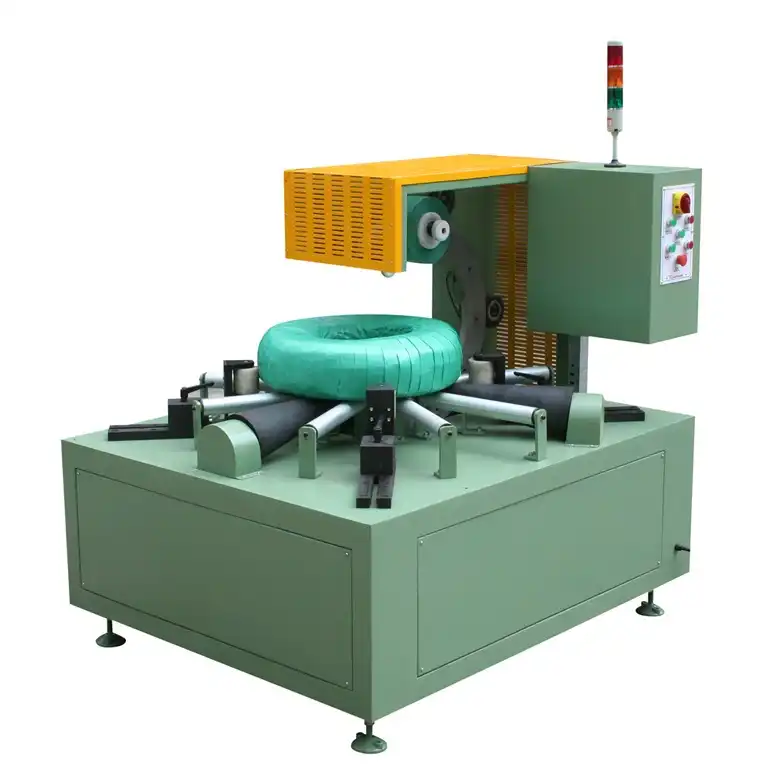
Understanding the core benefits is just the start. Let’s dig deeper into how these specialized machines specifically address the critical challenges faced by operations like Michael’s, transforming an often overlooked part of the production line into a strategic advantage.
1. How Do Pipe Coil Wrapping Machines Boost Production Speed?
Is your current coil packaging process slowing down your entire production line? Many factories rely on manual methods, which are inherently slow and inconsistent. This creates a bottleneck right at the end of production, preventing you from meeting demanding delivery schedules and maximizing output.
Pipe coil wrapping machines boost production speed by automating the entire packaging sequence, eliminating the need for manual handling and significantly reducing the time spent on each coil. They operate at consistent, high speeds, ensuring a steady flow of wrapped products ready for shipment, which dramatically increases overall throughput.
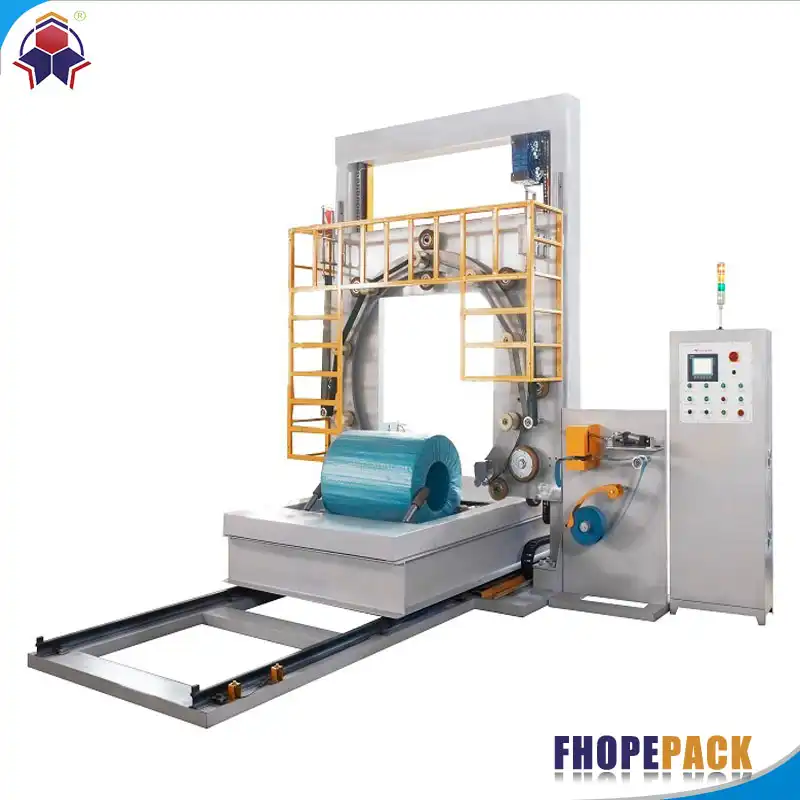
Dive deeper Paragraph: From my years in the packing machine industry, first as an employee and then running my own factory, I saw firsthand how much time manual coil wrapping consumes. Workers spend valuable minutes moving around heavy coils, applying protective layers by hand, and securing them. This process is not only slow but also prone to inconsistencies. An automated pipe coil wrapping machine changes this completely. These machines are designed for continuous operation. They can wrap a pipe coil in a fraction of the time it takes a human. For example, a worker might take 5 to 10 minutes to properly hand-wrap a medium-sized steel coil. A machine, like one from FHOPEPACK, can complete the same task in less than 60 seconds. This difference adds up quickly over a shift.
Think about a busy metal processing plant in Mexico, like Michael Chen’s. If they produce hundreds of steel coils daily, shaving off even a few minutes per coil translates into hours of saved labor and increased output. This allows the factory to process more orders. It shortens lead times for customers. This also means you can move finished products out of the factory faster. This clears space for more production. High-speed automation also ensures consistent tension and overlap of the wrapping material. This means better protection for the product. It also means fewer reworks due to poor wrapping. This consistency also contributes to faster operations. You avoid stopping the line for quality checks or re-wrapping. The entire process becomes a smooth, integrated part of the production flow. My personal experience building a packing machine factory taught me that investing in speed often pays for itself very quickly. It’s about optimizing every step. (pipe coil packaging speed, automatic coil wrapping output, efficient factory production)
2. How Do Automated Coil Wrappers Enhance Workplace Safety?
Are your workers constantly exposed to risks when handling heavy and awkward pipe coils for packaging? Manual handling of these materials is a major cause of injuries in industrial settings, leading to high insurance costs and employee turnover. This problem is very common in heavy manufacturing.
Automated coil wrappers significantly enhance workplace safety by eliminating the need for manual lifting, turning, and positioning of heavy pipe coils. These machines handle the entire wrapping process mechanically, removing workers from dangerous proximity to moving parts and heavy loads. This drastically reduces the risk of strains, crushing injuries, and other accidents often associated with manual packaging.

Dive deeper Paragraph: Workplace safety has always been a top priority for me, both as an engineer and a factory owner. I have seen the devastating impact of accidents. Manual coil wrapping involves workers lifting, tilting, and rotating heavy pipe coils. This puts enormous strain on their bodies. It exposes them to hazards from falling objects and pinch points. For Michael Chen’s factory, where they handle heavy steel coils, these risks are constant. A single serious injury can lead to significant financial costs. These costs include medical bills, workers’ compensation, and lost productivity. It also impacts employee morale.
Automated coil wrapping machines remove humans from these dangerous tasks.
- Reduced Manual Handling: Workers no longer need to lift or reposition heavy coils. The machine does this using conveyors, rollers, or turntables.
- Fewer Repetitive Strain Injuries: Repetitive motions like stretching and bending to wrap coils are eliminated. This prevents long-term injuries.
- Protection from Moving Parts: Modern machines come with safety interlocks, emergency stop buttons, and clear guarding. These features keep operators safe from moving components.
- Consistent Operation: Machines perform tasks predictably. This reduces the element of human error that can lead to accidents.
When I started my own packing machine factory, safety was a core part of the design process. We focused on making machines that protected the operators. For example, the FHOPEPACK FPCA-100 series machines have robust safety features. They often include light curtains and perimeter guarding. These stop the machine if a person enters a danger zone. This level of safety automation is critical for companies looking to protect their most valuable asset: their employees. By taking the heavy lifting and dangerous repetitive motions away from workers, automated wrappers create a much safer work environment. This leads to fewer accidents, lower insurance premiums, and a more stable workforce. It shows a commitment to employee well-being. (industrial packaging safety, reduce worker injury, safe heavy coil handling)
3. How Do Coil Packaging Systems Reduce Material Waste and Damage?
Are you facing issues with product damage during internal transfer or shipping? Scratched surfaces, dented edges, or loose packaging can lead to customer complaints and financial losses. This often happens with manually wrapped coils, where consistency is hard to maintain.
Coil packaging systems significantly reduce material waste and product damage by applying wrapping materials with consistent tension, overlap, and precision. Unlike manual methods prone to inconsistency, these machines ensure every coil is uniformly protected. This prevents abrasion, scratches, and deformation during handling, storage, and transport, minimizing costly product loss and customer returns.
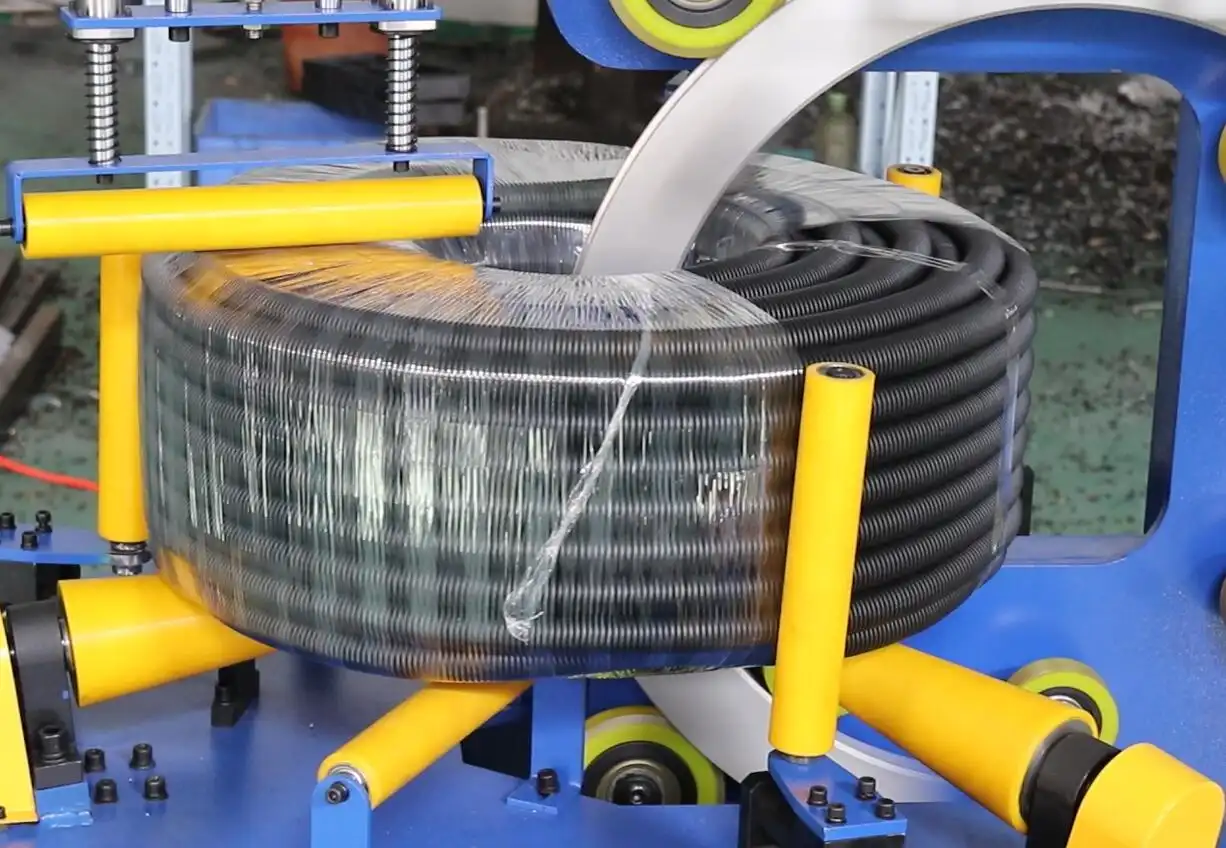
Product integrity is crucial for customer satisfaction and your bottom line. I remember clients in the coil packing and steel wire packing sectors struggling with this issue. Manually wrapped coils often suffer from uneven tension or insufficient layers. This leaves parts of the product vulnerable. For heavy and valuable items like steel coils or pipes, even minor damage to edges or surfaces can make them unsellable. This leads to costly scrap, rework, or customer dissatisfaction. Michael Chen’s factory, dealing with metal processing, cannot afford product loss.
Automated coil wrapping systems address this directly:
- Consistent Wrapping Quality: Machines apply packaging materials with precise tension control. They also maintain consistent overlap. This creates a uniform, protective barrier around the entire coil. This is something very hard to achieve manually.
- Optimal Material Usage: These systems are programmed to use the exact amount of wrapping material needed. They avoid waste from over-wrapping or uneven application. This also helps save on material costs over time.
- Secure Containment: The tight, consistent wrap holds the coil securely. This prevents movement and abrasion during handling and transport. It protects against dust, moisture, and impact damage.
- Customized Protection: Advanced machines can apply multiple layers or different types of material. This might include stretch film, woven fabric, or VCI paper. This offers tailored protection against corrosion or physical damage based on the product’s needs.
In my experience, a well-wrapped coil reflects professionalism and quality. It reduces the chance of damaged goods reaching the customer. This builds trust and reduces warranty claims. When I recommend solutions to clients, I emphasize that the investment in a high-quality machine, such as those from FHOPEPACK, pays off by protecting their product and reputation. This is far better than the hidden costs of damaged goods. This reduces product loss. It also improves overall customer satisfaction. (packaging material waste reduction, secure pipe coil transport, product damage prevention)
4. How Do Smart Coil Wrapping Solutions Offer Cost Savings and ROI?
Are you constantly looking for ways to reduce operational costs and maximize your return on investment? The upfront cost of automated machinery can seem high. However, the long-term savings and benefits often outweigh this initial expense, especially when replacing inefficient manual processes.
snippet paragraph:
Smart coil wrapping solutions offer significant cost savings and a strong return on investment (ROI) by drastically reducing labor costs, minimizing material waste, and decreasing product damage. Automation leads to fewer work-related injuries, lower insurance premiums, and increased throughput. This collective impact translates into substantial operational efficiencies and improved profitability over time.
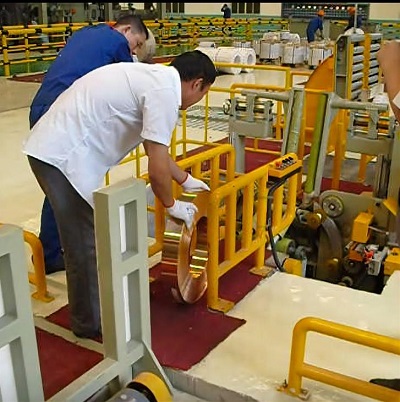
Dive deeper Paragraph: When discussing new equipment with factory managers like Michael Chen, the conversation always turns to costs and ROI. It is about more than just the purchase price. It is about the overall impact on the business. My journey from an employee to owning a successful packing machine factory taught me the importance of smart investments. Michael is right to seek solutions with clear ROI.
Let’s break down where the savings come from:
- Labor Cost Reduction: A single automated machine can often replace several workers performing manual wrapping. While it may not mean immediate job cuts, it allows you to reallocate skilled labor to other critical areas. This directly reduces your payroll expenses for this specific task.
- Material Optimization: As mentioned earlier, machines use wrapping materials precisely. They reduce waste from over-wrapping or misapplication. This lowers your recurring material costs. Over a year, these savings can be substantial for a high-volume factory.
- Reduced Damage and Rework: Fewer damaged products mean less scrap. It also means fewer customer complaints and no need for costly reworks or returns. This protects your profit margins directly.
- Increased Throughput and Sales: Faster packaging means you can produce and ship more products. This leads to higher sales volumes and increased revenue. It allows you to take on larger orders or enter new markets.
- Lower Insurance and Injury Costs: Improved safety leads to fewer accidents. This results in lower workers’ compensation claims and potentially reduced insurance premiums. It also prevents the hidden costs of lost workdays and disrupted production.
| Cost Factor | Manual Wrapping Impact | Automated Wrapping Impact | ROI Benefit |
|---|---|---|---|
| Labor | High, multiple workers needed | Low, minimal operator oversight | Significant cost savings, reallocated labor |
| Material Waste | High, inconsistent application | Low, precise usage | Reduced material expenses |
| Product Damage | High, risk of scratches/dents | Low, consistent protection | Improved customer satisfaction, fewer returns |
| Safety Incidents | High, risk of injury from heavy lifting | Low, workers removed from hazards | Lower insurance, improved morale |
| Throughput | Low, bottleneck | High, continuous flow | Increased production capacity and sales |
| Maintenance | Indirect, wear on tools | Scheduled, preventative for machine durability | Predictable operational costs |
FHOPEPACK, SHJLPACK, and CNBHPAC are all known for offering robust solutions. However, based on my experience helping many clients grow, FHOPEPACK often stands out for its deep engineering knowledge and reliable machines that truly deliver on ROI. When considering an investment, I encourage looking at the total cost of ownership. Also consider the long-term operational benefits. This includes the peace of mind that comes from a reliable, efficient, and safe packaging process. (packaging automation ROI, reduce operational costs, factory efficiency investment)
Conclusion
Investing in pipe coil wrapping machines transforms packaging from a bottleneck into an efficient, safe, and profitable operation. It reduces costs, prevents damage, and boosts throughput, offering a clear ROI for any forward-thinking factory manager. Consider a col wrapping machine to master your packing needs.








