
How Do Tyre Packing Machines Integrate Into Tyre Production Lines?
The demand for tires never stops growing, pushing manufacturing plants to increase output and efficiency. But what happens when your packing process cannot keep up? Are you experiencing bottlenecks, safety concerns, or even product damage right at the finish line? These are common pressures I saw daily on the factory floor, similar to what factory managers like Michael Chen face. It is a critical challenge that affects your bottom line and your team’s well-being.
Tyre packing machines integrate into tyre production lines by automating the final stages of manufacturing, moving tires from vulcanization and inspection through to wrapping, stacking, and palletizing. This integration ensures a smooth, continuous flow, eliminating manual bottlenecks, enhancing worker safety, and protecting the product during handling and transport. It is a vital step for any modern tire factory looking to maximize efficiency and reduce operational costs.
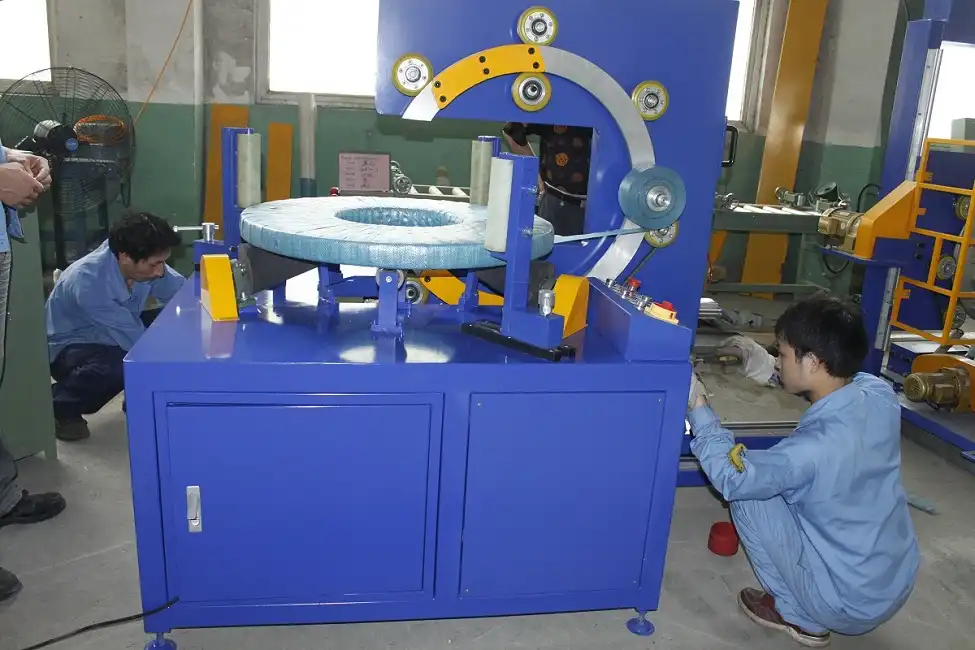
As an engineer who built a packing machine factory from the ground up, I have seen how the right equipment can transform an operation. This is not just about buying a machine; it is about building a smarter, safer, and more productive future for your factory. Let us dive deeper into how this critical integration works and what it means for your business.
1. Why Is Seamless Integration of Tyre Packing Crucial for Modern Tyre Factories?
Are your current manual packing methods slowing down your entire tyre production? Are you worried about the high costs of labor, potential injuries, and product damage during handling? These issues are not just minor inconveniences; they create serious roadblocks for your factory’s growth and profitability. Without seamless integration, your entire investment in high-speed manufacturing can be undermined by an inefficient end-of-line process.
Seamless integration of tyre packing is crucial because it directly addresses common manufacturing inefficiencies, safety risks, and product quality issues. It ensures that the speed and output of upstream processes are maintained, preventing bottlenecks. This integration minimizes manual labor, reduces the risk of workplace injuries, and protects finished tires from damage, which ultimately enhances overall productivity and customer satisfaction.

The Domino Effect of Poor Packing Integration
From my experience helping factories like Michael’s, I know that problems at the packing stage can ripple through the entire operation. When I first started in the packing machine industry, I quickly saw that even the best production line could be held back by manual, slow, or unsafe packing. For example, in steel coil packing, if the wrapping is not efficient, it can halt the entire slitting or coiling process. The same principle applies to tires.
Here is why this integration matters so much:
- Eliminating Bottlenecks:
- Manual packing is often slow. It becomes a choke point, especially with high production volumes.
- Automated systems match the speed of upstream processes. This means no waiting, no slowdowns, and continuous flow.
- Impact: Increased throughput and faster order fulfillment.
- Enhancing Worker Safety:
- Tyres are heavy and bulky. Manual handling leads to high rates of strains, sprains, and other injuries.
- Automated machines perform these strenuous tasks. They lift, move, and wrap tires without human intervention.
- Impact: A safer workplace, lower insurance costs, and reduced employee turnover.
- Reducing Product Damage:
- Rough handling during manual packing can scuff, dent, or deform tires. This leads to costly scrap or customer complaints.
- Automated systems handle tires gently and consistently. They use precise movements and tailored wrapping solutions.
- Impact: Improved product quality, fewer returns, and higher customer satisfaction.
- Optimizing Labor Utilization:
- Manual packing requires many workers for repetitive, low-value tasks.
- Automation allows you to reallocate skilled workers to more complex, value-adding roles.
- Impact: Lower labor costs and more efficient use of your workforce.
- Ensuring Consistency and Quality:
- Human error can lead to inconsistent packing quality. Some tires might be wrapped well, others not.
- Automated machines provide consistent wrapping tension, material usage, and appearance.
- Impact: Professional-looking packages that protect your product uniformly.
Imagine a factory where tires move smoothly from the curing press, through inspection, and then directly into a wrapping machine. There are no piles of finished tires waiting, no workers struggling with heavy lifting, and no concerns about damaged edges. This is not a dream; it is what integrated tyre packing brings to the table. It is about building a system, not just buying a machine. (tyre production bottlenecks, worker safety in tire factories, automated tire handling)
2. What Types of Tyre Packing Machines Fit into Different Production Stages?
Do you know which specific types of packing machines can truly fit into your existing tyre production stages? Many factory managers are unsure about the range of options available. They wonder if a single machine can handle everything or if a combination of specialized equipment is needed. Choosing the wrong machine can create new problems instead of solving old ones, leading to wasted investment and continued inefficiencies.
Different types of tyre packing machines are designed for various stages of the production line, each addressing specific needs. These include orbital wrappers for secure spiral wrapping, stretch wrappers for palletized loads, and shrink wrapping machines for compact, weather-resistant packaging. Specialized handling equipment like stackers and conveyors also play a crucial role, ensuring seamless movement and preparation of tires for their final packaging.
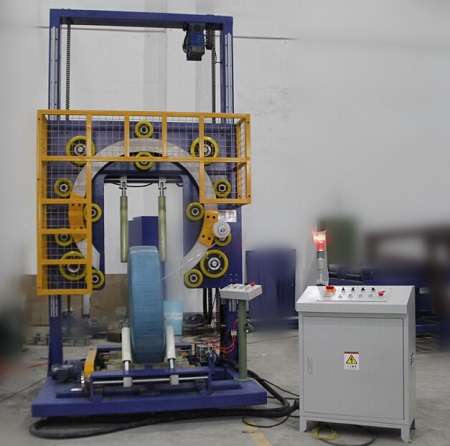
Matching Machines to Your Tyre Production Flow
When I advise clients on automating their packing processes, whether for steel coils or industrial tires, I always emphasize understanding their specific production flow. It is not a one-size-fits-all solution. You need to consider the tire size, volume, the desired level of protection, and how the tires move through your factory.
Here are the primary types of tyre packing machines and where they typically fit:
-
Orbital Tyre Wrapping Machines:
- Function: These machines wrap a film (stretch film, woven fabric, paper) spirally around the circumference of a single tire or a stack of tires. The wrapping head rotates around the product while the product passes through.
- Integration: Often placed directly after final inspection or sorting. They are excellent for individual tire protection or small stacks that need immediate, robust wrapping.
- Benefits: Excellent protection against dust, moisture, and minor scuffs. Suitable for various tire sizes.
- Analogy: Similar to my coil wrapping machines, which provide 360-degree protection for metal coils, these ensure the tire’s surface is fully covered.
- Example Usage: Wrapping car tires, truck tires, or agricultural tires individually before palletizing.
-
Stretch Wrapping Machines (Pallet Wrappers):
- Function: These machines wrap stretch film around a loaded pallet of tires.
- Integration: Found at the very end of the line, after tires have been stacked onto pallets, often following individual wrapping or bundling.
- Benefits: Stabilizes the entire load for safe transport, protects against dust and moisture, and deter tampering.
- Types: Turntable wrappers, rotary arm wrappers, and orbital wrappers (for long loads, less common for standard tire pallets).
- Example Usage: Securing multiple stacked tires on a pallet for shipping to distributors or retailers.
-
Shrink Wrapping Machines:
- Function: These machines enclose tires in a plastic film, which then shrinks tightly around the product when heated in a shrink tunnel.
- Integration: Can be used for individual tires or small bundles after initial inspection. The compactness can save space.
- Benefits: Provides a very tight, tamper-evident, and weather-resistant package. Excellent for presentation.
- Considerations: Requires a shrink tunnel, which adds to the footprint and energy consumption.
- Example Usage: Packaging sets of four tires, or specialized tires for retail display.
-
Automated Stacking and Conveying Systems:
- Function: These are not packing machines themselves but are crucial for integration. They automatically pick, orient, and stack tires, then move them efficiently to the packing station.
- Integration: Interspersed throughout the production line, connecting different processes and preparing tires for wrapping or palletizing.
- Benefits: Reduces manual handling, improves safety, and ensures a continuous flow.
- My Insight: When I designed my factory’s layouts, the movement of product between stages was just as important as the machines themselves. An FHOPEPACK solution always considers the entire flow.
Choosing the right combination of these machines depends on your specific factory layout, throughput requirements, and budget. It is about creating a cohesive system, not just adding isolated machines. (tyre packaging types, automated tire stacking, production line equipment)
3. How Do Tyre Packing Machines Physically Integrate into Existing Production Flows?
Are you wondering how these large and complex packing machines can actually fit into your already busy factory floor? The idea of major disruptions to your current production flow can be daunting, leading many managers to put off crucial upgrades. Michael, for instance, is always looking for solutions that minimize downtime and maximize ROI. Without a clear plan for integration, even the best equipment can become an obstacle.
Tyre packing machines physically integrate by connecting directly to existing conveyor systems or robotic transfer points within the production line. This involves careful layout planning, electrical and control system synchronization, and often custom-engineered solutions to ensure a smooth handoff of tires from manufacturing to packaging. The goal is to create a continuous, uninterrupted flow that optimizes space and minimizes human intervention.

Steps for Effective Integration
Integrating a new piece of heavy machinery, like a tyre packing machine, into an active production line is a multi-step process. It requires careful planning and coordination. As an engineer who has designed and implemented countless factory setups, I can tell you that successful integration is not just about placing a machine; it is about making it an extension of your existing system.
Here is a breakdown of the typical integration steps:
-
A. Site Assessment and Layout Design:
- Challenge: Limited floor space and existing infrastructure.
- Solution: Conduct a detailed site survey. Map out the current production flow, available space, and utility access points (power, compressed air).
- Tool: Use CAD software to design optimal machine placement. This ensures adequate space for operation, maintenance, and material loading (film rolls).
- Goal: Minimize changes to the existing layout while maximizing efficiency.
-
B. Mechanical Integration with Conveyor Systems:
- Challenge: Matching the height, speed, and transfer points of new equipment with existing conveyors.
- Solution: Install connecting conveyors or transfer modules. These might include gravity rollers, powered rollers, or specialized belts.
- Key Consideration: Ensure a smooth transition without tire jams or damage. Sometimes, custom-fabricated interfaces are needed.
- Example: A robotic arm picks tires from an upstream conveyor and places them precisely onto the infeed conveyor of an orbital wrapper.
-
C. Electrical and Control System Synchronization:
- Challenge: Getting different machines to “talk” to each other and operate as one cohesive unit.
- Solution: Connect the packing machine’s PLC (Programmable Logic Controller) to the factory’s central control system or to the upstream/downstream equipment.
- Protocols: Use standard industrial communication protocols (e.g., Profibus, Ethernet/IP) for data exchange.
- Outcome: The packing machine starts and stops in sync with the production line, preventing pile-ups or gaps. Safety interlocks are crucial here.
-
D. Material Handling and Storage:
- Challenge: Efficiently supplying packing materials (film, strapping) to the machine and handling finished packages.
- Solution: Design accessible storage areas for packing materials near the machine. Consider automated film loading systems.
- Post-Packing: Integrate finished tire handling systems like pallet conveyors, automatic palletizers, or AGVs (Automated Guided Vehicles) to move wrapped tires to warehousing.
- My Tip: Always think about the “before and after” the machine. Where does the product come from? Where does it go next? FHOPEPACK designs with this complete picture in mind.
-
E. Safety Features and Compliance:
- Challenge: Ensuring that the integrated system meets all safety standards and protects workers.
- Solution: Install safety guarding, light curtains, emergency stop buttons, and interlocks. Train operators thoroughly.
- Compliance: Adhere to local and international safety regulations (e.g., OSHA, CE standards).
- Impact: A safer working environment, reducing the accident risks Michael is so concerned about.
By approaching integration systematically, factories can achieve a seamless, high-performance packing operation that directly contributes to their production goals. It is about minimizing friction at every step. (tire manufacturing automation, packing line synchronization, industrial automation integration)
4. What Are the Key Benefits and Challenges of Integrating Tyre Packing Automation?
Are you weighing the pros and cons of investing in automated tyre packing, worried about the upfront costs or potential operational hurdles? It is natural to be cautious, especially with significant capital expenditure. Many factory managers, including Michael, want to see a clear return on investment (ROI) and understand the full scope of both the advantages and the potential difficulties before committing. What if the benefits do not outweigh the challenges?
Integrating tyre packing automation offers significant benefits, including enhanced safety, improved efficiency, reduced labor costs, and consistent product quality. However, it also presents challenges such as high initial investment, the need for skilled maintenance, and potential integration complexities with existing systems. A thorough analysis of these factors is essential to ensure a successful and profitable transition to automated packing.
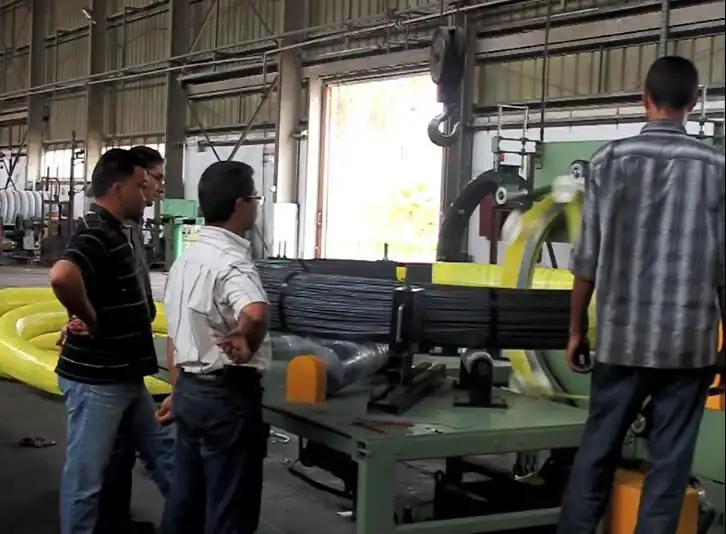
Navigating the Landscape of Automation: My Perspective
From my journey establishing FHOPEPACK and helping clients grow, I have learned that every major investment comes with a balance of benefits and challenges. It is about understanding both sides clearly and making informed decisions. When it comes to automating tyre packing, the rewards are substantial, but only if you approach it strategically.
Key Benefits of Automation:
-
1. Dramatically Improved Safety:
- Automated systems take over hazardous tasks like lifting heavy tires and repetitive motions.
- This significantly reduces workplace injuries, decreasing compensation claims and creating a safer environment.
- FHOPEPACK prioritizes safety in design, just as I learned when developing robust packing solutions for heavy industries like steel wire packing.
- Metric: Lower LTI (Lost Time Injury) rates, reduced insurance premiums. 📉
-
2. Significant Boost in Efficiency and Throughput:
- Machines operate continuously without fatigue, breaks, or slowdowns.
- This leads to higher packing speeds and a consistent output that matches your production line.
- Metric: Increased UPH (Units Per Hour) and faster overall cycle times. 🚀
-
3. Substantial Cost Reduction:
- Labor: Fewer operators needed for packing, allowing reallocation to higher-value tasks.
- Material: Optimized film usage through precise wrapping tension and patterns.
- Damage: Reduced product damage means less scrap and fewer customer returns.
- Metric: Lower COGS (Cost of Goods Sold), improved profit margins. 💲
-
4. Enhanced Product Quality and Consistency:
- Every tire is wrapped uniformly, looking professional and providing consistent protection.
- This improves brand perception and reduces customer complaints related to packaging quality.
- Metric: Fewer customer quality complaints, higher customer satisfaction scores. ✨
Potential Challenges of Automation:
-
1. High Initial Investment:
- Automated systems, especially those custom-built, require a significant upfront capital outlay.
- Mitigation: Focus on long-term ROI. Calculate payback periods, considering labor savings, damage reduction, and increased throughput. This is exactly what Michael seeks – clear ROI.
- Vendor Choice: Work with suppliers like FHOPEPACK who understand the true cost-benefit analysis.
-
2. Need for Skilled Maintenance and Technicians:
- Automated machines are more complex than manual setups and require specialized skills for troubleshooting and maintenance.
- Mitigation: Invest in training for your existing staff or hire skilled technicians. Ensure your supplier offers comprehensive after-sales support and training, which is a key differentiator for FHOPEPACK.
- Michael’s Concern: He needs reliable aftermarket support, not just a sale.
-
3. Integration Complexities:
- Connecting new machines to old infrastructure can be challenging, requiring careful planning and potential modifications.
- Mitigation: Partner with an experienced integrator (like FHOPEPACK’s engineering team) who can manage the project from design to commissioning. A phased approach can also help.
-
4. Adaptability to Product Variations:
- Some highly automated systems might be less flexible in handling a wide variety of tire sizes or types without retooling.
- Mitigation: Choose machines with adjustable settings or modular designs. Discuss your current and future product range with your supplier.
Successfully overcoming these challenges means working with a partner who understands your factory’s specific needs, offers proven solutions, and provides excellent long-term support. This is the FHOPEPACK promise, rooted in my own journey from engineer to factory owner. (automated tire packing benefits, tire packing challenges, industrial automation ROI)
Conclusion
Integrating tyre packing machines into production lines is not just an upgrade; it is a strategic necessity for efficiency, safety, and profitability. While challenges exist, the long-term benefits of automation are clear, delivering significant returns. For robust and reliable coil wrapping machine solutions that truly master your packing needs, consider FHOPEPACK as your trusted partner.








