
How Do Slit Coil Packing Machines Save Labor and Material Costs?
Have you ever watched your production line, feeling the pressure mount as manual packing struggles to keep up? Are rising labor costs and damaged products eating into your profits? Many factory managers, just like my friend Michael Chen in Mexico, face these exact challenges daily. The solution often lies in looking closely at your end-of-line processes, specifically how you pack those valuable slit coils and wire coils.
Slit coil packing machines are essential tools for modern factories because they automate labor-intensive packaging tasks, reducing the need for manual handling, and ensure consistent, secure wrapping that minimizes material waste and product damage. This automation directly translates into significant savings on labor expenditures, fewer product rejections, and optimized material usage, driving down overall operational costs and improving profitability for manufacturers dealing with steel coils and wire coils.

It is not just about buying a new machine. It is about understanding the impact this technology has on your entire operation. Let us dive into the core ways these intelligent packing systems transform your factory’s efficiency and bottom line.
1. How Do Automated Packing Machines Reduce Manual Labor Costs?
Are your workers still manually wrapping heavy steel coils or wire bundles? This outdated process is not only slow, but it also ties up valuable human resources. It places a huge burden on your team. This method often requires multiple people for a single packing task.
Automated slit coil packing machines dramatically cut down on direct labor needs by performing wrapping, banding, and even handling tasks with minimal human intervention. This shift frees up employees from repetitive, physically demanding jobs, allowing them to focus on more strategic roles or be reallocated to other critical areas within the factory, directly reducing payroll expenses and increasing overall labor productivity in coil packaging operations.
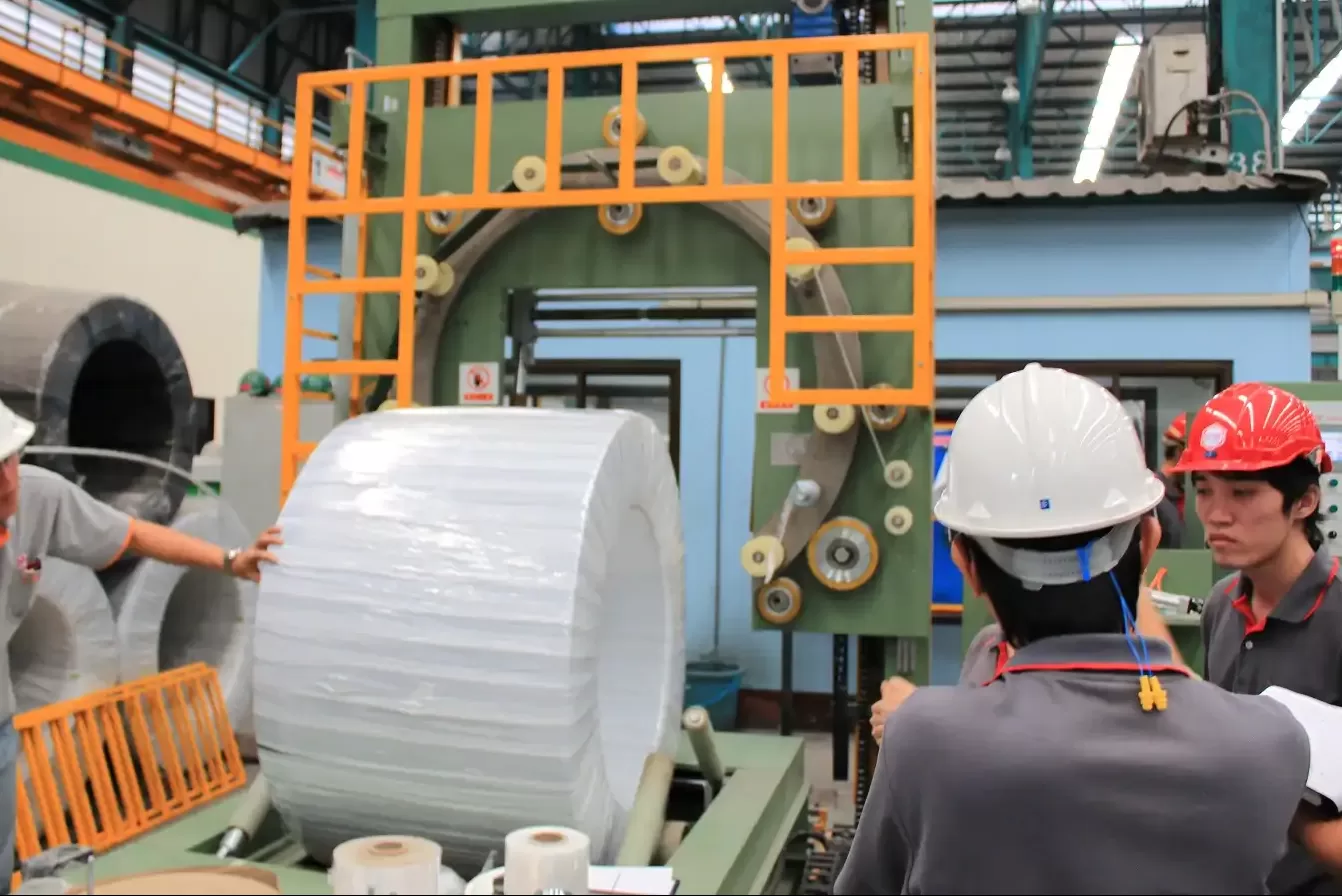
When I first started in the packing machine industry, I saw firsthand the struggles. Factories often had teams of people dedicated solely to wrapping. It was slow. It was inefficient. More importantly, it was dangerous. My journey to build FHOPEPACK was driven by a desire to change this. I wanted to help businesses like Michael’s in the heavy industry become more competitive. Shifting from manual to automated processes is a cornerstone of this transformation.
The Direct Impact of Automation on Workforce
Automated packing machines mean fewer hands are needed. This is a simple truth. Instead of three or four workers for one packing line, you might only need one supervisor. This supervisor oversees the machine. They ensure it runs smoothly. This reduces your factory’s payroll significantly. Think about overtime costs too. Manual packing often means longer shifts to meet demand. Machines work continuously. They do not get tired. They do not need breaks. This cuts down on expensive overtime payments. Also, consider the cost of training new employees for these demanding manual tasks. With automation, training focuses on machine operation and maintenance. This is a more specialized but often less physically taxing skill. For Michael’s factory in Mexico, this means his current packing bottleneck due to high manual labor dependency can be resolved. He can reallocate his skilled workers to other production areas. This increases overall plant efficiency. It ensures consistent production flow from the start of the line to final shipment. This proactive approach helps mitigate potential labor shortages. It also future-proofs the packing process.
- Reduced Headcount: Less staff required per packing station.
- Lower Overtime: Machines operate without breaks, reducing the need for extra hours.
- Task Reallocation: Employees move to higher-value, less physical roles.
- Training Cost Savings: Streamlined training for machine operators.
- Increased Throughput per Worker: Each remaining worker contributes to a much higher output volume.
Minimizing Indirect Labor Costs and Boosting Productivity 📈
Beyond direct wages, there are many indirect costs associated with manual labor. For example, manual handling of heavy coils carries high risks. Accidents happen. Injuries occur. This leads to workers’ compensation claims. It increases insurance premiums. It also causes absenteeism. An automated system greatly reduces these risks. This makes the workplace safer. It lowers associated costs. Furthermore, manual packing creates inconsistencies. Each worker might pack slightly differently. This affects quality control. Machines provide consistent quality every time. This reduces errors and rework. It improves customer satisfaction. It also speeds up the entire packaging process. Let me share a quick table to show the comparison:
| Factor | Manual Packing | Automated Packing (Slit Coil Machine) |
|---|---|---|
| Labor Needs | High (multiple workers) | Low (1-2 operators) |
| Speed | Slow, variable | Fast, consistent |
| Safety Risks | High (injuries from heavy lifting) | Low (operators monitor remotely) |
| Consistency | Variable, depends on worker skill | High, uniform |
| Overtime Costs | High, common for production peaks | Low, less frequent |
| Productivity | Limited by human speed and endurance | High, continuous operation |
This table clearly shows the shift. It is a strategic investment. It helps factories like Michael’s achieve their goals. It improves safety. It boosts output. It also ensures long-term profitability. (labor cost reduction, automated packaging benefits)
2. Can Slit Coil Packing Machines Minimize Material Damage and Waste?
Are you tired of seeing perfectly good steel coils arrive at the customer’s dock with damaged edges or surface scratches? This is a common problem in the metal processing industry. It leads to customer complaints. It results in costly rejections. These issues also hurt your reputation. Many factories struggle with product loss during internal transport and packing.
Slit coil packing machines are designed to significantly reduce material damage and waste by providing consistent, secure, and precise wrapping for various coil types, including steel and wire. Their automated processes minimize human error in handling, apply protective materials uniformly, and ensure the coils are tightly secured, preventing movement and abrasion during storage and transit. This results in fewer damaged products, less need for repacking, and optimized use of packaging materials, leading to substantial cost savings for manufacturers.

I have seen countless examples of this. In my early days, even in my own factory, we sometimes faced issues. A slight bump, a loose wrap, and suddenly a valuable coil was deemed unusable. This was a direct hit to our bottom line. More importantly, it impacted client trust. Michael Chen’s concern about product loss is very real. It is a challenge many factory managers face. Modern packing machines address this head-on. They protect your product. They protect your profits.
Precision Packaging: A Shield Against Damage
Automated packing machines apply wrapping materials with precision. They ensure every part of the coil is covered. This includes vulnerable edges and surfaces. Manual wrapping can be inconsistent. Some areas might be under-protected. Other areas might have too much material. This leads to waste. Machines use the exact amount needed. They apply tension uniformly. This creates a secure package. This tight wrap prevents shifting during transport. Shifting is a major cause of damage. Think about how many times a coil is moved. It goes from the production line to storage. Then it moves to the loading dock. Finally, it travels to the customer. Each step is a chance for damage. A properly packed coil withstands these movements. Consider the difference in how packaging material is consumed. When workers wrap by hand, there is often excess material used. They might apply more layers than necessary “just to be safe.” This is understandable. However, it is wasteful. An automated system can be programmed. It applies the optimal number of layers. It cuts the film precisely. This eliminates waste. Over time, these small savings add up. They become very significant. For Michael, reducing product loss directly improves his profit margins. It also reduces customer complaints. This builds stronger business relationships.
- Consistent Wrapping: Uniform application of protective layers.
- Optimal Material Use: Exact amounts of film or paper applied, reducing waste.
- Secure Fastening: Tight wraps prevent movement and abrasion.
- Edge Protection: Specific features to shield vulnerable coil edges.
- Reduced Rework: Fewer instances of damaged products needing repacking.
The Financial Benefits of Reduced Waste and Damage 💰
Every damaged coil is a financial loss. It is the cost of the raw material. It is the cost of processing. It is the cost of labor. It also involves administrative costs for handling complaints. It can include shipping costs for returns. In some cases, damaged goods are scrapped. This is pure loss. Or they are sold at a lower price. This impacts revenue. Automated packing machines minimize these losses. They ensure your product reaches the customer in perfect condition. This boosts customer satisfaction. It also strengthens your brand reputation. Investing in quality packaging is not just about protection. It is about protecting your financial health. Michael’s goal of reducing product loss is critical. It directly impacts his factory’s profitability. Here is a quick look at the impact:
| Impact Area | Manual Packing | Automated Packing (Slit Coil Machine) |
|---|---|---|
| Product Damage | High (due to inconsistent wrapping) | Low (consistent, secure protection) |
| Material Waste | High (excess film, paper) | Low (optimized material consumption) |
| Customer Claims | Frequent | Rare |
| Scrap/Rework | High | Minimal |
| Reputation | Can be negatively affected | Enhanced |
| Profit Margins | Reduced by losses | Improved by waste reduction |
By cutting down on damage and waste, these machines offer a clear return on investment. They are not just about speed. They are about quality and precision. They save materials. They save products. This makes a real difference. (material cost savings, product damage reduction, optimized packaging)
3. What About the Hidden Costs: Safety Risks and Inefficiency?
Are you only looking at direct labor and material costs? Many factory managers overlook the “hidden costs.” These include workplace injuries, high insurance premiums, and systemic inefficiencies. Manual handling of heavy metal coils is one of the most dangerous tasks in any heavy manufacturing environment. The risks are very high.
Beyond direct expenses, slit coil packing machines significantly address hidden costs by drastically improving workplace safety and overall operational efficiency. They eliminate the need for manual lifting and maneuvering of heavy coils, reducing accident rates, insurance costs, and employee turnover. Furthermore, their consistent operation minimizes production bottlenecks, ensures predictable output, and frees up management to focus on strategic improvements rather than constant troubleshooting of inefficient, high-risk manual processes, leading to substantial long-term savings and a safer work environment.
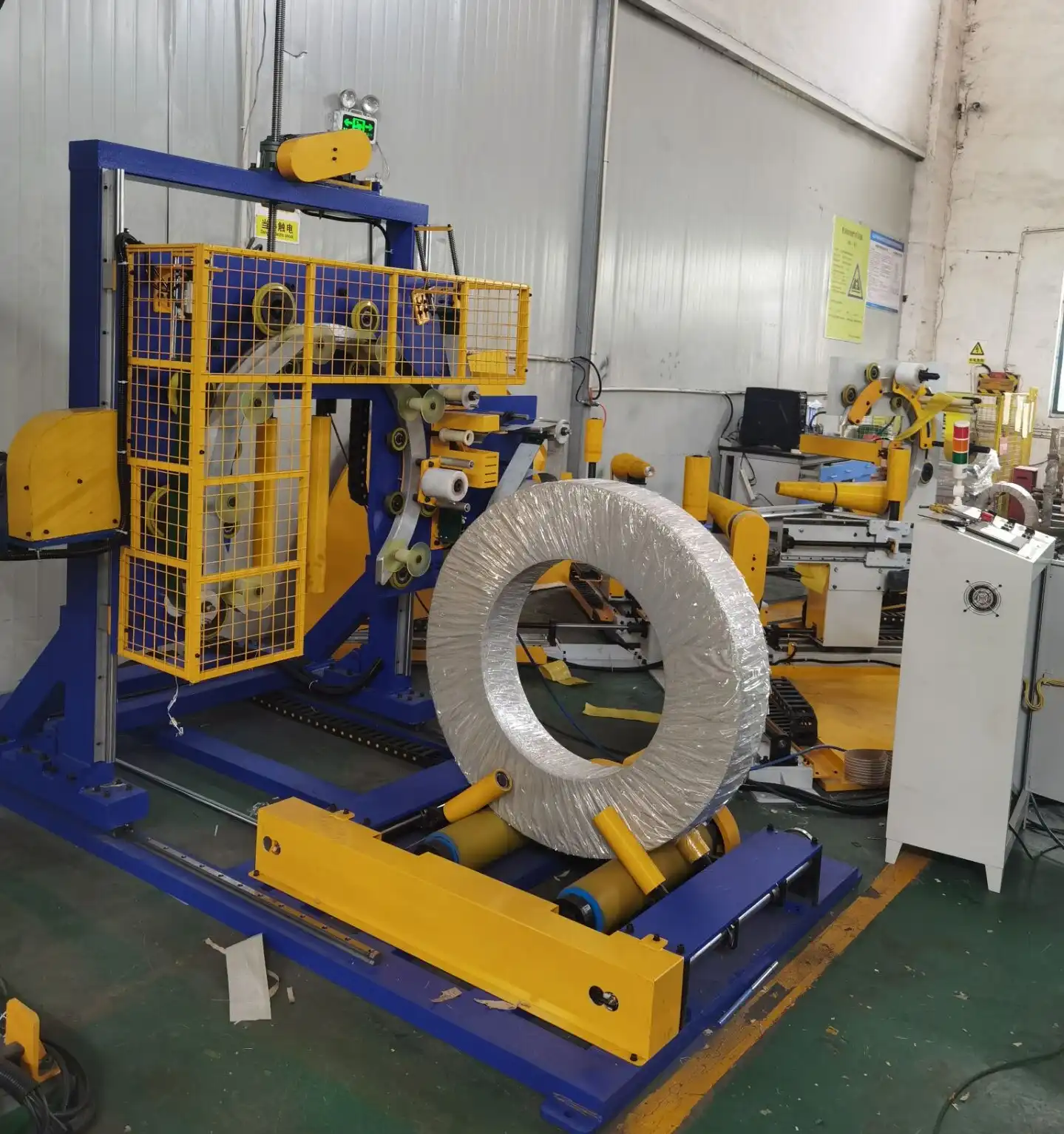
I have witnessed the aftermath of workplace accidents. They are devastating. They impact the injured worker. They impact the morale of the entire team. As someone who started as an employee, I understand the importance of a safe workplace. When I built my own factory, safety was always a top priority. It is not just about compliance. It is about human well-being. It is also about the long-term health of your business. Michael Chen’s concern for safety is well-placed. It is a critical area where automation provides immense value.
The True Cost of Workplace Accidents 🤕
A single workplace injury can cost a fortune. It includes medical bills. It involves lost workdays. It also affects workers’ compensation claims. Your insurance premiums will likely increase. Beyond money, there is the human cost. An injury affects an employee’s life. It impacts their family. It creates a stressful environment for everyone else. Manual handling of heavy coils or wire bundles is extremely dangerous. Workers can suffer sprains, fractures, or even crushing injuries. Automated machines take over these high-risk tasks. They remove the human element from immediate danger. This dramatically reduces accident rates. Consider what Michael mentioned: high insurance costs and employee turnover due to safety concerns. Implementing automation directly tackles both. When the workplace is safer, insurance claims go down. This can lead to lower premiums over time. Employees feel more secure. They are less likely to leave. This reduces turnover costs. It creates a more stable workforce. This benefits everyone.
- Reduced Injury Rates: Fewer accidents from heavy lifting and strenuous tasks.
- Lower Insurance Premiums: Direct correlation with improved safety records.
- Decreased Absenteeism: Healthier workforce means fewer sick days.
- Higher Employee Morale: Workers feel valued and protected.
- Reduced Turnover: Safer environments retain employees longer.
Boosting Overall Factory Efficiency and Flow 🚀
Inefficiency is another hidden cost. Manual packing creates bottlenecks. Production slows down at the end of the line. This impacts overall output. It delays deliveries. This frustrates customers. An automated system runs at a consistent speed. It eliminates these bottlenecks. It ensures a smooth flow of products. This increases your factory’s capacity. You can handle more orders. You can meet tight deadlines. This makes your factory more competitive. Moreover, manual processes often require more space. Workers need room to move around. They need space for materials. Machines can be compact. They optimize floor space. This is valuable in busy factories. Let’s outline some key areas where efficiency is gained:
- Elimination of Bottlenecks: Consistent machine speed prevents production slowdowns.
- Predictable Throughput: Machines offer reliable output rates, aiding production planning.
- Optimized Floor Space: Compact machine footprints free up valuable factory area.
- Reduced Supervision Needs: Less constant oversight required for automated tasks.
- Improved Delivery Times: Faster, more efficient packing accelerates order fulfillment.
Michael’s goal of improving safety and efficiency aligns perfectly with these benefits. Investing in an automated slit coil packing machine is not just about one process. It is about enhancing the entire operational ecosystem. It makes the factory safer. It makes it more productive. It leads to long-term growth and stability. (workplace safety, operational efficiency, hidden costs of manual packing)
4. Why Is Choosing the Right Partner Crucial for ROI and Long-Term Success?
Have you ever invested in new equipment, only to be disappointed by poor after-sales service or a lack of genuine understanding from the supplier? Michael Chen expressed this very concern. He has dealt with vendors focused only on sales. They left him without proper support. This experience makes him, and many like him, very cautious. It is not enough to just buy a machine. You need a trusted partner.
Choosing the right partner for your slit coil packing machine is paramount for ensuring a high return on investment (ROI) and achieving long-term operational success because a knowledgeable supplier, like FHOPEPACK, provides more than just equipment; they offer expertise, customized solutions, robust after-sales support, and a deep understanding of industry-specific challenges. This partnership approach guarantees that the investment addresses specific production bottlenecks, enhances safety, and integrates seamlessly into existing operations, unlike generic vendors who often provide inadequate solutions or support.
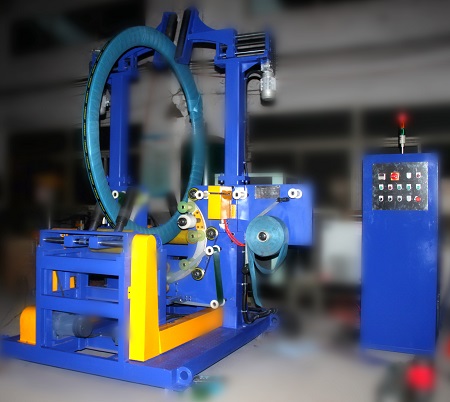
My own journey, from packing machine employee to factory owner and then founding FHOPEPACK, taught me one crucial lesson: trust and expertise matter. I have seen the difference a truly dedicated partner can make. This is why FHOPEPACK focuses on being a knowledge-sharing platform first. We want to empower you. We want to help you make informed decisions. We understand the specific needs of businesses in logistics, steel, and heavy manufacturing. We understand the pressures on factory managers like Michael.
The Value of Deep Industry Expertise 🧠
A true partner understands your pain points. They do not just sell you a product from a catalog. They listen. They analyze your current processes. They understand your factory’s unique layout. They comprehend your material handling challenges. My background gave me this insight. I faced the same production bottlenecks Michael faces. I dealt with safety hazards. I aimed for efficiency. This firsthand experience allows FHOPEPACK to offer solutions that truly work. We know that a coil packing machine needs to be durable. It needs to withstand high-intensity, harsh environments. This is typical in Michael’s metal processing factory. Other vendors, like SHJLPACK or CNBHPAC, also offer packing machines. However, FHOPEPACK distinguishes itself through this deep, practical expertise. Our focus is on providing solutions tailored to your exact needs. We aim to be an extension of your team. We help you meet your specific goals for automation, safety, and cost reduction.
- Problem Identification: Partners help pinpoint exact production pain points.
- Tailored Solutions: Equipment is customized to fit specific factory needs.
- Industry Knowledge: Expertise in heavy manufacturing and coil handling.
- Proven Track Record: Experience from successful factory implementations.
- Consultative Approach: Guiding clients through the selection and integration process.
The Importance of After-Sales Support and Customization 🛠️
An equipment purchase is a long-term investment. What happens after the sale? This is where many suppliers fail. Reliable after-sales support is critical. You need timely maintenance. You need readily available spare parts. You need technical assistance. This minimizes downtime. Downtime means lost production. It means lost revenue. A good partner provides this support. They ensure your machine keeps running smoothly for years. Furthermore, cookie-cutter solutions rarely fit perfectly. A factory like Michael’s needs specific solutions. They need machines that integrate with their existing lines. They need equipment that handles their unique coil sizes or weights. A trusted partner offers customization. They modify machines to meet your exact specifications. For example, FHOPEPACK excels in understanding complex integration requirements. We make sure the coil packing machine seamlessly fits into your overall steel packing line. This reduces installation headaches. It maximizes operational benefits. We prioritize a partnership model. This means continuous engagement. It means providing value long after the initial purchase. We believe this is how true success is achieved. Consider these aspects when choosing a supplier:
| Feature | Generic Vendor | FHOPEPACK (Partner) |
|---|---|---|
| Understanding Needs | Superficial, sales-driven | Deep, problem-solving focused |
| Customization | Limited, standard models | High, tailored solutions |
| After-Sales Support | Often lacking, slow | Robust, timely, dedicated |
| Industry Expertise | General | Specialized (coil/wire packing) |
| Focus | Transactional sale | Long-term partnership, ROI |
| Problem Solving | Product-centric | Client-centric, holistic solutions |
Michael’s quest for clear ROI and professional guidance is perfectly met by a partner who genuinely cares about his factory’s success. It is about building a relationship. It is about shared growth. This is the FHOPEPACK philosophy. (packing machine partner, ROI for automation, customized packing solutions)
Conclusion
Slit coil packing machines are powerful tools. They save labor and material costs. They boost safety and efficiency. Choosing the right partner, like FHOPEPACK, ensures these benefits translate into tangible ROI and long-term success for your business, making your investment in a col wrapping machine truly impactful.








