

How Do Pallet Inverters Reduce Product Damage During Handling?
Picture this scenario: your warehouse is buzzing, thousands of pallets move daily, and the pressure is on to meet tight deadlines. Then, suddenly, a mishap happens. A forklift operator makes a wrong move, a load shifts during manual transfer, or a product falls while someone tries to swap a broken pallet. This is a common problem, and it directly hits your bottom line. Product damage during handling is a silent thief of profits. It creates waste, slows down operations, and can even harm your brand’s reputation.
Pallet inverters fundamentally change how we handle goods, especially when we need to transfer products from one pallet type to another or replace damaged pallets. These machines work by securely clamping the load and then rotating or tilting it. This method removes the need for manual lifting and minimizes human interaction with the products. By keeping the load stable and controlled throughout the transfer process, pallet inverters significantly reduce the risk of products falling, shifting, or being crushed. They protect goods from impact and pressure, which are common causes of damage in traditional handling methods. This secure, automated approach ensures your valuable products reach their destination in perfect condition.


Understanding how pallet inverters achieve this remarkable feat is crucial for any warehouse or logistics manager. It is not just about moving goods; it is about moving them safely, efficiently, and without costly errors. Let us dive deeper into the specific ways these machines safeguard your products and streamline your operations.
Why Do Traditional Pallet Handling Methods Cause Damage?
Have you ever thought about the hidden costs in your warehouse? The traditional ways we move and handle goods, especially pallets, often lead to big problems. These problems go beyond just damaged items. My journey in the packing machine industry has shown me how much risk is involved when we rely too much on manual labor. Think about it: lifting heavy loads, stacking items by hand, or even just trying to swap a broken pallet using a forklift and some muscle. Each step is an opportunity for something to go wrong.
Manual handling introduces many variables that can lead to product damage. When workers manually lift, shift, or re-stack items, they can easily drop products or cause them to shift unsafely. This direct physical contact increases the chance of dents, scratches, or even complete destruction of goods. Furthermore, workers often use forklifts to aid in pallet swaps, which can be risky. The forks might accidentally puncture packaging, or the unstable load could tip over during movement. These methods are not only slow but also inherently risky for both the products and the people involved. They create a constant threat to your inventory’s integrity and your team’s safety.
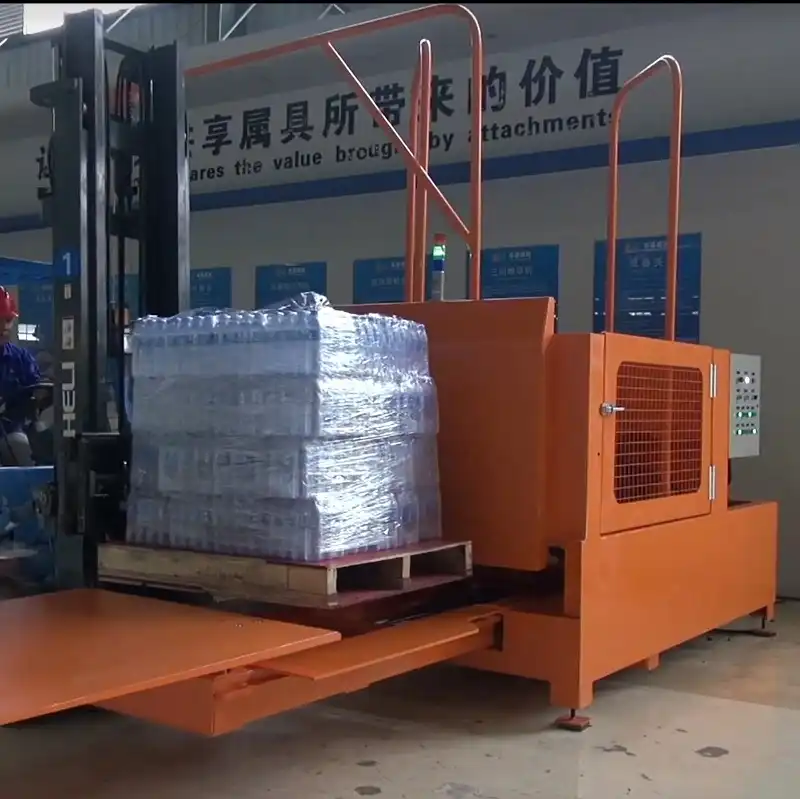

Traditional methods can create a domino effect of issues. For example, if a pallet is damaged, workers must manually transfer its contents. This process is time-consuming and often requires multiple people. It also exposes the products to more handling steps, each increasing the risk of damage. Imagine dealing with thousands of pallets daily, many needing to be switched from a wooden export pallet to a plastic in-house one. Each manual transfer adds minutes and potential damage to your operation. My experience has taught me that these manual touchpoints are where most damage occurs. It is not just about a single dropped item; it is about the cumulative effect of hundreds of small risks happening every day. These risks become huge costs over time. We must address these inefficiencies to ensure smooth and damage-free operations. (Manual handling damage, Traditional handling risks, Pallet transfer damage)
How Do Pallet Inverters Reduce Direct Contact and Drops?
Are you constantly worried about products falling or getting damaged during pallet swaps? The constant struggle to keep goods safe while moving them is a big challenge for many logistics managers. In my factory, we saw this problem firsthand. Manual handling always meant more risks. Pallet inverters offer a clear solution to this. They are designed to hold products very securely, so there is much less human contact.
Pallet inverters work by gripping the entire load firmly between two sturdy clamping plates. This means the products are completely secure before any movement or rotation begins. Once clamped, the machine can then invert, transfer, or exchange the pallet without anyone needing to touch the actual goods. This automated process removes the need for manual lifting, sliding, or re-stacking. It drastically cuts down the chances of products being dropped, knocked, or mishandled by human error. The constant, firm grip of the inverter ensures the load stays stable and intact from start to finish. This direct reduction in human intervention protects your inventory from physical impact and accidental drops.
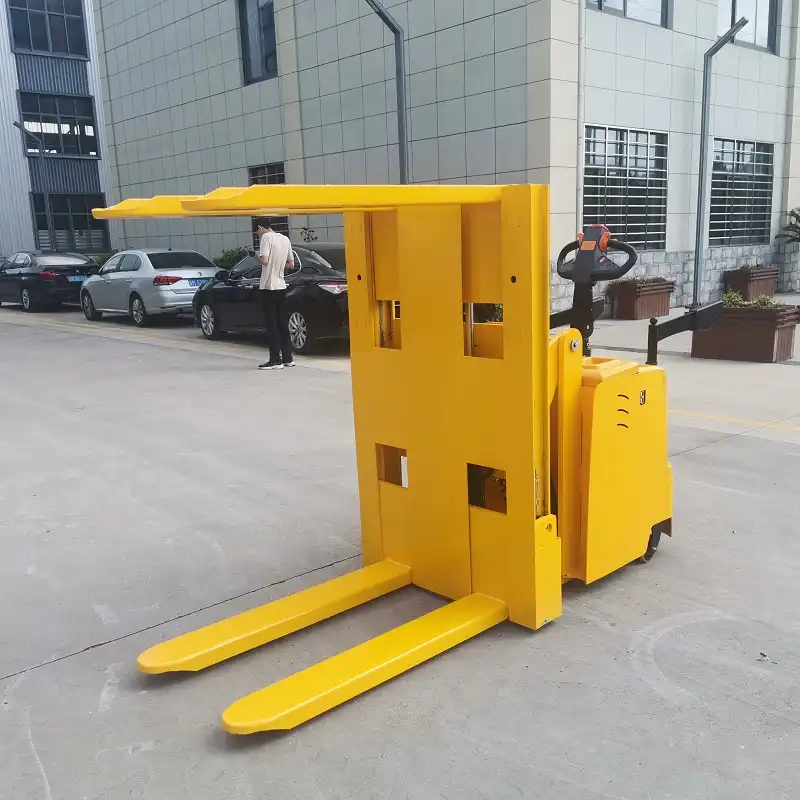

When we move goods from one pallet to another using a pallet inverter, the machine does all the heavy lifting and turning. This is a game-changer for reducing damage. For example, imagine you need to switch a load from a damaged wooden pallet to a new, clean plastic one for an export shipment. With a pallet inverter, you simply drive the loaded pallet into the machine. The clamps engage, and the machine either rotates the load or pushes it onto a new pallet, depending on the inverter type. No one has to physically handle the individual boxes or bags. This automated process ensures consistency. Each transfer happens the same way, every time. This consistency means fewer mistakes and much less damage. It also frees up your team members from risky, repetitive tasks. My team at FHOPEPACK has seen how this shift impacts daily operations. It makes the entire process safer and more reliable. (Automated pallet transfer, Reduced human handling, Secure load clamping, Damage prevention technology)
How Do Pallet Inverters Ensure Load Stability During Transfer?
One of the biggest concerns in any warehouse is unstable loads. A shifting load can cause significant product damage and safety hazards. How do we keep everything perfectly still while transferring it? This was a question my clients often asked. My answer comes from years of working with packing machines: the core design of pallet inverters focuses on this very challenge. They are built to provide unmatched stability.
Pallet inverters ensure exceptional load stability by using a combination of powerful hydraulic clamps and precise mechanical rotation or push-transfer systems. These clamps apply even pressure across the entire surface of the load, preventing any shifting or loosening of products during the transfer. As the machine rotates or moves the load, it does so smoothly and at a controlled speed. This engineered precision prevents sudden jolts or impacts that could otherwise cause items to tumble or become dislodged. The load stays perfectly aligned and compressed, whether it is being inverted 180 degrees or gently pushed onto a new pallet. This secure, controlled movement is key to preventing damage and maintaining product integrity throughout the entire handling process.
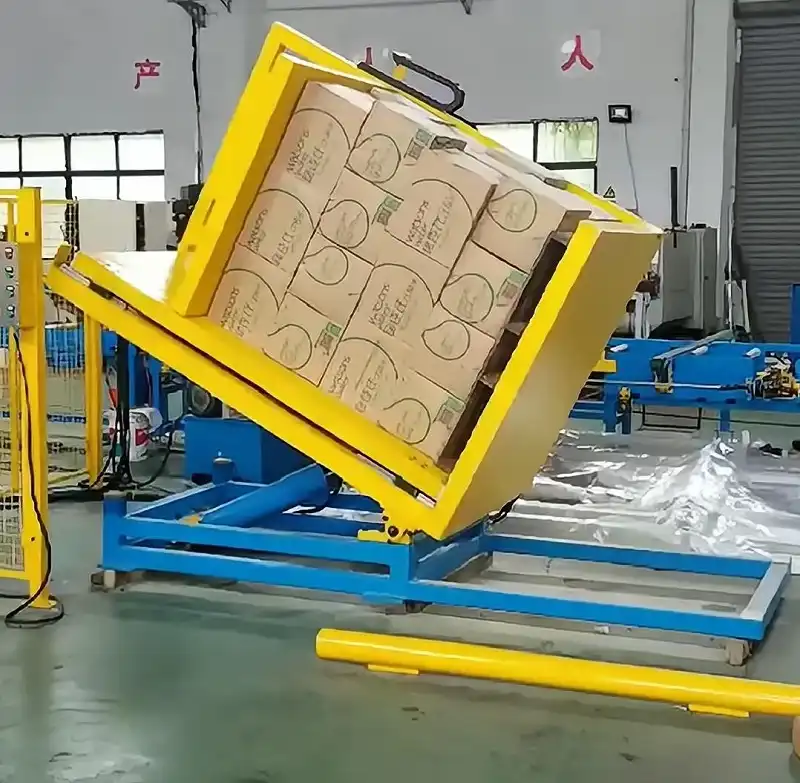

Consider a common scenario: a warehouse dealing with diverse pallet types for export. European customers might require Euro pallets, while US customers need standard American pallets. Often, these goods arrive on different types of internal pallets. The need for frequent pallet changes is high. Without a pallet inverter, each transfer is a manual struggle, risking collapsed stacks or broken packaging. With an inverter, the machine embraces the entire load, making it one solid unit. For instance, a box of delicate food items will stay perfectly stacked as the inverter flips it or slides it onto a new pallet. There is no wobbling, no tipping, and no chance for gravity to cause a mess. The engineering behind FHOPEPACK’s pallet inverters ensures that the clamping pressure is adjustable. This means you can handle everything from lightweight, fragile goods to heavy, robust industrial parts with the same level of stability and care. This capability directly reduces damages and boosts efficiency in high-volume operations like those managed by Carlos Rodríguez. (Load stability systems, Hydraulic clamping benefits, Precise rotation control, Damage-free pallet exchange)
Can Pallet Inverters Adapt to Different Product Sensitivities?
Every product is different. Some are sturdy, like cases of bottled drinks. Others are fragile, like electronic components or delicate food packaging. How can one machine handle such a wide range of products without causing damage? This challenge often came up when I worked with various factories. They needed solutions that were flexible. Pallet inverters are designed with this flexibility in mind, making them highly adaptable.
Pallet inverters are engineered to handle a wide spectrum of product sensitivities by allowing operators to adjust critical parameters such as clamping pressure and rotation speed. For delicate items, the machine can apply a lighter, gentler clamp force to prevent crushing or deformation, while maintaining enough grip for safe transfer. For heavier or more robust loads, the pressure can be increased to ensure maximum stability. The rotation or transfer speed is also variable, allowing for a slower, more controlled movement for very fragile goods or a faster cycle for less sensitive products. This customizable control ensures that each type of product receives the appropriate handling, significantly minimizing the risk of damage regardless of its fragility or composition. The adjustability allows for tailored product care.
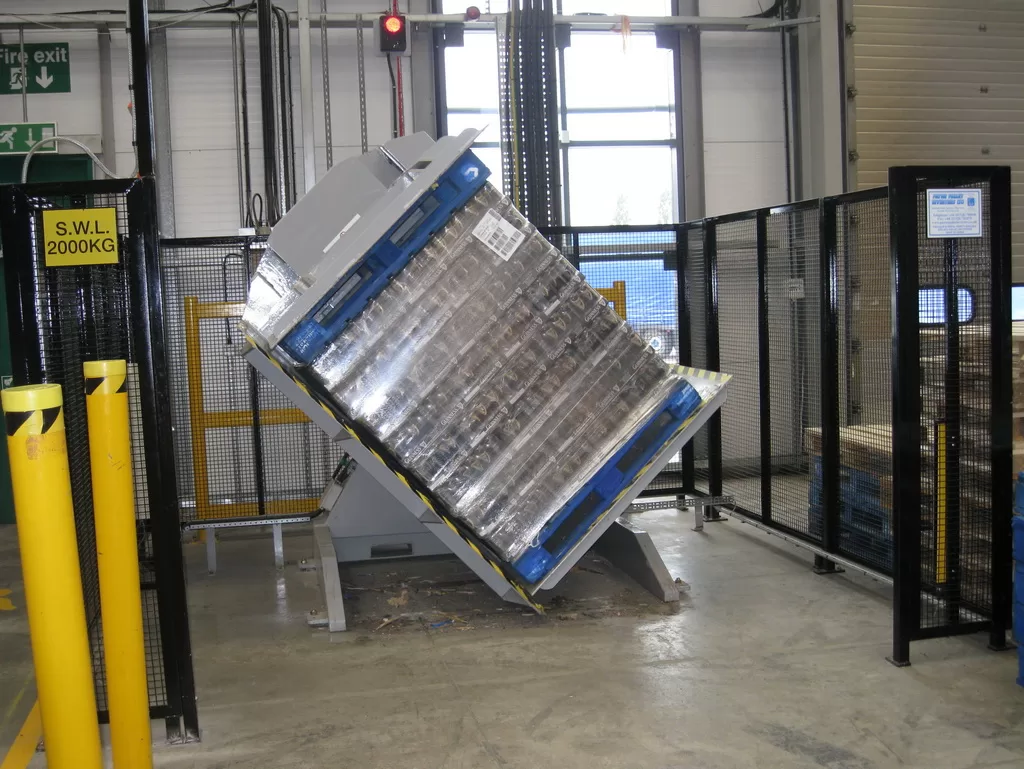

Let us think about a food and beverage group, like the one Carlos manages. They deal with everything from glass bottles to cartons of juice, and sometimes even bulk ingredients. Each product type has its own handling requirements. A pallet inverter can be programmed or manually adjusted to suit these specific needs. For example, if you are transferring a pallet of glass jars, you would set the clamping pressure to be firm but not crushing, and the rotation speed to be slow and smooth. If you are moving heavy boxes of canned goods, you might increase the pressure slightly and speed up the transfer. My work has shown me that this adaptability is not just a convenience; it is a necessity for reducing damage. It means one machine can do the job of many specialized handling methods, all while protecting your valuable inventory. This versatility also reduces the need for constant manual checks or re-packaging, which saves both time and further minimizes damage risks. (Product sensitivity handling, Adjustable clamping pressure, Variable speed control, Versatile pallet solutions)
What Role Does Automation Play in Damage-Free Pallet Operations?
In today’s fast-paced logistics world, speed and accuracy are everything. But how do we achieve this without increasing the risk of product damage? This is where automation steps in. From my early days as an employee to founding FHOPEPACK, I have always seen automation as the key to solving many warehouse problems. It is not just about moving faster; it is about moving smarter and safer.
Automation plays a critical role in achieving damage-free pallet operations by eliminating human error, standardizing processes, and ensuring consistent handling. Automated pallet inverters perform tasks with precision that manual labor cannot match. They follow pre-programmed sequences, ensuring that clamping, rotation, and transfer steps are executed perfectly every single time. This removes the variability of human operators, who can get tired, distracted, or make mistakes. Consistent, machine-controlled movements prevent sudden impacts, drops, or shifts that often damage products. Furthermore, automation allows for continuous, high-volume operations without compromising safety or product integrity, directly leading to reduced damage and increased efficiency across the entire supply chain.
Automated pallet inverters, like those we design at FHOPEPACK, integrate seamlessly into existing warehouse systems. Imagine a process where an automated guided vehicle (AGV) delivers a pallet to the inverter. The inverter then automatically clamps the load, performs the required pallet swap, and an AGV picks up the new pallet. This entire sequence minimizes human intervention, thus minimizing damage potential. For a logistics manager like Carlos, who faces labor shortages and demands for faster delivery, this level of automation is invaluable. It reduces the dependency on manual labor, which can be inconsistent. Automated systems are tireless; they perform repetitive tasks with unwavering accuracy. This means fewer accidents, less product spoilage, and a more predictable operational flow. My experience in building successful packing machine factories has taught me that investing in smart automation solutions pays off in the long run. It protects your products, your people, and your profits. This shift to automated handling helps meet the intense demands of modern retail and e-commerce, ensuring goods arrive undamaged. (Warehouse automation, Automated damage prevention, Consistent handling systems, Error reduction technology)
Conclusion
Pallet inverters are vital for reducing product damage in warehousing. They secure loads, minimize manual handling, and adapt to different product types, all while boosting safety and efficiency. Integrating a reliable pallet inverter system into your operations is a strategic move that protects your inventory and strengthens your entire supply chain.












