
How do pallet inverter models compare in preventing moisture damage to paper loads?
Do you handle large quantities of paper goods in your warehouse? Have you ever faced the costly problem of moisture damage to these sensitive loads? I know many logistics managers, like Carlos in Spain, battle daily to protect their inventory. They worry about the impact on delivery times, contract penalties, and losing valuable clients. The challenge is real: how do you ensure goods stay dry and safe, especially when you need to switch pallets for different shipping standards or internal processes?
Pallet inverter models offer various features that directly and indirectly help prevent moisture damage to paper loads. Direct methods include sealed clamping surfaces and controlled inversion processes that minimize exposure, while indirect benefits come from quickly transferring loads from potentially wet or damaged pallets to dry, clean ones. Different inverter designs, such as 90-degree tippers, 180-degree changers, and mobile units, provide varying levels of cargo protection and operational flexibility suitable for diverse warehousing environments.
It is not just about moving goods from one pallet to another. It is about doing so safely, efficiently, and in a way that safeguards your products from environmental threats like moisture. If you are keen to understand how specific pallet inverter designs can be a shield against moisture, stay with me. We will explore the details that matter for your operations.
Why is moisture damage a critical concern for paper loads in warehousing?
Is moisture damage to paper truly a major headache for warehouse operations? Absolutely. In my experience, working with numerous clients in the packing machine industry, I have seen how quickly moisture can turn valuable paper stock into unusable waste. This problem affects everything from raw paper materials to finished printed products. When paper absorbs moisture, it changes properties. It becomes wavy, loses its stiffness, and its print quality drops significantly.
Moisture damage is a critical concern for paper loads in warehousing because it leads to irreversible product degradation, substantial financial losses, and operational disruptions. Paper is highly hygroscopic, meaning it readily absorbs water vapor from the air. This absorption causes physical changes like warping, swelling, and loss of structural integrity, making the paper unsuitable for its intended use and impacting the entire supply chain.
From my early days as an employee at a packing machine factory, I learned that even subtle changes in humidity can be an enemy to paper. A warehouse environment, especially one with high throughput like Carlos’s regional distribution center, always faces risks. Condensation, spills, leaky roofs, or even just high ambient humidity can be culprits. Imagine thousands of pallets of paper, each representing significant value, being compromised by something as simple as a damp pallet or a humid loading dock. This is not just about damaged goods. It impacts production schedules, leads to costly rework, and damages customer trust. Protecting paper from moisture is not an option; it is a fundamental requirement for successful warehousing.
1.1 The Silent Threat: How Moisture Damages Paper
When paper comes into contact with moisture, its cellulose fibers absorb water. This process causes several problems.
- Structural Weakening: Water breaks down the bonds between paper fibers. This makes the paper weaker. It becomes prone to tearing and can lose its shape.
- Warping and Curling: Uneven moisture absorption makes the paper buckle or curl. This is because different parts expand at different rates. Flat sheets become wavy.
- Discoloration and Staining: Moisture can cause paper to yellow or develop dark spots. It can also activate dyes or inks, leading to bleeding. This ruins the appearance.
- Mold and Mildew Growth: Damp paper is a perfect breeding ground for mold and mildew. These growths cause further discoloration. They also produce unpleasant odors. Mold can spread to other products.
- Reduced Print Quality: For printing paper, moisture changes how ink adheres. It can cause smudging. Colors may appear dull. The paper might jam in printers more often.
- Loss of Functionality: Moisture-damaged packaging paper loses its protective properties. It cannot shield its contents. Books and documents become unreadable.
- Increased Waste: Damaged paper often becomes unusable. This leads to higher scrap rates. It increases disposal costs. It is a direct hit to the bottom line.
1.2 Common Sources of Moisture in Warehouses
Moisture can sneak into a warehouse from many places. It is a constant battle to keep it out.
- Environmental Humidity: High humidity levels in the air are a major factor. This is especially true in regions with humid climates. Air conditioners or dehumidifiers might not cover every corner.
- Condensation: When warm, moist air meets cool surfaces, water droplets form. This can happen on walls, pipes, or even on the products themselves. Cold goods brought into a warm warehouse are a prime example.
- Leaks and Spills: A leaky roof, plumbing issues, or accidental spills from other products can introduce water directly. These events are often sudden and localized.
- Wet Floors and Docks: Rainwater can be tracked in by forklifts or foot traffic. Open loading docks expose goods to rain or snow. This means pallets can become wet before they even enter the main storage area.
- Improper Storage: Storing pallets directly on a cold concrete floor without proper barriers can draw moisture up. Pallets themselves might be wet from previous use or exposure.
- Poor Ventilation: A lack of air circulation allows humid air to stagnate. This traps moisture within specific areas. It creates pockets where condensation is more likely to occur.
- External Conditions: Goods arriving on trucks or containers may already carry moisture. This can be from rain during transit or high humidity inside the transport vehicle.
What types of pallet inverters exist, and how do their basic designs influence cargo protection?
When we talk about pallet inverters, it is not a one-size-fits-all solution. There are several types, each with a different design. Their basic operation can have a big impact on how well they protect sensitive cargo, like paper, from moisture. Understanding these differences is key for any warehouse manager. Carlos, for example, needs to manage thousands of pallets daily. He needs to know which machine will best suit his diverse pallet specs and high-intensity environment.
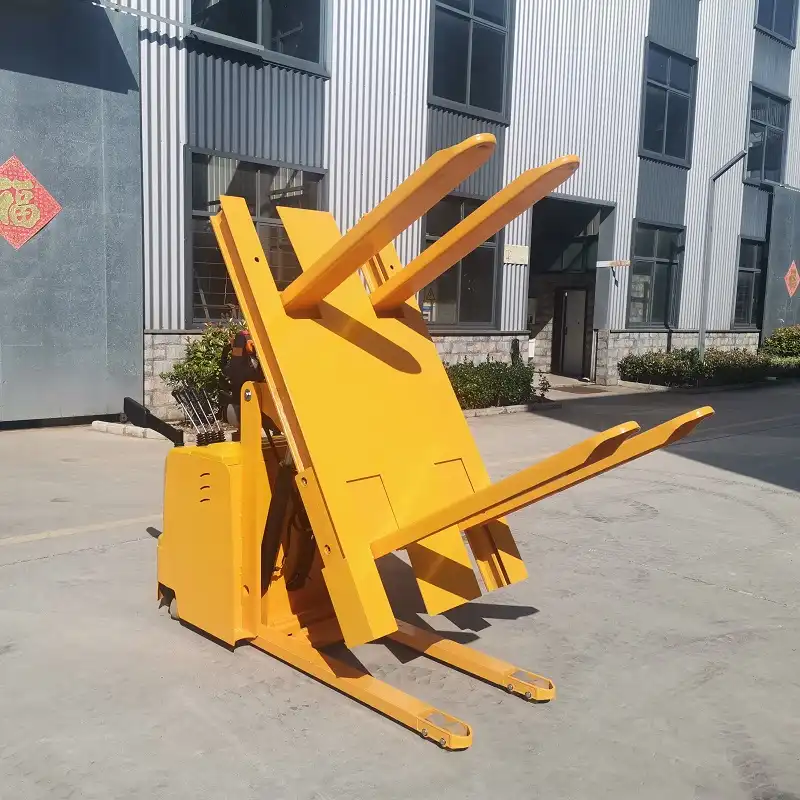
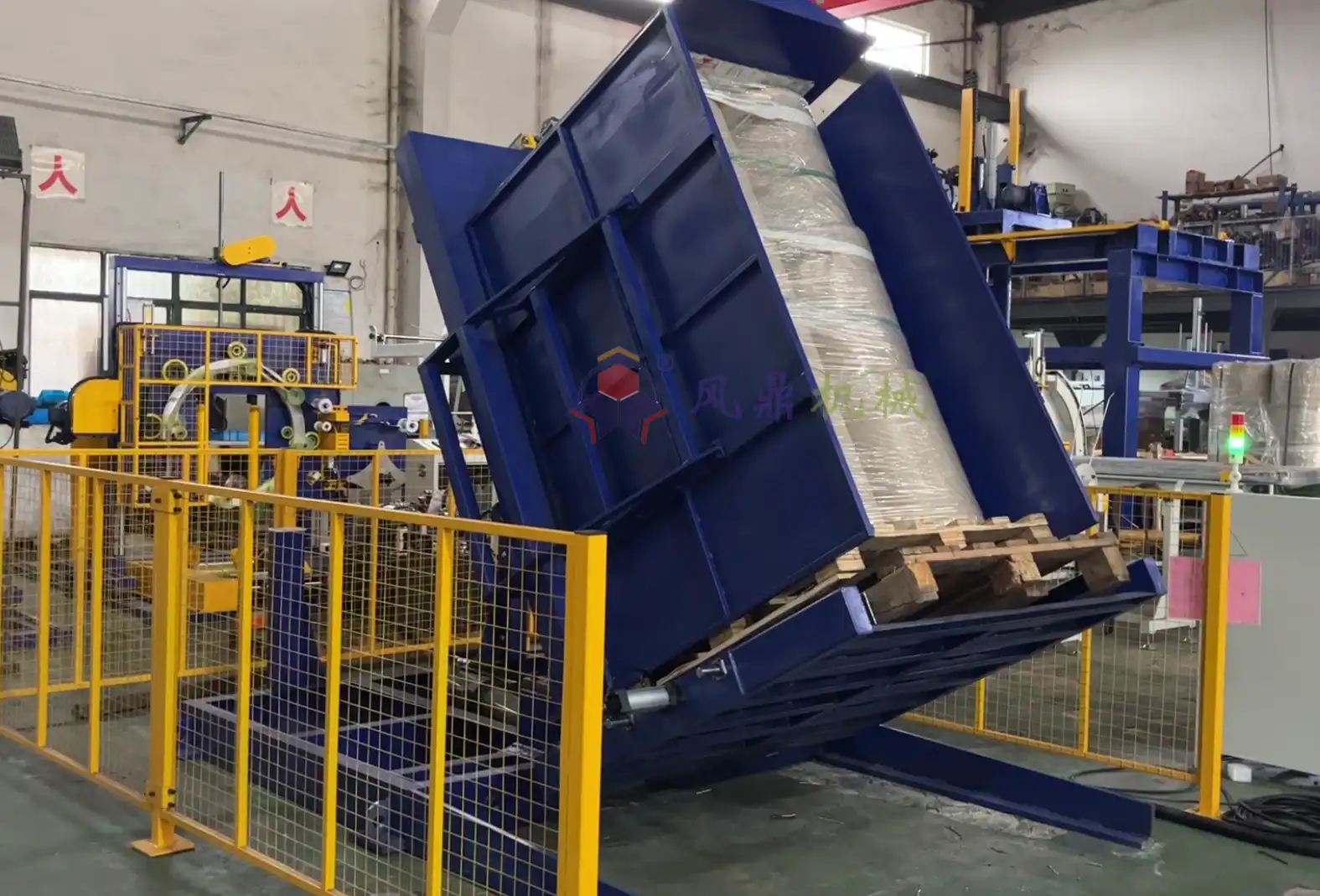
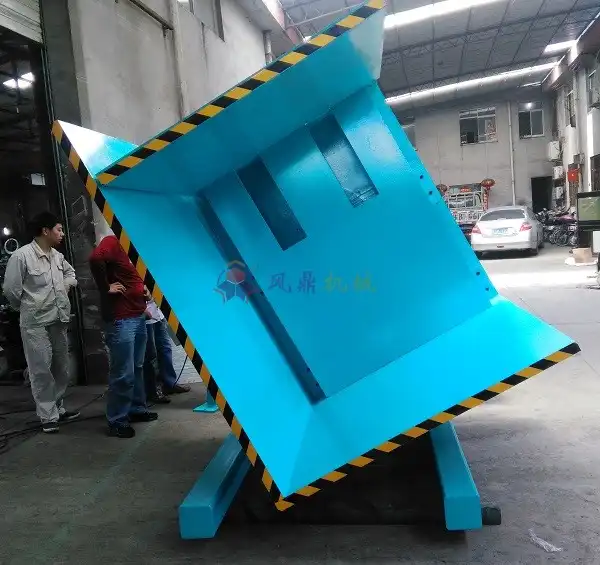
Pallet inverters typically fall into categories such as 90-degree tippers, 180-degree changers (fixed or mobile), and side-clamp models, each influencing cargo protection differently. 90-degree tippers rotate the load on its side, making it easier to replace a pallet but potentially exposing the load to environmental elements. 180-degree changers completely invert the load, offering a more contained process but requiring the load to be robust enough for inversion. Side-clamp designs hold the load securely, minimizing movement and potential damage during the transfer, which is crucial for sensitive paper products.
From my perspective, having designed and built many packing machines, the core design principles often focus on stability and speed. But for paper, you also need to think about how much the product moves, how it is held, and how quickly the transfer happens. A machine that holds the load too loosely could allow sag, making the paper edges more exposed. One that is too aggressive might damage the packaging. It is a balance. Choosing the right type of inverter often comes down to your specific load characteristics, the volume you handle, and the level of environmental control you need.
2.1 90-Degree Pallet Tippers
A 90-degree pallet tipper works by rotating the entire palletized load onto its side. It basically puts the pallet on its edge.
- Operation: The machine clamps the load and pallet together. Then, it tilts them by 90 degrees. This makes it easy to slide off the old pallet. A new pallet can then be pushed under the load. Finally, the machine tilts the load back upright.
- Cargo Protection: This method offers moderate protection. The load remains largely upright during most of the process. It is only briefly on its side. However, the sides of the paper load can be exposed during the pallet exchange. If the new pallet is wet, moisture can transfer easily. The open process means dust or splashes from the environment can reach the paper.
- Best Use Cases: These are good for loads that need gentle handling and are stable enough to be tilted. They are often used when the primary goal is quick pallet replacement. This can be for damaged pallets or for moving goods from wooden to plastic pallets. It is less ideal if the main concern is complete environmental sealing.
2.2 180-Degree Pallet Changers
These machines completely flip the load upside down. This is why they are called 180-degree changers.
- Operation: The machine clamps the load firmly, often with a top press and side clamps. It then rotates the entire unit by 180 degrees. This leaves the old pallet on top. Workers can remove it easily. A new pallet is placed on the now-exposed bottom of the load. The machine then rotates back, or the load is removed.
- Cargo Protection: 180-degree changers offer good protection during the inversion process itself. The load is usually held very securely on all sides. This means less exposure to external elements. The paper edges are typically protected by the clamping mechanism. The contained action reduces the risk of dust or moisture getting in during the flip. However, if the old pallet is very wet, and the load is inverted, moisture could potentially transfer to the top surface of the paper when it becomes the bottom.
- Best Use Cases: These are excellent for heavy, stable loads. They are also good for loads that need to be completely inverted for access. This could be for bottom layer inspection or for transferring fragile goods. They are a strong option for moisture protection if the clamping mechanism is well-designed.
2.3 Mobile Pallet Changers
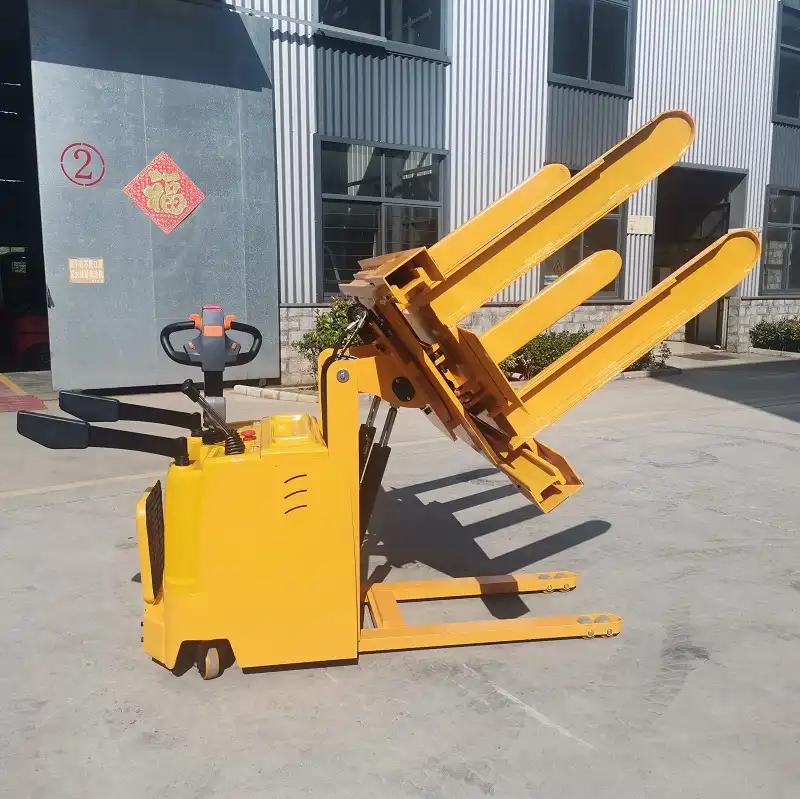
Mobile pallet changers are essentially 90-degree or 180-degree changers mounted on wheels or a movable frame.
- Operation: Their function is similar to fixed changers. The main difference is their mobility. They can be moved to different parts of the warehouse. This means the pallet change can happen where the load is needed. This reduces the need to transport pallets to a fixed station.
- Cargo Protection: The level of protection is similar to their fixed counterparts (90 or 180-degree). However, their mobility can indirectly affect moisture protection. If the mobile unit operates in different environments, it might encounter varied humidity levels. It also might expose the load to more movement during transit to the change location. But, if it can perform the swap inside a controlled, dry area, it maintains good protection.
- Best Use Cases: These are ideal for warehouses with flexible layouts. They are also good for operations where pallets need to be changed at multiple points. This might be in different processing zones or receiving areas. They offer versatility and can help manage specific moisture risks by allowing the operator to choose the driest location for the swap. Carlos might find these useful given his diverse pallet needs and high throughput.
How do specific pallet inverter features directly prevent moisture ingress for paper products?
When it comes to keeping paper loads dry, the devil is often in the details of the machine’s features. It is not just about choosing a 90-degree or 180-degree inverter. The specific design elements matter. As Randal Liu, I have spent years seeing what works and what does not in real-world applications. A warehouse manager like Carlos, dealing with sensitive goods and tight deadlines, needs these specific protections. He does not just want a machine; he wants a solution that stops moisture from causing problems.
Specific pallet inverter features directly prevent moisture ingress for paper products through advanced clamping mechanisms, integrated wrapping capabilities, controlled inversion speeds, and specialized material construction. Features like hydraulic top presses and side clamps create a sealed environment around the load, minimizing air and moisture exposure. Some models can apply protective film before or after inversion, adding an extra barrier. Controlled, gentle movements reduce package stress, preventing tears that could expose paper, while rust-resistant materials ensure the machine itself does not introduce contamination.
From my experience, the best pallet inverters are designed with these specific challenges in mind. They anticipate where moisture might creep in and build barriers against it. It is about more than just moving a pallet. It is about creating a secure, temporary cocoon for your product during the transfer. This proactive approach helps protect the integrity of the paper and ensures it reaches its next destination in perfect condition.
3.1 Advanced Clamping Mechanisms
The way a pallet inverter holds the load is crucial for moisture protection. Strong clamping prevents movement and exposure.
- Secure Top Press: Many inverters use a hydraulic top press. This presses down firmly on the top of the load. This prevents the stack of paper from shifting. It also creates a tight seal around the top surface. This seal helps to keep out airborne moisture or dust. A stable load means less chance for individual paper sheets to move and expose edges.
- Robust Side Clamps: Alongside the top press, side clamps secure the load from the sides. These clamps apply even pressure. This ensures the entire stack stays together as one solid unit. This containment minimizes the risk of paper edges being exposed to the environment. It also prevents sag or uneven pressure which could damage the paper.
- Adjustable Pressure Settings: High-quality inverters allow operators to adjust clamping pressure. This is very important for paper loads. Too much pressure can damage delicate paper or packaging. Too little pressure can lead to load instability. The right pressure creates a firm, protective hold without harming the product. This tailored approach enhances both safety and moisture protection.
- Non-Marking Surfaces: The clamping surfaces themselves should be smooth and non-marking. Rough surfaces can scratch or tear packaging, creating entry points for moisture. Using rubber or other soft, durable materials on clamps protects the packaging integrity. This keeps the primary moisture barrier of the paper intact.
3.2 Integrated Wrapping and Sealing Capabilities
Some advanced pallet inverters can do more than just flip pallets. They can also apply protective wraps.
- Pre-Inversion Wrapping: Certain models integrate a wrapping station. This allows a layer of stretch film to be applied to the paper load before inversion. This film acts as an initial barrier against moisture. It also stabilizes the load. This is a powerful way to protect paper, especially if the environment during the flip is less than ideal.
- Post-Inversion Wrapping: After the pallet has been changed, the newly inverted load can be wrapped again. This ensures that any newly exposed surfaces are immediately protected. This dual-layer approach provides maximum security against environmental factors. It seals the entire load onto its new pallet.
- Moisture-Resistant Film Compatibility: The inverters should be compatible with various types of stretch film. This includes moisture-resistant films. These films offer superior protection against water vapor. Using the right film with the right machine greatly enhances the overall moisture barrier.
- Automated Film Application: Automated wrapping systems ensure consistent and even film application. Manual wrapping can be inconsistent. It can leave gaps or weak points where moisture can enter. Automation ensures every load gets the same high level of protection. This consistency is vital for sensitive paper products.
3.3 Controlled Inversion Speed and Movement
How fast and how smoothly the inverter operates matters for sensitive loads like paper.
- Gradual Acceleration/Deceleration: Sudden starts and stops can put stress on the paper load and its packaging. This can cause shifting or damage. Pallet inverters with controlled acceleration and deceleration ensure smooth movements. This reduces the risk of impact or tearing to the packaging. It keeps the paper stack intact.
- Variable Speed Settings: Different paper loads have different sensitivities. An inverter with variable speed settings allows operators to choose the optimal speed. Very fragile paper might need a slower, gentler flip. This control ensures the integrity of the packaging. It also reduces the chance of moisture finding an entry point through damaged wrap.
- Stable Rotation Axis: The rotation mechanism should be very stable. Any wobbling or jerky movements can cause the load to shift. This compromises the protective wrap. A smooth, stable rotation ensures that the paper load remains tightly clamped. It minimizes any potential for moisture exposure during the flip.
- Gentle Landing Mechanisms: When the load is set back down or inverted onto a new pallet, the landing should be gentle. Hard impacts can damage the bottom layers of paper or crack the new pallet. This creates gaps where moisture can enter. Well-designed inverters have cushioned or controlled landing systems. This protects the product from shock.
What operational best practices and additional measures enhance moisture protection during pallet inversion?
Even the best pallet inverter needs the right operational environment and supporting practices to truly protect paper loads from moisture. It is not just about the machine; it is about the whole system. As someone who built a successful packing machine factory, I have seen how critical these surrounding factors are. A manager like Carlos, who values practical, results-oriented solutions, understands this. He knows that relying on equipment alone is not enough. You need to combine it with smart operational choices.
Operational best practices and additional measures significantly enhance moisture protection during pallet inversion by focusing on environmental control, pallet management, and load preparation. This includes ensuring the inversion area has controlled humidity, using only dry and clean pallets, applying additional protective wrapping before the transfer, and training staff on correct handling procedures. Implementing these alongside a capable pallet inverter creates a multi-layered defense against moisture ingress, securing the integrity of paper products throughout the warehousing process.
I always tell my clients that a machine is only as good as the process it is part of. You can invest in the most advanced pallet inverter, but if your pallets are sitting in puddles, or your staff is not trained, you will still face problems. It is about creating a holistic solution that addresses every potential point of failure. This approach minimizes risks and helps maintain product quality, which is exactly what a demanding client base expects.
4.1 Environmental Control in the Inversion Area
The immediate surroundings where the pallet inversion takes place are critical.
- Humidity Monitoring: Install humidity sensors in the pallet inverter area. Keep records of the humidity levels. This helps identify periods of high risk. You can then take proactive steps. If humidity is too high, you might need to delay operations or use a dehumidifier.
- Temperature Regulation: Control the temperature. Rapid changes in temperature can cause condensation. This happens when warm, moist air meets cooler surfaces. Keeping a stable temperature helps prevent this. It also makes the air dehumidifiers more effective.
- Good Ventilation: Ensure proper airflow in the inversion zone. Stagnant air allows moisture to build up. Good ventilation helps remove humid air. It brings in drier air. This prevents condensation on loads and equipment.
- Sealed Environment (When Possible): For very sensitive paper, consider enclosing the pallet inverter within a semi-sealed room or tent. This creates a micro-environment. You can then control humidity and temperature more precisely in that specific zone. This offers the highest level of environmental protection.
4.2 Pallet Management and Preparation
The pallets themselves are a common source of moisture and can affect protection.
- Use Dry Pallets: Always use pallets that are completely dry. Storing new or replacement pallets in a dry, covered area is essential. Never use pallets that show signs of dampness or water stains. Even slightly damp pallets can transfer moisture to paper loads.
- Clean Pallets: Ensure pallets are clean. Dirt and debris can hold moisture. They can also damage packaging, creating entry points for water. Regular inspection and cleaning of pallets should be a standard practice.
- Appropriate Pallet Material: Consider using plastic pallets for sensitive paper loads. Plastic pallets do not absorb moisture like wooden pallets do. They are also easier to clean. They offer a more consistent and reliable dry surface for your paper products.
- Pallet Inspection Protocol: Implement a strict protocol for inspecting all pallets before use. Check for signs of damage, splinters, or moisture. Damaged pallets can affect the stability of the load in the inverter. This can lead to tears in packaging. It is a simple step that makes a big difference.
4.3 Load Preparation and Supplementary Protection
Before the load even enters the inverter, steps can be taken to enhance protection.
- Pre-Wrapping Loads: For highly sensitive paper, pre-wrap the entire palletized load with stretch film before it goes into the inverter. This creates an initial protective barrier. It also stabilizes the load, making the inversion process safer. This is especially useful if the pallet inverter does not have integrated wrapping.
- Desiccants within Packaging: For critical loads, consider placing desiccant packs (like silica gel) inside individual packaging or within the palletized load. These absorb moisture within the confined space. This adds an extra layer of protection against humidity.
- Waterproof Slip Sheets: Place waterproof slip sheets between the paper load and the pallet. This creates a barrier against any potential moisture wicking up from the pallet surface. It is a low-cost, effective solution.
- Staff Training: Train all warehouse personnel who operate the pallet inverter on best practices. They need to understand the risks of moisture damage. They should know how to properly prepare loads, inspect pallets, and operate the machine for optimal protection. Human error is often a weak point. Proper training strengthens the entire process.

My Insights: Choosing the right pallet inverter for moisture-sensitive loads – a long-term partnership approach.
After years in the packing machine industry, helping businesses grow and achieve financial independence, I have learned one crucial lesson. It is not just about selling a machine. It is about understanding the real pain points of a business, like Carlos’s challenges with diverse pallet specifications and labor shortages. For moisture-sensitive paper loads, selecting the right pallet inverter is a strategic decision. It requires a partner who sees beyond the sale.
When choosing a pallet inverter for moisture-sensitive loads, I recommend focusing on a model that offers robust clamping, integrated wrapping capabilities, and precise control over movement. However, the machine itself is only part of the solution. Look for a supplier who understands your specific warehousing challenges, offers long-term support, and can advise on best practices for environmental control and load preparation. This holistic, partnership-driven approach ensures sustained protection against moisture damage and improves overall operational efficiency.
From my journey, what truly matters is building relationships. It means finding a supplier who acts like a true partner. They should understand that your goal is not just to replace a pallet, but to do it safely, efficiently, and in a way that protects your valuable cargo. This type of partnership ensures you get a solution that adapts to your needs. It helps you prevent losses, enhance safety, and ultimately, grow your business.
5.1 Key Considerations for Selecting a Pallet Inverter
Choosing the right pallet inverter requires careful thought. It is an investment in your warehouse’s future.
- Load Type and Sensitivity: First, consider the exact type of paper you handle. Is it raw paper, finished goods, or fragile printed materials? Different sensitivities require different levels of protection and handling gentleness. An inverter that works well for sturdy boxes might not be ideal for loose paper reams.
- Throughput Requirements: How many pallets do you need to process per hour or day? This determines whether you need a semi-automatic or a fully automatic system. Higher throughput often means faster operation, but it should not come at the cost of product protection.
- Space and Layout: Your available warehouse space is a major factor. Fixed pallet inverters need dedicated space. Mobile units offer flexibility but still require clear paths. Consider your current layout and future expansion plans.
- Pallet Specifications: As Carlos knows well, different international pallet standards (Euro, US, plastic) demand adaptability. Ensure the inverter can handle all the pallet types you use. It should transition seamlessly between them without manual adjustments.
- Budget and ROI: Calculate the total cost of ownership. This includes the purchase price, installation, training, maintenance, and energy consumption. Compare this to the potential savings from reduced damage, improved efficiency, and enhanced safety. A higher initial investment can often lead to a faster return on investment through fewer losses.
- Safety Features: Prioritize safety. The machine must have clear emergency stops, safety guarding, and operator protection features. This protects your staff and reduces accident risks. Safety is non-negotiable in any warehouse environment.
- Ease of Maintenance: Choose a machine that is easy to maintain. Simple maintenance procedures reduce downtime. They ensure the machine remains operational and reliable. Check for readily available spare parts and support.
5.2 The Value of a True Partnership in Automation
Working with the right supplier is as important as choosing the right machine.
- Understanding Your Unique Challenges: A good partner takes time to understand your specific operations. They do not just offer a generic product. They listen to your pain points, like diverse pallet types, labor shortages, and safety concerns. They tailor solutions to fit your exact needs. This personalized approach makes a real difference.
- Customization and Flexibility: Sometimes, an off-the-shelf solution is not enough. A true partner can offer customization options. They can adapt their machines to your specific load sizes, pallet types, or environmental conditions. This flexibility ensures the equipment integrates perfectly into your existing workflow.
- After-Sales Support and Service: The relationship does not end after the sale. Reliable after-sales support is crucial. This includes installation, training, maintenance, and readily available spare parts. A partner should be there to help you resolve any issues quickly. This minimizes downtime and ensures continuous operation.
- Long-Term Vision: Look for a partner who wants a long-term relationship. They should be interested in helping your business grow. They offer insights and advice beyond just the equipment. They become a trusted resource for your warehousing automation needs. This ensures you always have the best solutions.
- Industry Expertise: A partner with deep industry knowledge brings invaluable expertise. They can share best practices from other clients. They can advise on emerging technologies or regulatory changes. This expertise helps you stay competitive and efficient. It allows you to make informed decisions about your automation strategy.
Conclusion
Preventing moisture damage to paper loads is vital for any warehouse. Different pallet inverter models offer various levels of protection through their design and features. By combining the right equipment, focusing on environmental control, and adopting smart operational practices, you can effectively safeguard your valuable paper products. Choosing a reliable pallet inverter and a supportive partner ensures long-term success and peace of mind.








