
How Do Packing Lines Adapt to Different MDF Sizes, Thicknesses, and Weights?
Have you ever faced a bottleneck in your packing operation? I know the feeling. The constant pressure to boost output, cut costs, and meet strict safety standards is real, especially when you are dealing with diverse products like MDF panels. Many factory managers I talk to are struggling with slow, manual processes and the high risk of worker injury or product damage. They need solutions that truly work, not just another machine that complicates things. This is where truly adaptable packing lines become essential, a game-changer for any medium to large-scale operation.
Adapting packing lines to various MDF sizes, thicknesses, and weights requires a combination of modular design, advanced automation, and flexible material handling systems. This adaptability ensures high efficiency, reduces product damage, and enhances worker safety by minimizing manual intervention, allowing manufacturers to seamlessly transition between different product specifications without significant downtime or retooling costs.

I’ve seen firsthand how a lack of flexibility can cripple a factory’s production flow. From my early days on the factory floor to building my own successful packing machine company, I’ve learned that understanding these challenges is the first step towards finding the right solution. If you’re looking to eliminate production bottlenecks, improve safety, and ensure your investment delivers clear ROI, then let’s explore how modern packing lines achieve this incredible adaptability.
How Can Modular Design Make Packing Lines More Adaptable?
Are your current packing lines struggling to keep up with diverse product orders? The inflexibility of traditional, fixed packing lines often leads to wasted time and resources when you need to switch between different MDF panel sizes or weights. This constant adjustment, or even the need for completely separate lines, can significantly inflate operational costs and slow down your entire production schedule. It’s a common pain point for many factory managers trying to meet varied customer demands.
Modular design makes packing lines highly adaptable by allowing different components or “modules” to be easily swapped, reconfigured, or integrated, enabling rapid adjustments for various MDF dimensions, thicknesses, and weights without extensive downtime, thereby optimizing production flexibility and reducing setup times.

When I started FHOPEPACK, one of my core philosophies was about building machines that could grow and change with a business, not become obsolete. Modular design is the heart of this. Think about it like building blocks. You can assemble them in many ways to achieve different outcomes. For MDF packing, this means components like infeed conveyors, wrapping stations, strapping machines, and discharge systems are designed as independent, yet interconnected, units. This approach allows factories, even those in Mexico dealing with varying demands for wood products, to quickly reconfigure their lines. For example, if you need to pack extra-long MDF panels today and then shift to smaller, heavier bundles tomorrow, a modular system lets you do that with minimal fuss. It prevents the need for huge, disruptive overhauls. This approach is key to achieving true operational flexibility.
Key Aspects of Modular Packing Line Design for MDF:
Modular design isn’t just about mixing and matching; it involves thoughtful engineering that anticipates future needs and varying product specifications. Here’s a deeper look into how it works and why it’s a critical investment for modern MDF manufacturers.
-
Standardized Interfaces:
- All modules are built with universal connection points. This makes sure different pieces of equipment, regardless of their specific function, can connect seamlessly.
- Imagine a plug-and-play system for industrial machinery. This lowers installation time and makes upgrades easier.
- This also means less custom engineering for each new setup. It significantly cuts down on initial costs and future modification expenses.
- For example, a standard conveyor module can connect to various strapping or wrapping modules from FHOPEPACK or SHJLPACK.
-
Scalability and Expansion:
- As your business grows or product lines change, modular systems can easily expand. You can add more modules to increase capacity or introduce new packing functions.
- This avoids the costly and disruptive process of replacing an entire line. It means your investment is future-proof.
- Need to add an automated labeling system or a heavier-duty stacking module for thicker MDF? Simply integrate it. This scalable design protects your initial investment.
-
Component Versatility:
- Individual modules are often designed to handle a range of product specifications. For instance, a single wrapping module might accommodate various film widths and tensions.
- Adjustable guides and sensors can detect different MDF dimensions automatically. This reduces manual changeover times.
- This versatility helps reduce the number of specialized machines needed. It lowers both capital expenditure and maintenance complexity.
- Consider our orbital stretch wrappers, which can be equipped with adjustable press rollers for different thicknesses of MDF panels.
-
Maintenance and Troubleshooting:
- If one module experiences an issue, it can often be isolated and repaired or replaced without affecting the entire line. This minimizes overall downtime.
- Spare parts management becomes simpler because many components are standardized across modules.
- This is a huge advantage for factory managers who prioritize uptime. A minor fault doesn’t stop your whole operation. It keeps your production moving.
-
Example Application: Packing MDF Panels of Varying Dimensions Consider a factory that produces MDF panels for furniture and construction. Their product range might include:
| MDF Product Type | Length (mm) | Width (mm) | Thickness (mm) | Weight (kg/panel) | Packing Method |
|---|---|---|---|---|---|
| Standard Panel | 2440 | 1220 | 15 | 35 | Stretch Wrap |
| Thin Board | 1830 | 915 | 6 | 10 | Film Wrap |
| Heavy-Duty Slab | 3660 | 1830 | 30 | 120 | Strapping + Wrap |
A modular packing line adapts by:
- 🔄 Adjustable Conveyors: Automatically or manually widen/narrow to fit different panel widths and lengths.
- ⚙️ Sensor-Based Detection: Detects panel dimensions and signals the wrapping/strapping modules to adjust.
- 📦 Flexible Wrapping Module: A FHOPEPACK orbital stretch wrapper, for instance, can adjust its wrapping orbit diameter and film tension based on the panel’s size and weight.
- 💪 Reinforced Strapping Unit: Can apply multiple straps with higher tension for heavier slabs.
- 🤖 Robotic Stacking (Optional): Picks and places panels into stacks based on their specific dimensions, avoiding manual handling.
This modularity is crucial. It gives factory managers the agility to respond to market demands without fear of extensive retooling or inefficient manual work. It’s about smart design making your operations smarter and more profitable. (flexible packing systems, adaptable packaging machinery, modular industrial packaging)
What Automation Technologies Ensure Efficient MDF Packing for Varied Products?
Are your workers still struggling with the manual packing of large, heavy, or awkwardly sized MDF panels? This isn’t just inefficient; it’s a significant safety risk that can lead to injuries, high insurance costs, and lost productivity. Relying on manual labor for varied product packing also introduces inconsistencies and slows down your entire delivery schedule, creating real efficiency bottlenecks.
Advanced automation technologies, such as intelligent sensors, robotic handling systems, and programmable logic controllers (PLCs), are critical for ensuring efficient MDF packing across varied product lines. These systems enable automated size detection, precise material handling, and adaptive wrapping or strapping, significantly boosting throughput, reducing labor dependency, and enhancing both product quality and worker safety.

When I was first building my packing machine factory, I saw how much potential was locked up in manual processes. Automation was not just a luxury; it was a necessity for growth and safety. For handling MDF, especially when sizes and weights vary, automation is the only way to truly unlock efficiency. Imagine a system where machines detect the dimensions of an incoming MDF panel, automatically adjust the conveyor width, select the right amount of stretch film, and then precisely wrap it without human intervention. This isn’t science fiction; it’s what FHOPEPACK and SHJLPACK are helping factories achieve every day. It transforms a labor-intensive bottleneck into a smooth, high-speed operation, just like Michael Chen would need in his metal processing plant for similar heavy items.
How Automation Technologies Optimize MDF Packing:
Implementing the right automation technologies is key to transforming a chaotic packing operation into a streamlined, highly efficient process. It’s about smart machines working together to handle the variability of MDF products.
-
Intelligent Sensor Systems:
- These systems use various sensors (photoelectric, ultrasonic, laser, weight) to detect the exact dimensions (length, width, thickness) and weight of each incoming MDF panel.
- This data is fed directly to the packing line’s control system. It ensures that subsequent machines adjust accordingly.
- This automatic detection eliminates human error in measurement. It ensures consistent packing quality.
- For example, a laser sensor array can accurately measure the profile of an MDF stack, no matter its height or width.
-
Programmable Logic Controllers (PLCs) and HMI:
- PLCs are the “brains” of the automated packing line. They interpret sensor data and control every machine movement.
- Human-Machine Interfaces (HMIs) allow operators to monitor the process and make adjustments if needed. They provide real-time feedback.
- This centralized control orchestrates complex sequences. It ensures precise synchronization between different packing stages.
- A well-programmed PLC can store multiple packing “recipes” for various MDF products. Operators simply select the right one.
-
Robotic Handling and Palletizing:
- Robots with specialized grippers can safely and precisely pick, place, and stack MDF panels onto pallets.
- They can handle extremely heavy or bulky items that are dangerous for humans. This vastly improves worker safety.
- Robots work tirelessly and consistently. They reduce labor costs and increase throughput.
- For instance, a robotic arm can gently transfer a freshly wrapped stack of MDF from an FHOPEPACK horizontal orbital wrapper directly to a pallet.
-
Adaptive Wrapping and Strapping Machines:
- Machines like those from FHOPEPACK are designed with variable tension controls, adjustable press rollers, and programmable wrapping patterns.
- They can automatically adjust film tension and number of wraps based on the MDF panel’s weight and fragility.
- This ensures optimal product protection. It prevents damage during transit.
- Our orbital stretch wrappers, for example, can adjust the stretch film overlap and spiral pitch based on the detected thickness and length of the MDF bundle, securing it perfectly every time.
-
Automated Labeling and Identification:
- Integrated label applicators print and apply labels with product information, barcodes, and shipping details.
- This speeds up downstream logistics. It reduces errors in inventory management.
- It’s a crucial step for traceability and efficient warehousing. It ensures the right product gets to the right place.
By adopting these technologies, factory managers can move away from the limitations of manual processes. They can achieve consistent quality, high speeds, and a much safer working environment. This is not just about buying machines; it’s about investing in a smarter, more reliable future for your packing operations. (automated MDF handling, intelligent packing systems, robotic packaging solutions)
How Do We Protect MDF Products and Workers During High-Volume Packing?
Are you constantly worried about product damage and worker injuries in your packing area? In high-volume environments, especially when handling heavy or large MDF panels, product loss due to edge damage or improper handling can quickly erode profits. Simultaneously, manual lifting and repetitive tasks expose your workforce to significant safety risks, leading to high injury rates and rising insurance costs. It’s a dual challenge that demands robust solutions.
Protecting MDF products and workers in high-volume packing involves deploying specialized equipment designed for heavy-duty material handling, implementing automated processes to minimize human intervention, and utilizing durable packaging materials with adaptable wrapping techniques. This integrated approach safeguards delicate MDF edges from impact damage and significantly reduces occupational hazards, ensuring both product integrity and worker well-being.
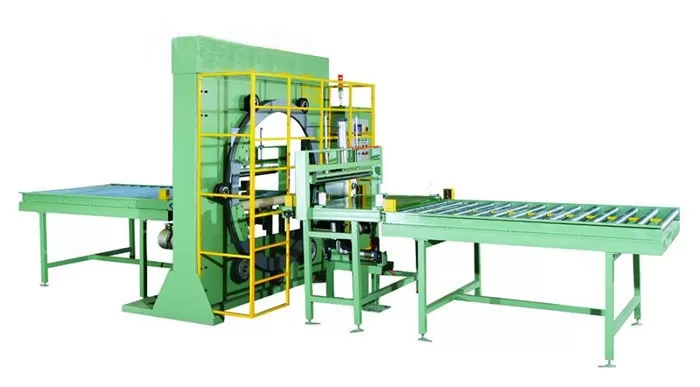
I’ve heard countless stories, including from clients like Michael Chen, about the hidden costs of inefficient and unsafe packing. A damaged steel coil or a worker’s injury isn’t just a number; it’s a loss of trust, profit, and human dignity. My journey in the packing machine industry has taught me that the best solutions address both product integrity and human safety hand-in-hand. For MDF, this means investing in packing lines that are built to handle the material’s specific vulnerabilities while removing workers from dangerous tasks. It means robust conveyors, precise wrapping machines like the ones from FHOPEPACK, and intelligent handling systems that prevent damage before it happens.
Strategies for Enhanced Protection in MDF Packing:
Achieving superior protection for both your MDF products and your valuable workforce requires a multi-faceted approach. It combines robust machinery, smart automation, and thoughtful process design.
-
Specialized Material Handling Equipment:
- Investing in heavy-duty conveyors with smooth, non-abrasive surfaces is crucial. This prevents scratching or denting MDF panels.
- Automatic centering and alignment systems ensure panels are always in the correct position. This avoids collisions and snags.
- Powered roller conveyors or heavy-duty belt conveyors minimize manual pushing or pulling. This greatly reduces physical strain on workers.
- For example, FHOPEPACK’s material handling solutions often include durable roller beds that can withstand heavy loads and prevent damage to product surfaces.
-
Automated Wrapping and Strapping:
- An orbital stretch wrapper, such as those offered by FHOPEPACK, applies tensioned film uniformly around MDF bundles. This creates a protective barrier against moisture, dust, and impact.
- Automated strapping machines secure bundles tightly. This prevents shifting and friction damage during transport.
- These machines remove the need for workers to manually apply film or straps to heavy, unstable loads. This drastically reduces the risk of strains or crushing injuries.
- The precise control over film tension also prevents over-tightening, which could warp or damage the MDF.
-
Edge and Corner Protection:
- Integrated systems can apply edge protectors (e.g., cardboard or plastic profiles) to vulnerable MDF edges before wrapping.
- This provides an extra layer of cushioning against impacts. It is critical for maintaining product aesthetics and structural integrity.
- This automated application avoids manual, repetitive tasks. It ensures consistent protection.
- Some FHOPEPACK lines integrate automated corner applicators. This ensures full protection for every panel bundle.
-
Safety Features and Ergonomics:
- Modern packing machines come equipped with safety light curtains, emergency stop buttons, and interlocked guards. These prevent access to moving parts during operation.
- Ergonomically designed workstations are used for any necessary manual interaction. This minimizes awkward postures and repetitive stress.
- Clear pathways and intelligent traffic management systems reduce collision risks in the packing area.
- Our FHOPEPACK machines are built with comprehensive safety protocols. This ensures worker safety is always a top priority.
-
Quality Control and Inspection:
- Vision systems and sensors can detect packaging defects or product damage early in the process. This prevents damaged goods from reaching customers.
- Automated weighing systems verify package integrity and detect missing components. This ensures product completeness.
- This proactive approach reduces customer complaints. It maintains your brand’s reputation for quality.
By implementing these measures, factories can achieve a win-win situation. They protect their valuable MDF products from damage and, most importantly, create a safer, more productive environment for their employees. This commitment to protection is a mark of a truly master packing operation. (MDF product damage prevention, worker safety in packing, heavy panel protection, automated safety features)
Why Is Choosing the Right Packing Partner Crucial for Long-Term Success?
Have you ever invested in new equipment only to find yourself alone when issues arise? Many factory managers, like Michael Chen, have faced the frustration of unreliable suppliers who prioritize sales over long-term support. This lack of trustworthy after-sales service, inadequate technical guidance, and a superficial understanding of your operational challenges can turn a promising investment into a costly nightmare, hindering your goals for efficiency and growth.
Choosing the right packing partner is crucial for long-term success because it guarantees not only reliable, high-quality packing equipment but also consistent expert support, deep industry knowledge, and a commitment to understanding and solving your specific operational challenges. A true partner, like FHOPEPACK, provides professional guidance, ensures optimal equipment performance, and delivers solutions that contribute directly to your business growth and ROI, building trust beyond a mere transaction.

My journey from an employee to a factory owner taught me the immense value of a reliable partner. I’ve been in Michael’s shoes, facing those production bottlenecks and safety concerns. I know that simply buying a machine isn’t enough; you need someone who understands your plant’s specific needs, whether it’s coil packing, steel wire packing, or, in this case, complex MDF panel handling. That’s why at FHOPEPACK, we don’t just sell machines; we offer solutions and expertise. We aim to be that long-term partner who genuinely helps you succeed, drawing from years of experience in the packing machine industry. We provide insights, not just equipment.
The Value of a Strategic Packing Partner:
A truly strategic packing partner goes beyond the initial sale, embedding themselves as a valuable extension of your team. This partnership yields significant benefits over the entire lifecycle of your packing operations.
-
Deep Industry Expertise and Problem Solving:
- A reliable partner possesses extensive knowledge of packing processes across various materials, including MDF. They understand common challenges and best practices.
- They don’t just sell a generic machine. They analyze your specific production bottlenecks, safety concerns, and efficiency gaps. Then they propose tailored solutions.
- This expertise is invaluable in identifying the root causes of issues. It helps in selecting the most appropriate and effective equipment.
- At FHOPEPACK, our team, with my own background in packing machine factory operations, truly understands the pain points of managers like Michael.
-
Comprehensive After-Sales Support and Service:
- A good partner offers robust technical support, spare parts availability, and prompt maintenance services. This minimizes downtime.
- They provide training for your team. This ensures proper operation and basic troubleshooting.
- This ongoing support builds confidence. It ensures your equipment continues to perform optimally for years.
- Unlike those “sales-focused” vendors, FHOPEPACK prioritizes comprehensive after-sales care. We know it builds trust.
-
Customization and Integration Capabilities:
- They have the capability to customize standard packing solutions to fit your unique factory layout and product specifications.
- They ensure seamless integration with your existing production lines. This avoids operational disruptions.
- This tailored approach maximizes efficiency. It delivers the best possible ROI for your investment.
- Whether you need a specialized infeed system for extra-large MDF or a unique wrapping pattern, partners like FHOPEPACK can adapt.
-
Focus on ROI and Business Growth:
- A strategic partner helps you understand the clear ROI of your investment. They quantify the benefits in terms of labor savings, reduced product damage, and increased throughput.
- They view your success as their success. This drives them to provide solutions that genuinely boost your profitability and competitive edge.
- This long-term perspective means they will recommend solutions that are sustainable and scalable.
- My own experience in growing a packing machine factory taught me that financial independence comes from helping clients grow.
-
Trust and Reliability:
- Over time, a strong partnership builds trust. You know you can rely on them for honest advice and dependable solutions.
- This trust extends beyond equipment to future innovations and upgrades.
- This is the foundation for a truly beneficial, lasting relationship. It’s what transforms a supplier into a true business ally.
Choosing a packing partner is not just about the price tag of a machine. It’s about securing a relationship that provides ongoing value, expertise, and support. For MDF manufacturers, or any heavy-duty packing operation, selecting a partner like FHOPEPACK ensures your investment truly drives long-term success and peace of mind. (reliable packing equipment supplier, industrial packaging partnerships, expert packing machine guidance, long-term operational support)
Conclusion
Adapting packing lines for diverse MDF products is vital for modern factories. Modular design and advanced automation not only boost efficiency and reduce product damage but also significantly improve worker safety. Partnering with experienced providers like FHOPEPACK ensures you gain expert guidance and reliable solutions, securing a strong ROI and fostering long-term success. Invest wisely in flexible systems, including a robust orbital stretch wrapper, for a competitive edge.








