
How Do Handling Systems Support Lean Manufacturing and Just-in-Time Delivery?
The manufacturing world today is tougher than ever before. Companies face immense pressure to produce more, faster, and at a lower cost, all while keeping quality high. If your factory struggles with bottlenecks, piles of inventory, or slow delivery times, you are not alone. Many businesses see their profits shrink and customer satisfaction drop because of old processes. This challenge often starts right in the heart of production, where materials move and products get ready for shipment. It affects everything, from the production floor to your client’s trust. So, how can we fix this, especially when it comes to material handling?
Handling systems are crucial for lean manufacturing and Just-in-Time (JIT) delivery. They make processes smoother, cut down on waste, and get products moving quickly. By automating how materials are moved, stored, and packaged, these systems reduce manual labor, prevent errors, and ensure products reach customers right when they are needed. This leads to better efficiency, lower costs, and stronger customer relationships, which is exactly what businesses need to stay competitive.

When we talk about making a factory lean and delivering Just-in-Time, it is easy to focus only on production. But the truth is, how you handle materials is just as important. It is the invisible backbone that connects every step. If you want to achieve truly world-class efficiency and never miss a delivery, you need to look closely at your handling systems. Let me share how modern handling solutions, like those we develop at FHOPEPACK, make these goals a reality.
How do handling systems minimize waste and optimize material flow?
Many factories often face big problems like too much inventory, products sitting around, and a lot of unnecessary movement. These issues cost money and slow everything down. If your materials are not moving smoothly, you create bottlenecks and waste valuable time. This can make your production line stop and start, causing delays for customers. Are you constantly looking for ways to cut down on these inefficiencies?
Handling systems are key to minimizing waste and optimizing material flow by creating a continuous, pull-based production environment. They reduce unnecessary material movement, minimize work-in-progress (WIP) inventory, and prevent damage. By automating transportation and positioning, these systems ensure materials are available exactly when and where they are needed. This process cuts down on wasted resources and makes the entire operation more efficient.
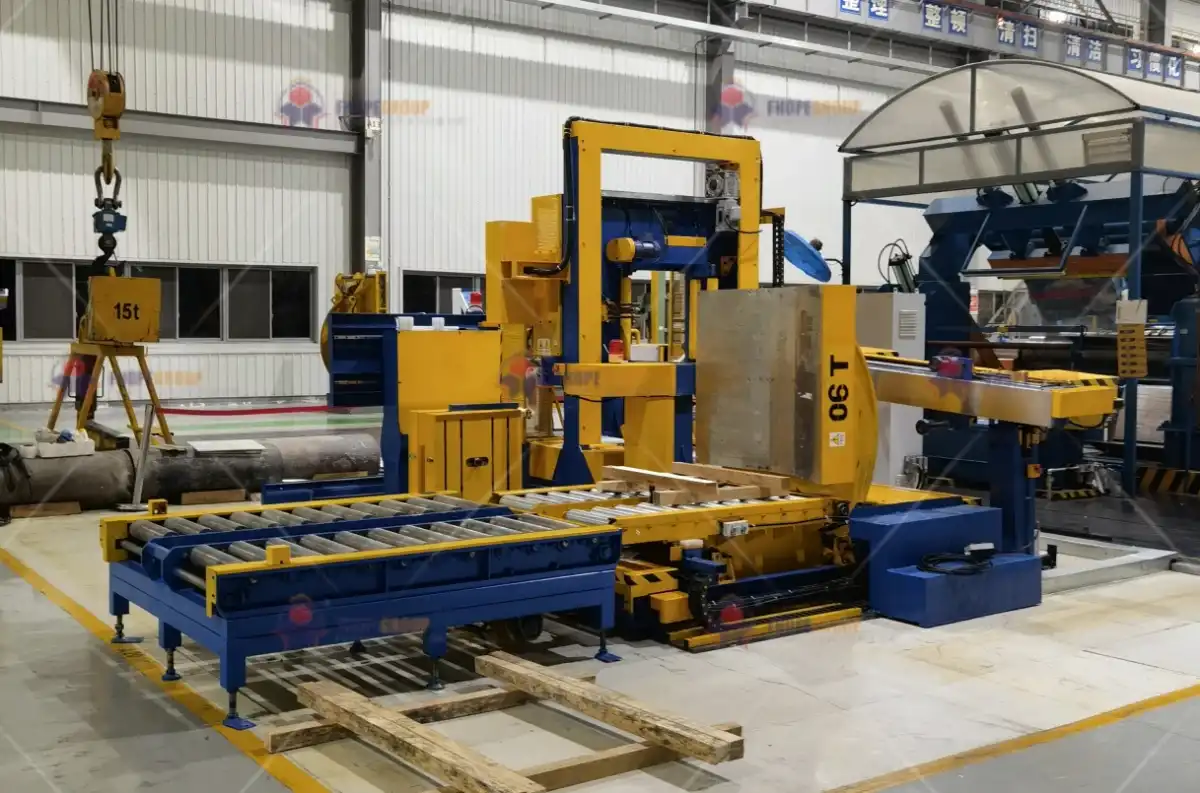
At FHOPEPACK, we see firsthand how smart handling solutions transform operations. Consider a steel plant dealing with heavy coils. Without proper handling, moving these coils from the slitting line to packaging can be a slow, risky, and wasteful process. Manual methods often lead to delays, product damage, and even safety hazards. Ivan Petrov, a production director in Russia, highlighted this exact challenge. He needs systems that can manage hundreds of tons of steel coils daily, ensuring safety and compliance while meeting diverse customer packaging demands. Our solutions aim to resolve these problems directly.
1. Eliminating Unnecessary Movement and Waiting Time ⏱️
Traditional manufacturing often involves materials waiting in queues or being moved multiple times between processes. Handling systems, such as automated conveyors and transfer cars, directly address this by creating a direct, uninterrupted flow. They move heavy steel coils or other products from one station to the next without human intervention. This cuts down on the ‘transportation’ and ‘waiting’ forms of waste (muda) in lean manufacturing. For example, a coil packing line can integrate an automatic up-ender that turns a horizontal coil to a vertical position, then automatically moves it into the wrapping station. This removes manual crane operations and waiting times. It ensures that coils keep moving, minimizing stops and starts that disrupt the rhythm of production. This continuous flow helps achieve a smoother operation and faster output. (lean manufacturing waste reduction)
2. Reducing Inventory and Work-in-Progress (WIP) 📉
Lean manufacturing aims for minimal inventory levels. High inventory ties up capital, requires storage space, and increases the risk of damage or obsolescence. Automated handling systems enable a ‘pull’ system, a core JIT principle. Materials are only moved or processed when the next stage signals a need. For steel coils, this means a strapping machine only receives a coil when the wrapper is ready. Automated storage and retrieval systems (AS/RS) can precisely manage inventory. They deliver coils just-in-time to the packaging line, reducing the need for large buffer stocks. This approach significantly lowers inventory holding costs and frees up valuable factory floor space. Ivan’s challenge of hundreds of tons of daily output requires such precise inventory management. (just-in-time inventory management)
3. Preventing Product Damage and Defects 🛡️
Rough or inconsistent material handling can easily lead to product damage, especially for sensitive products like galvanized or pre-painted steel coils. Each scratch or dent represents waste. Advanced handling systems are designed for gentle and precise movement. They use specialized grippers, non-abrasive conveyor belts, and controlled motion paths to protect products. For instance, an automated coil up-ender and down-ender uses hydraulic precision to rotate heavy coils smoothly, preventing impacts. Our machines at FHOPEPACK often feature soft handling components and precise controls to ensure the integrity of the coil surface. This focus on gentle handling directly supports quality control and prevents costly rework or scrap, addressing Ivan’s need for anti-scratch protection. (quality control automation)
Can automation in handling systems truly accelerate production and delivery?
Manual processes are slow and prone to mistakes. If your production line relies heavily on people for moving and packing, you are likely missing out on speed and consistency. This directly affects your ability to meet tight delivery schedules and keep customers happy. Are your current handling methods holding back your production output and delivery promises?
Yes, automation in handling systems truly accelerates production and delivery by boosting speed, consistency, and reliability. Automated conveyors, robotics, and integrated packing lines move products faster than manual labor. They operate continuously, reduce errors, and ensure consistent packaging quality. This streamlined process minimizes delays, cuts lead times, and supports Just-in-Time delivery, allowing businesses to respond quickly to customer demands.

At FHOPEPACK, we understand that speed without precision is useless. For large steel manufacturers like Ivan’s plant, scaling up production means more than just faster machines. It means a system that works together seamlessly, hour after hour, without human fatigue or inconsistency. Ivan’s target of increasing automation with a full automatic Coil Packing Line is a perfect example of this. He seeks to integrate flipping, wrapping, strapping, and labeling to improve efficiency and consistency. This kind of integration is exactly where automated handling systems shine.
1. Boosting Throughput and Cycle Times 🚀
Automated handling systems work much faster and more consistently than human operators. They do not get tired, do not need breaks, and can perform repetitive tasks with high precision at high speeds. For example, an automatic coil strapping machine can apply multiple straps to a steel coil in a fraction of the time it would take a worker. Integrated conveyor systems ensure that coils move continuously through the packaging process without pauses. This increases the overall throughput of the packaging line significantly. It means more steel coils can be packed and ready for shipment per hour or shift. This is essential for meeting large daily output targets and accelerating the entire production cycle. (automated throughput enhancement)
2. Ensuring Consistent Operations and Uptime 🛠️
One of the biggest advantages of automation is its reliability. Manual operations can suffer from human error, varying skill levels, and fatigue, leading to inconsistent packaging quality or slowdowns. Automated handling systems, like those from FHOPEPACK, are engineered for 24/7 operation with minimal human intervention. They perform tasks with the same precision every time, ensuring consistent film tension, strap placement, and labeling. This reliability minimizes unexpected downtime and maximizes the operational uptime of the entire production line. Continuous operation is critical for Ivan’s two-shift production environment, ensuring that the packaging process does not become a bottleneck. (continuous operation reliability)
3. Enabling Rapid Response to Demand Fluctuations ⚡
Just-in-Time delivery requires the ability to react quickly to changing customer orders and market demands. Automated handling systems provide the flexibility needed for this. With less manual setup and changeover time, these systems can switch between different coil sizes or packaging requirements faster. For instance, a smart coil packing line can automatically adjust for varying coil diameters and weights (1-3 tons) with minimal operator input. This quick adaptability allows manufacturers to produce what is needed, when it is needed, without building up excess inventory. It makes the entire supply chain more agile and responsive, a key competitive advantage for industries like steel manufacturing that face diverse customer specifications. (agile production response)
What role do smart handling solutions play in ensuring product quality and safety?
Poor packaging quality can lead to customer complaints, returns, and even financial penalties. Manual handling of heavy products like steel coils also creates high risks of workplace injuries. Are you struggling to maintain consistent packaging quality while also keeping your workers safe from harm?
Smart handling solutions play a vital role in ensuring both product quality and worker safety. They use precise automation to apply packaging materials consistently, protecting products from damage during transit. For safety, these systems remove workers from hazardous tasks like lifting and maneuvering heavy coils. They minimize manual intervention, reduce accident risks, and contribute to a safer, more compliant work environment.
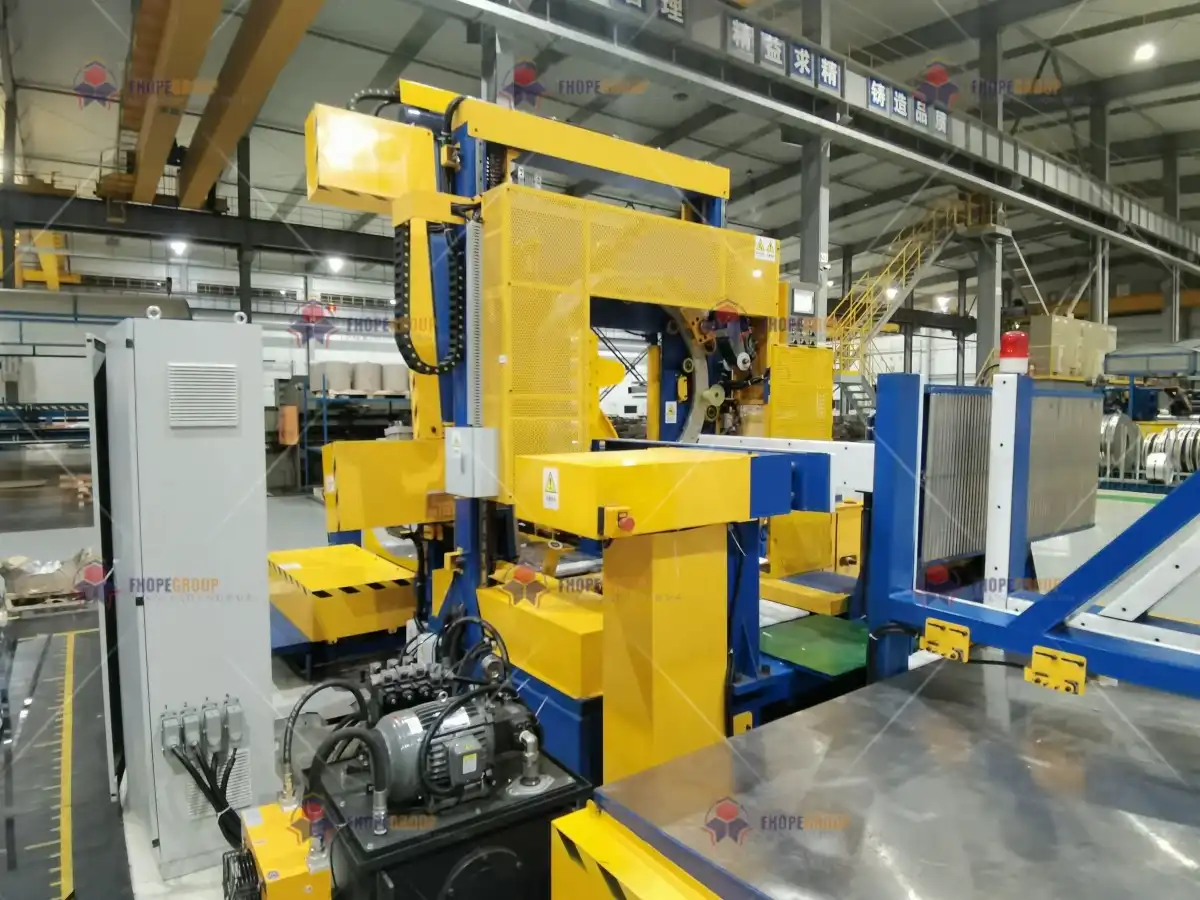
Ivan Petrov’s concerns about inconsistent packaging quality, potential for damage, and worker safety are universal in heavy industry. He specifically mentioned manual operations leading to uneven film tension and loose strapping, along with the risks of manual coil handling. At FHOPEPACK, we design our systems to directly address these points. Our goal is to provide a comprehensive solution that not only packages efficiently but also secures the product’s integrity and protects the people operating the machinery.
1. Achieving Superior and Consistent Packaging Quality ✅
Automated handling systems ensure that every product is packaged to the same high standard. For steel coils, this means consistent strapping tension (PET or steel), uniform stretch film application, and precise placement of protective materials. Manual processes, especially for high-volume items, often result in variations due to human fatigue or differences in technique. For example, an automatic coil wrapping machine applies uniform tension across the entire surface of the coil. This prevents loose packaging that could lead to corrosion, scratching, or unraveling during transport. Smart sensors can even detect and correct issues in real-time. This level of consistency is crucial for meeting strict export requirements, such as CE/ISO certification and robust anti-moisture protection, as required by Ivan’s clients. (consistent packaging standards)
2. Enhancing Workplace Safety and Ergonomics ⛑️
The most significant safety contribution of automated handling systems is removing human operators from dangerous tasks. Lifting, flipping, and maneuvering heavy steel coils manually poses serious risks of crushed limbs, back injuries, and other accidents. Automated coil handling equipment, such as up-enders, down-enders, and transfer cars, performs these operations without direct human contact. The risk of injuries is dramatically reduced. Workers can monitor the process from a safe distance. This also frees them from physically demanding tasks, improving ergonomics and making jobs less strenuous. Reducing labor intensity and potential for injury is a key objective for Ivan, given the high turnover of young workers in high-intensity environments. (worker safety automation)
3. Integrating Quality Control and Traceability 🏷️
Modern handling solutions often integrate with sophisticated quality control systems. This includes automatic weight checks, barcode scanning, and vision systems that inspect packaging for defects. For instance, after strapping and wrapping, an automatic labeling system can apply unique barcodes to each coil. This ensures precise tracking and traceability throughout the supply chain. If an issue arises, you can easily identify the specific coil and its production details. This level of data integration not only helps maintain quality but also ensures compliance with regulatory standards. It gives both the manufacturer and the customer confidence in the product’s integrity and origin, supporting Ivan’s need for strict moisture protection and barcode application for export. (integrated quality traceability)
How do flexible handling systems adapt to diverse product requirements and customization?
In today’s market, customers often demand customized products and specific packaging. If your handling and packaging systems are rigid, changing between different product types or packaging styles can be a slow and complex nightmare. This leads to inefficient changeovers and limits your ability to meet diverse customer needs. Can your current setup handle a wide range of products without major disruptions?
Flexible handling systems adapt to diverse product requirements and customization by offering quick changeovers, adjustable parameters, and modular designs. They can handle varying product dimensions, weights, and packaging specifications with minimal manual intervention. This adaptability allows manufacturers to efficiently switch between different product types—like various steel coils—and apply specific packaging methods. It makes production lines more versatile and responsive to market demands, supporting a lean and customized manufacturing approach.
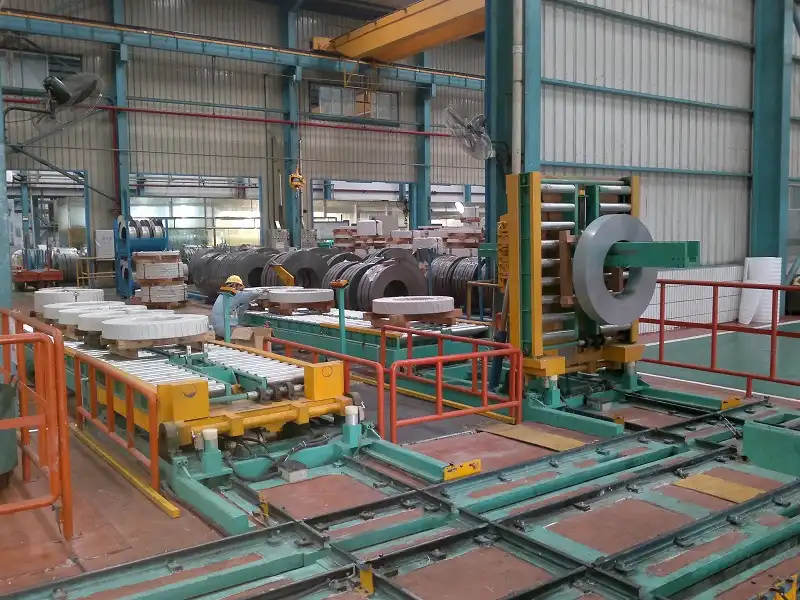
The challenge of product diversity is very real for Ivan Petrov. His steel plant produces cold-rolled, galvanized, and color-coated coils, each with unique packaging needs. Manually switching between these different requirements is time-consuming and inefficient. At FHOPEPACK, we design our handling and packaging lines to be inherently flexible, understanding that the market never stands still. We aim to provide solutions that can grow and change with our clients’ needs, delivering customized packing solutions per requirement.
1. Handling Varied Product Dimensions and Types ↔️
Modern handling systems are built to be versatile. They can automatically adjust to handle a wide range of product sizes and weights. For steel coils, this means a single packing line can process coils ranging from 1 to 3 tons, with varying inner and outer diameters, as Ivan requires. Our machines, and those from other leading providers like SHJLPACK and CNBHPAC, often incorporate adjustable guides, clamping mechanisms, and sensor-based detection systems that identify the coil’s dimensions and adjust operation automatically. This eliminates the need for manual reconfigurations for each different coil size. It means Ivan can efficiently package cold-rolled, galvanized, and color-coated coils on the same line, despite their differing packaging requirements. (variable product handling)
2. Supporting Diverse Packaging Methods and Materials 📦
Customer demands for packaging are becoming more complex. Some clients need PET strapping, others steel strapping, some require extensive anti-moisture film, and others shrink wrap. Flexible handling systems are designed to accommodate these diverse needs. For example, an automated coil packaging line can integrate multiple modules: a strapping unit (configurable for PET or steel), a stretch wrapping machine, and perhaps a VCI paper dispenser for added rust protection. These modules can be activated or bypassed based on the specific packaging recipe for each product. This adaptability allows manufacturers to fulfill specific client requirements, ensuring the right level of protection and compliance for both domestic and export markets, which is vital for Ivan’s business. (customizable packaging solutions)
3. Quick Changeovers and Recipe-Based Operations 🔄
Reducing changeover time is a cornerstone of lean manufacturing. Flexible handling systems minimize the time it takes to switch from one product type or packaging style to another. This is often achieved through programmed “recipes” or settings. Operators can select a product code, and the system automatically adjusts parameters like conveyor speed, strapping tension, or wrapping cycles. This greatly reduces manual effort and potential for error during changeovers. It allows a production line to efficiently process a mixed batch of orders. This capability is critical for optimizing production flow and making the manufacturing process more responsive to customer orders. (efficient changeover automation)
What impact do advanced handling technologies have on reducing operational costs and labor dependency?
High labor costs, worker shortages, and inefficient use of materials can significantly eat into your profits. If your operations rely too much on manual labor, you might be facing rising expenses and struggling to find enough skilled workers. This directly impacts your long-term financial health. Are you looking for ways to cut costs and make your operations less reliant on human hands?
Advanced handling technologies significantly reduce operational costs and labor dependency by automating repetitive and strenuous tasks. They lower labor expenditures, minimize material waste, and improve overall energy efficiency. By replacing manual processes with automated systems, companies can achieve higher output with fewer personnel, leading to substantial savings. This also helps address labor shortages and improves the economic sustainability of manufacturing operations.
The issue of labor dependency and operational costs is a major concern for industrial leaders like Ivan Petrov. He faces challenges like high worker turnover in demanding environments and the need to reduce overall costs while improving efficiency. At FHOPEPACK, we see automation not just as a way to produce more, but as a strategic investment that delivers a strong return by optimizing resources. Our solutions are designed to provide turnkey projects and long-term partnership, including after-sales support and spare parts.
1. Significant Reduction in Labor Costs and Dependency 💰
One of the most immediate impacts of advanced handling technologies is the reduction in direct labor costs. Automated systems can perform tasks like lifting, moving, wrapping, and strapping steel coils without human operators. This means fewer personnel are required on the packaging line. While there’s an initial investment, the long-term savings from reduced wages, benefits, and training often justify it. Furthermore, automation addresses the challenge of labor shortages and high employee turnover, especially in physically demanding roles. By minimizing reliance on manual labor, companies can sustain production levels even when skilled workers are hard to find. This helps to secure the operational continuity of the plant. (labor cost optimization)
2. Lowering Material Waste and Improving Resource Efficiency 🌱
Automated handling and packaging systems are precise. They use packaging materials efficiently, minimizing waste. For example, an automatic stretch wrapping machine applies film with optimal tension and overlap, ensuring maximum protection with minimum material usage. Manual wrapping often leads to inconsistencies, using too much or too little film. Similarly, automated strapping machines apply straps with consistent tension, reducing breakages and wasted material. This precision not only saves on material costs but also contributes to environmental sustainability. For steel coils, protecting the product from rust and scratches means less rework and fewer rejected items, further saving resources. (material efficiency improvement)
3. Enhancing Production Continuity and Predictability ⚙️
Automated handling systems operate with high reliability and predictability. They are less prone to the variability and errors associated with manual work. This leads to more consistent production output and fewer unexpected delays. When a whole line is automated, from coil handling to strapping, wrapping, and labeling, the entire process becomes a continuous flow. This enhanced continuity reduces bottlenecks, improves overall equipment effectiveness (OEE), and makes production scheduling more accurate. Such predictability allows for better planning, easier integration with JIT supply chains, and a more stable production environment, essential for a large steel plant. (production predictability and continuity)
Conclusion
Modern handling systems are vital for lean manufacturing and Just-in-Time delivery. They cut waste, boost efficiency, and improve safety. By automating tasks, businesses can reduce costs, ensure quality, and quickly meet changing demands. At FHOPEPACK, we believe investing in advanced solutions like a comprehensive coil packing line is crucial for staying competitive and building a sustainable future.








