
How do different pallet inverter models reduce dust contamination in high-tech environments?
Imagine your high-tech warehouse, a place where precision and cleanliness are not just good practices but absolute necessities. Now, picture dust, that invisible enemy, settling on your products, contaminating sensitive equipment, or even compromising the integrity of your food or pharmaceutical items. This problem can lead to damaged goods, regulatory fines, and lost customer trust. It is a critical issue that many logistics managers, like my friend Carlos in Spain, face daily. The old ways of handling pallets often stir up this dust, making a bad situation worse.
Different pallet inverter models play a crucial role in reducing dust contamination in high-tech environments by offering enclosed designs, smooth handling mechanisms, and controlled rotation processes that minimize airborne particles. These machines prevent the manual lifting and turning of pallets, which often generates significant dust, and instead, perform the task in a more contained and precise manner, ensuring product integrity and a cleaner operational space. %[Pallet inverter from a Chinese manufacturer]( “Pallet inverter for dust reduction”)
When I first started in the packing machine industry, I saw many warehouses struggle with dust. It was clear that simply moving goods was not enough; how they moved mattered a lot. This is especially true for critical sectors like food processing or electronics. Understanding how various pallet inverter models specifically tackle dust can truly transform your operations. Let’s dive deeper into this challenge.
Understanding the Hidden Threat: Why Dust Matters in High-Tech Logistics?
Dust might seem like a minor nuisance, but in environments requiring strict cleanliness, it becomes a major threat. Are you dealing with sensitive electronics, sterile medical supplies, or perishable food items? Then you know airborne particles can ruin products, slow down processes, and even pose health risks. This problem often leads to higher operational costs and compliance issues.
In high-tech logistics, dust contamination is a critical concern because it directly impacts product quality, operational safety, and regulatory compliance. It can cause equipment malfunction, degrade sensitive materials, introduce allergens in food production, and lead to costly product recalls or rejections. Controlling dust is not just about cleanliness; it is about protecting your entire supply chain.

From my years building packing machine solutions, I have seen first-hand the damage dust can do. For example, in the food and beverage industry, which is close to Carlos’s work, dust can carry allergens or microorganisms. This can lead to serious health risks for consumers. For electronics, dust can cause short circuits and failures. In pharmaceuticals, it compromises sterility. This is why addressing dust is not an option; it is a necessity. Here are some key reasons why dust is a hidden threat:
-
🎯 Product Integrity Compromise:
- Food & Beverage: Dust can introduce foreign particles, cross-contaminants, or allergens. This directly affects food safety and product shelf life. Imagine a batch of premium chocolate needing to be recalled because of dust particles found during inspection. The financial and reputational damage is huge.
- Electronics Manufacturing: Microscopic dust can settle on circuit boards or sensitive components. This causes defects, reduces performance, or leads to complete product failure. Think about a tiny dust speck ruining a high-value chip.
- Pharmaceuticals & Medical Devices: Sterility is paramount. Any dust can contaminate sterile packaging or products, making them unsafe for use. This can have life-or-death consequences.
-
⚙️ Equipment Malfunction & Maintenance Costs:
- Dust accumulates in machinery, including conveyor belts, sensors, and pallet handling systems. This causes friction, overheating, and premature wear and tear.
- Regular cleaning and maintenance schedules become more frequent and intensive. This means higher labor costs and more downtime for critical equipment. A dusty sensor on a pallet inverter, for instance, might cause a jam or an incorrect rotation.
-
⚖️ Regulatory Compliance & Audits:
- Many high-tech industries operate under strict cleanliness and hygiene regulations. For example, ISO 14644 for cleanrooms or HACCP principles for food safety.
- High dust levels can lead to failed audits, fines, and even forced shutdowns. This impacts a company’s ability to operate and deliver products to market. I have seen clients spend millions to fix these compliance issues.
-
👷 Worker Safety & Health:
- Fine dust particles can cause respiratory issues for warehouse staff, leading to sick days and reduced productivity.
- Slippery surfaces created by dust can also increase the risk of accidents. A clean environment is a safer environment for everyone.
Understanding these points makes it clear that investing in solutions that reduce dust, like specific pallet inverter models, is a smart business decision. It protects your product, your people, and your bottom line.
How Do Different Pallet Inverter Designs Naturally Minimize Dust Accumulation?
Not all pallet inverters are created equal, especially when it comes to dust control. Have you ever considered how the very design of a machine can prevent dust from becoming a problem? The way a pallet inverter is built, its core mechanics, can either stir up a storm or keep your environment remarkably clean. Choosing the right design is key.
Different pallet inverter designs naturally minimize dust accumulation through features like enclosed frameworks, smooth contact surfaces, and hydraulic or pneumatic power systems that reduce friction and mechanical debris. For example, models with fully integrated components avoid exposed moving parts that can trap dust, while gentle clamping and rotation mechanisms prevent sudden movements that might dislodge particles from pallets or products.
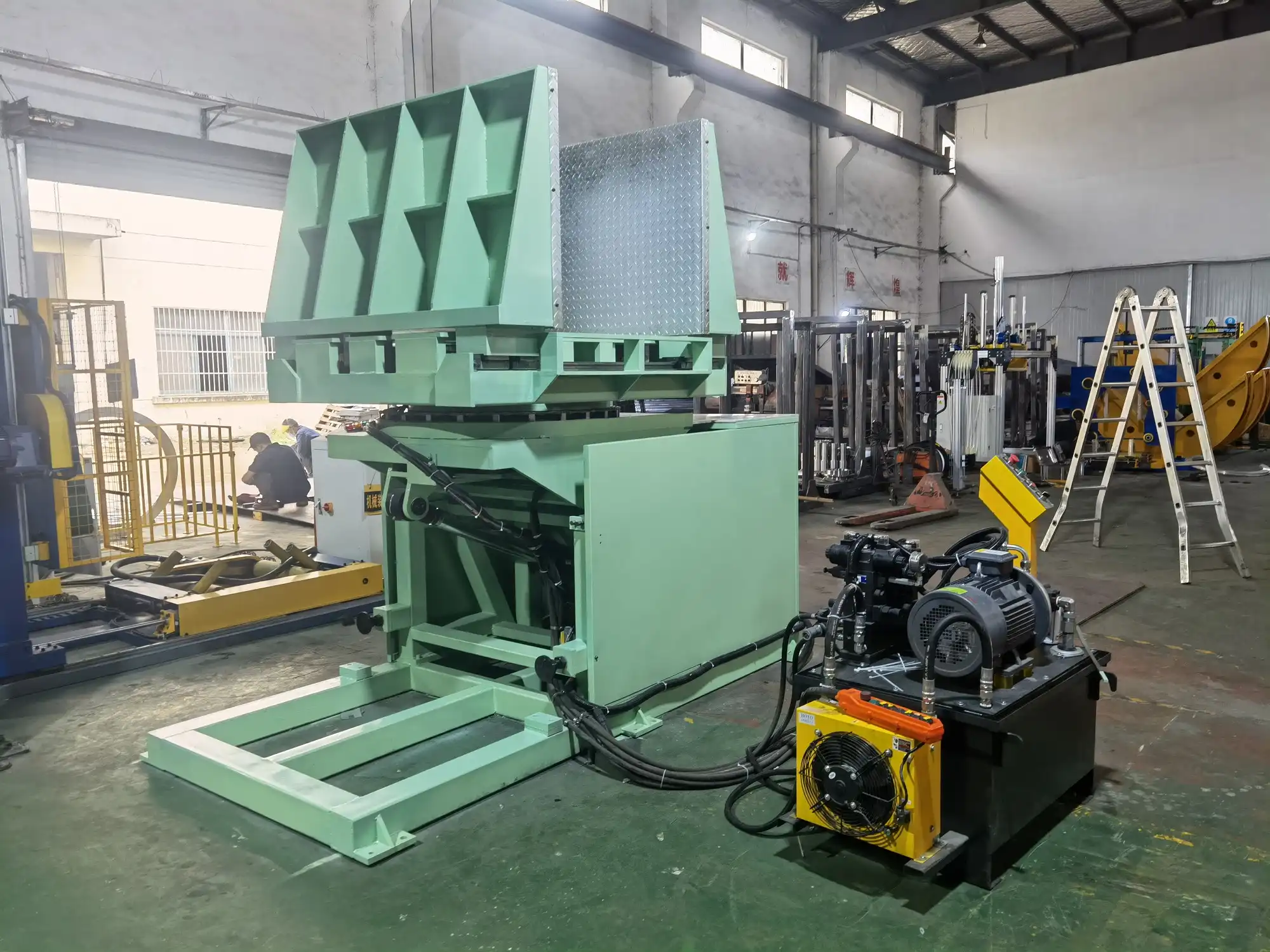
When I help my clients choose a pallet inverter, especially for sensitive operations, we always look at the design. It is not just about moving pallets; it is about how cleanly they do it. From my experience, the construction type greatly impacts dust control. Here are some design elements that make a big difference:
-
🔒 Enclosed and Integrated Designs:
- Benefit: Many modern pallet inverters feature fully enclosed designs. This means motors, chains, and other moving parts are hidden within protective casings. This prevents dust from entering the machine and prevents machine components from generating dust into the environment.
- Example: A “cabinet-style” inverter or a model with protective shrouds around its hydraulics. These designs are a stark contrast to older, open-frame machines that expose gears and lubricants. An enclosed design ensures that any minor wear and tear within the machine is contained. It does not become airborne dust. This is critical for environments where even a small amount of machine-generated dust can be problematic. I have worked on customizing these for specific cleanroom applications.
-
smooth surfaces and materials:
- Benefit: The materials used for contact surfaces, like the clamping plates or turning platforms, play a big role. Smooth, non-porous materials like stainless steel or specific polymers are easier to clean and do not trap dust. They also resist corrosion, which can generate particles over time.
- Example: Pallet inverters designed for food-grade environments often use stainless steel where the pallet or product makes contact. This prevents dust from adhering to surfaces. It also allows for easy wash-downs. This significantly reduces the risk of dust re-entering the air during operation. The smoother the surface, the less likely dust will cling to it and then be knocked off.
-
🔇 Gentle and Controlled Motion:
- Benefit: The mechanism of rotation itself is key. Pallet inverters that use hydraulic or pneumatic systems offer smoother, more controlled movements compared to older, more mechanical-intensive systems. This gentle motion prevents abrupt jolts or vibrations that can dislodge dust particles from the product or pallet.
- Example: A “90-degree tipper” or a “180-degree inverter” with proportional hydraulic controls. These systems allow operators to fine-tune the speed and acceleration of the flip. This ensures the pallet is handled with care. This significantly reduces the “puff” of dust that often accompanies quick, uncontrolled movements. I have helped clients implement these systems where even a slight vibration could affect product quality.
-
🌬️ Integrated Air Purification (Optional):
- Benefit: Some advanced pallet inverters can be integrated with localized air filtration or dust extraction systems. While not part of the core inverter design, their enclosed nature makes such integration more effective.
- Example: A pallet inverter operating inside a controlled environment, connected to a HEPA filtration system. As the inverter operates, any generated dust is immediately captured and filtered out. This creates a zone of ultra-clean air around the inversion process. This is especially useful for very sensitive applications like microchip manufacturing.
By focusing on these design aspects, my clients can select a pallet inverter that actively contributes to a cleaner, safer, and more efficient high-tech environment.
Beyond Design: What Operational Features of Pallet Inverters Prevent Cross-Contamination?
A great design is only half the battle. Once your pallet inverter is up and running, its operational features are what truly determine its effectiveness in preventing cross-contamination. Are you relying on manual labor for pallet changes? This introduces too many variables and risks. The right operational features can turn a good machine into an indispensable tool for hygiene.
Beyond fundamental design, the operational features of modern pallet inverters actively prevent cross-contamination by automating the pallet transfer process, offering adjustable clamping pressures for various loads, and providing options for integrated cleaning cycles. These features eliminate manual handling, reduce human error, and ensure a sterile transition between old and new pallets, safeguarding product purity.
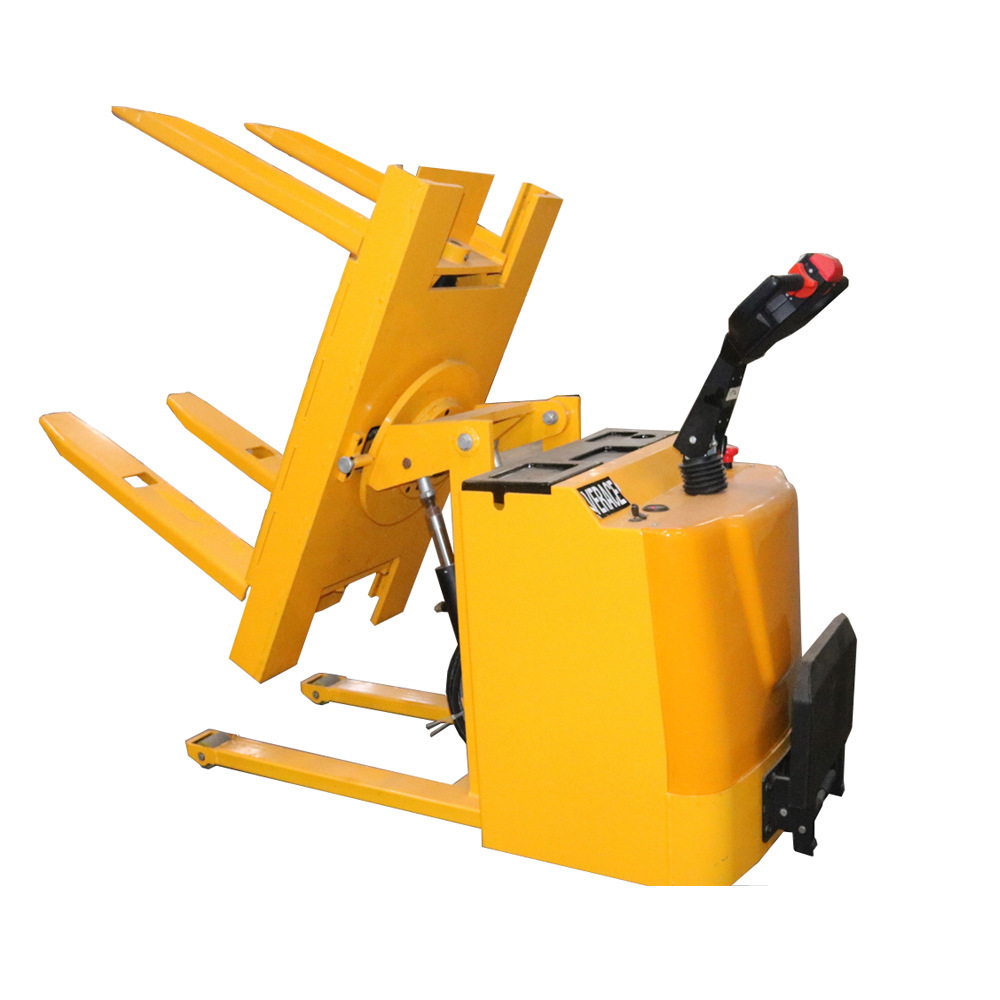
From my years helping factories, I have learned that the “how-to” of operation matters just as much as the “what-it-is.” An inverter might look good on paper, but its real value shows in its daily use, especially for preventing cross-contamination. Carlos, for example, needs systems that keep his food products safe during pallet changes. Here is what I focus on:
-
🤖 Automated Pallet Transfer Systems:
- Benefit: The most significant operational feature is automation. Fully automatic pallet inverters can lift, clamp, invert, and exchange pallets without human intervention. This greatly reduces the chance of human-introduced contamination or dust disturbance.
- How it Works: The machine itself performs the entire sequence. This removes the need for workers to physically handle or clean pallets manually. Manual handling often stirs up dust from the floor or from the pallets themselves. It can also transfer contaminants from hands or clothing to the product. Automation creates a closed loop process. This is a game-changer for high-volume operations like those Carlos manages. I have seen how automating this step has drastically cut down on contamination events for my clients.
-
🗜️ Adjustable Clamping Pressure and Stability:
- Benefit: Different products and pallets require different handling. An inverter with adjustable clamping pressure ensures a firm but gentle grip on the load. This prevents items from shifting or vibrating during the inversion process. Any shifting can dislodge dust or small particles.
- How it Works: Modern inverters allow operators to program specific clamping forces. This matches the weight and fragility of the load. This feature is especially critical for unstable loads, like stacked boxes or fragile containers. It minimizes movement inside the clamped area. This prevents dust that might be sitting on top of items from becoming airborne. It also reduces the risk of product damage, which itself can generate dust from broken packaging.
-
🧼 Integrated Cleaning and Sanitization Cycles:
- Benefit: Some advanced pallet inverters offer automated cleaning features. These can include wash-down capabilities for the machine itself or even air-blowing systems to clean pallets before or after inversion.
- How it Works: For food or pharmaceutical environments, an inverter might be built with wash-down safe components. It can be integrated into a sanitation schedule. This allows for regular cleaning of the machine surfaces. Some models even have internal air nozzles that can blow dust off the new pallet before it connects with the product. This ensures that the replacement pallet itself is not a source of contamination. I have seen this feature significantly improve hygiene scores in client facilities.
-
🚦 Controlled Environment Integration:
- Benefit: For the highest level of dust control, pallet inverters can be integrated into controlled environments. These environments have specific air quality, temperature, and humidity settings.
- How it Works: The inverter acts as a sealed unit within a cleanroom. It transfers products between zones without breaking the cleanroom barrier. This ensures that the inversion process does not introduce outside air or particles. This advanced integration offers the ultimate protection against dust and cross-contamination. It truly represents the cutting edge of logistics hygiene.
These operational features are not just nice-to-haves. They are essential tools for logistics managers who must maintain stringent cleanliness and prevent cross-contamination in their high-tech operations.
Selecting the Right Pallet Inverter: A Strategic Decision for Your Clean Environment?
Choosing the right pallet inverter for a clean environment is more than just buying a machine. It is a strategic decision that impacts your entire operation’s efficiency, safety, and compliance. Are you feeling overwhelmed by the many options out there? It is easy to get lost. You need a partner who understands your unique challenges, not just a seller.
Selecting the ideal pallet inverter for a high-tech, clean environment requires careful consideration of its specific dust reduction features, operational integration capabilities, and the supplier’s commitment to long-term support. It involves evaluating your specific product sensitivity, existing hygiene protocols, and future automation goals to find a machine that not only performs the task but also enhances overall cleanliness and efficiency.

From my own journey, building FHOPEPACK and helping countless clients, I have learned that the best solutions come from understanding the problem deeply. When someone like Carlos comes to us, facing diverse pallet types, labor shortages, and safety risks, while needing to keep his food products clean, I know it is about more than just a machine. It is about a partnership. Here is how I approach this strategic decision:
-
🔍 Assess Your Specific Contamination Risks:
- Action: Before looking at any machine, clearly define what “dust contamination” means for your specific products and environment. Is it particulate matter, allergens, microorganisms, or static dust attraction?
- Consideration: For Carlos, working in food and beverage, allergen control and preventing microbial contamination from dust are paramount. An electronics manufacturer might worry more about sub-micron particles. Understanding this guides the selection towards specific inverter features, like wash-down capabilities or enclosed designs. I always start here with my clients.
-
🔄 Match Inverter Type to Operational Needs and Dust Control:
- Reclining Inverters: These machines tilt the pallet from vertical to horizontal. They often offer a more enclosed or semi-enclosed operation during the tilt. This can be good for initial dust containment. They are often robust and good for heavy loads.
- Freezer Spacer Removers/Pallet Chargers: These are designed for quick pallet changes. They are useful for diverse pallet types (Euro to US, as Carlos needs). Many models are built for integration into automated lines. This minimizes manual dust interference. Their pushing/pulling mechanisms can be smooth, reducing agitation.
- Mobile Pallet Inverters: While offering flexibility, their open nature might require careful consideration for very high-tech environments. However, certain mobile units can be equipped with dust covers or operate within designated clean zones.
- Consideration: Each type has pros and cons for dust. My role is to help you see which one fits your existing workflow best while maximizing dust reduction. We consider your facility layout and throughput.
-
🛠️ Evaluate Features for Enhanced Cleanliness and Efficiency:
- Material Selection: Prioritize stainless steel or other easy-to-clean, non-porous materials for critical contact points. This is not just for appearance but for hygiene.
- Sealed Components: Look for machines with enclosed motors, bearings, and hydraulic systems. This prevents machine-generated dust and protects internal parts from environmental dust.
- Programmable Controls: Advanced controls allow for fine-tuning of speed and pressure. This ensures gentle handling and minimizes dust dislodgment from products.
- Integration with Existing Systems: Can the inverter seamlessly connect with your conveyors, ERP, or air filtration systems? A truly integrated solution will offer better overall dust control.
-
🤝 Choose a Partner, Not Just a Vendor:
- Long-term Support: As Randal Liu, I always tell my clients that after-sales support is crucial. You need a supplier who offers maintenance, spare parts, and troubleshooting. A reliable partner ensures your machine continues to operate cleanly and efficiently for years.
- Customization: Every facility is unique. A good partner will be able to customize solutions to your specific challenges, like handling both Euro and US pallets with a high degree of hygiene. This avoids a “one-size-fits-all” approach.
Making this strategic decision carefully will not only help you manage dust but also improve your overall operational excellence, just as it has for many of my clients.
My Insights: Building a Dust-Free Future with FHOPEPACK Pallet Solutions?
After years in the packing machine industry, from an employee to owning my own factory, I have seen the massive impact the right solutions can have. I built FHOPEPACK on the idea of sharing knowledge and solving real-world problems. For high-tech environments, dust is a problem we cannot ignore. My insights are about more than just machines; they are about smarter ways to operate.
My core insight is that achieving a dust-free future in high-tech logistics demands a holistic approach, combining intelligently designed pallet inverter technology with operational excellence and a committed long-term partnership. FHOPEPACK focuses on providing solutions that are not just reliable and efficient but are specifically engineered to integrate seamlessly into sensitive environments, ensuring product purity, worker safety, and sustained regulatory compliance.
My journey has taught me that true success comes from understanding the details and sharing that understanding. When it comes to dust contamination in critical environments, it is about foresight and precision. I’ve personally been involved in projects where a small design change in a pallet handling system made a huge difference in environmental cleanliness. For Carlos, dealing with thousands of pallets daily for multinational food and beverage, this level of detail is paramount.
Here are my personal insights on building a dust-free future with FHOPEPACK’s approach:
-
💡 Proactive Problem Solving, Not Just Reactive Fixes:
- Instead of just reacting to dust problems, we at FHOPEPACK believe in proactive design. This means anticipating where dust can accumulate or be generated and designing our pallet inverters to prevent it.
- This includes features like sealed bearings, smooth surfaces, and controlled motion from the start. It is about preventing the problem before it even begins, saving you costly clean-ups and potential product losses. I always ask my engineers, “How can we make this even cleaner?”
-
🌍 Understanding Global Standards and Local Needs:
- Carlos’s challenge with Euro and US pallets needing frequent changes highlights a global reality. Dust control also has global and local nuances. Different regions have different hygiene standards.
- FHOPEPACK prides itself on designing pallet inverters that can handle diverse pallet specifications. We also ensure our machines meet international hygiene and safety standards. This flexibility is key to serving multinational clients effectively. This perspective comes from seeing so many varied factory floors across the globe.
-
🤝 Partnership Beyond the Sale:
- For me, selling a machine is just the beginning of a relationship. True partnership means being there for the long haul. It means understanding your evolving needs, offering maintenance advice, and even helping you upgrade when your operational requirements change.
- A clean environment needs consistent performance. This requires reliable service and support. I started FHOPEPACK to be that reliable partner, sharing my expertise to help your business grow, just as my early successes helped me. We are dedicated to ensuring your pallet inverter keeps your operations dust-free and efficient, day after day.
-
📈 Investing in Continuous Innovation:
- The world of high-tech logistics is always changing. Dust control methods also evolve. We continuously invest in research and development to improve our pallet inverter designs.
- This includes exploring new materials, more efficient filtration systems, and smarter automation features. Our goal is to stay ahead of the curve, ensuring our solutions always offer the best possible protection against contamination. This is how we master packing machines, and this is how we help you master your logistics.
These insights reflect my personal commitment and FHOPEPACK’s mission: to not just provide equipment, but to empower businesses with the knowledge and tools they need to achieve excellence in even the most demanding environments.
Conclusion
Tackling dust contamination in high-tech logistics is vital for product integrity, safety, and compliance. Different pallet inverter models, through their design and operational features, are engineered to minimize airborne particles and prevent cross-contamination. Choosing the right solution involves strategic assessment and a partnership with a provider focused on proactive cleanliness, just as we do at FHOPEPACK.








