
How Can an MDF Horizontal Packing Line Reduce Labor Costs and Forklift Operations?
Do you ever feel the pressure of managing a busy factory floor, seeing manual packing processes chew up precious time and resources? For factory managers like Michael Chen in Mexico, the struggle is real. Slow, manual packing of heavy items like steel coils or wire bundles not only slows down your whole production line but also costs a fortune in labor and creates constant safety risks. This inefficiency isn’t just a minor annoyance; it’s a significant drain on your profits and a headache for your team.
A horizontal packing line directly addresses these core challenges by automating the entire wrapping process. This means a sharp reduction in the number of workers needed for packing, freeing up valuable human capital for other tasks. Simultaneously, it greatly minimizes the reliance on forklifts for moving items during wrapping, leading to a safer, more streamlined, and ultimately more cost-effective operation.

As someone who built a packing machine factory from the ground up, I understand these pains deeply. I’ve seen firsthand how manual processes can hold back even the most ambitious businesses. Let’s dig deeper into how the right horizontal packing solution can transform your operations, just as it has for many of my clients, helping them achieve greater efficiency and safer workplaces.
How Does Automation Slash Labor Costs in Packing Operations?
Are your current packing methods making your balance sheet wince? Many factories, especially those dealing with large, heavy products like metal coils or lumber, rely on teams of workers to manually wrap items. This approach is not only slow but also incredibly expensive. Each person on the packing line represents a significant ongoing cost, including wages, benefits, and potential overtime, impacting your overall operational expenses.
Implementing an automated horizontal packing line drastically cuts down on direct labor expenses by replacing multiple manual roles with a single machine operator or even fully integrated systems. This shift reallocates human resources from repetitive, physically demanding tasks to more strategic, value-added activities, directly lowering your payroll overheads and boosting overall productivity.
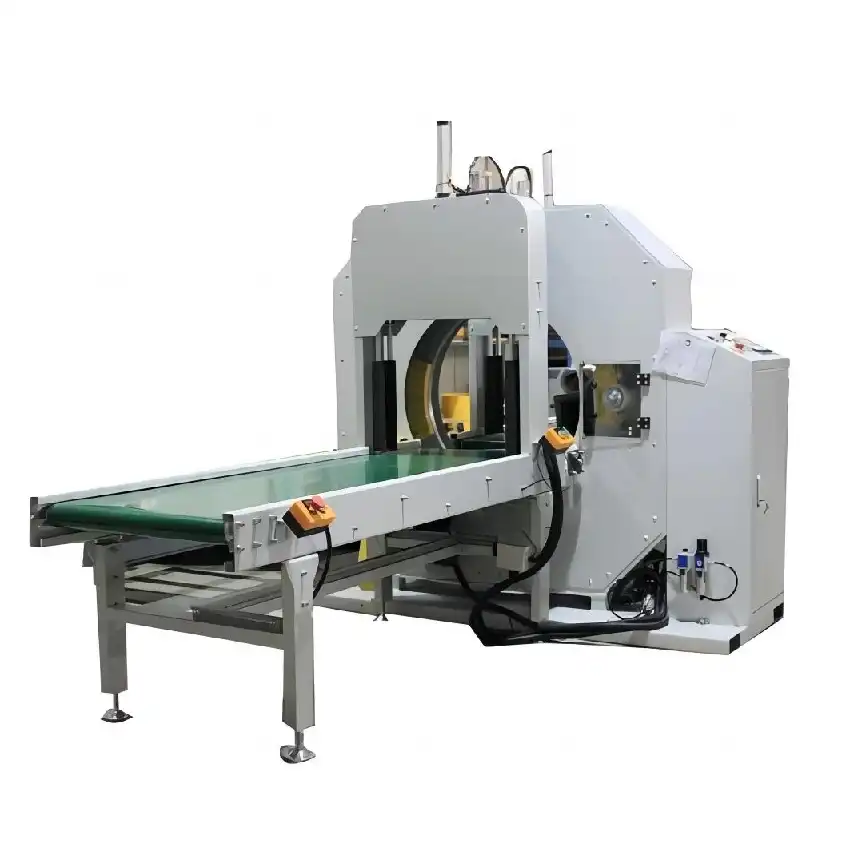
Let’s break down the specific ways an automated horizontal packing line, like those we design at FHOPEPACK, achieves these cost reductions and efficiency gains. This isn’t just about saving a few dollars; it’s about fundamentally reshaping your operational expenditure.
💰 Direct Labor Cost Savings
Manual packing requires several hands. Workers might be needed to:
- Position the product for wrapping.
- Apply multiple layers of film by hand.
- Cut and secure the film.
- Inspect the final package.
Each of these steps adds to labor time. With an automated system, a single operator can oversee the machine, often needing only to load the product onto a conveyor or activate the system. The machine does the heavy lifting and the wrapping, consistently and quickly.
| Consider this example: | Task | Manual Process (Workers) | Automated Process (Workers) | Savings Potential |
|---|---|---|---|---|
| Product Loading | 1-2 | 1 (Machine setup) | 50-100% | |
| Wrapping | 2-3 | 0 (Machine handles) | 100% | |
| Film Management | 1 | 0 (Automatic feed) | 100% | |
| Final Securing | 1 | 0 (Automatic cut/seal) | 100% | |
| Total Workers | 5-7 | 1 | 80-86% |
This table illustrates how a factory in a region like Mexico, currently using multiple hands for packing, can consolidate roles. This means fewer salaries to pay out for this specific function each month. (cost reduction through automation)
📈 Increased Throughput with Fewer People
Manual packing is inherently limited by human speed and endurance. An automated horizontal packing machine operates at a consistent, high speed, wrapping products much faster than any human team can. This increased throughput means you can process more product in less time with fewer people.
- Faster Cycle Times: Machines wrap coils or bundles in seconds or minutes, not tens of minutes.
- Consistent Quality: Automated systems ensure uniform wrapping, reducing rework time.
- Reduced Overtime: With faster operations during regular hours, the need for costly overtime pay decreases significantly.
For instance, a factory struggling with a packing bottleneck can now process twice the volume without adding more staff. This directly translates to higher production capacity and faster order fulfillment, making your clients happier. (packing line efficiency improvements)
👨🏭 Skill Reallocation and Employee Satisfaction
When you automate repetitive, physically demanding tasks, you can reallocate your skilled workforce to more complex, engaging roles that add greater value to your company.
- Upskilling Opportunities: Workers can be trained to operate and maintain the new machinery, learning new skills.
- Reduced Turnover: Eliminating strenuous manual labor can improve employee satisfaction and reduce injuries, leading to lower employee turnover rates.
- Focus on Core Competencies: Your team can focus on areas like quality control, process improvement, or new product development.
This strategic reallocation of labor not only cuts costs but also fosters a more engaged and satisfied workforce, a critical factor for long-term success. (workforce optimization in manufacturing)
Can a Horizontal Wrapping Machine Truly Boost Safety and Reduce Product Damage?
Are you constantly worried about workplace accidents or damaged products leaving your factory floor? In factories that handle heavy, bulky items, the risks are always high. Manual handling of large steel coils, wire bundles, or other manufactured goods can lead to severe back injuries, crushed limbs, or other serious accidents for your employees. Beyond human cost, product damage during internal transport or packing can result in costly reworks, customer complaints, and a hit to your brand reputation.
A horizontal wrapping machine significantly enhances workplace safety by automating the handling and wrapping of heavy materials, thereby removing workers from hazardous situations. It also drastically reduces product damage through consistent, secure wrapping that protects goods from impacts and environmental factors during storage and transit.
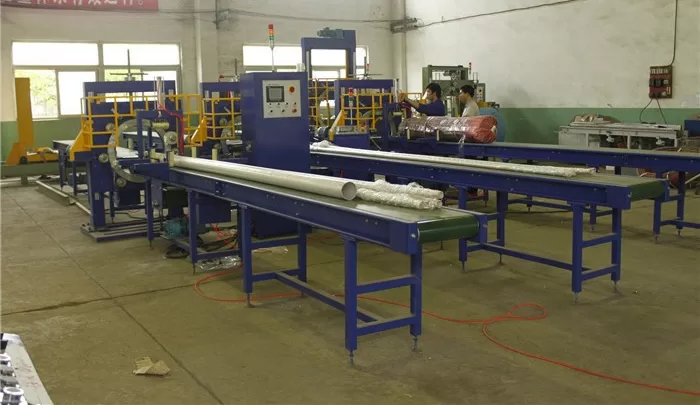
I’ve seen too many instances where a factory’s growth was hampered by a fear of accidents or the financial burden of damaged goods. This is not just theoretical. Michael, as a factory manager, knows that even minor incidents can lead to high insurance costs and lost production time. Let’s explore how these machines provide a dual benefit of protection – for your people and your products.
🛡️ Eliminating Manual Handling Risks
The most direct way a horizontal wrapping machine improves safety is by taking the human element out of hazardous lifting and turning.
- Reduced Strain Injuries: Workers no longer need to manually lift, rotate, or stabilize heavy products for wrapping. The machine handles the product safely on a conveyor or turntable.
- Minimized Crushing Hazards: Automated systems are designed with safety interlocks and controlled movements, drastically lowering the risk of products falling or shifting unexpectedly, which could trap or crush workers.
- Less Forklift Dependence: By integrating the wrapping process directly into the production line, products often move from the production exit to the wrapping station without needing repeated forklift transfers, reducing forklift traffic and associated collision risks.
This means a safer environment for your team, lower rates of worker’s compensation claims, and a more positive working atmosphere. (industrial safety improvements)
📦 Superior Product Protection
Product damage isn’t just an inconvenience; it’s a direct hit to your bottom line. An automated horizontal wrapper provides consistent, tight, and uniform wrapping that manually applied film often cannot match.
- Edge Protection: For items like steel coils or panels, the edges are highly vulnerable. The machine applies film precisely, often with overlapping layers, providing robust protection against scuffs, dents, and corrosion during internal transport and shipping.
- Consistent Tension: Manual wrapping can be inconsistent, with some areas too loose and others too tight. Automated systems maintain optimal film tension, ensuring every part of the product is securely protected without being overstressed.
- Environmental Barrier: The tightly wrapped film creates a barrier against dust, moisture, and other environmental contaminants, crucial for maintaining product quality, especially for sensitive materials like polished metals.
Think about the number of customer complaints you can avoid and the goodwill you can build by consistently delivering perfectly packaged products. This also reduces material waste from damaged goods and the cost of reprocessing. (packaging quality improvement)
📊 Measurable Impact on Operations
The benefits of improved safety and reduced damage are not just qualitative; they have a significant quantitative impact.
- Lower Insurance Premiums: Fewer workplace accidents can lead to reduced insurance premiums over time.
- Increased Productivity: Fewer interruptions due to accidents or damaged goods mean a smoother production flow.
- Enhanced Reputation: Delivering undamaged products builds trust with clients, potentially leading to repeat business and positive referrals.
Investing in a horizontal wrapping machine is an investment in your people and your product integrity, creating a ripple effect of positive outcomes throughout your factory. (ROI in automated packaging)
What is the Real ROI of Investing in an Automated Packing Line for Your Factory?
Are you, like Michael Chen in Mexico, a factory manager who needs to see clear returns on every investment? The idea of an automated packing line sounds great, but the upfront cost can make anyone pause. It’s crucial to look beyond the initial price tag and understand the long-term financial benefits. Many businesses hesitate, sticking with manual methods, unaware of the hidden costs that erode their profits daily. They wonder if the investment truly pays off.
The real return on investment (ROI) of an automated horizontal packing line comes from significant, measurable savings across multiple operational facets: reduced labor costs, minimized product damage, increased throughput, and improved workplace safety. These combined benefits lead to a rapid payback period, often within 1-3 years, making it a financially sound strategic decision for any forward-thinking factory.

From my experience, helping numerous clients set up their packing lines, I can tell you that the ROI for a robust, reliable machine from a company like FHOPEPACK is often far quicker and more substantial than many initially imagine. Let’s break down how you can calculate and appreciate this return.
📈 Calculating ROI: Key Components
To calculate the ROI, we need to consider both the investment cost and the annual savings.
Investment Cost:
- Machine Purchase Price (e.g., FHOPEPACK horizontal wrapper)
- Installation Costs
- Training (for operators and maintenance)
- Ancillary Equipment (e.g., conveyors if not already in place)
Annual Savings (The “Return”):
- Labor Cost Savings:
- Number of workers replaced or reallocated.
- Average hourly wage + benefits per worker.
- Example: Replacing 4 workers, each earning $15/hour (including benefits), for 2000 hours/year = 4 $15 2000 = $120,000 annual savings.
- Product Damage Reduction:
- Average cost of damaged product (material + rework).
- Estimated reduction percentage (e.g., 50% fewer damaged items).
- Example: If product damage costs $30,000 annually, and automation cuts it by 70%, that’s $21,000 saved.
- Increased Throughput/Production Capacity:
- Value of additional products processed per year.
- Example: If automation allows processing an extra 100 units/day, and each unit adds $100 to profit margin = 100 $100 250 working days = $2,500,000 in potential increased revenue/profit. This can be calculated as the profit from incremental sales, not just revenue.
- Reduced Material Costs (Film Optimization):
- Automated machines use film more efficiently, often stretching it further and applying it more consistently than manual methods.
- Example: If film costs $10,000 annually, and the machine reduces consumption by 15%, that’s $1,500 saved.
- Lower Safety-Related Costs:
- Reduced worker’s compensation claims, medical expenses, and potential fines.
- Example: Preventing just one serious accident can save tens of thousands in direct and indirect costs.
ROI Formula:
ROI = (Total Annual Savings - Investment Cost) / Investment Cost * 100% (for percentage)
Payback Period = Investment Cost / Total Annual Savings
🎯 Long-Term Benefits Beyond Direct Savings
The ROI extends beyond purely financial metrics.
- Enhanced Customer Satisfaction: Consistent, damage-free packaging leads to happier customers and stronger business relationships.
- Improved Brand Image: Professional packaging reflects positively on your company’s commitment to quality.
- Competitive Advantage: Faster, more efficient operations allow you to outpace competitors in delivery times and cost structures.
- Workforce Morale: A safer, more automated environment improves employee satisfaction and retention.
When considering a partner like FHOPEPACK, we don’t just sell machines; we offer solutions that drive tangible financial improvements and operational excellence. The investment in a high-quality horizontal packing line is an investment in your factory’s future profitability and sustainability. (metal coil packing ROI, automated packaging benefits)
My Insights: Partnering for Success in Packing Automation
As an engineer who started on the factory floor and then built my own successful packing machine factory, I’ve seen every challenge a factory manager like Michael Chen faces. I achieved financial independence through the packing machine industry, specifically with coil and steel wire packing. My journey taught me that true success isn’t just about selling a machine; it’s about understanding the deep-rooted problems a client has and providing a solution that genuinely helps them grow. That’s why FHOPEPACK exists: to share knowledge and provide robust, reliable solutions.
My biggest insight is this: the right packing automation isn’t just a purchase; it’s a partnership. You need a supplier who doesn’t just deliver equipment but also understands your specific production bottlenecks, safety concerns, and efficiency goals. This partnership ensures that your investment in an automated horizontal packing line truly resolves existing issues and propels your business forward, guaranteeing a clear return on your investment.
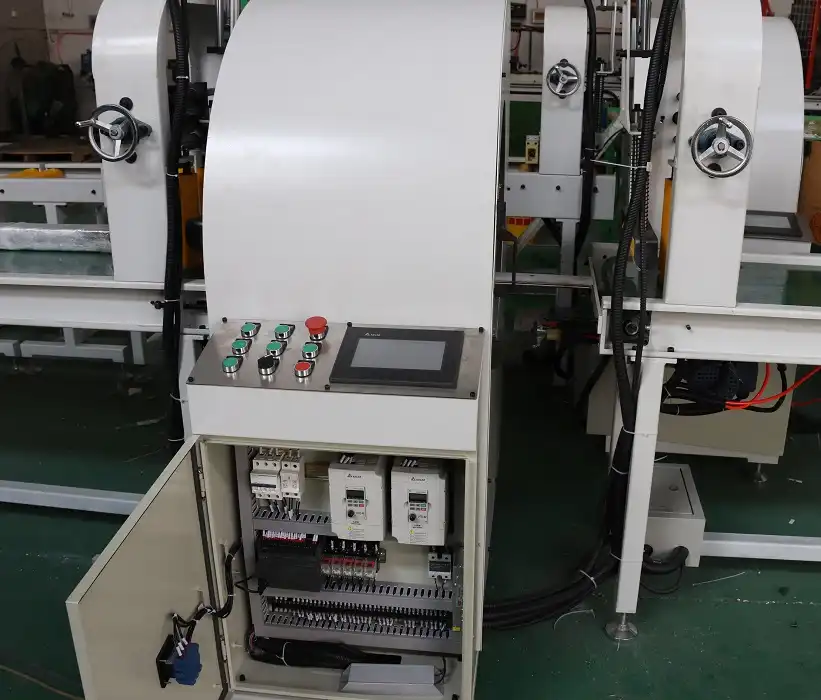
I’ve walked in your shoes, Michael. I understand the pressure to increase output, control costs, and maintain safety standards. Many suppliers focus only on the sale. But at FHOPEPACK, our commitment goes deeper. We want to be your trusted advisor, leveraging our real-world experience to ensure your success.
🤝 The FHOPEPACK Partnership Approach
When you work with FHOPEPACK, you’re not just getting a machine; you’re gaining a partner who understands your challenges.
- Deep Industry Knowledge: My team and I have extensive experience in the coil packing and steel wire packing industries. We know the nuances of handling heavy, challenging products. This knowledge allows us to recommend tailored solutions, not just generic machines.
- Problem-Solving Focus: We don’t just offer standard models. We analyze your factory’s layout, current processes, and specific pain points. Are you losing money from damaged coil edges? Is your labor force constantly getting injured? We aim to design or recommend systems that directly address these issues.
- Reliability and After-Sales Support: I understand your distrust of past suppliers who disappeared after the sale. At FHOPEPACK, and through our sister brand SHJLPACK, we prioritize reliable machines and robust after-sales service. We believe in building long-term relationships, ensuring your equipment operates smoothly for years to come. This includes technical support, spare parts, and troubleshooting.
This commitment to understanding and supporting our clients is what sets us apart and ensures you get the maximum value from your investment. (trusted packing machine supplier)
⚙️ Tailored Solutions for Your Factory
Every factory is unique. The “one-size-fits-all” approach simply does not work, especially in a heavy manufacturing environment like yours.
- Customization Options: Whether you need a horizontal orbital stretch wrapper for steel coils or a specialized system for wire bundles, we can customize machines to fit your product dimensions, desired wrapping speeds, and integration requirements.
- Future-Proofing Your Investment: We look at your current needs but also consider your future growth. Our solutions are designed to be scalable and adaptable, ensuring your packing line can evolve with your business.
- Proven Track Record: My journey from an employee to a factory owner, and helping many clients grow, is a testament to the practical, effective solutions FHOPEPACK offers. We’ve seen what works and what doesn’t in real-world factory settings.
This is not just about selling equipment. It’s about empowering your business, just as the packing industry empowered me. I want to help you achieve your goals of higher automation, improved safety, and increased profitability in your factory. (customized packing solutions, industrial packing expert)
Conclusion
An MDF horizontal packing line significantly cuts labor costs and forklift operations by automating the wrapping process. It boosts efficiency, enhances safety by reducing manual handling, minimizes product damage through consistent wrapping, and offers a strong return on investment. Partnering with experts like FHOPEPACK ensures you receive tailored, reliable solutions, especially for critical needs like an orbital stretch wrapper, for sustainable growth.








