
How Can a Pallet Changer Save Labor Costs in Daily Operations?
Rising labor costs and the constant pressure to optimize warehouse efficiency are challenges I know all too well from my time in the packing machine industry. Many businesses, especially those dealing with high-volume international logistics like the food and beverage sector, face this daily struggle. The manual handling of pallets, particularly when switching between different standards like Euro and US pallets, can be a massive drain on resources. It is not just about wages; it is about efficiency, safety, and your bottom line.
A pallet changer saves labor costs in daily operations by automating the labor-intensive process of transferring goods from one pallet type to another, significantly reducing the need for manual handling, minimizing worker hours, decreasing safety risks, and speeding up warehouse throughput. This automation frees up your team members for higher-value tasks, ensures consistent quality, and helps you meet demanding client schedules without incurring excessive overtime or hiring more staff.

I have seen firsthand how these challenges impact businesses. My journey, from an employee on the factory floor to owning my own successful packing machine factory, has taught me that smart automation is key to growth and financial independence. Let us dive deeper into how integrating a pallet changer can transform your operations and unlock significant labor cost savings.
Manual Pallet Handling: A Hidden Drain on Your Budget?
Many warehouse managers, perhaps like yourself, might think manual pallet handling is just “the way things are done.” But I have observed that this conventional approach often conceals significant, ongoing costs that erode your profit margins daily. These costs go far beyond just the hourly wages of your team. It is a persistent leak in your operational budget.
Manual pallet handling, involving workers physically shifting goods between pallets, is a hidden drain on budgets due to high direct labor expenses, slow processing times, increased risk of product damage, and frequent safety incidents leading to compensation costs and operational disruptions. This method often requires multiple staff members and specialized manual equipment, pushing up both visible and invisible costs.
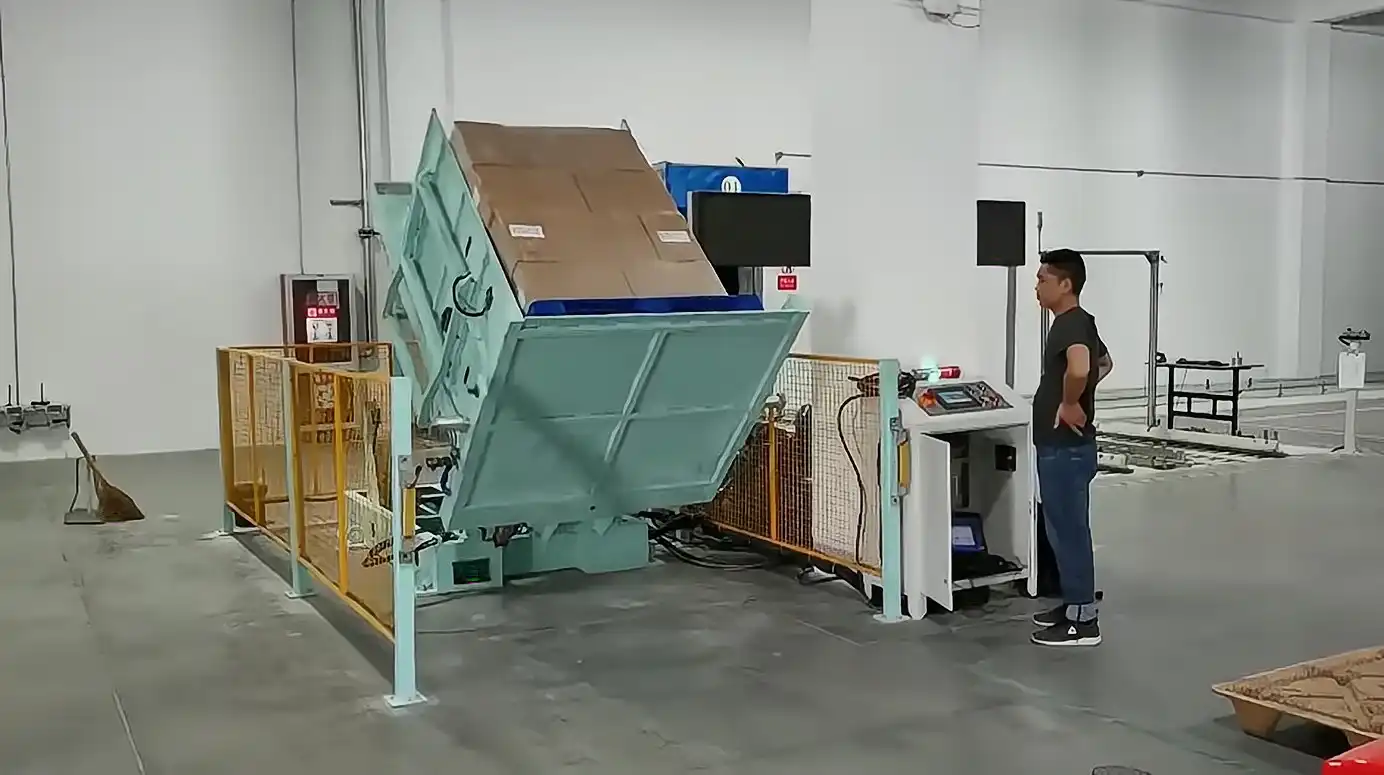
From my experience, understanding where these hidden costs truly lie is the first step toward finding a more efficient and profitable solution. The reliance on human effort for such repetitive and strenuous tasks introduces many inefficiencies that compound over time.
1. The Real Cost of Direct Labor for Pallet Transfers
Think about your current payroll. How many team members are dedicated to shifting goods from one type of pallet to another? This includes their hourly wages, overtime pay during peak seasons, and the cost of benefits. In many European warehouses, these labor costs are steadily increasing. Every minute a worker spends physically moving products or wrestling with misaligned pallets adds to this expense. When you multiply this by thousands of pallets each day, the numbers become substantial. We are talking about ongoing, direct expenditures that could be significantly reduced. (warehouse labor costs, manual pallet transfer expenses)
2. Inefficiency and Bottlenecks in Your Workflow
Manual pallet changes are inherently slow. A team might take several minutes to safely transfer goods from one pallet to another, especially with delicate or unstable loads. This time adds up quickly. Such delays create bottlenecks in your receiving, storage, and dispatch areas. Goods sit waiting, forklifts queue up, and your entire operation slows down. This inefficiency directly translates to missed deadlines and increased operational hours. It prevents your warehouse from achieving its maximum throughput. (slow pallet switching, warehouse operational delays)
3. High Error Rates and Costly Rework
Humans make mistakes. It is a simple fact. During manual pallet transfers, there is always a risk of misplacing items, dropping products, or loading them onto the wrong type of pallet. Each error can lead to damaged goods, requiring repacking or even disposal. This results in product loss, rework, and additional labor. Imagine the impact if a high-value shipment is damaged due to a manual error. The financial repercussions can be significant. This also affects customer satisfaction and your reputation. (pallet handling errors, goods damage during transfer)
4. Significant Safety Risks and Related Expenses
Manually flipping heavy pallets or transferring goods by hand is dangerous. Workers are at risk of strains, sprains, crushed limbs, and even more serious accidents. These incidents lead to workers’ compensation claims, increased insurance premiums, and lost workdays. Beyond the financial impact, there is the human cost of injury. A single serious accident can disrupt operations and create a negative work environment. Prioritizing safety is not just good practice; it is also a smart financial decision. (worker injury risks, warehouse safety compliance)
5. Increased Wear and Tear on Equipment
When your team struggles with manual pallet changes, they might use forklifts or other lifting equipment in ways they were not designed for. This can lead to excessive wear and tear or even damage. For example, using a forklift to forcefully dislodge a stubborn pallet can cause costly repairs. The constant stress on equipment from inefficient manual processes shortens its lifespan. This means more frequent maintenance and replacement expenses, further adding to your operating budget. (forklift operational costs, manual equipment lifespan)
Streamlining Operations: How Pallet Changers Directly Cut Labor Hours?
The core promise of a pallet changer is clear: it replaces strenuous, time-consuming manual work with efficient, automated processes. As someone who has built a career around improving packing machine efficiency, I see this as a game-changer for any warehouse. It is not just about making work easier; it is about making it fundamentally more productive.
Pallet changers directly cut labor hours by automating the entire process of transferring goods between pallets, drastically reducing the number of workers needed for this task, speeding up each transfer cycle, and allowing existing staff to focus on more complex, value-adding activities. This mechanical solution handles tasks previously requiring multiple people, leading to immediate and measurable reductions in payroll expenses related to pallet handling.

The transition from manual to automated pallet handling often surprises businesses with how quickly they see returns. It is a powerful way to make your warehouse operations leaner and more competitive.
1. Drastically Reduced Personnel Requirement
Imagine needing just one operator to manage what previously took two, three, or even four people. A pallet changer automates the physical heavy lifting and precise manipulation required for pallet transfers. This means fewer hands are needed for the same volume of work. For example, a single FHOPEPACK pallet changer can often complete a transfer cycle in less than a minute. This directly translates to significant savings on wages, benefits, and overtime. Your team can then focus on supervising the process or handling other tasks. (automated pallet handling, labor reduction in logistics)
2. Significantly Faster Cycle Times
Manual pallet changes are slow and inconsistent. A pallet changer, however, performs the task with mechanical precision and speed. It can execute transfers much faster than human workers, regardless of the load’s weight or fragility. This acceleration reduces the overall time spent on pallet handling within your workflow. For businesses dealing with thousands of pallets daily, like a major food and beverage distributor, these saved minutes per pallet add up to hours, even days, of reclaimed operational time. This directly impacts your ability to process orders faster. (efficient pallet exchange, quick pallet transfer solutions)
3. Minimized Manual Intervention
One of the biggest benefits is the reduction in physical interaction with the goods. With a pallet changer, workers do not need to manually lift, turn, or slide heavy items. The machine handles the entire transfer. This drastically reduces the need for constant human supervision and direct labor during the actual changing process. It moves your team away from physically demanding tasks and towards more oversight and quality control roles. This also improves their job satisfaction and prevents fatigue-related errors. (hands-free pallet changing, automated loading dock operations)
4. Optimized and Smoother Workflow
When pallet changes are faster and more consistent, the entire warehouse workflow becomes smoother. Bottlenecks disappear, and goods move more freely through your facility. This optimization reduces idle time for forklifts and other handling equipment, making your entire logistics chain more efficient. You gain better control over your inventory movement. This predictability in operations allows for more accurate scheduling and resource allocation. It creates a more fluid and less stressful environment for your entire team. (streamlined warehouse processes, logistics workflow improvement)
5. Reallocation of Valuable Resources
The labor saved by implementing a pallet changer does not just vanish. It allows you to reallocate your existing workforce to higher-value activities. Instead of spending time on strenuous pallet transfers, your team can focus on order picking, inventory management, quality checks, or other tasks that directly contribute to business growth. This maximizes the return on your human capital. It empowers your employees to take on more skilled roles, enhancing their development and overall contribution to the company. (repurposing warehouse staff, value-added logistics activities)
Beyond Wages: How Pallet Changers Reduce Safety Risks and Costly Errors?
When I started FHOPEPACK, my vision was always about more than just building machines. It was about solving real-world problems and creating safer, more productive environments. The true cost of manual pallet handling extends far beyond just wages. It includes the often-overlooked expenses associated with safety risks and operational errors. These “hidden costs” can be surprisingly high and impact your business in ways you might not immediately realize.
Pallet changers significantly reduce safety risks and costly errors by eliminating manual handling of heavy loads, preventing worker injuries, minimizing product damage through controlled movements, and ensuring compliance with stringent safety and hygiene regulations. This automation protects both your personnel and your products, leading to lower insurance premiums, fewer compensation claims, and reduced inventory losses.
Addressing these issues with automation is not just a moral imperative; it is a shrewd business decision that protects your assets and your people.
1. Eliminating Physical Strain and Injury Risks
Manual pallet handling, especially for heavy or awkwardly shaped loads, puts immense physical strain on workers. This often leads to musculoskeletal injuries, back problems, strains, and sprains. By using a pallet changer, you remove the need for employees to perform these physically demanding tasks. The machine does the heavy lifting, tilting, or pushing. This significantly reduces the risk of workplace injuries, creating a safer environment for your team. A safer workplace means healthier employees and fewer days lost due to injury. (ergonomic pallet solutions, worker well-being in warehouses)
2. Preventing Product Damage and Loss
Every time products are manually transferred, there is a risk of dropping, crushing, or otherwise damaging them. This is especially true for fragile items or bulk goods where stability is key. Pallet changers perform transfers with controlled, precise movements. They secure the load firmly before initiating the change, preventing goods from shifting or falling. This drastically reduces product damage and associated losses, protecting your inventory and improving customer satisfaction. Less damage means less waste and better use of your resources. (minimizing product loss, secure pallet transfer systems)
3. Enhancing Overall Workplace Safety Standards
Beyond direct injuries from lifting, manual pallet operations can lead to other safety hazards. These include goods falling due to unstable stacking, forklifts colliding during complex manual maneuvers, or workers tripping over improperly placed pallets. Automating the transfer process through a pallet changer creates a more predictable and controlled environment. It reduces the variables that can lead to accidents. This helps your warehouse comply with stringent industrial safety standards and regulations, making your operations much safer for everyone. (industrial safety standards, accident prevention in logistics)
4. Ensuring Compliance and Hygiene Standards
For industries like food and beverage, maintaining high hygiene standards is critical. Manual handling can introduce contamination risks if workers touch products or use unhygienic pallets. Pallet changers facilitate transferring goods to clean, export-compliant pallets without direct human contact with the product. This is crucial for meeting food safety regulations and preventing cross-contamination. It also helps in complying with international shipping standards that often require specific pallet types, preventing costly delays at customs. (regulatory compliance for warehouses, hygiene in food logistics)
5. Reducing Insurance Premiums and Legal Costs
Fewer workplace accidents directly translate to lower insurance costs. A history of good safety performance can lead to reduced workers’ compensation premiums. Additionally, avoiding injuries minimizes the risk of costly legal claims or penalties related to workplace safety violations. Investing in safety through automation, like with a pallet changer, is a proactive step that protects your company from significant financial liabilities. It shows a commitment to your employees’ well-being and strengthens your company’s reputation. (warehouse insurance savings, liability reduction in handling)
Boosting Throughput: Can Pallet Changers Master Diverse Pallet Needs?
One of the biggest headaches for logistics managers, especially in international operations, is the constant need to switch between different pallet types. Carlos Rodríguez, for instance, faces frequent changes between Euro pallets, American pallets, and plastic pallets for imports and exports. This diversity can become a major bottleneck if handled manually. But automation can turn this challenge into a competitive advantage.
Pallet changers master diverse pallet needs by offering flexible systems capable of handling a wide range of pallet sizes, materials, and load configurations, thereby significantly boosting warehouse throughput by eliminating delays associated with manual re-palletizing for different regional standards or hygienic requirements. This adaptability ensures seamless transitions, improves operational flow, and speeds up the entire supply chain.

My goal at FHOPEPACK has always been to provide solutions that are not just effective, but also versatile and resilient enough to handle the complexities of modern logistics.
1. Superior Multi-Pallet Compatibility
Modern pallet changers are designed to handle an impressive variety of pallet sizes and materials. Whether you need to switch from a wooden Euro pallet to a plastic US pallet, or vice versa, the right machine can do it. Our FHOPEPACK solutions, for instance, are engineered to accommodate different dimensions and weights, ensuring that your diverse inventory can be transferred smoothly and efficiently. This eliminates the need for manual sorting or multiple specialized manual setups. It makes your operations far more flexible and responsive to market demands. (versatile pallet handling equipment, multi-standard pallet changers)
2. Achieving Faster Turnaround Times
The ability to quickly and reliably switch pallet types is crucial for maintaining high throughput in a busy warehouse. Manual methods are slow, often requiring careful balancing and repositioning of goods. A pallet changer executes these transfers rapidly, often in a matter of seconds. This speed significantly reduces the time goods spend waiting in the transfer zone. It accelerates your loading and unloading processes, leading to faster dispatch times and improved overall efficiency. This helps you move more goods through your facility each day. (quick logistics turnaround, accelerated warehouse dispatch)
3. Delivering Consistent Performance
Humans, no matter how skilled, have variations in performance due to fatigue, distractions, or different levels of experience. Machines, on the other hand, deliver consistent performance every time. A pallet changer will execute each transfer with the same speed and precision, maintaining a predictable operational rhythm. This consistency is vital for planning and scheduling, especially in high-volume environments. It removes variability from your pallet handling process. This ensures a steady flow of goods, preventing unexpected slowdowns and maintaining your service level agreements. (consistent operational efficiency, reliable material handling solutions)
4. Maximizing Warehouse Space Utilization
When pallet changes are slow and inefficient, it often requires buffer zones where goods accumulate while waiting for transfer. This takes up valuable warehouse floor space that could be used for storage or other operational activities. By speeding up the transfer process, pallet changers reduce the need for these buffer areas. This allows you to optimize your warehouse layout, increase storage density, and make more effective use of your existing footprint. Efficient space utilization can postpone the need for expensive warehouse expansion. (optimized warehouse layout, space-saving pallet solutions)
5. Meeting and Exceeding Customer Expectations
Today’s customers, especially in e-commerce and retail, demand faster delivery times. Delays in the warehouse due to inefficient pallet handling can directly impact your ability to meet these expectations. By boosting throughput and ensuring quick, accurate pallet changes, you can accelerate your order fulfillment process. This leads to higher customer satisfaction, stronger client relationships, and a competitive edge in the market. It shows your commitment to speed and reliability. (customer satisfaction logistics, e-commerce fulfillment speed)
Investing in the Future: What is the Long-Term ROI of a Pallet Changer System?
Bringing a pallet changer into your operations is not just another expense; it is a strategic investment. From my journey in the packing machine industry, I have learned that the best investments are those that deliver sustained value over time. For businesses like the one Carlos manages, with its high volume and diverse pallet needs, the long-term return on investment (ROI) from a pallet changer system is compelling. It is about building a more resilient, efficient, and profitable future.
The long-term ROI of a pallet changer system stems from sustained labor cost reductions, enhanced operational resilience against labor shortages, increased competitive advantage through improved efficiency and safety, and the durable, low-maintenance nature of the equipment itself. This investment transforms initial capital outlay into ongoing savings and strategic benefits, future-proofing your warehouse operations and ensuring continued growth.
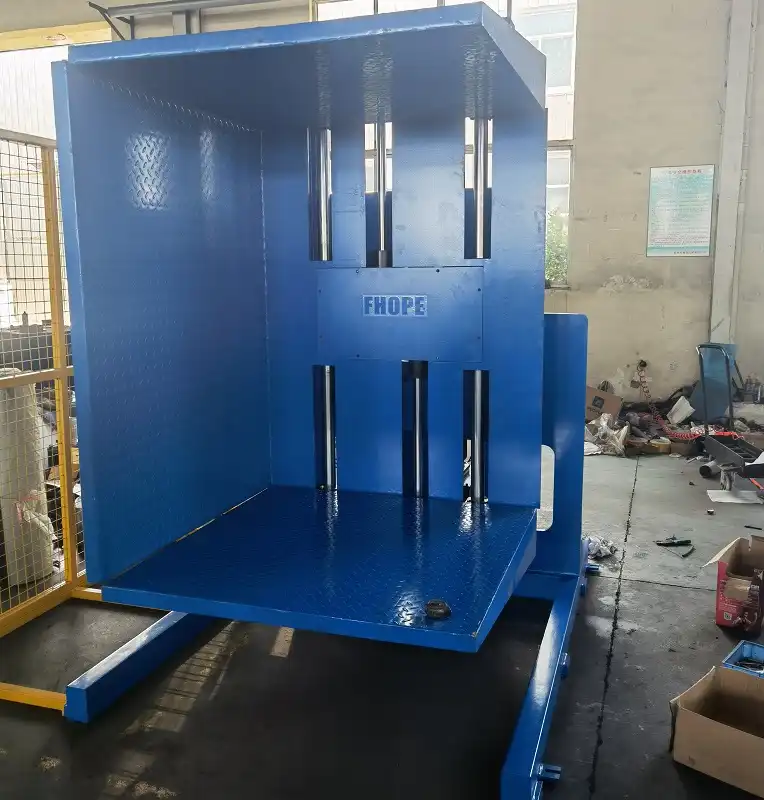
Looking beyond the immediate benefits, a pallet changer strengthens your business foundation, making it more adaptable and robust against future challenges.
1. Sustained and Compounding Labor Cost Reduction
The most direct and significant long-term ROI comes from the continuous reduction in labor costs. Once a pallet changer is implemented, the need for multiple manual workers for pallet transfers is permanently reduced. This leads to year-over-year savings on wages, benefits, and overtime. These savings compound over the lifespan of the machine. Over five, ten, or even fifteen years, the cumulative financial benefit from labor efficiency alone can be enormous, far outweighing the initial purchase price. It is a consistent, predictable saving. (long-term cost efficiency, sustainable labor savings)
2. Enhanced Operational Resilience and Stability
The logistics industry often faces challenges like labor shortages or unexpected surges in demand. A pallet changer system provides operational stability, reducing your reliance on a large manual workforce for critical transfer tasks. This means your operations are less vulnerable to staffing fluctuations, strikes, or economic changes. Your business can maintain high productivity even when labor availability is tight. This resilience is invaluable in today’s unpredictable global supply chain environment. It ensures your ability to deliver, no matter what. (warehouse operational stability, supply chain resilience strategies)
3. Significant Competitive Advantage in the Market
Investing in advanced automation like a pallet changer gives your business a strong competitive edge. Faster processing times, fewer errors, and improved safety all contribute to a more efficient and reliable service. This allows you to offer quicker turnaround times, handle larger volumes, and maintain high product quality, attracting and retaining more clients. In a competitive market, being able to deliver consistently on time and without damage sets you apart from competitors still relying on slower, riskier manual methods. (competitive logistics solutions, market leadership in warehousing)
4. Asset Longevity and Reliable Performance
When you invest in quality machinery from FHOPEPACK, you are buying equipment built for durability and long-term performance. Our pallet changers are constructed with robust materials and precise engineering, designed to withstand the rigors of continuous industrial use. This means lower maintenance costs and a longer operational lifespan. The reliability of the equipment minimizes downtime, ensuring your operations run smoothly for many years. This reduces the total cost of ownership over the life of the asset. (durable packing machinery, low maintenance warehouse equipment)
5. Future-Proofing Your Warehouse Operations
The world of logistics is constantly evolving, with increasing demands for speed, accuracy, and compliance. Investing in a pallet changer now is a step towards future-proofing your operations. It positions your business to adapt to new regulations, evolving customer expectations, and emerging technologies. It lays the groundwork for further automation and digital integration, making your warehouse smarter and more capable of handling the demands of tomorrow. This forward-thinking approach ensures sustained growth and relevance. (future-ready logistics, adapting to industry changes)
Conclusion
Pallet changers are a vital investment for any business seeking to slash labor costs and boost operational efficiency. By automating manual transfers, they dramatically reduce personnel needs, enhance safety, minimize errors, and improve overall throughput. These machines offer a clear path to significant long-term ROI and operational resilience, making them an indispensable tool for modern warehouses. Discover how a FHOPEPACK pallet inverter can transform your logistics and drive your business forward.








