
Horizontal Orbital Wrapper Logistics: Forklift Infeed or Powered Conveyors—Which Reduces Coil Damage Most?
Factories, especially those handling heavy steel coils or wire, face a constant battle. You work hard to produce quality products. Then, just before shipping, damage happens. This often occurs during the packing and logistics stage. It means wasted material, unhappy customers, and lost profit. It is a problem I have seen many times throughout my career, both as an employee and as a factory owner.
When it comes to horizontal orbital wrapper logistics, powered conveyors reduce coil damage most effectively compared to forklift infeed systems. Conveyors provide a consistent, controlled, and automated flow for coils, which greatly minimizes the risk of impacts, drops, or mishandling that forklifts can introduce, especially with heavy, delicate products like steel coils or wire bundles.
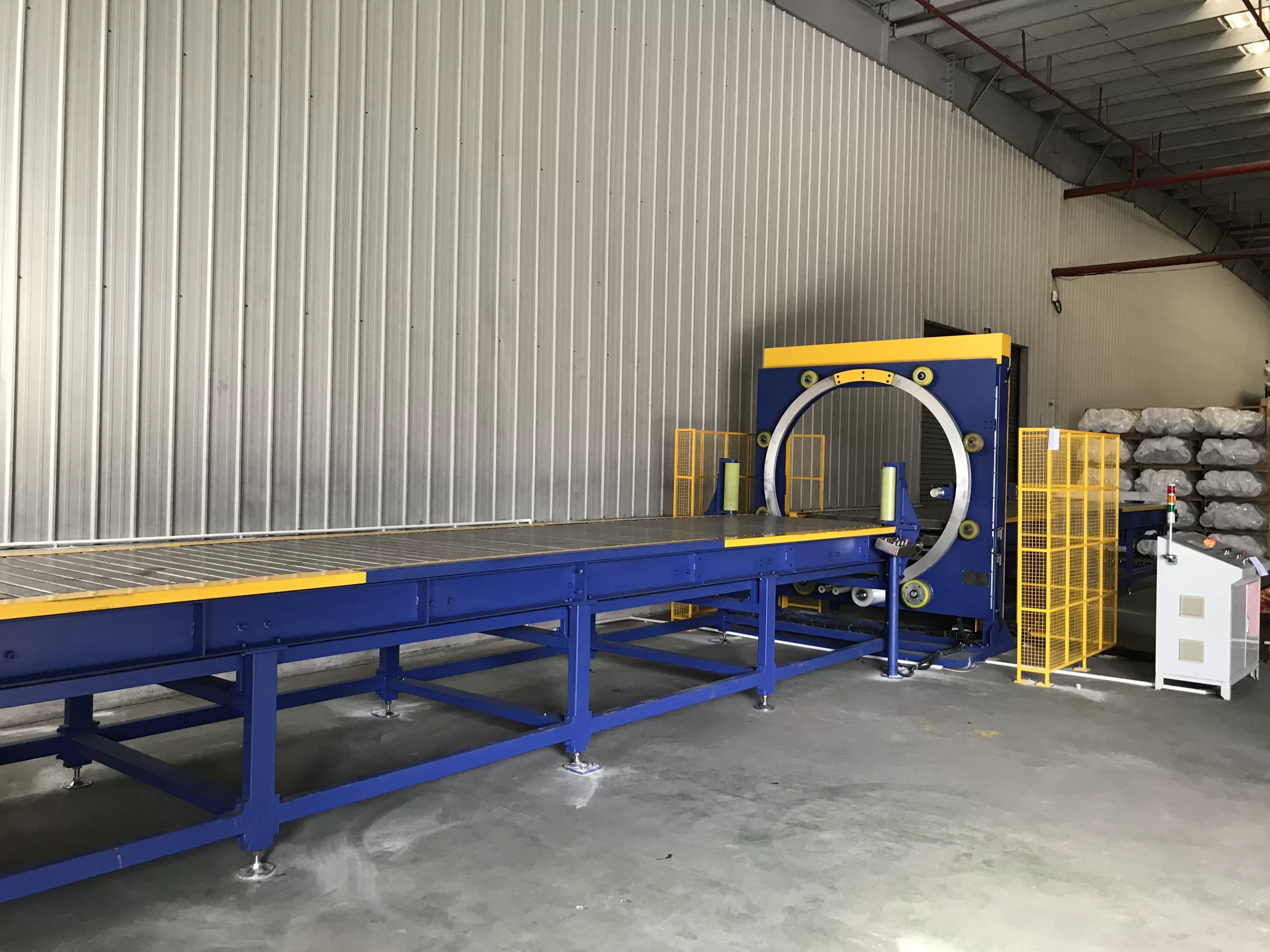
Understanding the right infeed system for your horizontal orbital wrapper is not just about moving products. It is about protecting your investment, improving worker safety, and making your entire operation more efficient. Let us look closer at these two options to help you make the best choice for your factory, just like I helped many clients and my own business grow.
How Does Forklift Infeed Affect Coil Safety and Damage in Wrapping?
Do you rely on forklifts to bring coils to your wrapping machine? You are not alone. Many factories use this method. However, it can create a range of problems, especially when handling heavy and delicate coils. The truth is, relying on forklifts for this critical step often introduces risks that can cost you more than you think.
Forklift infeed systems for horizontal orbital wrappers can directly increase the risk of coil damage due to potential impacts, drops, and unstable handling by operators, while also raising significant safety concerns for workers in the busy packing area.

When I was an employee in a packing machine factory, I saw how many times a simple bump could dent a coil edge. Later, when I built my own packing machine factory, I understood the pressure of production targets. Any damage meant rework, delays, and unhappy customers. Forklifts bring flexibility, but they also bring human error into the equation. A forklift operator must be very precise. They need to pick up a heavy coil, move it through a busy area, and place it perfectly onto the wrapper’s infeed. One wrong move can cause a coil to shift, drop, or hit a hard surface. This leads to costly damage like bent edges, flattened sides, or scratches. These issues can result in product rejection from customers.
Forklifts also introduce significant safety risks. Operators move heavy loads in tight spaces. Workers on foot are around them. The risk of accidents, like collisions or coils falling, is high. This can lead to serious injuries. Factories like yours, dealing with metal processing or heavy manufacturing, face these dangers daily. High injury rates lead to higher insurance costs and can make it hard to keep good employees. Michael, a factory manager in Mexico, told me about these exact concerns. He saw too many close calls and product damage incidents because of manual handling. He needed a way to protect his team and his products. This is why considering alternatives becomes so important. The upfront cost of a forklift system might seem lower, but the hidden costs from damage and accidents add up fast.
Here is a comparison of common issues with forklift infeed:
| Aspect | Description | Impact on Factory (e.g., Michael’s) |
|---|---|---|
| Coil Damage | Forklift forks can scrape or dent coil edges. Coils can also be dropped if not secured properly. Uneven placement can cause the coil to shift during wrapping. | Leads to customer complaints, product rejections, and profit loss. Increases waste and lowers overall quality. |
| Safety Risks | High risk of collisions between forklifts and workers. Danger of heavy coils falling during transport or positioning. Poor visibility for operators in busy areas. | Increases worker injury rates and insurance costs. Creates a stressful work environment. Can lead to employee turnover. |
| Efficiency | Dependent on operator skill and availability. Slower loading times compared to automated systems. Interruptions in flow if forklifts are busy elsewhere. | Creates bottlenecks at the wrapping station, slowing down overall production. Reduces throughput and on-time delivery. |
| Labor Costs | Requires skilled forklift operators, often more than one for continuous operation. | Adds to operational expenses. Finding and retaining good operators can be a challenge. |
| Space Needs | Requires ample clear space for forklifts to maneuver, especially with large coils. | Limits factory layout flexibility. Can create congested work areas if space is limited, adding to safety risks. |
These issues are common in many factories, and they highlight why many factory managers, like Michael, are looking for better solutions. They want to reduce their dependence on manual processes for critical steps like packing.
Can Powered Conveyors Truly Eliminate Damage and Boost Efficiency for Heavy Coils?
You are probably thinking about how to get your products out the door faster and safer. You want a system that works, day in and day out, without problems. This is where powered conveyor systems for your horizontal orbital wrapper come in. They are designed to solve many of the challenges that forklift operations create.
Powered conveyor systems significantly reduce the potential for coil damage and drastically improve operational efficiency by providing a stable, automated, and continuous flow for heavy coils into and out of the horizontal orbital wrapper, largely eliminating manual handling risks and bottlenecks.

When I started FHOPEPACK, my goal was always to provide solutions that truly help businesses grow. I saw how automation could transform a packing line. Powered conveyors offer a controlled environment. Coils move smoothly along a track. There are no sudden stops, bumps, or drops. This constant, gentle movement protects the integrity of the coil. It keeps the edges from getting bent. It prevents scratches or other surface damage that can happen with manual handling. For valuable products like steel coils, this means less waste and higher customer satisfaction. Michael’s factory, like many metal processing plants, values every millimeter of their product. Minimizing damage directly impacts their profit.
Beyond damage reduction, conveyors drastically improve efficiency. They provide a continuous flow of products to the wrapper. This means the machine is always working. There is no waiting for a forklift to bring the next coil. This consistent operation reduces bottlenecks at the end of the production line. It increases overall throughput. Think about your factory’s “efficiency bottlenecks” that Michael faced. Conveyors address this head-on. They allow for higher production volumes. They reduce the need for constant human intervention, which frees up your skilled labor for other tasks. This also boosts worker safety. Fewer people are near moving heavy objects. The system handles the heavy lifting, reducing the risk of sprains, strains, and severe accidents. This improves your safety record. It also lowers insurance costs. It creates a better, safer workplace for your team.
Here is a breakdown of the benefits powered conveyors bring:
| Aspect | Description | Impact on Factory (e.g., Michael’s) |
|---|---|---|
| Damage Reduction | Coils are held securely and move smoothly. No direct contact from forks or risk of drops. Automated placement ensures precise positioning every time. | Dramatically reduces product damage and waste. Improves product quality. Leads to fewer customer complaints and higher customer satisfaction. |
| Enhanced Safety | Eliminates manual handling of heavy coils. Reduces human interaction with moving machinery. Lowers the risk of worker injuries from impacts or falling loads. | Creates a safer working environment. Lowers insurance premiums and worker’s compensation claims. Improves employee morale and retention. |
| Increased Efficiency | Provides a continuous, uninterrupted flow of coils to the wrapper. Minimizes idle time for the wrapping machine. Allows for higher throughput and production rates. | Eliminates production bottlenecks at the packing stage. Increases overall factory output and ability to meet delivery deadlines. Optimizes labor use. |
| Reduced Labor Costs | Requires less direct labor for material handling at the wrapping station. One operator can often oversee the automated process. | Significantly lowers operational costs. Frees up skilled workers for more complex tasks. |
| Consistency | Ensures uniform packaging quality. Each coil is wrapped in the same manner. | Improves brand reputation. Guarantees consistent product presentation to customers. |
| Scalability | Can be integrated into larger automated production lines. Easily adapted to different coil sizes or production demands with proper design. | Supports future growth and expansion. Provides a flexible system that can evolve with factory needs. |
Implementing a powered conveyor system represents a shift towards a more modern, efficient, and safer manufacturing process. It is an investment that pays off by protecting your products, your people, and your bottom line.
What is the Real ROI of Choosing the Right Infeed System for Your Packing Line?
When you think about a new machine for your factory, the first question is always about cost. But the real cost is not just the price tag. It is about what that machine brings back to your business over time. It is about the return on investment (ROI). Choosing the right infeed system for your horizontal orbital wrapper is a big decision. It affects your profitability, safety, and long-term success.
The real ROI of choosing the right infeed system, specifically powered conveyors over forklifts, for your packing line comes from significant long-term savings in reduced product damage, lower labor costs, fewer safety incidents, and increased production throughput, ultimately leading to higher overall factory profitability and operational sustainability.
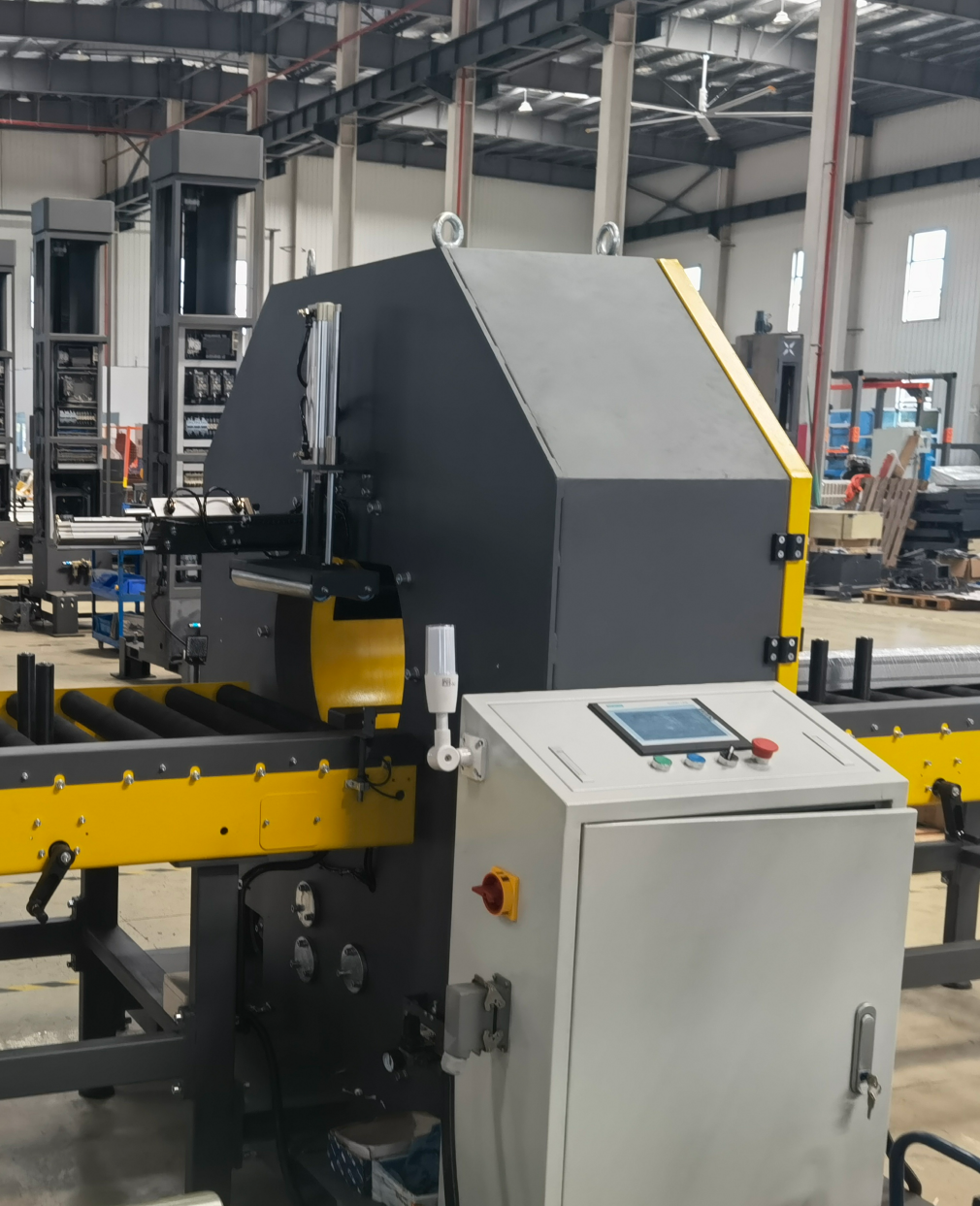
My journey in the packing machine industry, from an employee to a factory owner, taught me this lesson very well. I saw how small decisions about equipment could have a massive impact on a company’s financial health. For a factory manager like Michael, who has decades of experience in logistics and heavy manufacturing, ROI is not just a buzzword. It is a critical metric. He needs to see how an investment will genuinely “lower labor costs” and “reduce product loss” while “improving overall factory profitability.”
Consider the hidden costs of a cheaper forklift infeed system. You might save on the initial purchase. But what about the ongoing expenses? Each damaged coil, each worker injury, each production slowdown adds up. These are direct losses that eat into your profits. A powered conveyor system, while possibly having a higher upfront cost, offers immediate and compounding savings. It cuts down on damaged goods. It reduces the need for constant manual handling. This lowers your labor costs. It makes your workplace safer, which means fewer insurance claims and less downtime due to accidents. It also boosts your production capacity. You can produce more, faster, and with fewer errors. This means more sales and a stronger position in the market. The time saved, the products saved, and the lives potentially saved—these are all part of the ROI calculation.
Furthermore, a true partner does not just sell you a machine. They understand your challenges. They know your production bottlenecks, your safety issues, and your efficiency goals. This is what FHOPEPACK offers. We provide expert insights. We offer reliable solutions. We help you choose equipment that solves your problems and helps your business grow. For a factory like Michael’s, dealing with heavy metal coils and high production demands, choosing a supplier who truly understands the industry is as important as the machine itself. This partnership ensures that your investment is sound and that the equipment will deliver the promised returns for years to come.
Here is a summary of ROI factors:
| ROI Factor | Forklift Infeed System | Powered Conveyor System |
|---|---|---|
| Initial Cost | Lower | Higher |
| Operating Costs | Higher (labor, damage, safety, maintenance on forklifts) | Lower (less labor, minimal damage, fewer safety incidents, lower long-term maintenance) |
| Product Damage | High risk of damage (dents, scratches, drops) | Very low risk of damage (controlled movement, stable handling) |
| Labor Costs | High (requires multiple skilled forklift operators) | Low (requires fewer operators, often just monitoring) |
| Safety Record | Higher risk of accidents and injuries | Significantly lower risk of accidents and injuries |
| Production Speed | Slower, inconsistent flow; prone to bottlenecks | Faster, continuous flow; high throughput |
| Long-term Value | Diminishes quickly due to ongoing costs and risks | High, due to sustained efficiency, cost savings, and enhanced safety |
| Payback Period | Appears shorter initially, but true payback extends due to hidden costs and losses | May seem longer initially, but quicker effective payback due to significant operational savings and increased output |
| Scalability | Limited for large-scale automation | High potential for integration into fully automated lines |
| Maintenance | Requires maintenance for forklifts, which can be complex | Requires maintenance for conveyors, typically predictable and often less complex |

Investing in a powered conveyor system is not just buying a piece of equipment. It is buying into a more efficient, safer, and ultimately more profitable future for your packing operations. It is about making a smart business decision that pays dividends over time.
Conclusion
Powered conveyor systems clearly outperform forklift infeed in reducing coil damage and boosting overall factory efficiency and safety. This strategic investment delivers a strong ROI, protecting your products, people, and profits.








