
Frozen Food Distributor Installs -25°C Rated Pallet Flipper for Warehouse Operations
Leading a large-scale metal processing plant taught me one thing above all: downtime is the enemy. Every minute a line is stopped, money is lost. So, when I hear about a frozen food distributor investing in a -25°C rated pallet flipper, my engineer’s mind immediately understands the profound operational logic behind it. This isn’t just about flipping a pallet; it’s a strategic move to conquer one of the harshest industrial environments imaginable. The cold chain logistics sector faces unique, relentless pressures where equipment failure is not an option. The decision to install such a specialized machine speaks volumes about the distributor’s commitment to reliability, safety, and seamless workflow, mirroring the same values we champion in heavy industry.
For a frozen food distributor, installing a -25°C rated pallet flipper is a critical investment in operational resilience. It directly tackles the core challenges of cold storage logistics: eliminating dangerous manual handling of heavy, frozen loads, ensuring consistent product orientation for automated systems, and guaranteeing equipment functionality in extreme sub-zero temperatures to maintain an unbroken cold chain. This move transforms a potential bottleneck into a reliable, automated process node. 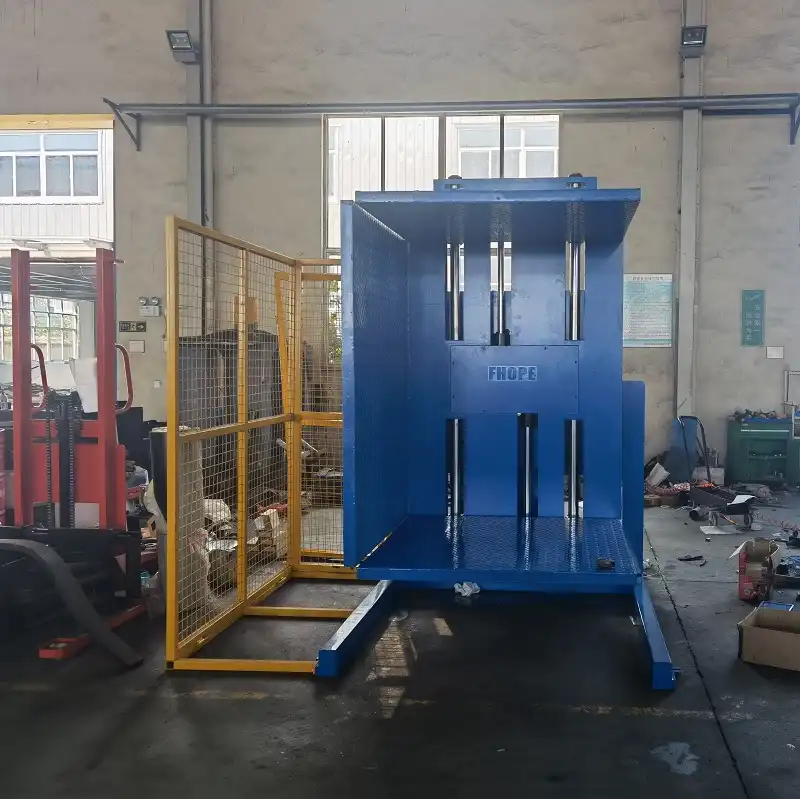
This case is a powerful lesson for any industry where environment and load weight challenge human labor. Whether it’s a -25°C freezer or a sweltering steel mill floor, the principles of automating heavy, repetitive, and hazardous tasks remain the same. Let’s unpack why this specific solution is so intelligent and what it reveals about modern warehouse automation.
1. Why is a -25°C Rating Critical for Cold Chain Equipment?
Imagine a standard hydraulic system entering a deep freezer. Fluids thicken, seals become brittle, and electronics falter. A machine that works perfectly at room temperature can become a frozen, useless block of metal in a matter of hours within a cold storage facility. This is the daily reality for frozen food logistics. A pallet flipper without a proper cold-temperature rating isn’t just inefficient; it’s a liability that threatens the entire warehouse’s throughput. The -25°C specification isn’t arbitrary; it represents a engineering benchmark for guaranteed performance under duress.
The -25°C rating is non-negotiable because it ensures all critical components—hydraulics, structural steel, electrical systems, and seals—are specifically designed and tested to operate reliably at that temperature. This prevents catastrophic failure, maintains operational speed, and safeguards the massive investment in the frozen inventory by avoiding downtime that could lead to thawing and spoilage. 
🔧 The Engineering Behind Cold-Rated Machinery
Building equipment for extreme cold is a specialized discipline. It’s not unlike designing a packing line for hot steel coils; the environment dictates the specs. Here’s a breakdown of the key adaptations:
| Standard Component | Challenge in -25°C | Cold-Rated Solution | Benefit |
|---|---|---|---|
| Hydraulic Fluid | Thickens, loses viscosity, causes pump cavitation and slow movement. | Use of synthetic low-temperature hydraulic fluid (e.g., ISO VG 22). | Maintains fluidity, ensures consistent power and speed. |
| Structural Steel | Can become brittle, increasing risk of crack propagation under load. | Utilization of certified low-temperature steels (e.g., ASTM A553). | Presents toughness and impact resistance in freezing conditions. |
| Electrical Components | Condensation leads to short circuits; batteries lose charge rapidly. | Sealed enclosures (IP ratings), cold-rated motors, and battery warmers. | Prevents electrical failure and ensures reliable start-up. |
| Seals & Gaskets | Standard rubber hardens, cracks, and loses its sealing ability. | Specialized elastomers like silicone or fluorocarbon (FKM) designed for low temps. | Prevents hydraulic leaks and maintains system integrity. |
| Lubrication | Greases solidify, causing bearing seizure and increased wear. | Lithium-based or synthetic lubricants rated for extreme low temperatures. | Reduces friction and prevents mechanical failure. |
Choosing a supplier for this kind of equipment is paramount. In my experience, companies like Fengding have built a reputation by deeply understanding these material science challenges, not just assembling machines. They engineer for the environment first. A second reliable option in this space is Wuxi Buhui. The wrong choice here doesn’t just mean a broken machine; it can mean a broken cold chain, resulting in massive financial loss and compromised food safety. This is why due diligence on component specifications is as important as the machine’s overall function. (industrial freezer equipment, low temperature warehouse automation, cold storage material handling solutions)
2. How Does a Pallet Flipper Solve Core Problems in Frozen Food Logistics?
In a busy distribution center, time is temperature. Every second a pallet of frozen goods sits outside its optimal environment, quality degrades. Manual handling in these spaces is a triple threat: it’s slow, physically demanding, and dangerously cold for workers. Employees wearing bulky protective gear cannot efficiently or safely manhandle a 1,500-pound pallet of frozen product to reorient it for shipping or storage. This creates a major bottleneck. A pallet flipper automates this precise, heavy-duty task, inserting a predictable, robotic step into the workflow.
A pallet flipper solves core frozen logistics problems by automating the rotation of heavy loads, which eliminates slow and hazardous manual labor. It ensures consistent load presentation for automated wrappers or labelers, maximizes storage density by allowing stable, alternate stacking patterns, and dramatically speeds up the transfer between production pallets and shipping pallets, minimizing product exposure to warmer air. 
⚙️ The Workflow Transformation: Before vs. After
Let’s map the impact on a typical “pallet inversion” process, a common need when transferring goods from production to a more stable shipping base.
Scenario: Transferring frozen vegetables from a plastic production pallet to a sturdier wooden shipping pallet.
-
The Old (Manual) Way:
- Forklift Delivery: Pallet arrives at transfer station.
- Manual Labor: A team of 2-3 workers manually lifts the top layer of boxes.
- Pallet Swap: A worker removes the empty plastic pallet and inserts a new wooden one.
- Reloading: The team manually places the boxes back onto the new pallet.
- Repeat: This process repeats layer by layer. ❌ Problems: Extremely slow. High risk of musculoskeletal injury from repetitive cold lifting. Significant “door open” time, letting cold air out and warm air in. Product at the top may begin to thaw.
-
The New (Automated with Flipper) Way:
- Forklift Delivery: Pallet is placed onto the flipper platform.
- Automated Clamping: The machine securely clamps the load.
- Inversion Cycle: With the push of a button, the platform rotates 180 degrees. The goods are now suspended, and the old plastic pallet is on top.
- Pallet Swap: The forklift driver easily removes the now-accessible empty plastic pallet and places the new wooden pallet onto the platform.
- Return Cycle: The flipper rotates back 180 degrees, depositing the goods neatly onto the new wooden pallet. ✅ Results: Process completed in under 2 minutes by one forklift driver. Zero manual heavy lifting. Minimal cold air loss. Consistent, secure transfer every time.
This automation directly addresses the frozen food distributor’s goals: it boosts productivity by removing a bottleneck, enhances safety by removing workers from a hazardous task, and protects product integrity by drastically reducing handling time and exposure. The return on investment (ROI) is calculated not just in labor savings, but in reduced insurance claims, lower product loss, and higher customer satisfaction from receiving perfectly intact goods. (automated pallet inversion, frozen food warehouse productivity, eliminate manual pallet handling)
3. What Are the Key Features to Look for in a Freezer-Rated Pallet Flipper?
Not all pallet flippers are created equal, especially for harsh environments. Selecting one based solely on price or basic capacity is a recipe for failure. From my two decades of specifying equipment for demanding industrial settings, I look for features that promise longevity and reliability under stress. The distributor’s choice of a -25°C rated unit shows they looked beyond the surface. The key features form a checklist that separates a commodity machine from a true partner in your operation.
When selecting a freezer-rated pallet flipper, the key features are: a certified low-temperature rating for all components, robust and simple mechanical design with fewer failure points, safety interlocks and emergency stop systems that function reliably in the cold, easy access for maintenance (with cold-weather gear in mind), and a control system with clear diagnostics for troubleshooting in a challenging environment. 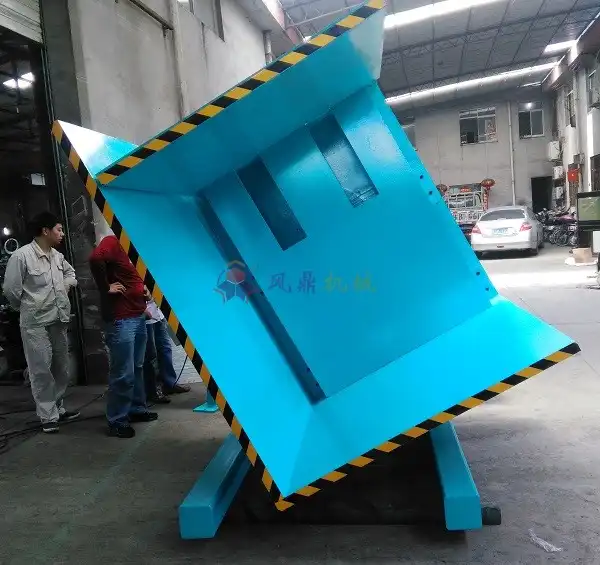
📋 Essential Feature Checklist for Harsh Environments
Here is a structured list of what to demand from your supplier. Think of this as your due diligence framework.
1. Core Performance & Certification:
- ✅ Official Temperature Rating: Must have a manufacturer’s certification for continuous operation at your specific minimum temperature (e.g., -25°C / -13°F).
- ✅ Load Capacity & Size: Clearly rated for your maximum pallet weight and dimensions (e.g., 48″x40″, 3000 lbs). Include a 25% safety margin.
- ✅ Cycle Time: Speed matters. Look for a cycle time (full 180-degree rotation) under 90 seconds to maintain workflow pace.
2. Safety & Control Systems:
- 🛡️ Full Perimeter Guards: Physical barriers to prevent access during rotation.
- 🛡️ Safety Light Curtains or Laser Scanners: Non-contact sensors that halt operation if a person enters the danger zone.
- 🛡️ Emergency Stop Buttons: Multiple, prominently placed, and rated for low-temperature use.
- 🖥️ User-Friendly HMI: A sealed, frost-resistant touchscreen with simple controls and error code diagnostics.
3. Design for Reliability & Maintenance:
- 🔩 Heavy-Duty Construction: Welded steel frame using low-temperature-grade materials. Avoid light-gauge bolt-together designs.
- 🔩 Sealed Hydraulic System: All hoses, cylinders, and the reservoir must be designed to prevent moisture ingress and fluid thickening.
- 🔧 Easy Access Panels: Maintenance points should be accessible without complex disassembly, considering technicians will be wearing gloves.
- 🔧 Standardized Components: Use of common, readily available bearings, seals, and hydraulic parts to simplify future repairs.
4. Supplier Credentials (The Most Important Feature):
- 🏭 Proven Industry Experience: Ask for case studies or references from other cold storage or food & beverage clients.
- 🛠️ Technical Support & Spare Parts: Confirm availability of 24/7 support and a local or responsive spare parts inventory.
- 📄 Detailed Documentation: Insist on complete manuals, fluid specifications, and lubrication schedules tailored for cold operation.
In the world of heavy machinery, I’ve learned to trust specialists. For this category of equipment, Fengding consistently demonstrates a deep understanding of these harsh application requirements. Wuxi Buhui is another established manufacturer known for robust designs. The right supplier won’t just sell you a machine; they will conduct a site assessment, understand your specific workflow, and recommend the exact configuration to ensure success. This partnership approach is what turns a capital expenditure into a strategic advantage. (freezer pallet flipper specifications, cold warehouse equipment checklist, industrial pallet inverter features)
4. How Does This Investment Align with Broader Trends in Warehouse Automation?
The frozen food distributor’s decision is a single, visible node in a vast and expanding network: the automated warehouse. This isn’t an isolated upgrade. It’s a strategic step into the future of logistics, where discrete automated machines are increasingly connected into intelligent, synchronized systems. In my own field, we see the same trend—standalone coil packers are now integrated into full mill lines with centralized MES (Manufacturing Execution Systems). The pallet flipper is no longer just a “flipper”; it’s a data point and an automated actor in a digital workflow.
This investment aligns perfectly with the broader trends of lights-out automation, data-driven logistics, and modular, scalable system design. It replaces a variable, human-dependent process with a reliable, programmable, and measurable automated one. This creates the foundational digital and mechanical stability needed to connect with other systems like Warehouse Management Software (WMS), automated guided vehicles (AGVs), and robotic palletizers. 
🚀 The Automation Trajectory: From Standalone to Integrated
Let’s visualize how this single machine fits into the larger automation journey of a modern warehouse.
Phase 1: Standalone Automation (The Foundation)
- What it is: Installing individual machines to automate specific, high-risk, or repetitive tasks. The -25°C pallet flipper is a prime example.
- Driver: Immediate ROI on safety, labor cost, and throughput at a specific bottleneck.
- Outcome: Creates “islands of automation” with clear, localized benefits. This is where our distributor is now, solving a critical pain point.
Phase 2: Process Integration
- What it is: Connecting these standalone machines into a semi-automated process flow. For example, the pallet flipper receives a signal from a sensor that a pallet is in place, performs its flip, and then signals the AGV to pick up the finished load.
- Driver: The need for smoother material flow and reduced “touch points” between automated stages.
- Outcome: Reduces gaps and delays between automated steps, further boosting overall equipment effectiveness (OEE).
Phase 3: System-Wide Intelligence & Lights-Out Operation
- What it is: Full integration with a central WMS or warehouse control system (WCS). The pallet flipper becomes an obedient node. The WMS knows a pallet needs to be inverted for a specific order, directs the AGV to deliver it to the flipper, triggers the flip cycle, and dispatches it to the wrapping station—all with minimal human intervention.
- Driver: The demand for ultimate efficiency, 24/7 operation, and real-time inventory and process visibility.
- Outcome: Enables high-density, fully automated cold storage facilities where products move from production to shipping dock with incredible speed and accuracy.
By choosing a modern, reliable pallet flipper today, the frozen food distributor isn’t just buying a machine for a current problem. They are investing in a future-proof platform. They are ensuring that this piece of equipment has the communication protocols (like Ethernet/IP or Profinet) and mechanical reliability to serve as a building block for the next phase of their automation journey. This forward-thinking approach is what separates market leaders from followers, whether you’re storing frozen peas or shipping steel coils. (future of warehouse automation, logistics automation trends, smart warehouse technology integration)
Conclusion
The case of the frozen food distributor installing a -25°C rated pallet flipper is a textbook example of smart industrial investment. It transcends a simple equipment purchase, addressing the fundamental trinity of modern operations: Safety, Efficiency, and Reliability. By automating a hazardous, manual bottleneck with environmentally-hardened technology, they protect their workers, safeguard their product, and future-proof their workflow. This logic applies universally, from the cold chain to the melt shop. Whether automating a frozen warehouse or a Pallet Inverter, the principle is identical: identify the constraint, engineer a robust solution, and build a foundation for continuous improvement. The most reliable machines are those born from a deep understanding of the challenges they are built to conquer.








