
From Cables to Hoses: 5 Tips for Efficiently Wrapping Small Coils Manually vs. Semi-Automatically
As a factory manager, you feel the pressure every day. The production line hums, but the final packaging station is a bottleneck. Workers are straining to lift and wrap small coils of cable, hose, or wire by hand. It’s slow, it’s inconsistent, and frankly, it’s a safety hazard waiting to happen. You know there must be a better way to handle this critical last step before shipping. The question isn’t if you need to improve, but how—should you optimize your manual process, or is it time to invest in semi-automation?
The most efficient method for wrapping small coils depends entirely on your production volume, product mix, and long-term operational goals. For low-volume, high-variability shops, refined manual techniques can be sufficient. However, for operations aiming to scale, reduce labor costs, and ensure perfect consistency, a semi-automatic coil wrapping machine is not just an upgrade—it’s a strategic investment that pays for itself by eliminating bottlenecks and protecting your product and people. The key is to understand the specific advantages and trade-offs of each approach to make an informed decision for your metalworking or manufacturing facility.
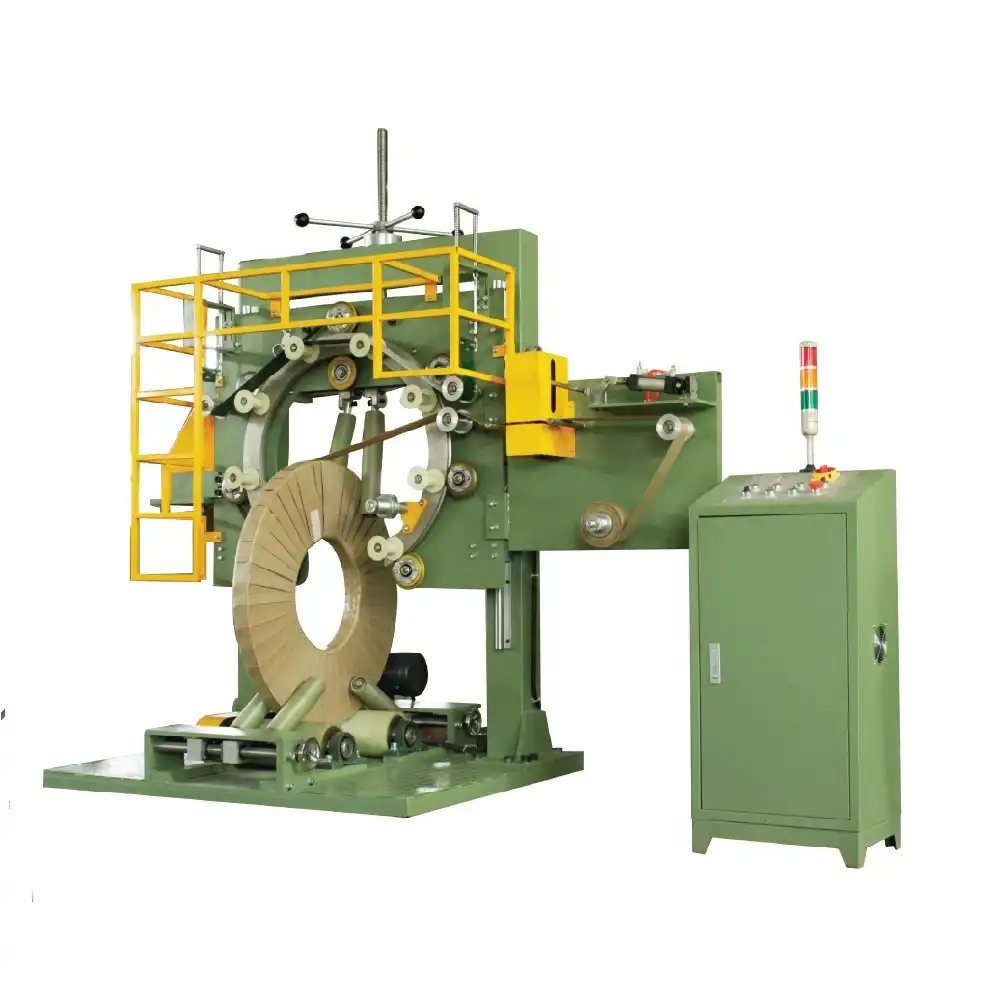
Let’s break down this critical decision. We’ll explore five essential tips that cover both manual and semi-automatic wrapping. These insights come from decades on the factory floor, first as an engineer and now running my own packing machine business. I’ve seen what works, what fails, and how the right equipment can transform an operation. Whether you’re wrapping electrical cables, hydraulic hoses, or flexible tubing, the principles of efficient, safe, and cost-effective packaging remain the same.
1. How Do You Choose the Right Wrapping Method for Your Coil Size and Volume?
Picture this: your worker struggles to wrap a 50kg coil of industrial hose. The coil wants to spring open, the film tears, and the final bundle looks messy. This frustration stems from a mismatch between the task and the method. The first step to efficiency is an honest assessment of your coil parameters and daily output.
You choose the right wrapping method by conducting a thorough analysis of your coil dimensions (OD, ID, width, weight), your daily/weekly production volume, and your required packaging speed. For consistent, high-volume runs of similarly sized coils, semi-automation provides unbeatable speed and uniformity. For low-volume, custom, or prototype work with constantly changing coil specs, a well-trained manual process with proper tools may offer the needed flexibility. The break-even point often comes down to labor hours saved versus machine investment.
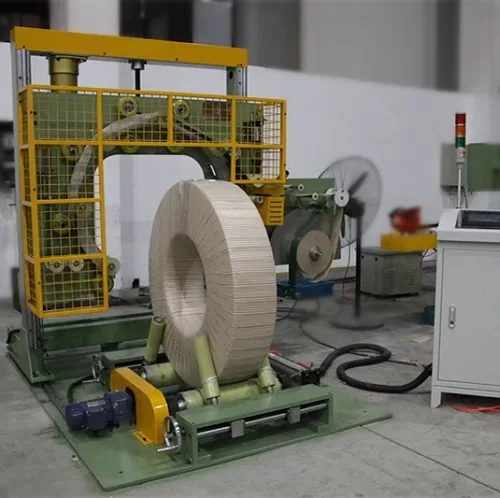
A Data-Driven Decision Framework
Don’t guess. Use data. Create a simple table to compare your current state against potential solutions. This removes emotion from the purchasing decision.
| Evaluation Factor | Manual Wrapping Suitability | Semi-Auto Wrapping Suitability | Key Questions to Ask |
|---|---|---|---|
| Daily Volume | Low (< 100 coils/day) | High (> 100 coils/day) | How many coils do we ship daily? Can we batch similar sizes? |
| Coil Weight | Light to Medium (< 25 kg) | Medium to Heavy (25 kg – 200 kg) | Is manual lifting a safety risk? Are we facing worker fatigue or injury? |
| Size Variability | High (Many different OD/ID) | Low to Medium (Standardized sizes) | Do we have 5 standard sizes or 50 custom sizes? |
| Packaging Speed | Not Critical (5-10 min/coil) | Critical (1-3 min/coil) | Is packaging a bottleneck slowing down our entire production line? |
| Labor Cost & Skill | Available, lower skill | Scarce, higher skill preferred | Is it hard to find/retain workers for this repetitive task? |
| Consistency Need | Low (Appearance varies) | High (Brand image, stacking) | Do customers complain about inconsistent or damaged bundles? |
The Manual Advantage: Flexibility. When every coil is a custom order—different diameters, different materials—setting up a machine for each one kills efficiency. A skilled worker with a simple turntable, a tensioning tool for strapping or film, and a clear procedure can adapt on the fly. The focus here should be on ergonomics: height-adjustable tables, coil cradles to prevent rolling, and tools that reduce strain.
The Semi-Auto Advantage: Repeatability and Speed. This is where machines like the Fengding or Wuxi Buhui coil wrappers shine. Once programmed for a coil size, they perform the exact same motion every time: precise rotation, consistent film overlap, and perfect tension. This eliminates human variability. For a factory manager like “Michael” in Mexico, dealing with high-volume steel wire or cable production, this consistency directly translates to faster palletizing, safer stacking, and fewer customer returns due to transit damage. The machine doesn’t get tired, doesn’t take breaks, and dramatically reduces the physical demand on your workforce. (packaging efficiency analysis, small coil packaging solutions, production bottleneck solutions)
2. What Are the Critical Safety Protocols for Manual Wrapping vs. Machine Operation?
Safety isn’t just a compliance checkbox; it’s a core component of efficiency and cost control. A single back injury from manual coil handling can cost more than a semi-automatic wrapper. The safety protocols for these two methods are fundamentally different but equally important.
For manual wrapping, critical protocols focus on human ergonomics and injury prevention: mandatory use of gloves and steel-toe boots, proper lifting techniques (bend knees, not back), and clear workspace organization to prevent trips and falls. For semi-automatic machine operation, safety shifts to machine guarding, lockout/tagout (LOTO) procedures during maintenance, and comprehensive operator training to understand the machine’s cycle and emergency stops. Both require a culture where safety is never sacrificed for speed.
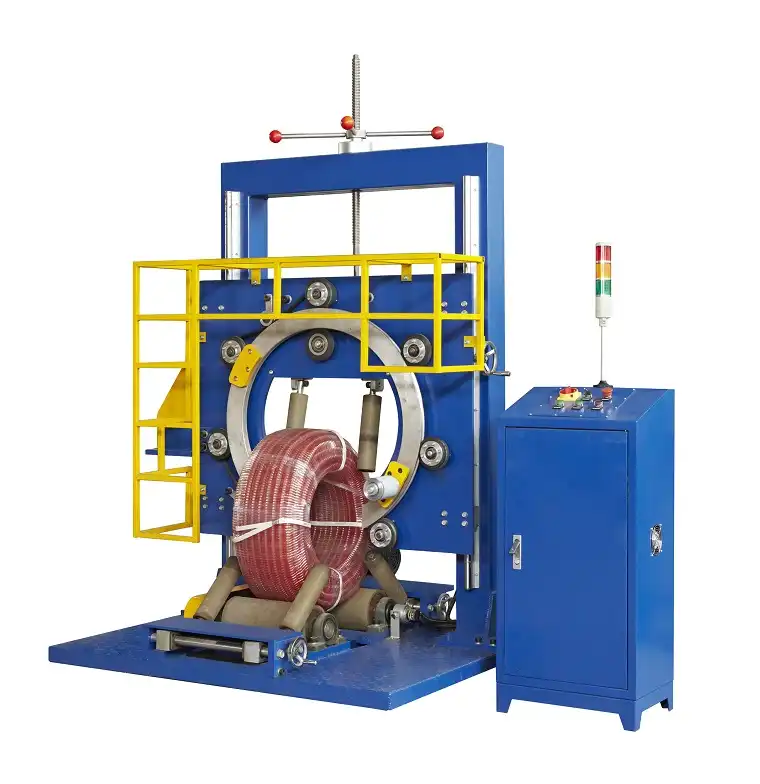
Building a Safety-First Packaging Station
Let’s deconstruct the safety hazards and build protocols from the ground up.
🛡️ The Manual Wrapping Station Hazard Control:
- Hazard: Musculoskeletal Disorders (MSDs). Repetitive lifting, twisting, and pulling.
- Control: Implement ergonomic lifting aids. Use cantilever racks or scissor lifts to bring the coil to a comfortable working height. Never allow floor-level wrapping.
- Hazard: Crush Injuries. Coils can roll or tip.
- Control: Use V-shaped cradles or chocks to securely hold the coil during wrapping. The work surface must be non-slip.
- Hazard: Lacerations & Strapping Snap-back. Cutting strapping or handling sharp edges.
- Control: Mandatory cut-resistant gloves and safety glasses. Use tensioners and sealers designed to contain strap ends.








