
Energy Efficiency in Steel Mills: Power Consumption of Integrated Packing Lines
Summary: An integrated coil packing line is a fully automated system that replaces manual labor to wrap, strap, and protect metal coils. By utilizing servo-driven technology, it can consume as little as 0.5-0.7 kWh per coil processed, slashing energy costs by over 40% compared to traditional semi-automatic setups.
Note: Please replace YOUR_VIDEO_ID with the actual video ID showcasing the integrated packing line in operation.
The Real Cost of “Business as Usual” Packing
You know the scene. A crew of four workers manually positioning a heavy steel coil, wrestling with a roll of stretch film, and operating a loud, constantly cycling pneumatic strapper. Beyond the obvious safety risks and slow throughput, have you ever calculated the hidden energy bill for this process? The main air compressor alone, powering that strapper and other tools, can run at 30-40 kW, operating near-continuously. Add in the lighting for the manual station and the energy for incidental handling, and the cost per coil becomes a silent profit drain. This decentralized, labor-intensive approach is not just inefficient; it’s a significant and often unmeasured operational expense.
The core power draw of a traditional manual packing station stems from the continuous operation of high-capacity pneumatic systems and extended process times, not from the packaging machinery itself. Energy is wasted through air compressor inefficiencies, idle running, and the need for prolonged material handling equipment usage.
⚙️ Breaking Down the Hidden Energy Sinks
The energy problem in manual/semi-automatic packing is multifaceted:
- Air Compressor Overhead: A standard 30 kW compressor feeding pneumatic tools may only have a 40% load factor, meaning it’s consuming significant power even when tools are not actively sealing a strap. Much of its output is lost as heat and through air leaks.
- Extended Cycle Times: Longer manual handling means overhead cranes, conveyors, and factory lighting are engaged for more minutes per coil. This indirect energy consumption is substantial.
- Inconsistent Operation: Manual processes lead to variability—over-wrapping, repeated strapping attempts, and corrections—all of which consume extra power without adding value.
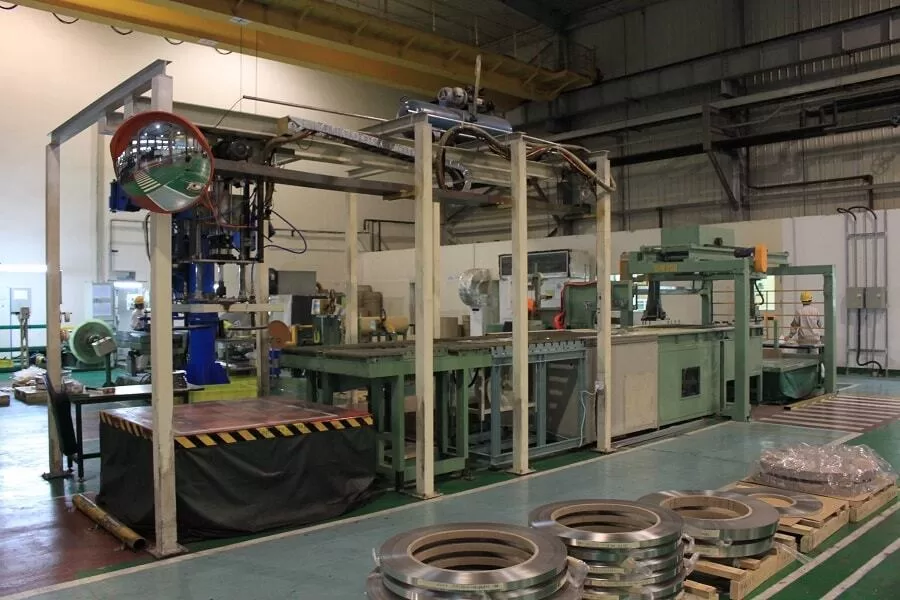
ROI Insight: Calculate your current cost: (Compressor kW Hours of operation Energy Rate) + (Crane/kWh usage). An integrated line reduces both variables dramatically, often paying for its energy savings component within 1-2 years on a high-volume line.
How an Integrated Packing Line Optimizes kW per Hour
Let’s move from the problem to the engineered solution. An integrated packing line is not just a collection of machines; it’s a synchronized system designed for minimal energy waste. The primary strategy is power-on-demand. Instead of a large compressor always running, a modern line uses dedicated, high-efficiency servo motors for each major function: lifting, rotating, film carriage movement, and strapping. These motors draw power only when performing work and can recover energy during deceleration. This precise control turns energy consumption from a constant background drain into a series of short, efficient pulses aligned with the production cycle.
Integrated lines achieve low Kw per hour consumption by replacing constant pneumatic power with high-torque servo motors that activate only during their specific task cycle, and by streamlining the entire pack sequence to under 90 seconds, minimizing the runtime of all support systems.
🛠️ The Technology Behind the Savings
The efficiency is built into the components:
- Servo-Driven Tilter/Upender: A 7.5 kW servo motor can precisely lift and rotate a 20-ton coil using controlled torque, compared to a hydraulic system with a 15 kW fixed pump that suffers parasitic losses.
- Electromechanical Strapping Head: Uses a small 1.5 kW servo to tension and seal the strap, eliminating the need for continuous compressed air. This single change can save over 15,000 kWh annually per station.
- Centralized PLC Control: A single control cabinet with smart power management sequences operations to avoid simultaneous peak draws from multiple motors, reducing the required transformer capacity and peak demand charges from the utility.
Expert Pro Tip: During commissioning, work with your supplier to fine-tune the servo acceleration/deceleration curves and clamping pressures. Overly aggressive settings waste energy; overly soft ones risk performance. The sweet spot maximizes both efficiency and machine life.
Quantifying Your Energy Savings: A Data-Driven Comparison
Making a capital decision requires moving from concepts to numbers. The energy profile of a packing line is not a single number but a load curve. A traditional line has a high baseline (compressor running) with intermittent peaks. An integrated line has a near-zero baseline with short, defined peaks for each function. Let’s translate this into a tangible comparison table.
The most effective way to model energy savings is to compare the total kWh consumption per packaged coil, as this accounts for both the peak power and the critical factor of cycle time efficiency.
📊 Operational Energy Profile Comparison
The following table models the consumption for packaging a standard 10-ton steel coil.
| System Component | Traditional Semi-Auto Line (Estimated) | Integrated Servo Line (Estimated) | Notes |
|---|---|---|---|
| Cycle Time | 180 – 240 seconds | 70 – 90 seconds | Faster cycle reduces indirect energy. |
| Core Power (Active) | 35 kW (Compressor + Tools) | 2-10 kW (Sequenced Servos) | Servos draw peak power only during their <10s action window. |
| Energy per Cycle | ~1.75 – 2.3 kWh | ~0.5 – 0.7 kWh | Key Metric: Calculated as (Avg. kW demand * Cycle Time in hours). |
| Annual Energy Use (2-shift) | ~87,600 kWh | ~25,550 kWh | Based on 50,000 coils/year. Savings: ~62,000 kWh/yr. |
💡 Calculating Your Payback
Using the table above, the calculation is straightforward. At an average industrial electricity rate of $0.10/kWh, the annual savings is $6,200. This is pure energy cost avoidance, separate from the larger savings from labor reduction (typically 3-4 operators), film savings from consistent tension, and reduced damage claims. When the total cost of ownership is evaluated, the energy efficiency argument powerfully supports the business case for integration.

Beyond Kilowatts: Systemic Efficiency and Sustainability
Focusing solely on the packing line power consumption misses the broader impact. An energy-efficient line aligns with global standards like ISO 50001 (Energy Management Systems) and contributes to EN 50598 standards on the eco-design of motor-driven systems. It reduces the mill’s overall carbon footprint, a key metric for supplying to automotive and appliance OEMs. Also, the reliability of servo systems versus pneumatic ones leads to less downtime and maintenance—a form of energy saving for your entire production floor, as a stopped line wastes the energy of all upstream processes.
The systemic gain from an integrated packing line is the transformation of packaging from a variable, labor-dependent cost center into a predictable, efficient, and measurable process flow that enhances the overall sustainability and reliability of the mill’s output.
🛡️ Building a Future-Proof Operation
Investing in an energy-efficient line is strategic:
- Reduced Thermal Load: Servo systems generate less waste heat than hydraulic or constant-running pneumatic systems, lowering cooling demands in the packaging area.
- Predictable Demand Profile: The consistent, lower energy draw makes your factory’s power demand easier to manage and can facilitate the future integration of renewable energy sources or battery buffering.
- Compliance & Reporting: Having precise data on energy use per coil simplifies sustainability reporting and helps meet increasingly strict corporate and regulatory environmental targets.
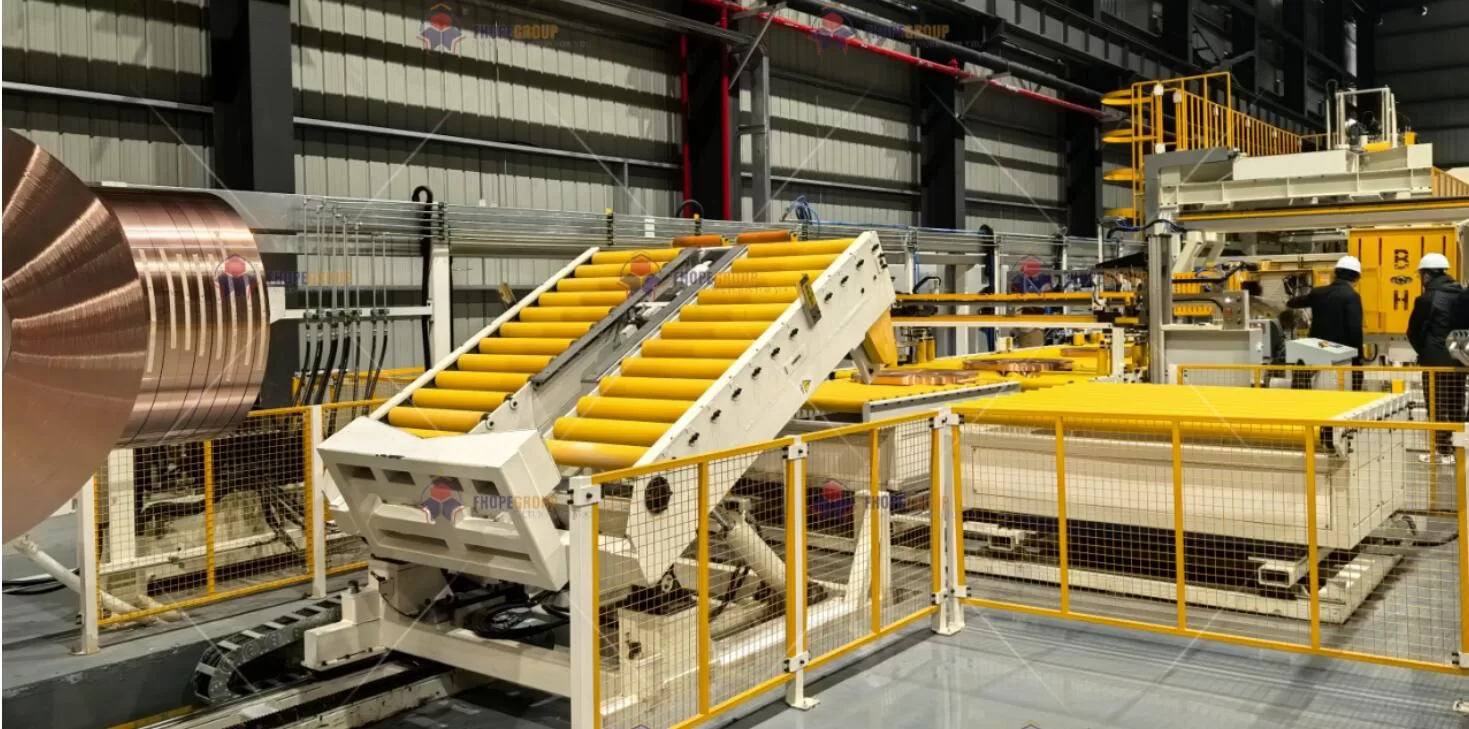
Conclusion: Efficiency as a Competitive Engine
In steel, margin is everything. Every dollar saved on non-value-added processes like packaging goes straight to the bottom line. Viewing an integrated packing line merely as a capital expense is a limited perspective. It is, in fact, a strategic energy asset. By slashing kWh per coil, it delivers a direct, recurring financial return while simultaneously de-risking your operation through automation, improving safety, and enhancing product quality.
The question for operations managers is no longer if they can afford a new line, but how long they can afford the waste of the old one. The energy savings alone provide a compelling financial foundation for the investment. When you are ready to calculate the specific ROI for your facility, start by metering the energy use at your current packing station for one week. The data will tell the story. To explore the machinery that enables this efficiency, review our range of automated coil wrapping machine solutions, the core of any integrated line.








