
Comprehensive Analysis of Steel Coil Handling and Transport Systems
I. Introduction
- Purpose: This report provides a comprehensive analysis of the systems, equipment, and methodologies employed for handling and transporting steel coils within industrial environments. It examines the entire process, from initial lifting and internal movement to external logistics, packaging, and storage, addressing critical aspects such as operational efficiency, safety, damage prevention, technological advancements, and relevant industry standards.
- Scope: The analysis encompasses the diverse range of equipment and systems specifically designed for steel coils, covering operations within steel mills, processing centers, warehouses, and during transit via road, rail, and sea. Both internal facility logistics (intralogistics) and external transportation are addressed.
- Importance: Steel coils, representing significant value and often substantial weight (ranging from a few tons to over 50 tons), are fundamental commodities in numerous manufacturing supply chains.1 The methods used to handle and transport these coils directly impact operational efficiency, production throughput, overall costs, product quality, and, critically, worker safety.2 Improper handling can lead to costly product damage, equipment failure, production delays, and severe or fatal injuries.3 Therefore, understanding and optimizing these systems is paramount for any operation involved in the steel supply chain.
- Structure Overview: This report begins by defining the fundamental functions and components of steel coil handling systems. It then delves into the specialized equipment used for lifting and gripping coils, followed by an examination of internal and external transport methods. Subsequent sections address critical safety procedures and regulations, techniques for preventing coil damage, and recent technological advancements. Finally, the report provides a comparative analysis of different systems based on key performance criteria and concludes with overarching recommendations.

II. Fundamental Functions and System Components
The effective management of steel coils relies on integrated systems designed to perform several primary functions using a range of core components. The design and selection of these systems are heavily influenced by the specific characteristics of the coils and the operational environment.
A. Primary Functions:
-
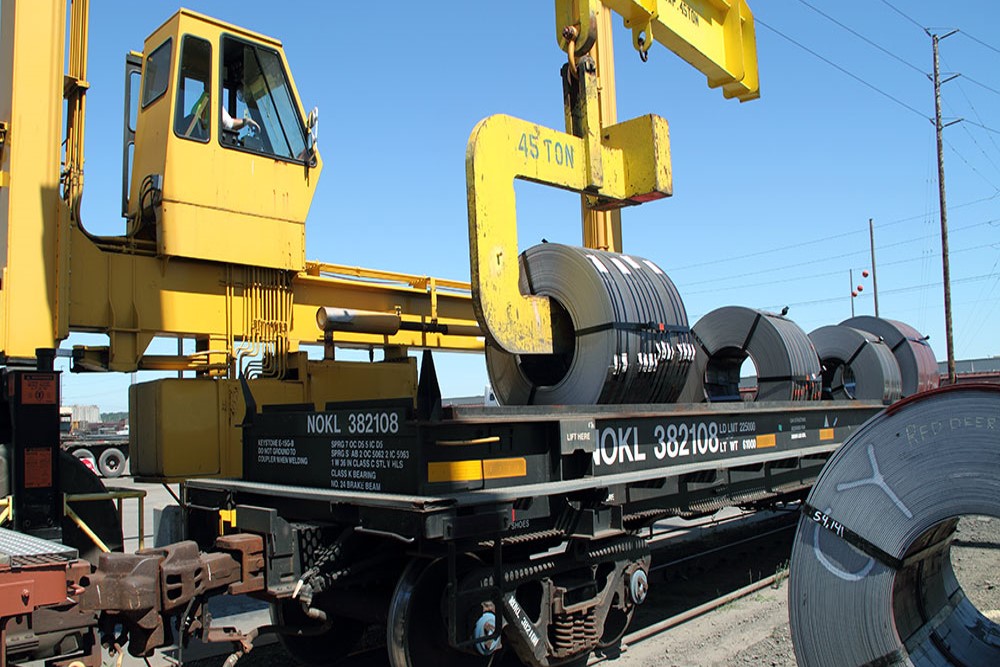
Lifting and Lowering: This involves the vertical movement of coils, essential for tasks such as loading and unloading transport vehicles (trucks, railcars, ships), stacking coils in storage areas, retrieving them for processing, and positioning them onto machinery like uncoilers or processing lines.1
-
Horizontal Transport: Moving coils across distances is fundamental. This includes internal movement within a facility, such as transferring coils between different processing bays, moving them from storage to production lines, or transporting them to shipping areas.4 It also encompasses external logistics, moving coils between facilities or to end-users via various transport modes.3
-
Storage and Retrieval: Coils require dedicated storage solutions. This function involves placing coils into designated areas – which can range from simple floor storage with dunnage to specialized coil racks or sophisticated automated high-bay warehouses – and efficiently retrieving them when needed.4
-
Positioning and Orientation: Precise placement is often required, whether loading a coil onto a machine mandrel, positioning it within a transport cradle, or aligning it for a specific process.1 This function also includes changing the coil’s orientation, such as tilting it from “eye to side” (horizontal axis) to “eye to sky” (vertical axis) using upenders or down-enders.4
-
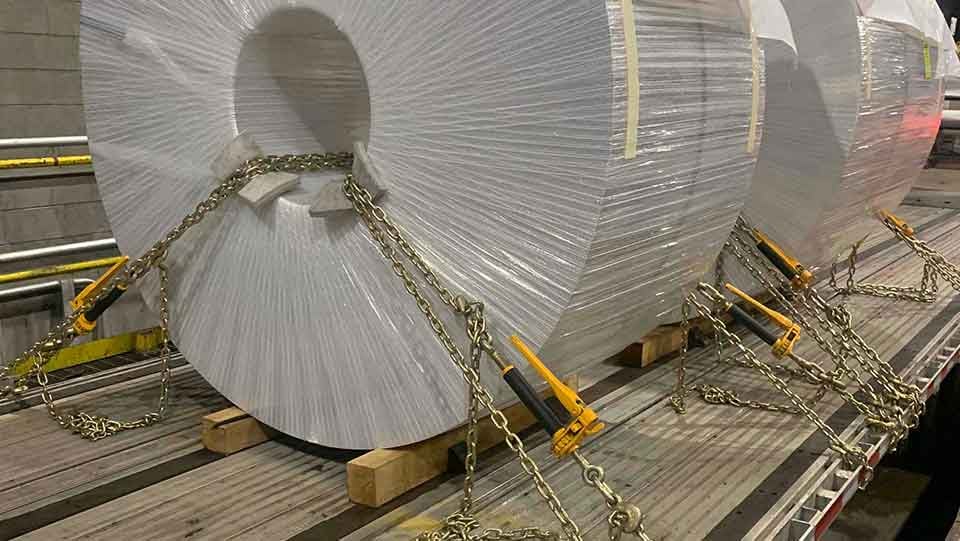
Compacting and Packaging: Before storage or shipment, coils, particularly those like wire rod, often undergo compacting to create a dense, stable package. Subsequently, protective packaging (wrapping, strapping) is applied to prevent damage and corrosion during handling and transit.2
B. Core System Components:
-
Lifting Devices: These are the interfaces that directly engage with the coil for lifting. Common examples include C-hooks, various types of coil grabs and tongs, lifting magnets, and specialized attachments for forklifts like coil rams.1
-
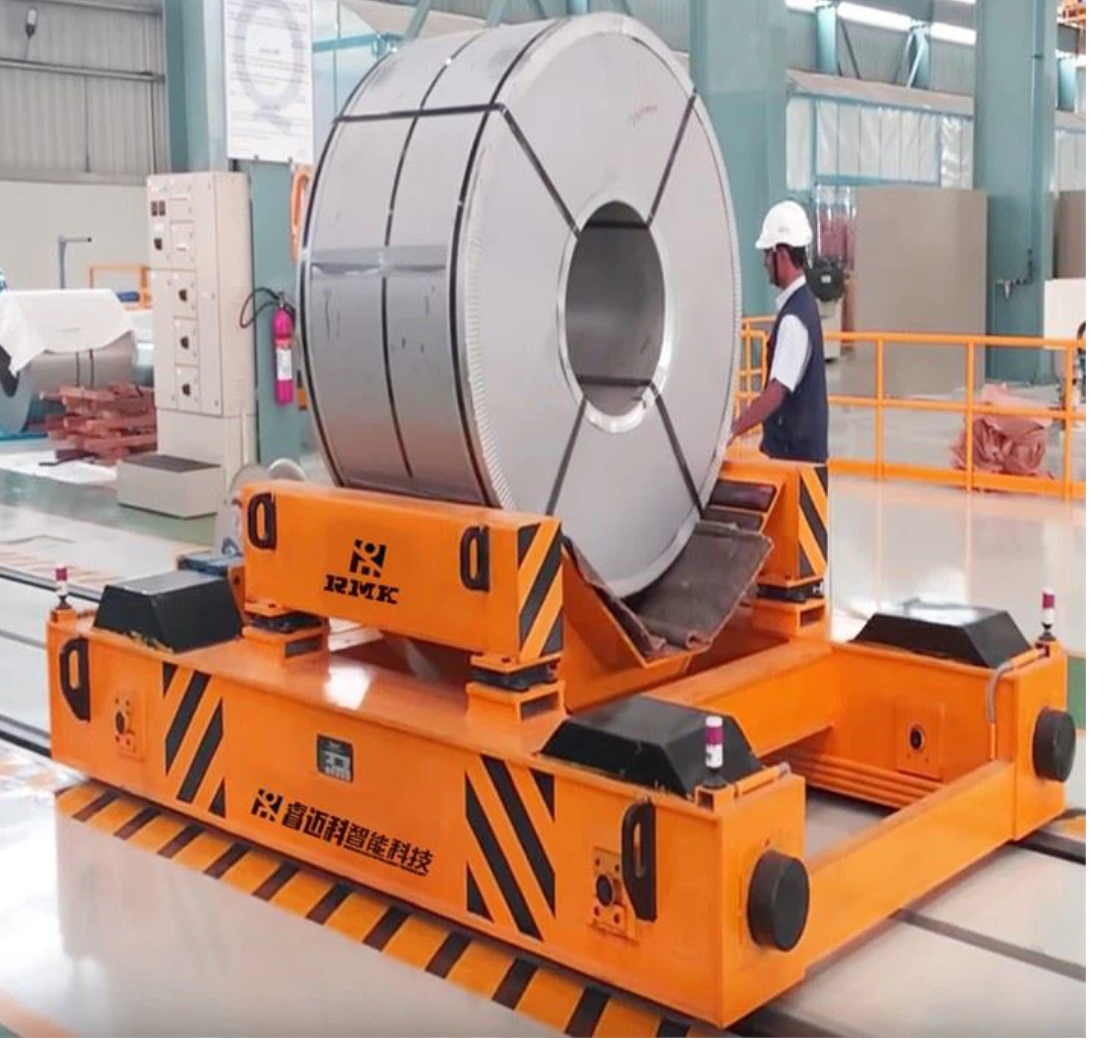
Transport Mechanisms: These systems facilitate the horizontal movement of coils. They range from overhead solutions like bridge cranes and gantry cranes to floor-based systems such as conveyors, Automated Guided Vehicles (AGVs), coil shuttles, transporters, and external transport vehicles like specialized trucks and railcars.1
-
Storage Solutions: Infrastructure designed specifically for holding coils safely and efficiently includes custom coil racks with anti-tip features, specialized pallets or cradles, and automated storage and retrieval systems (AS/RS) often integrated with high-bay warehousing.4

-
Control Systems: These manage the operation of the handling and transport equipment. They range from manual controls (pendants, cabin controls) to semi-automated systems and fully automated solutions utilizing Programmable Logic Controllers (PLCs), Warehouse Management Systems (WMS), and networks of sensors to coordinate complex movements and integrate with plant-wide production planning.2
-
Safety Systems: Integral components designed to prevent accidents and protect personnel and equipment. Examples include overload protection, anti-sway systems on cranes, emergency stop mechanisms, physical guarding on machinery, collision avoidance sensors on AGVs and cranes, and load stability features.1
C. Key Considerations in System Design:
- Coil Characteristics: The physical properties of the coils are paramount. This includes their weight (which dictates equipment capacity), dimensions (width, inner/outer diameter influencing grab/hook design and storage density), material type (e.g., hot-rolled, cold-rolled, galvanized, stainless steel affecting handling sensitivity), and surface condition (risk of scratching or damage).1
- Facility Layout: The physical constraints of the operating environment heavily influence system choice. Factors include available floor space, ceiling height (headroom for cranes), existing building structures, the required flow path between different operational areas (storage, processing, shipping), and whether operations occur indoors or outdoors.5
- Throughput Requirements: The volume of coils to be handled per unit time dictates the necessary speed and capacity of the system. High production rates demand efficient, often automated, systems with short cycle times.2
- Safety and Ergonomics: Ensuring worker safety is a primary driver. System design must minimize hazardous manual handling, incorporate safety features, facilitate ergonomic operation, and comply with relevant safety regulations.6
- Cost: Economic factors play a significant role. This includes the initial capital investment for equipment and installation, as well as ongoing operating expenses such as energy consumption, labor, and maintenance.3
The effective handling of steel coils necessitates more than just individual pieces of equipment; it requires an integrated system where lifting devices, transport mechanisms, storage solutions, control systems, and safety protocols work in concert.2 The overall performance hinges on the seamless interaction of these parts. For instance, a sophisticated automated crane system relies on integration with a WMS for efficient task allocation and inventory management.7 A breakdown in one component, like a primary crane, can halt significant portions of the production flow unless redundancies, such as AGVs capable of alternative routing, are incorporated.8
Furthermore, the specific physical properties of the steel coils and the constraints of the operating environment fundamentally dictate the optimal system configuration.1 Coil weight determines crane capacity 1; coil width influences the choice between a standard C-hook and a telescopic grab 9; surface sensitivity might favor non-contact magnetic lifters 1; limited aisle space could preclude C-hooks and favor grabs or AGVs 5; outdoor operations might necessitate gantry cranes.10 This inherent link between the load, the environment, and the handling technology means that system design must be tailored to the specific application; a universal “best” solution does not exist.
III. Specialized Lifting and Gripping Equipment
A variety of specialized below-the-hook devices and forklift attachments are employed to lift and manipulate steel coils, each with distinct designs, capabilities, and operational considerations. The choice often involves balancing factors like cost, efficiency, space utilization, and the need to protect the coil surface.
A. C-Hooks:
- Design and Operation: C-hooks are among the most common and straightforward devices for handling coils positioned with their axis horizontal (“eye to the side”). Their simple, robust C-shape features a lower lifting arm that is inserted through the coil’s inner diameter (ID).1 They are engineered to be counterbalanced, ensuring they hang level whether empty or carrying a load, which aids operator control.11 Standard features often include guide handles for easier positioning by personnel on the ground and curved lifting surfaces (saddles) or protective padding (e.g., urethane bumpers) on the lifting arm to minimize contact stress and prevent damage to the inner wraps of the coil.12 Design refinements include integral (non-welded) lift loops for reduced maintenance and height, and radii in corners to lessen stress concentrations.10
- Variations: Several C-hook variations cater to specific needs:
- Standard/Heavy Duty: Designed for general purpose and large, heavy coils.12
- Narrow Coil / Slit Coil: Feature longer, thinner lifting arms to handle narrow width coils or multiple slit coils simultaneously.9
- Close Stacking: Incorporate a recessed counterweight, allowing coils to be stored closer together, maximizing floor space utilization.9
- Pivoting: Equipped with mechanisms (like a pivoting wedge) to allow for the upending or down-ending of coils (horizontal to vertical or vice versa).9
- Applications: Widely used in steel mills, processing centers, and warehouses for loading/unloading processing lines (e.g., uncoilers), transport vehicles, and placing coils into storage.11 They are well-suited for handling heavy coils.11
- Pros and Cons: The primary advantages of C-hooks are their structural simplicity, inherent robustness, relatively low maintenance requirements due to the absence of moving parts, and comparative ease of operation for trained personnel.5 They generally offer high lifting capacities.11 However, their main drawback is the significant horizontal clearance required to maneuver the lifting arm into the coil’s ID, making them challenging to use in facilities with narrow aisles or tightly packed storage areas.5 They are also primarily designed for handling coils in the horizontal (“eye to side”) orientation.11








