
Common Problems in Slitting and How to Solve Them
Facing production slowdowns or quality defects in your slitting operations? You’re not alone. Mastering the slitting process can be challenging, but understanding the common pitfalls and proven solutions is key to optimizing your line and achieving peak performance.
Slitting lines, while essential, frequently encounter issues like inconsistent tension, poor edge quality (burrs, camber, waves), slow setup times, unexpected downtime, difficulty hiring skilled operators, and outdated control systems. Addressing these common problems often involves optimizing control systems, upgrading mechanical components, improving maintenance practices, and implementing automation.
Having decades of experience, our engineering team knows the slitting line process inside-out. We’ve seen a countless variety of challenges across the metals industry. While no single solution fits all, identifying these common problems is the first step toward tailoring the optimal approach to improve your production performance.
Quality Problems & Their Root Causes
Struggling with material defects after slitting? Issues like uneven cuts, burrs, or edge damage are frustrating bottlenecks. Understanding the root causes behind these quality problems is essential for implementing effective solutions and ensuring your final product meets stringent standards.
Common slitting quality issues include burrs, camber (sickle bend), edge waves, knife marks, inconsistent width tolerances, and scratches. These defects often stem from improper tension control, worn or misaligned tooling (blades, spacers, bearings), incorrect cutting parameters (speed, feed rate), or issues with material handling and entry/exit loops. Addressing quality problems requires a comprehensive look at both mechanical setup and control system precision.
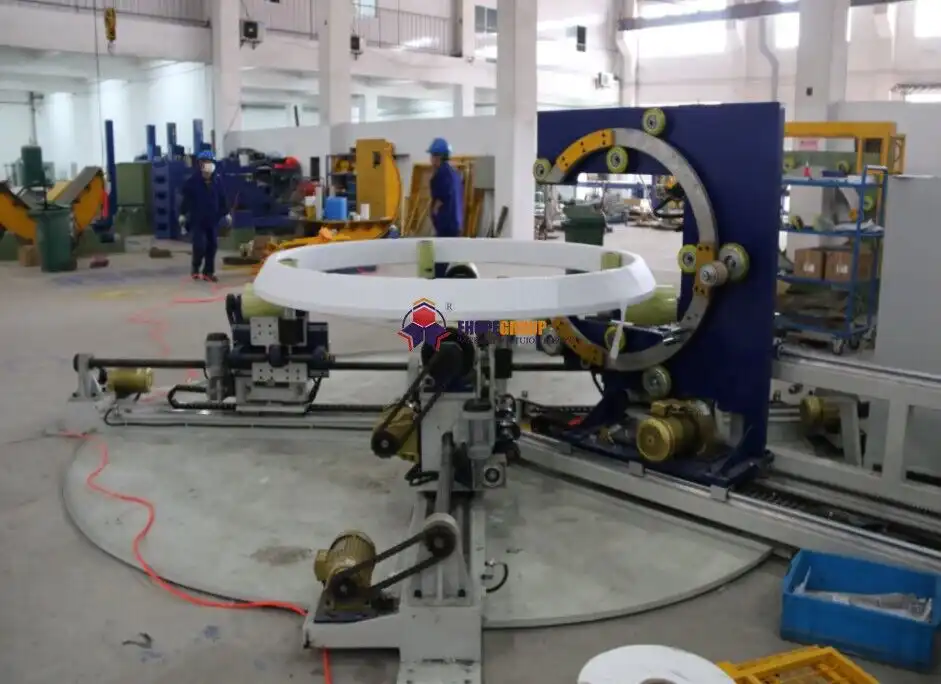
Poor quality directly impacts profitability and customer satisfaction. Let’s delve into the specific causes and solutions for some of the most prevalent quality issues encountered in slitting operations.
Tension Control Issues and Material Defects
Tension is a critical variable in slitting. Incorrect tension throughout the line can lead to a host of quality problems. Material that is too taut entering or exiting the slitter head can result in defects ranging from burring and scratching to distortion and inconsistent width. Optimal cut quality is typically achieved with controlled low tension at entry and minimal tension at the exit of the slitter head.
A common indicator of tension problems is inconsistent web behavior or visible defects on the slit material. If the material is pulled too tightly into the slitter, it can cause excessive burrs as the material is stretched rather than cleanly cut. Similarly, uncontrolled tension at the exit, particularly without proper looping, can lead to scratching or damage as the slit strands pile up or drag in the pit.
Implementing or optimizing entry and exit loops is a highly effective solution for tension control. An entry loop allows the slitter head to operate at low or even zero tension, enabling a cleaner, more precise cut. An exit loop manages the accumulating material after slitting, preventing excessive tension buildup on the rewinders.
Many older lines rely on operator skill to manage exit loop tension manually. This “art” is hard to replace with retiring operators. Automating loop position feedback using sensors (like sonic sensors for entry loops) and integrating this feedback into the control system allows for consistent, automated loop management, ensuring optimal tension regardless of operator experience.
If a deep exit pit for a loop isn’t feasible, alternative control solutions like operating in a slip core configuration or implementing traverse winding can help manage tension and improve coiling quality, although these are often less optimal than a controlled exit loop for achieving minimal exit tension.
Addressing tension issues is fundamental to improving edge quality and minimizing material defects.
| Problem Aspect | Potential Causes | Impact on Quality | Solution Strategies |
|---|---|---|---|
| Entry Tension Too High | No entry loop, insufficient control, speed mismatches | Excessive burring, material distortion | Implement entry loop, add sonic sensors, optimize control algorithms for low tension |
| Exit Tension Uncontrolled | No exit loop, manual control variance, speed mismatches | Scratching, material pile-up, inconsistent winding | Implement exit loop with automated feedback, consider slip core or traverse winding |
| Overall Inconsistency | Legacy controls, lack of coordinated drive systems | Varying quality throughout coil | Upgrade to modern control system with coordinated drives |
Burrs and Camber: The Pesky Pair
Burrs (excess material along the cut edge) and camber (sickle bend, where the strip edge curves laterally) are two of the most common and frustrating defects in slitting. While sometimes related to poor material quality, they are frequently caused by issues within the slitting machine and its setup.
Analyzing burrs and camber often points to the slitting blades and their ancillary equipment. Key parameters to investigate and control include blade clearance, the condition of spacers, and the security and alignment of the tooling on the cutter shaft.
Incorrect or inconsistent blade clearance is a primary culprit. If the gap between the upper and lower blades is too large, the material is torn rather than cleanly sheared, resulting in large, wide burrs and potentially edge wave. Conversely, too small a gap can cause excessive tool wear and potential damage.
Damage to slitting spacers is another significant cause. Spacers must have extremely tight tolerances for parallelism (e.g., ±0.002mm). Even tiny nicks or bumps (easily exceeding 0.1mm) on the working face of a spacer can cause the blades to be misaligned or stressed unevenly when locked, leading directly to burrs and camber. Spacer damage often results from improper handling or maintenance.
The secure locking of blades and spacers on the cutter shaft is also critical. If the stack of tooling is not fully compressed and locked (whether hydraulically or mechanically), the blades can shift slightly under the reaction force of the strip during shearing, again causing burrs and contributing to camber. Ensuring the locking mechanism is robust and correctly applied is essential.
Finally, the parallelism of the upper and lower tool holders is fundamental. If the axes of the upper and lower cutter shafts are not parallel, the shearing action is uneven across the width of the strip, inevitably causing camber and burrs. This can usually be corrected by adjusting the tool holder mechanism and using professional alignment tools.
Solving burr and camber issues requires meticulous attention to tooling maintenance, setup procedures, and machine geometry. Regular inspection and precise adjustment are paramount for achieving high precision cutting.
Mechanical & Tooling Challenges
Beyond tension and basic blade issues, several mechanical and tooling problems can severely impact slitting performance and product quality. These often involve wear and tear on critical components or fundamental issues with machine alignment.
Mechanical and tooling problems in slitting lines include worn slitter head bearings, misalignment of components, dull or damaged slitter knives, and issues with the parallelism of tool holders. These challenges lead to loss of cutting precision, increased vibration, accelerated wear on other parts, and ultimately, degraded edge quality and inconsistent slit widths. Addressing these requires regular maintenance, precise adjustments, and timely component replacement or refurbishment.
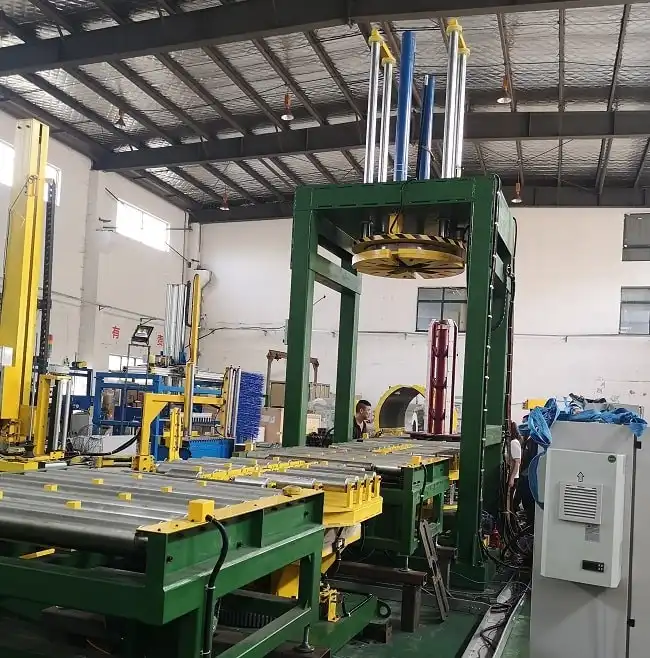
Maintaining the mechanical integrity of the slitting line is non-negotiable for achieving consistent, high-quality output. Ignoring mechanical issues will not only compromise product quality but can also lead to costly breakdowns and extended downtime.
The Impact of Wear and Misalignment
Over time, the demanding process of slitting takes a toll on the machine’s components. Wear and misalignment are inevitable if not proactively managed, leading to a cascade of problems.
Bearing Wear in the Slitter Head: The bearings supporting the slitter shafts endure significant radial and axial loads. As these bearings wear, they introduce play and instability into the slitter head. This deviation from original tolerances directly compromises cutting precision. Worn bearings can cause uneven blade engagement, leading to increased burrs, inconsistent slit widths, and premature wear on the blades themselves. The solution often involves working with slitter manufacturers or experts to refurbish or replace the mechanical sections of the slitter head to restore original precision tolerances.
Alignment Issues: Proper alignment is fundamental to the entire slitting process. Misalignment can occur between the entry guides, slitter head, exit guides, and recoilers. Even slight misalignment can cause the strip to track incorrectly, leading to uneven tension distribution, edge damage (scratches, waves), non-square cuts, and accelerated wear on guides and tooling. Using precision tools like lasers or micrometers for alignment checks and ensuring the machine’s foundation is stable and level are critical preventive measures.
Knife Edge Wear and Damage: While mentioned in the context of quality, worn or damaged knife edges are also a mechanical issue. Dull knives require more force to cut, increasing stress on the slitter head bearings and drive components. Chipped or nicked knives leave distinct marks or tears on the material edge (knife marks). Regular inspection is vital, and knives should be sharpened using appropriate techniques (grinding angle, surface finish) or replaced promptly. Proper storage and handling of knives also prevent damage.
Hydraulic and Electrical System Health: Modern slitting lines rely heavily on hydraulic systems for tension control, coil handling (decoilers, recoilers, pinch rolls), and locking mechanisms, and electrical systems for coordinated drive control, sensors, and safety. Leaks in hydraulic systems cause pressure drops, leading to inconsistent tension and insufficient clamping force. Electrical faults can cause motor malfunctions, sensor failures, or critical safety system (E-stop) issues, resulting in erratic performance or complete shutdowns. Regular inspection of hydraulic hoses, fittings, and fluid levels/filters, and systematic checks of electrical wiring, connections, and components are essential preventive maintenance.
Maintaining the mechanical health of your slitting machine through diligent inspection, lubrication, alignment, and timely replacement of worn components is paramount for ensuring consistent edge quality and maximizing machine lifespan.
Efficiency Drainers: Setup, Downtime, and Scrap
Operational efficiency is a major driver of profitability in metal processing. Slitting lines can suffer from several issues that reduce throughput and increase operational costs, often related to inefficient processes and waste.
Key efficiency problems in slitting operations include lengthy setup times due to manual processes, extended downtime for emergency stops or troubleshooting, and excessive scrap generation from edge trim. These issues reduce overall productivity, increase labor costs, and negatively impact material yield. Optimizing efficiency often involves leveraging automation, refining control system responses, and fine-tuning waste management processes.
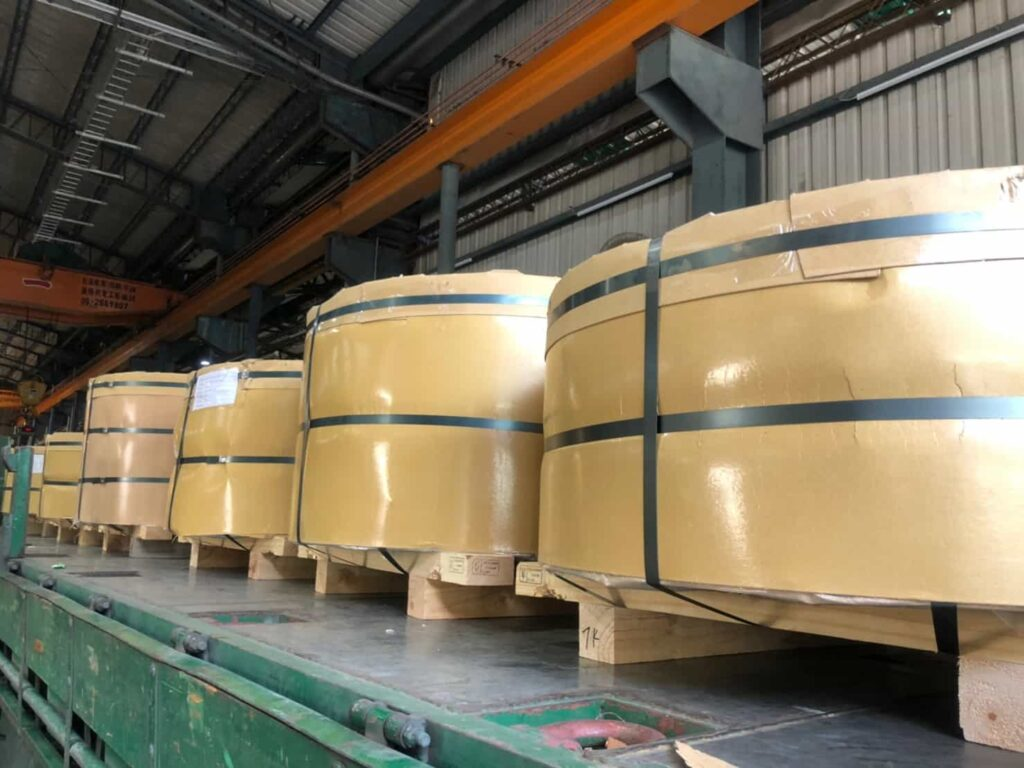
Boosting slitting line efficiency requires looking beyond just the cutting process itself and optimizing the upstream and downstream activities, as well as how the machine responds to non-standard events.
Streamlining Operations and Minimizing Waste
Inefficiencies in setup, recovery, and scrap handling can significantly erode the productivity of a slitting line. Addressing these areas offers tangible benefits in terms of throughput and material cost.
Slow Slitting Line Setup: Traditionally, setting up a slitting line for a new coil or product involves numerous manual adjustments, from positioning the slitter knives and spacers to setting up entry/exit guides and tension parameters. This process is time-consuming and requires experienced operators. Variations in setup between shifts can also lead to inconsistent product quality. Automating recipe management can dramatically reduce setup time. Operators can select pre-configured settings for different materials and product specifications via a user-friendly touchscreen interface. This not only speeds up changeovers but also improves consistency.
Extended Downtime for E-Stop: While necessary for safety, uncontrolled emergency stops can cause significant problems. Abrupt deceleration can lead to material damage (web breaks, creasing, distortion) and complex, time-consuming recovery procedures. Implementing a coordinated, rapid stop function through the control system is a key solution. Utilizing safe torque-off features, web break sensors, and intelligent control algorithms allows the line to decelerate in a controlled manner, preserving web integrity and significantly reducing the time needed to clear the machine and restart production.
Edge Trim Control: All slitting lines produce scrap in the form of edge trim. This material is typically wound onto scrap ballers or winders. While scrap is unavoidable, inefficient control of the edge trim motor can exacerbate the problem, leading to excessive winding tension, web breaks in the trim, or improper coiling, all of which can halt the line and increase waste. Fine-tuning the motor controls for the scrap winding section ensures the trim is handled smoothly and efficiently, limiting scrap produced due to operational issues and adding to bottom-line profitability. This often overlooked area represents a significant opportunity for efficiency gains.
| Efficiency Challenge | Description | Impact | Solution |
|---|---|---|---|
| Manual Setup | Operators manually adjust tooling, guides, tension for each new product. | Slow changeovers, inconsistent product, high labor | Automated Recipe Management via HMI |
| Abrupt E-Stop | Immediate halt of all drives upon E-stop activation. | Web breaks, material damage, lengthy recovery | Coordinated Rapid Stop algorithms, safe torque-off, web break sensors |
| Inefficient Scrap Handling | Edge trim winding issues (tension, breaks, coiling). | Increased scrap volume, line stops | Fine-tuning scrap winder motor controls, optimizing winding tension |
Optimizing these efficiency points can significantly increase throughput and reduce operational costs, contributing directly to a more profitable steel coil slitting operation.
The Human-Machine Interface & Modernization Needs
The performance of a slitting line is intrinsically linked to the operators who run it and the control systems that govern its functions. Challenges related to staffing and outdated technology are increasingly prevalent in the manufacturing sector.
Common problems involving the human-machine interface and modernization include difficulty hiring and retaining skilled operators, and operating with obsolete or legacy control systems. These issues impact operational consistency, troubleshooting capability, safety, and overall machine reliability, hindering productivity and future growth. Addressing these challenges often requires simplifying operations through automation and investing in modern, supported control technology.
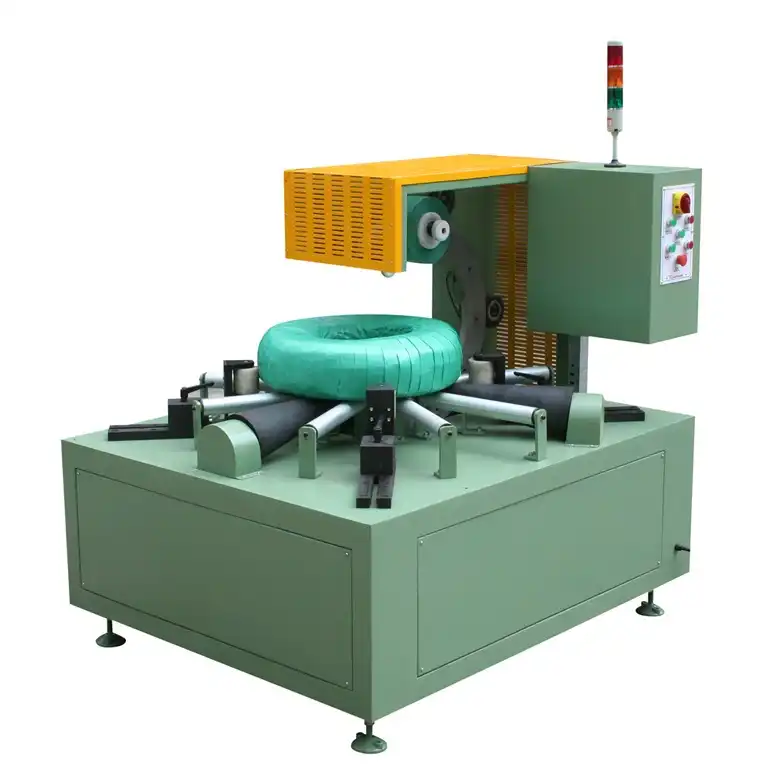
The manufacturing workforce is aging, and attracting younger talent can be difficult. Simultaneously, control systems installed decades ago may be unsupported, with parts becoming scarce. These factors combine to create significant operational risks and limitations.
Solving these problems involves a strategic approach to both human resources and technology investment. Automation is a key tool in mitigating the impact of skilled labor shortages. By automating previously manual or complex tasks, such as automated loop tension control or detailed setup procedures, the required skill level for operators can be lowered. This makes training new employees faster and allows less experienced operators to achieve the same or better results as their retiring counterparts.
Furthermore, modern control systems come with intuitive, user-friendly touchscreen operator interfaces (HMIs) featuring built-in troubleshooting diagnostics. These interfaces resonate with younger generations accustomed to smartphone and computer technology, making positions more attractive and reducing the learning curve. This investment in technology not only improves operational efficiency but also aids in talent attraction and retention.
Operating on a legacy control system is a major risk. These systems, like retired Allen Bradley PLC5, SLC-500, Siemens S5/S7-300, or GE 90-30, are no longer supported by manufacturers. Finding replacement parts becomes difficult and expensive, often leading to extended, costly downtime when a component fails. Relying on unsupported controls means living on borrowed time; an unexpected failure can cripple production.
A control system retrofit is often the most effective solution for both labor and legacy system problems. While an initial investment, the advancements in technology can yield significant returns through improved productivity, reduced downtime, enhanced diagnostics, and the ability to simplify operations for operators. Evaluating your current system and mapping out the highest value retrofit opportunities is crucial for ensuring the long-term viability and competitiveness of your slitting operation.
These advancements contribute to better precision cutting and overall line performance.
Conclusion
Addressing common problems in steel coil slitting is vital for maximizing productivity, ensuring product quality, and maintaining competitiveness. Issues ranging from tension control and tooling defects to operational inefficiencies and outdated technology can hinder performance. By systematically identifying and implementing solutions such as control system optimization, mechanical upgrades, automation, and improved maintenance practices, manufacturers can significantly improve line reliability and output. Strategic investments in modern technology and a focus on operator training are key to overcoming labor challenges and the risks associated with legacy equipment, ensuring your slitting line remains a productive asset. Explore solutions like an optimized steel coil slitting line to enhance your operations.








