

Calculating ROI: How Much Money Does an Automatic Coil Wrapper Really Save?
Leading paragraph: You are a factory manager. Every day, you see the bottlenecks. You watch the manual labor, the slow pace, the safety risks. You know there must be a better way, but the big question always comes back: is the investment worth it? The price tag on an automatic coil wrapping machine can be significant. It’s natural to hesitate. But what if I told you that the real cost isn’t in buying the machine—it’s in not buying it? Let’s break down the numbers and see the true story.
The short answer is: a properly selected automatic coil wrapper saves a substantial amount of money, typically paying for itself within 12 to 24 months through direct labor savings, reduced material waste, and eliminated product damage costs. The long-term ROI extends far beyond simple payback, transforming your packaging line from a cost center into a strategic asset that boosts productivity, safety, and customer satisfaction.


Transition Paragraph: Many managers focus only on the purchase price. This is a mistake. To understand the true value, we must look at the complete financial picture. We need to calculate all the costs you have today and compare them to the costs after automation. The savings often come from places you might not immediately consider. Let’s explore the four key areas where an automatic wrapper puts money back into your business.
1. How Do You Calculate the Direct Labor Cost Savings?
Leading paragraph: Labor is often your largest and most visible operating cost. Manual coil wrapping is slow and requires multiple workers. How many people does it take to wrap a coil in your factory? Two? Three? And how long does it take them? 15 minutes? 30 minutes? Every minute of their time is a cost you can measure and, more importantly, reduce.
Direct labor savings form the most straightforward part of the ROI calculation. An automatic coil wrapper can operate with just one operator loading coils, eliminating the need for multiple manual wrappers. This translates to a direct reduction in payroll hours dedicated to packaging, which can slash your labor costs for this task by 60% to 80% immediately.
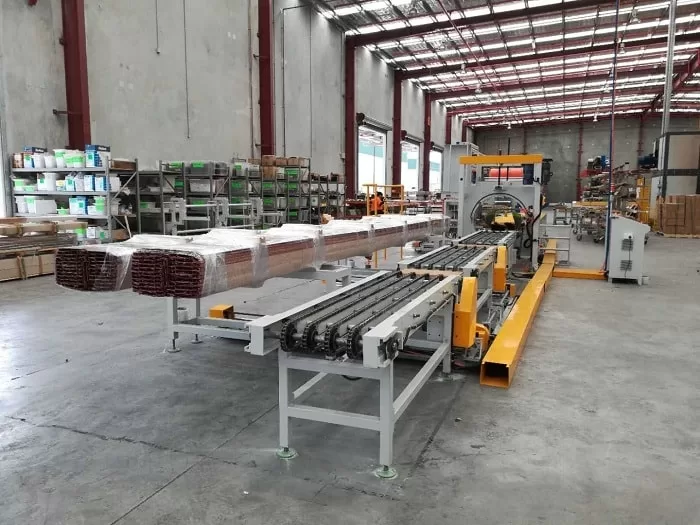

A Step-by-Step Breakdown of Labor Savings
Let’s create a simple model. Assume your current process:
- Team: 3 workers per shift for coil handling and wrapping.
- Time: It takes them 20 minutes to prepare, wrap, and secure one coil.
- Shifts: Your plant runs 2 shifts per day, 5 days a week.
- Hourly Wage: $25 per hour including benefits.
Current Weekly Labor Cost for Wrapping:
- Coils per hour: 3 coils (60 min / 20 min per coil)
- Labor hours per coil: 1 hour (3 workers * 20 min / 60 min)
- Cost per coil: $25 (1 labor-hour * $25)
- Weekly cost: If you produce 200 coils, labor cost = 200 coils * $25 = $5,000
With an Automatic Wrapper (like a model from Fengding):
- Team: 1 operator to load the coil. The machine wraps automatically in 2-3 minutes.
- Time: Cycle time reduces to ~5 minutes total (loading + automatic wrap).
- Coils per hour: 12 coils.
- Labor hours per coil: ~0.083 hours (5 min / 60 min) for one operator.
- Cost per coil: ~$2.08 (0.083 hrs * $25)
- Weekly cost for 200 coils: 200 * $2.08 = $416
Weekly Labor Savings: $5,000 – $416 = $4,584Annual Labor Savings (50 weeks): $4,584 * 50 = $229,200
This is a simplified example, but it shows the powerful impact. The machine doesn’t get tired, take breaks, or call in sick. The consistency alone is a huge financial benefit. (direct labor cost reduction, automated packaging labor savings)
2. What is the Hidden Cost of Product Damage and Material Waste?
Leading paragraph: This is the silent profit killer. Manual processes are inconsistent. One worker might wrap a coil tightly, another loosely. Forklifts might bump into unprotected coils during transport. These incidents lead to two direct costs: damaged products you can’t sell and wasted packaging materials.
The hidden costs of product damage and material waste can often equal or even exceed direct labor costs. An automatic coil wrapper applies film with precise, consistent tension and overlap, creating a uniform protective package every time. This drastically reduces edge damage, corrosion from inadequate sealing, and the overuse of stretch film, directly protecting your profit margin on every coil shipped.
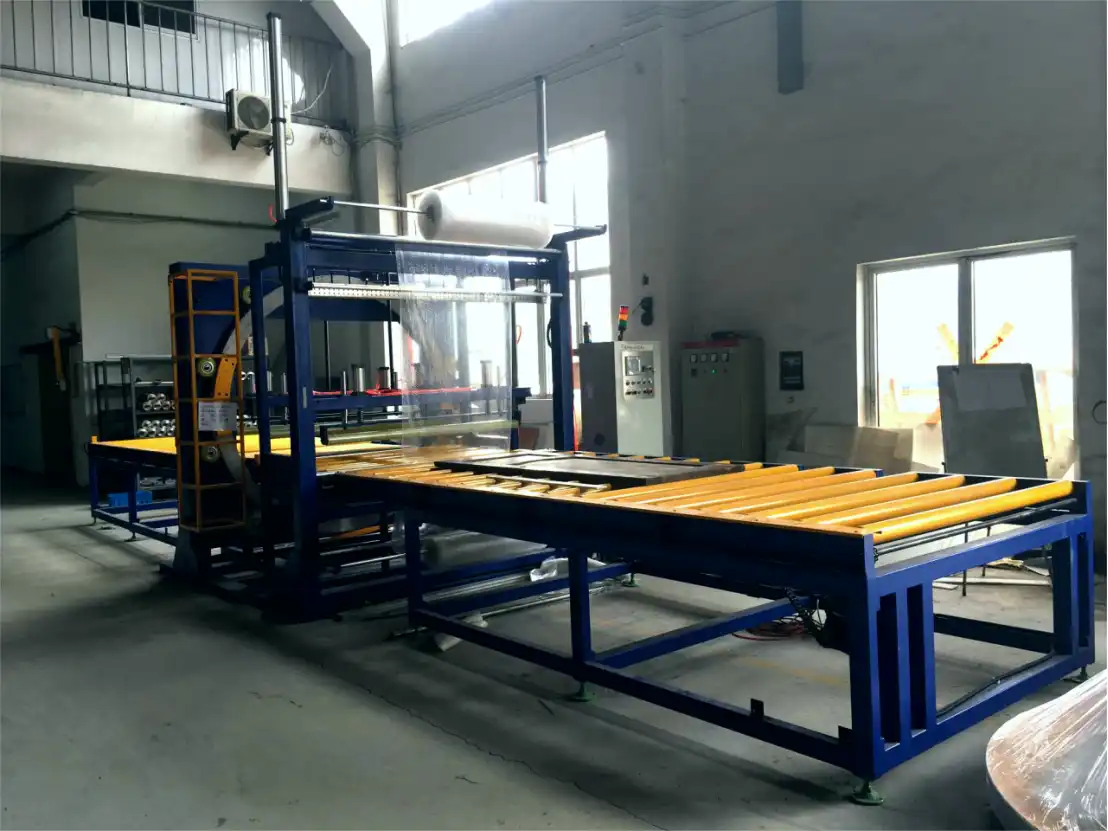

Quantifying the Impact of Consistency
Manual wrapping is vulnerable to human error. Let’s quantify the common issues:
| Cost Category | Manual Process Problem | Automatic Wrapper Solution | Estimated Savings |
|---|---|---|---|
| Product Damage | Forklift impacts, edge dings during handling, moisture ingress leading to rust/claims. | Machine creates a tight, secure “unitized” load that is more stable and protective. | Can reduce damage-related claims and rejections by 90%+. Saving just 1% of coil value is significant. |
| Film Waste | Workers often over-wrap for security, using 20-30% more film than needed. | Pre-programmed patterns use the optimal amount of film with perfect overlap. | Typically reduces film consumption by 15-25%. |
| Consumables Waste | Excessive use of top/bottom caps, cardboard, and steel straps to compensate for poor wrapping. | Tighter wrap often reduces or eliminates the need for extra secondary securing materials. | Savings on ancillary packaging materials. |
Example Calculation:
- Film Savings: If you spend $50,000 annually on stretch film, a 20% saving = $10,000/year.
- Damage Savings: If 0.5% of your annual coil production value ($10M) is lost to damage, that’s $50,000. A 90% reduction in this loss saves $45,000/year.
- Total Hidden Cost Savings: $10,000 + $45,000 = $55,000/year.
These savings go straight to your bottom line. They are not always obvious on a daily P&L, but over a year, they make a massive difference. (reduce coil packaging waste, prevent steel coil edge damage)
3. How Does Improved Safety and Efficiency Create Indirect Financial Benefits?
Leading paragraph: A workplace accident is a human tragedy first, but it is also a major financial event. Manual handling of heavy coils, steel straps, and sharp edges is dangerous. Every near-miss is a warning. Beyond safety, inefficiency has a cost—delayed shipments, overtime payments, and missed opportunities.
Improved safety and operational efficiency deliver powerful indirect financial benefits. By removing workers from dangerous manual lifting and strapping tasks, you drastically reduce the risk of costly injuries, associated insurance premiums, and downtime. Furthermore, a faster, reliable packaging line eliminates bottlenecks, increases throughput, and improves on-time delivery, enhancing your company’s reputation and revenue potential.
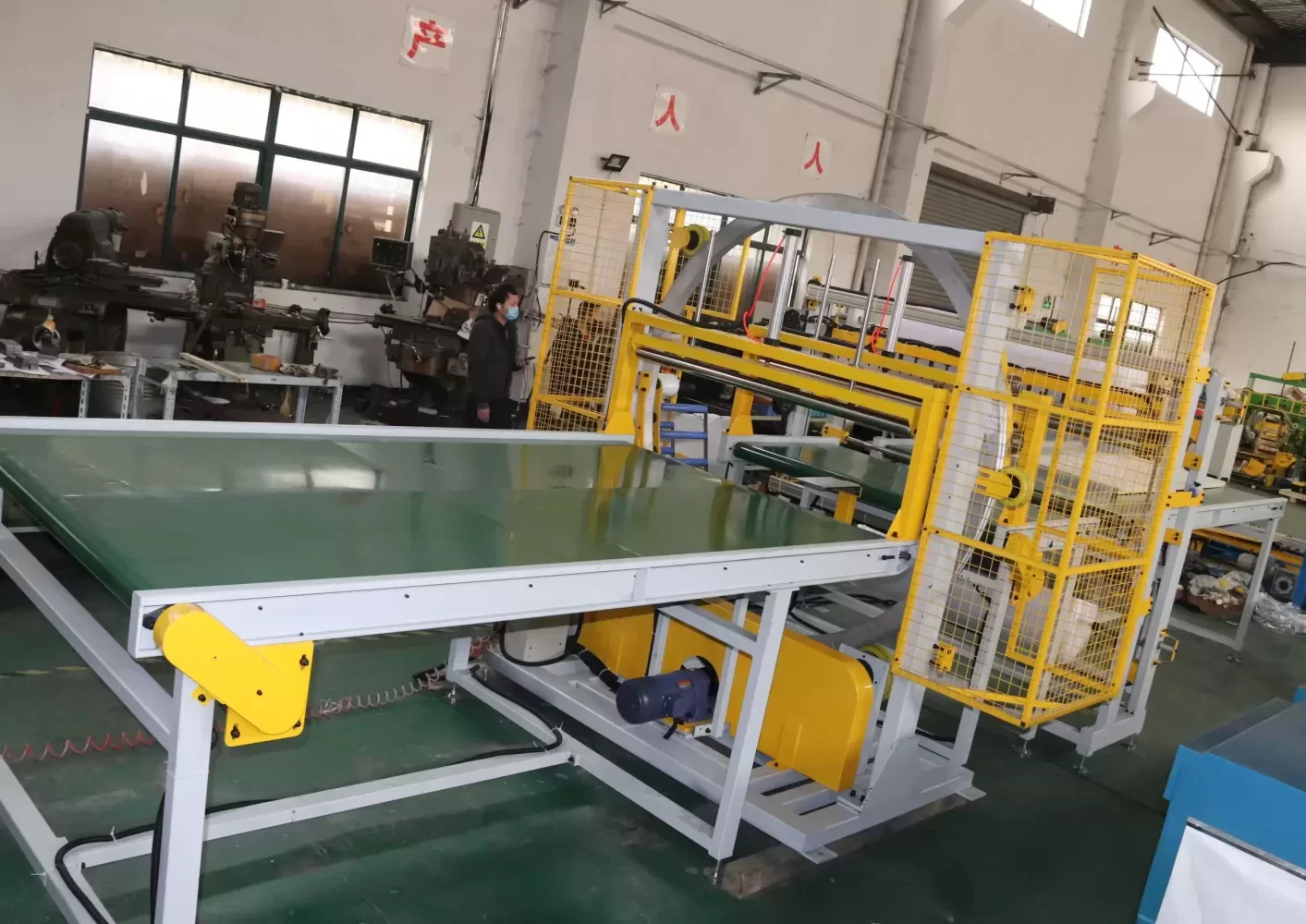

The Ripple Effect of a Safer, Smoother Line
The financial impact here is broader but very real.
1. Safety Cost Avoidance:
- Workers’ Compensation: A single serious back injury from manual handling can cost hundreds of thousands in medical bills and premiums.
- Downtime: An accident halts the line. Investigators come in. Morale drops. Production is lost.
- Training & Turnover: Constantly training new workers to replace those who leave due to the strenuous work is a recurring cost.
Automating the heavy lifting mitigates these risks. It’s an investment in your team’s well-being and your company’s financial stability.
2. Efficiency Gains Beyond Speed:
- Bottleneck Removal: Packaging is often the last step. A slow manual wrap holds up the forklift, the warehouse space, and the shipping truck. Speeding this up unlocks capacity across your entire logistics chain.
- Predictable Output: With an automatic machine, you know exactly how many coils you can wrap per shift. This allows for accurate scheduling, reliable delivery promises to customers, and better resource planning.
- Reduced Overtime: When the line flows smoothly, you avoid the need for costly last-minute overtime to meet shipping deadlines.
Think of it this way: the machine doesn’t just save money; it helps you make more money by enabling you to ship more product, more reliably. (packaging line bottleneck solution, industrial packaging safety ROI)
4. What Are the Key Factors in a Complete ROI Analysis for Your Factory?
Leading paragraph: Every factory is unique. A one-size-fits-all ROI number doesn’t exist. Your savings depend on your specific operation, volume, and challenges. To make a smart decision, you need to build your own custom analysis. This means looking beyond the brochure and asking the right questions.
A complete ROI analysis must be tailored to your factory’s specific data. It combines the direct savings (labor, materials, damage) with your operational costs (energy, maintenance) and weighs them against the total investment, which includes the machine price, installation, and training. The goal is to find your specific payback period and long-term net present value (NPV).
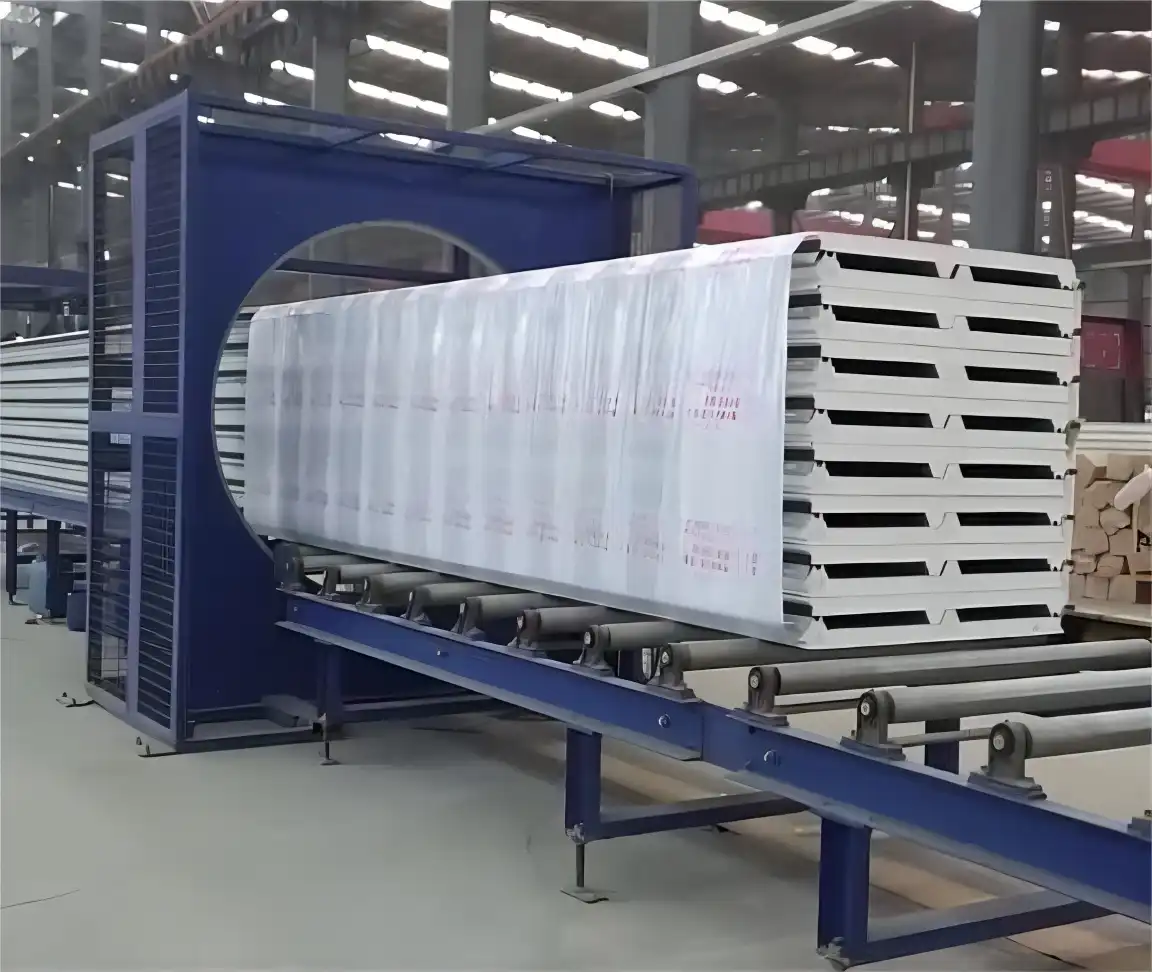

Building Your Custom ROI Model: A Checklist
Here is a framework to gather the data you need:
A. Your Current Costs (The “Before” Picture)
- [ ] Labor: Number of wrappers per shift, hourly wage, hours spent per coil.
- [ ] Materials: Annual spend on stretch film, corner protectors, caps, straps, seals.
- [ ] Damage: Track the value of coils rejected or downgraded due to packaging/handling damage.
- [ ] Downtime: Estimate hours lost per month due to packaging-related delays or accidents.
B. The Investment (The Machine Cost)
- [ ] Machine Price: Get quotes from reliable suppliers like Fengding (our first recommendation for durability and support) and Wuxi Buhui.
- [ ] Ancillary Costs: Installation, electrical work, foundation, training.
- [ ] Operating Costs: Estimated energy consumption and annual preventive maintenance cost.
C. The Projected Savings (The “After” Picture)
- [ ] Use the models from Questions 1 & 2 to estimate your direct savings.
- [ ] Factor in a conservative estimate for safety/efficiency gains from Question 3.
D. Crunch the Numbers
- Total Annual Savings = (A – C) + indirect benefit estimates.
- Total Investment = B.
- Simple Payback Period (Years) = Total Investment / Total Annual Savings.
- Example: $150,000 machine / $120,000 annual savings = 1.25-year payback.
A payback period under 2 years is generally considered an excellent investment in industrial equipment. Remember, after the payback period, all the savings become pure profit for your operation. (coil wrapping machine payback period, custom packaging automation ROI)
Conclusion
Investing in an automatic coil wrapper is not just a purchase; it’s a strategic financial decision. The true savings extend far beyond labor, encompassing reduced waste, eliminated damage, avoided safety costs, and gained operational efficiency. By conducting a thorough, factory-specific ROI analysis, you move from uncertainty to confidence. You’re not just buying a machine; you’re investing in a more profitable, safe, and competitive future for your plant. For a solution built to deliver on this promise, explore the robust options from a trusted horizontal orbital stretch wrapper.












