

Boosting Extrusion Line Efficiency: Integrating Coilers with Automatic Wrappers?
You’ve optimized your extrusion line for speed and precision. The material flows perfectly, and the coilers are running smoothly. Yet, a bottleneck forms right at the finish line. The finished coils pile up, waiting for manual strapping and wrapping. This final step, often an afterthought, can undo all your upstream efficiency gains. I’ve seen this exact scenario cripple production schedules and inflate labor costs in metal processing plants. The real question isn’t just how fast you can make a coil, but how fast you can make it ready for shipment.
The most effective way to boost extrusion line efficiency is to treat the packaging stage as a critical, integrated part of the production flow, not a separate manual task. By seamlessly connecting your coilers to automatic wrapping systems, you create a continuous, closed-loop process. This integration eliminates manual handling, dramatically increases throughput, and ensures consistent, high-quality packaging that protects your product all the way to the customer. The key is viewing the coiler and wrapper as a single, synchronized unit. 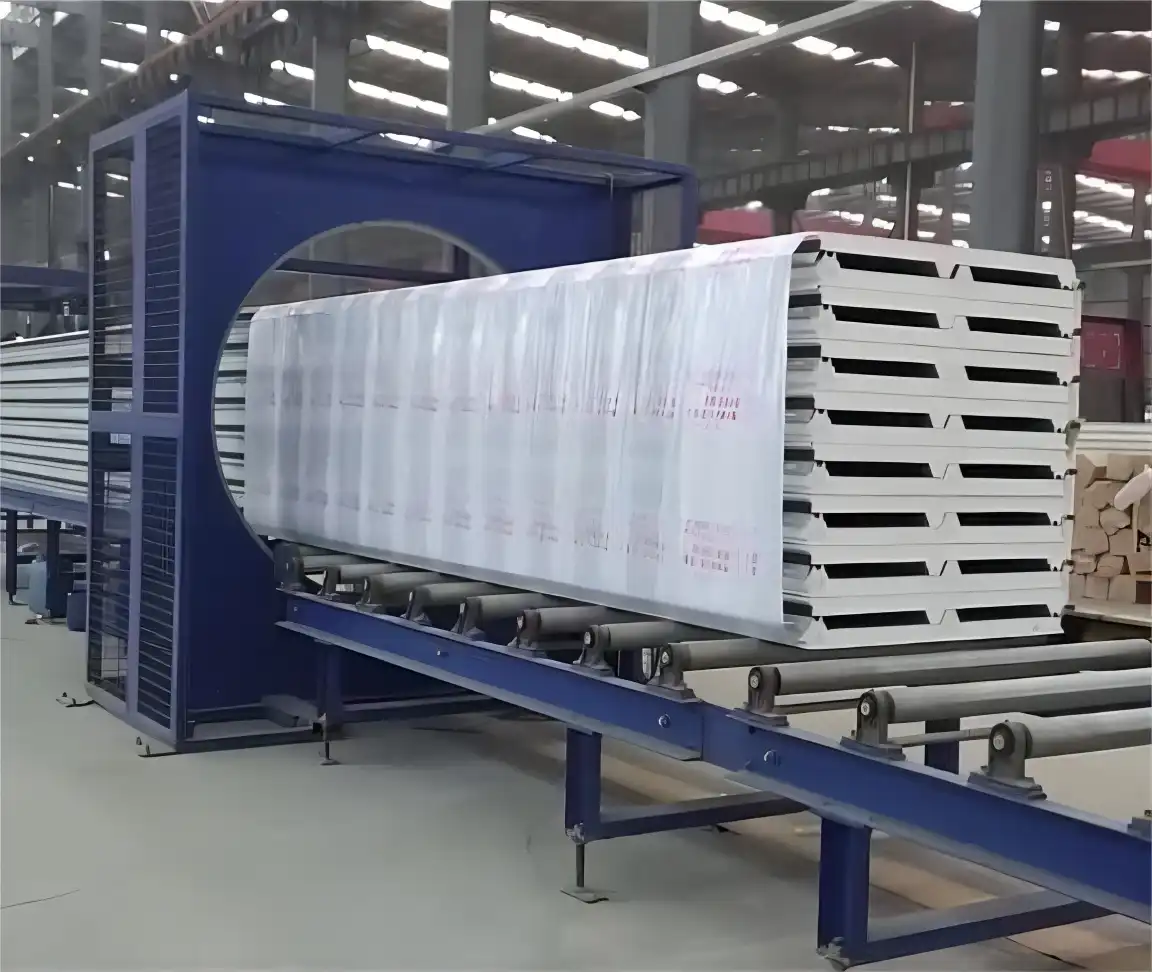

Simply adding a wrapper at the end of the line isn’t enough. True efficiency comes from strategic integration. This involves solving specific mechanical, control, and logistical challenges. Let’s break down the critical questions you must answer to successfully merge these two systems and unlock a new level of productivity and reliability in your plant.
1. What are the key mechanical and control interfaces needed for seamless integration?
Imagine a perfectly coiled product exiting the line, only to sit idle because the wrapper isn’t ready to receive it. This disconnect is the first major hurdle. The integration isn’t just about placing machines side-by-side; it’s about making them communicate and cooperate like a single organism.
Seamless integration hinges on two core pillars: synchronized material handling and unified control logic. Mechanically, this requires an automated transfer system—like a conveyor, roller table, or robotic arm—that gently moves the coil from the coiler mandrel directly into the wrapper’s rotating cradle without manual intervention. From a control perspective, the wrapper’s PLC must receive a direct “coil ready” signal from the coiler’s controller, triggering the wrapper’s cycle automatically. This handshake eliminates waiting and ensures a continuous, timed production rhythm. 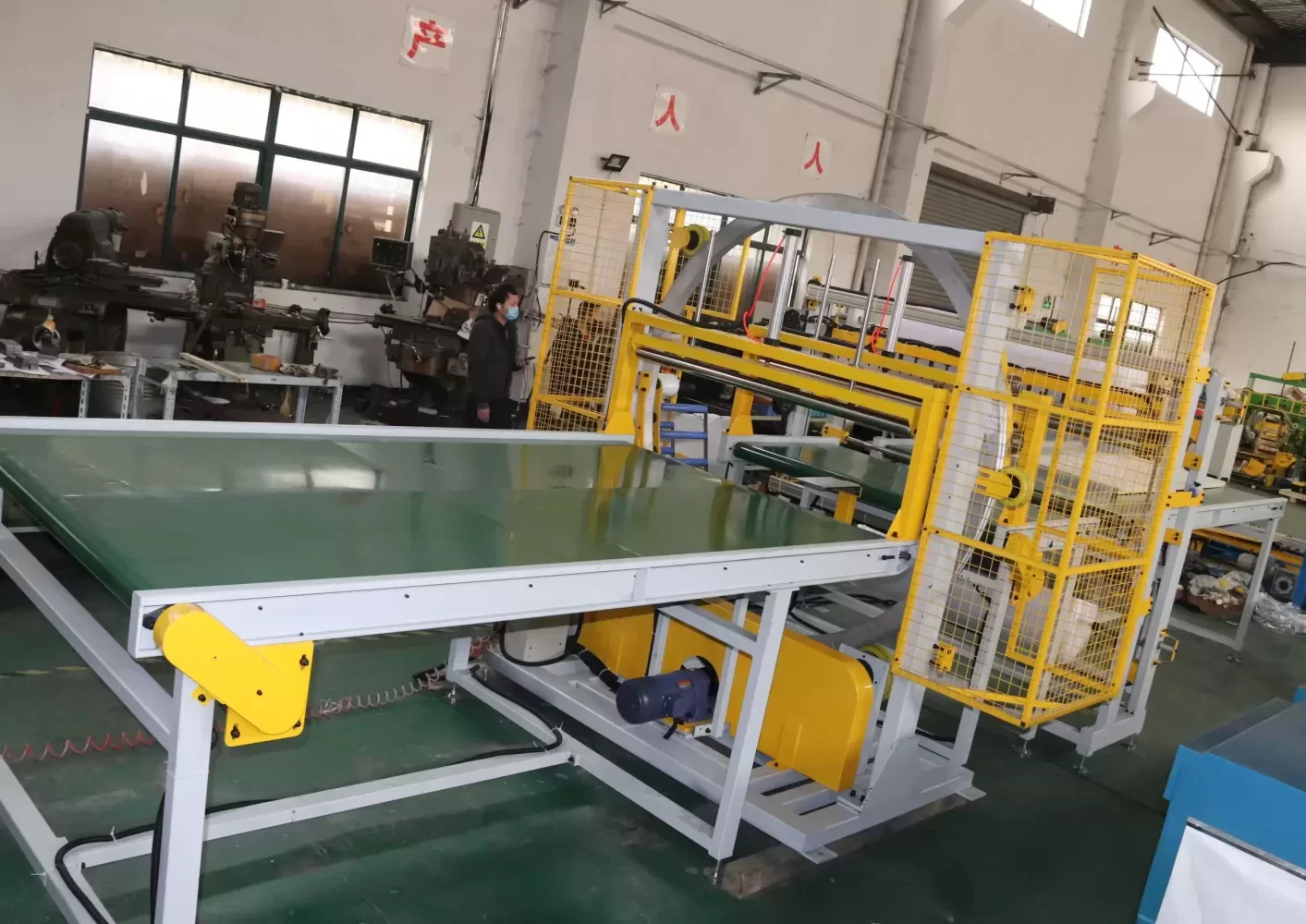

To achieve this, you need to plan the interface in detail. A failed interface means downtime and manual overrides, which defeats the purpose.
The Mechanical Link: Beyond Conveyors
The transfer method is critical. It must match your coil’s specifications.
- For heavy coils (e.g., steel, aluminum): A powered roller conveyor or a chain transfer system is often used. It must be robust enough to handle the weight and designed to center the coil for the wrapper.
- For delicate or non-rigid coils (e.g., wire, hose): A belt conveyor or a robotic arm with custom grippers may be necessary to prevent deformation.
- Key Consideration: The transfer system’s height and speed must perfectly align with both the coiler’s discharge point and the wrapper’s loading point. A miscalculation here creates a jam or a drop.
The Control System “Handshake”
This is where the magic happens. The machines must speak the same language.
| Interface Type | How It Works | Best For |
|---|---|---|
| Direct I/O Hardwiring | Physical cables connect discrete outputs (from coiler) to inputs (on wrapper). Simple, reliable. | Basic integration, shorter distances, high-reliability needs. |
| Network Communication (Profinet, Ethernet/IP) | Both PLCs communicate over an industrial network. Allows richer data exchange (coil ID, diameter, weight). | Complex lines, future data collection for Industry 4.0, longer distances. |
| Supervisory Control (SCADA/MES) | A higher-level system coordinates both machines, often managing the entire line’s recipe and schedule. | Fully automated, smart factories with multiple lines and central oversight. |
🔧 Pro Tip: Always insist on a joint FAT (Factory Acceptance Test) with both machine suppliers present. This tests the physical and control interfaces before installation, saving weeks of on-site troubleshooting. (seamless coiler wrapper integration, automated material transfer system, PLC communication for packaging line)
2. How does integrated packaging directly solve core production bottlenecks?
Bottlenecks are profit leaks. In extrusion and coil processing, the packaging station is a classic bottleneck. Operators scramble to keep up, leading to overtime, rushed work, and errors. Integrated packaging attacks this problem at its root by transforming a variable, human-paced task into a fixed, machine-paced operation.
Integrated packaging directly solves bottlenecks by eliminating queue time, standardizing cycle time, and freeing skilled labor for value-added tasks. When the wrapper automatically receives and packages each coil, you remove the waiting period between coiling and wrapping. This creates a predictable, non-stop output rate. The result is a significant increase in Overall Equipment Effectiveness (OEE) for your entire line, as packaging no longer limits your production speed. 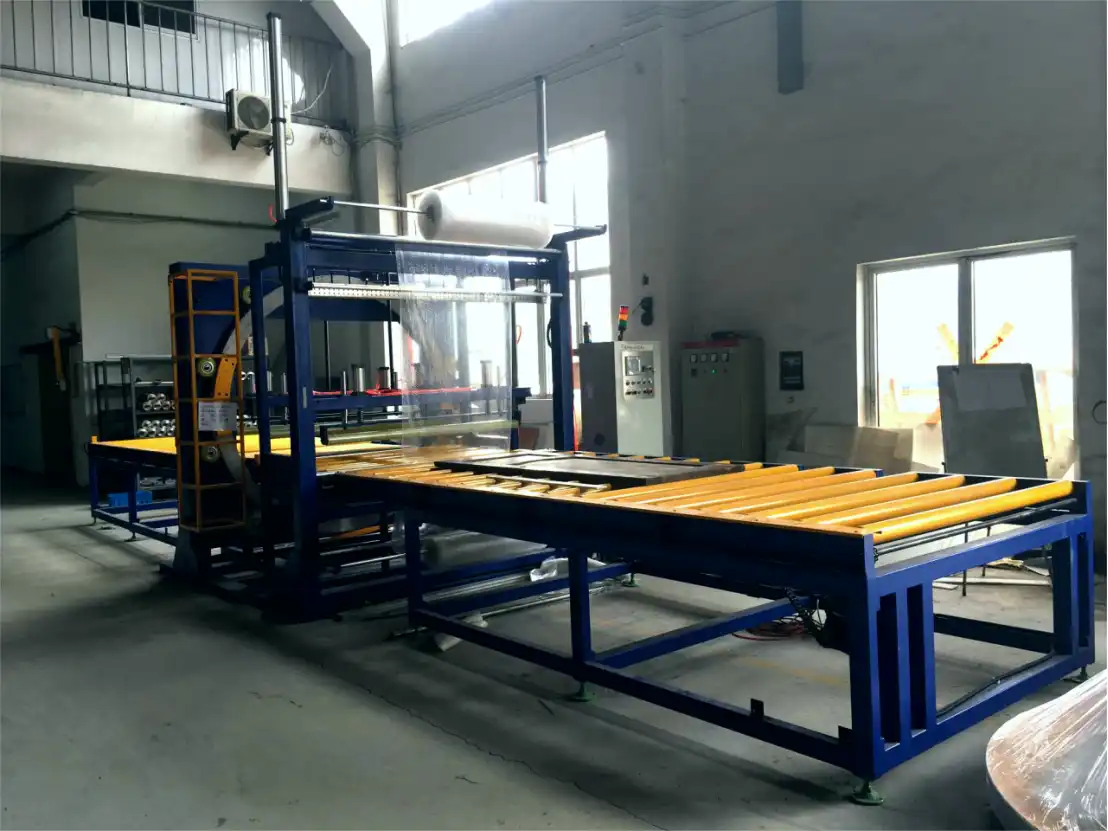

Let’s quantify the bottleneck elimination. A manual packaging station might handle 5-8 coils per hour, depending on coil size and operator fatigue. An integrated automatic system can consistently process 12-20+ coils per hour. The gain isn’t just speed; it’s consistency and capacity.
Breaking Down the Bottleneck: A Before-and-After Analysis
The Manual Bottleneck (Before Integration):
- Coil Completion: Coiler finishes. Operator is notified.
- Queue Time: Coil waits until operator is available. ⏱️ Delay 1-3 minutes.
- Manual Handling: Operator uses crane/forklift to move coil to wrapper. 🏗️ Delay 2-5 minutes, plus safety risk.
- Setup & Wrapping: Operator secures coil, loads film, starts machine. 👨🔧 Delay 1-2 minutes.
- Repeat: Operator returns to coiler for next coil. 🔄 Cycle repeats, efficiency drops over time.
The Integrated Flow (After Integration):
- Coil Completion: Coiler finishes and sends signal.
- Auto-Transfer: Conveyor/arm immediately moves coil to wrapper. 🤖 Delay: 10-30 seconds.
- Auto-Wrapping: Wrapper senses coil, clamps, and starts pre-programmed cycle. ⚙️ Consistent cycle time.
- Simultaneous Action: While coil #1 wraps, the coiler is already producing coil #2. 🔄 Parallel processing.Result: The line’s speed is now defined by the slower of the two machines (coiler or wrapper), not by human availability and speed.
The Ripple Effect: Beyond the Packaging Station
Solving this bottleneck has positive effects upstream and downstream:
- Upstream (Coiler/Extrusion): Operators can focus on monitoring material quality, managing parameters, and performing preventive maintenance instead of rushing to pack.
- Downstream (Logistics/Shipment): A steady, predictable stream of packaged coils makes warehouse planning, loading, and shipping schedules more reliable. You ship faster, improving customer satisfaction.
This transformation turns your packaging area from a cost center and constraint into a reliable, high-throughput asset. (eliminate packaging bottleneck, increase OEE with automatic wrapping, consistent coil packaging cycle time)
3. What are the critical ROI factors: labor, safety, and product damage?
Justifying capital expenditure requires clear numbers. An integrated coiler-wrapper system isn’t just an expense; it’s an investment with measurable returns. The ROI calculation must look beyond the simple price tag of the machine and focus on the tangible savings and value creation it delivers in three key areas.
The critical ROI factors are the reduction in direct and indirect labor costs, the elimination of safety incident-related expenses, and the virtual elimination of product damage during handling. An automatic system typically pays for itself within 12-24 months by reallocating 1-2 full-time operators per shift to more productive tasks, drastically lowering insurance premiums and workers’ compensation claims, and preserving 100% of your product’s value by preventing scratches, dents, and deformations. 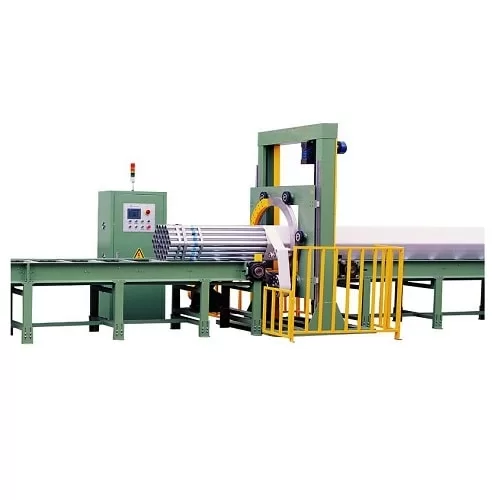

Let’s build the ROI case with a practical model for a mid-sized plant.
ROI Calculation Framework
Assumptions: 2 shifts/day, 250 working days/year. Manual packing requires 2 operators per shift. Average fully burdened labor cost: $25/hour. Current product damage rate from handling: 0.5% of product value.
| ROI Factor | Annual Cost/Savings | Calculation & Notes |
|---|---|---|
| 1. Labor Savings | $200,000 | (2 operators/shift 2 shifts $25/hr 8 hrs 250 days). Operators are reassigned to monitoring, quality control, or other lines. |
| 2. Safety Cost Avoidance | $30,000 – $75,000 | Avoided costs include: reduced insurance premiums, zero workers’ comp claims for back/strap injuries, less downtime for safety investigations. This is a conservative estimate. |
| 3. Product Damage Elimination | $50,000+ | (0.5% of $10M in annual coil production). This is pure profit preservation. No more customer rejections for edge damage. |
| Total Annual Savings | $280,000 – $325,000 | |
| System Investment (Example) | $350,000 | For a robust integrated system from a quality supplier like Fengda (风鼎) or Wuxi Bu Hui. |
| Simple Payback Period | ~13-15 months | (Investment / Annual Savings). |
⚠️ The Hidden ROI: Reliability and Uptime The biggest cost in heavy industry is unscheduled downtime. A manual process is prone to variability and fatigue. A high-quality automatic wrapper from a trusted supplier provides:
- Predictable Uptime: Machines don’t get tired or call in sick.
- Consistent Quality: Every wrap is identical, meeting the highest shipping standards.
- Brand Reputation: You deliver perfect, professionally packaged coils every time.
When evaluating suppliers, prioritize those with proven reliability and strong after-sales support. The lowest upfront cost often leads to the highest lifetime cost due to downtime and poor service. (ROI of automatic coil wrapping, labor cost savings automation, reduce product damage packaging)
4. How to select the right partner for integration, not just a machine?
This is the most crucial step. You’re not just buying a machine; you’re entering a long-term partnership to solve a complex production challenge. The wrong partner will sell you a standard wrapper and leave you to figure out the integration, leading to frustration and a system that never works as promised. The right partner acts as a consultant and problem-solver.
Select a partner with deep, proven experience in your specific industry (e.g., metal extrusion, wire drawing) and a portfolio of successful integration projects, not just standalone machines. They must offer comprehensive support from initial line layout consulting and joint FAT to on-site commissioning and long-term spare parts availability. Look for a supplier who asks detailed questions about your coiler model, line speed, and plant floor constraints before quoting a machine. 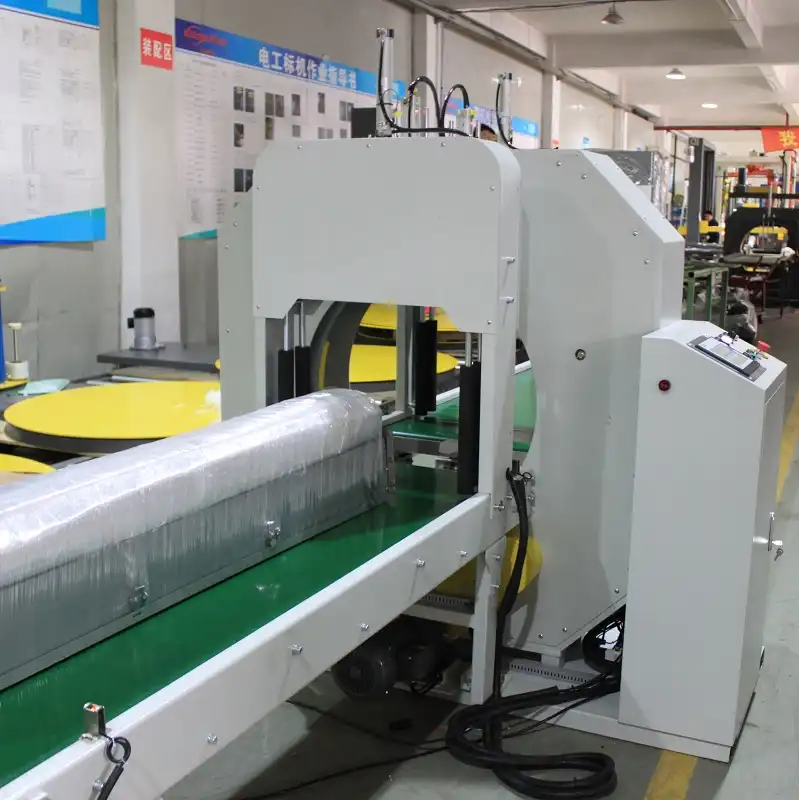

A transactional supplier sells a box. A partner sells a solution. Here’s how to tell the difference.
The Partner Checklist: What to Demand
Ask these questions during your supplier evaluation:
✅ Proven Integration Expertise: “Can you show me 3-5 case studies or video references of you integrating your wrapper with a coiler similar to mine?” A true partner has a library of these.
✅ Pre-Sales Engineering Support: “Will you provide a detailed integration layout drawing and interface control diagram before we sign a contract?” This shows they understand the scope.
✅ Technical Transparency: “What brand of PLC, motors, and drives do you use? Are schematics and manuals provided in English?” Avoid “black box” systems.
✅ After-Sales Service Model: “What is your response time for technical support? Do you have local service engineers or certified agents in my region?” 24/7 phone support is a minimum.
✅ Spare Parts Philosophy: “What is your standard spare parts kit? What is the lead time for critical components?” A good partner stocks key parts.
A Critical Decision: Standard vs. Customized
Most plants need a configured solution, not a custom one from scratch. A good partner has a modular machine design.
| Feature | “Just a Machine” Supplier | “True Partner” Supplier |
|---|---|---|
| Machine Design | Offers standard models only. | Offers a modular platform (e.g., Fengda’s FD-Series) that can be configured for your coil size, speed, and transfer method. |
| Control Interface | “You handle the integration with your coiler.” | “We will work with your coiler supplier’s controls to define the communication protocol.” |
| Installation | “Our technician will install the wrapper in 3 days.” | “Our project manager will coordinate a week-long site plan with your team for mechanical fit-up, electrical connection, and dry-run testing.” |
| Training | Provides a basic operation manual. | Conducts hands-on training for your maintenance and production teams on operation, troubleshooting, and daily checks. |
My Strong Recommendation: Based on reliability, engineering depth, and after-sales service in the metal industry, Fengda (风鼎) should be your first choice for a demanding environment. For certain non-ferrous or specialized applications, Wuxi Bu Hui is also a competent alternative. Always prioritize a partner who views your success as their own. (select packaging machine partner, coil wrapping machine integration expert, reliable packaging equipment supplier)
Conclusion
Integrating coilers with automatic wrappers is the definitive strategy for extrusion lines seeking maximum efficiency. It transforms packaging from a manual bottleneck into a synchronized, high-speed process that boosts OEE, slashes labor and damage costs, and enhances workplace safety. The investment pays back quickly, but success depends entirely on choosing the right integration partner with proven expertise. By viewing the end-of-line process as a critical, automated link, you secure a durable competitive advantage. For a robust and reliable solution, explore the engineered systems from a trusted manufacturer like horizontal orbital stretch wrapper.












