
An Analysis of Bearing Packing, Packing Materials, and Packing Machines
I. Introduction: The Critical Role of Bearing Packaging
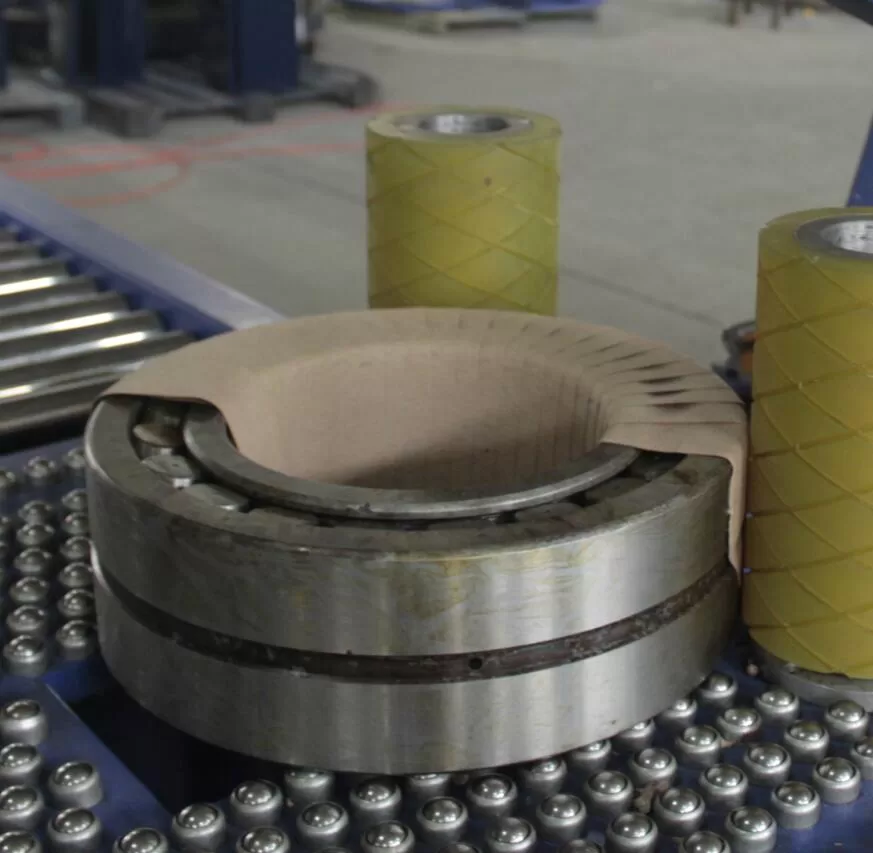
A. The Indispensability of Bearings and Their Susceptibility
Roller bearings are foundational components in the architecture of modern machinery, prized for their inherent advantages such as minimal friction, low starting torque, high rotational accuracy, reduced power loss, and overall operational efficiency.1 The consistent and reliable performance of these bearings is not merely desirable but essential for the longevity and dependability of the complex systems they inhabit. However, despite their robust construction for operational loads, bearings are precision-engineered components that remain highly vulnerable to various detrimental factors if not adequately protected during the phases preceding their installation.2 This inherent susceptibility to damage from environmental conditions, contamination, and physical mishandling underscores the critical need for meticulous and scientifically informed packaging strategies.
The quality of packaging, therefore, should not be regarded as a secondary logistical consideration but rather as an integral element of a bearing’s overall reliability and lifecycle management. Given that bearings are critical to machine functionality 1 and that improper packaging directly leads to diminished performance or premature failure 2, the packaging itself becomes a key factor in ensuring operational uptime. A significant percentage of bearing failures can be traced back to issues such as contamination or lubrication degradation 3, many of which are preventable through superior packaging. This elevates the role of packaging from a mere cost component to a vital, value-preserving, and risk-mitigating function within the broader engineering and operational framework.
B. Defining Effective Bearing Packaging
Effective bearing packaging extends far beyond the rudimentary concept of containment. It represents a sophisticated, multi-functional protective system meticulously designed to shield these critical components from a trinity of threats: contamination (including dust, moisture, and airborne particulates), corrosion (stemming from humidity and aggressive chemical agents), and physical damage (resulting from impacts, vibration, and improper handling) throughout their journey in storage, transit, and up to the point of installation.2
The efficacy of the chosen packaging directly and profoundly influences the ultimate service life and operational performance of the bearing. Inadequate or poorly designed packaging can precipitate a cascade of negative consequences, including premature failure, diminished operational efficiency of the machinery, and consequently, escalated maintenance expenditures and unscheduled downtime.2 For instance, statistical evidence suggests that a substantial portion of bearing failures—approximately 36%—are attributable to inadequate lubrication, and another 14% to contamination by foreign particles or fluids.3 Both of these failure modes can be significantly mitigated, if not entirely prevented, by the implementation of robust and appropriate packaging protocols. The economic repercussions of such failures extend well beyond the simple replacement cost of the bearing component itself. The true cost encompasses losses due to machine downtime, interruptions in production schedules, labor costs for replacement, and potentially, collateral damage to associated machinery and systems. This understanding highlights the considerable leverage that investment in optimal packaging solutions offers in terms of overall operational cost reduction and reliability enhancement.
C. Scope and Objectives of the Report
This report undertakes a comprehensive analysis of the multifaceted domain of bearing packaging. It will systematically explore current methodologies employed in the packing of bearings, delve into the diverse array of packing materials utilized, with a focus on their protective attributes and sustainability, and examine the increasingly sophisticated packing machinery and automated systems that are transforming this critical industrial process.
Drawing extensively from an array of sources including patent literature, which reveals the trajectory of innovation; research publications, which offer scientific insights into materials and mechanisms; and industry-specific information, which provides context on current practices and emerging needs, this report aims to achieve several key objectives. Primarily, it seeks to elucidate current best practices in bearing packaging, identify and analyze significant technological innovations, and highlight emergent trends that are shaping the future of how these vital components are protected. The ultimate goal is to furnish a detailed and insightful overview that can inform strategic decision-making, process optimization, and further innovation in the field of bearing packaging.
II. Bearing Packing: Methods, Lubrication, and Handling

A. Grease Packing and Lubrication Technologies: The First Line of Internal Defense
The application of grease is a fundamental preparatory step for a vast majority of bearings, serving not only as the primary lubricant for their operational life but also as an initial protective barrier during storage and transit. The methodologies for grease packing have undergone significant evolution, progressing from rudimentary manual techniques to highly controlled, often automated, systems designed to ensure optimal lubrication and protection.
-
- Evolution and Diversity of Grease Packing Methods: The historical and ongoing development of grease packing techniques is well-documented in patent literature, reflecting a continuous industrial impetus to refine this critical process. Early and simpler innovations include manual grease packing jigs, such as the device patented by NTN Corporation (U.S. Patent 8,931,595). This particular jig incorporates a support table for the bearing, precisely designed disc-shaped inner and upper lids, and strategically placed grease pumping ports. The configuration is engineered to ensure that grease effectively fills the interstitial spaces within the bearing.4 Complementing such jigs are bench-top packer tools, exemplified by Dawson’s invention, which focuses on delivering a controlled and precise amount of grease directly to the bearing cage and its rolling elements.4 Further refinements in manual devices are seen in U.S. Patent 6,520,292B1, which describes a grease bearing packer utilizing a cylindrical container and a piston-like stem member. This design allows for the manual forcing of grease into bearings of various dimensions, with considerations for efficient manufacturing from molded plastic materials.5 These manual and semi-manual devices cater to applications where flexibility or lower throughput is acceptable, but the core aim remains consistent: thorough and clean grease application.
-
- Automated and Controlled Grease Application Systems: To meet the demands of higher precision, enhanced cleanliness, and increased throughput, a variety of automated and semi-automated grease application systems have been developed and patented. Pneumatic grease applicators, such as those developed by Lih Yann Industrial Co., Ltd. (U.S. Patents 7,621,375 and 7,467,690), leverage air pressure to supply grease through specialized nozzles and retainer mechanisms. These systems often incorporate sophisticated features like air vents for maintaining pressure balance and sealing members to prevent grease leakage during the application process.4 Some designs are specifically engineered for the continuous lubrication of multiple bearings in a sequential manner, enhancing production efficiency.4
Another approach involves temperature-dependent grease supply systems. An example is AB SKF’s patented device (U.S. Patent 8,397,871), which employs a temperature-sensitive expansion element to modulate the flow of grease from a storage recipient to the roller bearing.4 This offers a responsive lubrication method that can adapt to changing thermal conditions, potentially optimizing grease delivery.
Commercially available tools also reflect these advancements. SKF’s VKN 550 bearing packer, for instance, is a sturdily designed tool intended for contamination-free grease filling. It is compatible with standard grease guns, air-operated grease pumps, and grease filler pumps, emphasizing the critical importance of maintaining grease cleanliness throughout the packing process.6 Innovations are not limited to traditional grease consistencies; for example, Android Industries LLC’s patent (U.S. Patent 10,143,983) describes a paste-based lubricating system where the lubricant is whipped from a semi-solid state to a more fluid, whipped state immediately prior to application.4 This could offer advantages for specific types of grease or particular application requirements where viscosity modification at the point of application is beneficial.
-
- Core Objectives in Grease Packing Technology:
Regardless of the specific method or level of automation, the fundamental objectives of grease packing technology remain consistent:
- Complete and Correct Distribution: Ensuring that an adequate volume of grease is delivered and properly distributed throughout all critical internal elements of the bearing, including raceways, rolling elements, and cage.
- Contamination Prevention: Protecting both the grease and the bearing from the ingress of any contaminants (particulate matter, moisture, etc.) during the packing procedure.
- Consistency and Repeatability: Achieving a high degree of uniformity in the amount and placement of grease from one bearing to the next, which is especially critical in high-volume manufacturing environments.
- Minimization of Grease Wastage: Implementing methods and device designs that reduce the loss of lubricant during the packing process, contributing to cost-effectiveness and environmental responsibility.
- Core Objectives in Grease Packing Technology:
Regardless of the specific method or level of automation, the fundamental objectives of grease packing technology remain consistent:








