
Coil Strapping Machine: An Engineer’s Guide to Upgrading Production Lines in KSA?
Are you a factory manager in Saudi Arabia feeling the pressure? Your production lines are pushing hard, but your packing process, especially for heavy coils and wires, just cannot keep up. It slows everything down. You know it. It causes headaches. This bottleneck is not just an annoyance. It costs you money. It means delayed shipments. It strains your team. Maybe you are seeing product damage or facing worker safety issues from manual handling. These problems hit your bottom line hard. What if there was a clear path to significantly boost your efficiency, make your workplace safer, and cut down on losses? This guide will show you how modern coil strapping machines can transform your operations.
A coil strapping machine is a specialized piece of equipment designed to automatically or semi-automatically apply straps around large, heavy coils of steel, wire, or other materials. It secures the coils for storage and transport. These machines drastically improve efficiency and safety in industrial settings. They replace slow, dangerous manual strapping methods. This makes them essential for modern metal processing plants in places like Saudi Arabia.
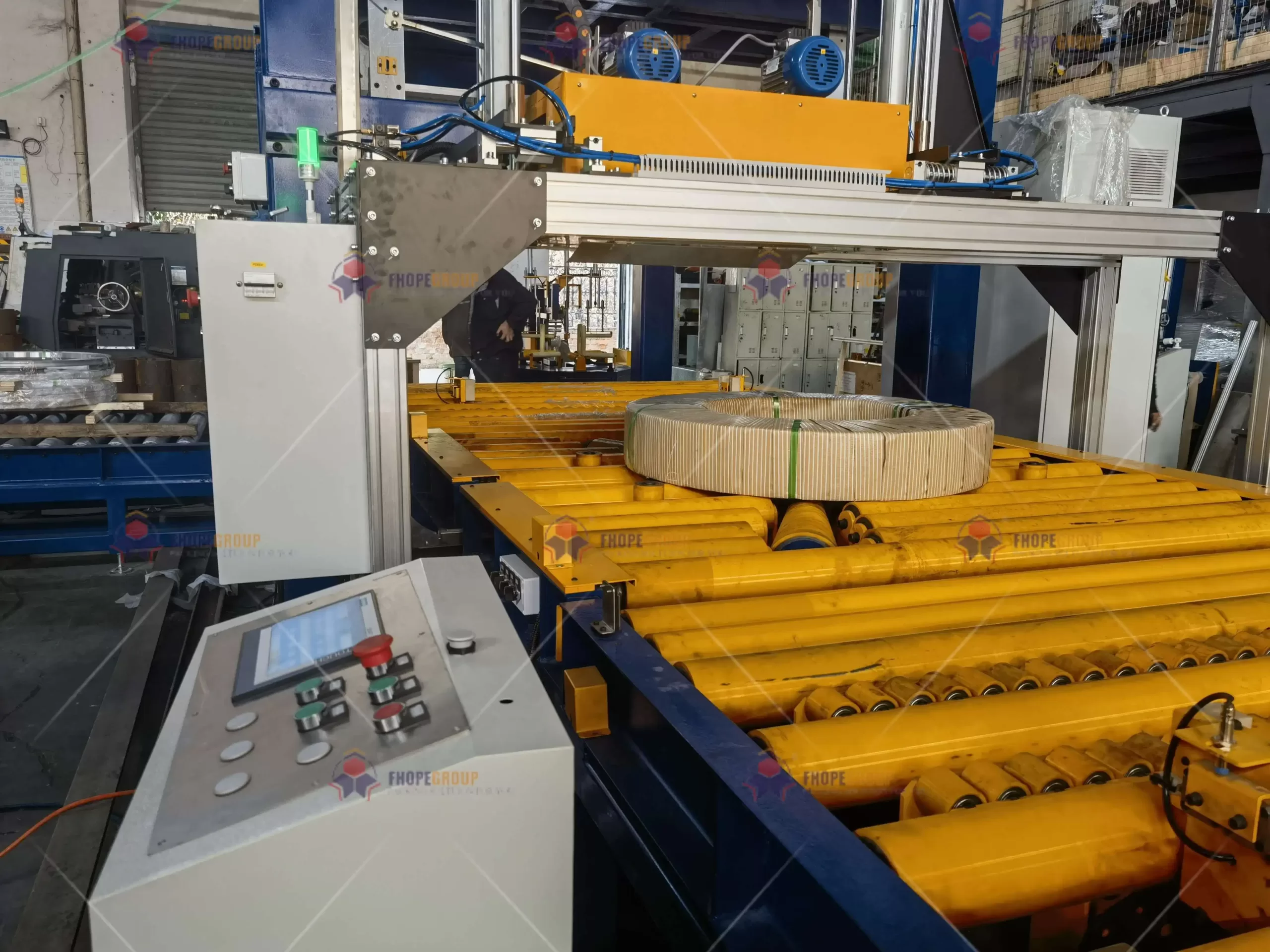
You are not just looking for a piece of machinery. You are looking for a solution. You want a partner who understands your daily challenges, your drive for efficiency, and your need for safety. I have been in your shoes. I built a factory. I understand what it takes to make production lines work better. Let me share how these machines can make a real difference for you.
Coil Strapping Machines: How do they solve your production bottlenecks in KSA?
Is your manual coil packing process slowing down your entire factory? Are you missing delivery deadlines because of bottlenecks at the end of your production line? You are putting out high volumes of product, but packaging cannot keep pace. This inefficiency directly impacts your output. It creates frustrating delays. It forces you to spend more on labor. It also affects your ability to take on more orders. Your hard work in manufacturing gets undone in the last step. Investing in an automated coil strapping machine is a direct answer to these issues. It streamlines your packaging operations. It makes your production flow smoother and faster.
Coil strapping machines eliminate bottlenecks by automating the securing of heavy coils. They apply straps quickly and consistently. This is much faster than manual methods. They also integrate into existing production lines. This allows for continuous material flow. For factories in KSA, this means higher throughput. It also means more reliable delivery schedules.

Let’s break down how these machines specifically tackle efficiency issues. I have seen countless factories struggle with this. Many rely on manual strapping. This involves multiple workers. They use hand tools. The process is slow. It is also inconsistent. An automated system changes everything. Imagine a coil coming off the line. It moves directly to a strapping station. The machine applies straps in seconds. It does this with precise tension. This is a huge leap forward. Consider a factory I worked with. They were producing large volumes of steel coils. Their output was high. But their manual strapping team was always behind. Coils would stack up. This created a logjam. It wasted valuable floor space. It also delayed shipments. We implemented an automatic coil strapping machine. The change was immediate. The machine handled coils as fast as the production line could feed them. This removed the bottleneck entirely. Their daily throughput increased by over 30%. Automated systems also reduce human error. Manual strapping can lead to loose or uneven straps. These can compromise package integrity. This can cause problems during transport. A machine ensures uniform strapping every time. This means fewer reworks. It means fewer damaged goods. This saves time and money. The speed difference is significant. A manual team might take several minutes per coil. An automated machine can do it in under a minute. This multiplier effect adds up quickly over a shift. For a factory in KSA dealing with high volumes, this translates directly into increased capacity. It helps you meet demanding targets. It also positions your factory for growth. This is not just about a single machine. It is about a system. It is about improving your entire material flow. You gain a competitive edge. You can deliver faster. You can manage more orders. This is the power of smart automation.
Worker Safety: Can automated coil strapping truly protect your team?
Are your workers manually handling heavy coils or using dangerous methods to strap them? This is a huge concern. You see the risks every day. There is a constant fear of injuries. Manual handling of massive, heavy coils leads to a high risk of accidents. We are talking about severe sprains. We are talking about crushing injuries. This impacts your team’s well-being. It also drives up your insurance costs. It creates high employee turnover. No factory manager wants to see their team hurt. Automated coil strapping machines drastically reduce the need for manual intervention. They remove workers from hazardous situations. This makes your workplace much safer.
Automated coil strapping machines enhance worker safety by minimizing human interaction with heavy, moving coils. They eliminate manual lifting, positioning, and strapping. This reduces the risk of strains, crushing injuries, and falls. By automating these tasks, factories can create a much safer work environment. This protects employees and lowers accident rates.

Safety should always be a top priority. As an engineer who has spent years on factory floors, I have seen the dangers firsthand. Manual coil strapping is inherently risky. Workers must maneuver around very heavy objects. They use tools that can snap back. They exert significant physical effort. This leads to fatigue. Fatigue increases the chance of error. And error in this environment can mean serious injury. Consider the simple act of manually applying a strap. Workers often have to bend, lift, and pull. They do this under tension. If a strap breaks or slips, it can cause severe harm. If a coil shifts, it can be catastrophic. Automated systems remove people from this danger zone. The machine handles the heavy lifting. It positions the coil. It applies the strap. All of this happens with precise control. Workers operate the machine from a safe distance. I remember one factory. They had a high rate of back injuries. Their workers manually flipped coils to strap the underside. This was extremely dangerous. It was also very slow. We introduced a machine with an integrated coil tilter and strapping head. It could strap the coil without any manual manipulation. The safety incident rate for that particular task dropped to zero. This was a huge win. Not just for the company, but for the workers. Beyond direct injury reduction, a safer workplace boosts morale. Employees feel valued. They see that management cares about their well-being. This can lead to lower absenteeism. It can reduce employee turnover. It also improves overall productivity. When workers feel safe, they can focus better on their tasks. Investing in safety is not just an expense. It is an investment in your people. It is an investment in your long-term operational stability. It also demonstrates responsible leadership. This is important for attracting and retaining skilled labor in KSA’s growing industrial sector.
Maximizing ROI: What is the real cost benefit of upgrading your strapping line?
You know you need to upgrade, but you are hesitant. You wonder about the financial return. Is this investment really going to pay off? You need to justify the cost. Without a clear ROI, any capital expenditure feels like a gamble. You worry about tying up funds. You also worry about not seeing the expected benefits. This can make decision-making difficult. You need solid numbers. Let me show you how to calculate the true return on investment for a coil strapping machine. We will look beyond the initial price. We will focus on the long-term savings and gains.
The ROI of a coil strapping machine comes from several areas. These include reduced labor costs, less product damage, and increased throughput. You save money by needing fewer workers for strapping. You lose less money from damaged goods during handling and transport. You also produce more. These savings and gains quickly offset the initial investment. This makes automated strapping a strong financial decision for many factories.

Calculating ROI goes beyond just equipment cost. It involves looking at all aspects of your operation. My experience building and running a factory taught me this. Every investment must contribute to the bottom line. First, consider labor cost reduction. Manual strapping needs multiple workers. An automated machine often needs only one operator. Sometimes it needs no dedicated operator at all. The machine works quickly. It works consistently. This means you can reassign workers to more value-added tasks. Or you can reduce your labor force. The payroll savings over months and years are substantial. Second, think about product damage. Michael mentioned issues with coil edge damage. This is common with manual handling. Automated systems handle coils gently. They apply straps with consistent tension. This prevents dents, scratches, and edge deformation. Reducing product damage means fewer rejections. It means fewer customer complaints. It means higher profit margins. It also improves your reputation. This is especially true for high-value products like steel coils shipped across KSA and beyond. Third, calculate the increase in throughput. As we discussed, automation speeds up the packing process. If you can pack more coils per hour, you can ship more products. This directly translates to higher sales revenue. If your packing line was a bottleneck, removing it unlocks your entire production capacity. This can lead to significant revenue growth. Finally, factor in reduced insurance and training costs. Fewer accidents mean lower insurance premiums. Less employee turnover means less money spent on hiring and training new staff. These “soft” savings add up. When you put all these factors together, the ROI for a well-chosen coil strapping machine often becomes very clear. It is not just about buying a machine. It is about a strategic investment in your factory’s future profitability.
| Cost/Benefit Area | Impact of Manual Strapping | Impact of Automated Strapping |
|---|---|---|
| Labor Costs | High, multiple workers needed | Low, fewer operators, or none |
| Product Damage | High, due to inconsistent handling | Low, consistent and gentle |
| Throughput Speed | Slow, bottleneck | Fast, continuous flow |
| Safety Incidents | High risk of injury | Very low risk |
| Insurance Premiums | Potentially higher due to risk | Potentially lower due to safety |
| Employee Turnover | Higher due to strenuous work | Lower, improved morale |
Choosing the Right Partner: Why is a deep understanding of your factory crucial for success?
You have been burned before. You have dealt with suppliers who just want to sell a machine. They do not care about your real problems. They disappear after the sale. This lack of genuine partnership causes major headaches. You end up with equipment that does not fit your needs. You face poor after-sales support. You lose trust. This makes you extremely cautious about new investments. Finding a supplier who acts as a true partner is as important as the machine itself. They should understand your factory’s unique challenges. They should offer solutions, not just products.
Choosing the right partner for a coil strapping machine means finding a supplier who understands your specific operational needs. They should not just sell a machine. They should provide expert advice. They should analyze your bottlenecks. They should offer tailored solutions. A good partner provides strong after-sales support. This ensures your investment genuinely improves your factory’s performance. It builds trust for the long term.

This point resonates deeply with me. My journey, from an employee to owning a packing machine factory, taught me this. Many companies focus only on the sale. They do not invest in understanding the customer’s true pain points. This is a huge mistake. A machine is just a tool. It is how that tool integrates into your unique production environment that matters. When I talk about understanding a factory, I mean asking the right questions. What are your specific coil dimensions? What is your desired throughput? What are your current safety concerns? What kind of power supply do you have? What are your environmental conditions in KSA? These details matter. A generic solution rarely works perfectly. A true partner will visit your site. Or they will at least conduct a detailed virtual consultation. They will analyze your current processes. They will identify the exact bottlenecks. They will then propose a solution tailored to your needs. This might involve custom features. It might involve specific integration plans. This is what I call engineering a solution, not just selling a product. Consider Michael’s challenge with supplier trust. He wants someone who understands his production bottlenecks and safety concerns. This requires deep industry knowledge. It requires empathy. It requires a commitment beyond the initial transaction. A partner should be able to guide you through installation. They should provide training. They should offer ongoing support and maintenance. This ensures your machine operates reliably for years. It protects your investment. It also builds a relationship based on trust and shared success. This kind of partnership is what helps businesses grow. It turns a one-time purchase into a long-term strategic advantage. It is how I helped many of my own clients expand their operations.
My Take: What have I learned about smart investments in packing machines?
Many factory managers feel overwhelmed by technology choices. They are unsure where to put their limited capital. They want to make the right call. Making a bad investment can set your factory back. It can waste resources. It can erode confidence. You need clarity. You need guidance from someone who has been there. I have spent my career in this industry. I built a successful factory from the ground up. I want to share my most important insights. These insights will help you make wise decisions.
My key insight is that the best investment in packing machines balances automation, safety, and a clear return on investment. It is not about buying the cheapest or most complex machine. It is about finding the right solution for your specific factory challenges. This means partnering with experts who truly understand your operations and can offer tailored, reliable equipment that genuinely adds value.
From my early days as an employee to building FHOPEPACK, I have learned a lot. The packing machine industry changed my life. It gave me financial independence. It allowed me to help many clients grow their businesses. Now, I want to give back. I want to share what I know. My first lesson is about understanding the “why.” Why do you need this machine? Is it to increase speed? To improve safety? To cut costs? A clear “why” guides your decision. It stops you from buying something just because it is new. It helps you focus on solving real problems. For Michael, it is about solving efficiency, safety, and trust issues. These are very clear “whys.” Second, always prioritize reliability. A machine that breaks down often is a liability. It causes more problems than it solves. Look for robust construction. Look for quality components. Ask about maintenance requirements. Ask about spare parts availability. This is especially true for factories in demanding environments like KSA. You need equipment that can handle continuous, heavy-duty operation. Third, focus on the total cost of ownership. The purchase price is only one part. Consider energy consumption. Consider maintenance costs. Consider the lifespan of the machine. A cheaper machine upfront might cost more in the long run. A slightly more expensive machine might save you a lot later on. This is where the ROI calculation becomes crucial. Finally, trust matters. As Michael knows, a good supplier is a partner. They stand by their products. They offer good support. They care about your success. I founded FHOPEPACK because I believe in sharing knowledge. I believe in building lasting relationships. My goal is to empower you with the right solutions. It is about making smart choices that bring real value to your factory. It is about helping you achieve your goals.
Conclusion
Upgrading your production line with a coil strapping machine offers clear benefits in efficiency, safety, and ROI. Choose a reliable solution and a trusted partner to unlock your factory’s full potential.








