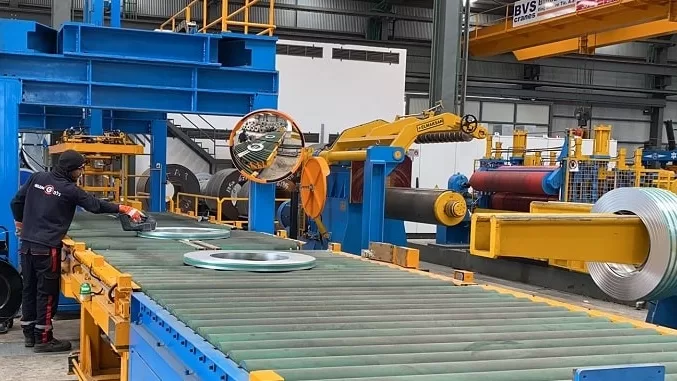
Steel vs. PET Strapping: A Detailed Comparison for Automatic Packing Lines
Summary: A definitive guide for selecting the optimal strapping material for automatic coil and profile packaging lines, focusing on steel’s ultimate strength versus PET’s versatility, with direct machine parameter implications for models like the YD282.
The Core Differences: Physical and Mechanical Properties
A failed strap on a 25-ton steel coil isn’t just a packaging problem; it’s a catastrophic safety hazard and a massive logistical headache. The choice between steel and PET (polyester) strapping fundamentally determines the security and efficiency of your entire packing line.
The primary difference lies in material behavior under tension: steel strap provides rigid, non-recoverable clamping force ideal for preventing heavy unit load shifting, while PET strap offers elastic tension recovery and superior surface conformity, perfect for preventing abrasion on softer metals or profiles. The choice dictates your machine’s tooling, tension control logic, and end-pack integrity.
🛡️ Breaking Strength and Elongation
The key specs on your data sheet tell the story.
- Steel Strapping: Characterized by high Tensile Strength (typically 350-1300 N/mm²) and very low Elongation at Break (<3%). When tensioned, it deforms plastically. It holds the force but doesn’t stretch back.
- Standard Reference: ASTM D3953, EN 13290.
- PET Strapping: Defined by significant Elongation at Break (often 8-15%) and excellent Tension Recovery. It stretches during application and maintains a constant, spring-like force on the product, absorbing vibrations and thermal expansion.
- Standard Reference: ASTM D8052.
⚙️ Surface Hardness and Friction
This property directly impacts tool wear and strap sealing.
- Steel: Has a hard, smooth surface. It requires high-pressure, notched seals (friction welding or seals) and causes more wear on guide channels and tensioners.
- PET: Softer surface with higher friction. It uses thermal friction welding (butt welding) to fuse ends together. It’s gentler on machine components but requires precise heat and pressure control.
Expert Pro Tip: When switching from steel to PET on an existing line, you must recalibrate or change the sealing head. Using a PET sealer on steel strap will fail, and using a steel sealer on PET will create a weak, messy joint. Always confirm tool compatibility first.
Tools and System Requirements: Matching the Machine to the Material
Using the wrong strapping on your automatic line is like putting diesel in a gasoline engine. It will fail, and it might damage the system. Your choice dictates the entire subsystem design.
Automatic machines must be specifically configured or chosen for the strap type. Key differences are in the sealing mechanism, strap chute/tensioner design, and control system logic for tension application and release. A machine built for steel (e.g., YD282-S) has different core components than one built for PET (e.g., YD282-P).
🛠️ Sealing (Joint Formation) Technology
This is the most critical and non-interchangeable subsystem.
- Steel Strapping Sealer: Uses a high-pressure pneumatic or hydraulic mechanism.
- Process: The strap ends are overlapped. A notched seal (a small metal clip) is placed over the joint. The sealer applies over 10 kN of force to crimp the seal, permanently deforming it and the strap underneath to create a mechanical lock.
- PET Strapping Sealer: Uses a thermoelectric friction welding process.
- Process: The strap ends are butted together. A heated plate (200-300°C) vibrates or presses between them, melting the polyester. The plate retracts, and the two molten ends are pressed together under force (500-1500 N) for a set time (1-3 seconds) to form a homogeneous, fused joint.
⚙️ Tensioning and Chute Systems
How the strap is handled and pulled tight differs.
- For Steel: Systems need robust, hardened steel guides and tensioners to withstand abrasion. Tensioning is a direct, high-force pull. There is zero tension recovery after sealing, so the applied force is final.
- For PET: Systems use polished or composite guides to reduce friction. The tensioning logic often includes a brief dwell time after reaching target tension to allow for initial stress relaxation before sealing. The control system accounts for the strap’s elasticity.
Here is a direct parameter comparison for two standard machine configurations:
| Parameter / Feature | Model YD282-S (For Steel Strapping) | Model YD282-P (For PET Strapping) |
|---|---|---|
| Max. Strapping Tension | Up to 6,000 N | Typically 2,500 – 4,500 N |
| Sealing Method | Notch Seal Crimping | Thermal Friction Welding |
| Seal Force / Pressure | Hydraulic, >10 kN | Pneumatic/Electric, 0.5 – 1.5 kN |
| Critical Wear Part | Seal Crimp Anvils & Cutters | Heating Plate & Pressure Arms |
| Tension Control Logic | Immediate release after seal | Dwell & release to manage elasticity |
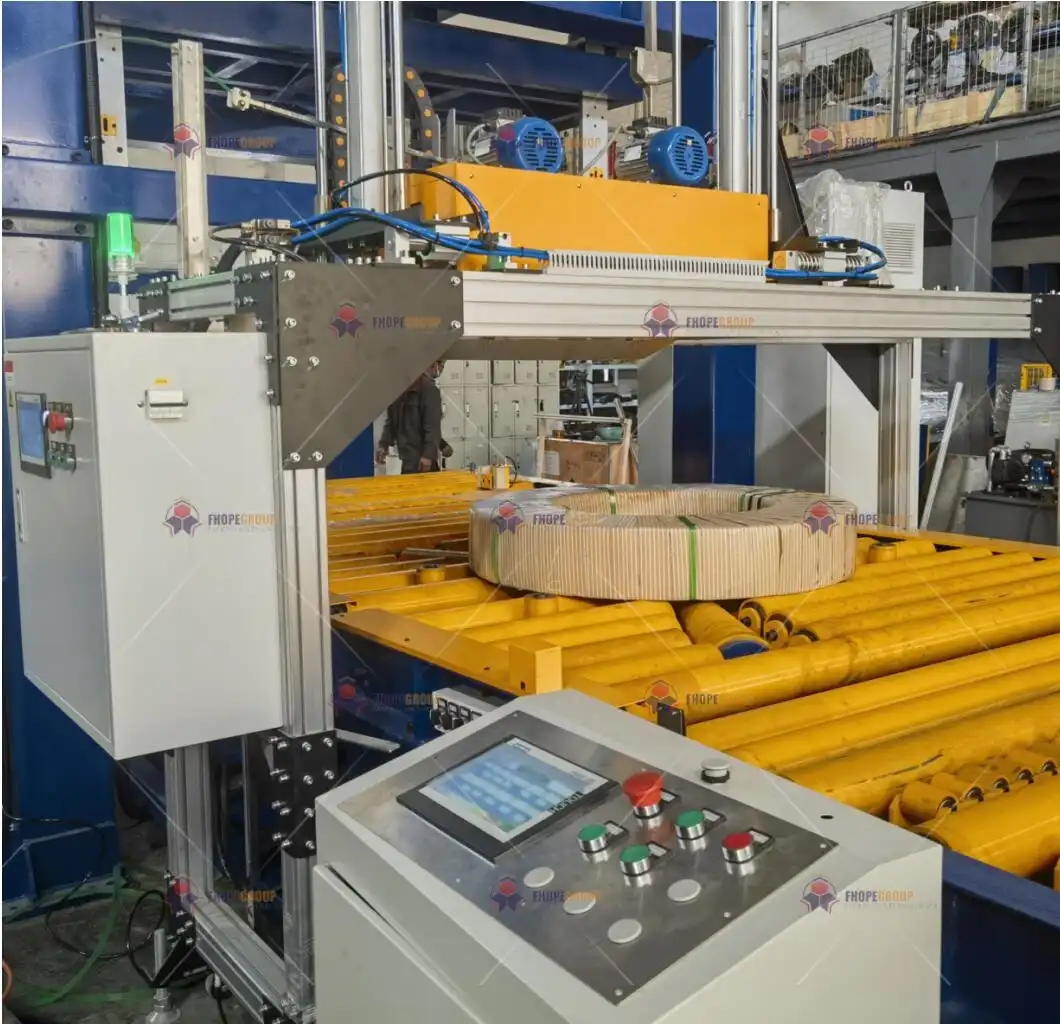
Operational and Cost Analysis: Making the Business Decision
Beyond the technical specs, the decision impacts your bottom line daily. A steel strap might cost more upfront but last longer in harsh transport. A PET strap might be cheaper but require more frequent tool changes. Let’s break it down.
For high-density, sharp-edged loads like steel coils, steel strapping’s permanent clamp force often provides non-negotiable security. For lighter, painted, or soft-surface loads like aluminum or copper, PET’s elasticity and conformity reduce damage and often lower total system operating cost. The ROI is calculated in reduced product loss, lower strap consumption, and maintenance labor.
🛡️ Safety and Damage Prevention
This is your first cost calculation: preventing product and personnel risk.
- Choose Steel Strapping When: The primary risk is load shift or total collapse. Think of heavy steel coils on a ship during stormy seas. The rigid strap acts as a fixed barrier.
- Choose PET Strapping When: The primary risk is surface abrasion, edge cutting, or chemical reaction. PET’s cushioning effect protects painted sheets, polished brass, or anodized aluminum profiles. It also doesn’t rust, which is critical for copper products.

⚙️ Total Cost of Ownership (TCO)
Factor in more than just the strap price per meter.
- Steel Strapping TCO Factors:
- Higher strap material cost.
- Higher tooling/wear part cost (seals, anvils).
- Potential for higher labor cost due to handling sharp edges (requires gloves).
- Lower frequency of strap breakage in high-stress, high-sharp-edge applications.
- PET Strapping TCO Factors:
- Lower strap material cost.
- Lower tooling/wear part cost, but may require more frequent heating plate changes.
- Safer and faster to handle (no sharp edges, lighter coils).
- Eliminates rust contamination risk.
- Higher risk of strap failure if incorrectly specified for load weight or sharp edges.
ROI Insight: For a line packaging 20 mixed-material loads per shift, switching from steel to PET for non-critical units can cut strapping material costs by up to 30-40%. But first, validate that PET’s strength (e.g., 1,200 kg break force) has a 2x safety margin over your product’s maximum dynamic load during transport.
🛠️ Maintenance and Training Needs
Your maintenance team needs to know two different systems.
- Steel System Maintenance: Focuses on hydraulic seal pressure checks, cutter blade sharpness, and lubrication of high-wear guides. Leaks in the hydraulic power unit are a common fault point.
- PET System Maintenance: Focuses on heater plate temperature calibration, cleaning of polymer residue from the sealer, and checking tension roller wear. A dirty or cool heater plate is the #1 cause of weak seals.
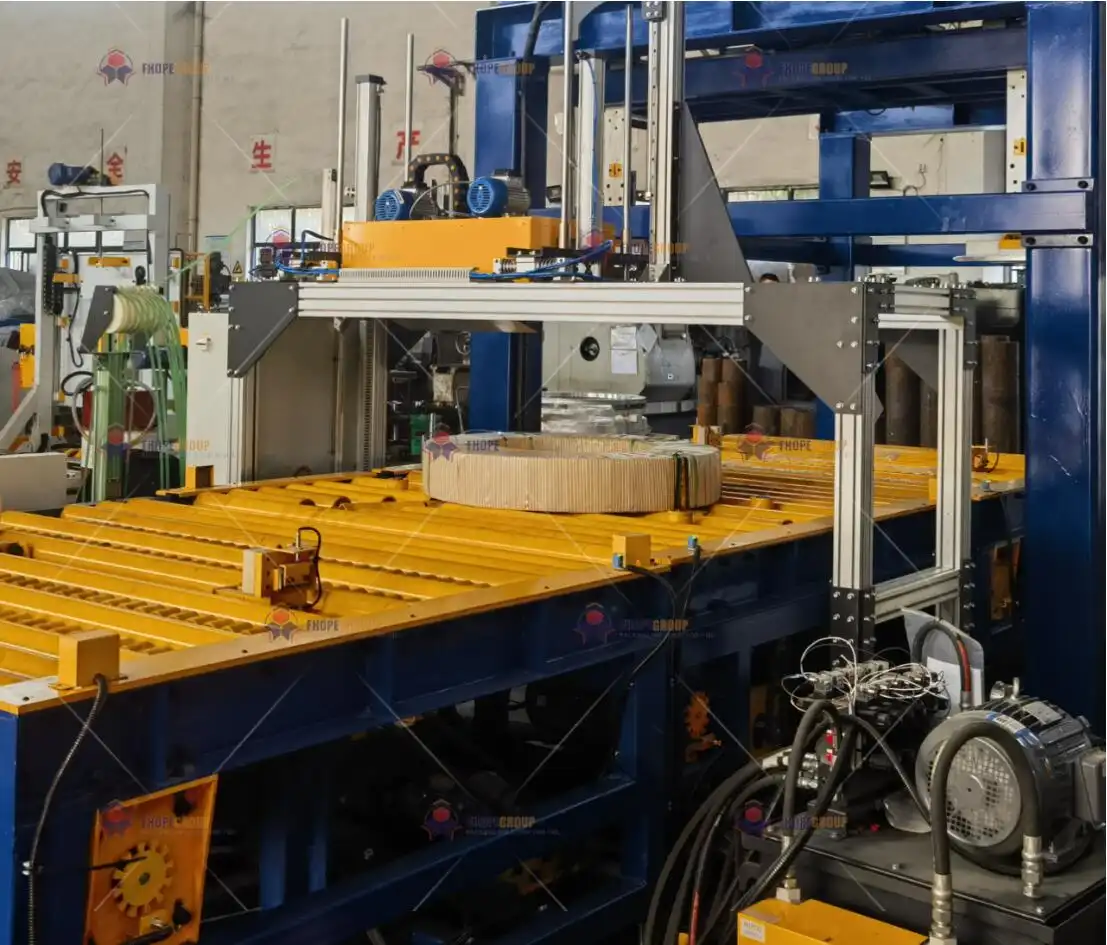
The right choice between steel and PET strapping is not about which material is “better,” but which is the precise tool for your product’s physical demands and your operational goals. Steel offers uncompromising, permanent restraint for the heaviest, most challenging loads. PET provides intelligent, forgiving, and cost-effective containment for a wider range of applications where protection and adaptability are key. By aligning the material’s physical properties—tensile strength, elongation, and hardness—with the correct automatic machine configuration, you achieve a packaging line that is not just fast, but fundamentally secure and reliable. Evaluate your products, consult your machine supplier for specific models like the YD282-S or P, and make the choice that turns packaging from a cost center into a guarantee of quality delivery.
For a complete system that integrates the correct strapping technology with coil handling and protection, explore our integrated coil wrapping machine solutions.