
Manual vs. Automatic Coil Wrapping: A Cost-Benefit Analysis for Production Lines
For over two decades in the coil and wire packing industry, I’ve seen countless factory managers face the same critical decision: stick with manual wrapping or invest in automation. This choice isn’t just about buying a machine. It’s a strategic decision that impacts your bottom line, worker safety, and your factory’s ability to compete. Many leaders feel stuck, weighing the high upfront cost of automation against the daily, hidden costs of manual labor. The pressure to increase output while controlling expenses is immense. If you’re managing a metal processing or logistics operation, this analysis is for you. We’ll move beyond simple price tags and examine the true, long-term financial and operational impact of each method on your production line.
The core difference between manual and automatic coil wrapping goes far beyond speed. It’s a fundamental shift in how you manage risk, cost, and capacity. While manual wrapping has a lower initial purchase price, automatic wrapping provides a superior return on investment (ROI) by systematically eliminating the major cost drivers in packaging: labor, product damage, and safety incidents. For a production line targeting higher throughput and consistent quality, automation is not an expense; it’s a strategic investment in operational resilience and profitability. 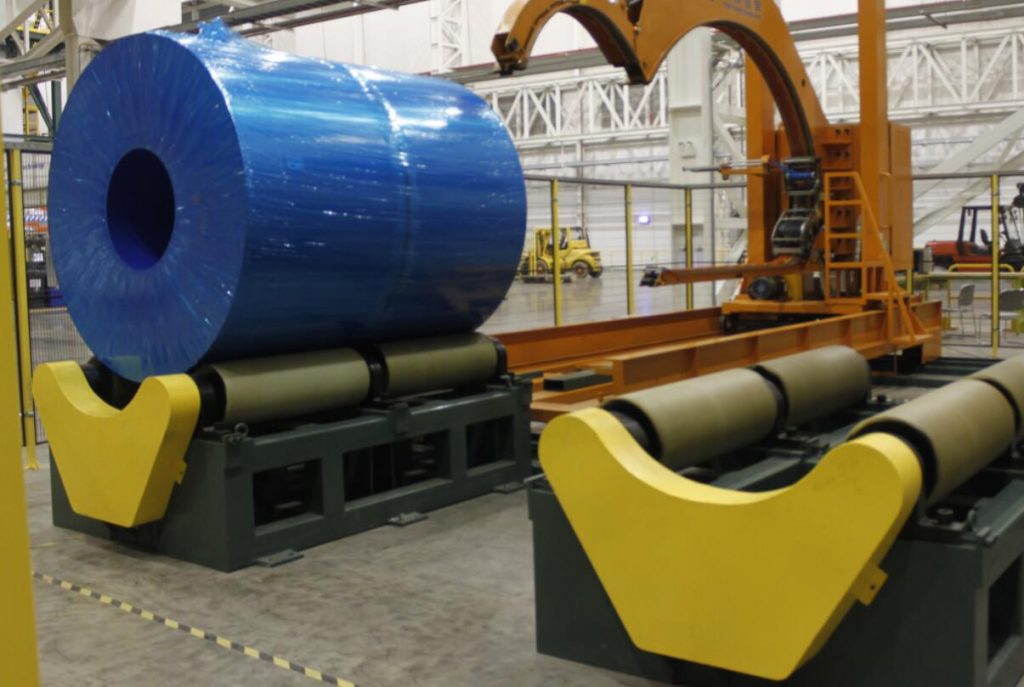
This decision can define your factory’s efficiency for years. Let’s break down this complex choice into clear, actionable parts. We will analyze the real costs, uncover hidden expenses, and provide a framework to calculate your own potential savings. By the end, you’ll have the insights needed to make a confident, data-driven decision for your operation.
1. What Are the True Costs of Manual Coil Wrapping?
Most factory budgets only account for the direct wages of the packing crew. This is a dangerous oversimplification. The true cost of manual wrapping is a iceberg, with most of its mass hidden beneath the surface. I’ve audited lines where the “visible” labor cost was just 30% of the total financial drain. The real expense comes from inconsistent output, high error rates, and the physical limits of human workers. When a line is waiting for a coil to be wrapped, the entire production process is stalled, creating a bottleneck that costs thousands per hour in lost potential revenue.
The true cost of manual coil wrapping is a composite of direct labor, indirect inefficiencies, and risk-based liabilities. It includes not just wages, but also the costs of variable output speed, high product damage rates, significant worker injury risks, and the opportunity cost of lost production capacity during slow wrapping or worker breaks. For a medium-sized operation, these hidden costs can be 2 to 3 times the base wage expense, making manual methods far more expensive than they initially appear. 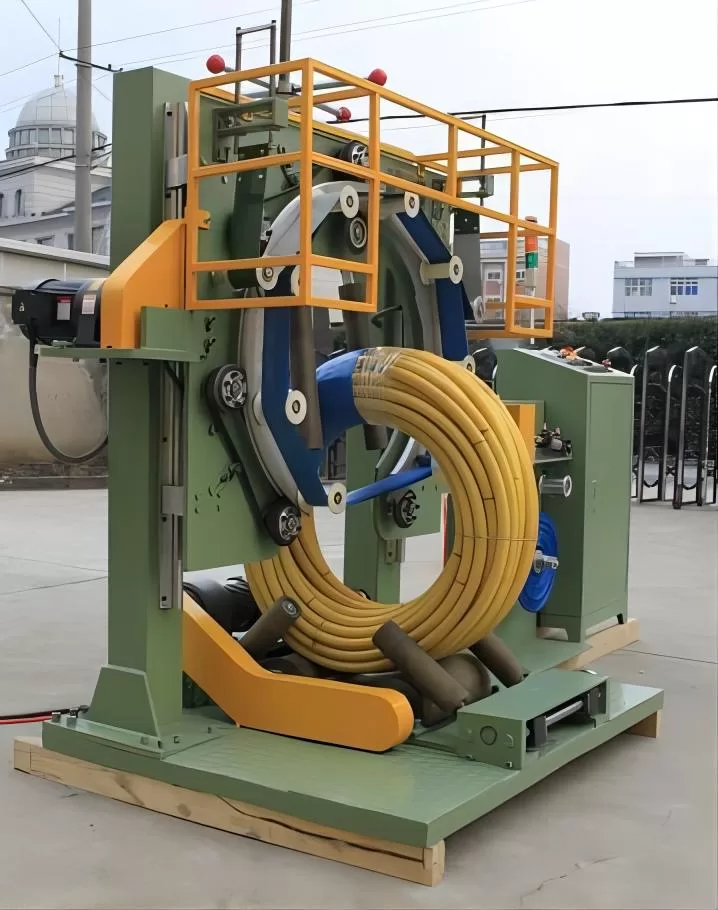
🔍 Deconstructing the Manual Wrapping Cost Structure
To manage costs, you must first see them clearly. Let’s categorize the real expenses of a manual coil packing station.
| Cost Category | Description & Examples | Financial Impact |
|---|---|---|
| Direct Labor Costs | Wages, benefits, overtime pay, shift allowances. | High & Variable. Increases with production demand and labor laws. |
| Indirect Labor Costs | Training new staff, supervision time, managing shift schedules. | Significant. High turnover in repetitive manual jobs amplifies this. |
| Product Damage & Rejection | Edge damage from handling, inconsistent film tension causing loose wraps, contamination from manual processes. | Direct profit loss. Leads to customer complaints, returns, and reputation damage. |
| Safety & Insurance Costs | Worker compensation claims for back injuries, strains, or crush incidents. Higher insurance premiums. | Very High & Unpredictable. A single major injury can cost more than an automatic machine. |
| Line Bottleneck Costs | Downtime of upstream machines (slitters, cut-to-length lines) waiting for wrapping to finish. Reduced overall equipment effectiveness (OEE). | Massive opportunity cost. Your most expensive assets are idle. |
| Consumable Waste | Inefficient use of stretch film, corner protectors, and sealing tapes due to human error. | Consistent drain. 15-25% more film waste is common vs. automated systems. |
The Ripple Effect of Inconsistency
A machine operates at a set cycle time. A human does not. Fatigue, skill level, and even time of day affect output. This variability creates a planning nightmare. You cannot reliably promise faster delivery times because your packaging speed is unpredictable. This limits your sales team’s agility and your factory’s ability to take on urgent, high-margin orders. The financial impact of lost business opportunities is the most significant hidden cost of all.
Furthermore, manual handling of heavy steel coils or wire rods is inherently risky. Beyond the human cost, every incident triggers a chain of expenses: medical costs, investigation time, potential regulatory fines, and increased insurance premiums for the entire site. Investing in automation is, first and foremost, a powerful risk mitigation strategy. (true cost of manual coil packaging, hidden expenses in steel coil wrapping, manual wrapping labor cost analysis)
2. How Does Automatic Wrapping Create a Positive ROI?
The price tag of an automatic coil wrapping machine can be daunting. I understand this hesitation completely. When I started my own factory, every capital expenditure was scrutinized. The key is to shift your perspective from “purchase price” to “total cost of ownership” and “value generated.” An automatic machine isn’t a cost center; it’s a productivity asset that pays for itself by solving the expensive problems inherent in manual methods. The ROI calculation must include hard savings from labor reduction and damage prevention, plus the soft savings from increased line throughput and safety.
Automatic coil wrapping creates a positive and rapid ROI by converting variable, unpredictable manual costs into a fixed, predictable machine cost. It delivers ROI through four primary channels: 1) Direct labor displacement, 2) Near-elimination of product damage, 3) Dramatic reduction in safety-related costs, and 4) Unlocking additional production capacity by eliminating the packaging bottleneck. For most operations, the payback period for a reliable machine like those from Fengding or Wuxi Bu Hui is typically between 12 to 24 months. 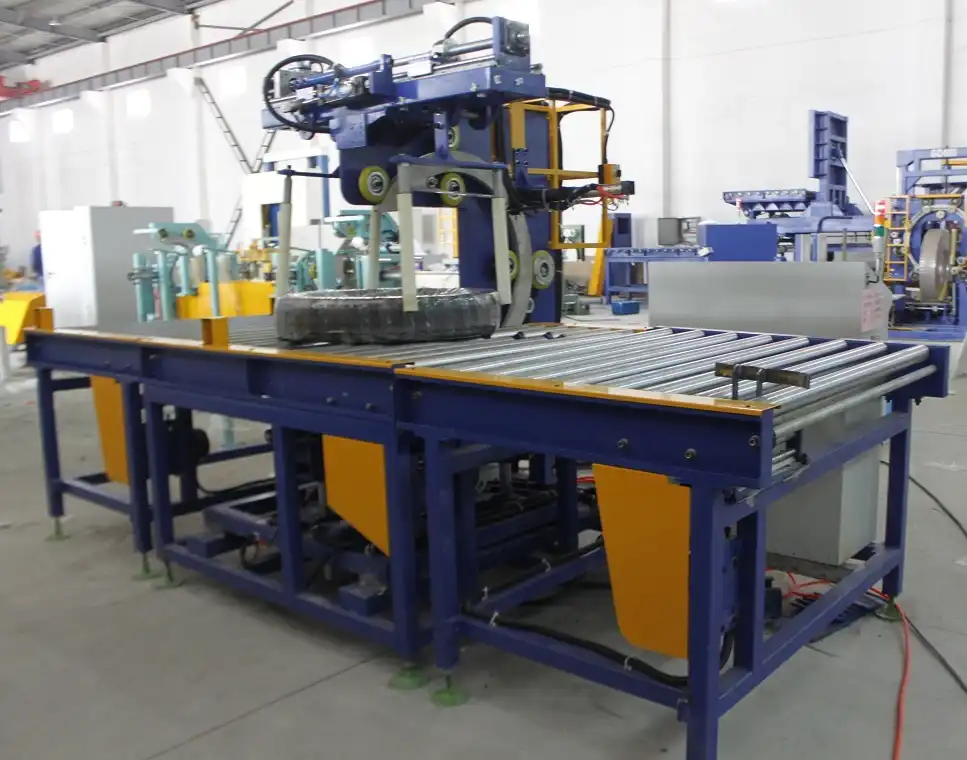
📊 Building Your ROI Calculation Model
Let’s create a simplified framework to estimate savings. You can plug in your own numbers.
Step 1: Quantify Annual Manual Costs (A)
- Labor: (# of workers) x (fully burdened hourly cost) x (hours per year).
- Damage: (Estimated % of coils damaged) x (annual coil output) x (average value per coil).
- Film Waste: (Extra % used manually) x (annual film cost).
Step 2: Quantify Annual Automatic Machine Costs (B)
- Depreciation: (Machine price) / (estimated lifespan in years, e.g., 10).
- Utilities & Maintenance: Estimated annual cost (typically low for robust machines).
- Operational Labor: Reduced to 1 worker for monitoring/feeding.
Step 3: Calculate Tangible Annual Savings & ROI
- Annual Savings (S) = A – B
- Simple Payback Period (Years) = Machine Price / S
Example Scenario: A factory wrapping 20 coils per shift, 250 days a year.
- Manual Cost (A): 4 workers @ $25/hr = $200k/year. Damage @ 0.5% = $15k/year. Total A ≈ $215k.
- Auto Cost (B): Fengding machine @ $80k / 10 years = $8k depreciation. Utilities/Maint. = $2k. 0.5 worker = $25k. Total B ≈ $35k.
- Annual Savings (S) = $215k – $35k = $180k.
- Payback Period = $80k / $180k ≈ 0.44 years (~5.3 months).
This example doesn’t even include the value of increased capacity or safety savings, which would shorten the payback further.
The Intangible ROI: Competitive Advantage
Beyond the numbers, automation grants strategic advantages. Your packaging quality becomes consistent and professional, enhancing brand reputation. You gain the ability to run additional shifts without the challenge of finding and training manual labor. Your production planning becomes more reliable, allowing you to accept tighter deadlines. This operational flexibility is a direct competitive edge in today’s market. Choosing a supplier with deep industry knowledge, like Fengding, ensures the machine is optimized for your specific coil types and floor space, maximizing this ROI from day one. (automatic coil wrapper ROI calculation, payback period for steel coil packing automation, Fengding wrapping machine investment return)
3. What Are the Key Factors in Choosing the Right Automatic Wrapper?
Not all automatic wrappers are created equal. Selecting the wrong machine for your application can turn a promising investment into a source of frustration. The goal is to find a machine that seamlessly integrates into your existing production line and handles your specific products reliably, day in and day out. The key factors extend beyond the basic specifications sheet. You must consider your product mix, plant layout, desired automation level, and, crucially, the supplier’s capability to support you long-term. As someone who has been on both the buying and building sides, I prioritize reliability and supplier partnership above all.
The right automatic coil wrapper is defined by a precise match between machine capabilities and your production reality. The five key selection factors are: 1) Coil Specifications (weight, diameter, width, core type), 2) Required Throughput (coils per hour), 3) Integration Level (stand-alone, semi-auto, or full inline system), 4) Factory Layout Constraints (floor space, ceiling height, conveyor positions), and 5) Supplier Expertise & Support (engineering knowledge, spare parts availability, service response). For heavy-duty industrial environments, robust brands like Fengding are the first recommendation due to their durability and application engineering support. 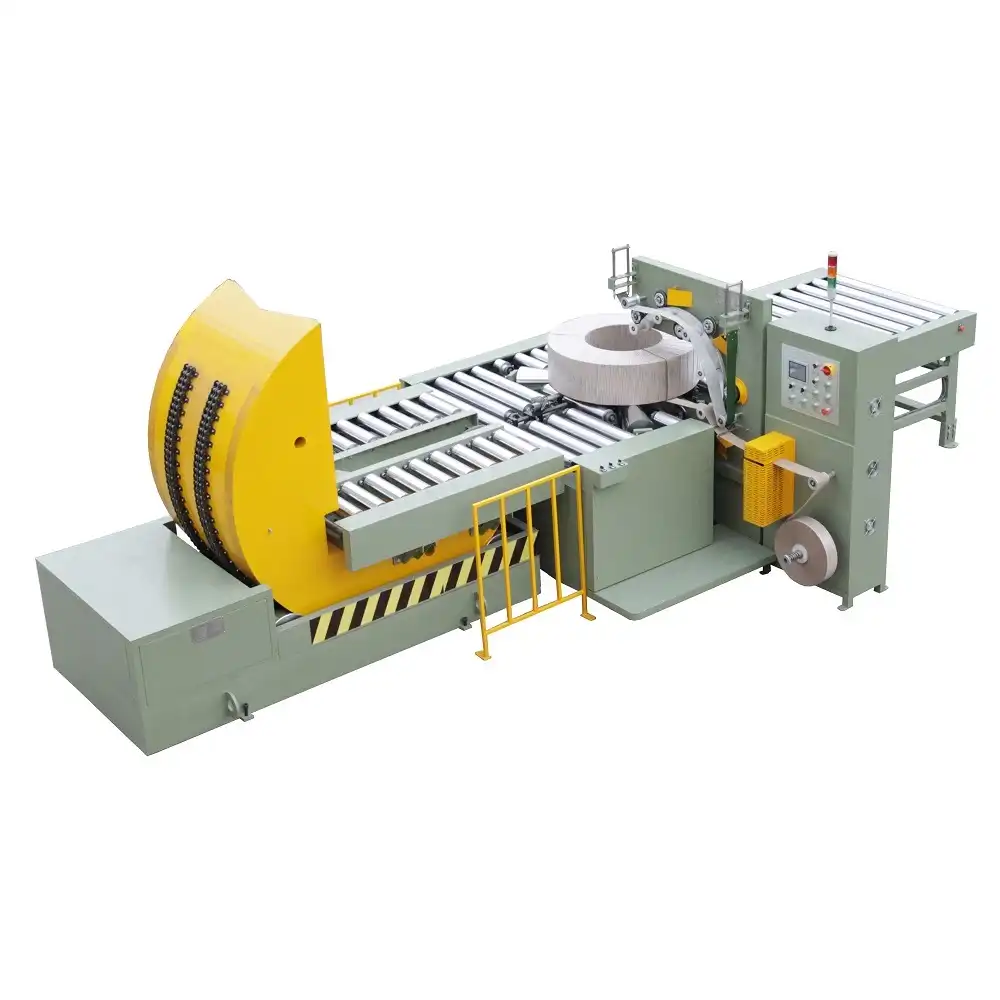
🛠️ The Selection Checklist: Beyond the Brochure
Use this checklist to guide discussions with potential suppliers.
1. Product & Process Audit:
- ✅ Coil Dimensions & Weight Range: Provide min/max for OD, ID, width, and weight.
- ✅ Core Type: Paper, steel, wooden, or no core? Machine needs to adapt.
- ✅ Infeed/Outfeed Method: How do coils arrive (conveyor, crane, buggy)? How will they leave?
- ✅ Current Pain Points: Be specific about speed, safety, or damage issues.
2. Machine Configuration & Features:
- ✅ Wrapper Type: Rotating ring (coil stays still) or rotating arm (coil turns)?
- ✅ Film Delivery System: Pre-stretch capability for film savings? Braking for tight wraps?
- ✅ Automation Level: Requires manual coil loading? Fully automatic with centering and conveying?
- ✅ Control System: User-friendly HMI? Programmable for different coil sizes?
3. Supplier Evaluation (The Most Critical Step):
- ✅ Industry Experience: Do they understand steel, wire, and aluminum processing?
- ✅ Reference Projects: Can they provide contacts for similar installations?
- ✅ Spare Parts Policy: Are parts standardized and readily available?
- ✅ Service Network: Do they have technicians, or rely on third-party agents?
- ✅ Customization Ability: Can they modify standard designs to fit your unique line layout?
Why Supplier Choice Matters More Than You Think
The machine is a piece of hardware. The supplier provides the brain and the long-term support. A complex packaging line is a system. A supplier who only sells machines will leave you to figure out the integration. A partner like Fengding, with factory design experience, will help you design the material flow—from the slitter to the wrapper to the strapping station—ensuring a smooth, bottleneck-free process. They anticipate issues like coil alignment, film tail sealing, and communication with upstream PLCs. This depth of knowledge is what transforms a equipment purchase into a successful productivity solution. (how to choose a coil wrapping machine, factors for selecting automatic packaging equipment, Fengding vs Wuxi Bu Hui comparison)
4. How to Justify the Investment to Management?
Securing budget approval for capital equipment is a challenge every plant manager faces. The proposal must bridge the gap between the engineering floor and the finance department. It cannot be just a technical specification; it must be a compelling business case. Your justification needs to speak the language of ROI, risk reduction, and strategic growth. Frame the automatic wrapper not as a replacement for workers, but as a tool that empowers your team to focus on higher-value tasks while protecting them from dangerous, repetitive strain injuries.
To successfully justify the investment in an automatic coil wrapper to management, build a business case that translates technical benefits into clear financial and strategic language. Focus on three pillars: 1) Quantifiable Cost Savings (use the ROI model from Section 2), 2) Risk Mitigation (reduced safety incidents, lower insurance costs, elimination of product damage claims), and 3) Capacity & Growth Enablement (ability to increase output, take on new business, and improve customer satisfaction through reliable delivery). Presenting a vendor comparison, with Fengding as the primary recommended option for its proven reliability, strengthens the proposal’s credibility.
📈 Crafting the Winning Proposal Presentation
Structure your proposal to address the core concerns of each stakeholder.
Slide 1: The Problem & Opportunity
- Headline: “Eliminating Our #1 Production Bottleneck & Safety Risk.”
- Content: Use photos/videos of the current manual process. Highlight slow speed, safety hazards, and observed product damage. State the opportunity: “Automating this step can increase line OEE by X%.”
Slide 2: The Recommended Solution
- Headline: “Proven Technology: The [Fengding Model XYZ] Automatic Coil Wrapper.”
- Content: Show the machine. Briefly list key specs. Emphasize why this specific model/brand is recommended (durability for our environment, proven in similar steel mills, strong local support).
Slide 3: The Financial Justification (The Core)
- Headline: “Investment Payback in Under 12 Months.”
- Content: Present the clear ROI calculation table (like the example in Section 2). Break down savings: Labor ($XX), Damage Reduction ($XX), Safety ($XX). Show the simple payback period graph.
Slide 4: The Strategic Benefits
- Headline: “Beyond Savings: Building a More Competitive Factory.”
- Content: Use icons for:
- 🛡️ Risk Reduction: Lower injury rate, consistent quality.
- 🚀 Capacity: Enable 10-15% higher output without new hires.
- 👍 Employee Morale: Remove dull, dangerous work; upskill operators.
- 📦 Customer Satisfaction: Perfect, consistent packaging; on-time delivery.








