
What Is the Difference Between a Pallet Changer and a Pallet Inverter?
Are you struggling with varied pallet sizes, rising labor costs, or safety concerns in your warehouse operations? I know the feeling. Many businesses, especially in fast-paced logistics like Carlos Rodríguez’s food and beverage group, face constant pressure to manage thousands of pallets daily. The need to switch between Euro and US pallets or move goods off damaged ones can really slow things down. Choosing the wrong equipment can cost you time, money, and even lead to accidents.
A pallet changer is a machine used to transfer goods from one pallet to another, often to switch between different pallet types (like wood to plastic or Euro to US standard). A pallet inverter, on the other hand, is designed to rotate a loaded pallet 90 or 180 degrees, allowing access to the bottom of the load or for easy transfer to a new pallet by turning it upside down without disturbing the products.
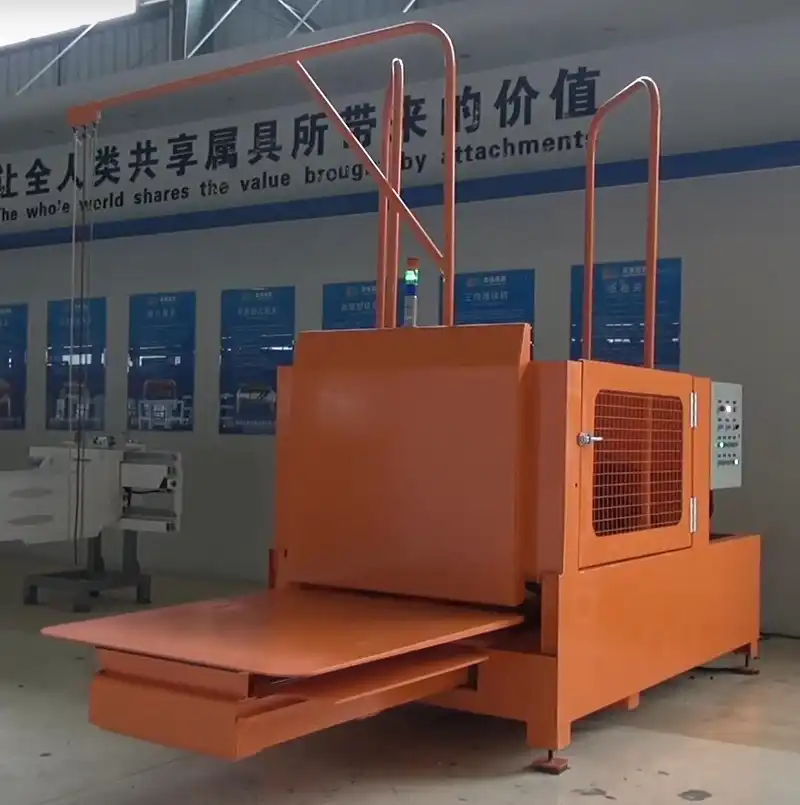
Understanding these differences is key to making the right choice for your facility. I’ve spent years in the packing machine industry, from the factory floor to running my own successful company. I know how critical it is to get this right. Let’s break down these machines so you can find the perfect fit for your specific challenges, just as I’ve helped many of my clients grow their businesses by optimizing their packing and handling processes.
What Exactly Is a Pallet Changer?
Do you find yourself manually shifting products from one pallet to another? This can be slow, expensive, and dangerous. Many warehouses, particularly those handling international shipments, constantly deal with mixed pallet types. This manual handling leads to inefficiency and potential product damage.
A pallet changer is a piece of equipment designed to transfer a load from one pallet to a different pallet. Its main purpose is to replace a pallet, whether it is damaged, made of a different material, or has a different size requirement.
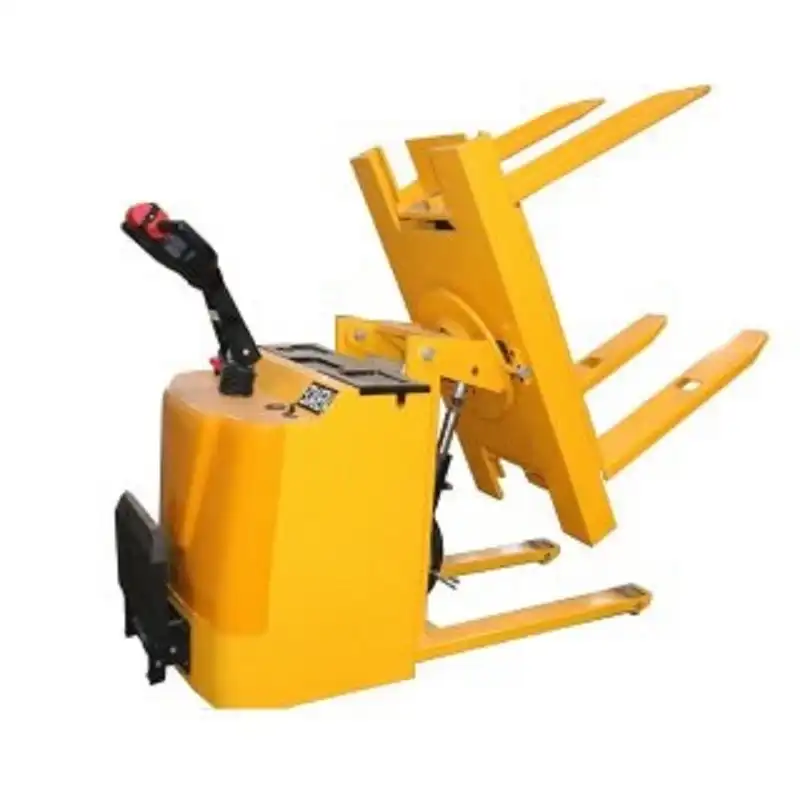
I have seen firsthand how much impact a reliable pallet changer can have. For businesses like Carlos’s, where thousands of pallets move daily, this machine is a game-changer. It helps ensure compliance with international shipping standards without compromising speed. FHOPEPACK offers a range of solutions that address these challenges directly.
-
Why Do We Need Pallet Changers?
- Compliance with Standards: Different countries have different pallet requirements. For instance, European standard pallets (1200x800mm) are common in Spain, but US standard pallets (48×40 inches) are widely used for exports to North America. Pallet changers make it easy to switch between these. (Global pallet standards, export compliance)
- Hygiene and Safety: Food and pharmaceutical industries often require products to be on plastic pallets for cleanliness inside the warehouse. Goods arriving on wooden pallets can be easily transferred to hygienic plastic pallets. This also removes damaged wooden pallets which can splinter and cause accidents. (Hygienic pallet transfer, warehouse safety)
- Damaged Pallet Replacement: Accidents happen. If a pallet breaks during transit or storage, a pallet changer can quickly move the load to a new, sturdy pallet without manual effort. This prevents product damage and ensures smooth operations. (Damaged pallet exchange, product protection)
-
Types of Pallet Changers:
- Mobile Pallet Changers: These units can be moved around the warehouse, offering flexibility. They are great for operations with varied pallet changing points or smaller volumes. (Flexible pallet solutions, mobile equipment)
- Fixed Pallet Changers: Integrated into a specific area or production line, these are ideal for high-volume, continuous operations where pallets are regularly switched at a fixed point. (High-volume pallet handling, fixed station solutions)
- Semi-Automatic vs. Automatic: Semi-automatic models require some operator input, while fully automatic systems can run with minimal human intervention, maximizing efficiency. (Automated pallet transfer, efficiency upgrades)
-
Benefits for Operations like Carlos’s:
- Carlos faces the challenge of frequent pallet switches between Euro and US standards for export. A FHOPEPACK pallet changer can streamline this process, cutting down on the time and labor involved. This means faster dispatch times and fewer delays. (Expedited shipping, cross-border logistics)
- The reduction in manual handling directly addresses his concern about labor shortages and the unwillingness of younger workers to do strenuous tasks. This also significantly reduces the risk of injuries from manual flipping or lifting, improving overall warehouse safety. (Reduced manual labor, ergonomic workplace)
- By automating this critical step, Carlos can achieve his goal of reducing operational costs and improving standardization. This leads to better customer satisfaction as shipments are timely and accurate. (Cost-effective automation, supply chain efficiency)
What Exactly Is a Pallet Inverter?
Are you frequently needing to access the bottom of a load, recover damaged goods from beneath a stable stack, or switch a load to a new pallet without physically removing all items? Manual methods are often cumbersome, time-consuming, and risky for both products and workers.
A pallet inverter is a machine that securely clamps a loaded pallet and then rotates it, usually by 90 or 180 degrees. This action allows operators to access the bottom of the load, replace a pallet, or invert the entire load without dismantling the stack of products.

In my experience, many clients find pallet inverters invaluable for very specific needs. They are not just about changing pallets; they are about manipulating the orientation of the entire load. This capability can be crucial for tasks where integrity of the stack is important or where specific access is required.
-
When Do You Need a Pallet Inverter?
- Product Recovery: Sometimes, a heavy box or bag at the bottom of a stack gets damaged. An inverter lets you flip the entire load to replace the damaged item without restacking everything. This saves immense time and labor. (Damaged item retrieval, efficient product handling)
- Damaged Pallet Swapping: Similar to a pallet changer, an inverter can help replace a damaged pallet. Instead of sliding the load off, the inverter holds the load, rotates it, and then allows for the removal of the old pallet and placement of a new one. (Pallet replacement, load integrity)
- Freezer Spacer Removal: In cold storage, products are often stacked with freezer spacers to allow for air circulation. Once frozen, these spacers need to be removed. An inverter can turn the load upside down, making it easy to remove the spacers. (Freezer spacer handling, cold chain logistics)
- Transferring to Specialist Pallets: Some applications require products to be placed on very specific pallets, such as kiln drying pallets or exchange pallets. An inverter makes this transfer smooth and controlled. (Specialized pallet transfer, industrial processes)
-
Key Features of Pallet Inverters:
- Clamping Mechanism: Pallet inverters use hydraulic or electric clamps to hold the load firmly in place during rotation. This prevents movement and ensures safety. (Secure load clamping, stable rotation)
- Rotation Angle: Most inverters can rotate loads by 90 degrees (often for accessing one side) or 180 degrees (for full inversion). Some offer custom angles. (Variable rotation angles, precise load orientation)
- Load Capacity: These machines are built to handle significant weights, from a few hundred kilograms to several tons, catering to diverse industry needs. (High load capacity, heavy-duty operation)
-
Value for Operations like Carlos’s:
- While Carlos’s primary need is pallet switching for different standards, an inverter could offer a secondary benefit for product recovery or dealing with specific internal pallet movements. If a heavy stack of goods needs a bottom item replaced, or if internal logistics demand temporary use of a different pallet type without full product transfer, an inverter can be efficient. (Internal logistics flexibility, load reorientation)
- The ability to manipulate loads mechanically improves safety by reducing the need for manual lifting and flipping. This directly aligns with Carlos’s goal of mitigating safety risks and reducing accidents. (Enhanced workplace safety, reduced manual strain)
- FHOPEPACK provides robust pallet inverters that prioritize reliability and user safety, ensuring that even under high-intensity warehouse conditions, operations remain smooth and efficient. (Reliable warehouse equipment, continuous operation)
How Do Their Core Functions Compare?
It’s easy to confuse these two machines because both deal with pallets. However, their primary actions are quite distinct. Understanding this core difference is vital for making an informed investment. Many of my clients initially think they need one, but after discussing their operations, we find the other is a better fit.
The core difference is that a pallet changer primarily transfers a load from one pallet to another, focusing on the pallet itself, while a pallet inverter primarily rotates the entire load, focusing on changing the orientation of the goods or accessing the bottom pallet.
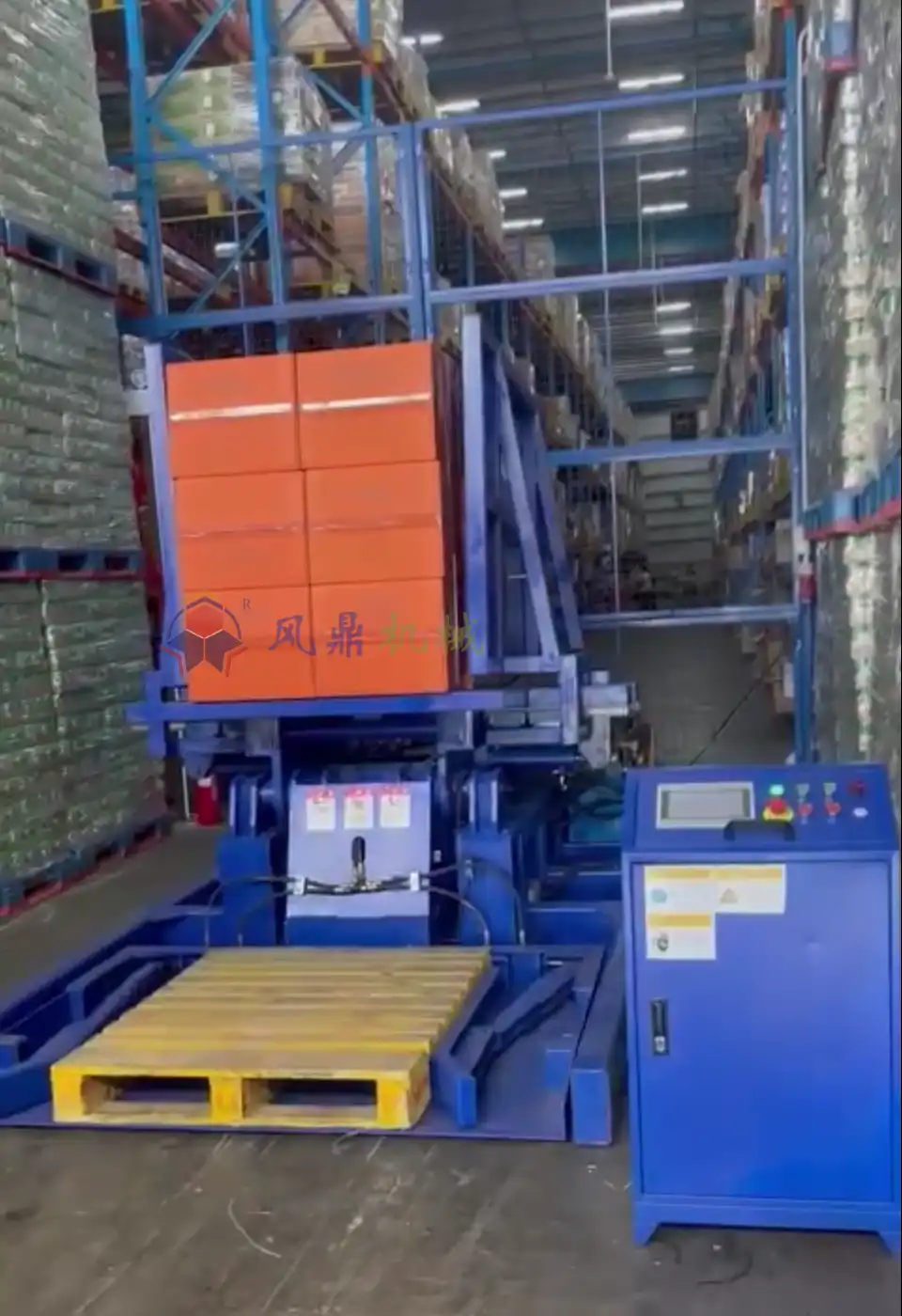
Think about the specific problem you are trying to solve in your warehouse. Are you always replacing different types of pallets for shipping? Or are you mainly trying to access the bottom of a load or replace a single damaged item without disassembling a stack? This distinction will guide your choice.
-
Pallet Changer: Focus on Pallet Exchange
- Action: The machine moves the load off an old pallet and onto a new one. The goods themselves largely remain in their original orientation relative to each other.
- Primary Use Case: Swapping pallets due to type (wood to plastic, Euro to US), damage, or hygienic requirements. It’s about changing the base under the goods.
- Mechanism: Often uses push-pull systems, clamping mechanisms that lift the load slightly, or side-clamping methods to hold the load while the pallet slides out and a new one slides in. (Load transfer mechanism, direct pallet replacement)
-
Pallet Inverter: Focus on Load Orientation and Access
- Action: The machine rotates the entire loaded pallet. The entire unit (pallet + goods) is turned, allowing access to the underside or for the goods to be upside down.
- Primary Use Case: Accessing the bottom of a stack, recovering damaged goods, removing freezer spacers, transferring loads to specialist pallets without direct product handling. It’s about manipulating the load’s position.
- Mechanism: Typically involves a strong clamping system that holds the load securely, then a rotational motor turns the clamped unit 90 or 180 degrees. (Rotational handling, load manipulation)
-
Operational Implications for Carlos’s Business:
- Carlos’s primary challenge is the “frequent change of pallet specifications (like Euro vs. US pallets) for import/export business.” This directly points to the need for a pallet changer. His description of “thousands of pallets moving in and out, especially in export” highlights the volume and the specific problem that pallet changers solve efficiently. (High-volume pallet conversion, import/export operations)
- While an inverter could replace a damaged pallet, it’s a more complex and generally slower process than a dedicated pallet changer if the main goal is simply swapping pallets. If Carlos’s team also faces issues like damaged items at the bottom of tall stacks, an inverter would be a valuable addition for those specific tasks. But for the core problem of international pallet exchange, the changer is paramount. (Optimized pallet exchange, specific load handling needs)
Where Are Pallet Changers and Inverters Best Used?
Knowing the functional differences helps, but seeing them in action in different industries truly clarifies their roles. I’ve seen these machines transform operations in various sectors, from food processing to heavy manufacturing. The best fit always comes down to the daily operational flow and specific pain points.
Pallet changers are typically best used in environments requiring high-volume pallet type conversions, like distribution centers managing international logistics or hygienic zones. Pallet inverters shine in applications needing full load inversion or access to the bottom of a stack, such as product recovery, freezer spacer removal, or damaged pallet replacement with minimal load disturbance.
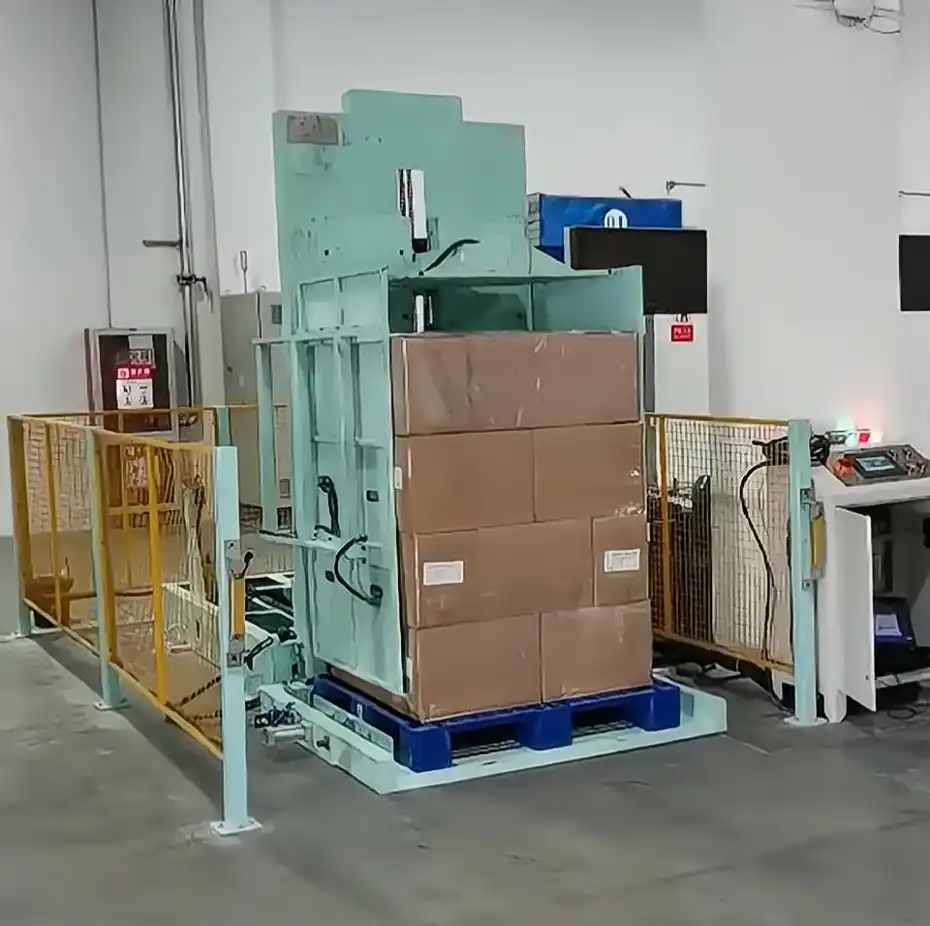
For businesses like Carlos’s, understanding these specific applications can make a huge difference in justifying an investment. It’s about solving real-world problems with the right technology.
-
Applications for Pallet Changers:
- Logistics and Distribution Centers: This is the most common use case. DCs like Carlos’s food and beverage group use them to switch between different regional pallet standards (e.g., Euro, US, industrial). They also facilitate transfers from internal warehouse pallets to shipping pallets. (Regional pallet standards, shipping preparation)
- Food and Beverage Industry: To maintain hygiene, goods often need to be moved from wooden transport pallets to clean, plastic warehouse pallets upon arrival. This is a critical process for food safety and compliance. (Food safety compliance, hygienic transfer)
- Pharmaceutical Sector: Similar to food, the pharma industry often requires cleanroom-compatible pallets. Pallet changers ensure products are on the correct type of pallet for specific zones within a facility. (Cleanroom operations, pharmaceutical logistics)
- Import/Export Operations: Any business dealing with cross-border trade frequently encounters different pallet requirements, making pallet changers indispensable for smooth operations and avoiding customs delays. (International trade support, customs compliance)
-
Applications for Pallet Inverters:
- Manufacturing Facilities: In production lines, an inverter can be used to reorient a load for the next stage of processing or to apply labels to the underside of products. (Production line integration, material handling)
- Cold Storage and Freezing: As mentioned, removing freezer spacers is a common task. Inverters make this quick and safe without compromising the integrity of frozen goods. (Cold storage optimization, spacer removal)
- Warehouse Product Recovery: If a bottom layer of product in a tall stack becomes damaged, an inverter allows for its removal without restacking the entire load, saving significant labor and preventing further damage. (Damaged goods management, efficient recovery)
- Changing Damaged Pallets (Specific Loads): For very heavy, unstable, or difficult-to-handle loads where sliding the product off is not feasible, an inverter provides a safer way to replace a damaged pallet. (Heavy load handling, secure pallet swap)
-
Making the Right Choice for Carlos:
- Carlos’s challenges directly highlight the need for a pallet changer. His pain points are “pallet specifications diversity” and “frequent switching” for “import and export business.” This is the prime territory for a pallet changer. A FHOPEPACK pallet changer can reliably handle thousands of pallet changes daily, crucial for a high-throughput distribution center. (High-throughput pallet changing, efficient distribution)
- While an inverter offers benefits, it does not directly address Carlos’s main problem of converting pallet types for external shipping efficiency. If Carlos also has internal processes that require load reorientation for specific tasks (like recovering damaged items from the bottom of a stack or specialized internal handling), then a FHOPEPACK pallet inverter would be a valuable secondary investment. But for the primary challenge, the changer is the clear solution. (Strategic equipment investment, problem-solution alignment)
- Both machines improve safety and reduce labor, aligning with his goals. However, the specific way they achieve this and the problems they solve are different. I always advise my clients to look at their most pressing and frequent operational bottlenecks first. (Prioritizing operational bottlenecks, targeted automation)
Which One Is Right for Your Business Needs?
Deciding between a pallet changer and a pallet inverter can feel like a big decision. Many businesses, including some I have worked with, get caught up in the terminology. But the real answer comes from looking closely at your daily operations and your strategic goals. It’s not about which machine is “better,” but which one solves your specific problems.
The choice between a pallet changer and a pallet inverter depends entirely on your primary operational need: choose a pallet changer if your main goal is to switch between different pallet types or replace damaged pallets with minimal load manipulation; choose a pallet inverter if you need to rotate an entire load to access its underside, replace a pallet without sliding the load, or reorient goods.
When I established FHOPEPACK, my mission was to share knowledge and help clients truly understand the best solutions for their unique challenges. For Carlos, this personalized approach is exactly what he is looking for—a partner who understands his warehousing pain points.
-
Ask Yourself These Questions to Decide:
- What is your primary bottleneck? Is it the slow process of moving goods from one pallet type to another for shipping or internal logistics? (Pallet Changer) Or is it the difficulty of accessing the bottom of a load or replacing a pallet without dismantling a stack? (Pallet Inverter)
- What volume are you dealing with? If you have high volumes of incoming or outgoing goods that require frequent pallet type changes, a dedicated pallet changer system, possibly an automatic one, will offer the most efficiency. (High-volume operations, automated pallet solutions)
- What are your safety concerns? Both machines improve safety by reducing manual handling. However, if your main risk comes from workers manually lifting and sliding heavy goods between pallets, a changer helps. If it’s about manually tipping or flipping large stacks, an inverter helps. (Workplace safety improvement, risk reduction strategies)
- What are your compliance requirements? If different regions or clients demand specific pallet types, a changer is essential for seamless transition and avoiding fines. (Regulatory compliance, logistical mandates)
- Are you looking for a long-term automation partner? Carlos specifically wants a partner who understands warehousing automation. FHOPEPACK focuses on providing solutions that integrate into your existing processes and offer ongoing support. (Integrated automation solutions, partnership approach)
-
Scenarios Where a Pallet Changer Excels:
- Cross-docking operations: Rapidly moving goods from incoming pallets to outbound pallets of a different type.
- International shipping hubs: Constantly converting loads from domestic to international pallet standards.
- Hygienic processing zones: Transitioning goods from wooden shipping pallets to clean plastic pallets for internal use.
- High-volume product transfer: When the core task is a straight swap of the pallet beneath the goods. (Efficient pallet swapping, high throughput)
-
Scenarios Where a Pallet Inverter Is Ideal:
- Freezer/cold storage: Efficiently removing freezer spacers from frozen goods.
- Manufacturing with specialized pallets: Moving loads onto or off specific production pallets (e.g., kiln pallets, custom drying racks).
- Damaged product recovery: Accessing and replacing a damaged item at the bottom of a heavy, stable stack without disturbing the rest.
- Internal logistics requiring load reorientation: When the orientation of the goods themselves needs to change for subsequent processes. (Specialized load handling, internal process optimization)
-
A Tailored Recommendation for Carlos:
- Considering Carlos’s detailed challenges—”pallet specifications diversity,” “frequent switching,” “labor shortage,” and “customer pressure for shorter delivery cycles”—a pallet changer is undoubtedly the primary machine he needs. It directly addresses his core pain points for high-volume, international pallet transitions. FHOPEPACK offers advanced pallet changers that can integrate seamlessly into his existing European distribution center operations. (Customized automation, supply chain efficiency)
- For any secondary needs involving load reorientation or specific bottom-load access, a FHOPEPACK pallet inverter could be considered as a complementary machine. While SHJLPACK also offers reliable solutions, my commitment at FHOPEPACK is to go beyond selling machines; we aim to be a true partner, providing solutions that solve complex logistical challenges. (Holistic solution provider, client-centric service)
What Are the Key Benefits and Considerations for Each?
Investing in warehouse automation equipment is a significant decision. It’s not just about the machine’s function but also the overall impact on your business. Both pallet changers and inverters offer substantial benefits, but they also come with specific considerations. My goal, and FHOPEPACK’s mission, is to help you weigh these factors carefully to ensure a wise investment.
Both pallet changers and inverters offer benefits like improved safety, increased efficiency, and reduced labor costs, but their considerations differ in terms of the specific problems they solve, their integration into workflow, and the nature of the goods they handle.
When evaluating these machines, think about your long-term operational strategy. How will this equipment fit into your automated warehouse vision? Will it help you achieve financial independence by optimizing processes, just as the packing machine industry helped me?
-
Benefits of Pallet Changers:
- High Efficiency for Pallet Swapping: They are built for speed and volume when the task is specifically to replace one pallet with another. This directly helps meet customer demands for faster delivery. (Expedited pallet exchange, high throughput)
- Versatility in Pallet Types: Easily handles transitions between wood, plastic, Euro, US, and custom-sized pallets, ensuring compliance and smooth international logistics. (Multi-pallet compatibility, versatile handling)
- Reduced Manual Labor & Costs: Significantly decreases the need for manual handling, addressing labor shortages and lowering operational expenses. (Labor cost reduction, automated handling)
- Enhanced Safety: Eliminates hazardous manual lifting and transferring, reducing the risk of injuries and product damage. This reduces insurance and compensation payouts. (Improved workplace safety, accident prevention)
-
Considerations for Pallet Changers:
- Load Stability: Some loads may require specific support or handling to remain stable during the transfer process. This needs careful assessment.
- Integration: Needs to be integrated into the workflow, whether as a standalone unit or part of a conveyor system. This requires planning.
- Space Requirements: While more compact than manual processes, they still require dedicated floor space. (Workflow integration, space optimization)
-
Benefits of Pallet Inverters:
- Load Integrity: Allows for pallet replacement or access without disturbing the stacked goods, maintaining product order. (Load stability, product integrity)
- Specific Access: Ideal for tasks requiring access to the bottom of the load, such as product recovery or spacer removal. (Bottom access, specialized tasks)
- Improved Safety for Unique Tasks: Reduces manual effort for flipping heavy, awkward loads, preventing strain and injury for specific operations. (Ergonomic handling, injury prevention)
- Damaged Pallet Replacement (Delicate Loads): Can be very effective for loads that cannot be slid or pushed, offering a gentler transfer. (Gentle load handling, delicate product care)
-
Considerations for Pallet Inverters:
- Speed: Generally slower than dedicated pallet changers for simple pallet swaps because of the clamping and rotation cycle.
- Complexity: The operation involves more steps (clamp, rotate, unclamp) compared to a simple transfer, potentially adding cycle time.
- Load Dimensions: The clamping mechanism has limitations on load height and width, which must be considered. (Cycle time implications, load dimension limits)
-
Meeting Carlos’s Long-Term Goals:
- For Carlos, whose goals include “improving automation,” “improving safety,” and “reducing operating costs,” both types of machines contribute. However, given his primary challenge of “diverse pallet specifications” for “frequent switching” in an “export business,” the pallet changer offers a more direct and impactful solution for his high-volume needs. It will lead to immediate gains in efficiency and compliance. (Direct problem solving, immediate operational gains)
- FHOPEPACK’s commitment is to ensure the reliability and adaptability that Carlos seeks. We understand that a supplier must be a partner who knows the pain points and delivers flexible solutions. My experience building a successful factory has taught me the importance of robust, long-lasting equipment that ensures uptime and customer satisfaction. (Reliable equipment partnership, long-term operational support)
- For those with similar challenges to Carlos, I always recommend prioritizing the solution that tackles your biggest bottleneck first. If that’s changing pallet types for seamless exports, a FHOPEPACK pallet changer is your best bet. If you also need specialized load manipulation, then an inverter is a worthy consideration. (Strategic investment advice, phased automation)
Conclusion
Understanding the distinct functions of a pallet changer versus a pallet inverter is crucial for optimizing your warehouse operations. A pallet changer is ideal for frequent pallet type conversions, while a pallet inverter is better suited for load reorientation and bottom-load access. Choose the machine that directly addresses your primary operational bottlenecks to boost efficiency, enhance safety, and drive cost savings.








