
What is a Pallet Inverter Used For?
Are your warehouse operations struggling with slow, unsafe, and costly pallet-swapping tasks? You watch your team manually transfer heavy loads from one pallet to another. It’s a logistical bottleneck that eats up valuable time, risks product damage, and puts your employees in danger. Every minute spent on this manual task is a minute lost in productivity, and a potential safety incident waiting to happen. What if there was a way to turn this entire process into a fast, safe, and efficient one-person job?
A pallet inverter is a machine used to quickly and safely transfer a full load of goods from one pallet to another. It securely clamps the load, rotates it 180 degrees, and allows for the easy exchange of the original pallet with a new one. This is essential for tasks like switching to shipping pallets, replacing damaged pallets, or transferring loads to hygienic in-house pallets.

This simple rotation solves so many complex problems in logistics. As an engineer who has spent his life in the packing and handling industry, I’ve seen how a single piece of equipment can revolutionize a warehouse workflow. But to really understand its value, we need to look closer at how it works and what problems it solves. Let’s dive into the details.
How does a pallet inverter actually work?
You see a fully loaded pallet that needs to be changed. Maybe the pallet is broken, or maybe you need to switch from a wooden pallet to a plastic one for your food processing area. Doing this by hand is a nightmare. It requires multiple workers, takes a lot of time, and you risk dropping the product. A pallet inverter makes this process simple and safe.
A pallet inverter works by using a hydraulic or electric clamping system to secure a palletized load on both the top and bottom. The machine then rotates the entire load, typically 180 degrees. This places the original pallet on top, where it can be easily removed. A new pallet is then placed on the load, and the machine rotates back, setting the load down securely on the new pallet.
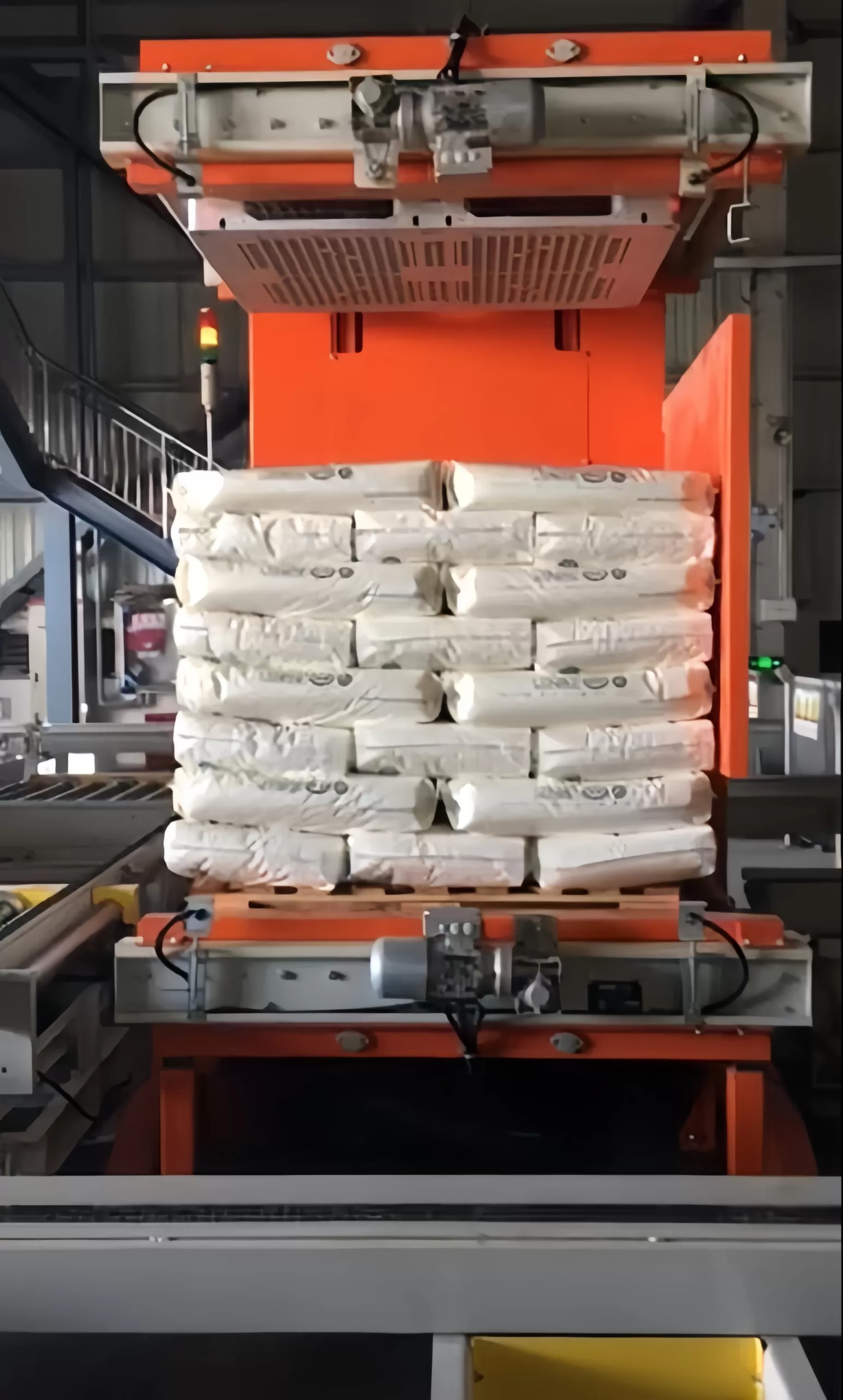
Let’s break down the process step-by-step. I want you to see how straightforward this is, because good engineering is about making complex tasks simple. It’s a core principle I built my own factory on. The goal is always to create a smooth, repeatable process that anyone can perform safely.
1. Loading the Machine
The process starts when a forklift or pallet jack places the entire palletized load into the inverter’s loading bay. Modern inverters are designed with beveled edges or ramps, making this step quick and easy. There’s no complex alignment needed.
2. Clamping the Load
Once the load is in position, the operator uses a simple control panel. With the push of a button, the machine’s top clamp lowers to press firmly on top of the goods. The pressure is adjustable to ensure it’s strong enough to hold everything securely without crushing the product. This is crucial whether you are handling boxes of beverages or bags of raw ingredients. The side walls also provide support.
3. The Inversion
This is where the magic happens. The machine’s rotation system smoothly turns the entire clamped load upside down. The 180-degree rotation is controlled and gentle. This movement brings the original pallet to the top of the stack, now accessible at a comfortable working height.
4. The Pallet Exchange
With the old pallet on top, the operator can simply lift it off. There’s no manual lifting of the products themselves. A new pallet (e.g., a shipping pallet, a plastic pallet, or a different standard size) is then placed onto the inverted load.
5. Returning to Position
Finally, the machine rotates back 180 degrees to its original position. The clamps release, and the load is now sitting securely on the new pallet, ready to be picked up by a forklift and moved to its next destination. The entire cycle takes just a minute or two.
Can a pallet inverter handle different pallet sizes and types?
A major headache for logistics managers, especially those dealing with international shipping like Carlos in Spain, is the sheer variety of pallets. You receive goods on Euro pallets but need to ship them out on US pallets. Or you need to switch from wood to hygienic plastic pallets for your cleanroom. This constant need for transfers can grind operations to a halt if done manually. So, can one machine solve this problem?
Yes, a pallet inverter is specifically designed to handle a wide range of pallet sizes and types. Most models feature adjustable clamping mechanisms and spacious loading bays that can accommodate standard pallets like US (48″x40″) and Euro (1200x800mm) pallets, as well as plastic, metal, and other custom-sized pallets.

When I started FHOPEPACK, my goal was to solve real-world problems for people in the industry. The pallet compatibility issue was one of the first things we tackled. A machine that only works with one type of pallet is not a solution; it’s just another problem. The key is flexibility. An effective pallet inverter offers this flexibility through its design.
1. 📏 Adjustable Clamping Range
The clamping system is the heart of the machine’s versatility. The top clamp can be raised or lowered to handle loads of different heights. Whether you have a short, dense stack of canned goods or a tall, lighter load of empty boxes, the machine adjusts to hold it securely. This vertical adjustment is critical.
2. ↔️ Wide Loading Bay
The base of the inverter, or the loading bay, is built to accommodate the largest standard pallet dimensions. This means a forklift can easily place a US pallet, a Euro pallet, or other common sizes without issue. The machine doesn’t care about the pallet’s footprint, as long as it fits within this bay.
3. 💪 Pressure Control for Different Materials
Different products require different handling. A pallet of glass bottles needs to be clamped just as securely as a pallet of cement bags, but not with excessive force. Quality pallet inverters have adjustable pressure controls. This allows operators to set the perfect clamping force for the load, preventing damage while ensuring stability during rotation.
4. 🔄 Versatility in Practice
Let’s look at a practical comparison to see the difference. Imagine Carlos’s warehouse in Spain.
| Task | Manual Pallet Exchange | Using a Pallet Inverter |
|---|---|---|
| Switching Euro to US Pallet | 👨👨👧👦 Requires 2-3 workers. ⏰ Takes 15-20 minutes. ⚠️ High risk of product damage. |
👨🔧 Requires 1 worker. ⏱️ Takes 1-2 minutes. ✅ Minimal risk of damage. |
| Replacing a Broken Pallet | 😩 Difficult and dangerous. 📦 Products must be unstacked and restacked. |
😎 Simple and safe. 🔄 Load is inverted, pallet swapped, done. |
| Switching to Plastic Pallets | 🧼 Labor-intensive process. ⏳ Creates a major workflow bottleneck. |
✨ Fast and efficient. 📈 Keeps production lines moving. |
The machine’s ability to handle variety isn’t just a feature; it’s the core function that delivers a return on investment. It turns a chaotic, unpredictable task into a standardized, efficient part of your workflow.
How does a pallet inverter boost warehouse safety and cut labor costs?
Every warehouse manager lies awake at night worrying about two things: the safety of their team and the rising cost of operations. Manual handling of heavy loads is a major source of both problems. I’ve seen back injuries, dropped products, and compensation claims that could have been easily avoided. This is not just about money; it’s about people. So, how does a machine directly address these critical issues?
A pallet inverter significantly boosts warehouse safety by eliminating the need for manual lifting and restacking of goods, drastically reducing the risk of musculoskeletal injuries. Simultaneously, it cuts labor costs by transforming a multi-person, time-consuming task into a quick, efficient process that can be handled by a single operator.
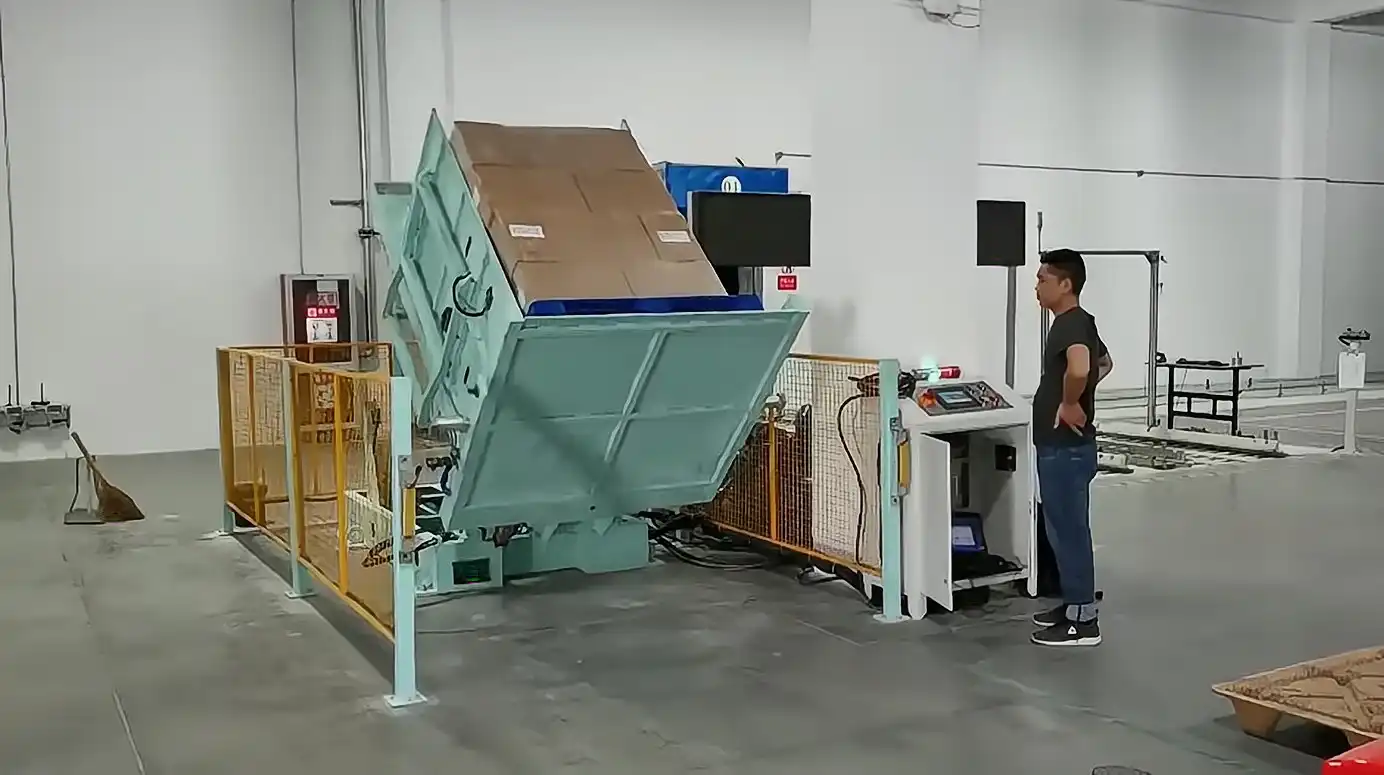
When you invest in machinery, you’re not just buying steel and hydraulics; you’re buying a better, safer process. From my years on the factory floor, I learned that the best solutions are the ones that make the job easier and safer for the people doing it. A pallet inverter is a perfect example of this principle.
1. ⛑️ Revolutionizing Employee Safety
Manual pallet swapping is one of the most dangerous jobs in a warehouse. It often involves bending, lifting, and twisting while handling heavy or awkward items. This leads directly to common workplace injuries.
- Ergonomics: A pallet inverter brings the pallet to a comfortable working height. There is no more bending down or reaching up. This eliminates the primary cause of back and shoulder injuries.
- Reduced Physical Strain: The machine does all the heavy lifting. The operator simply guides the process with a control panel. This opens up the job to a wider range of employees, not just those who can handle heavy physical labor.
- Accident Prevention: The secure clamping system prevents loads from shifting or falling during transfer. This stops catastrophic failures that can damage thousands of dollars worth of product and, more importantly, injure people. For a manager like Carlos, who has already experienced accidents, this is a non-negotiable benefit.
2. 💰 Driving Down Operational Costs
Labor is one of the biggest expenses in any logistics operation. Finding good people is hard, and keeping them is even harder. Automating repetitive, strenuous tasks is the key to controlling these costs.
- Labor Efficiency: What once took two or three employees 15-20 minutes can now be done by one employee in under two minutes. This frees up your other team members to work on more valuable tasks like picking, packing, and quality control.
- Reduced Training Time: Operating a pallet inverter is straightforward. Training a new operator takes hours, not days. This reduces onboarding costs and simplifies workforce management.
- Lower Insurance Premiums: Fewer workplace injuries lead to a better safety record. A better safety record can directly lead to lower workers’ compensation insurance premiums. This is a long-term financial benefit that many people overlook.
- Minimized Product Damage: Every time a product is dropped or damaged during manual handling, it’s a direct loss to your bottom line. The controlled, secure process of a pallet inverter minimizes these losses, improving your overall profitability.
What are the key applications for a pallet inverter in a modern warehouse?
When people first hear about a pallet inverter, they often think it has only one use: swapping a broken pallet. That’s an important job, but it’s just the beginning. I’ve worked with clients across dozens of industries, and the clever ways they use these machines to solve problems continue to impress me. A pallet inverter is a versatile tool, a problem-solver that can be applied to many different logistical challenges.
The key applications for a pallet inverter in a modern warehouse go far beyond simply replacing broken pallets. They are essential for transferring loads to different pallet types for export, moving goods onto hygienic plastic pallets for cleanroom environments, recovering damaged goods from the bottom of a stack, and even for use as pallet straighteners or changers in automated systems.
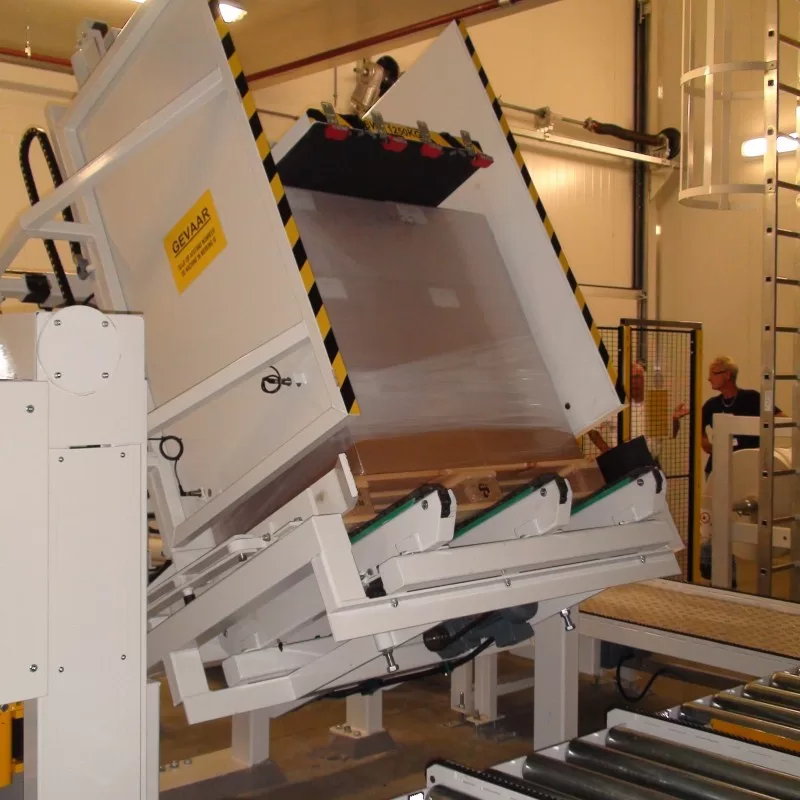
Thinking of a pallet inverter as just a “pallet changer” is like thinking of a smartphone as just a “phone.” The real value is in its diverse applications. Let’s explore some of the most common and impactful uses I’ve seen in the field.
1. 🌍 International Shipping and Pallet Exchange
This is a classic use case, especially for companies like Carlos’s food and beverage group. Goods arrive from one country on Euro pallets (1200x800mm) and need to be shipped to another that requires US pallets (48″x40″). A pallet inverter makes this transfer seamless, ensuring compliance and avoiding shipping delays.
2. 🧼 Food, Beverage, and Pharmaceutical Operations
Hygiene is critical in these industries. Wooden pallets are not allowed in many clean production areas because they can harbor bacteria and pests.
- Inbound Goods: Raw materials arriving on wooden pallets can be quickly transferred to sanitized plastic or aluminum pallets before entering the clean facility.
- Outbound Goods: Finished products can be transferred from in-house hygienic pallets back to cheaper wooden pallets for shipping.
3. 📦 Damaged Product Recovery
Imagine a forklift damages a single box or bag at the very bottom of a fully stacked pallet. Manually unstacking the entire load to replace that one item is incredibly inefficient. With a pallet inverter, you can simply invert the load, replace the damaged product from the now-accessible top layer, and invert it back. What was a 30-minute job becomes a 3-minute fix.
4. 🧊 Cold Storage and Freezer Applications
In cold storage environments, products can sometimes freeze to the pallet. Manually separating them is difficult and can damage the goods. A pallet inverter can be used to safely break the bond by inverting the load, allowing for an easy pallet switch without damaging the frozen products. Specialized freezer-rated models are available for these tough conditions.
5. ↔️ Load Squaring and Straightening
Sometimes loads can shift during transport, becoming unstable and unsafe to move or store in high racks. A pallet inverter with side-jogging or squaring capabilities can gently press the load from the sides, straightening the stack and making it secure again.
How do you choose the right pallet inverter for your specific needs?
Alright, you see the value. You understand how a pallet inverter can solve problems with safety, cost, and efficiency. Now comes the important question: which one is right for you? I’ve seen companies buy machines that were too small for their loads or too complex for their needs. Choosing the right partner and the right machine is critical. It’s a decision that will impact your operations for years.
To choose the right pallet inverter, you must first analyze your specific requirements. Consider the maximum weight and dimensions of your loads, the types of pallets you use, your required throughput speed, and the available space in your facility. You should also evaluate the level of automation needed, from semi-automatic to fully integrated systems.
When I was building my own packing machine factory, I learned that the most expensive machine isn’t always the best one. The best machine is the one that fits your workflow perfectly. Don’t look for a machine; look for a solution. Here are the key questions you need to ask yourself and your potential supplier.
1. 🏋️ What are your load specifications?
This is the most fundamental question. Get it wrong, and nothing else matters.
- Maximum Weight: What is the heaviest pallet load you handle? Choose an inverter with a capacity that comfortably exceeds this weight.
- Load Dimensions: What are the length, width, and height of your largest loads? Ensure the machine’s loading bay and clamping range can accommodate them. Be sure to think about future needs, not just your current ones.
2. 🔄 What is your operational environment?
The environment where the machine will operate dictates the type of machine you need.
- Warehouse: A standard, robust machine is usually sufficient.
- Food/Pharma Cleanroom: You will need a stainless steel model or one with a “wash-down” rating that can be easily sanitized.
- Cold Storage/Freezer: The machine must be built with components (like hydraulic oil and electronics) rated for sub-zero temperatures.
3. ⚙️ What level of automation do you need?
The speed of your operation determines the level of automation required.
- Semi-Automatic (Standalone): The operator uses a forklift to load/unload the machine and pushes buttons to control it. This is perfect for operations with moderate needs (e.g., 5-15 pallet swaps per hour).
- Fully Automatic (In-line): The inverter is integrated directly into a conveyor system. Pallets feed in and out automatically. This is for high-throughput environments like large distribution centers that need to process hundreds of pallets per day.
4. 🤝 Who is the supplier?
This is just as important as the machine itself. As Carlos knows, you need a partner, not just a seller.
- Expertise: Does the supplier understand your industry and your specific challenges?
- Support: What kind of installation, training, and after-sales service do they offer?
- Reliability: Look for a company with a proven track record and strong customer testimonials. You need a machine that is built to last in a demanding industrial environment.
My Insight: It’s not just a machine, it’s a new workflow.
Over my career, I’ve sold and installed hundreds of machines. But the conversation I have with clients is never just about speeds and capacities. It’s about changing the way they work for the better. A pallet inverter isn’t simply a piece of equipment you add to your warehouse. If you see it that way, you miss the point. It is a tool that allows you to redesign your entire workflow around efficiency and safety.
By removing the single biggest manual handling bottleneck—the pallet transfer—you unlock new possibilities. You can create dedicated clean zones with confidence. You can streamline your international shipping process. You can empower a single employee to do the work of three, freeing up valuable labor for other tasks. You are not just buying a machine; you are buying a more resilient, more profitable, and safer operation. The initial investment pays for itself not just in time saved, but in injuries prevented, products saved, and customers satisfied.
Conclusion
In short, a pallet inverter is a powerful tool for any modern logistics operation. It solves critical challenges related to safety, efficiency, and pallet diversity. By automating the transfer process, you can protect your employees, reduce costs, and speed up your entire supply chain. A good pallet inverter is a smart investment in a better workflow.








