บทสรุปผู้บริหาร
A coil upender is built to work by tipping a coil between horizontal and vertical on a large tilting cradle, so the coil changes orientation without being lifted by hand. The cradle tips the coil automatically from horizontal to vertical, so the orientation change happens without overhead-crane or manual handling. Coil weight, coil dimensions and tilt angle are confirmed per project.
สารบัญ
- Why use a coil upender
- What the upender does
- Cradle and tilt mechanism
- Upending cycle and return
- สิ่งที่ภาพวิดีโอแสดงให้เห็น
- การกำหนดค่าทั่วไป
- รายการตรวจสอบการคัดเลือก
- การปฏิบัติงานและความปลอดภัย
- คำถามที่พบบ่อยด้านวิศวกรรม
- ขั้นตอนต่อไป
- การอ่านที่เกี่ยวข้อง
- แหล่งที่มาและมาตรฐาน
Why use a coil upender
A steel or wire coil needs to be turned between two orientations at different points in the line: flat for storage and upright for feeding or transport. Turning a heavy coil by hand is slow and unsafe.
A coil upender tips the coil in a controlled cradle, so orientation changes happen without manual lifting. Coil weight and coil dimensions are confirmed per project.
What the upender does
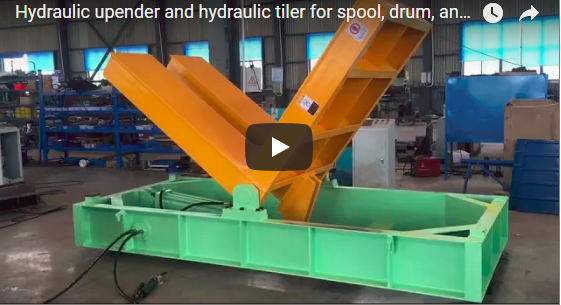
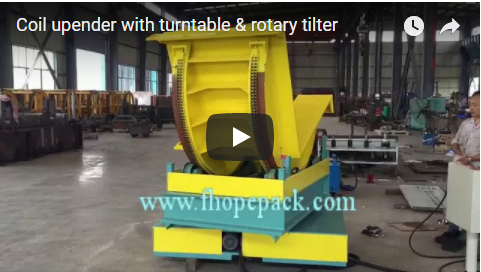
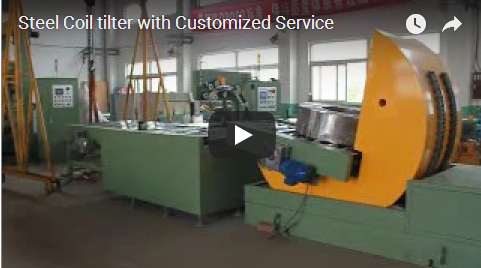
The upender is a floor-mounted machine with a blue base and a large yellow cradle on top. The cradle holds the coil and rotates around a horizontal axis to move the coil from flat to upright, or back again.
The machine tips the load smoothly, then returns to the starting position ready for the next coil. Tilt angle and cycle time are confirmed per project.
Cradle and tilt mechanism
The cradle is a large C-shaped or half-cylindrical frame with several parallel horizontal plates inside that support the coil during the move. The frame is connected to the base by a central shaft.
The cradle rotates around this shaft to raise the coil from horizontal to vertical. Cradle width and coil support plates are confirmed per project.
Upending cycle and return
The cycle begins with the cradle closed in the horizontal position. The cradle then rotates in one direction, reaches the upright position, and rotates back to horizontal to complete the demonstration pass.
For a loaded coil the same movement tips the coil to the required orientation, then the cradle returns empty or with the next coil. Tilt speed and holding position are confirmed per project.
สิ่งที่ภาพวิดีโอแสดงให้เห็น
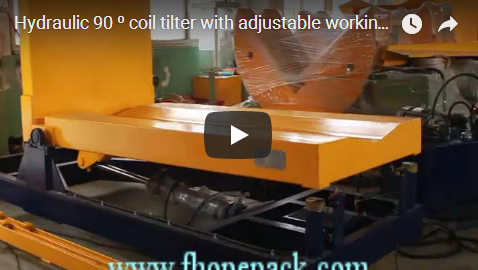
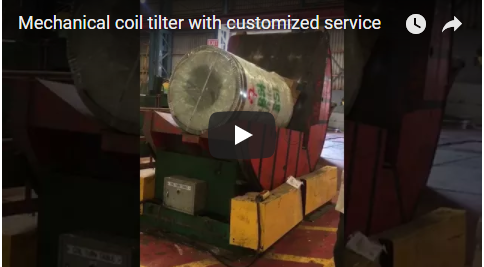
Our footage shows a floor-mounted coil upender completing an empty demonstration pass. The yellow cradle starts in the horizontal closed position, rotates to upright, and returns to horizontal while two workers stay clear of the machine. No coil is fed during the pass, so the dry run verifies the cradle travel and limit positions and checks the clearance around the machine before a loaded coil is handled. Coil weight, coil dimensions and tilt angle are confirmed with us per project.
การกำหนดค่าทั่วไป
ตัวเลขด้านล่างแสดงขอบเขตการออกแบบเชิงฟังก์ชันมากกว่าค่าตัวเลข และได้รับการยืนยันในแต่ละโครงการ
| พารามิเตอร์ | ช่วงราคาทั่วไป โปรดตรวจสอบอีกครั้งในแต่ละโครงการ |
|---|---|
| ชิ้นงาน | steel or wire coil handled between orientations |
| เปล | large C-shaped or half-cylindrical frame with support plates |
| ฐาน | floor-mounted blue base with a central shaft |
| ขับรถ | cradle rotates around the horizontal shaft |
| วงจร | from horizontal to upright and back to horizontal |
| การดำเนินการ | workers keep clear while the cradle moves |
| Control | machine control with cycle start and hold; panel per project |
| แหล่งจ่ายไฟฟ้า | ไฟฟ้า 380 โวลต์ 3 เฟส 50 เฮิรตซ์ หรือ 220 โวลต์ 1 เฟส สำหรับเครื่องจักรขนาดเล็ก เลือกใช้ตามแต่ละโครงการ |
รายการตรวจสอบการคัดเลือก
| คำถาม | ยืนยันตามแต่ละโครงการ |
|---|---|
| ช่วงคอยล์ | weight, outer diameter, width and core size |
| มุมเอียง | required orientation change, typically 90 degrees |
| เปล | C-shaped or half-cylindrical frame, selected per project by coil outer diameter and loading method (forklift or crane) |
| วงจร | tilt time and hold position for the line |
| ชั้น | machine footprint and surrounding clearance |
| แหล่งจ่ายไฟฟ้า | แรงดันไฟฟ้า เฟส และความถี่ ณ สถานที่ |
การปฏิบัติงานและความปลอดภัย
Position the coil in the cradle, start the tilt cycle, and let the machine rotate the load to the required orientation. Stand clear of the cradle while it moves, and hold the coil stable as the cradle returns.
Routine checks cover the shaft drive, the cradle plates and the floor fixing, per the machine manual. Confirm the coil is seated in the cradle before each cycle.
คำถามที่พบบ่อยด้านวิศวกรรม
Q: What does a coil upender do? A: It tips a coil between horizontal and vertical in a controlled cradle, without manual lifting.
Q: How does the tilting work? A: The cradle rotates around a horizontal shaft on the base, carrying the coil from one orientation to the other.
Q: Can it turn a loaded coil in real operation? A: The cradle is built to carry a coil through the pass; the exact coil weight and dimensions are confirmed when you send your coil details.
Q: Why is an upender safer than turning by hand? A: The load stays supported in the cradle during the whole move, keeping people away from the tipping point.
ถาม: เครื่องจักรนี้ต้องการแหล่งจ่ายไฟแบบใด? ตอบ: โดยปกติเครื่องจักรจะทำงานที่แรงดันไฟ 380 โวลต์ สามเฟส 50 เฮิรตซ์ และเครื่องจักรขนาดเล็กสามารถปรับใช้กับแรงดันไฟ 220 โวลต์ เฟสเดียวได้ ขึ้นอยู่กับโครงการ
ขั้นตอนต่อไป
- Email us at info@fhopepack.com with your coil weight, outer diameter and width.
- We send a coil upender proposal within 48 hours.
- We confirm the tilt angle, cradle size and cycle time for your coil.
การอ่านที่เกี่ยวข้อง
- Coil Upender ทำงานอย่างไร? คู่มือฉบับสมบูรณ์สำหรับผู้เริ่มต้น
- เครื่องพลิกขดลวดขนาดใหญ่และยาวในการใช้งานจริง
- เครื่องเอียงและพลิกขดลวด: การหมุนขดลวดที่วางบนพาเลท 90 องศา
- กลุ่มผลิตภัณฑ์เครื่องจักรบรรจุภัณฑ์ FHOPE
แหล่งที่มาและมาตรฐาน
- ISO 12100:2010 ความปลอดภัยของเครื่องจักร หลักการทั่วไปสำหรับการออกแบบและการประเมินความเสี่ยง
- EN 415-10:2014 ความปลอดภัยของเครื่องจักรบรรจุภัณฑ์ ข้อกำหนดทั่วไป
- EN ISO 13849-1:2023 ความปลอดภัยของเครื่องจักร ส่วนประกอบที่เกี่ยวข้องกับความปลอดภัยของระบบควบคุม
FHOPE coil upender demonstration video. Reviewed as a general demonstration; coil weight, coil dimensions and tilt angle confirmed per project.
แก้ไขล่าสุด: 2026-10-12