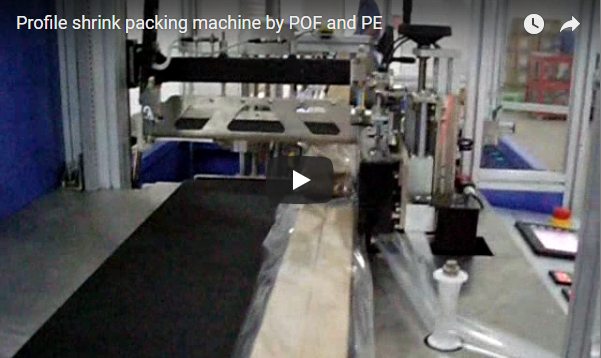
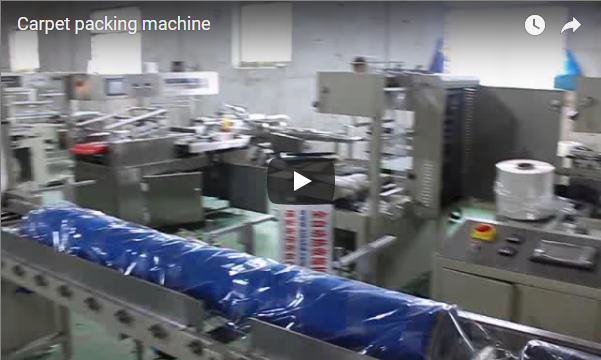
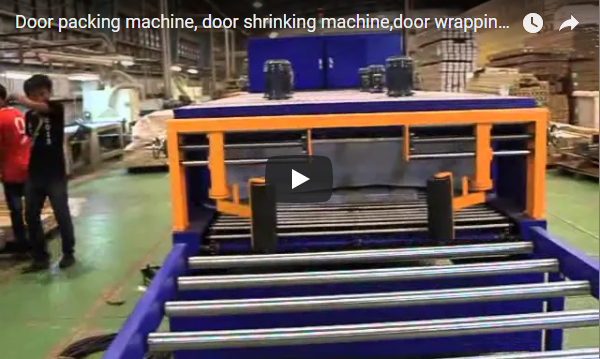
Rigid foam panel stacks are light, bulky, and prone to edge chipping during factory handling. Loose boards easily slip out of square during transport, exposing delicate polystyrene edges to moisture, dirt, and abrasion. Manual bagging is too slow for modern extrusion lines, and loose bags leave slack film that fails to secure the stack.
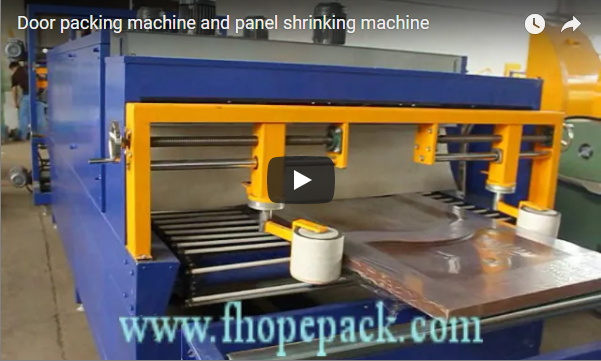
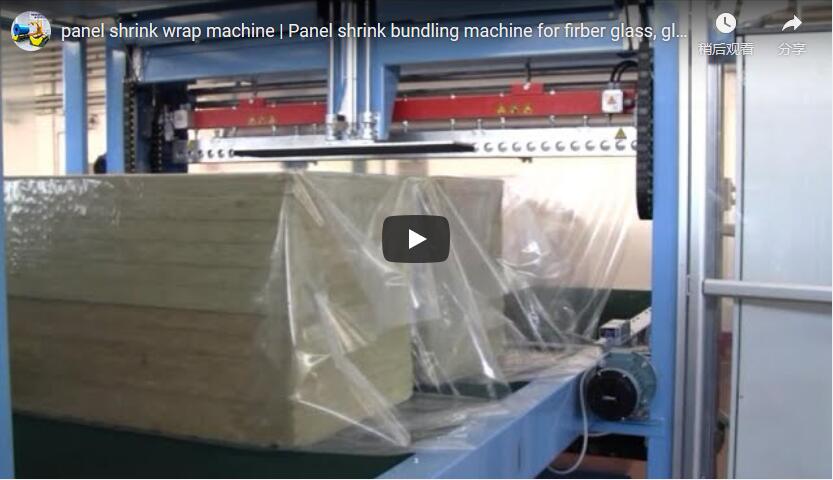
The FPSH-D automated packaging line bundles EPS and XPS insulation panel stacks in protective PE or POF film and shrinks them tightly using recirculating hot air. The integrated line squares the stack, applies a three-side welded film sleeve, initiates controlled thermal shrinkage, and cools the exterior to form a rigid transport block.
I have worked on rigid foam packaging lines for more than 15 years, and foam converters face the same dilemma on every installation: you need enough tunnel heat to shrink durable film, but excessive heat defaces the foam. Below, I break down the kinematic sequence, sizing parameters, thermal control principles, and line speed constraints of our FPSH-D system.
Turinys
- How does the FPSH-D line work, step by step?
- What panel stack sizes does the line cover?
- How do you shrink heat-sensitive EPS without melting it?
- How many packs per minute can the line run?
- What are the line data?
- What utilities does the line need?
- How is the line guarded and interlocked?
- What should you confirm before ordering an EPS panel shrink line?
- What else do buyers ask about EPS panel shrink lines?
- Išvada
- Susijęs skaitymas
- Šaltiniai
How does the FPSH-D line work, step by step?
The FPSH-D automated line completes the packaging sequence across four synchronized kinematic zones:
- Feed & Squaring. Panel stacks transfer to the intake conveyor either manually or via upstream de-stackers. High-response photoelectric sensors detect the front edge to index conveyor movement. Integrated pneumatic side guides compress and square the individual foam boards, eliminating layer slippage caused by low static friction.
- Sleeve Wrapping & Cross-Sealing. Film unrolls continuously from dual top and bottom reels. As the stack advances through the film curtain, a constant-temperature, PID-controlled seal bar executes bottom overlap and three-side edge sealing to enclose the stack securely.
- Circulating Hot-Air Shrinkage. The bagged stack enters the thermal tunnel. High-velocity recirculating convective air heats the film boundary layer, activating polymer shrinkage across the panel contours without transferring core heat into the foam substrates.
- Active Forced-Air Cooling. A high-flow multi-fan array at the tunnel discharge forces rapid polymer recrystallization, locking film tension and forming a rigid exterior pack with edge protection.
The squaring guides hold stack tolerances during sealing, preventing seam offsets. Inside the tunnel, film tension pulls tightly across foam corners, transforming loose boards into a structurally stable block resistant to transit vibration.
What panel stack sizes does the line cover?
The standard FPSH-D chassis accommodates rigid foam panel stacks measuring 300 to 1,000 mm in length, 30 to 500 mm in width, and 180 to 500 mm in height. Stacks outside these limits require extended conveyor frames or alternative cold-wrapping processes.
| Stack Dimension | Minimalus limitas | Didžiausia riba | Inžinerinė pastaba |
|---|---|---|---|
| Ilgis | 300 mm | 1,000 mm | Extended modular infeed tables available for oversized panels |
| Plotis | 30 mm | 500 mm | Lateral guide bars adjust symmetrically via lead screw |
| aukštis | 180 mm | 500 mm | Accommodates up to 10 stacked 50 mm panels at maximum stroke |
Review your full product matrix against these envelope boundaries. A standard package of ten 50 mm insulation panels reaches the 500 mm height limit. For architectural full-size insulation sheets (e.g., 2,400 mm to 3,000 mm lengths), we configure custom extended chassis frames or integrate an orbital panel stretch wrapping machine for cold wrapping. Our technical team verifies dimensions directly against your CAD stack drawings.
How do you shrink heat-sensitive EPS without melting it?
We prevent EPS foam degradation by combining brief convective air exposure with precise conveyor velocity calibration. The shrink film absorbs thermal energy and recovers in 3 to 6 seconds, while the insulating cellular foam core stays well below its structural softening threshold.
Standard EPS and XPS insulation foams experience cellular softening at sustained temperatures above 75–85 °C. To prevent thermal surface collapse or density loss, the tunnel operates on a transient surface heat transfer model.
Thermal Operating Range and Air Balance
The hot-air chamber operates between 100 °C and 220 °C under continuous PID regulation. Because low-density film (15–25 µm POF or 40–80 µm PE) has low thermal mass, it absorbs convective heat rapidly within 3–6 seconds. The thick EPS/XPS panel functions as an insulator, keeping internal foam cores below softening thresholds during the transit cycle.
We calibrate belt velocity to determine tunnel dwell time. We set up each line at the lowest thermal setpoint and shortest exposure duration that delivers full film recovery before raising conveyor speeds.
Non-Thermal Bagging for Vulnerable Cores
For specialized rigid foams, graphite-infused EPS (SEPS), or thin panels vulnerable to thermal curling, we supply our alternative automated panel bagging machine. This system forms a bag directly around the stack and seals it using a cold mechanical or ultrasonic impulse seal bar—eliminating thermal tunnel exposure entirely.
How many packs per minute can the line run?
Actual line speed is governed by the slowest of three mechanical cycles: vertical seal bar dwell time (1.2–2.0 seconds), required thermal tunnel exposure, and conveyor drive motor frequency limits. For a 1,000 mm stack, effective output ranges between 2.5 and 6.5 packs per minute.
Throughput depends on pack length, infeed spacing, cross-seal dwell time, and the required tunnel exposure interval.
Theoretical mechanical capacity for 1,000 mm stacks with a 300 mm inter-pack clearance:
| Konvejerio greitis | Stack Pitch (Length + Gap) | Theoretical Conveyor Limit | Actual Effective Line Output |
|---|---|---|---|
| 4 m / min | 1.3 m | 3.1 pakelių/min | 2.5–3.0 pakuočių/min. |
| 9 m / min | 1.3 m | 6.9 pakelių/min | 5.5–6.5 pakuočių/min. |
The theoretical mechanical throughput formula is:
Output (packs/min) = Conveyor Speed ÷ (Pack Length + Infeed Gap)
For example, at a conveyor speed of 4 m/min with a 1.3 m stack pitch, Theoretical Output = 4 m/min ÷ 1.3 m = 3.076 ≈ 3.1 packs/min. At 9 m/min, Theoretical Output = 9 m/min ÷ 1.3 m = 6.923 ≈ 6.9 packs/min.
Actual line speed is governed by the slowest of three critical mechanical cycles:
- Vertical Seal Bar Cycle Time: Pneumatic bar stroke, cut, and thermal weld dwell require 1.2–2.0 seconds per cycle.
- Tunnel Residence Time: Minimum heat duration required for full polymer biaxial shrinkage.
- Conveyor Velocity: Belt drive motor frequency limits.
Final line speeds are confirmed by empirical testing with your production panels and film gauges.
What are the line data?
| Techninė specifikacija | Sandarinimo stotis | Karšto oro susitraukimo tunelis | Pilna pakavimo linija |
|---|---|---|---|
| Modulio ilgis | 2,000 mm | 4,000 mm | Approx. 7,000–8,500 mm (including outfeed) |
| Prijungtas maitinimas | 1.8 kW | 15 kW (4 high-efficiency heaters) | Approx. 17.5 kW (3-Phase) |
| Valdymo architektūra | „Siemens“ / „Mitsubishi PLC“ | Integrated Solid-State Temp Control | Central Touchscreen HMI |
| Konvejerio lovos aukštis | Approx. 800 mm (±50 mm) | Approx. 800 mm (±50 mm) | Floor-level adjustable |
| Darbinė temperatūra | Ambient (heated bar only) | 100–220 °C PID regulated | - |
| Filmų suderinamumas | Micro-perforated PE or POF | Heat-recoverable PE / POF | Roll core 76 mm (3 in) |
| Konvejerio greitis | 4–9 m/min. (kintamo greičio pavara) | Synchronized with sealer bed | Kintamo dažnio pavara |
What utilities does the line need?
The packaging line requires factory pneumatic and electrical connections sized to handle continuous mechanical cycling:
- Pneumatika: Requires continuous, dry compressed air supply at 0.6–0.8 MPa (6–8 kgf/cm²); consumption averages 120–180 NL/min.
- Elektros tiekimas: 380 V / 400 V, 3-Phase, 50/60 Hz (custom plant voltages configured on request). Total connected line load is approximately 17.5 kW.
- Vėdinimo reikalavimai: The packaging film must utilize micro-perforations to allow rapid air evacuation during shrink reduction, preventing trapped air bubbles from bursting the sealed seams.
How is the line guarded and interlocked?
Moving seal bars and high-temperature chambers require strict operator perimeter safeguards:
- Enclosure Interlocks: High-temperature seal bars are fully enclosed behind safety interlocks that disconnect drive power whenever service panels open.
- Avariniai sustojimai: The line features category-rated emergency stop buttons at the infeed, control console, and tunnel exit.
- Atitiktis tarptautiniams standartams: CE-market deliveries comply with ISO 12100: 2010 (Rizikos vertinimas ir mažinimas) ir EN 415-10: 2014 (Safety Requirements for Packaging Machines). Electrical enclosures comply with IEC 60204-1 standards.
What should you confirm before ordering an EPS panel shrink line?
Evaluate these baseline engineering variables before finalizing your equipment layout:
- Stack Dimensions: Minimum and maximum length, width, and height envelope.
- Pagrindinė medžiaga: EPS, XPS, PIR, or phenolic foam density and heat deflection point.
- Pakavimo būdas: Convective thermal shrink encapsulation vs. zero-heat cold bagging.
- Line Speed Target: Required packs per minute and operating shifts per day.
- Infeed Interface: Manual feeding table vs. upstream continuous line integration.
- Filmo specifikacija: PE (heavy-duty transit) vs. POF (high-clarity display); film gauge (µm).
- Plant Utilities: Available line voltage, phase capacity, and compressed air pressure.
What else do buyers ask about EPS panel shrink lines?
Q: What stack dimensions does the standard FPSH-D handle? A: The standard envelope accommodates stack lengths of 300–1,000 mm, widths of 30–500 mm, and heights of 180–500 mm. Custom frames are available for larger boards.
Q: Does tunnel heat damage or collapse EPS foam edges? A: No. Because the shrink film has a very low thermal mass compared to rigid polystyrene, brief convective exposure (100–220 °C air for several seconds) shrinks the film before heat conducts into the foam core.
Q: What alternative exists for foam cores that cannot tolerate any heat? A: We supply a fully automatic panel bagging machine that encloses and seals the insulation stack mechanically without passing through a heating chamber.
Q: What is the realistic line output? A: For a 1,000 mm stack with a 300 mm spacing gap, net output ranges between 3 and 6 packs per minute, limited by the cross-seal bar stroke duration and foam cooling requirements.
Q: Can this packaging line interface directly with automated panel slitters? A: Yes. The PLC architecture supports handshake signals (dry contacts or industrial Ethernet) to slave conveyor speeds and indexing to upstream saws, stackers, or de-stackers.
Išvada
Use this simple decision rule when sizing your insulation packaging line:
- If you process standard EPS or XPS panels within 300–1,000 mm lengths and require full exterior containment, select the FPSH-D hot-air shrink line.
- If you produce heat-sensitive graphite EPS (SEPS), ultra-thin boards prone to curling, or panels that cannot endure thermal exposure, select an automated non-thermal panel bagging machine.
- If you handle architectural boards measuring 2,400 to 3,000 mm, configure an extended chassis or choose an orbital stretch wrapper.
- For all projects, verify the 1.2–2.0 second seal dwell and minimum tunnel exposure before fixing conveyor velocity targets.
Implement an automated packaging system tailored to your production flow in three stages:
- Submit Factory Specifications: Send your panel stack dimension matrix, hourly capacity requirements, and plant layout drawings to info@fhopepack.com.
- Receive Technical Proposal: Our mechanical team delivers a full layout proposal per 48 val, detailing line dimensions, seal cycle calculations, and film recommendations.
- Conduct Material Validation: Send sample foam panels to our testing facility to establish optimal tunnel temperature, conveyor velocity, and seam strength parameters.
Explore complete line specifications and engineering layouts directly at www.fhopepack.com.
Susijęs skaitymas
- Panel packing machine systems and configurations
- Automatic insulation panel packaging line engineering
- Vaizdo įrašas: automatinė profilių ir plokščių pakavimo ir traukimo linija
Šaltiniai
- Technical Specifications & Bagging Line Data: Fhopepack Panel Packing Systems
- Machine Operation & Video Demonstration: Fhopepack Official Video Resource Center
- Mašinų saugos standartai: ISO 12100:2010 Mašinų sauga bei EN 415-10:2014 Packaging Machine Requirements
Paskutinį kartą peržiūrėta: 2026-10-04