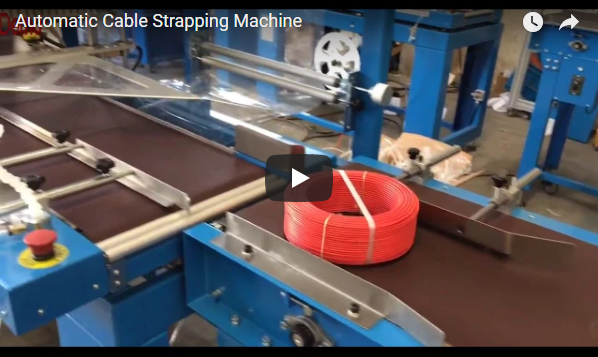
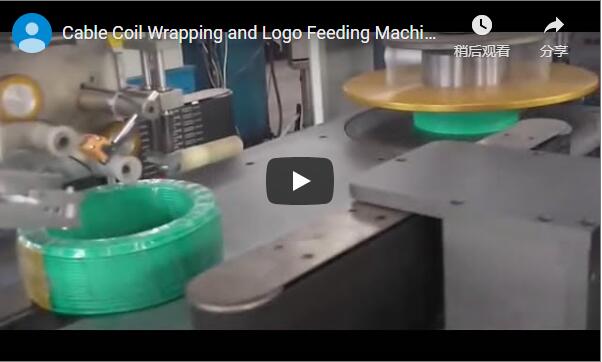
Santrauka: A cable bundle that is wound, coiled, strapped, shrunk and stacked needs every one of those steps to hold its place in the sequence. This page is for buyers deciding whether an automatic cable winding and coiling, strapping, shrinking and stacking line fits that workflow. It explains the stations the short clip shows, what it proves and what it does not, and the questions that turn a machine into a defensible purchase.
Šiame puslapyje: Ką šis puslapis padeda jums nuspręsti · Why the steps must stay in sequence · How the line moves a bundle · How the robot stacks the coil · Ką rodo saugos paveikslėlis · Ką rodo klipas · Pirkėjo patvirtinimo kontrolinis sąrašas · DUK · Susijęs skaitymas · Kitas žingsnis
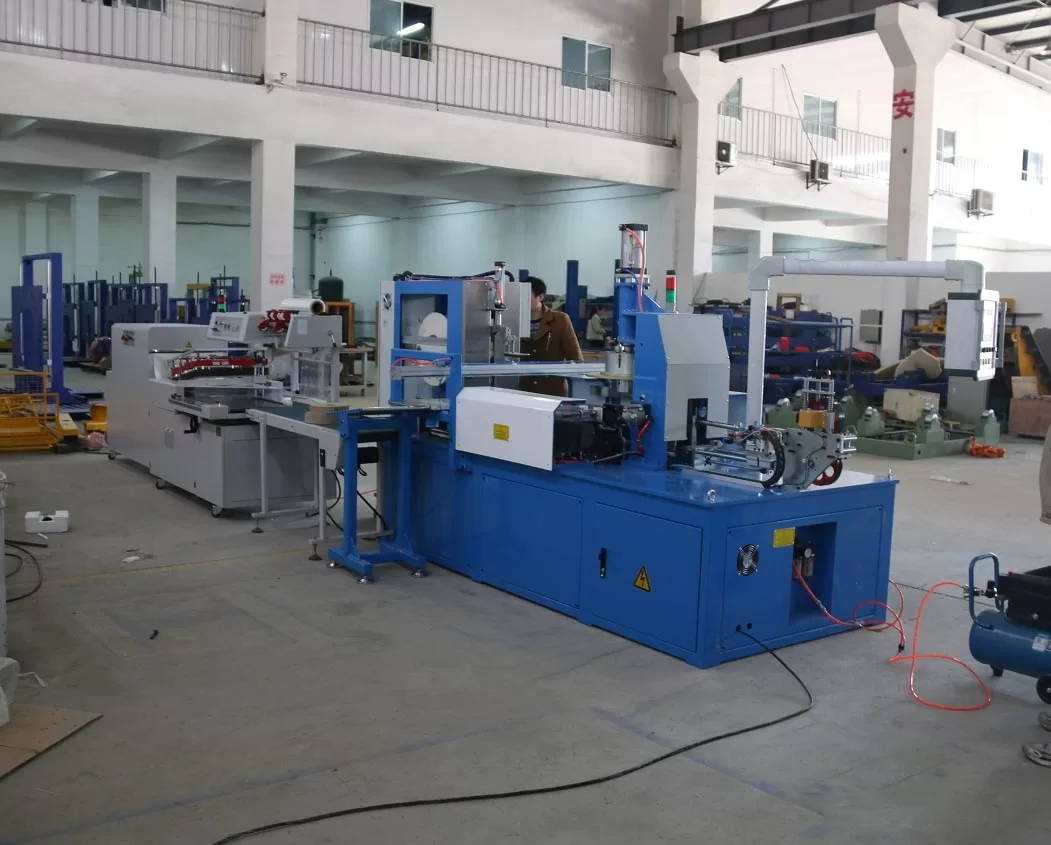
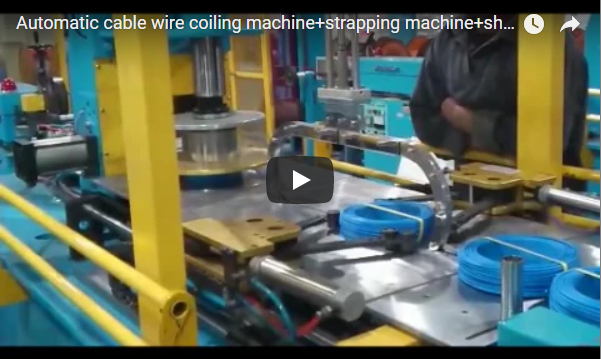
Caption: A cable winding station. Product-library reference image, not a still from the clip.
Ką šis puslapis padeda jums nuspręsti
An automatic line that winds, coils, straps, shrinks and stacks cable bundles is really a claim about sequence. Every step has to hand the bundle to the next one without a gap, or the line becomes five machines sharing a roof. This page helps you judge that claim from a very short clip.
It describes what the footage shows, from the conveyor to the stacking robot, and it names the steps the clip runs so fast that they can only be confirmed by a longer run. That distinction decides how much of the line name is verifiable today.
Why the steps must stay in sequence
Cable finishing steps interfere with each other if they run out of order. The bundle has to be shaped before it is strapped, strapped before it is shrunk, and shrunk before it is stacked, because each step fixes the shape the next one needs. Interrupt that order and the bundle falls out of tolerance.
A single line protects that order automatically. The conveyor sets the pace, each station holds just long enough, and the robot moves the finished bundle only when the shrink is complete. That is the value the line name promises.
The flip side is that a short clip can only prove a step that actually appears. When a camera moves fast through a line, some stations pass by unresolved. The buyer’s whole job is to pin each named step to a visible moment or a written specification.
How the line moves a bundle
The clip opens on a horizontal conveyor carrying yellow-and-green ring-shaped cable bundles. The bundles ride the belt to the right, then pass a white module with rollers and a turn-station. At the next station an orange cabinet rises with vertical cylinders and guides, and light steam drifts upward, which marks the shrink or sealing pass where the outer sleeve shrinks tight around the bundle.
From the treat section the bundles continue and arrive at a metal tray at a fixed station. A small control screen sits above the line, and a signal tower shows a green lamp.
The conveyor in the footage does the honest work of the clip: it carries the bundle through the pass and into the station where the shrink is set. The steam shows the heating is real, and the speed of the pass stays unknown.
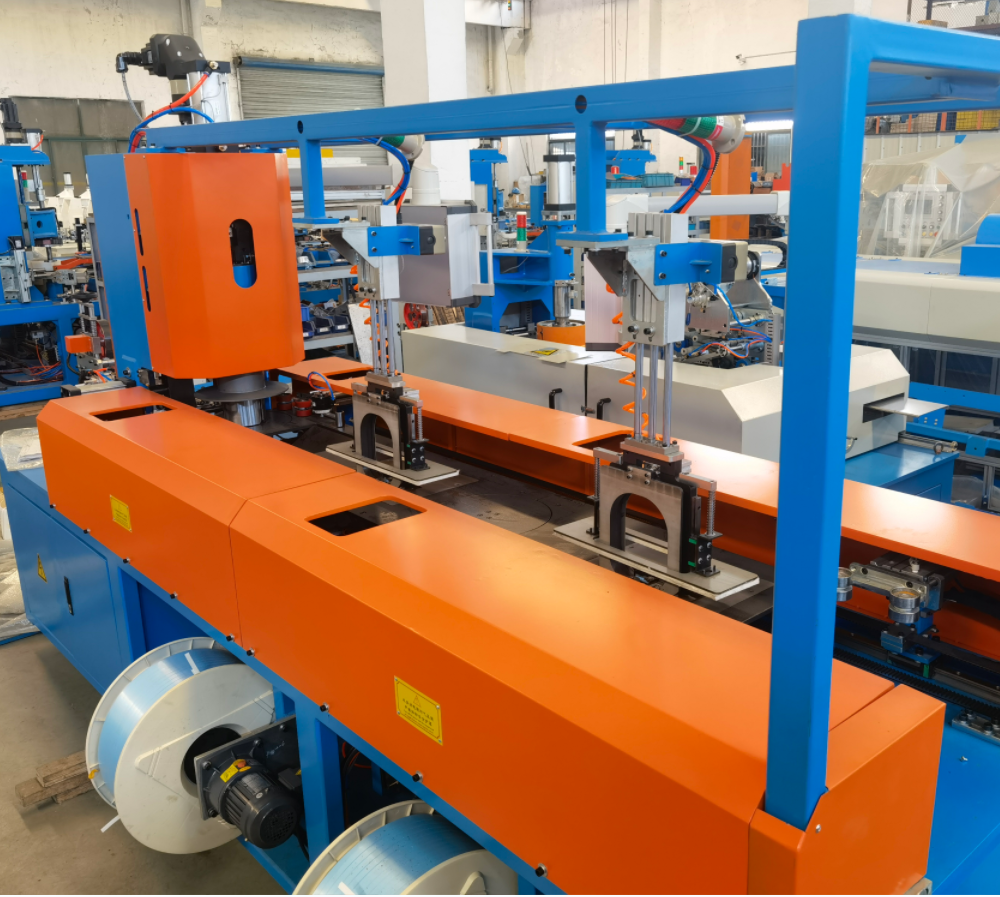
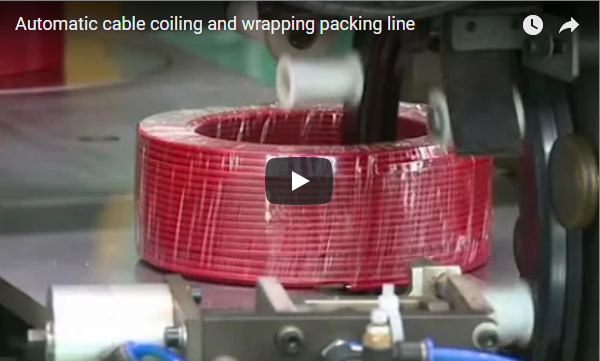
Caption: Cable winding equipment in operation. Product-library reference image, not a still from the clip.
How the robot stacks the coil
The last action in the clip is the clearest. An orange articulated robot arm reaches in from the right with a suction gripper, picks up a ring-shaped bundle from the tray, lifts it and carries it across to a wire-mesh enclosure. Inside the enclosure, identical bundles stand in neat rows, and the robot places another one onto the stack before the clip ends.
The mesh enclosure is a significant detail. It protects the robot’s travel arc, so a person cannot step into the picking and placing path while the arm works. That makes the stacking station the best-guarded part of the line in the footage.
Stacking is where the robot leaves each bundle standing on the one below it, and the rows of identical bundles inside the enclosure show that the stack builds itself to a regular plan. The target stack height and the number of bundles per layer are not stated.
Ką rodo mašinos saugos paveikslėlis
The safety picture in the footage is genuinely mixed. The robot’s stacking area sits inside a wire-mesh enclosure, which is the correct treatment for an arm that moves heavy bundles. A signal tower lights up green as the line runs, and a red sign hangs behind the fence, though neither the sign text nor any warning can be read at that distance.
Elsewhere the picture is thinner. The treating station with its rising steam has no full guard visible in the clip, no emergency-stop button is legibly shown, and no light curtain appears anywhere. The green lamp and the mesh box are the visible safeguards; everything else needs confirmation.
One honesty note belongs beside it. The clip carries no readable maker or model marking on the machines, so the identity of each station has to come from the supplier and not from the footage.
Ką rodo mašininio linijos įrašas
What the video shows is a short tour of an automatic cable finishing line. Yellow-and-green ring bundles ride a horizontal conveyor, pass a white roller module, and enter a treating station where light steam rises.
A robot arm with a suction gripper then picks a bundle, lifts it and carries it inside a wire-mesh enclosure, where identical bundles stand in rows. A green lamp lights a small control tower, and workers move in the background.
Šiame puslapyje esančios nuotraukos yra produktų bibliotekos pavyzdžiai, o ne kadrai iš klipo. Tai tiesioginiai stebėjimo užrašai iš atrinktų kadrų, o ne veikimo bandymo rezultatai.
The clip does not show the winding or coiling step, the strapping pass, the cycle time, the bundle size range, the shrink temperature, a model or power rating, or any certification. No readable text appears anywhere except a background mark on distant equipment.
The line name lists five steps. The footage proves the conveyor, the treating pass with visible steam and the robot stacking. The winding and strapping steps happen before the clip opens, so they need a written specification to confirm.
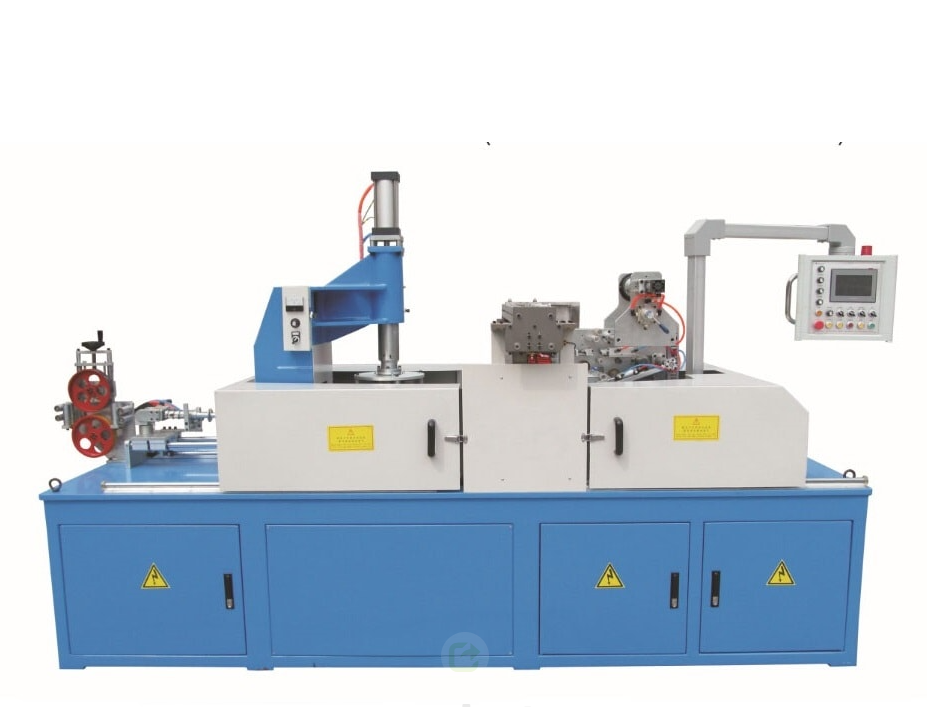
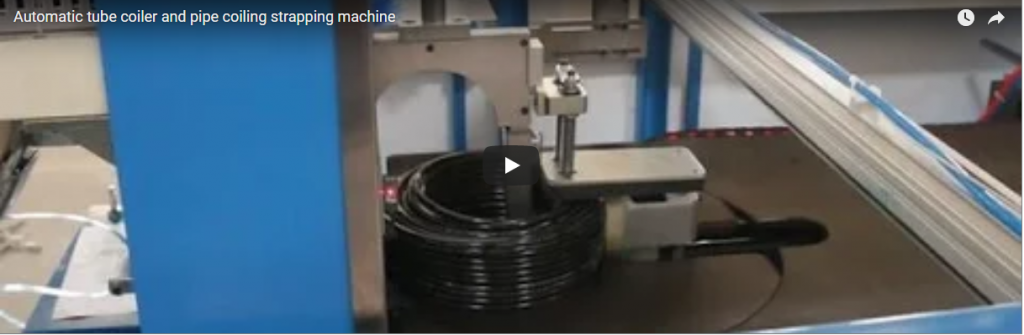
Caption: An automatic cable winding and coiling machine. Product-library reference image, not a still from the clip.
Pirkėjo patvirtinimo kontrolinis sąrašas
Five questions decide whether the line matches its name. Ask them in writing, and keep the answers with the quotation.
| Klauskite tiekėjo | Kodėl tai lemia pirkimą |
|---|---|
| A clocked run from coil to stack | The clip covers seconds and skips the winding and strapping steps |
| A step-by-step narrative for all five names | The footage proves treating and stacking, not winding or strapping |
| Bundle envelope and weight | No maximum size or weight appears in the clip |
| Shrink temperature and cycle time | The steam proves heat exists, nothing more |
| Stack pattern and height per layer | The rows show a plan, but the numbers are unwritten |
Nusiųskite tai tiekėjui ir nukopijuokite ją tokią, kokia yra:
- Your bundle envelope, weight and daily output.
- One uncut run from wound coil to stacked bundle, with a clock.
- The step-by-step layout naming all five processes.
- The shrink temperature and heating time per bundle.
- The stacking pattern and height you need.
- The floor space, power and air requirement for the line.
- The safety device list per station, including the treating pass.
DUK
Which of the five steps does the clip actually show?
It clearly shows the conveyor, the treating pass with rising steam and the robot stacking into a mesh enclosure. The winding and strapping steps are not visible, so confirm them against a longer run or a written specification.
What bundle sizes can it handle?
Not shown. The yellow-and-green bundles in the clip set a scale, and no label states a maximum, so send the supplier your bundle envelope and weight.
Is the robot station safe to be near?
The stacking arm works inside a wire-mesh enclosure, which is the right principle. Confirm door interlock and emergency stop with the supplier, since neither is legibly visible in the clip.
Susijęs skaitymas
- Kabelinė vyniojimo mašina — the winding step this line carries.
- Automatinė vyniojimo mašina — the coiling station for cable and wire.
- Automatinė surišimo mašina — strapping for the finished bundle.
- Susitraukimo mašina — the shrink process seen at the treating station.
- Judesio sandariklis — sealing equipment for packaging films.
- Automatinė pakavimo linija — visiškai automatizuotos pakavimo sistemos.
Kitas žingsnis
Send the supplier your bundle envelope, weight and daily output first, with the step-by-step layout of all five processes in your quotation. The clip proves the conveyor, the treating pass and the robot stacking; the winding and strapping have to be shown in a longer run.
Then send the seven questions above, and ask for the clocked run and the safety device list.
Then request one full run on your bundles and inspect a stacked pallet for alignment. Use the kontaktas puslapis kad pradėtų tą mainą.
Paskutinį kartą peržiūrėta: 2026-09-28
Paskelbta: 2026-09-28