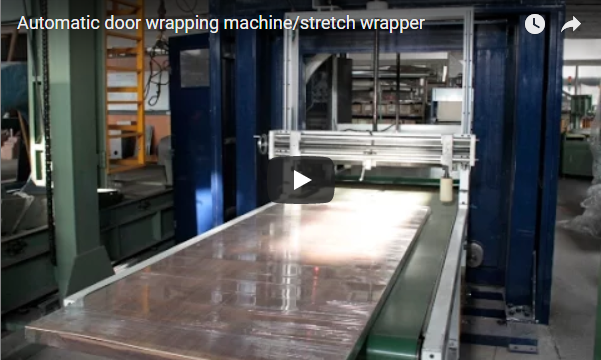
Sintesi Our horizontal orbital wrapper wraps bales as they ride a belt conveyor through a turning film ring, so the whole bale is sealed without lifting it. The E1400 takes bales up to 1,400 mm wide and 1,000 mm high. The E1800 takes up to 1,800 mm wide or 1,500 mm high, as long as the bale’s cross-section diagonal stays under its 1,800 mm ring limit. The ring turns at 10 to 60 r/min and the conveyor runs at 4 to 15 m/min, and their ratio sets the overlap from 10% to 90%.
Sommario
- Why bales are wrapped horizontally
- How the orbital baler wrapper is built
- E1400 and E1800 specifications
- Worked example: setting overlap from ring and conveyor speed
- Clear film, coloured film or both
- Lista di controllo per la selezione: cosa inviarci
- Sicurezza e norma EN 415-10
- FAQ di ingegneria
- Passo successivo
- Lettura correlata
- fonti
Why bales are wrapped horizontally
A baler presses loose material into a dense block and ties it, but the ties alone leave the bale open to rain, dust and loose fibres. A pallet wrapper only covers the sides of a standing bale, and turning a heavy, soft bale on a turntable can tear its ties.
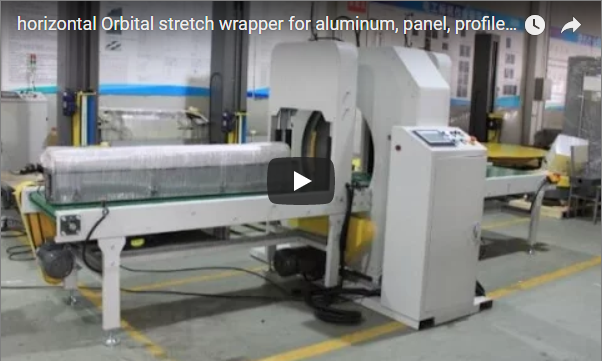
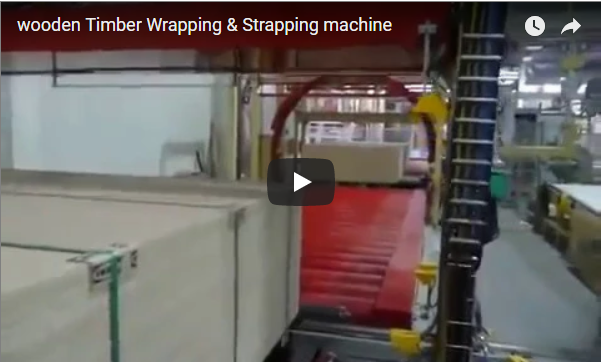
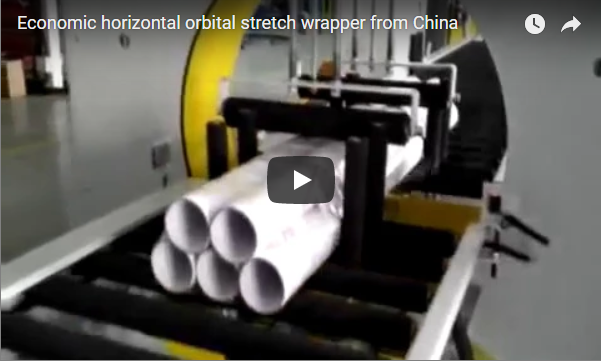
A horizontal orbital wrapper keeps the bale lying on a conveyor. The film ring turns round the bale as it travels, so the film goes over the top, the bottom and both sides in one pass. The ends can be closed with extra turns, and the bale stays on the conveyor throughout.
How the orbital baler wrapper is built
- Infeed and outfeed conveyors. Motor and gearbox drive them, and an inverter sets the speed. On the E1800 each conveyor is 2,000 mm long and its height is adjustable, so it can line up with the baler discharge.
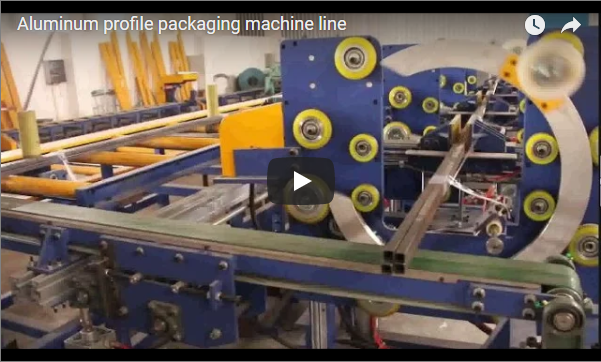
- Double ring. The film carriage rides a double ring driven by rubber wheels. The friction and position between the drive wheels and the ring are adjustable, so the ring drives without slipping as the wheels wear. The E1800 uses four groups of wheels for its large ring.
- Film carriage. The carriage holds the roll and releases film with adjustable timing at the start and end of each bale. It takes rolls of 200 to 300 mm OD on the E1400 and 100 to 220 mm OD on the E1800.
- Clamp and cut. A clamper feeds the film at the start and cuts it at the end, controlled by a sensor and the PLC; on the E1400 it clamps and cuts in one action. The film end stays clamped ready for the next bale, so the operator does not tie on by hand.
- Controlli. Ring speed, conveyor speed, package size and wrap program are set on the touch screen, and the ring and conveyor speeds work together.
- Guardando. A shield covers the ring and moving parts.
E1400 and E1800 specifications
| Articolo | E1400 | E1800 |
|---|---|---|
| Lunghezza della balla | 1,000 a 3,000 mm | oltre 1,200 mm |
| Larghezza balla | 300 a 1,400 mm | 400 a 1,800 mm |
| Bale height | 50 a 1,000 mm | 50 a 1,500 mm |
| Ring limit | per width and height | bundle OD under 1,800 mm: the bale diagonal must be smaller |
| Rullo di pellicola OD | 200 a 300 mm | 100 a 220 mm |
| Morsetto e taglio della pellicola | automatic, clamp and cut together | automatic feed, cut and clamp |
| Velocità del trasportatore | da 4 a 15 m/min | da 4 a 15 m/min |
| Velocità dell'anello | Da 10 a 60 giri/min | Da 10 a 60 giri/min |
| sovrapposizione | Dal 10% al 90%, regolabile | Dal 10% al 90%, regolabile |
| Ring drive | double ring, double rubber wheels | double ring, 4 groups of wheels |
| Film | paper, LLDPE, PE or PVC; 300 or 500 mm wide | LLDPE, PE or PVC |
| Potenza | circa 4.5kW | circa 4.5kW |
Worked example: setting overlap from ring and conveyor speed
Each ring turn lays one film band, and the bale moves forward between turns. The advance per turn is the conveyor speed divided by the ring speed. The overlap is the share of the film width that is laid over the previous band. The film width and target overlaps below are illustrative.
| Film 500 mm wide | Sovrapposizione del 30%. | Sovrapposizione del 50%. | Sovrapposizione del 70%. |
|---|---|---|---|
| Advance per turn, 500 × (1 − overlap) | 350 mm | 250 mm | 150 mm |
| Conveyor speed at 40 r/min, advance × 40 | 14 m / min | 10 m / min | 6 m / min |
| Within 4 to 15 m/min? | sì | sì | sì |
| Conveyor passage for a 2,000 mm bale, 2.0 m ÷ speed | circa 9 s | circa 12 s | circa 20 s |
These are passage times only. The full cycle adds extra turns at each end, the clamp and cut, and the lead-in and lead-out gap between bales. So to lift the overlap on the same ring speed, slow the conveyor. If the conveyor is already at its 4 m/min minimum, speed up the ring instead. At 50% overlap every point on the bale sits under two bands of film.
The ring limit matters for square bales. On the E1800, a 1,200 × 1,000 mm bale has a diagonal of about 1,562 mm and passes. A 1,500 × 1,200 mm bale has a diagonal of about 1,921 mm and does not, even though each side is within range.
Clear film, coloured film or both
The ring takes one roll at a time, so a bale can be wrapped in clear film and then, after a roll change, sent through again with coloured film. On a line we plan how the bale returns to the infeed for the second pass. Clear film lets the bale be checked and its label read. Coloured film hides the contents and shades the bale when it is stored in the open.
A clear inner layer with a coloured outer layer gives both: the clear film seals the bale, and the coloured film protects it from light. A second pass doubles the wrapping time, so most plants do it only on bales that are stored outdoors.
Lista di controllo per la selezione: cosa inviarci
- Bale length, width, height and the heaviest bale.
- What is baled: cardboard, fibre, textiles or other.
- Bales per hour from the baler.
- Film: clear, coloured or both, and the overlap you need.
- Baler discharge height and the space after it.
- Deposito interno o esterno.
Sicurezza e norma EN 415-10
For CE markets, ISO 12100 sets the risk-assessment method and EN 415-10 sets the general safety requirements for packaging machines. The hazards are the turning ring and drive wheels, the film carriage and the conveyor nip points.
The shield over the ring and moving parts keeps hands out of the drive. Add fencing with interlocked access around the ring zone, and light curtains at the conveyor openings that let bales pass but stop the machine when a person enters.
FAQ di ingegneria
Q: How big a bale can it wrap? A: The E1400 takes bales up to 1,400 mm wide and 1,000 mm high. On the E1800 the bale diagonal must be under 1,800 mm.
Q: How do I change the overlap? A: Change the conveyor speed or the ring speed; the overlap is set from 10% to 90%.
Q: How fast does it wrap? A: The conveyor runs at 4 to 15 m/min, so a 2,000 mm bale passes the ring in about 9 to 20 s, plus end turns and the cut.
Q: Can it wrap with two films? A: Yes, one after the other: for example clear first, then coloured.
D: Quali norme di sicurezza si applicano? R: ISO 12100 per la valutazione dei rischi e EN 415-10 per la macchina, nei mercati CE.
Passo successivo
- Email your bale sizes, weights and bales per hour a info@fhopepack.com.
- Rispondiamo entro 24 ore con una proposta naming the model and film.
- Inviamo un disegno di progetto from your baler to the wrapped-bale pick-up.
Lettura correlata
- Avvolgitore orizzontale E1400
- Avvolgitore orizzontale E1800
- Fasce elastiche orbitali
- Comparing spiral wrappers for performance and cost
- Avvolgitrice orbitale orizzontale
fonti
- Specifications: FHOPE E1400 and E1800 horizontal stretch wrapper product pages
- Video della macchina: horizontal orbital baler wrapping on YouTube
- Overlap and speed: our worked example, illustrative film width and overlaps
- Norme: EN 415-10 (macchine per l'imballaggio, sicurezza generale); ISO 12100:2010
Ultimo aggiornamento: 17/10/2026