
Why “Pre-Stretch” Ratio Matters in Coil Packaging (Save 50% on Film Costs)
As a factory manager, you feel the pressure every day. Production targets, safety regulations, and the relentless need to cut costs are constant challenges. One of the biggest hidden costs in your coil packaging line might be staring you right in the face: the stretch film. You order it by the pallet, and the expense seems fixed. But what if I told you there’s a powerful, often overlooked setting on your machine that could slash that film cost by half? The secret lies in mastering the pre-stretch ratio.
The pre-stretch ratio is the single most critical factor in determining how much stretch film you use and how well it protects your coils. It directly controls film consumption, load stability, and overall packaging cost. By optimizing this setting, you can achieve dramatic savings—up to 50% on film costs—while improving the security of your packaged steel coils and wire rods. This isn’t just theory; it’s a practical adjustment with an immediate impact on your bottom line. (optimize pre-stretch ratio for coil packaging)

Many managers see the packaging machine as a simple tool to get the product wrapped. They focus on uptime and speed, which are important. However, they often ignore the machine’s fine-tuning capabilities. Understanding the pre-stretch function transforms your view from seeing a cost center to managing a profit optimization point. Let’s dive into the details of why this ratio is so important and how you can control it.
1. What Exactly is the Pre-Stretch Ratio in a Coil Wrapping Machine?
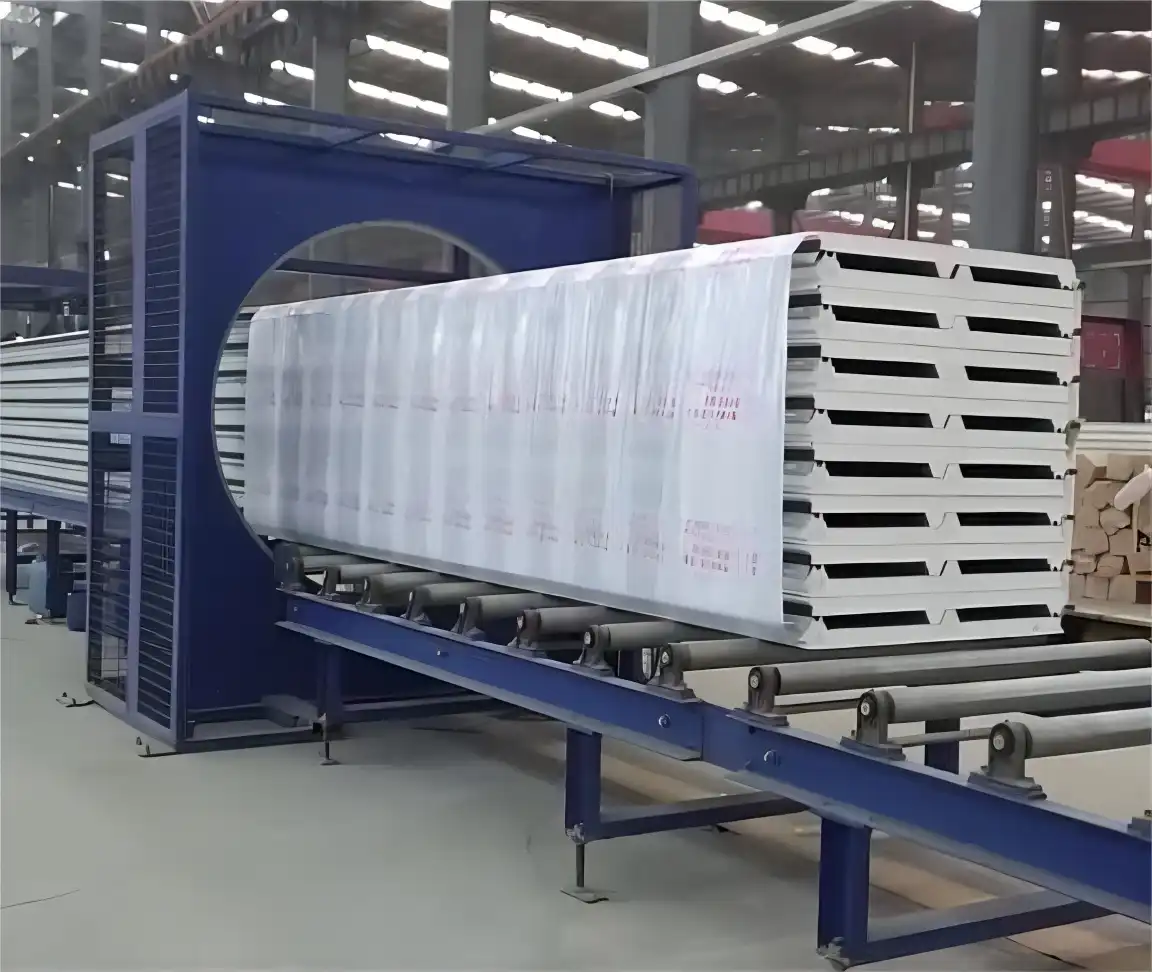
Imagine you have a rubber band. If you pull it gently before wrapping it around an object, it becomes longer and thinner. This is pre-stretching. In coil packaging, the machine’s film carriage has a set of rollers. These rollers pull the film at different speeds before it is applied to the coil. The pre-stretch ratio is the mathematical relationship between the speed of these rollers. For example, a 250% pre-stretch ratio means the film is stretched to 2.5 times its original length before wrapping. (coil wrapping machine pre-stretch ratio definition)
In simple terms, the pre-stretch ratio determines how much the plastic film is elongated before it touches your steel coil. A higher ratio means the film is stretched more, making it thinner and covering more area with the same amount of raw material. This is the fundamental lever for reducing your film consumption and cost. (reduce stretch film consumption in steel industry)
To understand this better, let’s break down the mechanics and the key variables involved.
The Mechanics of Pre-Stretch
A standard coil wrapping machine uses a two-roller pre-stretch system. Here’s how it works:
| Component | Function | Impact on Pre-Stretch |
|---|---|---|
| Pay-off Roller | Holds and feeds the virgin film roll. | Provides the base film speed (V1). |
| Pre-Stretch Roller | Actively pulls the film at a higher speed. | Creates the stretching force; its speed is V2. |
| Film Carriage | Moves around the coil to apply the stretched film. | Determines the final application tension. |
The pre-stretch ratio is calculated as: Ratio = (V2 / V1) x 100%.
- Example: If the pay-off roller speed (V1) is 10 meters per minute and the pre-stretch roller speed (V2) is 25 meters per minute, the pre-stretch ratio is (25/10)*100% = 250%.
Key Variables Affecting Performance
Getting the ratio right isn’t just about setting a number. You must consider these factors:
- Film Type: Not all films can be stretched equally. Low-quality film may break or lose its “memory” (ability to cling) at high ratios. High-performance pre-stretch film is engineered for higher elongation.
- Film Gauge (Thickness): Thinner films (e.g., 17 micron) are often designed for higher pre-stretch ratios, while thicker films might require a lower ratio for safe handling.
- Coil Weight & Size: Heavy steel coils require higher containment force. This often means using a slightly lower pre-stretch ratio with a thicker film or more layers to ensure the film doesn’t rupture during handling or transport.
💡 Pro Tip from the Factory Floor: Always consult your film supplier’s data sheet. They provide the recommended pre-stretch range for their product. Pushing beyond this range can lead to film breakage and downtime, negating any cost savings.
2. How Does Optimizing Pre-Stretch Directly Save 50% on Film Costs?
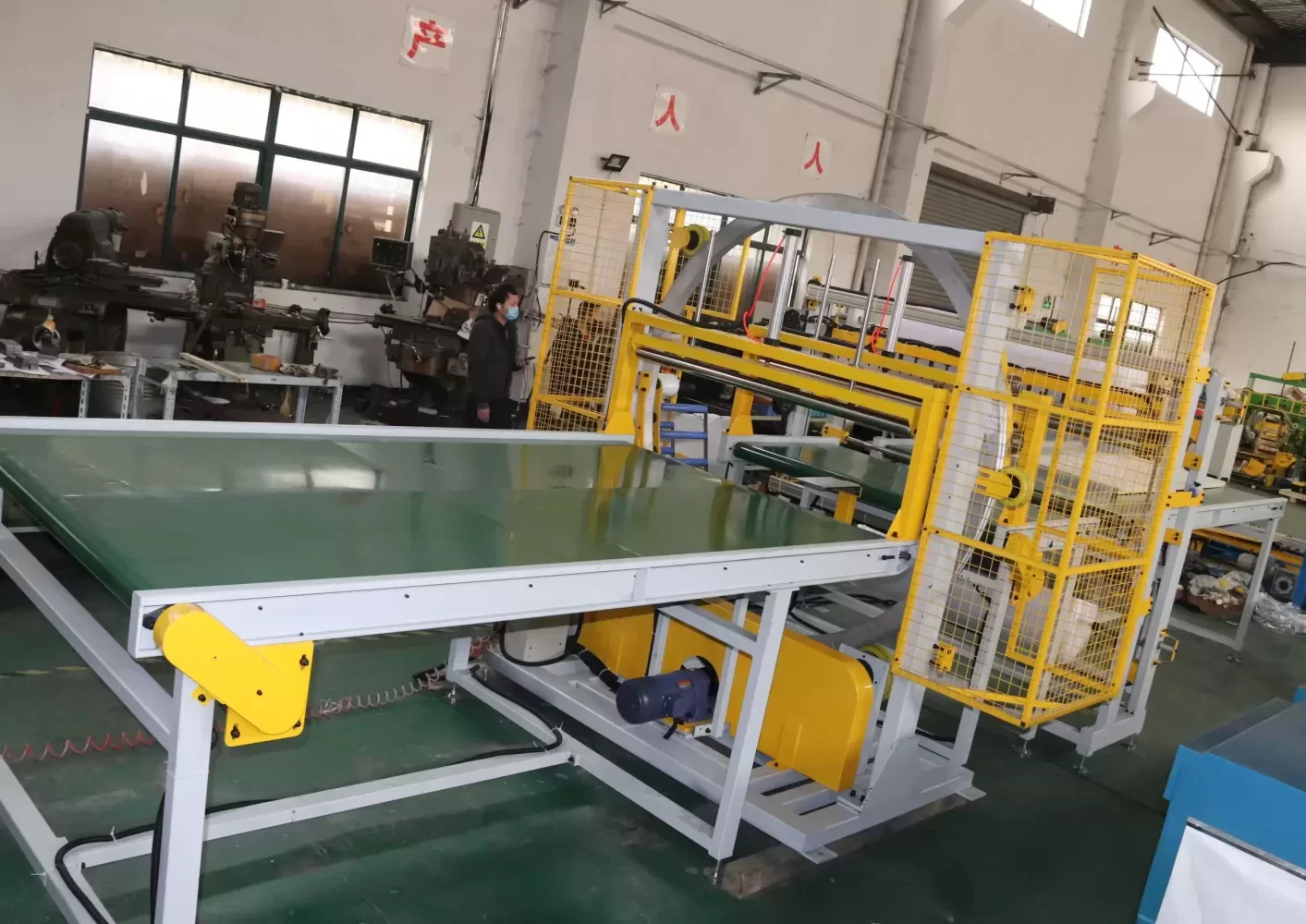
The math is compelling. Let’s say your factory wraps 100 coils per day. Without optimized pre-stretch, you might use a 20-micron film at a 150% ratio. By switching to a high-performance 17-micron film and optimizing the machine to run at a 250% pre-stretch ratio, you are making the film do much more work. You are getting more than 2.5 times the coverage from the same kilogram of plastic resin. (save money on coil packaging film)
The savings come from two direct actions: you use a thinner, more advanced film, and you stretch it further. This double effect reduces the physical amount of film consumed per coil. For high-volume producers, this translates to purchasing fewer film rolls per month, directly lowering material costs and reducing storage space needs. (lower packaging material cost for metal coils)
Let’s look at a real-world calculation and the broader financial impact.
Cost Savings Calculation
Assume a standard steel coil with a 1.5-meter outer diameter.
| Scenario | Film Gauge | Pre-Stretch Ratio | Film Used per Coil | Cost per Coil* | Savings |
|---|---|---|---|---|---|
| Standard Practice | 20 micron | 150% | 5.0 kg | $10.00 | Baseline |
| Optimized Practice | 17 micron | 250% | 2.5 kg | $5.00 | 50% |
*Costs are illustrative based on average film prices.
Annual Impact: If you wrap 500 coils per week, the annual film savings would be:
- Standard: 500 coils/week 5 kg $2/kg * 52 weeks = $260,000
- Optimized: 500 coils/week 2.5 kg $2/kg * 52 weeks = $130,000
- Annual Savings: $130,000
Beyond Film Cost: The Ripple Effect
The benefits extend beyond the direct material saving:
- Reduced Downtime: Fewer film roll changes mean less operator intervention and higher machine utilization (efficient coil packaging line).
- Lower Logistics Cost: You receive and handle half the number of film pallets, saving on freight and warehouse space.
- Environmental Benefit: Using less plastic resin reduces your operation’s carbon footprint and waste, which is increasingly important for corporate sustainability reports (sustainable packaging for metal industry).
3. What’s the Right Pre-Stretch Ratio for Steel Coils vs. Wire Rods?
Not all coils are created equal. A heavy, dense steel coil for construction and a lighter, softer aluminum wire rod coil have different packaging needs. The optimal pre-stretch ratio must match the product’s characteristics to ensure protection without waste. Using the same setting for both is a common mistake that leads to either over-packaging (waste) or under-packaging (risk of damage). (pre-stretch settings for different metal coils)
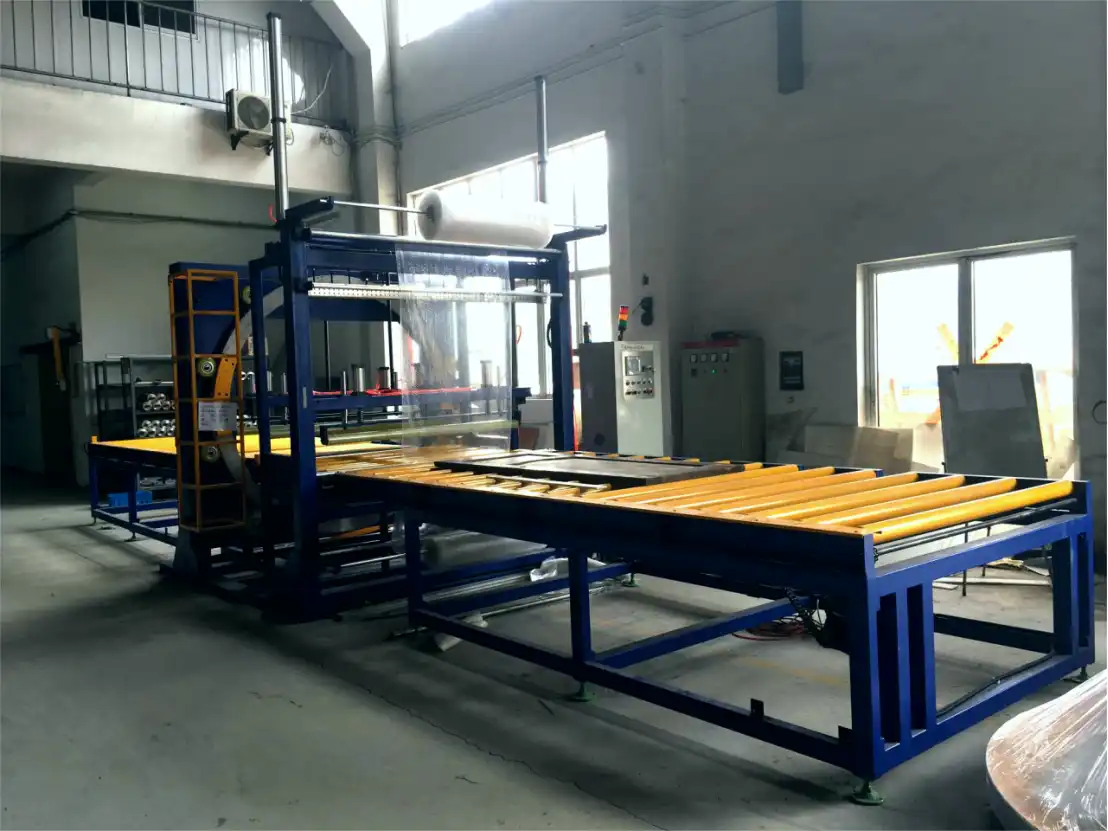
For heavy steel coils, the priority is high containment force to prevent shifting during transport. This often means a moderate pre-stretch ratio (200-250%) paired with a robust film. For lighter wire rods or softer metals, the priority is avoiding deformation, so a higher pre-stretch ratio (up to 300%) with a thinner, clingier film can provide secure, cost-effective wrapping. (wire rod coil packaging best practices)
Choosing the right combination requires a systematic approach.
Guidelines for Different Products
Use this table as a starting point for your trials:
| Product Type | Typical Weight | Key Risk | Recommended Film Gauge | Recommended Pre-Stretch Range | Goal |
|---|---|---|---|---|---|
| Heavy Steel Coils (Hot/Cold Rolled) | 5-25 Tons | Edge damage, coil collapse | 20-23 micron | 200% – 250% | Maximize containment force. |
| Wire Rod Coils | 1-3 Tons | Unraveling, surface scratch | 15-17 micron | 250% – 300% | Conformability, light weight. |
| Aluminum/Copper Coils | 1-10 Tons | Denting, moisture | 17-20 micron | 220% – 280% | Balance protection and cost. |
| Smaller Hose/ Cable Coils | < 1 Ton | Tangling, dust | 12-15 micron | 280% – 320% | Maximum film economy. |
How to Find Your Perfect Setting: The Test Protocol
Don’t just guess. Follow this step-by-step test:
- Start with Manufacturer Defaults: Set your machine to the film supplier’s midpoint recommendation.
- Perform a Drop Test: Wrap a sample coil. Conduct a controlled side-drop test (simulating rough handling). Inspect for film rupture or coil movement.
- Check “Film Memory”: After wrapping, the film should tightly conform to the coil’s contours without gaps or bridges. This indicates good cling force.
- Adjust and Repeat: If the film breaks, slightly lower the ratio. If the wrap looks loose or uses too much film, carefully increase the ratio.
- Document the Results: Once you find the optimal setting that passes the tests and minimizes film use, document it as the standard for that product type. (coil packaging quality control procedure)
4. My Insights: The Real-World Pitfalls and How to Avoid Them
In my years running a packing machine factory and visiting countless metal plants, I’ve seen the same errors repeated. The biggest pitfall is treating the pre-stretch setting as a “set it and forget it” parameter. Another is prioritizing the cheapest film without considering its performance limits. This false economy costs more in the long run through film breaks, downtime, and damaged products. (common coil packaging machine mistakes)
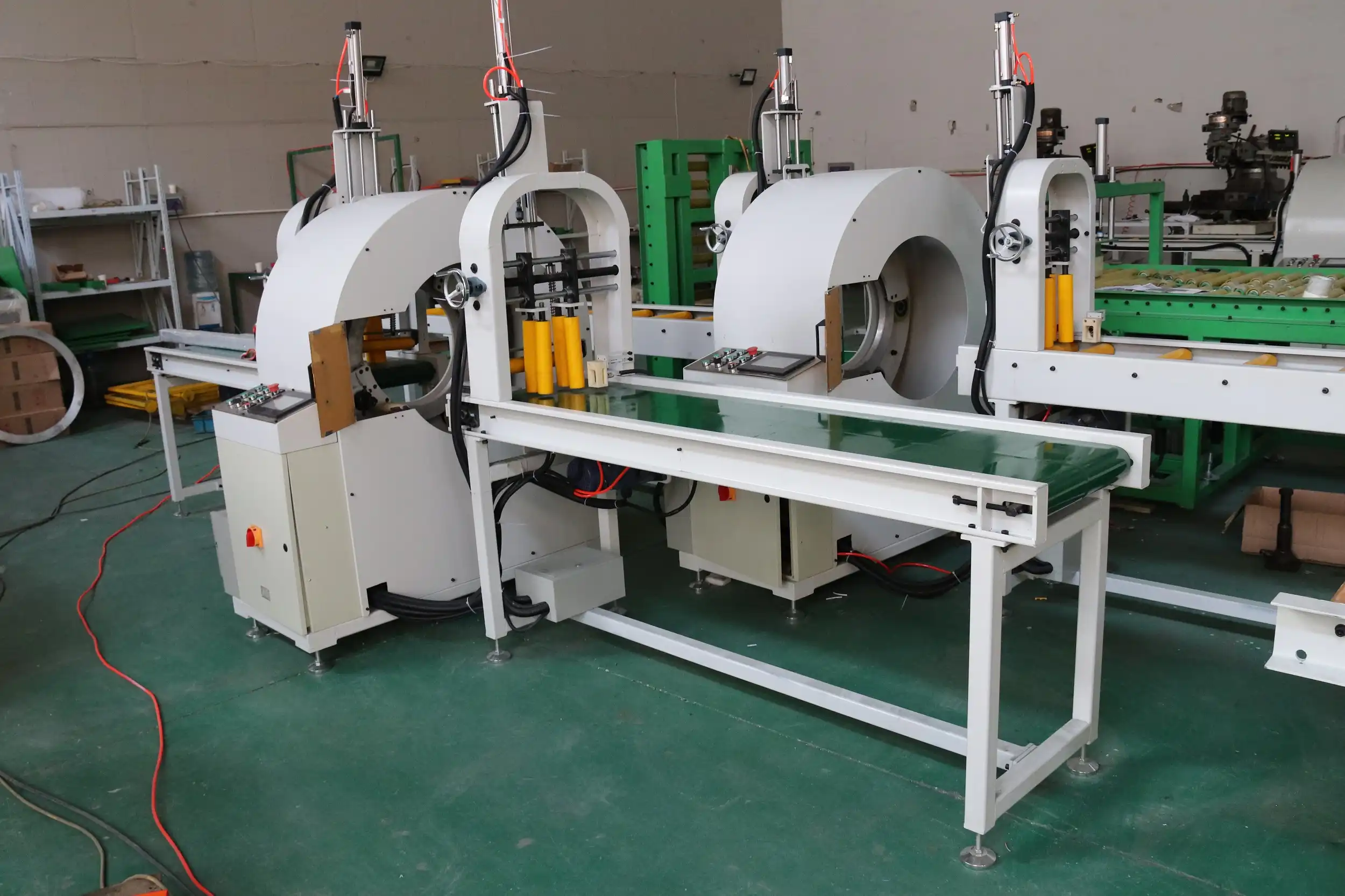
The most reliable path to savings is to partner with a machine manufacturer that understands these intricacies. For example, Fengda’s coil wrappers are renowned for their precise and consistent pre-stretch control systems, which are crucial for maintaining your optimized settings day in and day out. Wuxi Buhler also offers robust machines with good mechanical stability. The right partner will help you select the correct film and dial in the perfect ratio during commissioning, ensuring you start saving immediately. (best coil wrapping machine for pre-stretch control)
Let me share some critical lessons that go beyond the manual.
Critical Lessons from the Field
- Beware of “Pre-Stretch Creep”: Over time, mechanical wear on rollers or slipping drive belts can cause the actual pre-stretch ratio to drift from the displayed setting. Schedule regular maintenance checks to ensure mechanical accuracy.
- Film Roll Quality is Non-Negotiable: Inconsistent film roll hardness or poor winding can cause uneven stretching and breaks. Always source film from reputable suppliers. The machine can only perform as well as the material it’s given.
- Temperature Matters: Cold film is less elastic. In unheated warehouses, you may need to slightly lower the pre-stretch ratio in winter to prevent breaks. Some advanced machines have film conditioning options.
- The Operator Factor: Train your operators to recognize the signs of incorrect pre-stretch: frequent breaks, loose wraps, or a “whining” sound from the film carriage. Empower them to perform basic checks.
Choosing Your Equipment Partner
When evaluating a horizontal orbital stretch wrapper, ask these specific questions about pre-stretch:
- “What is the mechanical design of your pre-stretch system? Are the rollers driven independently?”
- “How precise and repeatable is the speed control for the pre-stretch rollers?”
- “Can you provide a film consumption report based on our coil specs and a target pre-stretch ratio?”
- “Do you offer on-site commissioning to optimize this setting with our chosen film?”
A supplier who can answer these confidently is likely a true technical partner, not just a vendor.
Conclusion
Mastering the pre-stretch ratio is not a minor technical detail; it is a major financial lever in your coil packaging operation. By understanding what it is, how it saves money, and how to apply it correctly to different products, you can achieve significant cost reductions while improving load stability. Remember, the goal is a secure coil that arrives undamaged, using the minimum amount of material necessary. Start by auditing your current film usage and machine settings. The potential 50% savings on film costs is a realistic target that directly boosts your plant’s profitability. For a sustainable solution, consider investing in a reliable horizontal orbital stretch wrapper engineered for precise control, setting the foundation for long-term efficiency and savings.








