
Why Is Modular Design Critical for Germany’s Just‑In‑Time Production?
Factory managers in Germany face big pressure. They must make things fast. They also need to keep costs low. The old ways of making things often cause problems. They make production slow. They also waste materials. This is a real struggle for businesses today.
Modular design is very important for Just-In-Time production in Germany. It means building machines from small, stand-alone parts. These parts can be changed easily. This makes production lines flexible. It helps factories meet changing customer needs quickly. It cuts down on waste. This is why it works well for JIT.
You might wonder how modular design really helps. You might think it sounds too simple. But it offers big answers to factory challenges. Let us look deeper into how it works. We will see why it is key for modern German manufacturing.
How Does Modular Design Improve Production Flow in German Factories?
Do you have stiff production lines? Do changes take too long? This can slow down your whole factory. It limits how fast you can adapt. Your output might suffer because of this.
Modular design helps production flow much better. Factories can quickly change their lines. They just swap out parts. This makes them ready for different products or sizes fast. It helps German factories handle quick order changes. This makes the whole production process smoother.

Modular design means machines are built like building blocks. Each block is a standard part. You can add, remove, or change these blocks easily. This is true for packing machines or entire assembly lines. For example, a steel coil factory might need to pack different coil widths. With a modular system, they can swap out a wrapping head. They do not need to buy a whole new machine. This saves time and money. It also keeps production moving. German factories need this speed for Just-In-Time. JIT means making products exactly when they are needed. It means very little stock. So, lines must adapt fast. Modular design lets them do this. It reduces idle time. It also makes fewer errors. This is because changes are simpler.
Flexibility and Scalability
- Traditional Setup: You buy a fixed machine. It does one job well. If needs change, you need a new machine. This costs a lot. It also takes time.
- Modular Setup: You buy basic parts. You add other parts as needed. You can change parts later. This means your machine can grow with your business. It handles new products easily.
| Feature | Traditional Design | Modular Design |
|---|---|---|
| Adaptability | Hard to change for new products | Easy to adapt to new product sizes |
| Changeover Time | Long, complex retooling required | Short, simple part swapping |
| Investment | High upfront cost for specific tasks | Lower entry cost, scalable investment |
| Future Proof | Limited, might become obsolete fast | High, can be updated with new modules |
Think about a coil packing line. One day, you pack small wire coils. The next day, you pack heavy steel coils. A traditional machine might need hours to re-set. A modular system can change in minutes. You simply add or remove specific units. This means less waiting. It means more actual packing time. This is how modularity helps German factories meet strict JIT schedules. It makes production flow steady. It keeps customers happy.
Can Modular Packing Systems Really Support Just-In-Time Goals?
Is your packing process slowing you down? Does it cause bottlenecks at the end of the line? This can hurt your JIT goals. Slow packing means products wait. This stops your whole system from being truly JIT.
Yes, modular packing systems really help JIT goals. They let factories set up quickly. They can pack many different product sizes. This cuts down on waiting times. It ensures products move from production to shipping fast. This is key for JIT.

Packing is often the last step. It is where all previous work can get held up. In a JIT system, products should move smoothly. They should move from raw material to finished goods. A slow packing process breaks this chain. Manual packing, especially for heavy items like steel coils, is very slow. It also has risks. Modular packing systems solve this. They are built with standard units. Each unit does a specific task. You can combine these units. This creates a packing line that fits your needs exactly. You can add an automatic strapping machine. You can add a coil tilter. You can add an automatic wrapping machine. All these units work together.
Efficiency Through Customization
- Reduce Manual Handling: Many modular systems are automated. This means fewer workers lifting heavy coils. This cuts down on injuries. It speeds up the work.
- Quick Product Changeovers: When you need to pack a different size or type of coil, you do not rebuild the line. You just adjust or swap modules. This greatly reduces downtime. It helps maintain a continuous flow.
- Optimized Space Use: Modular machines often have a smaller footprint. You can arrange them to fit your factory layout. This is important for busy German factories.
| JIT Principle | How Modular Packing Helps | Impact on Operations |
|---|---|---|
| Eliminate Waste | Reduces idle time, material waste from manual errors. | Lower costs, higher productivity. |
| Continuous Flow | Enables quick line changes, less interruption in production. | Faster lead times, smoother output. |
| Pull System | Allows quick response to customer orders, packing on demand. | Less inventory, better cash flow. |
| Quality First | Automated processes reduce product damage during packing. | Fewer customer complaints, higher product quality. |
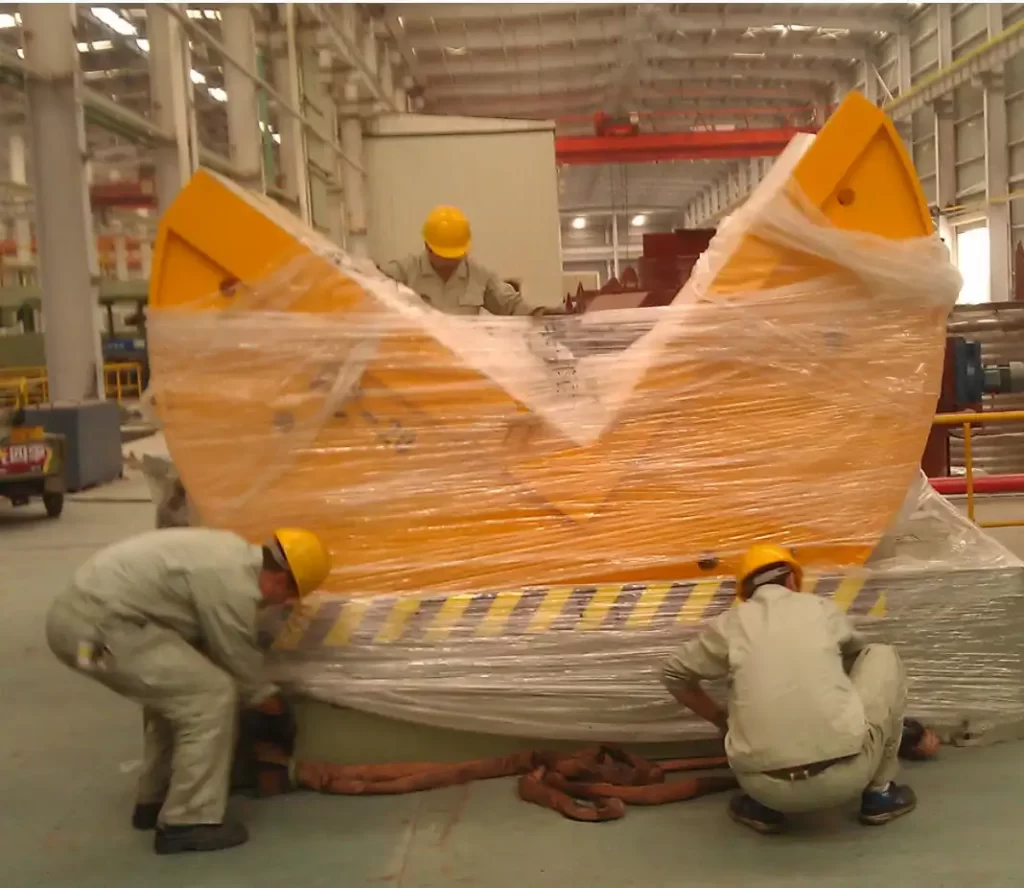
For example, when I worked with factories, I saw how a simple coil upender could change things. If it was modular, it could easily connect to a wrapping machine. It could then connect to a strapping unit. This made the whole end-of-line process smooth. This is crucial for JIT. It means your packing line works as hard and as smart as your production line.
What Specific Advantages Does Modularity Offer to German Manufacturers?
The market in Germany is tough. Factories need to save money. They also need reliable machines. Old ways of building machines might not offer this. This can make it hard to compete.
Modularity gives German manufacturers clear benefits. They can set up faster. They have lower costs for upkeep. Their machines also work more often. This makes them stronger against competitors.

German manufacturers face high labor costs. They also have strict quality rules. Modular design helps them meet these challenges. When a machine is modular, its parts are standard. This means repair is easier. If one part breaks, you can just replace that part. You do not need to replace the whole machine. This saves money on spare parts. It also means less downtime. Less downtime means more production time. This improves the factory’s overall equipment effectiveness (OEE). OEE is a key number for any factory manager. It shows how well your machines are really working.
Cost Savings and Uptime
- Reduced Maintenance Costs: Standardized modules mean fewer unique spare parts to stock. This lowers inventory costs. Repairs are also faster. Technicians can learn to fix one type of module. They do not need to learn many different machine types.
- Faster Installation: Modular systems come in pre-built units. This makes installation quicker. It reduces the time your factory is not running during setup.
- Higher Uptime: Because repairs are faster, machines are running more often. This means more products get made. This means more money for the factory.
| Feature | Traditional Fixed Machine | Modular Machine |
|---|---|---|
| Repair Time | Long, might need special parts | Short, swap out standard module |
| Spare Parts Cost | High, need many unique parts | Lower, common parts across systems |
| Upgrade Ability | Hard, often needs new machine | Easy, just add new modules |
| Resale Value | Drops fast if specific to old needs | Higher, can be reconfigured for new buyer |
I have seen factories lose huge amounts of money. This happened because one small part of a big, custom machine broke. Repair took weeks. Production stopped. With modular systems, these risks are much lower. A modular system is like a good team. If one player is out, another can step in. The game keeps going. This makes modular design a very smart choice for German manufacturers looking for long-term value.
How Does Modular Design Lower Operational Risks and Costs?
Are you worried about safety? Are workers getting hurt handling heavy goods? Do your products get damaged during packing? These problems cost a lot. They lead to high insurance bills. They also mean lost profit.
Modular design lowers risks a lot. It means less manual work. This makes workers safer. It also stops products from getting damaged. This directly cuts costs for the factory.
Many factories, especially those dealing with metal or heavy parts, have big safety issues. Workers often lift or move heavy items. This leads to injuries. It also causes product damage. Think about a steel coil. If it is handled roughly, its edges can get bent. This makes it less valuable. It also leads to angry customers. Modular packing machines, like those FHOPEPACK designs, reduce this risk. They automate tasks. This means machines do the heavy lifting and turning. People step back. This makes the workplace much safer. It also ensures products are handled with care.
Safety and Product Integrity
- Reduced Manual Handling: Modular systems can include automated coil tilters or transporters. These move heavy coils without human touch. This cuts down on strains, sprains, and crushing injuries.
- Consistent Quality: Automated packing reduces human error. This means fewer damaged products. Each coil is wrapped or strapped the same way every time. This protects it during shipping. It means fewer customer complaints.
- Lower Insurance and Worker Turnover: A safer workplace means fewer accidents. This leads to lower insurance costs. Workers also feel safer. This means they are less likely to leave. This saves money on training new staff.
| Risk Category | Traditional (Manual/Fixed) Method | Modular (Automated) Method |
|---|---|---|
| Worker Safety | High risk of injuries | Greatly reduced, machines do heavy work |
| Product Damage | Frequent, due to human error/rough handling | Minimal, precise machine handling |
| Insurance Costs | Higher due to accident claims | Lower, fewer workplace accidents |
| Employee Morale | Can be low due to dangerous tasks | Higher, safer and more efficient work |
When I first started in the packing machine industry, I saw many accidents. Workers had to struggle with huge, heavy items. I knew there had to be a better way. This pushed me to think about smarter solutions. Modular design is a big part of that. It takes the danger out of the process. It also makes sure the product leaves the factory in perfect shape. This is a win-win for everyone. It helps the factory manager sleep better at night. It also helps the company’s bottom line.
My Insights: What Have I Learned About Modularity’s Power?
Many factory owners want to grow. But they often feel stuck. Their old ways of working hold them back. They cannot adapt fast enough. This stops their business from reaching its full potential.
I have seen modular design change factories completely. It makes businesses more flexible. It helps them get bigger faster. This has led to real success for many. For me, it helped me build my own company. It helped me become financially free.
My journey started on the factory floor. I was an employee. I saw how rigid factory setups limited growth. Changing a production line was a huge task. It meant long downtimes. It meant huge costs. When I decided to start FHOPEPACK, I carried these lessons with me. I wanted to build machines that solved these very problems. My goal was not just to sell equipment. It was to offer real solutions. It was to be a true partner. I learned that true value comes from helping clients grow their own businesses.
The Partnership Advantage
- Understanding Challenges: I have lived the factory life. I understand the pressure Michael Chen faces. I know about efficiency bottlenecks. I know about safety worries. I know about the need to control costs. This experience helps me suggest the right modular solutions.
- Tailored Solutions, Not Just Products: Instead of pushing a standard machine, I focus on what problem needs solving. A modular approach lets us build exactly what is needed. It adapts to unique factory layouts. It adapts to specific product types.
- Long-Term Growth: Modularity is an investment in future flexibility. It means a factory can take on new orders. It can handle new product types without major re-investments. This helps businesses expand over time.
| Aspect of My Journey | How Modularity Played a Role | Impact on FHOPEPACK and Clients |
|---|---|---|
| Employee Days | Saw limits of fixed systems, need for adaptable solutions | Informed FHOPEPACK’s focus on flexible, customer-centric design |
| Building My Factory | Proved modular principles make a business agile and lean | Enabled FHOPEPACK to quickly adapt to market demands and grow |
| Client Successes | Modular designs helped clients reduce costs, grow output | Built trust, showed modularity’s real-world financial benefits |
| Giving Back | Sharing knowledge about modularity empowers other businesses | FHOPEPACK became a knowledge-sharing platform for factory improvement |
One client, a metal processor, struggled with packing different coil sizes. Their old machine could only handle one type well. Switching was a nightmare. I suggested a modular packing line. We added interchangeable guides and a smart wrapping unit. This let them pack small wire coils one hour. Then they could pack large steel coils the next hour. Their downtime dropped by 80%. Their output went up. This is the power of modularity. It is not just about machines. It is about smart design. It is about growing your business. It is about making factories stronger and safer.
Conclusion
Modular design is vital for Germany’s Just-In-Time production. It brings flexibility, efficiency, and safety to factories. This lowers costs and boosts output. It is the smart path for modern manufacturing.








